Wars 2026 02/28 Israel-Iran War 3.0

Wars 2026 02/28 Israel-Iran War 3.0
140
2K
More threads by RayKalm

G War Archive

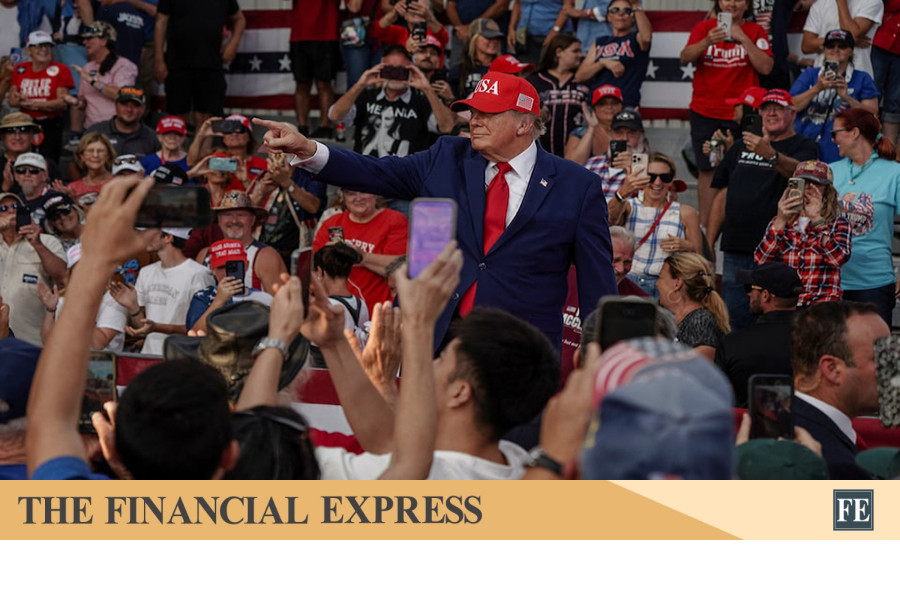
US likely to extend Russian oil waiver to temper Iran war shock

REUTERS

Published :
Apr 11, 2026 20:30
Updated :
Apr 11, 2026 20:30

1776127258327.webp


US President Donald Trump's administration is likely to extend as soon as Friday a waiver allowing countries to buy some sanctioned Russian oil and petroleum products, two sources familiar with the matter told Reuters.

The US Treasury Department has allowed purchases of Russian oil and products at sea since mid-March with a 30-day waiver that expires on Apr 11, part of efforts to control global energy prices during the US-Israeli war with Iran.

Russia's presidential envoy Kirill Dmitriev had said the original waiver would free 100 million barrels of Russian crude, equal to almost a day's worth of global output.

US Treasury Secretary Scott Bessent met with Trump in the White House on Thursday to talk about extending the waiver, and they agreed it was a good idea, one of the sources said, asking not to be named.

Officials at the White House and Treasury Department did not immediately comment on the matter.

Oil prices LCOc1 have spiked since the start of the war due to the partial closure of the Strait of Hormuz, through which about 20 percent of the world's oil and gas had been shipped daily before the conflict. The war is creating the biggest oil supply disruption in history, the 32-nation International Energy Agency has said.

Rising fuel prices are a major concern for Trump and his Republican party leading into midterm elections in November.

The waivers have been criticized by politicians at home and abroad as they could complicate the West's efforts to deprive Russia of revenue for its war in Ukraine and put Washington at odds with its allies.

European Commission President Ursula von der Leyen has said now is not the time to relax sanctions against Russia.

Congressional Backlash

The US also waived sanctions on Iranian oil at sea on Mar 20 for 30 days, in an effort to control prices, spurring criticism from lawmakers from both political parties.

"Waiving oil sanctions now advantages the countries that wish to do us harm," Republican Senator Jerry Moran said last month, as he urged the administration to not renew the waivers. "Iran and Russia are actively working together to place Americans and other innocent lives at risk."

Senate Minority Leader Chuck Schumer and fellow Democratic Senator Jeanne Shaheen urged the administration on Friday not to renew the license on Russian oil. “It remains far from clear that the extraordinary step of providing sanctions relief to Russia provided any relief for US consumers or eased the global energy crisis," they said in a statement.

"Instead, even as Russia supported Iran in targeting Americans, the Trump Administration has rewarded the Kremlin while Russia has continued to launch strikes at Ukraine—including a barrage of 1,000 strikes in late March," they said.

India, a US ally vulnerable to fuel shocks resulting from the war, has expected Washington to renew the waiver on Russian oil.​
 

Trump orders blockade of Hormuz strait after Iran talks fail

AFP
Washington, United States
Published: 13 Apr 2026, 09: 20

1776129174070.webp

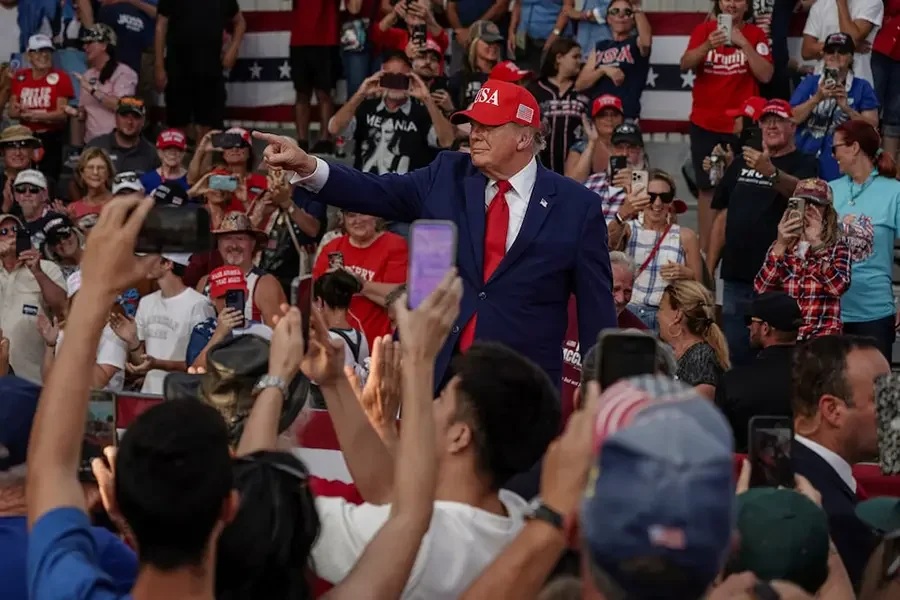
US President Donald Trump File photo

President Donald Trump ordered the US Navy on Sunday to block the crucial Strait of Hormuz shipping lane, furious with Iran's refusal to surrender its nuclear ambitions after peace talks in Pakistan broke down without an agreement.

In response to Trump's announcement, Iran's Revolutionary Guards warned they had traffic in the strategic waterway under their full control and would trap any enemy who tried to challenge it "in a deadly vortex".

In a lengthy declaration on his social media platform, Trump said his eventual goal was to clear the strait of mines and reopen it to all shipping, but that in the meantime Iran must not be allowed to profit from its control of the waterway.

"Effective immediately, the United States Navy, the Finest in the World, will begin the process of BLOCKADING any and all Ships trying to enter, or leave, the Strait of Hormuz," Trump said. "Any Iranian who fires at us, or at peaceful vessels, will be blown to hell!"

Iran's parliament speaker Mohammad Bagher Ghalibaf, who led the Iranian delegation in Pakistan, said upon arriving back in Tehran that the country would "not bow to any threats" from Washington.

Tehran has itself been restricting traffic through the strait -- a key route for global oil and gas shipments -- while allowing vessels deemed to be working for friendly countries, such as China, to pass. There have been unconfirmed reports that Tehran plans to charge tolls.

"This is world extortion," Trump said. "I have also instructed our Navy to seek and interdict every vessel in International Waters that has paid a toll to Iran. No one who pays an illegal toll will have safe passage on the high seas. We will also begin destroying the mines the Iranians laid in the Straits."

The US military had said Saturday that two Navy warships transited through the strait to begin clearing it of mines and ensure it was a "safe pathway" for tankers, a claim denied by Tehran.

Iran's Fars news agency reported on Sunday that two Pakistani-flagged oil tankers heading for the strait had turned around.

Fears of renewed fighting rattled an already tense region after the US-Iran talks collapsed.

"I am worried about the continuation of the situation and the return of attacks again," said Imam, an Egyptian housewife living in UAE capital Abu Dhabi.

"I was making a great effort not to pass my tension on to the children."

'Act of extortion'

Trump later in a Fox News interview again threatened Iran's energy infrastructure, before warning he would impose a 50 percent tariff on Chinese imports if Beijing tried to help the Iranian military.

"I could take out Iran in one day. I could have their entire energy everything, every one of their plants, their electric generating plants," he said.

The president's latest ultimatum appeared to have been triggered by the failure of talks to secure a deal to end the six-week-old war.

Iran's refusal to give up its right to a nuclear programme frustrated the US delegation, led by Vice President JD Vance, White House envoy Steve Witkoff and Trump's son-in-law Jared Kushner.

"I have always said, right from the beginning, and many years ago, Iran will never have a nuclear weapon!" Trump said.

"The Blockade will begin shortly. Other Countries will be involved with this Blockade," he added, without specifying which ones.

After the talks -- the highest-level meeting between the two sides since the 1979 Islamic revolution -- Vance warned that Washington had made Tehran its "final and best offer" for a deal, adding: "We'll see if the Iranians accept it."

Ghalibaf said he had "put forward constructive initiatives" but the US team did not win Iran's trust.

Iranian MP Mahmoud Nabavian, also present at the Pakistan talks, posted on X that the excessive US demands included "a joint share with Iran in the benefits of the Strait of Hormuz" alongside removing the country's 60-percent enriched uranium.

Expert Nicole Grajewski said a US blockade of the strait was "not a minor coercive signal", but would rather be considered an effective renewal of the war.

"It suggests Washington is increasingly disillusioned with diplomacy and more willing to rely on direct military means," said Grajewski, an assistant professor at Sciences Po's Center for International Research.

'War continues'

The failure of the talks will raise concerns that a return to fighting could drive world energy prices higher and further damage shipping and oil and gas facilities.

Pakistan urged both countries to continue respecting the temporary truce.

But concern has grown that the ceasefire could collapse in part because of continued Israeli strikes in Lebanon, where Iran has insisted the truce also applies.

Lebanese and Israeli officials are due to hold talks in Washington on Tuesday.

Prime Minister Benjamin Netanyahu paid a visit to troops in southern Lebanon, according to a video posted Sunday, saying the threat of a Hezbollah invasion of northern Israel was removed but the "war continues, including within the security zone in Lebanon".

Tamara, an 18-year-old cashier in Beirut, said focus should remain on her country, where Israeli strikes killed more than 350 people on Wednesday.

"We can't say the war has stopped because there are talks," she said.

"We mustn't forget the massacre that happened."​
 

Iran offers proposal allowing ships to exit Oman side of Hormuz free of attack: Source

REUTERS

Published :
Apr 16, 2026 00:42
Updated :
Apr 16, 2026 00:42

1776297326196.webp


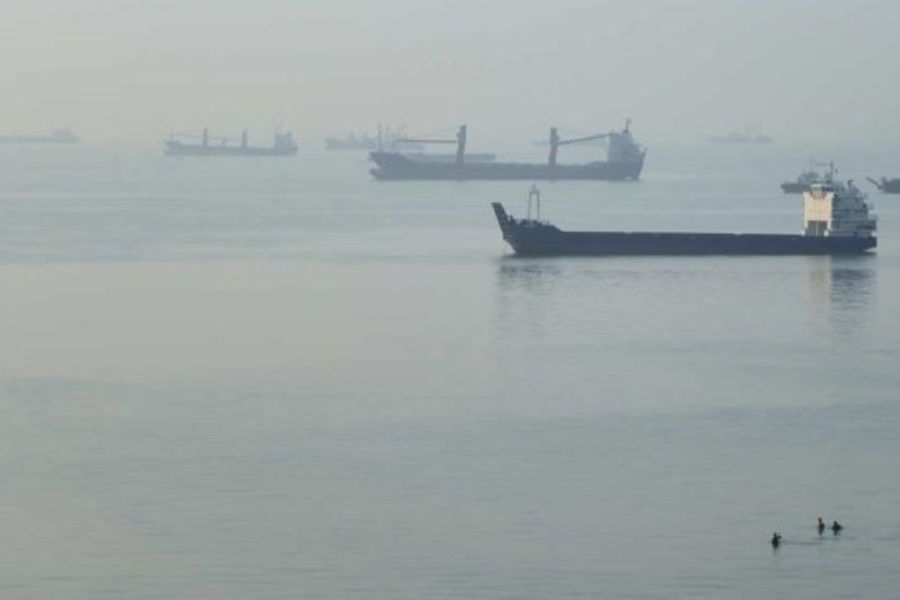
A vessel in the Strait of Hormuz, off the coast of Oman’s Musandam province, April 12, 2026. REUTERS/File Photo

Iran could consider allowing ships to sail freely through the Oman side of the Strait of Hormuz without risk of attack ‌as part of proposals it has offered in negotiations with the United States if a deal is clinched to prevent renewed conflict, a source briefed by Tehran said.

The war has resulted in the largest-ever disruption of global oil and gas supplies ⁠due to Iran's interruption of traffic through the strait, which handles about 20% of the world's oil and liquefied natural gas flows.

Hundreds of tankers and other ships and 20,000 seafarers have been stuck inside the Gulf since the Iran war began on February 28.

The source, who declined to be identified due to the sensitivity of the matter, said Iran could be willing to let ships use the ‌other ⁠side of the narrow strait in Omani waters without any hindrance from Tehran.

The source did not say whether Iran would also agree to clear any mines it may have placed in that stretch of water or ⁠if all ships - even those linked to Israel - would be allowed to pass freely.

But the source added that the proposal hinged on whether Washington ⁠was prepared to meet Tehran's demands, a condition that was central to any potential breakthrough with the Strait of Hormuz.

The White ⁠House did not immediately respond to a request for comment.​
 

Trump says Iran war 'close to over'; army chief of mediator Pakistan arrives in Tehran

REUTERS

Published :
Apr 15, 2026 22:08
Updated :
Apr 15, 2026 22:30

1776297423819.webp

Israeli soldiers walk among destroyed buildings in southern Lebanon, near the Israel-Lebanon border, as seen from the Israeli side of the border in northern Israel, Apr 14, 2026. Photo : REUTERS

US President Donald Trump said the war with Iran was close to over, telling the world to brace for an “amazing two days”, as the army chief of mediator Pakistan arrived in Tehran in a bid to prevent a renewed conflict.

The diplomatic push came as US and Iranian officials weighed a return to Pakistan for further talks after negotiations there ended on Sunday without a breakthrough.

Pakistan’s military confirmed Field Marshal Asim Munir had arrived in Tehran. A senior Iranian source told Reuters that Munir, who had mediated the last round of talks, was heading to Iran “to narrow gaps” between the two sides.

“I think you’re going to be watching an amazing two days ahead,” Trump told ABC News reporter Jonathan Karl, according to a post by the reporter on X, adding he did not think it would be necessary to extend a two-week ceasefire that expires next week.Breaking News Alerts

“I think it’s close to over, yeah. I mean I view it as very close to over,” Trump said in an interview on Fox Business Network conducted Tuesday and broadcast Wednesday. “We’ll see what happens. I think they want to make a deal very badly.”

Officials from Pakistan, Iran and Gulf states also said both sides could return to Islamabad in coming days.

The talks last weekend broke down without an agreement to end the war, which Trump launched alongside Israel on Feb 28, triggering Iranian attacks on Iran’s Gulf neighbours and reigniting a conflict between Israel and Iran-backed Hezbollah in Lebanon.

Trump’s optimism lifted global stocks towards record highs. Oil prices - having fallen on Tuesday and in early Wednesday trade - were slightly up at around $95 per barrel, after the US said its blockade of Iranian ports had halted seaborne trade in and out of Iran.

Tanker Intercepted

The US military said it was turning back more vessels, including the US-sanctioned, Chinese-owned tanker Rich Starry which was seen heading back through the Strait of Hormuz on Wednesday.Business Strategy Consulting

A US destroyer stopped two oil tankers attempting to leave the Iranian port of Chabahar on the Gulf of Oman on Tuesday, a US official said.

An Iranian supertanker subject to US sanctions crossed the strait towards Iran’s Imam Khomeini port despite the blockade, Iran’s Fars News agency said on Wednesday. Fars did not identify the tanker or give further details of its voyage.

While Iran and the United States appear so far to have avoided a major confrontation at sea since the United States began its blockade on Monday, Tehran has said it would retaliate against military action.

Iran’s joint military command warned it would halt trade flows in the Gulf, the Sea of Oman and the Red Sea - which connects to the Suez Canal - if the US blockade continued.

Trump has also threatened to escalate if the war resumes. He told Fox Business Network: “...We could take out every one of their bridges in one hour. We could take out every one of their power plants, electric power plants, in one hour. We don’t want to do that...so we’ll see what happens.”

Return To Islamabad

Trump told the New York Post on Tuesday that his negotiators were likely to return to Pakistan, thanks largely to the “great job” army chief Munir was doing to moderate the talks.

Speaking later at an event in Georgia, Vice President JD Vance, who led the US delegation at last weekend’s talks, said Trump wanted to make a “grand bargain” with Iran but there was a lot of mistrust between the two countries.

Iran’s nuclear ambitions were a key sticking point at last weekend’s talks. The US had proposed a 20-year suspension of all nuclear activity by Iran - an apparent concession from longstanding demands for a permanent ban - while Tehran had suggested a halt of 3 to 5 years, according to people familiar with the proposals.

The head of the International Atomic Energy Agency, Rafael Grossi, said the length of any moratorium on Iranian uranium enrichment was a political decision and suggested Iran might accept a compromise as a confidence-building measure.

Washington has also pressed for any enriched nuclear material to be removed from Iran, while Tehran has demanded that international sanctions against it be lifted.

One source involved in the talks said back-channel talks had made progress in narrowing gaps, bringing the two sides closer to a deal that could be put forward at a new round of talks.

Complicating peace efforts, Israel has continued to attack Lebanon as it targets Iran-backed Hezbollah. Israel and the US say that campaign is not covered by the ceasefire, while Iran insists it is.

Israel’s security cabinet will convene late on Wednesday to discuss a possible Lebanon ceasefire, a senior Israeli official told Reuters, after Israeli and Lebanese officials held rare talks in Washington a day earlier.

Fallout Of The War

The war has prompted Iran to effectively shut the Strait of Hormuz - a vital artery for global crude and gas shipments - to ships other than its own, sharply reducing exports from the Gulf, particularly to Asia and Europe, and leaving energy importers scrambling for alternative supplies.

The oil market also faces further tightening, as the US does not plan to renew a 30-day waiver of sanctions on Iranian oil at sea that expires this week, according to US officials.Commodity Market Updates

An estimated 5,000 people have been killed in the fighting, including about 3,000 in Iran and 2,000 in Lebanon. The governor of Iran’s Tehran province said many of those killed were students, women, teachers and university professors.​
 

Iran military warns will block Red Sea if US naval blockade continues

AFP
Tehran, Iran
Published: 15 Apr 2026, 19: 47

1776299284330.webp

Iranian women walk past a residential building destroyed in a US-Israeli airstrike, in Tehran on April 13, 2026. AFP

Iran's military warned on Wednesday it would block trade through the Red Sea, along with the Gulf and Sea of Oman, if the US naval blockade on Iranian ports continues.

In a statement carried by Iranian state television, the head of the military's central command centre said if the US continues with its blockade and "creates insecurity for Iran''s commercial vessels and oil tankers", it will also constitute "a prelude" to violating the ceasefire.

"The powerful armed forces of the Islamic republic will not allow any exports or imports to continue in the Persian Gulf, the Sea of Oman, and the Red Sea," said Ali Abdollahi.

He added that Iran will "act decisively to defend its national sovereignty and its interests".

The United States has imposed a naval blockade on Iranian ports since Monday after US-Iran talks over the weekend in Pakistan failed to produce a deal to end the war.

But maritime tracking data on Tuesday indicated that several ships sailing from Iranian ports had crossed the Strait of Hormuz despite the blockade.

On Wednesday, Iran's Tasnim news agency quoted unnamed informed sources as saying that shipping from Iran''s southern ports had continued.

It added that Iranian "commercial vessels have set sail for various destinations around the world" during the past 24 hours.​
 

Latest Posts

Back