War Archive
Saif
Senior Member
- Messages
- 21,737
- Likes
- 9,794
- Nation

- Residence
- Axis Group


Region will not serve as shields for United States bases: Mojtaba Khamenei
Iran’s supreme leader Ayatollah Mojtaba Khamenei said on Tuesday that regional countries would no longer be shields for United States bases, in a written statement carried by state television...
 www.newagebd.net
Region will not serve as shields for United States bases: Mojtaba Khamenei
Agence France-Presse . Tehran, Iran 26 May, 2026, 15:29
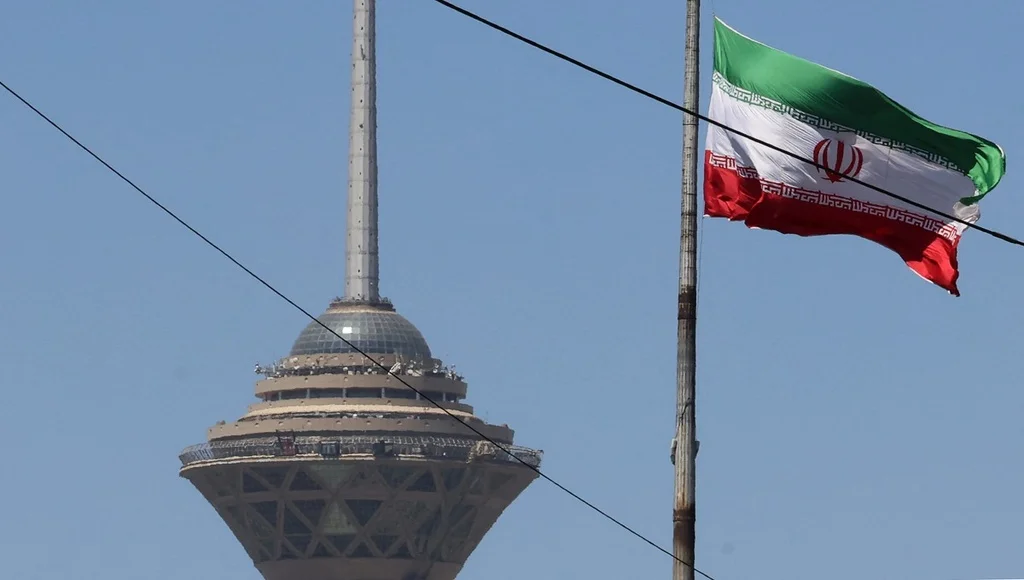
The Iranian flag flutters near the Milad Tower, part of the International Trade and Convention Center of Tehran, in the capital on May 25, 2026. | AFP photo.
Iran’s supreme leader Ayatollah Mojtaba Khamenei said on Tuesday that regional countries would no longer be shields for United States bases, in a written statement carried by state television.
‘What is certain in this regard is that the hands of time will not turn backwards, and the nations and lands of the region will no longer serve as shields for American bases,’ said Khamenei, who has not appeared in public since he took office in March, in a message marking the Eid al-Azha holiday.
He said the United States ‘in addition to no longer having any safe haven in the region for aggression and the establishment of military bases, is moving further and further away from its former position with each passing day’.
The remarks come as Iran and the United States continued exchanges aimed at reaching a deal to end the war which began on February 28 and spread across the region.
A fragile ceasefire has been in place since April 8.
Iran’s foreign ministry has said Tehran and Washington reached understandings on many issues in exchanges over a deal for ending the war, but warned an agreement was not yet imminent.
On Tuesday, Iran’s Revolutionary Guards said they had downed a US drone and shot at other aircraft attempting to enter the country’s airspace, without specifying when the incidents took place.
In a statement, the Guards further warned ‘against any violation of the ceasefire by the aggressor US military and considers its right to reciprocal response legitimate and certain.’
On Monday, the US Central Command said forces attacked missile sites in southern Iran and boats trying to lay mines, despite the ceasefire.
Iran has not officially confirmed the US attack but state media reported blasts in the southern port city of Bandar Abbas without specifying their source.
Mojtaba Khamenei, 56, succeeded his father Ali Khamenei who was killed in the opening US-Israel strikes of February 28, triggering retaliatory attacks by Tehran across the region.
Agence France-Presse . Tehran, Iran 26 May, 2026, 15:29
The Iranian flag flutters near the Milad Tower, part of the International Trade and Convention Center of Tehran, in the capital on May 25, 2026. | AFP photo.
Iran’s supreme leader Ayatollah Mojtaba Khamenei said on Tuesday that regional countries would no longer be shields for United States bases, in a written statement carried by state television.
‘What is certain in this regard is that the hands of time will not turn backwards, and the nations and lands of the region will no longer serve as shields for American bases,’ said Khamenei, who has not appeared in public since he took office in March, in a message marking the Eid al-Azha holiday.
He said the United States ‘in addition to no longer having any safe haven in the region for aggression and the establishment of military bases, is moving further and further away from its former position with each passing day’.
The remarks come as Iran and the United States continued exchanges aimed at reaching a deal to end the war which began on February 28 and spread across the region.
A fragile ceasefire has been in place since April 8.
Iran’s foreign ministry has said Tehran and Washington reached understandings on many issues in exchanges over a deal for ending the war, but warned an agreement was not yet imminent.
On Tuesday, Iran’s Revolutionary Guards said they had downed a US drone and shot at other aircraft attempting to enter the country’s airspace, without specifying when the incidents took place.
In a statement, the Guards further warned ‘against any violation of the ceasefire by the aggressor US military and considers its right to reciprocal response legitimate and certain.’
On Monday, the US Central Command said forces attacked missile sites in southern Iran and boats trying to lay mines, despite the ceasefire.
Iran has not officially confirmed the US attack but state media reported blasts in the southern port city of Bandar Abbas without specifying their source.
Mojtaba Khamenei, 56, succeeded his father Ali Khamenei who was killed in the opening US-Israel strikes of February 28, triggering retaliatory attacks by Tehran across the region.