Wars 2026 02/28 Israel-Iran War 3.0

Wars 2026 02/28 Israel-Iran War 3.0
204
3K
More threads by RayKalm

G War Archive

Region will not serve as shields for United States bases: Mojtaba Khamenei
Agence France-Presse . Tehran, Iran 26 May, 2026, 15:29
1779842246088.webp

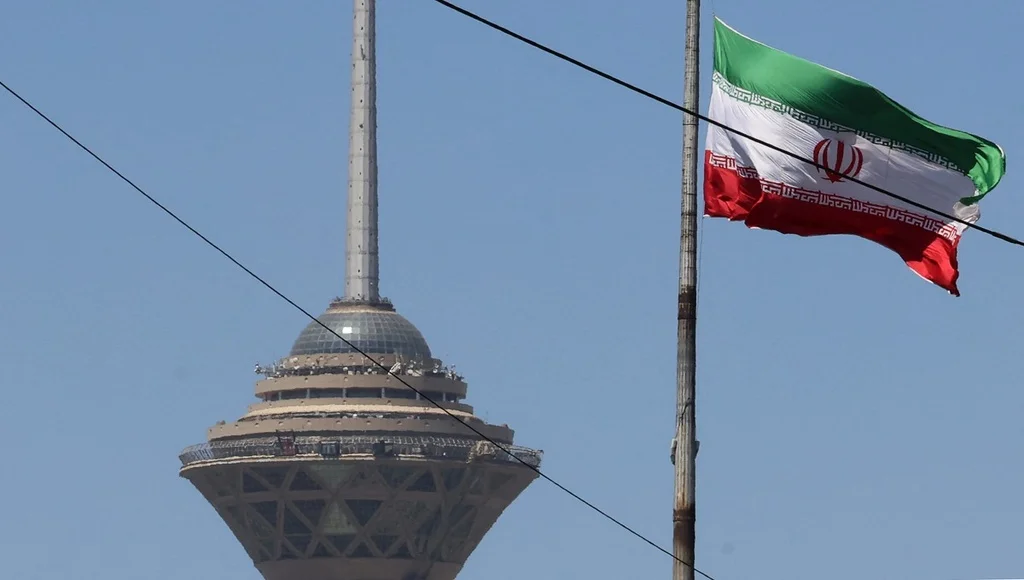
The Iranian flag flutters near the Milad Tower, part of the International Trade and Convention Center of Tehran, in the capital on May 25, 2026. | AFP photo.

Iran’s supreme leader Ayatollah Mojtaba Khamenei said on Tuesday that regional countries would no longer be shields for United States bases, in a written statement carried by state television.

‘What is certain in this regard is that the hands of time will not turn backwards, and the nations and lands of the region will no longer serve as shields for American bases,’ said Khamenei, who has not appeared in public since he took office in March, in a message marking the Eid al-Azha holiday.

He said the United States ‘in addition to no longer having any safe haven in the region for aggression and the establishment of military bases, is moving further and further away from its former position with each passing day’.

The remarks come as Iran and the United States continued exchanges aimed at reaching a deal to end the war which began on February 28 and spread across the region.

A fragile ceasefire has been in place since April 8.

Iran’s foreign ministry has said Tehran and Washington reached understandings on many issues in exchanges over a deal for ending the war, but warned an agreement was not yet imminent.

On Tuesday, Iran’s Revolutionary Guards said they had downed a US drone and shot at other aircraft attempting to enter the country’s airspace, without specifying when the incidents took place.

In a statement, the Guards further warned ‘against any violation of the ceasefire by the aggressor US military and considers its right to reciprocal response legitimate and certain.’

On Monday, the US Central Command said forces attacked missile sites in southern Iran and boats trying to lay mines, despite the ceasefire.

Iran has not officially confirmed the US attack but state media reported blasts in the southern port city of Bandar Abbas without specifying their source.

Mojtaba Khamenei, 56, succeeded his father Ali Khamenei who was killed in the opening US-Israel strikes of February 28, triggering retaliatory attacks by Tehran across the region.​
 

Iran rules out negotiations on enriched uranium
New Age Online 27 May, 2026, 18:54

Iran on Wednesday ruled out any negotiation on the fate of its enriched uranium reserves with the United States.

The deputy secretary of Iran’s Supreme National Security Council, Ali Baqeri, said that the issue of Iran’s enriched uranium stockpile was not currently included in the ongoing negotiations with the United States, reports Iranian semi-official Tasnim News Agency.

He confirmed that indirect contacts between Tehran and Washington continued.

Talking to journalists on the sidelines of the First International Security Forum in Moscow, Ali Baqeri said that discussions on the fate of Iran’s enriched uranium reserves ‘are not on the agenda of the talks.’

He also commented on developments related to the Strait of Hormuz, saying that Iran and the United States were yet to reach a final agreement regarding the reopening of the strategic waterway, Russian state-owned domestic news agency RIA Novosti reported.

‘Until we agree on all issues, we consider that we have not agreed on anything,’ Ali Baqeri said in response to a question about negotiations concerning maritime transit in the region.

He further revealed that Iran and Oman are jointly working on a new mechanism governing vessel transit through the Strait of Hormuz.

According to him, Tehran and Muscat, as the two littoral states oversee the strait, are discussing new procedures and regulations for maritime passage that will differ significantly from the arrangements in place before the recent conflict involving Iran.

He added that indirect communications between Iran and the United States continued, without providing further details about the nature or venue of the contacts.

The remarks came amid continued diplomatic efforts and regional consultations following heightened tensions in and around the Persian Gulf and the Strait of Hormuz in the wake of the US-Israeli war of aggression against Iran.​
 

US commits to ending naval blockade in draft deal: Iran state TV
Agence France-Presse . Tehran, Iran 27 May, 2026, 21:03

1779935811475.webp

Donald Trump

Iranian state television said on Wednesday that a draft framework deal with the United States included a commitment to lift the naval blockade on Iran, restore traffic through the Strait of Hormuz and the US to withdraw its forces from the Gulf region.

Tehran and Washington have in recent days been swapping proposals to end the war on Iran, which broke out on February 28 and engulfed the Middle East, while a fragile ceasefire has been in place since April 8.

The report cited what it described as a draft outline of a potential memorandum of understanding, while noting that the text was ‘still not finalised’.

Iran has since kept a tight control over the strategic Strait of Hormuz, a vital global energy conduit, while the United States has imposed a naval blockade on Iranian ports and coasts since April 13.

‘The United States has committed itself to lifting Iran’s naval blockade and to cease harassing ships passing to or from the Islamic Republic of Iran,’ the state TV report said.

In return Iran would allow commercial shipping through the Strait of Hormuz to resume as it had before the war within one month, according to the draft.

The draft says Iran would continue to manage shipping lanes, inspect vessels, and impose service fees on ships — measures which have only been imposed since the war.

Iran’s commitments would not apply to military vessels, and Tehran had not agreed ‘to unconditionally reopen the strait,’ it added.

On the withdrawal of US troops from the region, the draft said Washington had given ‘a commitment to the Islamic Republic of Iran regarding this issue’.

It added that it remained unclear whether the commitment referred only to forces deployed before and during the war, or if it also included existing US military bases in the Gulf.

Following agreement on the framework, Tehran and Washington would enter a 60-day negotiation period, the draft said, without specifying which issues would be discussed.

‘If negotiations reach a final agreement during the 60-day period, this agreement is expected to be approved by a binding resolution of the United Nations Security Council,’ it added.​
 

US, Iran trade strikes in most serious clash since truce began

AFP
Tehran

1780021156410.webp

The US and Israel carried out an attack on Iran. File photo

The United States and Iran traded strikes on Thursday in their most serious clash since an April ceasefire began, rattling ongoing efforts to negotiate an end to the war and open the vital Strait of Hormuz.

The latest exchange also drew in US ally Kuwait, which said it was responding to incoming fire, and came as violence on the war's Lebanese front escalated sharply after Israel declared much of the country's south a combat zone.

Iranian forces fired at four ships attempting to cross Hormuz, according to state broadcaster IRIB. Iran has blockaded the strait since the start of the war in late February.

US forces struck a ground control station in the southern port area of Bandar Abbas, a US official said, prompting Iran to then target "the American air base that served as the source of the attack", according to IRIB, citing the country's Revolutionary Guards.

The Guards did not provide details on the location of the base, though Kuwait, which hosts US troops, said its air defences were responding to an attack.

Iranian foreign ministry spokesman Esmaeil Baqaei condemned the US strikes and said the Islamic republic would "take all necessary measures to defend its national sovereignty".

The ministry called the strikes "violations" of the truce, though the US official described them as "purely defensive, and intended to maintain the ceasefire".

The clash underscored the uncertainty surrounding the stuttering negotiations aimed at formally ending the conflict that began on 28 February with US-Israeli attacks on Iran, though neither side has appeared eager to return to all-out war.

Before Thursday's strikes, Amir, a 27-year-old software developer in the Iranian capital, said fears of renewed fighting were ever present in spite of the ceasefire and talk of a deal.

"I feel like nothing is certain yet," he said. "The daily question is: Will there be missile strikes tonight?"

Hormuz impasse

A key focus of the proposed deal has been restoring full traffic in the Strait of Hormuz, leaving global energy markets grappling with curbed supplies of the huge amounts of oil and gas that normally pass through it.

Oil prices bounced higher on Thursday after reports of the strikes, reversing much of the previous day's fall spurred by hopes of a deal.

President Donald Trump threatened US ally Oman when asked about a possible short-term arrangement allowing it and Iran to control the Hormuz.

"No, the strait is going to be open to everybody," Trump said. "It's international waters and Oman will behave just like everybody else or we'll have to blow them up."

Oman has played a mediation role in the war and has itself come under attack from Tehran.

Baqaei condemned the threat towards Oman, calling it "a worrying sign of the normalisation of anarchy and intimidation in international relations".

The US Treasury, meanwhile, announced sanctions on Wednesday against Iran's Persian Gulf Strait Authority, Tehran's new agency that collects fees for travelling through the Strait of Hormuz.

Lebanon strikes

In Lebanon, a separate ceasefire has done little to stop the fighting between Israel and Iran-backed Hezbollah, which has only escalated in recent days.

The Israeli military said on Thursday it had begun new strikes on Hezbollah infrastructure around Tyre after issuing an evacuation warning to residents of the southern city.

The previous day it had declared all areas south of Lebanon's Zahrani River -- which roughly 40 kilometres (25 miles) from the border -- as "combat zones" and told residents to leave.

The sweeping warning, the first of its kind since an 17 April ceasefire, came as many Lebanese tried to celebrate the Muslim holiday of Eid al-Adha.

Lebanon's official National News Agency also reported a series of strikes on Nabatieh city resulting in "huge destruction" in residential areas.

Lebanon's health ministry on Wednesday reported the overall death toll since the war erupted on 2 March stood at 3,269.

The Israeli military, meanwhile, said on Thursday that a soldier was killed the day before by a Hezbollah drone near the Lebanon border, taking to 24 the number of its troops killed in the war with the Iran-backed group.

Iran has also insisted any agreement must apply to Lebanon.​
 

US, Iran agree deal framework, await Trump approval: US source

Agence France-Presse . Washington, United States 28 May, 2026, 23:30

1780022889887.webp

Donald Trump

US and Iranian negotiators have agreed on a framework for a 60-day ceasefire extension deal but it still needs US president Donald Trump’s approval, US sources told AFP on Thursday.

The sources confirmed a report by the Axios news outlet that stated that the two sides had reached agreement on a memorandum of understanding to prolong the truce and launch negotiations on Iran’s nuclear programme.

There was no immediate confirmation from Trump himself, or from Iran.

The 60-day deal may say that shipping through the Strait of Hormuz will be unrestricted, with no tolls or harassment and with Iran having to remove all mines within 30 days, Axios reported.

The United States will in return lift its naval blockade on Iran’s ports, but only in proportion to how much commercial shipping is restored, it said.

The memorandum will also contain an Iranian commitment not to pursue a nuclear weapon, Axios said. Among the first issues to be addressed is how to dispose of Iran’s stocks of enriched uranium.

Trump has repeatedly insisted that Iran cannot have a nuclear weapon under any deal to end the war that the United States and Israel launched on February 28. A fragile ceasefire has been in place since April 7.

The US president said on Wednesday that he was ‘not satisfied’ yet with Iran’s offers and warned that he could ‘finish the job’ militarily.

Washington and Tehran both accused each other of violating the truce earlier on Thursday following an exchange of fire.​
 

Latest Posts

Back