Wars 2026 02/28 Israel-Iran War 3.0

Wars 2026 02/28 Israel-Iran War 3.0
214
3K
More threads by RayKalm

G War Archive

Draft deal includes releasing $12b in frozen assets: Iran state TV
Agence France-Presse . Tehran, Iran 31 May, 2026, 01:32
1780187332789.webp

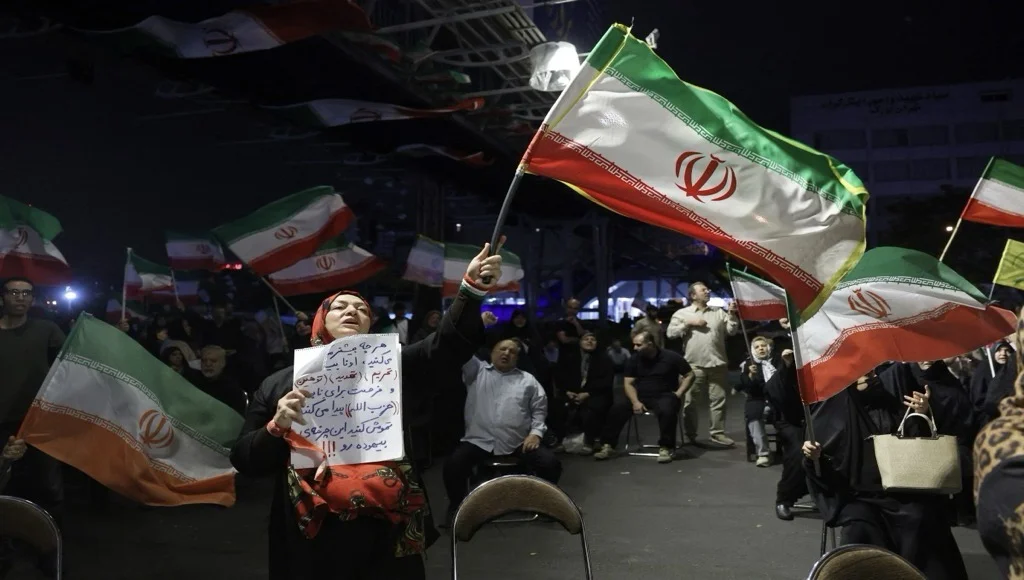
People wave Iran’s national flags during an anti-US and Israel protests in Tehran on Friday. —AFP photo

Iranian state media reported on Saturday that a proposed memorandum of understanding with the United States included an agreement to release $12 billion in frozen assets.

The report cited an ‘unofficial’ draft of the memorandum, and a similar item carried by state TV earlier this week was dismissed by the White House as a ‘fabrication’.

It comes a day after US president Donald Trump issued his own detailed characterisation of a potential agreement aimed at halting the war between the two foes, key elements of which were likewise disputed by Iranian sources.

Saturday’s state TV report said, ‘The United States has pledged to provide Iran with full access to $12 billion of its assets within 60 days, so that these resources can be transferred and spent in banks of Iran’s desired destination without restrictions.’

In his own description of the deal on Friday, Trump had insisted that ‘no money will be exchanged, until further notice’, which Iranian media reports citing informed sources swiftly refuted.

Earlier this week, a source told AFP that Iran’s central bank chief was part of a delegation that visited Qatar ‘to discuss the issue of frozen funds, which is addressed in the MoU as part of an eventual final deal’.

Saturday’s state TV report also said that Tehran would continue to manage the Strait of Hormuz, which Iran has blockaded since the start of the war, roiling global markets.

On Friday, Trump had said that Iran would reopen the strait ‘for unrestricted shipping traffic’, and the United States has repeatedly said it would be unacceptable for Iran to retain control over the vital conduit for energy shipments.​
 

Iran says does not trust US as Trump toughens terms
The New York Times and Axios reported on Saturday that Trump had sent back a “tougher” new framework to be considered by Iran, though details remain unclear.

AFP
Tehran

1780271879871.webp

People walk past an anti-US billboard depicting US President Donald Trump and the Strait of Hormuz, in Tehran, Iran, on 30 May 2026 REUTERS

Iran’s chief negotiator warned the United States is not to be trusted Sunday, saying Tehran would not agree to any deal with Washington unless it fully secures Iranian rights.

Mohammad Bagher Ghalibaf’s remarks came as reports emerged that US President Donald Trump had sent a tougher peace proposal back to Iran, and underlined the rift that the parties still need to close.

Any further tweaks to the draft could further delay an agreement to formally end the Middle East war and reopen the Strait of Hormuz after weeks of fraught negotiations marked by sharp rhetoric and occasional flare-ups of violence.

Iran was already in negotiations with the United States about the fate of its nuclear programme in February, when the US and Israel launched air and missile strikes that wiped out much of the Islamic republic’s senior leadership.

And, while Tehran has long insisted that its nuclear programme is for purely civilian ends, the United States and its Western allies have long suspected it aims to develop a weapon.

Nuclear guarantees

The New York Times and Axios reported on Saturday that Trump had sent back a “tougher” new framework to be considered by Iran, though details remain unclear.

Trump has said his priorities include stopping Iran from any nuclear weapon development and re-opening the Hormuz shipping lane, over which Iran has sought to impose control since the war began.

“The one guarantee that I have to have is that there will be no nuclear weapons. They’ve agreed to that, and it was very interesting,” he told his daughter-in-law Lara Trump in an interview on her Fox News show.

But Tehran has previously cast doubt on Trump’s assertions and the sides remain far apart on key issues.

“We will not approve any agreement until we are certain that the rights of the Iranian people have been upheld,” Ghalibaf said, in a video broadcast on state television.

According to the Tasnim news agency, “exchanges between Iran and the United States regarding the text of a possible memorandum of understanding are ongoing, with both parties regularly proposing amendments.

“No agreement has yet been finalised, and it is possible that any agreement will be rejected,” it said.

Iran has said it needs the release of $12 billion in frozen assets before engaging in substantive talks on its nuclear program, dismissing earlier Trump comments that its enriched uranium stockpile would be destroyed as “baseless”, according to Iranian media.

Tehran has also insisted that Lebanon be included in any deal, despite ongoing fighting, with Beirut accusing Israel of a “scorched-earth policy” as it expands operations against Iran-backed Hezbollah.

Flare-ups

Though daily strikes throughout Iran and the Gulf halted after Tehran and Washington struck a temporary ceasefire in April and talks mediated by Pakistan, sporadic fighting has continued.

Iran’s Revolutionary Guards had shot down a US military drone “about to enter Iranian territorial waters”, Iran’s state broadcaster IRIB reported, though Washington has not confirmed the incident.

Earlier this week, the worst fighting since the ceasefire erupted when US forces struck the Iranian port of Bandar Abbas, prompting retaliatory fire from Iran.

Nevertheless diplomacy has continued with Trump under pressure to secure a deal that would lift competing US and Iranian blockades around the Strait of Hormuz that have strangled a vital route for global oil supplies.

After Trump said Iran would charge “no tolls” on ships passing through the strait under any deal, Iranian news agency Fars cited sources saying “no such clause” existed.

Iran’s ISNA news agency on Saturday quoted lawmaker Alireza Salimi as saying a plan “to implement Iran’s management and sovereignty” over the strait -- which includes imposing “administrative fees” for navigation -- would soon go before parliament.

Lebanon front

Israeli said Sunday that troops had also crossed the Litani river and raised the Israeli flag over the strategic medieval fortress of Beaufort in southern Lebanon.

Smoke billowed from the surrounding area as the invading army’s banner was seen by AFP above the castle, which Israel famously used as a base during their previous two-decade-long occupation.

The push to Beaufort came as the Israeli military issued a sweeping evacuation order to areas south of the Zahrani River, north of the Litani and around 40 kilometres (25 miles) from the border, warning that it was targeting Hezbollah.

“The capture of Beaufort is a dramatic stage and a dramatic shift in the policy we are leading. We have broken the barrier of fear. We are taking the initiative, we are operating on all fronts -- in Syria, in Gaza, in Lebanon,” Israeli Prime Minister Benjamin Netanyahu said.

The Israeli military said Sunday that one soldier was killed the previous day in a Hezbollah drone strike.Lebanese Prime Minister Nawaf Salam has accused Israel of pursuing a “scorched-earth policy and collective punishment”, and called for “a swift and real ceasefire.”

Israel confirmed it was expanding its ground offensive in a statement released early on Sunday, saying “a significant number” of its forces were operating against Hezbollah beyond the Litani river.

A truce between Israel and Hezbollah formally began on 17 April but it has never been observed, with both sides accusing each other of violating it.​
 

US says it struck Iranian military sites, Tehran responds with air base attack

REUTERS

Published :
Jun 01, 2026 13:21
Updated :
Jun 01, 2026 13:21

1780359647026.webp

A man holds an Iranian flag near an anti-US billboard depicting U.S. President Donald Trump and the Strait of Hormuz, in Tehran, Iran, on May 30, 2026 — WANA (West Asia News Agency) via REUTERS

The US said it struck Iranian military sites at ‌the weekend and Iran's Revolutionary Guards said on Monday it had targeted a US base in response, the latest exchange of attacks amid negotiations to end the three-month-old war.

The US and Iran have sporadically exchanged strikes since their ceasefire took effect in early April as diplomacy aimed at a more durable agreement drags on. A similar exchange occurred last Thursday and was described in near-identical terms by both sides.

The weekend US strikes on Iran's Gulf coast were in response to "aggressive Iranian actions that included the shootdown of a US MQ-1 drone that was operating over international waters," the US Central ⁠Command said in a post on X.

"U.S. fighter aircraft swiftly responded by eliminating Iranian air defences, a ground control station, and two one-way attack drones that posed clear threats to ships transiting regional waters," CENTCOM said, adding it will continue to protect US assets and interests during the ongoing ceasefire.

Iran's Islamic Revolutionary Guard Corps said on Monday it had targeted an air base used by the US in response to the attack on southern Iran, without identifying which base.

Air defences in Kuwait, where a major US base is located, were intercepting missile and drone attacks on Monday as sirens sounded across the country, the state news agency KUNA reported, without providing further details.

The war launched by the US and Israel on February 28 has killed thousands of people, mainly in Iran and Lebanon, and caused global economic pain by pushing up energy prices due to Iran's effective closure of the Strait of Hormuz.

STOP NEGATIVE 'CHIRPING', TRUMP SAYS

In a late night social media ‌post, US ⁠President Donald Trump did not mention the exchange of hostilities, repeating his as-yet unproven claim that Iran "really wants to make a deal".

He berated critics, including what he described as "seemingly unpatriotic Republicans", for negative “chirping” about negotiations to end the conflict.

"Just sit back and relax, it will all work out well in the end - It always does!" he said.

Trump is under pressure to reopen the Strait of Hormuz and get US gasoline prices down ahead of the November congressional elections, as voters show increasing frustration over rising prices. At the ⁠same time, he faces a potential backlash from Iran hawks in his own party over any concessions to Tehran.

Oil prices rose about 2 per cent in Asia on Monday as the lack of progress in negotiations kept traders on edge.

Trump has said his key aim in the war is to prevent Iran from developing a nuclear weapon with its highly enriched uranium. ⁠Tehran has consistently denied it has plans to do that.

The two sides remain at odds on several other issues, such as Tehran's demands for the lifting of sanctions and the release of tens of billions of dollars of Iranian oil revenues frozen in foreign banks.

Israel's war in Lebanon with the Iranian-backed Hezbollah ⁠militia is another major impediment.

Israeli Prime Minister Benjamin Netanyahu said on Sunday he had ordered troops to move further into Lebanon in the battle against the Iranian-backed Hezbollah militant group.

US Secretary of State Marco Rubio spoke with both Lebanese President Joseph Aoun and Netanyahu on the diplomatic negotiations between Israel and Lebanon and has proposed a plan to allow for "gradual de-escalation," a US official said.​
 

Rubio to testify before Congress for the first time since the start of the Iran war

AP

Published :
Jun 02, 2026 11:49
Updated :
Jun 02, 2026 11:49

1780533374222.webp


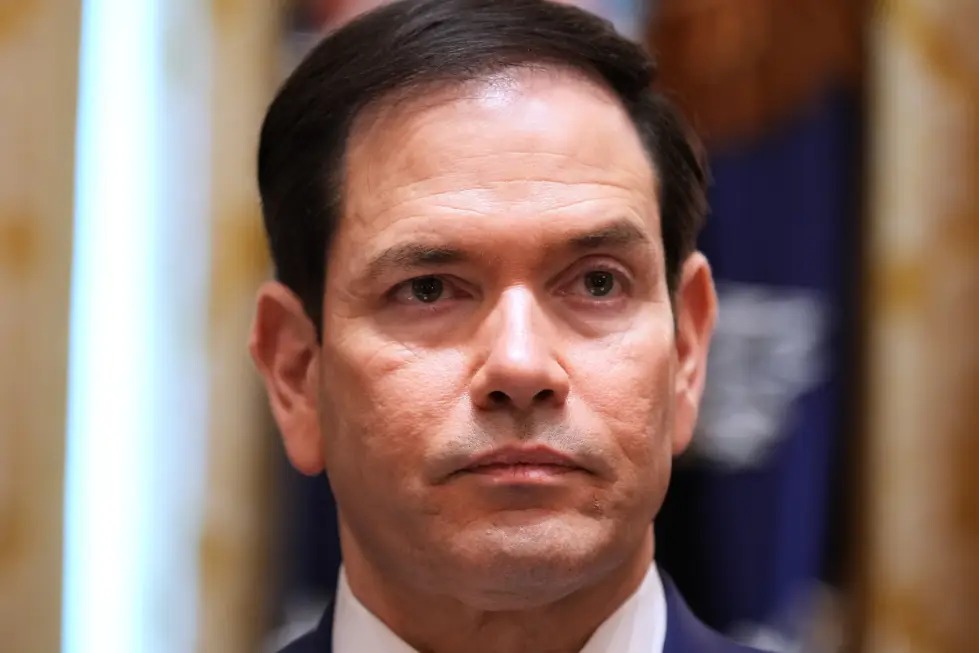
Secretary of State Marco Rubio is set to face a litany of questions Tuesday about the Trump administration's fragile or stalling diplomatic efforts around the world when he appears for back-to-back hearings on Capitol Hill for the first time since the Iran war began.

The former Republican senator will sit before House and Senate committees to make the State Department's annual budget request. But the focus is likely to shift quickly to the already unsteady ceasefire between Washington and Tehran, which has been further tested in recent days by back-and-forth attacks.

Cabinet members, including Rubio, have defended President Donald Trump's decision to launch the conflict despite promises over the years not to engage in "forever wars" in the Middle East. That work has been made more difficult by Trump's shifting goals for the conflict.

While Rubio is testifying before Congress for the first time since the Iran war started on Feb. 28, he took part in a classified briefing for lawmakers days after the first U.S. and Israeli strikes. He faced Democrats' anger over the lack of congressional approval but strong support from most Republicans for taking action against one of America's oldest adversaries.

In the two months since the war began, however, a small but growing faction of Republicans have joined Democrats in questioning the astronomical price tag and overall economic consequences of the conflict as they head into midterm elections in the fall.

Last month, the Senate managed to advance legislation for the first time that would have forced Trump to withdraw from the conflict after GOP Sen. Bill Cassidy — fresh off a primary election loss in which Trump endorsed his opponent — joined Democrats in pushing it forward.

The House also had scheduled a vote on a war powers resolution, but GOP leadership kept it from coming to the floor after it became clear that the majority party would not have the numbers to defeat it.

The actions show the GOP is struggling to maintain political backing for Trump's handling of the war as rank-and-file Republicans are increasingly willing to defy the president over the conflict.

Following his appearances Tuesday before the Senate Foreign Relations Committee and House Appropriations subcommittee responsible for the State Department, Rubio will return to the Hill on Wednesday to testify before the House Foreign Affairs Committee and equivalent Senate Appropriations subcommittee.

Rubio — the son of Cuban immigrants — also is likely to be questioned about the administration's escalatory behavior toward Cuba, as Trump has hinted that the small island country could be the next U.S. target after operations in Iran are wrapped up.

Despite a series of meetings between U.S. and Cuban officials, Trump and Rubio have renewed threats against the island's government, which take on greater weight after the administration announced criminal charges against former President Raúl Castro.

Over his congressional career and now as America's top diplomat, Rubio has maintained that Cuba is a national security threat because of its ties to U.S. adversaries and that Trump is intent on addressing it.​
 

‘No tangible progress’ in talks with US to end war: Iran FM
Agence France-Presse . Tehran, Iran 04 June, 2026, 01:44

1780535376824.webp

Iranian women walk through the Enghelab Square in Tehran on Wednesday. AFP photo.

The Iranian foreign minister, Abbas Araghchi, said on Wednesday that lines of communication with the United States were still open, but ‘no tangible progress’ was made in negotiations to end the war.

‘Communications with the Americans have not been cut off, and messages have been exchanged regarding the need to stop aggression against Beirut, but no tangible progress has been made in the negotiation process,’ the Tasnim news agency quoted him as telling Lebanon’s Al Mayadeen TV.

‘Returning to the negotiating table is conditional on ensuring the rights of the Iranian people, ending the war in Lebanon, and stopping tensions in the region.’

Any attack on Beirut will trigger ‘full-scale resumption of war’

The Iranian foreign minister warned that any attack on Lebanese capital Beirut would trigger a ‘full-scale resumption’ of the war, as Israel pressed its campaign against Lebanese militant group Hezbollah.

‘Any attack on Beirut will have grave consequences and will lead to a full-scale resumption of the war,’ the Tasnim news agency quoted Araghchi as telling Al Mayadeen TV. ‘Our armed forces are ready to strike Israel if it attacks Beirut.'​
 

US House votes to curb Trump on Iran war as talks stall

AFP
Kuwait City, Kuwait
Published: 04 Jun 2026, 09: 13

1780628835231.webp

President Donald Trump arrives from the Blue Room to speak about the Iran war from the Cross Hall of the White House on Wednesday, 1 April, 2026, in Washington. Reuters

The US House of Representatives has backed a resolution seeking to halt American military action in Iran -- a symbolic move that deals a political blow to President Donald Trump as efforts to find a deal with Tehran stagnate.

Weeks of complicated talks marked by sharp rhetoric and flare-ups of violence have not managed to reach a deal to end the war and reopen the Strait of Hormuz, which is essential to oil supplies.

Washington and Tehran have sent divergent message in recent days, with Iran saying Wednesday “no tangible progress” was made, while Trump again voiced optimism by telling reporters at the White House “it could happen... over the weekend.”

But in the latest episode of violence, Kuwaiti officials said renewed hostilities on Wednesday included an Iranian drone strike on a passenger terminal at Kuwait international airport that killed one person and wounded 63.

In the wake of the flare-ups, four lawmakers from Trump’s Republican party joined Democrats on Wednesday to vote 215-208 in favour of the public rebuke.

The resolution was largely symbolic, as the US president can veto the measure if it gains Senate approval.

“This is a loud and unambiguous message to Donald Trump on behalf of the American people: it’s time to end his deeply unpopular and illegal war of choice in Iran,” Democrats posted on X.

At a congressional hearing, US Secretary of State Marco Rubio said Iran’s highly enriched uranium stockpiles were at the centre of discussions with Tehran.

Washington insists Tehran must turn over its near-weapons-grade enriched uranium, agree to curb its nuclear activities and re-open the Strait of Hormuz, the key shipping channel for Gulf oil and gas, for any peace agreement to take hold.

Iranian Foreign Minister Abbas Araghchi said lines of communication with the United States were still open but warned that any Israeli attack on the Lebanese capital Beirut as part of its campaign against Iran-backed Hezbollah would trigger a “full-scale resumption” of the conflict.

“Communications with the Americans have not been cut off, and messages have been exchanged regarding the need to stop aggression against Beirut, but no tangible progress has been made in the negotiation process,” the Tasnim news agency quoted Araghchi as telling Lebanon’s Al Mayadeen TV.

1780628918748.webp

Senate Majority Leader John Thune (R-S.D.) speaks to reporters on Capitol Hill on 3 June 2026 in Washington, DC. Congressional members spoke to reporters ahead of Thursday's vote-a-rama ahead in the House. Getty Images via AFP

“Any attack on Beirut will have grave consequences and will lead to a full-scale resumption of the war,” he said. “Our armed forces are ready to strike Israel if it attacks Beirut.”

Israel, Lebanon agree ceasefire

In Washington, Israel and Lebanon agreed to a ceasefire after two days of direct talks. Notably, the agreement requires a “complete cessation” of fire by Hezbollah.

They further agreed “with the guidance of the United States” to create “pilot zones” in which Lebanese armed forces -- which have struggled to contain Hezbollah -- “will take exclusive control of the territory to the exclusion of all non-state actors,” a joint statement said.

Further talks were planned in the week of 22 June, with a view toward reaching a “comprehensive agreement.”

Israel and Hezbollah, however, have continued to trade fire, with Hezbollah claiming missile attacks on northern Israel Wednesday and Lebanon saying Israeli strikes in the south killed at least nine people, including two paramedics.

Israeli troops are staging their deepest ground offensive into Lebanon in two decades.

A truce to halt the fighting in Lebanon was meant to take hold on 17 April but has never been observed.

‘Playing with fire’

Kuwait’s military condemned the drone strike on its airport as an act of “criminal Iranian aggression.” India’s foreign ministry said the one fatality was an Indian national.

Iran’s Revolutionary Guards denied attacking the airport and said it was “an error in the American Patriot systems, which landed on the terminal after failing to intercept Iranian missiles.”

The Revolutionary Guards also accused US forces of provoking a response by targeting a tanker and a communications tower on the country’s Qeshm Island.

The fresh attacks constitute one of the more severe tests yet of the April 8 ceasefire that paused more than a month of war sparked by the US-Israeli bombing of Iran, and has largely held despite sporadic exchanges of fire.

Trump played down the renewed hostilities saying “in that part of the world ceasefire is when you’re shooting in a more moderate manner.”

Israeli Prime Minister Benjamin Netanyahu accused Iran meanwhile of “playing with fire.”

“Iran surely knows what the (US) president has said, that if necessary, there’ll be a full-scale return to military action,” Netanyahu said in an interview with US channel CNBC.

Kuwait suspended air traffic and diverted arriving planes to other destinations following the drone attack on the airport, but later restarted Kuwait Airways flights.

The international airport has been targeted several times during the war, and had only fully resumed operations on Monday.

Hassan Sheikh, a 40-year-old Pakistani resident of Kuwait who lives near the airport, said he heard explosions throughout the night, adding: “For the first time, my children felt how serious the situation was.”​
 

Iran leader says dealt enemies ‘decisive blow’ in war
Agence France-Presse . Tehran, Iran 05 June, 2026, 00:15

1780631619705.webp


Iran’s supreme leader said Thursday that the United States and Israel had been dealt a ‘decisive blow’ in the Middle East war, after the government reported ‘no tangible progress’ in negotiations on ending the conflict.

Ayatollah Mojtaba Khamenei’s message, read out by a prayer leader at a ceremony marking the anniversary of the death of the Islamic republic’s founder, came after the US House of Representatives passed a resolution seeking to halt American military action in Iran.

Weeks of talks marked by threats and flare-ups of violence have failed to secure a deal to end the war and reopen the Strait of Hormuz, a key conduit for global energy flows.

The US and Iran have sent divergent messages, with Tehran insisting on steep conditions for progress, even as president Donald Trump again voiced optimism, telling reporters a deal ‘could happen over the weekend’.

In his message, Khamenei said his country’s enemies, after ‘facing a decisive blow’, were now ‘experiencing a deeply meaningful and profound humiliation’.

Khamenei has not been seen in public since being wounded in strikes that killed his father and predecessor Ali Khamenei in the opening salvo of the US-Israeli bombing campaign on February 28.

Every June 4 since 1989, the elder Khamenei had delivered a speech at the commemoration of Ayatollah Ruhollah Khomeini’s death.

This year, however, an empty chair bearing his portrait stood at the mausoleum, according to footage broadcast from the site.

Trump is under pressure to find a way out of the war, which has delivered a shock to markets and proven unpopular at home as midterm elections loom.

But in spite of a ceasefire that has largely held since April, progress towards a final deal has been halting and punctured by sporadic episodes of violence.

Iranian foreign minister Abbas Araghchi had said Wednesday that ‘communications with the Americans have not been cut off but no tangible progress has been made in the negotiation process’.

Four lawmakers from Trump’s Republican party joined Democrats on Wednesday to vote 215-208 in favour of a resolution ordering the withdrawal of American troops from the Iran war.

‘This is a loud and unambiguous message to Donald Trump on behalf of the American people: it’s time to end his deeply unpopular and illegal war of choice in Iran,’ Democrats posted on X.

The resolution was largely symbolic, however, as the US president can veto it if it gains Senate approval.

At a congressional hearing, US secretary of state Marco Rubio said Iran’s highly enriched uranium stockpiles were at the centre of discussions with Tehran.

The UN’s nuclear agency said in a confidential report seen by AFP on Thursday that a lack of access to verify nuclear material in Iran posed a ‘proliferation concern’, calling on the Islamic republic to ‘engage the agency constructively’.

Washington insists Tehran must turn over its near-weapons-grade enriched uranium, agree to curb its nuclear activities and reopen Hormuz.

Iran, however, has long claimed a right to enrichment, and has also preconditioned a deal on halting the parallel conflict in Lebanon, where Israel is fighting the Tehran-backed armed group Hezbollah.

Israel and Lebanon agreed on Wednesday to implement a new conditional ceasefire after two days of direct talks in Washington, but Hezbollah’s leader rejected the truce just hours later.

The agreement called for a ‘complete cessation’ of fire by Hezbollah, and for ‘pilot zones’ in which the Lebanese armed forces ‘will take exclusive control of the territory to the exclusion of all non-state actors’.

But Hezbollah chief Naim Qassem demanded Thursday that any ceasefire be ‘comprehensive’, vowing that ‘as long as our villages are unsafe — being bombed, destroyed and our people killed — the settlements (north Israel) are unsafe’.

Iran’s powerful Revolutionary Guards said in a statement that the ‘initial condition for accepting a ceasefire in the regional war has been a ceasefire on all fronts, including Lebanon’, demanding Israel withdraw.

A previous truce was meant to have taken hold in Lebanon on April 17 but has never been observed, with the violence only escalating since.

Earlier Thursday, the Israeli military said air raid sirens sounded in northern Israel due to an incident involving a ‘suspicious aerial target’, while Hezbollah claimed several attacks on Israeli troops who have invaded south Lebanon.

Lebanon’s state-run National News Agency reported strikes in more than 20 locations in Lebanon’s south and east.

Israel is staging its deepest ground offensive into Lebanon in two decades, and even after the announcement of the conditional truce, its defence minister Israel Katz had said its troops would stay where they are ‘while continuing to dismantle terrorist infrastructure’.​
 

Latest Posts

Back