Bangladesh Defense
Saif
Senior Member
- Jan 24, 2024
- 21,011
- 9,685
- Nation

- Residence
- Axis Group

Can the NCP succeed in building an inclusive Bangladesh?
The path ahead for the NCP will be fraught with challenges.
Can the NCP succeed in building an inclusive Bangladesh?

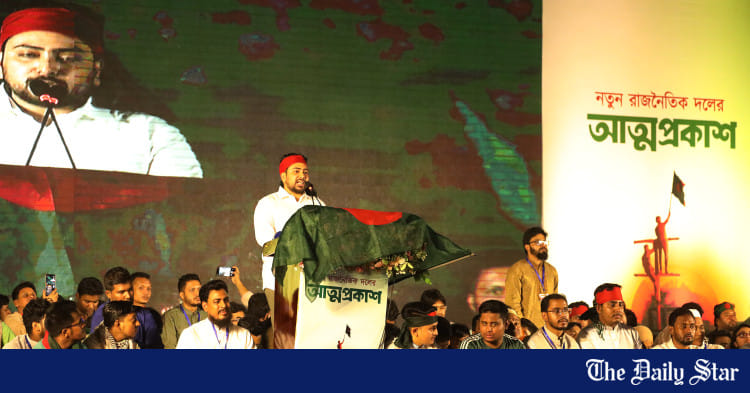
Nahid Islam, convener of the newly formed National Citizen Party (NCP), delivers a speech with top leaders present on stage during the launch of the party on February 28, 2025. PHOTO: AMRAN HOSSAIN
For a nation whose political landscape has been dominated by two major parties for decades, the announcement of the National Citizen Party (NCP)—led by student heroes of the July uprising—marks a watershed moment in Bangladesh's history. The media attention, public turnout, and palpable energy surrounding this launch suggest that this is not just another political outfit destined for obscurity; it could potentially be a third major political force in the country that could fundamentally alter our political trajectory for decades to come.
Indeed, as I watched the celebrations from thousands of kilometres away, the energy was unmistakable. The heroes of what is now being called the "Monsoon Revolution" have captured the imagination of an entire generation—particularly Gen Z and Millennial voters, some of whom will likely cast their ballots for the first time in the upcoming national election.
What struck me most about the launch was its festive, almost celebratory atmosphere—a stark contrast to the typically combative tone of Bangladeshi political gatherings. The welcoming of leaders from diverse political backgrounds (with the deliberate exclusion of Awami League-aligned parties) sent a clear message: this is a new brand of politics that will be more civil and collegial.
Even more significant was the conscious display of religious inclusivity. Recitations from both the Quran and Bhagavad Gita on the same stage represented a powerful symbolic rejection of the identity politics that the Awami League had weaponised during its reign of more than 15 years, and a nostalgic throwback to our childhood years, when every school morning started with the anthem and recitations from multiple religious texts. I would like to believe this was not mere tokenism but a declaration of intent—that Bangladesh's future must be built on unity rather than division, on shared citizenship rather than religious or ethnic fragmentation.
In the weeks leading up to this announcement, the rumour mill had been working overtime. Would this be a fundamentalist wolf in the progressive sheep's clothing? Would the movement fragment along ideological lines? Would women be marginalised in the leadership structure?
The launch effectively dispelled many of these concerns. The inclusion of three prominent women in the top leadership, including Dr Tasnim Jara—a well-respected Oxford-trained health professional and social media influencer—demonstrated a commitment to gender representation that goes beyond mere lip service. The coexistence of leaders from various ideological backgrounds, including Nasiruddin Patwary and Akhter Hossain (who were rumoured to be at loggerheads), suggested an ability to bridge differences in service of a greater cause.
Perhaps most heartening was the philosophical vision articulated by NCP Convener Nahid Islam in his inaugural address. His declaration that "July 2024 marks the beginning of our struggle for a Second Republic" framed the movement not merely as opposition to the previous regime but as a positive project to reimagine the very foundations of our nation.
The concept of a Second Republic carries profound historical weight. In the US, the civil war transformed the nation into what historians often call a "Second American Republic"—one where slavery was abolished, citizenship was redefined, and federal power was expanded. Similarly, France has traversed through five distinct republics, each marking a fundamental reimagining of the state following moments of crisis. Bangladesh now stands at such a crossroads. Fifty-four years after our independence, this call for a Second Republic represents the culmination of decades of unfulfilled promises and institutional degradation. The wheels of history turn slowly; the original republic, born in the blood of 1971, perhaps needed these five decades to completely exhaust its possibilities. The Monsoon Revolution has given us this rare opening—a constitutional moment where the fundamental rules governing our society can be rewritten.
Nahid's emphasis on drafting a new democratic constitution through an elected constituent assembly is, therefore, particularly significant. His rejection of familial dynasties in favour of merit-based leadership represents a direct challenge to the political culture that has dominated Bangladesh since independence. The promise that "corruption and nepotism will have no place in our politics" will resonate deeply with a population that has watched helplessly as the fruits of our economic growth have been concentrated in the hands of political elites and their cronies.
Most heartening was the NCP's commitment to protecting Bangladesh's ethnic, social, gender, religious, and cultural diversity. This stands in stark contrast to movements in other countries, where popular revolutions or uprisings have often been followed by takeovers by fundamentalists.
But let us harbour no illusions. The path ahead for the NCP will be fraught with challenges. They said they wanted to build a country free from discrimination and committed to inclusivity. However, there have been many instances of discrimination against members of minority communities, women, and people from vulnerable groups. In quite a few instances, no one from the students' party or the anti-discrimination students' movement platform spoke out in their support.
The decision by several student leaders to join Prof Muhammad Yunus's interim government has proven to be a strategic miscalculation that now weighs heavily on the NCP. In the seven tumultuous months since July, these student "advisers" have become convenient scapegoats for the interim administration's failures. They now carry the stain of association with an increasingly ineffective interim government that has struggled to deliver on its promises. For the NCP to succeed, it must consciously shed this baggage and establish a distinct identity separate from the interim government's shortcomings. They must candidly acknowledge these missteps—not as failures of character, but as lessons in political strategy.
Any such attempts will inevitably be combated by established political forces. The Awami League—along with its allies—clearly views these student leaders as sworn enemies and will likely deploy every tool in its vast war chest to undermine them. The BNP, which stands to lose the most if this new party gains momentum, may fight tooth and nail for every inch of political space. Local mobilisation in every constituency, requiring networks and on-the-ground foot soldiers so far enjoyed only by the largest parties, will be a huge challenge to overcome. Fundraising to sustain the electoral effort without resorting to the usual cronyism and extortion tactics of old is yet another challenge.
However, internal cohesion may perhaps end up being the greatest single challenge. Politics in Bangladesh has a long history of fragmentation in parties lacking a singular, cult-like leadership figure, such as Sheikh Mujibur Rahman or Ziaur Rahman. The diverse backgrounds and ideologies represented within the NCP could become fault lines under pressure, especially when facing ruling party oppression or attempts to buy loyalty.
Only time will tell whether the NCP can withstand these tests. However, if they can remain faithful to their founding philosophy—fighting for equity and justice, championing the cause of ordinary citizens, practising internal democracy, and maintaining a zero tolerance policy towards corruption—they may well attain political power sooner than many expect. Their stated vision of a Second Republic—one where power truly flows from the people, where institutions serve citizens rather than ruling parties, where economic growth benefits all, and where Bangladesh's rich diversity is celebrated rather than weaponised—should resonate powerfully with a population that has grown weary of false promises from the political establishment.
We stand at a critical juncture in our nation's history. The sacrifices made during the July uprising have created an opening for fundamental change. The NCP's ability to translate this moment into a lasting movement will depend on their moral superiority and political acumen first and foremost, but also on whether the majority of ordinary citizens embrace and sustain their vision of a more just, inclusive, and democratic Bangladesh.
Rubayat Khan is volunteer op-ed editor at Muktipotro.
Nahid Islam, convener of the newly formed National Citizen Party (NCP), delivers a speech with top leaders present on stage during the launch of the party on February 28, 2025. PHOTO: AMRAN HOSSAIN
For a nation whose political landscape has been dominated by two major parties for decades, the announcement of the National Citizen Party (NCP)—led by student heroes of the July uprising—marks a watershed moment in Bangladesh's history. The media attention, public turnout, and palpable energy surrounding this launch suggest that this is not just another political outfit destined for obscurity; it could potentially be a third major political force in the country that could fundamentally alter our political trajectory for decades to come.
Indeed, as I watched the celebrations from thousands of kilometres away, the energy was unmistakable. The heroes of what is now being called the "Monsoon Revolution" have captured the imagination of an entire generation—particularly Gen Z and Millennial voters, some of whom will likely cast their ballots for the first time in the upcoming national election.
What struck me most about the launch was its festive, almost celebratory atmosphere—a stark contrast to the typically combative tone of Bangladeshi political gatherings. The welcoming of leaders from diverse political backgrounds (with the deliberate exclusion of Awami League-aligned parties) sent a clear message: this is a new brand of politics that will be more civil and collegial.
Even more significant was the conscious display of religious inclusivity. Recitations from both the Quran and Bhagavad Gita on the same stage represented a powerful symbolic rejection of the identity politics that the Awami League had weaponised during its reign of more than 15 years, and a nostalgic throwback to our childhood years, when every school morning started with the anthem and recitations from multiple religious texts. I would like to believe this was not mere tokenism but a declaration of intent—that Bangladesh's future must be built on unity rather than division, on shared citizenship rather than religious or ethnic fragmentation.
In the weeks leading up to this announcement, the rumour mill had been working overtime. Would this be a fundamentalist wolf in the progressive sheep's clothing? Would the movement fragment along ideological lines? Would women be marginalised in the leadership structure?
The launch effectively dispelled many of these concerns. The inclusion of three prominent women in the top leadership, including Dr Tasnim Jara—a well-respected Oxford-trained health professional and social media influencer—demonstrated a commitment to gender representation that goes beyond mere lip service. The coexistence of leaders from various ideological backgrounds, including Nasiruddin Patwary and Akhter Hossain (who were rumoured to be at loggerheads), suggested an ability to bridge differences in service of a greater cause.
Perhaps most heartening was the philosophical vision articulated by NCP Convener Nahid Islam in his inaugural address. His declaration that "July 2024 marks the beginning of our struggle for a Second Republic" framed the movement not merely as opposition to the previous regime but as a positive project to reimagine the very foundations of our nation.
The concept of a Second Republic carries profound historical weight. In the US, the civil war transformed the nation into what historians often call a "Second American Republic"—one where slavery was abolished, citizenship was redefined, and federal power was expanded. Similarly, France has traversed through five distinct republics, each marking a fundamental reimagining of the state following moments of crisis. Bangladesh now stands at such a crossroads. Fifty-four years after our independence, this call for a Second Republic represents the culmination of decades of unfulfilled promises and institutional degradation. The wheels of history turn slowly; the original republic, born in the blood of 1971, perhaps needed these five decades to completely exhaust its possibilities. The Monsoon Revolution has given us this rare opening—a constitutional moment where the fundamental rules governing our society can be rewritten.
Nahid's emphasis on drafting a new democratic constitution through an elected constituent assembly is, therefore, particularly significant. His rejection of familial dynasties in favour of merit-based leadership represents a direct challenge to the political culture that has dominated Bangladesh since independence. The promise that "corruption and nepotism will have no place in our politics" will resonate deeply with a population that has watched helplessly as the fruits of our economic growth have been concentrated in the hands of political elites and their cronies.
Most heartening was the NCP's commitment to protecting Bangladesh's ethnic, social, gender, religious, and cultural diversity. This stands in stark contrast to movements in other countries, where popular revolutions or uprisings have often been followed by takeovers by fundamentalists.
But let us harbour no illusions. The path ahead for the NCP will be fraught with challenges. They said they wanted to build a country free from discrimination and committed to inclusivity. However, there have been many instances of discrimination against members of minority communities, women, and people from vulnerable groups. In quite a few instances, no one from the students' party or the anti-discrimination students' movement platform spoke out in their support.
The decision by several student leaders to join Prof Muhammad Yunus's interim government has proven to be a strategic miscalculation that now weighs heavily on the NCP. In the seven tumultuous months since July, these student "advisers" have become convenient scapegoats for the interim administration's failures. They now carry the stain of association with an increasingly ineffective interim government that has struggled to deliver on its promises. For the NCP to succeed, it must consciously shed this baggage and establish a distinct identity separate from the interim government's shortcomings. They must candidly acknowledge these missteps—not as failures of character, but as lessons in political strategy.
Any such attempts will inevitably be combated by established political forces. The Awami League—along with its allies—clearly views these student leaders as sworn enemies and will likely deploy every tool in its vast war chest to undermine them. The BNP, which stands to lose the most if this new party gains momentum, may fight tooth and nail for every inch of political space. Local mobilisation in every constituency, requiring networks and on-the-ground foot soldiers so far enjoyed only by the largest parties, will be a huge challenge to overcome. Fundraising to sustain the electoral effort without resorting to the usual cronyism and extortion tactics of old is yet another challenge.
However, internal cohesion may perhaps end up being the greatest single challenge. Politics in Bangladesh has a long history of fragmentation in parties lacking a singular, cult-like leadership figure, such as Sheikh Mujibur Rahman or Ziaur Rahman. The diverse backgrounds and ideologies represented within the NCP could become fault lines under pressure, especially when facing ruling party oppression or attempts to buy loyalty.
Only time will tell whether the NCP can withstand these tests. However, if they can remain faithful to their founding philosophy—fighting for equity and justice, championing the cause of ordinary citizens, practising internal democracy, and maintaining a zero tolerance policy towards corruption—they may well attain political power sooner than many expect. Their stated vision of a Second Republic—one where power truly flows from the people, where institutions serve citizens rather than ruling parties, where economic growth benefits all, and where Bangladesh's rich diversity is celebrated rather than weaponised—should resonate powerfully with a population that has grown weary of false promises from the political establishment.
We stand at a critical juncture in our nation's history. The sacrifices made during the July uprising have created an opening for fundamental change. The NCP's ability to translate this moment into a lasting movement will depend on their moral superiority and political acumen first and foremost, but also on whether the majority of ordinary citizens embrace and sustain their vision of a more just, inclusive, and democratic Bangladesh.
Rubayat Khan is volunteer op-ed editor at Muktipotro.