Electric vehicles (EVs) are considered climate-friendly alternatives to internal combustion engine (ICE) vehicles. EVs can limit ecological damage, reduce smog (mix of smoke and fog i.e., air pollution) and protect public health. Driving an EV (i.e., battery operated car i.e., BEV) off the current
thefinancialexpress.com.bd
Electric vehicles are climate-friendly but not a cure-all solution
Electric vehicles (EVs) are considered climate-friendly alternatives to internal combustion engine (ICE) vehicles. EVs can limit ecological damage, reduce smog (mix of smoke and fog i.e., air pollution) and protect public health.
Driving an EV (i.e., battery operated car i.e., BEV) off the current grid is still much less polluting than driving an ICE vehicle. According to the modeling by the NRMA and PwC Australia, an average new ICE vehicle emits around 185 gCO2/km compared to an average new battery electric vehicle (BEV) which emits around 98 gCO2/km, if charged via the grid. ICE vehicles emit a range of particulates, contaminants, gases and a lot of heat as a result of the combustion process, whereas BEVs emit a little heat only. However, if EV battery is charged from "dirty" power sources, it would contribute to global warming.
Governments and automakers around the world have been promoting EVs as a key technology to curb oil use and fight climate change. However, an important but often ignored fact is that the climate mitigation benefits of BEVs are usually delayed.
EVS COST MORE BUT WITH UPFRONT SAVINGS: EVs generally cost more to buy than petrol and diesel vehicles. However, prices are falling as more players enter the market. Governments in countries offer incentives to help ensure the next car one buys is not a gas guzzler. The Australian government also offers a fringe benefits tax exemption if one buys an EV by salary sacrificing.
CHARGING OF EV IS CHEAPER: The cost of charging an EV is cheaper than filling a tank with petrol or diesel. For example, charging a 65kWh electric HundaiKona overnight cost about A$20 while the cost of filling the petrol tank is closer to A$90. Another cost saving comes from servicing. EV models do not need servicing as often because they do not have an engine, gearbox, spark plugs and exhaust systems.
Australians bought more than 87,000 EVs in 2023. Lack of public fast-charging infrastructure is often quoted to be a major barrier to electric vehicle uptake. It is reported that Electric vehicle charging sites will double in Australia over the coming year. The number of cars-charging stations surged by 90 per cent in Australia during 2023. Local firm Chargefox had installed the greatest number of electric chargers in Australia (The Guardian).
EVS ALSO PRODUCE EMISSIONS: EVs do not produce any tailpipe emissions. However, EV's lifecycle emissions may be considerable. Emissions produced during a vehicle's production, operation and disposal are often collectively called "lifecycle emissions". These include emissions produced during:
l the vehicle manufacturing process;
l to manufacture a vehicle and its battery (as is the case for all vehicles)
l to generate the electricity for an EV
l from tyre, brake and road wear (as is the case for all vehicles).
l the transport of the vehicle to its first point of sale
l generation of electricity
EVS ARE LESS EMITTING BUT THEY MAY ALSO CONTRIBUTE TO EMISSION: Most electric cars tend to produce significantly lower emissions than most cars operated with gasoline. Even though electric vehicles are more emission-intensive because of their batteries, their electric motors are more efficient than traditional vehicles run by fossil fuels. Experts largely agree that electric vehicles create a lower carbon footprint over the lifecycle than do traditional cars and trucks that use internal combustion engines. For this reason, the world has experienced a rapid growth of the EV market. As for instance, the EV stock reached 16.5 million worldwide, triple the amount in 2018. EV sales have grown significantly in recent years. In 2020, EV and hybrids constituted more than 10 per cent of total car sales. And there is a growing political and economic will to transition to EVs (UNFCCC, n.d.).
However, there is a misconception about EV. EVs are not emission free and by no means a silver bullet. Dr. Sergey Paltsev, an EV expert, believes the biggest misconception around EVs is the concept they are going to decarbonise transport. The notion of EVs as "zero emission vehicles" must be properly qualified due to the need to decarbonise electricity production (that EVs use) and account for emissions during mining of minerals and refining of rare metals needed for battery production, such as cobalt and lithium. For example, for every ton of extracted lithium, between 5 and 15 tonnes of carbon is created. Manufacturing batteries also results in long carbon journeys.
The level of emissions depends on where the electricity to charge electric vehicles comes from. EVs are only as green as the power grid they draw from. For example, if a person drives an EV in Norway, where most electricity is powered by near zero emission hydroelectricity, then the person is contributing much lower levels of CO2. But if the person drives the same car in China, where most electricity comes from coal-fired power plants, he may be contributing as much CO2 equivalent as that, of using two-thirds of a tank of petrol.
It is generally more expensive to charge an EV at a public charging station than at home. The full benefits of EVs are available when electricity sources become renewable (hydro, wind, solar, nuclear etc). An EV can produce zero emissions from vehicles if it uses 100 per cent renewable energy. However, it might take many years for that to happen. It is imperative that electric grids need to get much, much cleaner before electric vehicles are truly emission-free.
MAKING BUILDINGS 'EV-READY': EV charging is a high-power application. It impacts overall building power supply. Only the owner of the building can make strategic investment decisions for a commercial building. A tenant may initiate a request to the owner to provide EV charging. An owner may facilitate the tenant by providing with a few dedicated EV charging car spaces and expanding the number as demand increases (NSW Government 2023).
Buildings need to have features to accommodate EV charging. This is not even present in developed countries. Not many existing buildings in developed countries currently accommodate EV charging. Government department may develop helpful guidelines for making buildings EV-ready. This will help owners, managers, occupants and strata managers design, retrofit and wire 'EV readiness' into apartment and commercial buildings.
EVS ARE STILL ON THE WINNING SIDE: Compared to fossil fuel cars, electric cars use less energy and can charge from zero-carbon sources. The picture for electric cars will improve as power from the wind, hydro and the sun, replaces gas and oil, reducing carbon emissions from generating electricity. Lucien Mathieu, T&E's cars director, said that even if you choose a worst-case scenario - vehicles made and run with electricity largely from coal - the electric car will win out after about 70,000km (about six years of driving). "The more you drive an electric car, the better it gets" (The Guardian, 23 Dec, 2023). Further, battery development is still in relative infancy, and is likely that EV batteries will be developed further with new technology, resulting in lowering costs and putting the balance further in favour of EVs.
POLICY NOTES: Unlocking a lower interest rate to buy EV is another policy support. The Commonwealth Bank in Australia offers personal loan discounts for customers who show willingness to invest in an electric vehicle. The Commonwealth Bank's EV loan covers the cost of the vehicle, charging station and batteries.
It is hoped that as the numbers of EVs on the road increase, the infrastructure will also increase. The mass rollout of EVs depends on the availability of charging stations. The supply of charging stations on the other hand depends on expected demand for EVs. This chicken and egg problem may be solved with well-coordinated public policy.
Despite huge potential and increasing adoption, EVs will not be a magic bullet for sustainable transportation. Enhancing public transportation, land-use planning that encourages compact development, and reducing the use of private motorised transport by mode switching to walking, biking and public transport will be essential for a carbon free sustainable transportation. Not having an electric car is better for the environment if we can rely on public transport instead.
The respective authority/government body may consider forming a fund/needed policy supports to build fast-charging stations. Cutting taxes on EVs could be another option to encourage EV uptake.
Mohammad Abu Yusuf is Additional Secretary, Finance Division, Ministry of Finance, Government of Bangladesh.
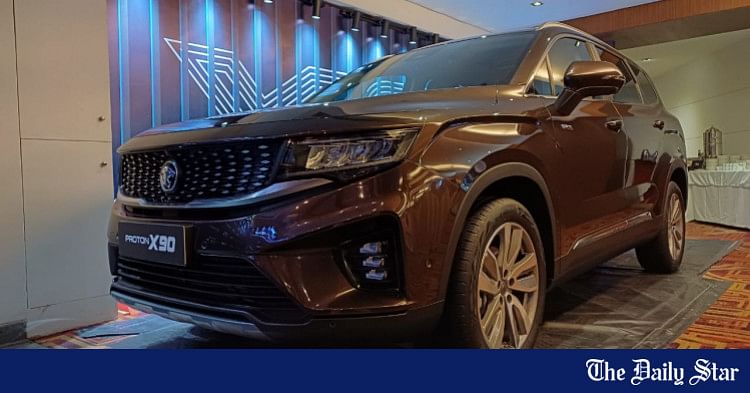
Rancon and Proton Holdings have unveiled the Proton X90 hybrid vehicle in the Bangladesh market. In a launching ceremony today, Rancon and Proton also announced their joint plans to begin local manufacturing of Proton cars in Bangladesh by the end of this year.
www.thedailystar.net
Proton X90 launched in BD; local production to begin by end-2024
Rancon aims to begin local production of Proton cars in Bangladesh with an investment of US$100 million.
Proton X90.
Rancon and Proton Holdings have unveiled the Proton X90 hybrid vehicle in the Bangladesh market. In a launching ceremony today, Rancon and Proton also announced their joint plans to begin local manufacturing of Proton cars in Bangladesh by the end of this year.
The Proton X90 is equipped with a 48V mild hybrid system and a 1.5L turbocharged engine developed in collaboration with Volvo.
The vehicle is offered in two variants: the 6-seater Flagship and the 7-seater Premium, priced at Taka 49.90 lakh and Taka 45.90 lakh respectively, and will be sold at Rancon's showrooms in Dhaka and Chattogram.
According to Dr Li Chunrong, CEO of Proton, Rancon will develop a sales and after-sales network and invest in a manufacturing facility for Proton vehicles in Bangladesh. "We aim to become a significant entity in the automotive market of Bangladesh with our future product lineup," said Dr Chunrong.
Romo Rouf Chowdhury, Group Managing Director of Rancon Holdings Limited, stated that an investment of US$100 million has ben made in Rancon's own industrial park, with plans to start local production of Proton vehicles by the end of 2024 to reduce retail prices.
According to a press handout, Rancon will provide a five-year warranty or 150,000 km coverage (whichever comes first), along with six free after-sales services. Additionally, Rancon assures authorised after-sales service and genuine spare parts availability through its service centres in Dhaka and Chattogram.
The automobile industry of Bangladesh is seeing a notable shift towards electric vehicles (EVs) with BYD Auto Co Ltd, the world’s biggest EV maker, set to launch its Seal model on the domestic market.
www.thedailystar.net
Electric vehicles etching their way into domestic automobile industry
The automobile industry of Bangladesh is seeing a notable shift towards electric vehicles (EVs) with BYD Auto Co Ltd, the world's biggest EV maker, set to launch its Seal model on the domestic market.
CG-Runner Bangladesh, an authorised distributor of BYD, will roll out the premium passenger sedan on March 2 and later introduce electric SUVs, buses, trucks and other vehicles produced by the Chinese automaker.
The BYD Seal is equipped with a battery capacity of 82.5 kilowatt hours and can travel 540 kilometres at full charge, which can be achieved in 40 minutes using its fast charging capability.
CG-Runner is a collaboration between Chowdhury Group, a leading conglomerate of Nepal, and Runner Group, a local company that pioneered two-wheeler and three-wheeler manufacturing in Bangladesh.
The company is also developing a nationwide charging network with the help of Genex Infrastructure Limited, with the two having signed a memorandum of understanding to this end on January 16.
Amid Shakif Khan, director of marketing at Runner Group, said they would launch the BYD Seal through a ceremony at the International Convention City Bashundhara in the capital's Purbachal.
"We will disclose the car's price at the event, where top officials of BYD and Chowdhury Group will be present," he added.
Khan also informed that the Atto-3, an SUV designed by the Chinese brand, will also be brought to Bangladesh within the next three months.
Khan said it was currently impossible to determine how much customers would have to spend on maintaining EVs considering the absence of a finalised government policy regarding EV registration and charging costs.
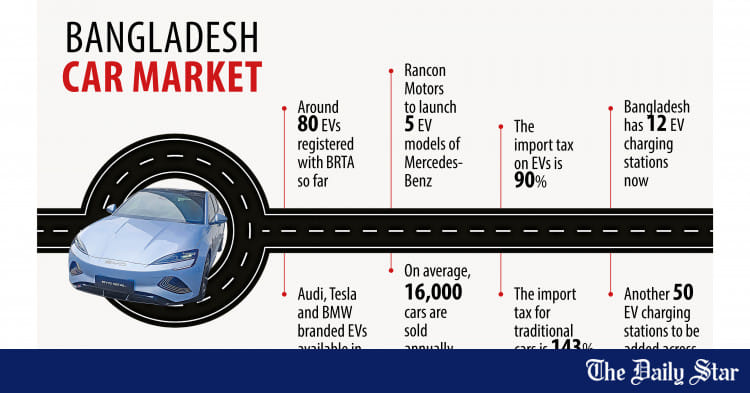
Currently, EV imports are taxed at 90 percent while other cars are taxed from 143-350 percent depending on the engine capacity.
However, industry people hope the government's objective to gradually phase out traditional fossil fuel-powered cars will help bring down such expenses through subsidies and incentives.
Khan added that they would eventually introduce budget-friendly models to cater to the mass market.
Shanat Datta, CFO of Runner Automobiles, said EVs are environmentally friendly as they reduce dependence on fossil fuels.
"There is an opportunity to speed up our industrial development, diversify exports and create more jobs by ensuring the research and development of the latest technologies, such as EVs," he added.
BYD is currently the world's leading manufacturer of new energy vehicles (NEVs), with the company's sales in the segment having increased 208.6 percent year-on-year to 1.863 million units in 2022.
In China, the term new energy vehicle (NEV) is used to designate automobiles that are fully or predominantly powered by electric energy.
Similarly, the automaker's NEV sales had edged up by 64.8 percent to 2.683 million units last year.
At present, BYD has operations in about 400 cities across 70 countries.
Now, the company is set to pioneer the NEV segment in Bangladesh with its highly integrated designs for the next generation of "pure" electric vehicles.
On October 8 last year, BYD organised a programme styled "BYD SEAL Asia Pacific Track Day" at the BYD Museum in Shenzhen, where they briefly explained why they are interested in entering Bangladesh.
Speaking at the event, Liu Xueliang, general manager of BYD's Asia Pacific Auto Sales Division, said there is a good scope for EV sales in Bangladesh.
This is because the 'Mujib Climate Prosperity Plan' aims to ensure that at least 30 percent of all cars in Bangladesh are battery-powered by 2030.
Besides, Bangladesh plans to reduce its carbon emissions by 15 percent by 2030.
Also, using EVs offers several benefits, including lower operating costs, reduced maintenance costs, and government incentives, Liu added.
According to data from the National Board of Revenue (NBR), about 8,650 cars were imported during the July-December period of the current fiscal year, with new cars making up just 1 percent of the imports.
About 80 percent of the imported cars are Toyota-branded while Honda and Nissan contribute 7 percent each. The remaining 6 percent is made up of models designed by Mitsubishi and other brands.
However, car importers say the demand for EVs is still low.
Only 14 electric vehicles, from brands such as Audi, Porsche, Morris Garages, BMW, Tesla, and Mercedes-Benz were imported in the last six months.
The NBR data also showed that a total of just 79 EVs have been imported since 2018.
Runner Group's Khan said EV sales would gradually increase in Bangladesh as the government is taking several initiatives to reduce fossil fuel consumption.
Apart from Chinese manufacturers, Indian companies are also entering the market with electric buses and mini-trucks. Overall, the electric car market will likely see significant growth in the days ahead, he added.
It signs deal with representative of Kia Corporation
www.thedailystar.net
Pragoti to assemble and sell Kia sedan by this year
It signs deal with representative of Kia Corporation
State-run Pragoti Industries today signed a memorandum of understanding (MoU) with STX Corporation, an authorised representative of Kia Corporation of South Korea, to assemble and sell Cerato, one of Kia's sedans.
Currently, the 1600cc vehicle is available in the local market in the reconditioned format at around Tk 38 lakh.
"By signing the MoU, Pragati will be able to supply brand new sedans at a reasonable price to buyers, including the government and private organisations, by December 2024," said Abul Kalam Azad, managing director of Pragoti Industries.
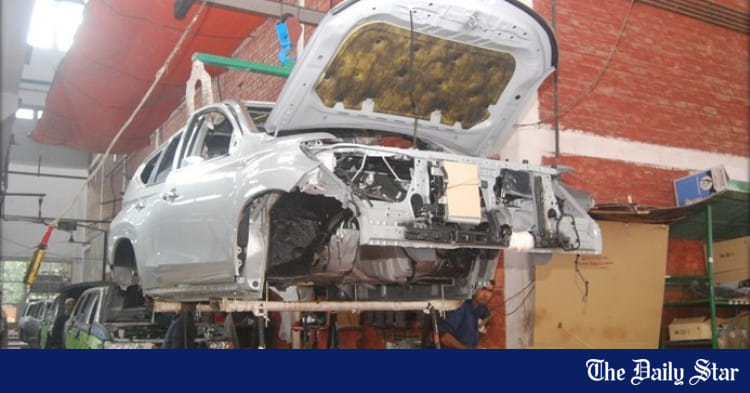
Signing the deal with Park Sang Joon, chief executive officer of STX Corporation, in Seoul, Azad said 200 units would primarily be assembled per year using existing facilities.
Referring to its market survey, he said Cerato would be preferred by Bangladeshi customers for its sunroof, 10-inch screen and latest safety features.
A concern of the Bangladesh Steel and Engineering Corporation (BSEC), Pragoti currently assembles sport utility vehicles, such as the Pajero Sport, active sport crossovers, and double-cabin pickups of the Japanese brand as well as buses designed by India's Tata.
For about a decade now, Pragati has been seeking approval to assemble sedans with engine capacities of within 1600cc to make the cars more affordable for local consumers.
The annual demand for sedans in Bangladesh currently stands at about 16,000 units, according to data of the Bangladesh Road Transport Authority.
Of the total demand, around 83 percent is met through reconditioned car imports from Japan.
This is because at present, only PHP Group, Fair Technology Group and Pragoti Industries are engaged in local assembly, said industry people.
Attending the signing ceremony as chief guest, Industries Minister Nurul Majid Mahmud Humayun said Pragati would be able to utilise its Chattogram factory's close proximity to Chattogram port.
"Sedan car assembling will start. Then manufacturing. Pragati will have its own brand," he said, calling upon Kia Corporation for technical assistance and investment.
Md Moniruzzaman, BSEC chairman, SM Alam, additional secretary to the industries ministry, Delwar Hossain, ambassador of Bangladesh to South Korea, Anisuzzaman Chowdhury, representative of Kia Bangladesh and executive director of Meghna Automobile, Sang Ho (Stevin) Park, managing director of STX Corporation, and Sang Nam Kim, mobility business division team leader, were present.
মোটর শিল্পের বিকাশে সরকারের সহযোগিতা চায় ব্যবসায়ীরা
এফই অনলাইন ডেস্ক
Published :
May 09, 2024 21:53
Updated :
May 09, 2024 21:53
স্থানীয় বাজারে অটো মোবাইল শিল্পের বিশাল সম্ভাবনা বিদ্যমান। কিন্তু বিশাল এই বাজারের চাহিদা মেটাতে গাড়ি ও যন্ত্রপাতির অধিকাংশ নিয়ে আসতে হয় বিদেশ থেকে। এই শিল্পের বিকাশ ও স্থানীয় বাজার ধরার পাশাপাশি বিদেশে রপ্তানির সম্ভাবনা কাজে লাগাতে সরকারের সহযোগিতা চান এই খাতের সাথে সংশ্লিষ্ট ব্যবসায়ীরা। সরকারের নীতি সহায়তা পেলে দেশেই অটো মোবাইল প্রস্তুত ও উৎপাদন কার্যক্রম বিকশিত হবে বলে মনে করেন ব্যবসায়ীরা।
বৃহস্পতিবার সকালে এফবিসিসিআই কার্যালয়ে অনুষ্ঠিত অটোমোবাইল ম্যানুফ্যাকচারার্স এন্ড অ্যাসেম্বলারস্ বিষয়ক স্ট্যান্ডিং কমিটির প্রথম সভায় এসব বিষয় নিয়ে আলোচনা হয় বলে এক সংবাদ বিজ্ঞপ্তিতে জানানো হয়েছে।
সভায় প্রধান অতিথি হিসেবে (অনলাইনে) যুক্ত ছিলেন এফবিসিসিআই সভাপতি মাহবুবুল আলম। এতে সভাপতিত্ব করেন কমিটির চেয়ারম্যান এবং উত্তরা মটরস্ লিঃ এর চেয়ারম্যান এবং ব্যবস্থাপনা পরিচালক মতিউর রহমান।
প্রধান অতিথির বক্তব্যে এফবিসিসিআই সভাপতি মাহবুবুল আলম বলেন, আমাদের অর্থনীতি এখন অনেক বড়। অর্থনীতি বড় হওয়ার সাথে সাথে দেশে মোটর শিল্পের চাহিদাও অনেক বেড়েছে। এই সুযোগ কাজে লাগাতে সুনির্দিষ্ট পরিকল্পনা অনুযায়ী আগাতে হবে।
তিনি বলেন, স্মার্ট বাংলাদেশের দিকে আমরা এগিয়ে যাচ্ছি। ব্যবসায় অতীতেও যেমন চ্যালেঞ্জ ছিল, এখনো আছে এবং ভবিষ্যতেও থাকবে থাকবে। এর মধ্যেই বেসরকারি খাতের এগিয়ে নেওয়ার মাধ্যমে দেশের অর্থনীতিকে এগিয়ে নিতে হবে। এসময় লাইট ইঞ্জিনিয়ারিং এর বিকাশের উপরও জোর দেন তিনি।
অটোমোবাইল খাতে ম্যানুফ্যাকচারিং বা প্রস্তুতকরণে ব্যবসায়ীদের কাজ শুরু করার আহ্বান জানিয়ে এফবিসিসিআই্ সভাপতি বলেন, ব্যবসা চালাতে গাড়ি আমদানি করা হচ্ছে এবং হবেও। তবে আমদানি সারাজীবন নয়, এখন সময় হয়েছে আমরা গাড়ি প্রস্তুতকরণে দিকে মনোযোগী হওয়ার। এজন্য কাউকে না কাউকে কাজ শুরু করতে হবে। এসময় অটো মোবাইল উৎপাদনে বড় বড় শিল্প প্রতিষ্ঠানকে এগিয়ে আসার আহ্বান জানান তিনি।
কমিটির ডিরেক্টর ইন-চার্জ ও এফবিসিসিআই'র সাবেক সহ-সভাপতি মো. হাবীব উল্লাহ ডন বলেন, "দেশের জনসংখ্যা দিন দিন বাড়ছে। মানুষের ক্রয়ক্ষমতায় বাড়ছে। তবে জনসংখ্যার তুলনায় পর্যাপ্ত গণপরিবহন না থাকায় মানুষ ব্যক্তিগত গাড়ি কিনছে। এক্ষেত্রে রিকন্ডিশনড্ গাড়ি আমদানি দেশের অর্থনীতিকে বেগবান করছে। তবে আমদানির সাথে সাথে অ্যাসেম্বলিং এবং তারপর প্রস্তুতকরণে কাজ শুরু করতে হবে"।
উন্মুক্ত আলোচনায় অংশ নিয়ে ব্যবসায়ীরা দেশে অটোমোবাইল খাতের ভেন্ডর উন্নয়নে জোর দেন। তারা বলেন, অটোমোবাইল খাতের বিশাল বাজার রয়েছে সারাবিশ্বে। এসব বাজার ধরতে দেশে যন্ত্রপাতি তৈরিতে ভেন্ডর উন্নয়ন জরুরি। ভেন্ডর উন্নয়নে প্রণোদনাসহ লক্ষ্য নির্ধারণ করা উচিত।
এছাড়া অটোমোবাইল খাতের মেইটেইন্যান্সের জন্য আলাদা অঞ্চল নির্ধারণ করে দেয়া, সময়ের সাথে সাথে এসআরও-তে পরিবর্তন আনা, দেশে ইলেকট্রিক যানবাহন আমদানি সহজীকরণ করা, বিআরটিএ-তে যানবাহনের রেজিস্ট্রেশন প্রক্রিয়া দ্রুততর করা, ব্যাংকগুলোকে একই নীতি অনুসরণ করাসহ অটোমোবাইল খাত সংশ্লিষ্ট সরকারের যেকোনো নীতিমালা প্রণয়নে অভিজ্ঞ ব্যবসায়ীদের মতামত গ্রহণ করার দাবি জানান ব্যবসায়ীরা।
সভায় আরও উপস্থিত ছিলেন এফবিসিসিআইর পরিচালক হাফেজ হাজী হারুন অর রশীদ, কাওসার আহমেদ, নিয়াজ আলী চিশতী, আমির হোসেন নূরানী, মহাসচি মো. আলমগীর, কমিটির কো-চেয়ারম্যান ও সদস্যবৃন্দ।

 Bangladesh Defense