Home Watch Videos Wars Movies Login

[🇧🇩-Land] Bangladesh Army News/Views

Latest Posts Countries Wars Q&A

[🇧🇩-Land] Bangladesh Army News/Views
62
3K
More threads by Saif

G   Bangladesh Defense

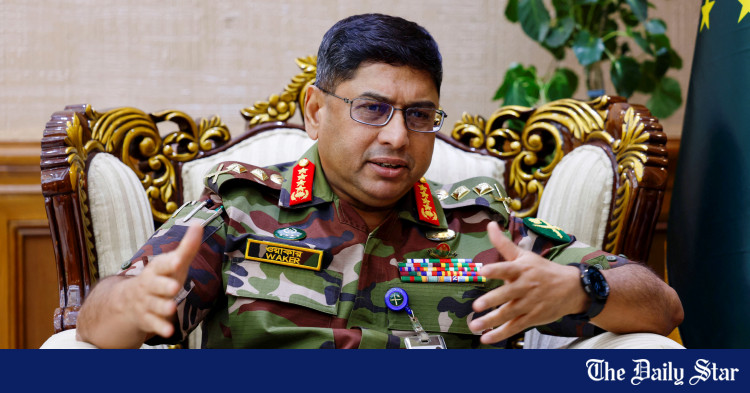
Army chief returns home after visiting US, Canada

1729899701328.webp

Photo: Reuters

Chief of Army Staff General Waker-Uz-Zaman returned home today after an 11-day official visit to the US and Canada, an Inter Services Public Relations Directorate (ISPR) press release said last evening.

During the visit, the army chief met UN high officials related to the peacekeeping missions at its headquarters as well as high-ranking military and civil officials of the US and Canada, including the USA army chief.

On October 17, the army chief joined a bilateral meeting at UN headquarters in New York with UN Under-Secretary-General for Peace Operations Jean-Pierre Lacroix, Under-Secretary-General for Operational Support Atul Khare, Assistant Secretary General for Human Rights Ilze Brands Kehris, Assistant Secretary General for Middle East, Asia, and Pacific Affairs Mohammed Khaled Khiari, and Director of Office for Peacekeeping Strategic Partnership General Jai Menon.

The army chief visited the Permanent Mission of Bangladesh in New York and paid a courtesy call on the permanent representative.

On October 22, the army chief paid a courtesy call on US Chief of Staff of the Army General Randy A George at the Pentagon in Washington, DC.

Besides, Bangladesh Army Chief paid a courtesy call on US Assistant Secretary of Defence for Indo-Pacific Security Affairs Dr Ely Ratner.

He also called on US Assistant Secretary of State Donald Lu.

During the visit to Canada, the army chief met Lieutenant General Stephen R Kelsey, vice-chief of the defense staff of Canada.

Besides, the army chief also paid a courtesy call on Citizenship and Immigration Affairs member at the Canadian Parliament's standing committee Salma Zahid.

Moreover, High Commissioner-designate of Canada to Bangladesh Ajit Singh and Bangladesh High Commissioner to Canada Nahida Sobhan paid a courtesy call on the army chief, added the press release.

On October 15, the army chief left Dhaka for official visit to the US and Canada.​
 
Analyze

Analyze Post

Add your ideas here:
Highlight Cite Respond

Lt Tanjim murder: One more suspect arrested in Cox’s Bazar

1729900500041.webp

Lt Tanjim Sarwar Nirjon

One more suspect has been arrested in connection with the murder of Lt Tanjim Sarwar Nirjon in Chakaria upazila of Cox's Bazar.

The arrestee is Kamal Uddin Prokash, 35, said a press release by Inter-Services Public Relations (ISPR).

Acting on a tip-off, a team of Bangladesh Army conducted the drive in Rangmahal area of Chakaria around 10:35am yesterday and arrested Kamal.

During primary interrogation, the arrestee admitted his involvement in the killing, the release added.

Lt Tanjim, 23, was stabbed to death during a drive to prevent a robbery in the upazila in the early hours of September 24.

Later, the army filed a case with Chakaria Police Station in this connection.

With the latest arrest, a total of 12 people have been arrested in connection with the murder. Three of them directly took part in the killing, the release said.

The army will continue to conduct operations to arrest the other robbers involved in the killing, the ISPR statement added.

Born in Tangail, Tanjim was a student of Pabna Cadet College. He was commissioned in the Army Service Corps from the Bangladesh Military Academy on June 8, 2022, after completing the 82nd Long Course.​
 
Analyze

Analyze Post

Add your ideas here:
Highlight Cite Respond
  • Like (+1)
Reactions: Bilal9

Role of army in nation-building and governance
by Nasimul Gani and Imran Chowdhury 16 November, 2024, 00:00

1731719532614.webp

New Age

THE Bangladesh army, with its rich history of contributions, has significantly shaped the country’s political, social and economic landscapes. In a nation of 170 million people, the army’s role extends beyond defence to nation-building and governance and fostering a stable democratic environment. The July-August uprising and the role of the military have opened a new dimension of involvement and challenges to support the interim government of Bangladesh.

As we look forward to the future, the army’s continued contributions will be crucial in ensuring national integrity, stability and prosperity. The next decades will call for the army to further redefine its role to meet modern challenges while it remains true to commitments regarding democracy and civil rights. The challenges of the modernisation of military and development will always require practical debates and ensure aspiration of people for the national interest and security.

Historical context and evolution

EMERGING from the struggle for independence in 1971, the army has shown a remarkable adaptability over the decades, evolving to meet changing national and global scenarios. Its expansion from national defence to peacekeeping, disaster management and infrastructure development underscores its ability to contribute significantly to nation-building and socio-economic development, reassuring us of its readiness to face future challenges. The army’s contribution has ranged from rebuilding after natural disasters to aiding national infrastructure projects such as the construction of the Padma bridge.

This shift from purely military functions to multi-faceted roles, including social face, has been crucial in reinforcing its position as a reliable institution in times of national need. The July-August uprising has changed the dynamics of the socio-political landscape and has created scopes for a new role of the army. We are still going through different critical national challenges which demand an active and passive role of the army for the development of national integration. Under the present situation, the involvement of retired army officers and men will be very crucial.

Infrastructure and socio-economic development

THE army has made significant strides in nation-building by participating in infrastructure projects and socio-economic initiatives. It has been actively involved in developing roads, bridges and public buildings, often stepping in when civilian agencies are overwhelmed or lack the capacity. The completion of large-scale projects such as the Padma bridge has underscored the army’s technical expertise and project management capabilities. Alongside its infrastructure projects, the army is deeply engaged in social welfare activities, providing healthcare services, education and emergency response during natural disasters.

Its presence in remote areas has helped to bridge the gap in services delivery, fostering a sense of community and contributing to equitable development and national unity. The army opens schools in far-flung areas and medical camps to meet the needs of civilians. Such efforts are essentially required for installing the spirit of access to service, specifically in areas that have conventionally been left behind in development. In addition, the army can be involved in agricultural development projects for better food security, which is quite important for a country continuously going through natural disasters and increasing population demands. Such initiatives may include farmer training in modern techniques and access to all essential resources that could directly affect rural livelihoods and contribute to building greater national economic resiliency.

Good governance and strengthening democracy

THE army’s role in governance and democracy has evolved, reflecting the changing political landscape of Bangladesh. While the army has intervened in politics in the past, its future role should focus on supporting democratic institutions and promoting good governance which we may turn to as collaboration. A professional military that respects civilian control and people’s will will be crucial in this transition. The army’s strict internal discipline and efficiency can be leveraged to enhance public administration. By working with civilian authorities, the army can offer training, logistics, and strategic planning support, thereby improving governance standards. Moreover, the army’s non-partisan stance and professionalism are vital in safeguarding democratic processes, particularly during elections, to ensure transparency and public trust.

Financial prudence and national image

THE army has diversified its activities to include economic ventures, ranging from manufacturing to service industries. As a major institution, it is essential for the army to exercise financial prudence and transparency in managing these ventures to maintain its credibility and public support. Ensuring that military-owned enterprises operate transparently and do not conflict with civilian enterprises is crucial for maintaining a balance in the economy. The army’s participation in international peacekeeping missions under the United Nations has also significantly enhanced Bangladesh’s global image. Continued involvement in such missions will further solidify its reputation as a professional and disciplined force, capable of contributing to global peace and security.

Counteracting regional influence and insurgency

BANGLADESH’S geopolitical position makes it susceptible to various regional influences and security challenges. The army’s role in ensuring national sovereignty and countering external interference is therefore vital. Strengthening its intelligence and surveillance capabilities is crucial for effectively neutralising insurgent threats and managing cross-border activities. The army’s strategic role in balancing relationships with neighbouring countries such as India, China and SAARC countries will be critical in ensuring that Bangladesh maintains its sovereignty and freedom from undue influence. By focusing on modernizing its capabilities and fostering regional partnerships, the army can ensure that Bangladesh remains a stable and influential player in South Asia. The other would be counter-terrorism, probably in relation to community engagement and local intelligence. This close coordination by the army with civilian law enforcement agencies can enable identifying and treating the causes of violence and leading to a more secure environment.

Civil rights and public perception

THE relationship between the army and the civil population is integral to national stability. Historically viewed as the nation’s saviour, the army must continue to uphold civil rights and ensure that its actions align with the country’s best interests. Respect for human rights and maintaining transparency in its operations are essential for sustaining public trust and support. The army can further enhance its image by engaging in public outreach and civic education initiatives. By participating in social programs that promote national identity and unity, the army can strengthen the societal fabric and contribute to a more cohesive national identity.

Challenges and recommendations

THE army faces several challenges as it navigates its evolving role. Balancing its traditional responsibilities with expanded expectations in governance and nation-building requires a clear delineation of military and civilian roles. Maintaining professionalism, non-partisanship and respect for civilian control and adhering to people’s aspiration and will will be crucial in this transition. By following a few recommendations, the army can meet such challenges in a very strategic way to enhance readiness in ensuring national security within a complex geopolitical environment.

Professionalism and training: The army should continue to invest in professional military education and training to prepare its personnel for complex scenarios, both domestic and international. This focus will ensure that the army is equipped to handle evolving security and governance challenges.

Collaboration with civilian agencies: Increased collaboration with civilian agencies will ensure that the army’s involvement in non-traditional roles complements, rather than substitutes, civilian governance. Such partnerships can help address national issues in a holistic manner. In the future, therefore, many challenges must be dealt with proactively if the army is to reach effectiveness. Regional changes in security demands that the army upgrade its equipment and technologies matching advancements in cyber warfare.

Cyber threats: Cyber threats are increasing while critical infrastructures and sensitive data are at risk. Professional units and special training are required. Other internal security issues involve political instability and extremism, which again require a strong counter strategy and better intelligence operations.

Adaptability with social face: Natural disasters that frequently hit Bangladesh make it quite vulnerable, so disaster response preparedness is very opportune. The army should be ready for humanitarian and disaster relief work, as this is the call of the nation.

Collaboration for modernisation: Financial situations may limit the procurement of modern equipment and training. In that respect, the army has to make a partnership with the private sector and international organizations to acquire the best use of resources.

People’s participation: The geo-strategic compulsions and security awareness by the people of Bangladesh will be instrumental in securing national sovereignty and integrity and ensuring people’s participation in national defence.

Motivation and nationwide military training: The able-bodied students and citizens should undergo compulsory military training to ensure national productivity, good governance and social harmony which will help developing national integration.

Employment of retired officers and men: The post-uprising matrix demands an effective use and the role of capable retired officers and men’s services to combat poor law and order situation, investigating the corruptions and killings/injured person cases, administering critical appointments for nation building and good governance etc. These trained human resources will be very much required to fill up the deficiency, accelerating the development and speed of their administration and providing directional leadership to Bangladesh.

The army’s role will be critical in shaping the nation’s trajectory in terms of democracy, governance, and socio-economic development. By maintaining its professional integrity, supporting democratic institutions, and contributing to national development, the army can continue to be a pillar of stability and progress. A balanced approach that respects civilian supremacy, fosters transparency, and supports national unity will ensure that the army remains a respected and integral part of Bangladesh’s development narrative.

Md Nasimul Gani is a retired brigadier general and retired lieutenant Imran Chowdhury is an author based in the United Kingdom.​
 
Analyze

Analyze Post

Add your ideas here:
Highlight Cite Respond

Army chief visits Cox’s Bazar
BSS
Dhaka
Published: 18 Nov 2024, 22: 53

1731978913750.webp

Chief of Army Staff General Waker-Uz-Zaman lays foundation stone of two residential buildings - ‘Senaneer’ and ‘Swapnachura’ in the Ramu Cantonment ISPR

Chief of Army Staff General Waker-Uz-Zaman visited 10 Infantry Division and Cox’s Bazar area on 17 and 18 November.

During the visit, he laid the foundation stone of two residential buildings - ‘Senaneer’ and ‘Swapnachura’ - to be built in the Ramu Cantonment. These will help resolve the accommodation problem of Junior Commissioned Officers (JCOs), officers and army personnel of other ranks, said a release of Inter-Services Public Relations (ISPR) this evening.

Meanwhile, wife of army chief Begum Sarahnaz Kamalika Zaman inaugurated ‘Proyash’, the specialised educational institution, at Ramu cantonment in Cox’s Bazar as the chief guest.

Besides, she unveiled the new plaque of ‘Shaheed Lieutenant Tanzim Cantonment Public School and College’, which was earlier named as ‘Ramu Cantonment Public School and College’

Shaheed Lieutenant Tanzim Sarower made his supreme sacrifice in the service of the motherland on September 24, 2024, which has become a bright example of patriotism, self-sacrifice and heroism for future generations, the release added.

Senior military officers of the Army Headquarters and Ramu Cantonment, family members of martyred Lt. Tanzim, JCOs, soldiers of other ranks, civil and military officers, employees, teachers and students of ‘Shaheed Lt. Tanzim Cantonment Public School and College’ also attended the ceremony.​
 
Analyze

Analyze Post

Add your ideas here:
Highlight Cite Respond
সাম্প্রতিক ইস্যু নিয়ে অফিসারের দায়িত্ব নিতে বললেন সেনাপ্রধান


Analyze

Analyze Post

Add your ideas here:
Highlight Cite Respond
  • Like (+1)
Reactions: Bilal9

দেশের বর্তমান পরিস্থিতি নিয়ে যা বললেন সেনাপ্রধান

 
Analyze

Analyze Post

Add your ideas here:
Highlight Cite Respond
  • Like (+1)
Reactions: Bilal9

I know this is old news from 2021 but there are rumors than an augmentation batch of one or more regiments has been delivered recently. @Saif bhai can you kindly confirm?

--------------------------------------------------------------------------------------​

Turkey delivers the first batch of Tiger Guided Multiple-Launch Rockets to Bangladesh​

1733525949379.png


Turkish defense giant Roketsan has delivered the first regiment of its powerful TRG-300 series Tiger Guided Multiple-Launch Rocket (GMLRS) systems to the Bangladesh Army.

Photos of the shipment being transported by heavy equipment transporters (HETs) by road were snapped up by netizens in Bangladesh today.

Earlier in the year the Bangladesh Army Chief of Staff (CAS) General Aziz Ahmed disclosed the delivery of Turkish origin GMLRS and Chinese light tanks would be completed by the middle of the year.

The Bangladesh Army is in the midst of a large scale modernization that has witnessed procurement of military hardware from Europe, China and US.

In recent years Turkey has secured itself as one of the major defense equipment suppliers to the Bangladesh Army and Air Force. It is also trying to develop cooperation with the Bangladesh Navy, naval shipyards and the Bangladeshi defense industry.

Turkey's own defense industry export agency disclosed the country's arms manufacturers exported nearly $60 million of military hardware to Bangladesh in April 2021.

This is largely accounted for the sale of three regiments of Type B MLRS (Tiger Missile System). Each regiment includes 18 firing units and associated support vehicles.

The Tiger Missile System (Type B) is designed to hit potential targets such as artillery systems, air defense systems, radar sites, assembly areas, logistic facilities, C3 facilities and other high priority targets. It is combat proven and has the capability to function in all weather, terrain in day or night. The system is characterized by its high accuracy precision strike capability and anti-jamming functionality.

The 300mm diameter rockets have a warhead weight of up to 670 kg and effective radius of over 80 m. It is accurate to less than 10 m and its guidance is achieved by GPS, GNSS aided INS.

The Tiger missile system utilizes Russian Kamaz 65224 series 6×6 high-mobility chassis.

Turkey has exported this system to several other friendly nations already including Azerbaijan, which used it in combat.
 
Analyze

Analyze Post

Add your ideas here:
Highlight Cite Respond
Bilal bhai, Bangladesh has ordered one more regiment of TRG-300 from Turkey. The delivery date is still unknown.
 
Analyze

Analyze Post

Add your ideas here:
Highlight Cite Respond
  • Love (+3)
Reactions: Bilal9

Members Online

Latest Posts

Back
 
G
O
 
H
O
M
E