Home Watch Videos Wars Movies Login

[🇧🇩] Energy Security of Bangladesh

[🇧🇩] Energy Security of Bangladesh
723
26K
More threads by Saif

G Bangladesh Defense

Merit of importing LNG from Myanmar


1786057397869.webp


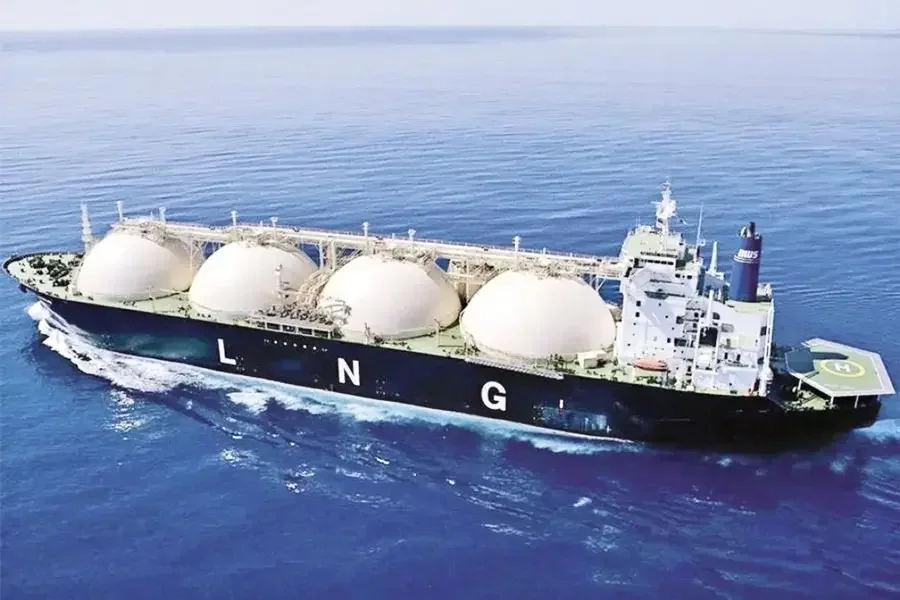
Bangladesh's renewed interest in importing liquefied natural gas (LNG) from neighbouring Myanmar comes at a time when the country's energy crisis has reached an alarming level. Against the backdrop of dwindling domestic gas reserves, disruptions in global supply chains and mounting pressure on industries and power generation, the proposal appears not only timely but also strategically prudent. If pursued with foresight and pragmatism, it could mark the beginning of a new chapter in regional energy cooperation.

What makes the proposal particularly attractive is geographic proximity. Unlike LNG shipments from the United States, Australia or Angola, which require between two and four weeks to reach Bangladesh, supplies from Myanmar could arrive within 12 hours. Even compared with imports from the Middle East, which typically take nearly a week, Myanmar offers an unmatched logistical advantage.

The urgency of finding alternative suppliers has become increasingly evident. Bangladesh's long-term LNG suppliers, QatarEnergy and OQ Trading, have curtailed deliveries by invoking force majeure following geopolitical tensions in the Middle East. Consequently, the country has been compelled to rely heavily on the volatile spot market, exposing itself to soaring prices and uncertain availability. The disruption of operations at one of the country's floating storage and regasification units (FSRUs) has only compounded the crisis, sharply reducing gas supplies to homes, power plants and industries. Electricity generation has suffered, factories have faced production disruptions and households continue to endure shortages. These developments underscore the vulnerability of an energy system that depends excessively on distant suppliers and fragile infrastructure. In this context, Myanmar presents a compelling alternative. Rich in natural gas reserves and already exporting gas to China and Thailand through pipelines, the neighbouring country possesses both resources and experiences to become a reliable energy partner. Bangladesh's proposal for importing LNG in the short term while exploring pipeline connectivity over the longer term reflects a sensible and phased approach. A pipeline, though requiring considerable investment and political commitment, could eventually provide a more economical and stable supply than seaborne LNG.

The discussions between the two governments indicate encouraging political goodwill. Myanmar has reportedly welcomed the proposal and suggested further deliberations through a joint technical committee, while Bangladesh has initiated ministerial-level engagement to move the process forward. Nevertheless, optimism must be tempered with realism. Any agreement must rest on commercially viable pricing, transparent contractual arrangements and credible guarantees of uninterrupted supply. Political instability in Myanmar and the complex regional geopolitical landscape cannot be ignored. Bangladesh should therefore regard Myanmar as an important addition to its energy portfolio rather than as a substitute for broader diversification. Ultimately, the proposal is about more than importing gas. It is about building resilience in a world where energy security has become inseparable from national security. Diversified sources, regional cooperation and long-term planning are no longer optional but essential. If handled wisely, an LNG partnership with Myanmar could help Bangladesh navigate its immediate energy crisis while laying the foundation for a more secure, flexible and sustainable energy future.​
 
Analyze

Analyze Post

Add your ideas here:
Highlight Cite Respond

Payment guarantee restored to lure investment in renewable power
Stakeholders take govt step as significant for improving bankability of utility-scale projects

1786146763895.webp


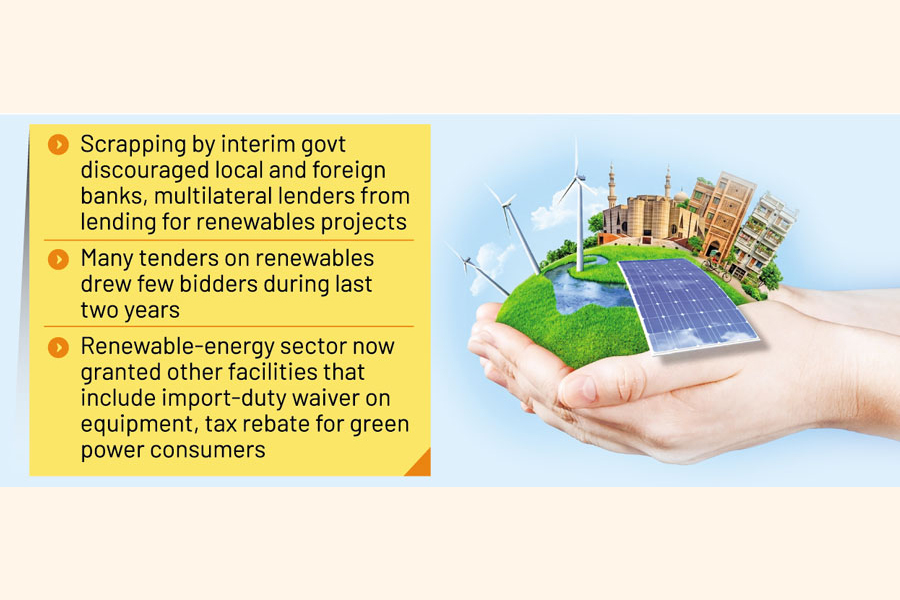
A provision of "Payment Guarantee" for renewable-energy sector is now restored, nearly two years after it was scrapped by the interim government only to dissuade both local and foreign investors from making fresh investment, sources said.

In the absence of payment guarantee, local and foreign banks as well as multilateral lenders shied away y from providing loans for renewable energy projects, leading to lower response in the tenders.

Many tenders on renewable-energy projects received only a few bidders during the last two years, forcing the government to extend bid document-submission deadlines repeatedly.

Now investors say as the government agreed to include the provision of payment guarantee in the bid documents, they have no risks in making investment, and getting bank loans to set up renewable-energy-based power plants will be easier for them.

Officials said the investors had long been pressing the government to restore the provision of payment guarantee so that they can secure loans to set up green power plants.

In the face of their repeated demands, Power Division in a recent letter to Bangladesh Power Development Board (BPDB) has asked for incorporating the provision of payment guarantee while inviting tenders in the future, sources said.

Contacted Friday, Golam Mortuza, Director IPP Cell-1 of BPDB, acknowledged government directives to incorporate the provision of payment guarantee again into bid documents, now that government thrust on energy search grows amid a crunch.

"We are working on it. It was a long demand from the private sector," he told The Financial Express.

Mr Mortuza said the government guarantee would help attract both local and foreign investments in the renewable-energy sector.

As the interim government had written off the guarantee and was not issuing guarantee letters, a number of solar-power projects faced setbacks in getting loans disbursed from local and foreign financiers, including the Asian Development Bank and Japan International Cooperation Agency.

Amid the stalemate, the ADB- JICA duo in a letter to then energy adviser reminded about upholding the contractual obligations, including the issuance of payment-guarantee letters in favour of the independent power producers.

Imran Chowdhury, Deputy Director of Sonagazi Solar Power Ltd, said Power Division's decision to include the payment guarantee in contractual framework is a significant step towards improving the bankability of Bangladesh's utility-scale renewable-energy projects.

"Payment security is one of the key considerations for international lenders, and this measure is expected to strengthen lender confidence and facilitate access to long-term project financing," the company man told The Financial Express.

He has suggested incorporating the provision of payment guarantee into the tender documents of BPDB's ongoing IPP-based solar projects before the bid-submission deadline to maximise the benefits of the decision.

"This would provide greater certainty to prospective bidders, encourage wider participation from experienced international project developers and IPPs, and strengthen competition," said Mr Chowdhury, also a director of Bangladesh Sustainable and Renewable Energy Association.

Stakeholders say as Bangladesh moves towards its target of 10-gigawatt renewable- energy capacity by 2030, improving project bankability will be essential to mobilise international financing and accelerate the implementation of utility-scale solar projects.

Amid the significant fall of electricity generation due to the shortage of gas and fuel oils and rising power subsidy, the new government in the recent months gave utmost importance on producing clean power.

To this end, the renewable-energy sector has been granted various facilities, including waiving import duty on equipment for clean power plants and offering tax rebate for green power consumers.

Bangladesh currently has the installed capacity to generate 1,822 megawatts of electricity from renewable sources, according to the Sustainable and Renewable Energy Development Authority (BSREA).​
 
Analyze

Analyze Post

Add your ideas here:
Highlight Cite Respond

Govt approves LNG cargo from Aramco Trading Singapore at $21.55 per MMBtu

Cabinet committee clears August 11-12 delivery

Star Online Report

1786148207962.webp


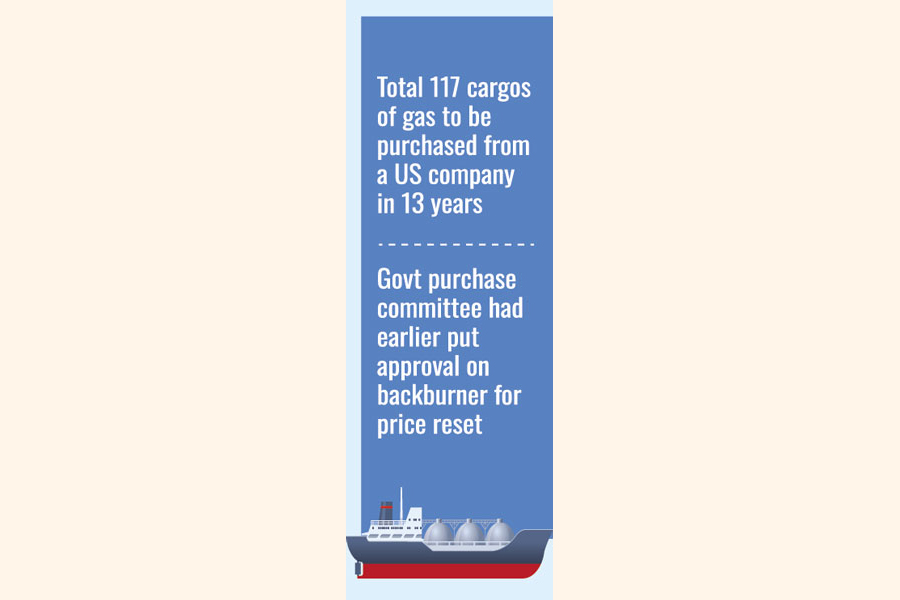
The Cabinet Committee on Government Purchase on Friday approved the short-term procurement of one LNG cargo from Aramco Trading Singapore Pte Ltd under a government-to-government (G2G) arrangement at $21.55 per MMBtu.

The virtual meeting was presided over by the finance and planning minister.

The meeting’s outcomes were confirmed through a press statement by Cabinet Division Deputy Secretary Mohammad Ashrafuzzaman Bhuiyan.

According to the approved proposal, the LNG cargo will be delivered under a direct purchase process between August 11 and 12.

Meanwhile, a proposal for long-term LNG -- supply spanning from 2026 to 2038 -- by Gunvor USA LLC was withdrawn by the Energy and Mineral Resources Division.​
 
Analyze

Analyze Post

Add your ideas here:
Highlight Cite Respond

AI can destroy repetitive jobs, but also create new job scopes
BD needs renewable energy to open its own data centre

1786233373925.webp


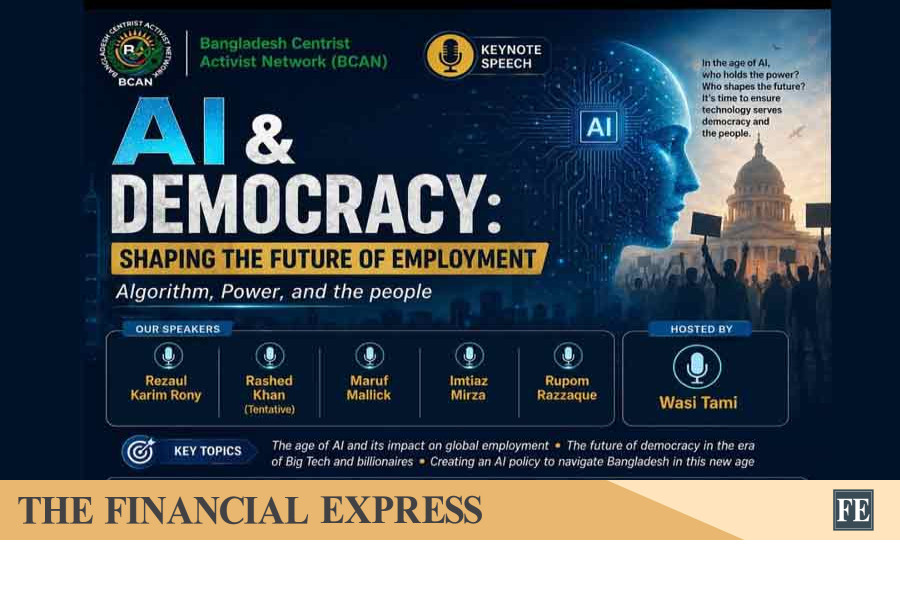
Artificial intelligence (AI) should be viewed primarily as a productivity tool and an opportunity to create new employment rather than simply as a threat to jobs, speakers said at a discussion in the city on Saturday.

They, however, cautioned that Bangladesh could face significant employment disruptions if it fails to prepare its workforce for the rapid expansion of AI and other emerging technologies.

The discussion titled “AI & Democracy: Shaping the Future of Employment”, organised by BCAN, was held at the auditorium of the Press Institute of Bangladesh (PIB).

Imtiaz Mirza, executive director of BCAN, said Bangladesh had failed to take advantage of successive technological revolutions and was now facing another major transformation with AI.

He said the country also lacked the investment ecosystem needed to develop a semiconductor industry.

“The government should take initiatives to build an ecosystem for semiconductor investment and development,” he said.

Mr Mirza said AI had already displaced millions of programming-related jobs globally, but humans would continue to be needed to monitor, manage and supervise AI systems.

He described every crisis as a potential opportunity and said Bangladesh could turn the AI transition into an opportunity by developing the necessary skills and infrastructure.

Author and adviser to NICTF Maruf Mallick said Bangladesh needed to understand how AI would reshape employment and society rather than simply resist technological change.

He stressed the importance of preparing people and institutions for a future in which AI would increasingly influence economic activities and employment.

Presenting a paper virtually, Marzia Mithila, an architect and designer, said Bangladesh should aim to produce “AI managers” rather than remain merely AI consumers.

She urged the country to focus on designing the future, designing algorithms and designing democracy in an era increasingly shaped by artificial intelligence.

Rezaul Karim Rony, poet and thinker, said the country was now at a critical juncture and should use the AI transition to create a new generation of skilled workers instead of allowing technological disruption to deepen unemployment.

AI should be treated as a productivity tool rather than a substitute for, or competitor to, human workers, he said.

He said Bangladesh's challenge was therefore not simply to prevent AI from replacing jobs, but to ensure that workers were equipped to perform new tasks created by the technology.

He said the benefits of AI would depend on how effectively Bangladesh could combine technological advancement with creativity, adaptability, regulation and democratic institutions.

Rupam Razzaque, an IT professional and entrepreneur, said businesses should not necessarily seek to minimise employment through technology.

He said BD's biggest ICT related company currently has 1,200 employees and that the ambition should be to expand employment of a single entity to around 20,000.

Mozammel Hoque (Rebel Chowdhury), a software architect, said the fourth industrial revolution was already under way and AI was advancing at an unprecedented pace.

He said the amount of information that a person could gather over an entire lifetime centuries ago could now be processed or accessed within a single day.

“AI is still in its infancy,” he said, warning that future stages of AI development could have far greater implications for human employment.

He said artificial general intelligence (AGI), if developed to a sufficiently advanced level, could potentially replace many human functions, while artificial superintelligence (ASI) could eventually become capable of surpassing human intelligence.

However, he said the immediate challenge was already visible, as AI was increasingly affecting desk jobs and repetitive tasks.

“Repetitive work will be cut,” he said, while noting that current AI systems still lacked genuine innovation.

According to him, humans would continue to have a crucial role in innovation because innovation involves generating and evaluating multiple possible ideas before taking them into production.

He identified creativity as a key ingredient of innovation, stressing that creativity should not be understood merely as artistic or aesthetic ability.

“Every contribution is creativity,” he said, arguing that workers would need to develop the ability to think, create and adapt alongside AI.

He also stressed the importance of adaptability in the emerging labour market, saying intellectual strength alone would not be sufficient for survival in a rapidly changing technological environment.

Drawing on the principle of adaptation associated with Darwin's theory of evolution, he said those capable of adapting to changing conditions would be better positioned to survive and succeed.

Ronty Chowdhury, director of the cultural wing of BCAN, said Bangladesh currently lacked the necessary capacity, data infrastructure and policy framework to develop a competitive AI ecosystem.

He said the country needed to develop AI data centres along with the supporting energy infrastructure.

AI data centres require a huge and uninterrupted supply of electricity, he said, adding that Bangladesh currently relied heavily on conventional fuel-based energy but needed to move towards renewable energy to meet the growing power demand of AI infrastructure.

“The full ecosystem should be developed at the same time,” he said, noting that Bangladesh now had an opportunity to do so as the country was increasingly generating electricity from solar power.

He said appropriate policies could encourage investment in renewable energy and AI-related infrastructure.

According to him, international technology companies spend around US$1.0 billion to US$2.0 billion on data centres and related services for Bangladeshi consumers.

If the country could develop its own data-centre infrastructure, a significant portion of that expenditure could remain within the domestic economy.

He said Bangladesh would require around 250 megawatts of solar power, involving an estimated investment of Tk 30 billion, to support the development of AI-related data infrastructure.

A battery-based power system for AI data centres could require another Tk 100 billion, he said.

He stressed that AI data centres require uninterrupted electricity supply round the clock and therefore Bangladesh would need a reliable 24-hour power system supported by renewable energy and storage facilities.​
 
Analyze

Analyze Post

Add your ideas here:
Highlight Cite Respond

Latest Posts

Back
 
G
O
 
H
O
M
E