Home Watch Videos Wars Movies Login

[🇧🇩] Save the Rivers/Forests/Hills-----Save the Environment

[🇧🇩] Save the Rivers/Forests/Hills-----Save the Environment
602
20K
More threads by Saif

G Bangladesh Defense

A rain-soaked July is over. Now Bangladesh faces a hotter August

Mostafa Shabuj

Bangladesh recorded 35.6 percent higher-than-normal rainfall in July due to active monsoon winds, low-pressure systems and depressions, according to the latest long-term weather report released by the Bangladesh Meteorological Department (BMD) today.

In its forecast for August, the BMD predicted near-normal overall rainfall across the country, alongside above-normal day and night temperatures, isolated mild-to-moderate heatwaves and the possibility of short-term flooding in several regions.

According to the report, Bangladesh received an average of 666mm of rainfall in July, well above the normal monthly average of 457mm.

The country also experienced an average of 25 rainy days during the month, compared with the normal monthly average of 21 days.

Except for Mymensingh, where rainfall remained close to normal with a marginal negative deviation of 0.05 percent, recording 437mm over 27 days, all other divisions experienced above-normal precipitation.

1785713919072.webp

According to the report, Bangladesh received an average of 666mm of rainfall in July, well above the normal monthly average of 457mm. File Photo

Khulna recorded the highest increase in rainfall, receiving 554mm over 23 days, or 53 percent above normal. Chattogram followed with 1,047mm over 26 days, 51 percent above normal, while Sylhet recorded 736mm over 28 days, 37.3 percent above normal.

Dhaka received 495mm of rainfall over 25 days, 33.4 percent above normal. Rangpur recorded 472mm over 27 days, 15.4 percent above normal, Rajshahi received 354mm over 26 days, 13.6 percent above normal, and Barishal logged 602mm over 26 days, 12.6 percent above normal.

BMD attributed the excessive rainfall to three low-pressure systems that formed over the Bay of Bengal during July, two of which intensified into depressions.

The highest single-day rainfall during the month was recorded at Ambagan in Chattogram, where 329mm of rain fell on July 8.

The country's highest temperature in July was 37.6 degrees Celsius, recorded in Rangpur.

Following a meeting of its expert committee chaired by BMD Director Md Mominul Islam today, the department forecast near-normal rainfall across the country in August.

The committee predicted that one to two monsoon low-pressure systems may form over the Bay of Bengal during the month, with one likely to intensify into a depression.

Both day- and night-time temperatures are expected to remain above the normal monthly averages. The BMD also forecast that one or two isolated mild (36.0°C to 37.9°C) to moderate (38.0°C to 39.9°C) heatwaves may sweep across parts of the country.

1785713964500.webp

BMD also forecast that one or two isolated mild (36.0°C to 37.9°C) to moderate (38.0°C to 39.9°C) heatwaves may sweep across parts of the country. Photo: Firoz Ahmed

Water levels in the country's major river systems are likely to rise during the month. Owing to heavy seasonal rainfall, short-term flood situations may develop in the northern, north-eastern and south-eastern regions of Bangladesh.

In its three-month outlook for August to October 2026, also released today, the BMD forecast below-normal rainfall over the period.

During these three months, the Bay of Bengal may witness four to six low-pressure systems, of which two to three could intensify into depressions.

The department also forecast thunderstorms on 10 to 15 days during the period, while isolated mild-to-moderate heatwaves may occur four to six times.

Daytime and night-time temperatures are expected to remain generally above normal throughout the late monsoon period.​
 
Analyze

Analyze Post

Add your ideas here:
Highlight Cite Respond

Clean and healthy rivers are the key

Transformation of Asia's food systems

1785884546354.webp

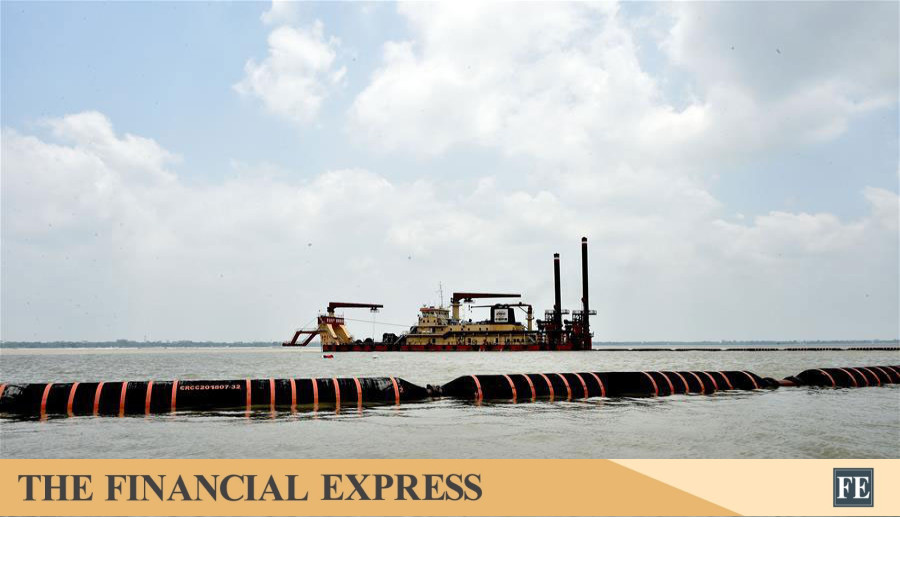
A dredging vessel works on Padma river in Shariatpur district, Bangladesh on May 27, 2019 —Xinhua Photo


Asia and the Pacific's food story has always been a water story.

From the Indus to the Mekong, the Yellow River to the Ganges, rivers have shaped civilizations, nourished crops, and powered trade. That relationship is under strain. The region is home to over half the world's people but holds far less than its share of freshwater. Demand is rising, even as rivers, aquifers, and ecosystems face mounting stress.

Food security begins long before food reaches the table. The region feeds more than 4 billion people using just 28 per cent of global freshwater and 30 per cent of arable land. Yet, more than three-quarters of the region's land experiences water stress. Rice-the predominant staple-uses about 40 per cent of irrigation water, and almost half of cropland is degraded, undermining productivity and ecological resilience.

In six decades, Asia and the Pacific experienced three waves of transformation. The Green Revolution doubled cereal yields in countries such as India and Indonesia. Rural industrialisation connected farms to processing and markets. Globalisation turned Thailand and Viet Nam into major agricultural exporters.

These shifts slashed hunger-but generated hidden costs. South Asia now hosts some of the world's most groundwater-stressed basins. Fertiliser use in parts of East and Southeast Asia more than quadrupled since the 1970s, polluting rivers and creating coastal dead zones. Diets have narrowed toward calorie sufficiency rather than nutritional diversity.

A changing climate compounds these pressures. Glaciers in the Hindu Kush-Himalayan region, which supplies water to almost 2 billion people, are retreating rapidly-a third could disappear this century. After a period of higher flows driven by accelerated melting, river volumes will likely decline in arid months. Meanwhile, rainfall grows more erratic. In 2022 and 2023, floods across Pakistan, India, and parts of Southeast Asia caused billions of dollars in losses, while droughts reduced agricultural output in Central and West Asia.

Agriculture itself is intensifying river stress. Heavy fertiliser and pesticide use leads to nutrient runoff and contamination. Soil erosion from steep-slope farming reduces reservoir storage and irrigation reliability. Groundwater extraction in parts of India, Pakistan, and northern People's Republic of China now exceeds natural recharge rates.

The cycle is clear: degraded rivers undermine agriculture; unsustainable agriculture degrades rivers.

River systems do not follow borders; they connect mountain headwaters to deltas and farms to fisheries.

Breaking that cycle requires managing food systems at the scale at which water flows-across landscapes and river basins. River systems do not follow borders; they connect mountain headwaters to deltas and farms to fisheries. Monitoring glacier melt, for example, enables governments to anticipate seasonal river flows so farmers downstream can adjust crops and irrigation schedules. Restoring upstream forests reduces floods and sediment loads, protecting irrigation and hydropower infrastructure. Wetland restoration buffers storm surges while sustaining farming and fisheries.

Water must also be valued as natural capital. Water-related disasters account for nearly 75 per cent of natural disaster losses. When aquifers collapse or river water becomes unsafe, economic shocks ripple across agriculture, health, and industry. Incorporating ecosystem services into planning-through natural capital accounting, smarter pricing, and better incentives-aligns growth with sustainability.

Four shifts are essential.

First, move from yield maximisation to systems optimisation. The goal is to grow food in ways that conserve water, protect soil, diversify crops, and improve diets. Drip irrigation, for instance, can reduce water use by 30 to 50 per cent while significantly increasing yields for certain high-value crops. In South Asia, farmers shifting from water-intensive rice to diversified horticulture have raised incomes while easing pressure on groundwater.

Governments must coordinate policies. Water, agriculture, health, and environment ministries often operate independently. Unsafe water and poor sanitation spread disease and reduce nutrient absorption, stunting the growth of children. Over half of all stunted children live in Asia and the Pacific. Aligning fertiliser subsidies with water-quality standards and nutrition strategies can improve farm productivity, protect rivers, and strengthen human capital.

We need to transition from short-term projects to long-term, programmatic investment. Multi-year initiatives that combine irrigation modernisation, watershed restoration, digital water monitoring, and climate adaptation deliver more durable resilience than isolated infrastructure projects. Integrated river basin programs in the Mekong and South Asia show how upstream data and downstream investments can be coordinated to reduce flood risk and stabilise agricultural output.

Finally, embed inclusion. Women make up a substantial share of the region's agricultural workforce yet often lack authority over water management. Evidence from farmer-managed irrigation systems shows that when women participate in water scheduling and fee collection, maintenance improves and irrigation coverage expands. Inclusion strengthens both equity and system performance.

Securing water is inseparable from improving nutrition. Clean and reliable water enables production of fruits, vegetables, and protein sources essential to healthy diets.

The future of food in Asia and the Pacific flows through its rivers. To secure that future, we must treat rivers as economic assets and manage and restore landscapes as living systems.

The direction is clear: transforming food systems begins with restoring and sustaining clean, healthy rivers.

Qingfeng Zhang is Asian Development Bank (ADB) Country Director for Bangladesh.​
 

Analyze Post

Add your ideas here:
Highlight Cite Respond

A new frontier for Bangladesh's green economy


1786233092561.webp


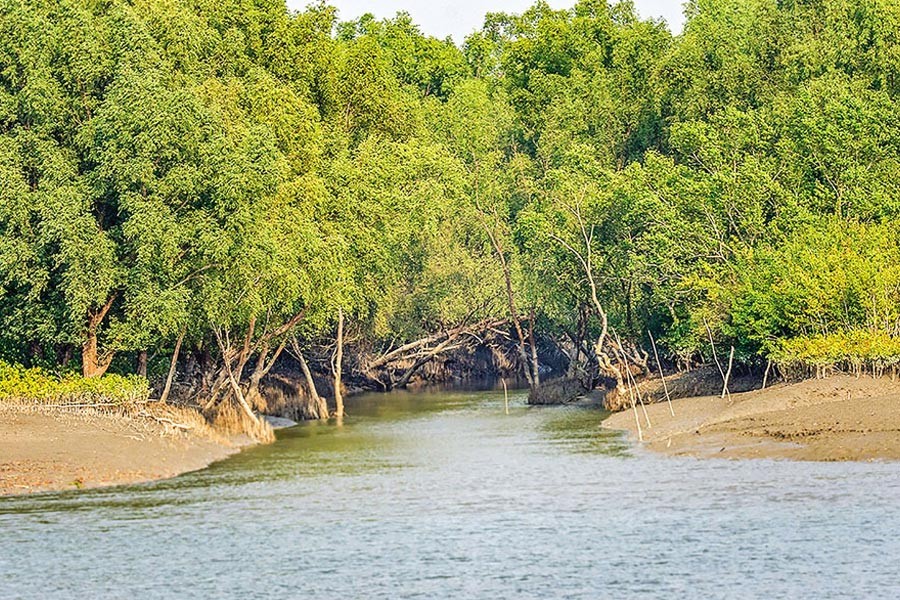
The Sundarbans, the country's mangrove forest, helps Bangladesh reduce the carbon emissions to a large extent.
Bangladesh is widely recognized as one of the most vulnerable to the impacts of climate change. Cyclones, floods, river erosion, salinity intrusion, and frequent heat waves continue to place mounting pressure on the country's economy and the livelihoods of millions. Yet Bangladesh contributes less than one per cent of global greenhouse gas emissions. This stark imbalance underscores the importance of climate justice. At the same time, it presents an opportunity to transform climate action from a development challenge into an economic opportunity. Among the most promising avenues is carbon trading.

Carbon trading is a market-based mechanism that assigns economic value to reducing greenhouse gas emissions. When a country, company, or project successfully lowers or removes carbon emissions beyond established benchmarks, it can generate carbon credits. These credits can then be sold to governments or businesses seeking to offset their emissions or meet climate commitments. In simple terms, environmental stewardship becomes a source of financial return. As both voluntary and compliance carbon markets continue to expand worldwide, carbon trading is emerging as an integral component of the global green economy.

For Bangladesh, the prospects are particularly encouraging. The country possesses significant untapped potential to develop internationally recognized carbon credit projects across multiple sectors. Renewable energy initiatives, especially solar power, biogas plants, energy-efficient brick kilns, industrial energy efficiency improvements, sustainable waste management, climate-smart agriculture, and social forestry all offer viable pathways for reducing emissions while creating tradable carbon assets.

Bangladesh's forests also represent an important opportunity. The country's mangrove ecosystems, coastal green belts, and community forestry programmes play a critical role in carbon sequestration. The Sundarbans, the world's largest mangrove forest, is not only an ecological treasure and a UNESCO World Heritage Site but also one of the region's most valuable natural carbon sinks. Through rigorous scientific assessment, conservation, and sustainable forest expansion aligned with international standards, Bangladesh could generate substantial carbon credits while simultaneously protecting biodiversity and strengthening climate resilience.

At the same time, global climate policies are reshaping international trade. The European Union's Carbon Border Adjustment Mechanism (CBAM) currently applies to carbon-intensive sectors such as cement, steel, aluminium, fertilizers, electricity, and hydrogen. Although Bangladesh's ready-made garment sector is not yet covered, the EU's broader sustainability agenda-including its 2030 industrial strategy, sustainable textiles policy, and supply-chain decarbonization initiatives-signals that stricter environmental requirements for textile and apparel exports are likely in the coming years.

While there has been no final decision to impose carbon tariffs on garments, many policy experts anticipate that between 2028 and 2030 manufacturers may face mandatory carbon reporting, product carbon footprint disclosure, and more stringent environmental transparency requirements. For Bangladesh, whose economy relies heavily on garment exports, preparing for this transition is no longer optional-it is a strategic necessity.

Encouragingly, many Bangladeshi garment manufacturers have already invested in green factories, rooftop solar systems, energy-efficient technologies, water conservation measures, and waste recycling. These investments not only enhance environmental performance but also position the industry to participate in international carbon markets. If properly certified, such initiatives could generate additional revenue through carbon credits while strengthening the country's competitiveness in an increasingly sustainability-driven global marketplace.

Despite these opportunities, significant challenges remain. Participation in carbon markets requires robust systems for measuring, reporting, and verifying (MRV) emission reductions, supported by reliable data, internationally-accredited verification procedures, skilled professionals, and strong institutional capacity. Bangladesh has made progress, but these capabilities remain limited. Moreover, the costs associated with project registration, certification, and compliance with international standards can be prohibitive, particularly for small and medium-sized enterprises.

Policy coordination is equally critical. Developing a successful carbon market will require close collaboration among the Ministry of Environment, Forest and Climate Change, the Ministry of Power, Energy and Mineral Resources, the Ministry of Industries, the Ministry of Finance, and the private sector. Bangladesh must also establish a transparent, accountable, and internationally credible national carbon market framework aligned with Article 6 of the Paris Agreement, which provides the legal basis for international carbon trading and cooperation.

Global investors are increasingly directing capital toward low-carbon and climate-resilient projects. If Bangladesh acts decisively by strengthening its policy framework, building technical expertise, and fostering international partnerships, carbon trading could become more than just a new source of foreign exchange earnings. It could accelerate sustainable development, create green jobs, facilitate technology transfer, attract climate finance, and enhance the country's long-term economic resilience.

Bangladesh has long been viewed primarily as a victim of climate change. The time has come to redefine that narrative. By embracing carbon trading, the country has an opportunity to become an active contributor to global climate solutions while advancing its own development objectives. With sound policies, scientific preparedness, and timely investment, today's climate initiatives can lay the foundation for tomorrow's green economy.

Carbon trading is not merely an environmental instrument; it is an economic opportunity for which the time has arrived.​
 
Analyze

Analyze Post

Add your ideas here:
Highlight Cite Respond

Latest Posts

Back
 
G
O
 
H
O
M
E