Bangladesh Defense
Saif
Senior Member
- Jan 24, 2024
- 21,457
- 9,743
- Nation

- Residence
- Axis Group

The Financial Express | First Financial Daily of Bangladesh
Get latest stock share market news, financial news, economy news, politics news, breaking news, Bangladesh economy news at The Financial Express.
Reform cannot wait as banking crisis deepens
Published :
Jun 22, 2026 00:30
Updated :
Jun 22, 2026 00:30
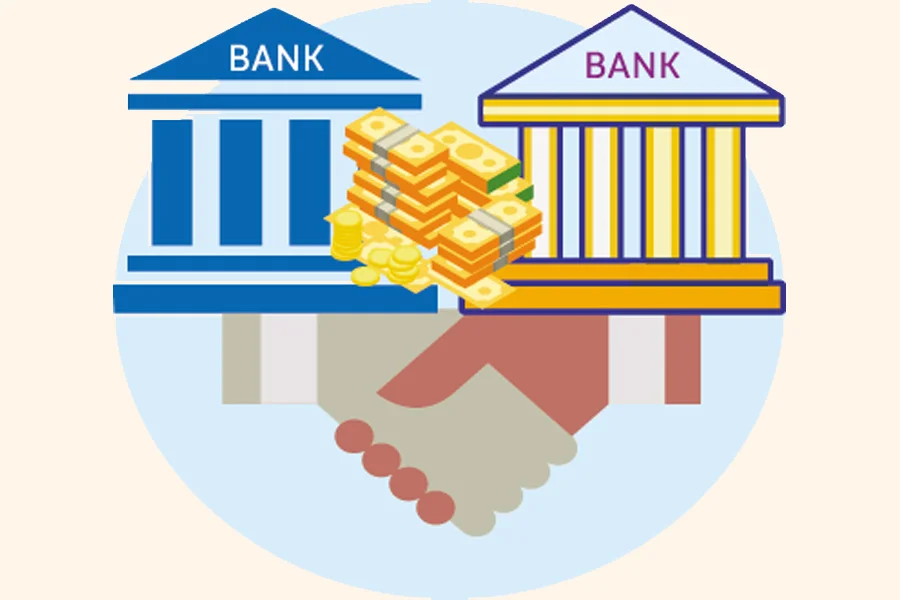
The country's banking sector continues to make screaming headlines. Recent media reports inform that, by the end of 2025, distressed loans across all scheduled banks had surged by more than 47 per cent to Tk 10.08 trillion --- an amount that exceeds the size of the proposed national budget for the fiscal year 2026-27. As mounting bad loans eroded earnings of most of the banks, the sector collectively posted a staggering net loss of Tk 1.3 trillion last year. Thus the banking sector's woes, stemming from years of systematic looting under the previous Awami League government, show little sign of abating. On the contrary, the sector now finds itself on the cusp of yet another crisis. According to recent report published in this newspaper, banks' profitability is being squeezed by a shrinking net interest margin (NIM), raising serious concerns about the long-term sustainability and stability of the banking industry.
The deterioration in banks' net interest margin offers a clear indication of the sector's worsening financial health. NIM, which measures the difference between interest earned on loans and interest paid on deposits relative to interest-earning assets, is a key indicator of the profitability of a bank's core business. According to the Bangladesh Bank data, the sector's aggregate NIM plunged from 1.30 per cent in 2024 to a negative 0.49 per cent in 2025. Officials attribute this sorry state of affairs largely to the explosion of non-performing loans. As things stand, many banks are earning little or no income from a significant portion of their assets stuck as NPL, yet they must continue to honour their obligations to depositors. The industrial slowdown in recent years has further exacerbated the situation by dampening credit demand and weakening borrowers' repayment capacity. Consequently, banks with ample liquidity are increasingly opting to invest in government treasury instruments rather than extending fresh loans in a high-risk environment, while those grappling with liquidity shortages are bearing the brunt of the crisis.
The implications of this crisis extend far beyond the banking industry itself. In his budget speech, the finance minister outlined a three-stage strategy for the economy --- recovery and stabilisation, followed by restoration and growth. However, experts are of the view that as long as the financial sector remains mired in crisis, the vision of economic recovery and sustained growth will remain out of reach. The banking sector is the lifeline of the economy, with its assets equivalent to roughly half of the country's GDP. The government, too, relies heavily on banks to finance its budget deficits. Nearly half of the proposed Tk 2.43 trillion budget deficit for the coming fiscal year is expected to be financed through borrowing from the banking sector. Therefore, a weak banking sector cannot support economic recovery and growth. Restoring the health of the financial sector must be a top priority.
The government has already injected around Tk 520 billion into five merged Islami banks and the central bank has extended special liquidity support to at least 12 troubled private banks. However, injecting public funds into troubled banks without addressing the underlying governance failures cannot provide a lasting solution. What the sector needs is a comprehensive reform aimed at prompt resolution of nonviable institutions, ensuring adequate depositor protection, reforming state-owned banks, strengthening governance and risk management etc. To this end, the government should consider establishing a high-powered banking reform commission comprising independent experts.
Published :
Jun 22, 2026 00:30
Updated :
Jun 22, 2026 00:30
The country's banking sector continues to make screaming headlines. Recent media reports inform that, by the end of 2025, distressed loans across all scheduled banks had surged by more than 47 per cent to Tk 10.08 trillion --- an amount that exceeds the size of the proposed national budget for the fiscal year 2026-27. As mounting bad loans eroded earnings of most of the banks, the sector collectively posted a staggering net loss of Tk 1.3 trillion last year. Thus the banking sector's woes, stemming from years of systematic looting under the previous Awami League government, show little sign of abating. On the contrary, the sector now finds itself on the cusp of yet another crisis. According to recent report published in this newspaper, banks' profitability is being squeezed by a shrinking net interest margin (NIM), raising serious concerns about the long-term sustainability and stability of the banking industry.
The deterioration in banks' net interest margin offers a clear indication of the sector's worsening financial health. NIM, which measures the difference between interest earned on loans and interest paid on deposits relative to interest-earning assets, is a key indicator of the profitability of a bank's core business. According to the Bangladesh Bank data, the sector's aggregate NIM plunged from 1.30 per cent in 2024 to a negative 0.49 per cent in 2025. Officials attribute this sorry state of affairs largely to the explosion of non-performing loans. As things stand, many banks are earning little or no income from a significant portion of their assets stuck as NPL, yet they must continue to honour their obligations to depositors. The industrial slowdown in recent years has further exacerbated the situation by dampening credit demand and weakening borrowers' repayment capacity. Consequently, banks with ample liquidity are increasingly opting to invest in government treasury instruments rather than extending fresh loans in a high-risk environment, while those grappling with liquidity shortages are bearing the brunt of the crisis.
The implications of this crisis extend far beyond the banking industry itself. In his budget speech, the finance minister outlined a three-stage strategy for the economy --- recovery and stabilisation, followed by restoration and growth. However, experts are of the view that as long as the financial sector remains mired in crisis, the vision of economic recovery and sustained growth will remain out of reach. The banking sector is the lifeline of the economy, with its assets equivalent to roughly half of the country's GDP. The government, too, relies heavily on banks to finance its budget deficits. Nearly half of the proposed Tk 2.43 trillion budget deficit for the coming fiscal year is expected to be financed through borrowing from the banking sector. Therefore, a weak banking sector cannot support economic recovery and growth. Restoring the health of the financial sector must be a top priority.
The government has already injected around Tk 520 billion into five merged Islami banks and the central bank has extended special liquidity support to at least 12 troubled private banks. However, injecting public funds into troubled banks without addressing the underlying governance failures cannot provide a lasting solution. What the sector needs is a comprehensive reform aimed at prompt resolution of nonviable institutions, ensuring adequate depositor protection, reforming state-owned banks, strengthening governance and risk management etc. To this end, the government should consider establishing a high-powered banking reform commission comprising independent experts.