Donate ☕
201 Military Defense Forums
[🇧🇩] - BDR Mutiny---An Irreparable Damage to Bangladesh's First Line of Defense | Page 14 | PKDefense
Home Login Watch Videos Wars Movies
Serious discussion on defense, geopolitics, and global security.

[🇧🇩] BDR Mutiny---An Irreparable Damage to Bangladesh's First Line of Defense

[🇧🇩] BDR Mutiny---An Irreparable Damage to Bangladesh's First Line of Defense
115
5K
More threads by Saif

G Bangladesh Defense

15 YEARS OF BDR MUTINY​

No end to wait for justice​

Judge shortage holds back hearing of appeals against conviction, 283 in jail after acquittal of murder charges​

Muktadir Rashid and M Moneruzzaman | Published: 00:34, Feb 25,2024


facebook sharing button
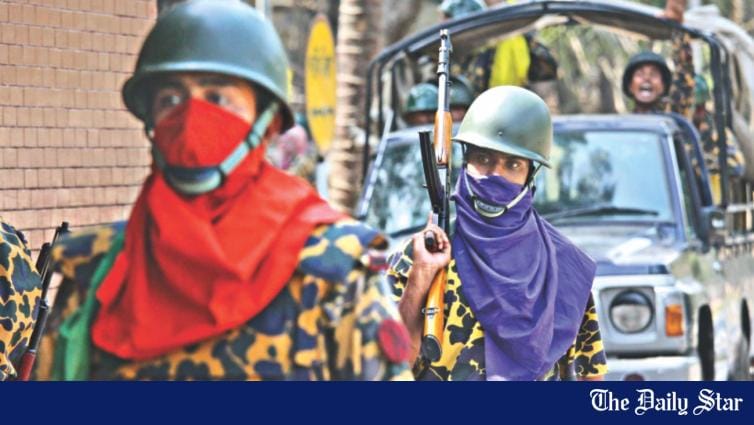
226321_173.jpg

twitter sharing button

Families of the victims as well as the accused soldiers still cry for justice as appeals against convictions in the murder case for the February 25–26, 2009 mutiny in the border force are still pending with the Appellate Division, while a case under the explosives act is pending with the trial court.

Justice into the killings of 75 people, mostly army officers deputed in the erstwhile Bangladesh Rifles, has not been delivered even after 15 years of the mutiny in the border force, while many former soldiers and civilians have been languishing in jail for years and dozens have died pending trials.

Those who were acquitted by a trial court in November 2013 of the murder charge have been in jail as another case related to explosive substances is still pending with the trial court.

The families of the accused and convicts said at least 48 people have died in jail custody since the trial started, while the plot and plotters are yet to be identified.
‘Many questions about the incident are yet to be answered,’ said retired Lieutenant Colonel Mustafizur Rahman, who investigated the incident during his posting in army intelligence and later left the job and the country.

He said that their investigation could not identify many perpetrators.

Family members of the accused and convicts said that they were devastated by the event and its aftermath, and they wanted immediate disposal of the trials pending both in the Supreme Court and trial court.

The shortage of Appellate Division judges caused the delay in holding hearings on 71 appeals filed by the government and the convicts, according to attorney general AM Amin Uddin.

‘A special bench with at least four judges will be needed to hear and dispose of the large volume of appeals,’ Amin told reporters at his office on Thursday.

On February 25, 2009, several hundred BDR soldiers took arms against their officers deputed from the army at Durbar Hall during their annual gathering at the paramilitary headquarters in Dhaka, leaving 75 people—57 army officers, two wives of army officers, nine BDR soldiers, five civilians, an army soldier, and a police constable—killed.
Border guard special courts sentenced 5,926 soldiers to varying terms on mutiny charges in 57 cases, including 11 in Dhaka, while two criminal cases—one filed for the murders and the other filed under the Explosive Substances Act—are still pending with the court.

A case filed under the Explosive Substances Act against 833 BDR personnel and a civilian is pending with the Dhaka Metropolitan Sessions Judge Court, and 273 of the 1,344 prosecution witnesses have so far been examined, said deputy chief prosecutor Sheikh Baharul Islam.

Only 18 prosecution witnesses were examined between February 2023 and February 2024, according to a court document.

The appeals filed by death-row convicts against their sentences and another by the government against the acquittal of some soldiers by the High Court in the murder case await an Appellate Division hearing.

Attorney general Amin said that the special bench required for the pending hearings could not be constituted unless new judges were appointed to the Appellate Division.
Two major cases were investigated jointly by the Criminal Investigation Department, and the trial started in 2011 against 850 riflemen and civilians.

Amid the simultaneous trial, the trial court continued the trial of the case filed for murder and other offences, slowing down proceedings in the explosives case.

On November 5, 2013, additional sessions judge Akhtaruzzaman, who was later elevated to the High Court as judge, pronounced the verdict in the murder case, sentencing 151 soldiers and civilian Zakir Hossain to death.

The court also jailed 160 soldiers, including late Bangladesh Nationalist Party leader Nasiruddin Pintu, local Awami League leader and retired BDR subedar Md Torab Ali, for life terms, and 256 others for varying terms.

It acquitted 278 people. Four others died before the verdict.

In November 2017, the special High Court bench of Justice Md Shawkat Hossain, Justice Md Abu Zafor Siddique, and Justice Md Nazrul Islam Talukder upheld the death sentences of 139 soldiers. It commuted the death sentences of seven soldiers and Md Zakir Hossain, then a local Awami League leader, to life in jail.

The court acquitted four soldiers of the charges, and BDR deputy assistant director Habibur Rahman died in jail custody in February 2014 while his appeal against the death sentence was pending with the High Court.

The High Court upheld the life terms of 146 BDR personnel and acquitted 12 others of their life terms. Two others died during the pendency of their appeals.

Defence lawyers and family members said that a total of 283 acquitted people and 190 others, who completed their short jail terms in other cases, were still languishing in jail due to the delayed trial of the explosives case.

‘My brother sepoy Darul Islam was in Peelkhana during the mutiny. He was arrested later. He was jailed for seven years on the charge of murder but acquitted of the charges of murder, arson, and other heinous crimes. It’s been 10 years, he was not released,’ Sabuj Miah told New Age over phone.

He said that they had been trying to draw the attention of the government and judiciary to how the former troopers were facing injustice.

The attorney general said that the government filed 20 appeals in December 2020.

Death-row convicts filed 35 appeals in January and February 2021 against their sentences, a court official said. The attorney general said all appeals would be heard together.

Both the government inquiry committee, headed by former secretary Anis-uz-Zaman Khan, and an investigation conducted by the army failed to identify the plot and the plotters.

The report by Anis-uz-Zaman recommended an investigation into the failure to gather intelligence about the planned mutiny. The army did not make the results of its investigation public.

New York-based rights group Human Rights Watch said that it had obtained the report and stated that the report faulted the government for not having taken a stronger line against BDR before the rebellion.

The successive Awami League government has so far initiated no further investigation recommended by the two probe bodies, while the main opposition Bangladesh Nationalist Party has been saying that they will identify the perpetrators if voted to power.

HRW also urged the government to establish an independent investigative and prosecutorial task force with sufficient expertise, authority, and resources to rigorously investigate and, where appropriate, prosecute all allegations of unlawful deaths, torture, and mistreatment of suspects in the BDR mutiny, regardless of the perpetrator’s rank or institutional affiliation.

Families of slain officers and convicted soldiers said that the nation should know the reason for the rebellion, as well as the plot and plotters because neither an investigation nor a trial revealed them.

Slain Colonel Quadrat Elahi Rahman Shafique’s son, Saquib Rahman, repeatedly said that the pawns were tried but the plotters were not identified.

As of February 24, a total of 761 BDR jawans have been detained in Dhaka Central Jail, Kashimpur High Central Jail-1, Kashimpur Central Jail-2, and Kashimpur High Security Central Jail, according to the directorate of the prisons.

Senior military and civilian officials will pay tribute to the graves of killed soldiers at their military graveyard in the capital’s Banani today.​
 
Analyze

Analyze Post

Add your ideas here:
Highlight Cite Fact Check Respond

BDR Carnage: Genocide case filed against Hasina, aides
M Moneruzzaman 19 December, 2024, 23:54

1734654600325.webp

The families of the BDR carnage victims come out of the International Crimes Tribunal premises on Thursday after lodging a complaint with the chief prosecutor, accusing ousted prime minister Sheikh Hasina, then army chief Moneen U Ahmed and 56 others of committing genocide during the massacre at Pilkhana in 2009. | Md Saurav

The families of 22 victims of the 2009 carnage at then Bangladesh Rifles headquarters filed a complaint with the International Crimes Tribunal chief prosecutor on Thursday accusing deposed prime minister Sheikh Hasina, her defense adviser Tarique Ahmed Siddique, former army chief Moneen U Ahmed and 55 others of crimes against humanity and genocide.

The carnage killed 74 people, including 57 army officers including then BDR chief Major General Shakil Ahmed in February 25–26, 2009.

This is the first case filed with the tribunal against Hasina and her associates for the rebellion of the soldiers of then BDR, now the Border Guard Bangladesh.

Hasina, who fled to India in the face of a student-people uprising on August 5, faces several ICT cases for atrocities committed during the July–August uprising.

The victim families filed the complaint a day after the home affairs adviser Jahangir Alam Chowdhury on December 17 announced that a committee would be formed within the next five working days to ensure justice for the BDR massacre.

The announcement from the government came amid growing calls for justice for the BDR massacre.

Lawyer Uday Tasmir, representing the 22 families of the slain army officers, including Major General Shakil Ahmed’s son Rakin Ahmed and Colonel Quadrat Elahi Rahman Shafique’s son Saquib Rahman, submitted the complaint to the ICT chief prosecutor in the presence of 15–20 victim family members.

Uday Tasmir told reporters that the killings of the 57 officers constituted genocide and crimes against humanity and Hasina and her associates, including then army chief, home minister, law minister, and intelligence chiefs, were directly involved in the crimes.

‘Our allegations are clear and specific,’ said Tasmir, ‘patriotic, skilled, and brilliant army officers were deliberately targeted to weaken the Bangladesh Army and the BDR, creating a national crisis to jeopardise the country’s independence and sovereignty.’

Then army chief cannot avoid the responsibility, he said.

The complaint accused Hasina of orchestrating a plan to destroy the two key forces to consolidate power and establish a fascist regime.

It alleged that bodies of the slain officers were set on fire and mutilated, family members of the officers were held hostage, their homes were looted, and the killings were premeditated acts of genocide to eliminate opposition within the armed forces.

The complaint said that the victims were buried in mass graves in a bid to hide the bodies of the victims.

Mehrim Ferdowsi, the wife of Colonel Mujibul Haque, also addressed journalists, asserting that the massacre was a calculated attack.

‘Even today, neither we nor our children know why our loved ones were murdered. The truth must come to light through a proper investigation,’ she said.

The families demanded an independent commission to uncover the truth behind the carnage.

In a press release, they alleged that Sheikh Hasina’s government had systematically targeted patriotic army officers, identifying them as obstacles to her autocratic rule.

The release called for the release of innocent BDR members still detained in connection with the carnage, alleging that they were victims of a prolonged conspiracy.

‘The crimes were planned and executed under the direct orders of Sheikh Hasina and her defence adviser Tarique Siddique,’ it said.

The families said that none dared in the past 15 years to stand against the anti-state actions and criminal conspiracies carried out by Hasina and her government.

Victim families have long been demanding justice for the BDR carnage by forming an independent commission.

They also raised key allegations against then Awami League lawmakers Sheikh Fazle Noor Taposh, Sheikh Selim, and Jahangir Kabir Nanak.

Two cases, one for murders and another for explosive substances, were filed for the BDR carnage. The explosive case is still pending with the trial court.

On November 27, 2017, the High Court upheld the death sentences of 139 of the 152 condemned convicts of murders of 57 commanders on deputation from the army during the February 2009 BDR mutiny.

Death sentences of seven other BDR soldiers and Md Zakir Hossain, then a local Awami League leader, were commuted to life term imprisonment.

It also upheld the life imprisonment of 146 of the 160 life term recipients. Two of them, including Bangladesh Nationalist party leader Nasiruddin Ahmed Pintu, died in custody while 12 others were acquitted of the charges.

The convicts’ appeals and the AL government’s appeals against acquittals of BDR members are pending with the Appellate Division.

On November 5, 2013, the trial court convicted 568 accused, mostly BDR members, and sentenced 152 accused to death, 162 to imprisonment for life term and 256 to imprisonment for varying terms.

The court acquitted 278 other accused while four accused had died during the trial.

One of the death row convicts died later.

The High Court called for holding probes to find out why the BDR intelligence agency failed to gather information that a mutiny was brewing to coincide with BDR Week celebrations.

The High Court in the verdict also called the carnage a pre-planned massacre of 57 brilliant army officers, then serving BDR on deputation, by some ambitious BDR soldiers during their 30-hour mutiny.

The High Court said that only 55 army officers died in action during the War of Independence.

Of the 850 accused tried in the murder case, 827 were BDR members and 22 civilians while a lone accused was from the Ansar and VDP force.

Breaking his silence for the past 15 years following the February 25–26, 2009 rebellion, former army chief Moeen U Ahmed in an interview with a newspaper in September 2024 demanded re-investigation into the carnage to uncover the plot and the plotters of the incident in both home and aboard.

‘A fresh probe by forming a new inquiry committee can find out the plot and plotters in both home and aboard in the BDR carnage,’ said Moeen in a video statement on YouTube from Florida in the United States.

The mutineers demanded an end to army control over the BDR, withdrawal of army members, and direct talks with then prime minister Sheikh Hasina.

Then state minister for local government rural development and cooperative minister Jahangir Kabir Nanak, whip Mirza Azam, then home minister Sahara Khatun and then local lawmaker Sheikh Fazle Noor Taposh attempted negotiations, entering the BDR headquarters with a white flag.

A rebel delegation met with Sheikh Hasina, who announced an amnesty for the mutineers.

Despite an initial ceasefire, firing resumed in the evening.

Talks between the rebels and government representatives continued late into the night, with assurances of laying down arms.

At about 2:30 am on February 26, some rebels surrendered their weapons, but sporadic gunfire persisted.

BDR soldiers in other districts took positions on highways, leaving borders unprotected.

Hasina addressed the nation at 2:00pm on February 26, urging rebels to surrender, warning of military action if they did not comply. By 6:00pm, army tanks and commandos surrounded Pilkhana, prompting rebels to hoist a white flag and flee.

Control was restored by police and the Armed Police Battalion, ending the ordeal for over 100 hostages.

A mass grave discovered the next day revealed the full extent of the savagery, leaving the nation in shock and mourning.​
 
Analyze

Analyze Post

Add your ideas here:
Highlight Cite Fact Check Respond
  • Like (+1)
Reactions: Bilal9

7-member commission formed to investigate BDR carnage
Staff Correspondent 23 December, 2024, 20:51

The interim government formed a seven-member commission on reinvestigating the 2009 BDR carnage amid an outcry from the victim families and political pressure.

Adviser to the home affairs ministry, retired Lieutenant General Md Jahangir Alam Chowdhury, said on Monday that the chief adviser approved the formation of the commission on Sunday.

He shared the information while talking to journalists after the Border Guard Bangladesh Medal Award Ceremony held on the occasion of BGB Day 2024 at the BGB Headquarters in Pilkhana in the capital.

The commission was formed within seven days since Jahangir on December 17 hinted about formation of a probe committee to reinvestigate the BDR carnage to ensure justice.

Earlier on December 15, deputy attorney general Tanim Khan informed a High Court bench that formation of a commission on the BDR carnage would be conflicting, citing two pending cases regarding the incident.

On February 25–26, 2009, in a mutiny 57 military officers, the chief of the BDR, Major General Shakil Ahmed among them, and 17 civilians were killed at the then BDR headquarters, Pilkhana, in Dhaka city.

A home ministry press release issued on Monday, referred the home adviser, saying that the commission would be led by former BGB director general ALM. Fazlur Rahman and would have two armed forces officials, one civil servant, one police official and two teachers, one each from Dhaka University and Jagannath University,

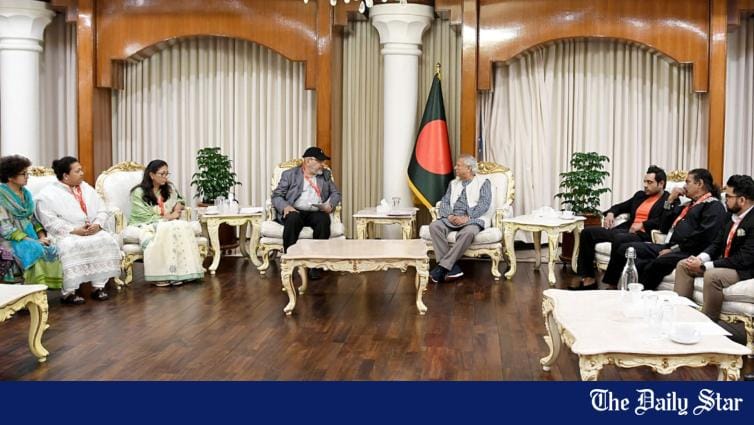
Following the news of the formation of the commission, family members of the victims visited Prabashi Kalyan Bhaban, the office of law adviser Asif Nazrul, who is also the adviser to the expatriates’ welfare and overseas employment ministry.

On December 19, families of 22 BDR carnage victims filed a complaint with the International Crimes Tribunal chief prosecutor, accusing deposed prime minister Sheikh Hasina, her defence adviser Tarique Ahmed Siddique, former army chief Moneen U Ahmed and 55 others of crimes against humanity and genocide.

At a media briefing following the families’ meeting with the law adviser, retired Brigadier General Hasan Nasir expressed appreciation over forming the investigation commission but stressed the need to avoid repeating the mistakes of earlier investigations.

‘Not only the victim families, but citizens also want to know the plotters behind the carnage, the financiers and their collaborators who aided and abetted the plotters to flee the country and obstructed a proper investigation and trial process,’ he said.

Hasan Nasir alleged that he was forced into retirement after he voiced dissent during the proceedings of the previous investigation.

‘We suspect that many military officers were spared from the investigation. Without their support, BDR soldiers could not have executed such a gruesome killing mission,’ he added. Hasan emphasised the importance of holding those military officers responsible for the carnage accountable and granting bail to innocent BDR soldiers to ensure justice.

Among the delegates, former BDR chief Major General Shakil Ahmed’s son Rakin Ahmed was also present at the briefing. He said, ‘We are not confident about the home affairs ministry. However, we will closely observe the activities of the commission.’

Earlier on August 17, Rakin, accusing the ousted prime minister Sheikh Hasina, said, ‘former prime minister is directly involved in this. There are many call records and instructions that we have heard. Ask the journalists to release those. This was done with the help of foreigners.’

Lawyer Sakib Rahman, the son of martyred Colonel Qudrat Elahi, stated that the families of the martyred officers believed the entire nation expected a thorough investigation into the BDR carnage.

Law adviser Asif Nazrul did not attend the post-meeting media briefing.​
 
Analyze

Analyze Post

Add your ideas here:
Highlight Cite Fact Check Respond
  • Like (+1)
Reactions: Bilal9
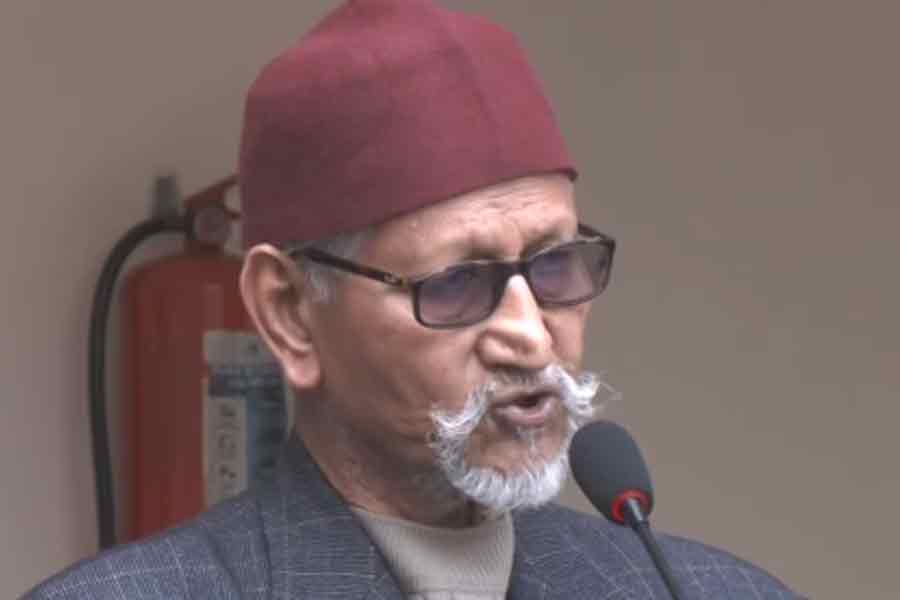
The head of the investigation commission established to investigate the BDR carnage Major General (rtd) ALM Fazlur Rahman is talking to the journalists about various issues.

 
Analyze

Analyze Post

Add your ideas here:
Highlight Cite Fact Check Respond
  • Like (+1)
Reactions: Bilal9

BDR massacre commission to identify local, foreign conspiracies: chief
Staff Correspondent 26 December, 2024, 13:55

The chairman of the newly formed National Independent Commission formed to reinvestigate the 2009 BDR massacre, Major General (retired) ALM Fazlur Rahman, said on Thursday that the commission would identify local and foreign conspiracies behind the massacre at the erstwhile Bangladesh Rifles headquarters in Dhaka.

He made the remarks while briefing journalists after the commission’s first meeting at the Border Guard Bangladesh headquarters in the capital.

‘We have been tasked with identifying the individuals and entities, both local and foreign, responsible for the massacre,’ he said.

Fazlur Rahman said that the commission’s commitment was to thoroughly investigate the BDR massacre that took place in 2009.

The commission will work to identify all individuals, groups, or organisations responsible for the killings, those who aided the crimes, conspired, or tampered with evidence, he said.

Fazlur Rahman also said that they would remain impartial and uninfluenced by any external factors.

When asked about aligning the commission’s investigation with the International Crimes Tribunal, he said that they would seek the inclusion of four legal experts specialising in civil, criminal, military, and international law.

He also noted that the commission would consider measures to prevent individuals involved with the incident from leaving the country, following discussions with commission members.

Regarding extradition, he said that efforts would be made to contact individuals living abroad through the foreign ministry.

‘If extradition proves impossible, a team would be sent to record their statements abroad,’ he added.

He also said that the commission’s office would initially operate out of the BGB Dhaka Battalion office, and it would soon write to relevant authorities, including the chief adviser, to secure necessary supports.

Fazlur also said that they would also propose granting the commission’s chief a position equivalent to an adviser and equal status to an Appellate Division judge for the commission’s members.

On December 23, the government formed the seven-member commission to reinvestigate the BDR massacre and uncover the nature of the crimes committed during the BDR massacre in 2009 soon after the Awami League-led government came to power.

The carnage killed 74 people, including 57 army officers including the then Bangladesh Rifles chief Major General Shakil Ahmed in February 25–26, 2009.​
 
Analyze

Analyze Post

Add your ideas here:
Highlight Cite Fact Check Respond
  • Love (+3)
Reactions: Bilal9

Probe commission chief assures of thorough probe into BDR tragedy
BSS
Published :
Dec 26, 2024 20:59
Updated :
Dec 26, 2024 20:59

1735261168385.webp


Major General (retd) ALM Fazlur Rahman, the Chairman of the newly-formed National Independent Investigation Commission to reinvestigate the mutiny at the then BDR headquarters at Pilkhana on February 25 to 26, 2009, has assured of a thorough probe into the matter.

"We're committed to investigating thoroughly into the tragedy as it is a national issue," he said while speaking to journalists after coming out of the commission's maiden meeting at the Bangladesh Border Guard (BGB) Headquarters in Dhaka on Thursday.

The commission chief said they would use their intellect and work with devotion to complete the re-investigation within the given period.

He said they are also pledge-bound to address the plights of those affected by the mutiny.

The commission, which was formed on December 24, has been given 90 days to reinvestigate the Bangladesh Rifles (BDR-now BGB) carnage that left 74 people, including 57 army officials, dead.

It has been entrusted with the primary task of unearthing both local and foreign conspiracies surrounding the deadly incident.

The commission, which has been given a three-month timeframe, will adopt an impartial approach, striving to conduct the investigation without any external influence.

Six other members are: Maj Gen Md Jahangir Alam Talukder (Retd), Brigadier General Md Saidur Rahman, Bir Pratik, (Retd), retired joint secretary Munsi Alauddin Al Azad, retired DIG Dr M Akbar Ali, Md Shariful Islam, Associate Professor of Political Science Department of Dhaka University, Md Shahnewaz Khan Chandan, assistant professor of the Institute of Education and Research of Jagannath University.​
 
Analyze

Analyze Post

Add your ideas here:
Highlight Cite Fact Check Respond
  • Love (+3)
Reactions: Bilal9

Members Online

Latest Posts