[🇧🇩] Energy Security of Bangladesh

[🇧🇩] Energy Security of Bangladesh
660
22K
More threads by Saif

G Bangladesh Defense

Policy support for generating more solar power

Mushfiqur Rahman

Published :
May 14, 2026 23:41
Updated :
May 14, 2026 23:41
1778802519229.webp


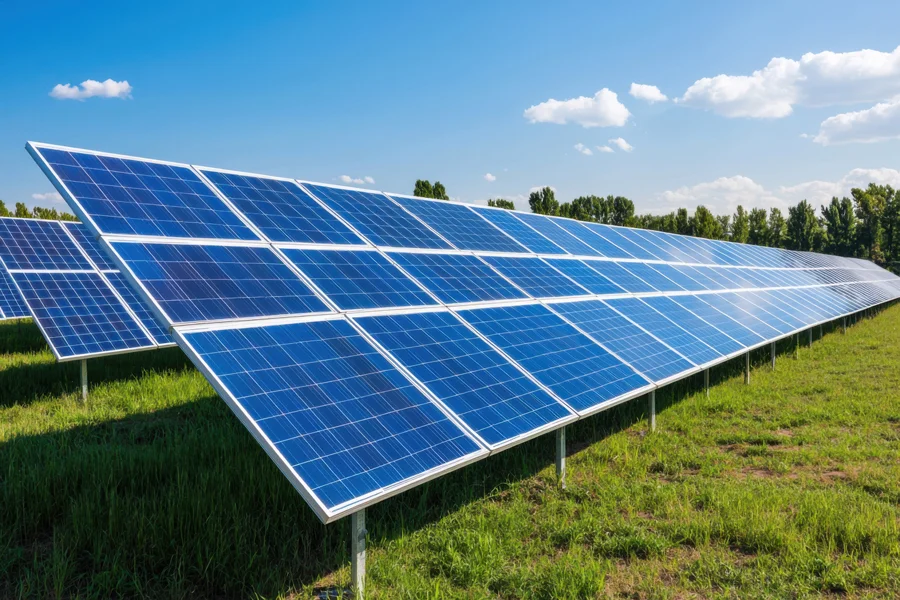
Bangladesh government has been trying to accelerate renewable energy- based power generation for diversifying primary energy sources. Bangladesh remains significantly behind its regional neighbours in renewable energy use. As reported, India, Pakistan, Vietnam and Thailand have considerably expanded their solar, wind and hydro energy use for power generation to reduce fossil fuel dependence and to secure diversification of energy sources. On the contrary, Nepal and Bhutan have been successfully harnessing hydroelectricity as the main sources for power.

Minister for Ministry of Power, Energy and Mineral Resources, Iqbal Hassan Mahmud informed the media (May7, 2026) that the government was set to introduce new policy framework to accelerate solar energy expansion and attract investment in renewable energy following Prime Minister's directive. The minister further informed that the government had been working on a simplified framework for importing solar power generation equipment including solar PV panels, inverters, frames etc., to reduce tax burden on investors in renewable energy sector, and also set out enabling conditions in the policy so that battery storage technology for electricity will be encouraged and solar energy can support evening peak hour demands in the country. It is expected that the government would finalise the 'new policy' document within May 2026, approve it by June 2026. Bangladesh has a target for 10,000 MW renewable energy-based power generation within next five years. Energy Minister further expressed the hope that the new policy would help expand rooftop solar power generation with the participations of private investors in the major cities. He expected that policy support from the government would help create a profitable market for investors while easing pressure on grid connected electricity supply.

Bangladesh Chamber of Industries (BCI) leaders consider that the country has fallen into an 'energy trap' by increasing heavy dependence on fossil fuel imports and delays in transition to renewable energy. It was opined in a seminar organised by the BCI in Dhaka on May 10, 2026. BCI President Anwar-ul-Alam Chowdhury considers that 'the growing dependence on imported fossil fuels has become one of the country's biggest economic vulnerabilities, as it exposes the economy to global shocks and forces the government to spend nearly $12 billion annually on fuel imports.'

Published reports suggest that the country's primary energy imports surged from 47.7 to 62.5 per cent between the fiscal year 2020-2021 and 2024-2025. And the average power generation costs increased from BDT 6.61/kWh to BDT 11.33/kWh between FY 2020-2021 and 2022-2023. Cost of fuel has a major role in increasing power generation costs. Against the global average of 33.8 per cent renewable energy share for grid connected power generation, Bangladesh has only 2.3 per cent share for the same.

Experts believe that delays in land allocation, weak financing, tax burdens on solar power generation equipment and batteries and absence of sovereign guarantees for the renewable energy based power generation facilities (solar and wind parks) remain as major impediments for private investment growth for the sector.

In the global arena, fossil fuel supply chain disruptions and uncertainties due to US-Israel and Iran war have been pushing global shifts from oil and gas to clean energy sources. The 1970's oil shocks compelled the industrialised economies to reduce reliance on oil supply dependent on OPEC cartel and enhance energy efficiency, focus on nuclear energy, introduction of electric vehicles, mass communication networks (metro, electric trains etc). The recent Persian Gulf crisis has already pushed the soaring demands for electric vehicles to offset oil and gas-based vehicles. As the renewable energy options are tested alternatives, countries of the world including in Southeast and South Asia have been rapidly expanding their solar, wind and hydropower generation capacities.

The Guardian (May 3, 2026) reported that Vietnam decided to shelve a massive LNG terminal development project and planed for substituting it with renewable energy projects. In India, solar accounted for 9 per cent of Indian electricity generation last year (up from 0.5 per cent a decade ago). Indian consumer market has been witnessing strong demand for 'electric three wheelers'. China, already the leading manufacturer of electric vehicles, solar PV panels, batteries and other accessories for solar and wind power generation has taken commendable lead in renewable energy towards faster transition to clean energy.

Mushfiqur Rahman is a mining engineer, He writes on energy and environment issues.​
 

Different tactics in power price hike: Lower middle class to face greater pressure

Mohiuddin
Dhaka
Updated: 12 May 2026, 10: 20

1778890598501.webp

Representational image File photo

Bangladesh Power Development Board (PDB) has adopted a new tactic in its proposal to increase electricity prices. Alongside raising prices, the agency wants to increase revenue by changing the billing slabs for residential consumers. If the proposal is implemented, a large section of consumers may lose the benefit of using electricity at lower rates. Besides, the PDB also wants electricity prices to be adjusted twice a year.

According to the PDB proposal, this may create additional billing pressure on 35 per cent of electricity consumers. Of them, 23 per cent belong to the lower middle class and use less than 200 units of electricity per month. Such consumers generally use electricity at home to regularly run multiple lights, fans, refrigerators and televisions.

Currently, among residential consumers, those using up to 50 units per month are considered lifeline consumers. This is the slab for the lowest electricity users, who mainly use lights and one fan. Consumers using up to 75 units fall under the first slab. According to the proposal, electricity prices for lifeline and first-slab consumers will not increase. However, consumers using more than 75 units of electricity will have to come under higher pricing.

Currently, consumers using 76 to 200 units fall under the second billing slab. The PDB has proposed changing this slab to cover zero to 200 units. That means consumers will no longer get the lower-rate benefit for the first 75 units. According to PDB calculations, this change may generate an additional Tk 26.57 billion in annual retail revenue. The PDB is also looking for multiple ways to increase revenue from the Bangladesh Rural Electrification Board (REB).

PDB officials say the government does not want to increase electricity prices for poor people. Therefore, instead of raising prices for the first two categories, a proposal has been made to change the slab starting from the second tier.

The impact of the PDB proposal can be understood from the bill calculation of a consumer using 200 units of electricity per month. Under the current system, the first 75 units are billed at the first slab rate of Tk 5.26 per unit. This amounts to Tk 394.50. The remaining 125 units are billed at the second slab rate of Tk 7.20 per unit, adding another Tk 900. Altogether, the bill at the current rate stands at Tk 1,294.50.

However, if the PDB proposal is implemented, the entire 200 units will be calculated at the second slab rate. In that case, even without an increase in electricity prices, the consumer’s bill will rise to Tk 1,440. That means the bill will increase by Tk 145.50 solely due to the slab change.

Along with this, the PDB has also proposed increasing the second slab rate. It wants to raise the price from Tk 7.20 per unit to Tk 8.20 per unit. If implemented, the electricity bill for a consumer using 200 units per month will rise to Tk 1,640. That means the monthly bill will increase by Tk 345.50. In addition, demand charges and VAT will be added to the bill.

Electricity bill for the poor not increasing

PDB officials say the government does not want to increase electricity prices for poor people. Therefore, instead of raising prices for the first two categories, a proposal has been made to change the slab starting from the second tier. As a result, those who use more electricity will no longer receive the lower-rate benefit of the first slab.

People concerned from the power sector said there has been little initiative to reduce electricity production costs.
However, people concerned from the power sector said the PDB should first reduce its own unreasonable expenses.

Instead, it is trying to collect extra money from consumers. Slab-based benefits in bills exist specifically for lower electricity users. Similarly, tax rates in income tax are determined according to slabs. Even second-tier taxpayers receive the benefits of the first slab.

According to PDB data, there are more than 43.1 million residential electricity consumers in the country. Of them, 43 per cent are lifeline consumers who use up to 50 units. Another 22 per cent use up to 75 units. However, 10,153,862 consumers use between 76 and 200 units. The remaining four slabs consist of consumers using more than 200 to 600 units of electricity (12 per cent).

Electricity billing slabs were mainly introduced to benefit lower electricity users. Nothing can be said immediately about changing slabs. The technical committee will submit a report, after which the issues will be discussed during hearings.
BERC Chairman Jalal Ahmed

PDB Chairman Rezaul Karim told Prothom Alo that due to financial shortages, fuel (oil and coal) cannot be purchased and payments to power plants cannot be made. The deficit cannot be resolved even by reducing costs. The price of the US dollar has increased by nearly 50 per cent over the past few years. Fuel prices are also higher. Therefore, a proposal has been made to adjust electricity prices. The proposal to change residential electricity slabs has also been made to reduce the deficit. The Bangladesh Energy Regulatory Commission (BERC) will review these matters.

Proposal to adjust prices every 6 months

On 3 May, the Power Division sent a letter to the BERC for electricity price adjustment. It said that due to the ongoing Middle East situation, the cabinet committee decided on 27 April to adjust wholesale and retail electricity tariffs.

It was decided to increase wholesale prices by 21 per cent (Tk 1.5 per unit) and accordingly raise retail prices and send a proposal with slab changes.

Following this, the PDB submitted its proposal to the BERC on 4 May. It proposed increasing retail prices alongside wholesale rates. Later, five other distribution companies also proposed price adjustments in line with wholesale prices.

On 5 May, the BERC took the matter into consideration and formed a technical committee. The commission has scheduled hearings for 20 and 21 May. The PDB has proposed implementing the increased prices from 1 June.

To regularly adjust electricity prices, the PDB has also proposed fixing electricity prices for the next several years under a multi-year tariff system. This would allow consumers to prepare in advance with prior expectations.

In addition, the PDB has proposed automatically linking fuel costs with wholesale electricity prices. A formula has been proposed for this purpose. If fuel prices increase or decrease, wholesale electricity prices will also rise or fall. The PDB has proposed adjusting this every six months.

BERC Chairman Jalal Ahmed told Prothom Alo that electricity billing slabs were mainly introduced to benefit lower electricity users. Nothing can be said immediately about changing slabs. The technical committee will submit a report, after which the issues will be discussed during hearings. However, the commission will decide on all proposals considering consumer interests.

No visible effort to reduce costs

People concerned from the power sector said there has been little initiative to reduce electricity production costs. During the previous Awami League government, generation capacity was increased to double demand, which also raised capacity charges or rental payments to power plants. Agreements with these power plants were made under the special powers law without tenders.

The previous interim government repealed the law. After that, a national committee was formed to review all contracts made under that law. The national committee submitted its report in January. Last month, the current government formed another committee to review the contracts again.

The national committee’s report said the government is purchasing electricity at abnormally high prices: 40 to 50 per cent higher at furnace oil-based power plants, 45 per cent higher at gas-fired plants, and 70 to 80 per cent higher in the solar power sector. These are not market prices, but the result of contracts. If reforms are not carried out, the country will sink.

Energy adviser of the Consumers Association of Bangladesh (CAB), M Shamsul Alam, told Prothom Alo that the government is allowing opportunities for looting instead of reducing costs, while shifting the burden onto consumers by showing a deficit crisis. The PDB may propose price adjustments, but it cannot prescribe strategies to fill the deficit.

There is no scope to consider the proposal to change electricity bill slabs. This is a matter of government policy, not a hearing issue. These proposals mean putting additional pressure on the lower middle class, he added.​
 

Proposed power tariff hike and pertinent issues

Atiqul Kabir Tuhin

Published :
May 17, 2026 00:03
Updated :
May 17, 2026 00:03

1778986012347.webp


Inflation is resurging once again after a brief respite, raising serious concern among people in lower-income brackets about the cost of living. Prices of almost all essential commodities have gone up, and all modes of transportation have become costlier since the government increased fuel prices last month. Now, in a move that is bound to aggravate inflationary pressure, the Bangladesh Power Development Board (PDB) and other transmission and distribution utilities are reportedly pushing for electricity price increases between 17 and 21 per cent.

The Bangladesh Energy Regulatory Commission (BERC) is scheduled to hold two separate public hearings on bulk and retail electricity prices on May 20 and May 21, respectively. If past experience is anything to go by, such public hearings are mere formalities before going for the hike.

Raising power tariffs once or even twice a year was routine during the Awami League government. The interim government didn't increase the tariff during its 18-month tenure. Then, the energy minister of the incumbent BNP government also assured the public in February that the government would prioritise reducing system losses, curbing irregularities, and cutting unnecessary expenditure instead of burdening consumers with higher tariffs. The current move to raise electricity prices therefore appears surprising and contradictory to the government's earlier commitments.

True, Bangladesh's heavy dependence on imported primary fuels for electricity generation such as furnace oil, LNG, and coal makes domestic pricing highly vulnerable to international shocks. Global energy market volatility following the Middle East conflict has further increased the cost of power production. There is also pressure from the IMF to reduce subsidies. The government's subsidy burden in the power sector is on track to reach about Tk 430 billion in the current fiscal year. Against this backdrop, the government may consider raising the tariff. But an increase in electricity prices does not mean only higher monthly utility bills for households. It will also raise production costs for industries, increase irrigation expenses for farmers, and push up costs in transportation and cold storage operations. The ripple effects will inevitably spread throughout the economy, driving up the prices of goods and services.

Energy sector experts therefore are of the view that the government should focus on reducing production cost by addressing the flawed policies of the Awami League government. In January this year, a national committee, formed by the interim government to review unsolicited power contracts signed during the Awami League regime, found that inflated capacity charges had been costing Bangladesh up to $1.5 billion annually. The committee warned that unless contracts with the private power plants are renegotiated, the country could face about $7.2 billion in excess payments over the remaining lifespan of the deals.

It is therefore hoped that the government will conduct a comprehensive review of all existing power purchase agreements (PPAs) and assess their fairness and economic viability, while gradually phasing out capacity payments. It is also crucial to examine why over 40 per cent excess power generation capacity was created and who has been benefiting from it. Any move to increase power tariffs without correcting the past policy missteps would amount to facilitating plundering of state resources, while passing the burden onto consumers.

At the same time, increasing power generation from local energy sources such as gas, coal, and solar is crucial to reduce dependence on costly imports. Exploration of new gas fields, along with the extraction of coal from existing reserve, should be given priority to ensure long-term energy security and price stability. A sustainable power generation strategy based on domestic resources is essential not only for reducing production costs, but also for long term stability of the power sector.​
 

West Asia conflict pushes Bangladesh energy costs up by Tk 400b: Finance minister

bdnews24.com

Published :
May 16, 2026 15:32
Updated :
May 16, 2026 21:52

1778986252347.webp


Finance Minister Amir Khosru Mahmud Chowdhury has said the West Asia conflict has increased Bangladesh’s fuel oil and gas import costs by around Tk 400 billion, warning that the country is going through “very difficult times”.

On Saturday, he pointed at disruption in the Strait of Hormuz.

Speaking during an event at Chattogram Maa O Shishu General Hospital in Agrabad, he said it had affected shipping routes and fuel supply chains, forcing Bangladesh to raise domestic fuel prices despite efforts to stabilise the market.

“You think I am sitting on a treasury as finance minister, ready to write cheques and money will appear. It is not that simple,” he said.

He added that around Tk 400 billion had already been absorbed from the budget due to higher fuel and gas costs linked to the conflict.

“Everything we inherited from the [Awami League] government was minus, minus and minus. There is nothing positive. Everything is negative debt. We now have to make that up,” he said.

Khosru also said around Tk 500 billion in unpaid bills remained in the power and energy sectors from previous administrations, which the BNP government was now forced to clear.

“So we are in a deeply negative financial position. First we must recover from this, then the economy will move forward. I have already said it will take two years for the economy to stand back on its feet,” he added.

Tensions spiked in West Asia following a Feb 28 joint strike by Israel and the United States on Iran, which triggered counterattacks across Gulf countries hosting US military bases.

Turning to healthcare, he said the government had launched a major initiative to expand services and significantly increase budget allocation.

He said universal preventive and primary healthcare is a basic right, but many citizens have been deprived of it.

He added that the government plans to involve private hospitals in treating low-income patients, with costs covered by the state, citing limitations in public facilities.

The minister, however, warned that budget increases alone would not improve services without proper implementation and accountability.

“Earlier allocations in health mostly went to corruption. People did not receive services. This time, we must ensure proper use through coordination,” he said.​
 

Fuel supply normalises amid regional crisis
Increased imports from regular suppliers ease oil shortages

M AZIZUR RAHMAN

Published :
May 17, 2026 08:30
Updated :
May 17, 2026 08:30

1778986621771.webp


Bangladesh's fuel supply situation has largely returned to normal despite ongoing volatility in global energy markets triggered by the Middle East crisis and restrictions on shipping through the Strait of Hormuz.

Increased imports from regular suppliers and higher oil cargo arrivals have helped stabilise petroleum product distribution across the country since early this month.

Officials say the government is now focusing on strengthening strategic fuel reserves to prevent future supply disruptions, while long queues at petrol pumps and restrictions on commercial activities have gradually disappeared.

Although state-run Bangladesh Petroleum Corporation (BPC) issued notifications of award (NOA) to around a dozen new suppliers under the direct purchase method (DPM), none of them had supplied oil to the country until May 16, BPC Chairman Md Rezanur Rahman told The Financial Express on Saturday.

He said only a couple of the newly awarded companies had deposited the required performance guarantee (PG) to fulfil their commitments to supply petroleum products to BPC.

Some companies declined to submit the performance guarantee even after securing contracts, while others failed to proceed with supply arrangements after receiving the NOAs, the BPC chairman said.

If the companies that submitted the guarantees proceed as planned, the first oil supplies under the DPM contracts are expected to reach Bangladesh in June, he added.

A&A Energy Oil & Gas LLC of the United States, Petrogas International Corporation of the UAE, AP Energy Investments Ltd of the Netherlands, Steller Marketing and Trade LLC of the United States, Superstar International (Group) Ltd of Hong Kong, Exxon Mobil Kazakhstan Inc, Abeer Trade & Global Markets of Malaysia, Archer Energy LLC of the United States, Maxwell International SPC, Yar Energy of Switzerland, Aka Energy Ltd of the United Kingdom, Mazda Oil Company Ltd of Japan, VSM Bio FZ LLC of the UAE and Pacific Silverline Ltd of Nigeria were among the firms selected to supply petroleum products to Bangladesh under the initiative.

The BPC chairman said regular suppliers that had previously deferred oil cargoes or declared force majeure after the outbreak of the war had now resumed deliveries to BPC. As a result, the country's overall petroleum product imports have increased since early April, improving fuel supply and distribution across the country, he said.

"We imported around 27 oil cargoes in April, which is nearly 50 per cent higher than the usual monthly import volume," he said, adding that BPC normally imports about 18 cargoes a month. The country's sole crude oil refinery, Eastern Refinery Limited, has also resumed full-scale operations after importing 100,000 tonnes of crude oil in early May, he said.

Another 100,000-tonne crude oil cargo is expected to arrive within the next several weeks to keep refinery operations running smoothly, he added.

The BPC chairman acknowledged that Bangladesh faced an immediate fuel crisis after the Middle East war began on February 28 due to insufficient petroleum reserves.

"Afterwards, we became more cautious and are using the current ceasefire period to build up our oil stocks," he said. "We are working to ensure at least three months' worth of oil reserves in the country to avoid unforeseen supply shocks in the future," Mr Rahman added.

Apart from using BPC's own storage facilities and those of its subsidiaries, the corporation also plans to store fuel in tanks belonging to power plants, the railway sector and other available facilities.

Despite rising international oil prices, BPC is continuing to purchase petroleum products using its own funds, he said.

He added that financing support from the International Islamic Trade Finance Corporation is also helping Bangladesh procure fuel from global suppliers.

Bangladesh has long imported crude oil from Saudi Aramco and Abu Dhabi National Oil Company.

BPC also imports refined petroleum products through government-to-government arrangements from suppliers including Kuwait Petroleum Corporation, PETCO Trading Labuan Company Limited, Emirates National Oil Company (Singapore) Pte Ltd, PetroChina (Singapore) Pte Ltd, PT Bumi Siak Pusako, Unipec Singapore Pte Ltd, PTT International Trading Pte, Numaligarh Refinery Limited and OQ Trading Limited.

Sources said long queues at petrol pumps have disappeared since early this month, while restrictions on shopping mall operating hours have also been relaxed. "I do not know where so many customers have gone," said Petrol Pump Owners Association Convener Sazzadul Karim Kabul.

He said daily sales of petrol and octane had fallen to one-fifth of previous levels.

"Usually, we sold around 10,000 litres of petrol and octane combined each day. Now sales have dropped to around 2,000 litres a day," he said.

Mr Kabul alleged that the long queues seen in recent months had been created intentionally.

"Many people rushed to stockpile petrol and octane," he said, adding that large volumes of fuel remain stored in vehicle tanks, reducing demand at filling stations.

He added that petrol and octane sales would return to normal once the excess stored fuel is gradually consumed.​
 

Latest Posts

Back