[🇧🇩] New President For Bangladesh

[🇧🇩] New President For Bangladesh
2
35
More threads by Saif

G Bangladesh Defense

Saif

Senior Member
Joined
Jan 24, 2024
Messages
20,800
Likes
9,685
Nation

Residence

Axis Group

Mirza Fakhrul likely to be BNP’s presidential nominee, party sources say

His possible move to Bangabhaban could trigger cabinet reshuffle and BNP leadership changes

Sajjad Hossain
1786319124558.webp

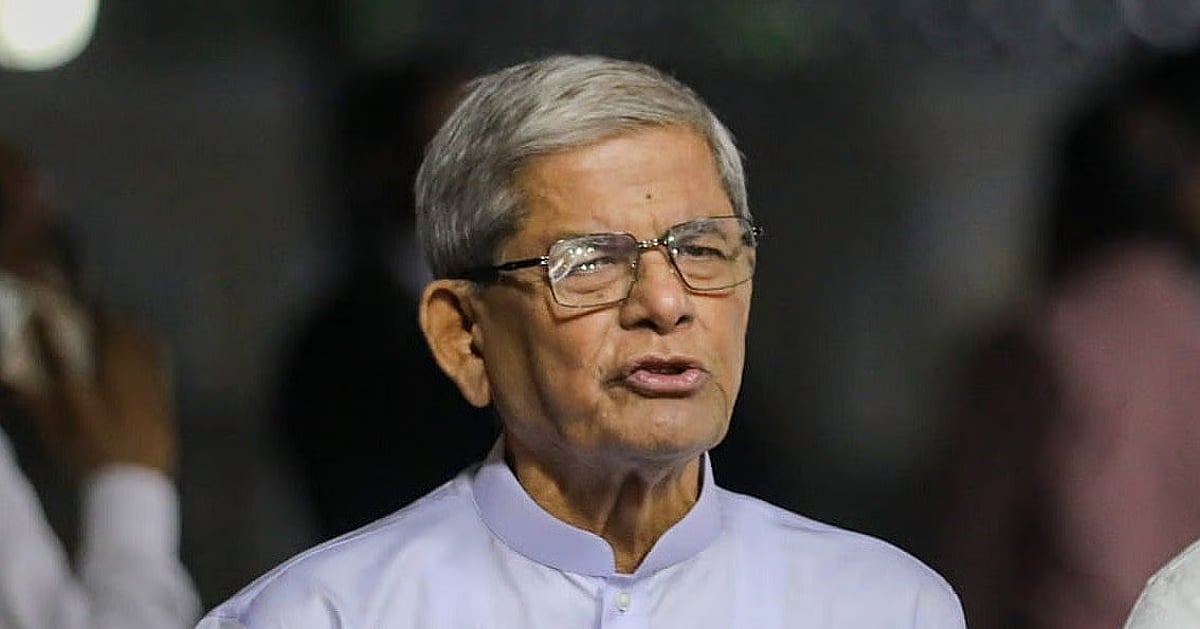
Mirza Fakhrul Islam Alamgir. File photo

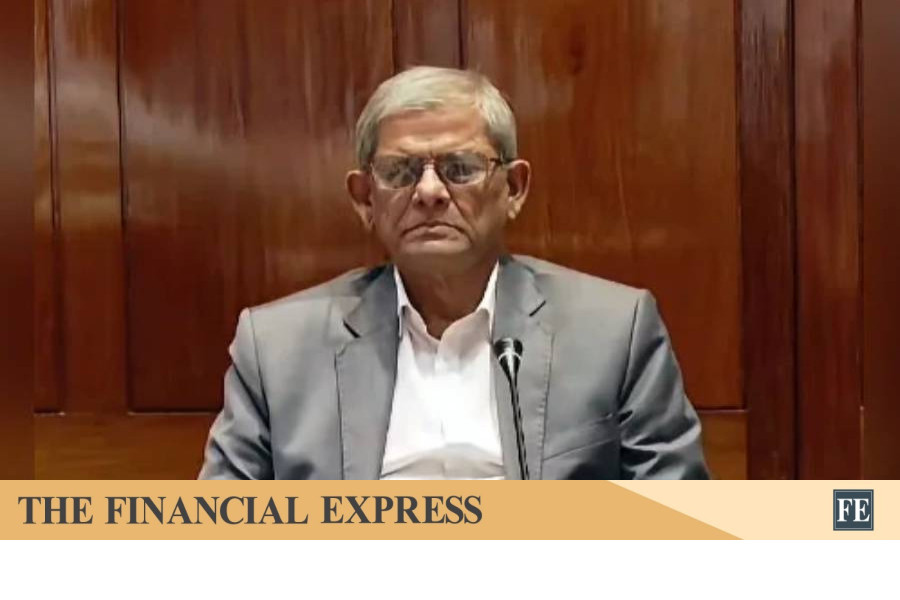
BNP Secretary General and LGRD Minister Mirza Fakhrul Islam Alamgir is likely to be the party’s nominee for president, according to multiple party sources.

Party insiders said the nomination would be a reward for his long contributions to the BNP.

Fakhrul has also signed the consent form for the presidential nomination. The party may formally announce him as its presidential candidate on Wednesday or Thursday, said party sources.

The BNP collected two nomination papers for the presidential election Sunday morning, further setting the process in motion.

Party sources said a final decision on the candidate is expected before the deadline for submitting nomination papers.

If Fakhrul is formally nominated and subsequently elected president, his departure from both the cabinet and the BNP secretary general's post would require simultaneous changes in the government and the party leadership, they said.

Under an arrangement now being discussed, Home Minister Salahuddin Ahmed is likely to take charge of the Ministry of Local Government, Rural Development and Cooperatives, currently headed by Fakhrul.

Water Resources Minister Md Shahiduddin Chowdhury Anee, meanwhile, is being considered to succeed Salahuddin as home minister, according to the sources.

They stressed that these changes have not yet been formally approved and would depend on Fakhrul eventually becoming president.

Adjustments could still be made before any final announcement.

Senior Joint Secretary General and prime minister's adviser Ruhul Kabir Rizvi is expected to serve as acting secretary general if Fakhrul leaves the post, the sources said.

Rizvi is likely to remain in charge until the BNP holds its next national council, where the party would make a longer-term decision on the secretary general's position.

The possible elevation of Fakhrul would mark a major change in the BNP's leadership structure, as he has served at the centre of the party's organisational and political decision-making for more than a decade.

He became acting secretary general on March 20, 2011, before being made full secretary general on March 30, 2016. Earlier, he was named senior joint secretary general at the BNP's fifth national council on December 8, 2009.

Born in Thakurgaon on January 26, 1948, Fakhrul entered politics after careers in teaching and government service.

He was elected chairman of Thakurgaon municipality in 1988 as an independent candidate and joined the BNP in the early 1990s during the anti-Ershad movement. He became president of the Thakurgaon district BNP in 1992.

Fakhrul was elected an MP from Thakurgaon-1 in the 2001 parliamentary election and served as state minister for agriculture and later for civil aviation and tourism during the BNP-led government from 2001 to 2006.

Possible reshuffle

Salahuddin, a member of the BNP Standing Committee, is among the party's senior policymakers and currently heads the home ministry.

During the BNP-led four-party alliance government beginning in 2001, he served as state minister for communications. Earlier, he worked as an assistant private secretary to then prime minister Khaleda Zia between 1991 and 1996.

If the proposed reshuffle goes ahead, his transfer to LGRD would place another senior BNP leader in charge of a ministry closely linked to local government institutions and development activities across the country.

Anee, meanwhile, is a senior BNP leader and three-time MP from Lakshmipur-3.

He was elected to parliament in 2001 and 2008 and returned to the Jatiya Sangsad in the 2026 national election before being appointed water resources minister.

Anee also has a long background in party politics. During his years at Dhaka University, he held several positions in student politics and later served as president of Jatiyatabadi Chhatra Dal from 1996 to 1998.

He became a member of the BNP Central Executive Committee in 1999 and later served in a number of party positions, including joint secretary general and convener of the Lakshmipur district BNP.

His possible appointment to the home ministry would represent a significant elevation within the cabinet, given the ministry's central role in law enforcement and internal security.

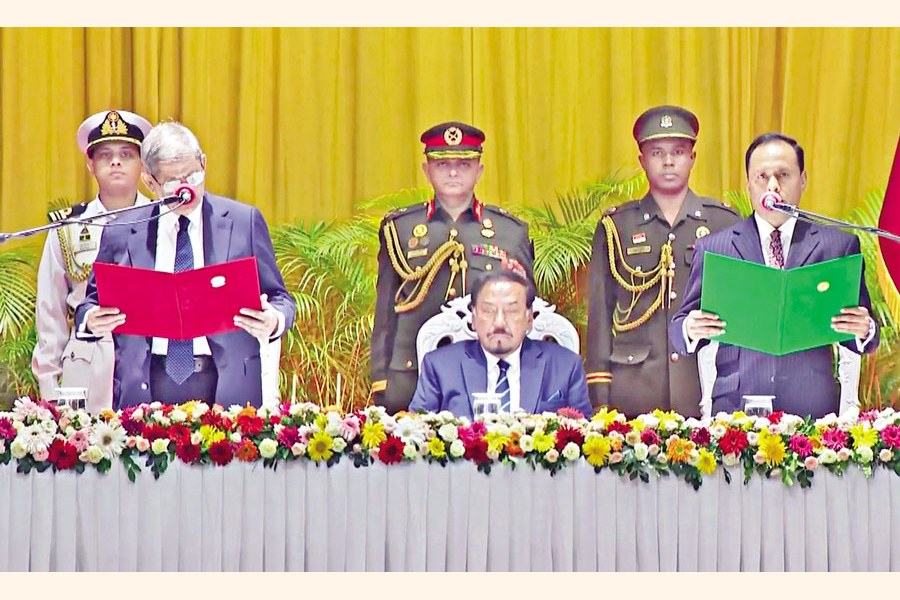
Bangladesh will elect its president on August 20, with voting scheduled from 2:00pm to 5:00pm, according to the Election Commission's announcement on August 6.

EC said nomination papers can be submitted from 10:00am to 4:00pm on August 13. The nomination papers will be scrutinised on August 16. The deadline for withdrawal of candidature is 4:00pm on August 18.

The office of president became vacant after Mohammed Shahabuddin resigned on July 24. Following his resignation, Speaker Hafiz Uddin Ahmad has been discharging the duties as acting president.​
 

From teaching to politics, Mirza Fakhrul set to become President

1786662702416.webp
 

A presidential election, or another coronation?

Kamal Ahmed

1786925089756.webp

VISUAL: ANWAR SOHEL

On August 20, for only the second time in our history, parliamentarians will have the opportunity to elect the president of the republic. If the ruling party sticks to its decision not to allow its MPs to vote freely, however, the entire exercise is poised to be anything but an election. It could instead be described as the beginning of the new president’s coronation.

Like the first presidential vote 35 years ago, this one too follows another pro-democracy uprising. The first uprising forced out the military dictator, General HM Ershad; the second overthrew the civilian but increasingly dictatorial regime of Sheikh Hasina. In between these upheavals, we had seven presidential elections, all won unopposed by nominees of the then ruling parties. Interestingly, in both post-uprising parliaments, BNP would play a decisive role in determining the country’s democratic future.

The second mass uprising, known as the July Uprising, was, in many ways, a very different political upheaval. It was largely initiated and steered by young people, particularly the Gen Z. Their aspirations were also far more radical, seeking deep and wide-ranging reforms of the state and its institutions. Nearly two decades of mass disenfranchisement and the systematic persecution of dissent and opposition under a civilian authoritarian regime created the conditions for broader national unity to bring an end to tyranny and “reconstruct the state on the foundation of democracy and human dignity.”

This was the premise on which all the major active political parties, after painstaking negotiations lasting more than a year, agreed to a broad reform agenda known as the July National Charter. The charter’s signatories, including the ruling BNP and the opposition 11-party alliance, declared that it “aims to reform the constitution, electoral system, judiciary, public administration, police administration, and mechanisms for combating corruption.”

The document arguably represents the second major expression in our history—after the all-party declaration of 1990—of a broad national consensus on political reform. Much of it could, and should, have been implemented without great difficulty had that unity been preserved instead of being undermined by disputes over procedural issues.

The July Charter is particularly significant because, under its proposed reforms, the presidency would acquire a degree of independence in appointing key officials to several state institutions—powers that previous presidents did not enjoy. In 1991, constitutional reform transformed the presidency into a largely ceremonial office. Over the following decades, we witnessed the gradual concentration of almost all state power in the hands of the prime minister, eventually producing what became a textbook example of electoral autocracy under Sheikh Hasina’s leadership.

The July Charter seeks to restore a degree of balance between the president and the prime minister by empowering the presidency to make appointments to the National Human Rights Commission, Information Commission, Law Commission, Press Council, Energy Regulatory Commission, and the governor of the central bank. The BNP agreed to these provisions but registered a note of dissent over the inclusion of the Bangladesh Bank governor as well as the chair and members of the Energy Regulatory Commission.

The charter also provides a conditional exemption from some of its provisions, stating that “if any political party or alliance secures a public mandate based on explicit mention in their election manifesto, they may proceed accordingly with necessary measures.”

As a signatory to the charter, BNP is expected to empower the country’s 23rd president accordingly. Its manifesto, known as the 31-point plan, remains silent on the presidency and its powers, thereby making the charter’s proposals effectively binding on the party. Although implementation of the charter remains stalled amid an ongoing dispute between the ruling BNP and the opposition 11-party alliance over procedural questions, it is widely expected that even limited constitutional changes would eventually result in a significant enhancement of the president’s powers. The president’s role also assumes particular significance in appointing a caretaker government to oversee national elections if political parties fail to agree on selecting the head of a caretaker administration.

The national consensus reached after the July Uprising also prescribes that the president should be elected through a secret ballot. Article 10 of the July Charter, under the heading “Presidential Election Procedure,” states: “The Constitution shall stipulate that Bangladesh shall have a President elected by majority vote through secret ballot by members of both houses of Parliament (lower and upper).”

Because the constitutional amendments have yet to be made, the forthcoming election will take place without an upper house. The election has also been necessitated by the premature resignation of Mohammed Shahabuddin from the presidency. The absence of an upper house makes the contest even less competitive, particularly because the current single-chamber parliament gives the ruling party a two-thirds majority. The outcome, therefore, appears to be a foregone conclusion in favour of the ruling party’s nominee Mirza Fakhrul Islam Alamgir.

The election could, at least theoretically, still produce a different outcome if BNP lifted the Article 70 restriction on its MPs. On August 11, Chief Whip Nurul Islam Moni told the media that Article 70 of the Constitution would remain in force during the presidential election, meaning that any lawmaker voting against the party’s decision would risk losing their parliamentary membership. This is clearly at odds with what BNP promised the nation when it signed the July Charter. BNP’s note of dissent on amending Article 70 reserves only two additional areas, beyond confidence votes and finance bills, where the restriction would apply: constitutional amendments and national security. Article 70, when incorporated into the constitution, was not intended to prevent MPs from exercising their freedom of choice—perhaps only once in a parliamentary term—to vote for the person who would hold the country’s highest constitutional office.

Taking away MPs’ freedom to choose the new president obviously raises the question of whether the party lacks confidence in the MPs elected on its ticket to support its nominee. More fundamentally, does the very principle of a secret ballot not strengthen the independence and stature of the office of the president? Ostensibly, as a co-signatory of the charter, presumed winner Mirza Fakhrul would command greater respect, although he may understandably have had no part in the decision to block a free vote.

Undoubtedly, the delay in implementing the July Charter over persistent procedural disputes is not only making the reform agenda uncertain; it is also taking us back towards the very system that we fought, and paid such a huge price, to overthrow.

Kamal Ahmed is consulting editor at The Daily Star. He led the Media Reform Commission under the interim government.​
 

Latest Posts

Back