[🇧🇩] Geopolitical Importance of Bangladesh

[🇧🇩] Geopolitical Importance of Bangladesh
28
1K
More threads by Saif

G Bangladesh Defense

How Bangladesh can navigate the geopolitical crossroads

1740007532588.webp

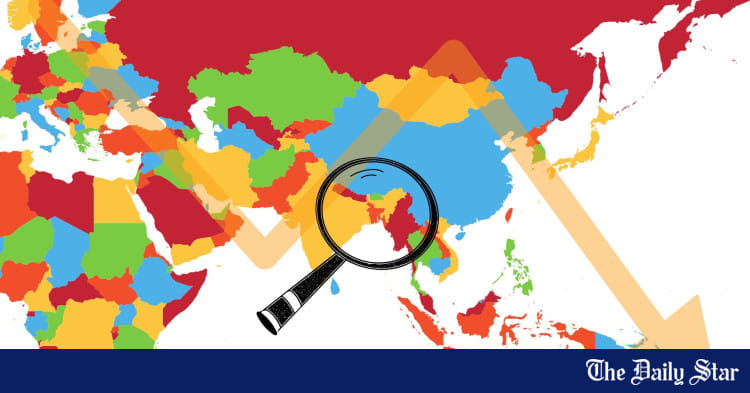
VISUAL: SIFAT AFRIN SHAMS

In recent times, the geopolitical landscape of the world has changed quite fast. The Ukraine war a few years ago, followed by the Israel-Palestine conflict, and the rise of right-wing governments in different European countries have changed the geopolitical panorama a lot. The ouster of Bashar al-Assad in Syria and that of Sheikh Hasina in Bangladesh have also added new dynamics at least to the respective regional geopolitics. Very recently, the election of Donald Trump as the newest US president has also added a lot to the changing scenario. Undoubtedly, the world is now at a geopolitical crossroads. One may wonder: what are the implications of all these for Bangladesh? In this context, some observations may be pertinent.

First, traditionally, the term "geopolitics" has a specific connotation. This concept has a "geographical" dimension as well as "political." But it must also be recognised that economic interests remain behind it as an important aspect. In fact, most of the time, economic interests of nations drive the global geopolitical dynamic. Since geopolitical phenomena reflect international relations, it is obvious that one of these relations would be economic. The bottom line is, it is wrong to keep the geopolitical concerns only to the arenas of geography and politics; it is necessary to recognise that "geoeconomics" and "political economy" of nations are equally crucial in the broader context of geopolitics.

Second, given that geoeconomics and political economy are important in geopolitics, the world in recent years has moved more and more to what is known as "economic nationalism," which implies economic isolation of nations in order to unilaterally protect each country's own economic interests. Economic nationalism has two implications. One, it demands and requires relatively closed economies, and inward-looking economic policies and strategies. And two, when needed, it may go up at best to bilateral relations from a unilateral position, but economic nationalism will not opt for multilateral interactions. People may think that economic nationalism is more anchored in ideas of the newly elected US president, but in reality, such nationalism was the by-product of the Covid pandemic. With the global outbreak of the pandemic in 2020, each country was set to protect its own people and to guard its economic interests in terms of trade, financial investments, and resource flows, including grants and aid. Economic nationalism is a characteristic of the current geopolitical structure.

Third, the present geopolitical system is characterised by inequality, instability, and unsustainability. We live in a world that is unequal on many planes—economic, social, political, cultural, etc. There are economic disparities among nations and within nation-states. In many societies, social exclusion is the norm, rather than an exception. At the global level, the political space is dominated by developed nations, and within countries, by the rich and the powerful. Voice and autonomy of those who are poor and marginalised are still more of an idea than a reality. Inequalities are manifested not only in outcomes such as income or wealth, but also in opportunities, such as access to education and healthcare services, entry into information and technology (ICT), etc. Conflicts, violence and intolerance have made the global order unstable and complex. Climate change, deforestation, desertification, salinisation, and loss of biodiversity have not only affected the lives of the present generation, but also are reducing the opportunities for future generations.

How do all of these affect Bangladesh? First of all, economic nationalism would affect its external trade, as well as the aid and foreign investment flows into the country. The trading partners will be more inward-looking, as a result of which some of the benefits that Bangladesh used to enjoy may no longer be available. The country may face higher tariffs and non-tariff barriers from its trading partners. Similarly, aid and foreign investment flows into the Bangladesh economy may be reduced. All these will impact the growth prospect of the country, adversely affecting job creation and employment in the economy.

Second, in a changed geopolitical structure, multilateralism is gradually taking a back seat and bilateral approaches are getting preferences. It means that external aid, particularly grants, will be negotiated bilaterally, rather than on multilateral platforms. It also implies that political concerns like water-sharing, cross-border migration and environmental issues, which sometimes are related to more than one nation, are probably going to be addressed between two nations, rather than by multiple nations. Thus, Bangladesh may have to deal with the flood issues separately with India and Nepal, rather than jointly with those countries. Similarly, there may not be a regional approach to the Rohingya crisis and different environmental issues that concern more than one country. All these may impact the regional public goods scenario in South Asia.

Third, in the new geopolitical order, there will be disparities in global economic opportunities. It will be important for Bangladesh to seize them. For example, the digital revolution around the world would provide numerous openings for Bangladeshi youths and entrepreneurs. The challenge would be whether Bangladesh is prepared in terms of educational standards, skill sets, and human resource development. This is crucial as some of the other countries would be moving faster than Bangladesh. At the same time, the country will have to be aware of the global risks, which may range from economic recession to some pandemics. Given the differences in the state of development, the countries will neither be equally prepared nor equally equipped to overcome the risks. Bangladesh needs forward planning to remain ahead of the game.

Fourth, one of the major milestones that Bangladesh will have to pass in its development process is its graduation from the LDC (Least Developed Country) status in 2026. The event is prestigious. Graduating from the LDC status will boost the nation's morale and aspire the people to reach a higher goal. But at the same time, such a graduation entails some challenges. For example, with the graduation, Bangladesh may lose its preferential treatment status in international trade; it may no longer be a candidate for grants from multilateral organisations. The changed global geopolitical structure may impact the LDC graduation scenario of Bangladesh. The country must be planning ahead of time to address the issues associated with the LDC graduation.

Finally, in the changed geopolitical scenario, it is not only global institutions but also regional groupings that are becoming relevant and effective. Yes, the South Asian Association for Regional Cooperation (SAARC) exists, but it needs strengthening and must be made more effective. It can be a useful platform for regional negotiations and decision-making. However, Bangladesh must look beyond SAARC. It should explore how it can be linked to platforms such as G15, G20, and BRICS (Brazil, Russia, India, China, and South Africa). Bangladesh should also use the platform of South-South cooperation to get the best out of the changed global geopolitical situation.

Selim Jahan is former director of the Human Development Report Office under the United Nations Development Programme and lead author of the Human Development Report.​
 

Bay of Bengal, Bangladesh, geo-strategy

1783049029919.webp


THE Bay of Bengal is rapidly emerging as one of the world’s most strategically significant maritime regions. Beyond serving as a crucial route for international trade and energy transportation, it has become an arena of growing geopolitical competition and regional connectivity. As China, India, the United States and Japan deepen their engagement in the Indo-Pacific, Bangladesh is attracting increasing strategic attention. Against this backdrop, an important question arises: can Bangladesh evolve into a middle power in the Bay of Bengal?

A middle power is neither a superpower nor a dominant regional hegemon. Rather, it is a state with sufficient economic strength, diplomatic influence, strategic importance and institutional capacity to shape regional affairs. Countries such as Australia, South Korea, Indonesia and Turkey are commonly regarded as middle powers because they actively influence regional agendas, contribute to international governance and often serve as constructive partners in addressing shared challenges. Bangladesh has not yet reached that position, but several emerging trends suggest that it possesses many of the characteristics required to move in that direction.

One of Bangladesh’s greatest advantages lies in its geography. Positioned between South Asia and Southeast Asia, the country occupies a strategic location that naturally connects the two regions. With direct access to the Bay of Bengal and close proximity to some of the world’s busiest maritime routes, Bangladesh enjoys a geographical advantage that few countries in the region possess. As a significant share of global trade passes through the wider Indo-Pacific, maritime security, logistics and regional connectivity are becoming increasingly important. If developed effectively, ports such as Chattogram and Matarbari could evolve into major regional logistics hubs, connecting neighbouring countries with international markets while strengthening Bangladesh’s own strategic relevance.

Economic progress provides another important foundation for middle-power aspirations. Over the past decade, Bangladesh has demonstrated remarkable resilience through sustained economic growth driven by its export-oriented garment industry, strong remittance inflows and continued investment in infrastructure. Although economic challenges remain, particularly amid global uncertainties, the country’s ability to maintain development has enhanced its international standing. Economic strength not only supports domestic development but also expands diplomatic influence by enabling greater investment in strategic sectors such as maritime infrastructure, port development, naval modernisation and regional connectivity. Demographics

Bangladesh’s foreign policy has also contributed to its growing strategic importance. Since independence, the country has generally adhered to the principle of ‘friendship to all and malice toward none.’ This balanced approach has enabled Bangladesh to maintain constructive relations with competing global powers, including India, China, the United States, Japan and the European Union. At a time when geopolitical rivalry is becoming increasingly pronounced, such diplomatic flexibility represents a valuable strategic asset. Rather than aligning exclusively with any single bloc, Bangladesh has positioned itself as a reliable partner capable of engaging with multiple stakeholders while preserving its own national interests.

The peaceful settlement of maritime boundary disputes with India and Myanmar further strengthened Bangladesh’s strategic position. By pursuing international legal mechanisms, Bangladesh secured sovereign rights over a substantial maritime area in the Bay of Bengal. Beyond resolving longstanding disputes, these decisions created new opportunities to develop fisheries, offshore energy resources, marine biodiversity and other components of the blue economy. If these resources are managed sustainably and efficiently, they could significantly enhance both the country’s economic prospects and its geopolitical influence.

Regional organisations provide another avenue through which Bangladesh can strengthen its role. As an active member of BIMSTEC, the Indian Ocean Rim Association (IORA) and SAARC, Bangladesh already participates in institutions that increasingly shape regional cooperation. As issues such as maritime security, climate adaptation, disaster management and regional trade become more prominent, these organisations offer valuable platforms for Bangladesh to contribute ideas, promote cooperation and exercise diplomatic leadership. Taking more proactive initiatives within these forums would allow the country to strengthen its regional profile while demonstrating many of the characteristics associated with middle powers.

Nevertheless, important challenges continue to stand in the way of these ambitions. Economic size remains one of the defining attributes of middle-power status, and Bangladesh still trails more established regional players in terms of overall economic capacity. Although the economy has grown steadily, it remains vulnerable to external shocks, dependence on a relatively narrow export base and rising energy demands. Sustained diversification, technological innovation and higher-value industries will therefore be essential if Bangladesh hopes to expand its regional influence over the long term.

Maritime and military capabilities also require continued development. Middle powers typically possess credible naval and coast guard forces capable of safeguarding national interests while contributing to wider regional security. Bangladesh has made notable progress in modernising its navy, but further investment is needed in maritime surveillance, blue-water capabilities, coastal infrastructure, cybersecurity and maritime domain awareness. Without stronger capabilities at sea, the country’s ability to protect its expanding maritime interests and shape developments in the Bay of Bengal may remain constrained. Demographics

Climate change presents another significant challenge. Bangladesh remains one of the countries most vulnerable to sea-level rise, cyclones and other climate-related disasters. These pressures place considerable strain on national resources and development priorities. Yet they also provide an opportunity. Bangladesh has already emerged as an influential voice on climate vulnerability and adaptation. By continuing to champion climate justice, resilience and adaptation financing in international forums, the country can reinforce a distinctive dimension of its diplomatic identity while strengthening its standing in regional and global affairs.

Ultimately, Bangladesh’s emergence as a middle power will depend on its ability to transform strategic advantages into sustained strategic influence. Geography alone cannot generate power. It must be supported by economic resilience, institutional capacity, technological advancement, effective governance and proactive diplomacy. Continued investment in ports, maritime industries, education, digital transformation and regional connectivity will determine whether Bangladesh can fully capitalise on the opportunities presented by the changing geopolitical landscape.

Bangladesh may not yet qualify as a middle power in the Bay of Bengal, but it possesses many of the essential foundations to become one. If it can address its structural weaknesses while pursuing a coherent long-term maritime strategy, the country has the potential to emerge as an influential regional actor capable of shaping developments in the Bay of Bengal and contributing meaningfully to regional stability, connectivity and shared prosperity.

Dr Nasim Ahmed is former additional secretary to the government and an associate professor of public policy at the Bangladesh Institute of Governance and Management.​
 
Bangladesh must hold its own amid changing geopolitics

Shamsad Mortuza

1783816369457.webp

FILE VISUAL: STAR

The performative presence of two superpowers in the precincts of Bangladesh’s national parliament has added some twists in the country’s political plot. Last year, hundreds of drones illuminated the sky over Manik Mia Avenue to celebrate the July uprising and the Sino-Bangla friendship. Then, last week, a US military band performed at the same venue, remembering American architect Louis I Kahn, who designed the parliament complex. The celebration of America Week 2026 coincided with the formation of an American caucus in Bangladesh’s parliament. The pronounced exercises in cultural diplomacy, however, cannot be separated from geopolitics.

The parliament complex, irrespective of its designer or inception date, unequivocally belongs to Bangladesh. Yet, we allowed external powers to enter our national narrative through spectacular technology and/or political symbolism there. Their interest in the symbolic site prompts us to rethink different micro-narratives connected to our national narrative.

Understanding these stories requires referencing the newly proposed Bangladesh-China-Myanmar economic corridor and Dhaka’s reciprocal trade agreement with Washington. On paper, the return to the idea of an economic corridor connecting Bangladesh with Yunnan through Myanmar is an overdue expression of the country’s “Look East” policy that promises greater access to China and Southeast Asia and modernised ports and multimodal transport to take full advantage of our geographical location. But the Agreement on Reciprocal Trade (ART) signed by the interim government with the US has certain provisions about digital trade, technology, border measures, supply chains, procurement, and Bangladesh’s commercial relations with other countries that prompt us to read the tri-national corridor and the US treaty together. The real challenge for Bangladesh is to participate in the proposed economic corridor without narrowing its access to the US market or compromising its economic choices due to external factors. This will be a test of our strategic autonomy.

The corridor outlined by China after our premier’s state visit connects Bangladesh with the Yunnan province through Myanmar. The connectivity entails development of various manufacturing and export processing zones that may help Bangladesh diversify its economy beyond RMG exports and remittances. A commercially viable connection to Yunnan could boost support logistics, agro-processing, tourism, light engineering, warehousing, and regional value chains.

However, the Myanmar question presents a major obstacle. Any corridor to Yunnan must traverse the conflict-ridden Rakhine state, a region marked by civil war, the expulsion of Rohingya Muslims, and significant Chinese and Indian strategic investments. China already has a China-Myanmar economic corridor that connects them with the proposed deep-sea port and special economic zone at Kyaukphyu in Rakhine. India, meanwhile, has invested in the Kaladan Multimodal Transit Transport Project. Kaladan employs Sittwe Port to link Mizoram with Kolkata, reducing its dependency on the narrow Siliguri Corridor. Both India and China maintain pragmatic relations with the Myanmar authorities as well as with the ethnic armed organisations. Washington views the corridor as the Chinese ambition of expanding its presence between the South China Sea and the Bay of Bengal. The theatre that we are witnessing is thus becoming increasingly crowded.

Bangladesh needs to learn from the BCIM initiative and the consequences of geopolitical rivalry. The project had a premature demise as strategic suspicion displaced economic cooperation. India was uncomfortable seeing the corridor as part of China’s Belt and Road Initiative (BRI). The new trilateral proposal excludes India, which has reasons to be sensitive about its vulnerable northeast. Dhaka should take New Delhi’s security concerns into account while remaining focused on avoiding India’s veto over legitimate connectivity decisions. A Bangladesh-first policy must highlight the corridor as commercially defensible, not a geopolitical trigger directed at New Delhi. Strategic autonomy requires the ability to work with both countries while becoming dependent on neither.

The situation is made more complicated by the US trade deal signed on February 9, which lets the US charge a 19 percent tariff on most Bangladeshi goods but also allows certain amounts of RMG and textile products to be imported without tariffs if they are connected to American cotton and man-made fibres. These conditions also permit agricultural, industrial, energy and technology products to enter the US market as the largest single-country export market. But the treaty reportedly restricts Bangladesh from economic dealings with third countries. Washington could interpret the proposed corridor as a violation of the treaty.

Bangladesh, therefore, needs to come up with its narrative where it could benefit from both. It could import American cotton, use Chinese machinery, manufacture RMG products in Bangladesh, and export them to several markets. But such an outcome will be possible only if neither side is allowed to impose exclusivity.

The danger is that the US may use market access to influence Bangladesh’s relations with China, while China may use infrastructure dependency to shape Bangladesh’s strategic pressures, but Bangladesh must learn to avert this dual vulnerability trap.

The weakest link in the corridor’s ambition is Myanmar. A treaty signed with Myanmar’s central government may not necessarily provide safe passage to ASEAN goods. India’s Kaladan project faces similar difficulties because the route crosses conflict-affected territory. This is where China can exert its influence to protect the infrastructure interests. But that could also imply Bangladesh becoming dependent upon Chinese mediation for the security of a route located in a third country. Such dependency is a serious sovereignty concern.

At the same time, the issue of the Rohingya refugees remains unresolved. We must address the unresolved issue of the Rohingya repatriation before any corridor is planned. More than 12 lakh Rohingya remain displaced in Bangladesh because Myanmar denied them citizenship and provision to return to their homeland with safety and dignity. Bangladesh cannot treat Rakhine as an economic corridor while accepting its closure as a homeland for the Rohingya.

So the government’s “Bangladesh first” position must use the corridor as leverage. It needs to convince China to be more active as a mediator for Rohingya repatriation. Bangladesh can learn from India as to how it prioritised its relations with the Myanmar authorities for different strategic projects. The corridor framework must not be separated from measurable commitments concerning humanitarian access, the security and citizenship rights of the Rohingya as well as their return. Connectivity cannot become a reward for Myanmar’s continued refusal to ignore the displacement of its people.

To return to the two performances on the parliament premises, we must reflect on the struggle for narrative influence now unfolding around Bangladesh. There is nothing wrong with connecting our story with those from the larger worlds. However, we should not let such cultural presence be mistaken for a strategic entitlement. The parliament belongs to the people of Bangladesh. The decisions made within the parliament must also reflect this principle.

Bangladesh needs the American market. It needs Chinese trade, investment and infrastructure. It needs workable relations with India, whose territory surrounds most of our land border. It needs peace in Myanmar and stability in the Bay of Bengal. The national interest lies not in choosing one relationship against the others but in preventing any relationship from closing off the rest.

Dr Shamsad Mortuza is vice-chancellor at the University of Liberal Arts Bangladesh (ULAB).​
 

Bay of Bengal, new geopolitics, and Bangladesh's strategic opportunities


1784331029710.webp
 

China, India and US: Bangladesh's geopolitical risks
In terms of economy, trade, and geopolitics, with whom Bangladesh should become closer, asks AKM Ahsan Ullah

AKM Ahsan Ullah

University Teacher and Researcher

1786923533353.webp


A question frequently arises regarding Bangladesh's foreign policy: Will the country lean more toward India, China, the United States, or some other power? While the question is intriguing, it is not particularly useful for governance. This is because modern international relations are built on specific exchanges of mutual interest, rather than permanent allegiance.

A single state can be a security partner with one country, a technology partner with another, a trade partner with a third, and a labour market partner with a fourth. Bangladesh now needs to create a map of partnership based on needs instead of choosing friends.

This necessity has become even more urgent. Bangladesh is set to graduate from the list of least developed countries on 24 November 2026. This graduation is prestigious but could also change certain trade benefits, special market access, and types of international aid.

The country's exports remain overly dependent on a few markets and garments. In 2025, about 94 per cent of the European Union's imports from Bangladesh were textile products, amounting to 23. 3 billion euros in goods trade. Therefore, in the next stage of Bangladesh's diplomacy, it is crucial to have measurable outcomes in terms of market acquisition, skills, technology, mobility, and knowledge.

Bangladesh's priority is India, which is not an emotional decision but a geographic necessity. Almost the entire land border of Bangladesh is surrounded by India; in terms of rivers, borders, electricity, roads, railways, seaports, the communication in Northeast India, and Bangladesh's access to Nepal-Bhutan, India is indispensable.

However, relations do not mean unilateral dependency. Bangladesh's goal should be to establish a structure with India where the benefits of cooperation are visible and mutual. Priorities could include managing the shared river waters, stopping civilian fatalities at the borders, rail and water connections, electricity and energy trade, easing of medical and education visas, and reducing tariff barriers in the Indian market against Bangladesh.

Only about 5 per cent of South Asia's total trade is intra-regional, yet according to the World Bank, the current $23 billion regional trade could reach at least $67 billion. There is also great potential to multiply Bangladesh’s exports to India. Hence, the relationship with India should be measured not merely by political closeness among governments but by the achieved results in market, water, border, and communication.

Japan and South Korea: Partnerships in development financing technology

Japan is possibly the least controversial and most highly promising strategic partner for Bangladesh. For a long time, Japan has been a significant collaborator in infrastructure, development-financing, transportation, education, and human resource development of Bangladesh. In 2025, Japan announced an aid package of around $1.06 billion for budget support, rail modernisation, scholarships, among others.

However, relationships should not be confined to bridges, ports, or loans alone. Bangladesh’s next partnership with Japan should be focused on industrial technology, quality production, engineering education, healthcare, renewable energy, urban management, and developing skilled caregivers for the aged population. Japan’s labour shortage is an opportunity for Bangladesh, but not according to the old model of sending unskilled labourers. A joint system for language training, professional certification, behavioural training, and skill assessment before employment needs to be developed.

The same strategy is required for South Korea. Korea employs Bangladeshi workers, but the relationship’s potential is much greater than the labour market. Joint training centres can be established in electronics, shipbuilding, automated manufacturing, batteries, information technology, and technical education. Big Korean firms should not only be attracted to sell products in Bangladesh’s market but also to build production, research, and supply systems within Bangladesh.

European Union: Partnership in apparel market and knowledge

The European union is one of Bangladesh’s major export markets. However, Bangladesh's Europe-policy has long been centered around garment tariff benefits. The relationship must be built on a new foundation after its graduation from the list of least developed countries.

Sector-specific partnerships need to be established with Germany, France, Italy, the Netherlands, Sweden, and Denmark. Engineering, green industries, and technical training with Germany; water management, delta planning, and agricultural technology with the Netherlands; aviation, satellites, marine research, and culture with France; legal regular labour mobility and small industries with Italy; cooperation in renewable energy, digital governance, and social security with Nordic countries can be increased.

Bangladesh’s main goal with Europe should be to create a sustainable trade system where labour rights, environmental standards, carbon emissions, supply chain transparency, and product source identification are present. If Europe is seen only as a buyer, Bangladesh will remain confined to cheap labour; if made a partner in technology, design, research, and branding, it can climb the value chain.

The movement of students and researchers should also be central to this relationship. Long-term institutional partnerships should be built in joint degrees, laboratories, climate research, public health, artificial intelligence, and migration research. Visa facilitation is needed not just for tourists; separate movement arrangements are required for researchers, teachers, industry trainees, and young entrepreneurs.

However, relations do not mean unilateral dependency. Bangladesh's goal should be to establish a structure with India where the benefits of cooperation are visible and mutual. Priorities could include managing the shared river waters, stopping civilian fatalities at the borders, rail and water connections, electricity and energy trade, easing of medical and education visas, and reducing tariff barriers in the Indian market against Bangladesh.

Gulf States: Economic co-production

Saudi Arabia, the United Arab Emirates, Qatar, Oman, and Kuwait are extremely important for Bangladesh’s foreign employment and expatriate income. Expatriate remittances are one of the mainstays of economic stability for Bangladesh; in various months of the fiscal year 2025-26, monthly expatriate income was over 2-3 billion dollars.

However, Gulf relations are still largely limited to sending labourers, buying fuel, and religious connections. This model needs changing. Gulf countries are investing in sectors like tourism, healthcare, artificial intelligence, construction technology, food security, aviation, and financial services, moving away from oil-dependent economies. Bangladesh should develop skills partnerships with them—creating joint training and certification centres in Bangladesh according to specific occupational needs.

At the same time, Saudi, Emirati, and Qatari investments in Bangladesh in ports, transportation, food processing, healthcare, tourism, and renewable energy can be attracted. Gulf states have a food security need; Bangladesh needs capital and technology in its agriculture and food processing sectors. Instead of merely contractual farming, a system of joint ownership, processing, and export can be built. Most crucially, state-level negotiations on minimum wages, recruitment costs, compensation, social security, and job change rights for workers are essential. The success isn’t about sending more workers but ensuring they don’t go in debt, insecure, or unskilled conditions.

ASEAN: Bangladesh’s immediate future

While Bangladesh is a South Asian country, a significant portion of its economic future lies in Southeast Asia. Therefore, relations with Malaysia, Singapore, Indonesia, Thailand, and Vietnam should be prioritised.

Singapore can be a partner in financial services, port management, urban planning, technological initiatives, and international arbitration. With Malaysia, aside from labour market collaboration, cooperation in higher education, halal economy, electronics, and healthcare is possible.

Pharmaceutical, agriculture, Muslim consumer market, defence industry, and marine cooperation with Indonesia can be enhanced. Opportunities to learn from Thailand in medicine, tourism, food processing, and Bay of Bengal communications; and from Vietnam in export-oriented industry policy, electronics, agricultural productivity, and supply chain exist.

ASEAN has shown that effective cooperation in economy and communication is possible despite political system differences. Where intra-regional trade in South Asia is about 5 per cent, it is about 25 per cent in ASEAN. Therefore, Bangladesh must forge sector-based agreements, business visas, direct flight and shipping routes, and a university network with ASEAN. The Rohingya crisis with Myanmar will complicate this east-facing policy, though the relationship with the entire Southeast Asia should not be held hostage by one country's actions.

Bangladesh does not need many friends; there is a need for such partners whose relationships yield tangible benefits in the lives of citizens—creating more jobs, easing visas, creating education opportunities, bringing technology, diversifying exports, and increasing the state's bargaining power. Although the world is now divided into camps of loyalty, successful nations do not deposit their futures in just one camp.

United States, China, and the balance work

China is an important source of imports, infrastructure partner, supplier of manufacturing machinery, and a significant strategic power for Bangladesh. Bangladeshi priorities with China should be focused on reducing trade deficits, market access for Bangladeshi products, production relocation, technology, renewal energy, and reliable supply of industrial raw materials. Joint investment and export-oriented production should be prioritised over loan-dependent projects.

The United States is one of Bangladesh’s key export markets and a significant centre for higher education, research, technology, health, and expatriate networks. According to export data, the US was Bangladesh’s largest single export destination in the fiscal year 2024-25. Bangladesh’s relationship with the US should not only be confined to discussions about elections, sanctions, or security, but be directed towards market access, cotton and textile supply chains, technology investment, university research, pharmaceuticals, and knowledge and capital transfer from expatriate Bangladeshis.

The issue is that in the US-China rivalry and India-China disputes, one relationship may seem suspicious to the other. The solution is not secretive balance, but declared transparency. Bangladesh needs to express openly which project with whom, why, under what economic evaluation, and on what terms it is being undertaken. Parliamentary review, loan risk analysis, and open tenders in matters of defence, ports, or significant infrastructure could reduce suspicion.

Relationship risks and transition

A deep relationship with one country can concern another. Excess Chinese strategic presence is India's concern; leaning towards the US’s security framework is China’s problem; human rights and labour standards are significant to Western countries; the Muslim world watches Bangladesh’s stance on issues like Palestine.

The effective path to avoiding these risks is not to repeatedly state ‘friendship with all’; rather, to keep relationships issue-based. For example, industry and infrastructure with China, quality development with Japan, markets, and technology with the US, connectivity and water with India, green exports with Europe, labour and investment with the Gulf, and production and regional linkage with ASEAN.

Secondly, no state should be allowed to be Bangladesh’s sole gateway. Energy, arms, loans, imports, exports, and labour market—each needs to have multiple alternatives. Thirdly, bilateral agreements should rely on institutions instead of personal political relations. Agreements that stand even if the government changes make sustainable diplomacy.

Bangladesh does not need many friends; there is a need for such partners whose relationships yield tangible benefits in the lives of citizens—creating more jobs, easing visas, creating education opportunities, bringing technology, diversifying exports, and increasing the state's bargaining power. Although the world is now divided into camps of loyalty, successful nations do not deposit their futures in just one camp.

Therefore, the next principle of Bangladesh’s foreign policy could be—neighbourly in geography, multidimensional in the economy, ambitious in technology, and transparent in diplomacy. The depth of relationships should not be measured by photos, visits, or joint statements, but by how many new markets opened, how many skilled workers got honourable jobs, how much research was generated, how many students got opportunities for mobility, and how effective the passport became in general citizens' lives.

#AKM Ahsan Ullah is Professor, International, Security, and Migration, University of Brunei Darussalam, Brunei​
 

Latest Posts

Back