Bangladesh Defense
Saif
Senior Member
- Jan 24, 2024
- 21,561
- 9,760
- Nation

- Residence
- Axis Group

Repatriation without rights
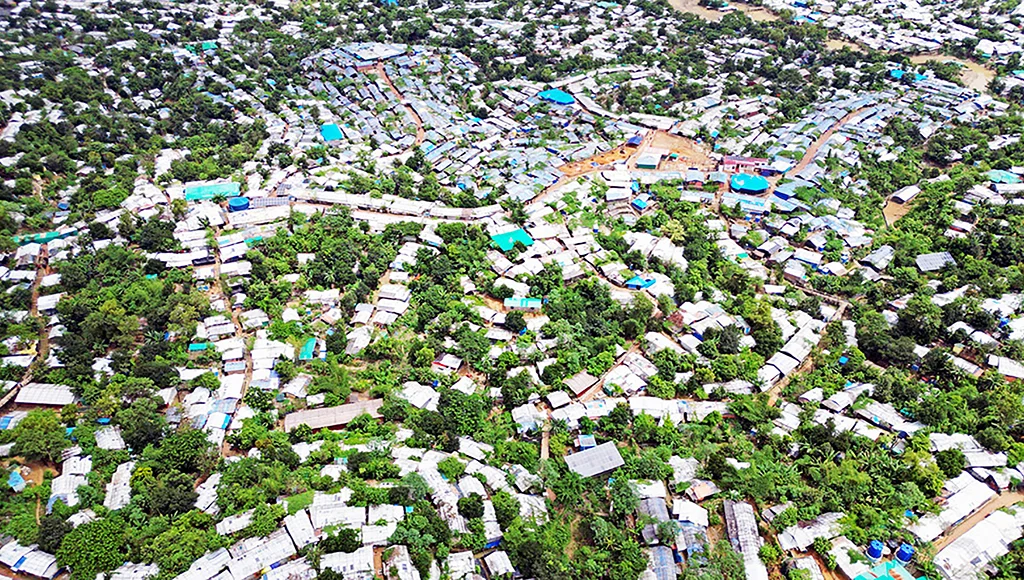
The photograph shows a view of the Kutupalong Rohingya camp in Ukhiya, Cox’s Bazar. | Agence France-Presse/Munir uz Zaman
THE Rohingya crisis remains one of South and Southeast Asia’s most enduring humanitarian and political failures. Since the mass expulsion of Rohingyas from Myanmar’s Rakhine State in 2017, Bangladesh has hosted more than one million refugees in Cox’s Bazar and Bhasan Char while Myanmar has failed to create the conditions for their safe return. What began as an emergency has become a protracted crisis marked by statelessness, insecurity, aid dependency and diplomatic fatigue. Repatriation continues to be presented as the preferred durable solution, yet every major initiative has failed because the central political issue remains unresolved: the Rohingyas cannot safely return to a country that still denies them citizenship, protection and equal belonging.
Bangladesh and Myanmar signed a bilateral repatriation agreement only months after the 2017 exodus. Yet the arrangement was non-binding and failed to address the guarantees that mattered most to the refugees, including citizenship, freedom of movement, property restitution and independent monitoring. Since then, every major repatriation effort has followed the same pattern. Attempts in 2018 and 2019 collapsed because refugees refused to return without credible assurances of safety and rights. A China-facilitated pilot initiative in 2023, which included visits by Rohingya representatives to Rakhine, also stalled as renewed fighting, cyclone damage and deteriorating security made even limited returns unrealistic. More fundamentally, refugees remained unconvinced that conditions had changed. Their reluctance was not a rejection of repatriation but a rational response to continued uncertainty. Returning to fenced settlements or tightly controlled villages without legal status would simply replace exile in Bangladesh with confinement in Myanmar.
These repeated failures expose the central weakness of the repatriation agenda. Too much attention has been given to moving refugees across the border and too little to creating the conditions that would allow them to return as citizens with rights, security and dignity. Myanmar’s 1982 citizenship law, long-standing restrictions on movement and entrenched discrimination remain fundamental obstacles. The 2021 military coup has made matters worse, fragmenting authority and turning Rakhine into an active conflict zone contested by the Myanmar military, the Arakan Army and other armed groups. Bangladesh is therefore no longer negotiating with a single reluctant government but with an increasingly fragmented political and security landscape.
The challenge extends well beyond Bangladesh and Myanmar. China has sought to mediate because stability in Myanmar serves its strategic interests, but its diplomacy has focused more on facilitating dialogue than addressing the rights that underpin sustainable return. India has balanced humanitarian concerns with security and geopolitical priorities, while ASEAN has struggled to move beyond its tradition of consensus and non-interference. Western governments have backed accountability efforts and imposed sanctions, yet these measures have done little to change realities inside Rakhine. The result is a fragmented diplomatic response in which no external actor has applied sufficient leverage or sustained pressure to make a rights-based solution politically unavoidable.
Bangladesh’s position has become increasingly difficult. Its humanitarian response has evolved into a long-term national responsibility, placing growing pressure on land, forests, water resources, public services and host communities. Security concerns have also intensified as trafficking, armed groups and criminal networks exploit a refugee population with limited education, livelihood opportunities and freedom of movement. At the same time, declining international funding has reduced food assistance, healthcare and education, deepening frustration in the camps and encouraging dangerous onward journeys by sea to countries such as Indonesia and Malaysia. Yet these mounting pressures cannot justify premature repatriation. Any return must remain voluntary, safe, dignified and firmly grounded in rights.
The crisis also exposes the limits of humanitarianism. Aid can keep people alive, but it cannot resolve statelessness or political exclusion. For years, the international response has operated on separate tracks: humanitarian agencies sustain refugees in Bangladesh, legal institutions pursue accountability, diplomats negotiate repatriation and development partners support host communities. Each effort is necessary, but together they have failed to produce a coherent political strategy. The Rohingya have too often been treated as beneficiaries of assistance rather than stakeholders in decisions about their future. Any durable solution must give them a meaningful voice in shaping the conditions of return, including citizenship, security, education and mechanisms to monitor implementation.
The way forward requires realism rather than rhetoric. Repatriation should remain the long-term objective, but only after verifiable changes inside Rakhine. Refugees need more than transport across a border; they need a credible pathway to citizenship, freedom of movement, access to services, protection from abuse and either the restoration of, or compensation for, lost property. Any future agreement should include independent international monitoring with meaningful access to return areas. Diplomacy must also adapt to Myanmar’s fragmented political landscape by engaging relevant actors without compromising the principle that rights, not expediency, should determine the terms of return.
Nor can the camps in Bangladesh remain indefinite waiting rooms. Refugees need education, skills development, legal protection and limited livelihood opportunities to prevent social deterioration and preserve their capacity to rebuild their lives when return eventually becomes possible. These measures should not be viewed as local integration but as responsible crisis management. International partners must also do more by sustaining humanitarian funding, expanding resettlement for the most vulnerable, supporting host communities and maintaining coordinated diplomatic pressure on Myanmar. Accountability efforts must continue because impunity remains one of the principal obstacles to safe return.
Ultimately, the Rohingya crisis is not a logistical failure but a political one. Refugee lists, reception centres and pilot projects cannot substitute for citizenship, security and recognition. Bangladesh seeks relief from a burden it cannot carry indefinitely; Myanmar continues to avoid confronting the policies that created the crisis; regional powers prioritise stability; and donors struggle to sustain international attention. The Rohingya seek something far simpler: the right to return home as equal citizens. Until repatriation efforts are anchored in that principle, they will continue to produce agreements without trust, announcements without returns, and roadmaps without roads.
Dr Mohammad Zaman is an expert in resettlement and development. His recent edited book (co-editors Robert Anderson and Kawser Ahmed) is titled Rohingya Stories: History and Geopolitics in a Multipolar World (Springer, 2025).
The photograph shows a view of the Kutupalong Rohingya camp in Ukhiya, Cox’s Bazar. | Agence France-Presse/Munir uz Zaman
THE Rohingya crisis remains one of South and Southeast Asia’s most enduring humanitarian and political failures. Since the mass expulsion of Rohingyas from Myanmar’s Rakhine State in 2017, Bangladesh has hosted more than one million refugees in Cox’s Bazar and Bhasan Char while Myanmar has failed to create the conditions for their safe return. What began as an emergency has become a protracted crisis marked by statelessness, insecurity, aid dependency and diplomatic fatigue. Repatriation continues to be presented as the preferred durable solution, yet every major initiative has failed because the central political issue remains unresolved: the Rohingyas cannot safely return to a country that still denies them citizenship, protection and equal belonging.
Bangladesh and Myanmar signed a bilateral repatriation agreement only months after the 2017 exodus. Yet the arrangement was non-binding and failed to address the guarantees that mattered most to the refugees, including citizenship, freedom of movement, property restitution and independent monitoring. Since then, every major repatriation effort has followed the same pattern. Attempts in 2018 and 2019 collapsed because refugees refused to return without credible assurances of safety and rights. A China-facilitated pilot initiative in 2023, which included visits by Rohingya representatives to Rakhine, also stalled as renewed fighting, cyclone damage and deteriorating security made even limited returns unrealistic. More fundamentally, refugees remained unconvinced that conditions had changed. Their reluctance was not a rejection of repatriation but a rational response to continued uncertainty. Returning to fenced settlements or tightly controlled villages without legal status would simply replace exile in Bangladesh with confinement in Myanmar.
These repeated failures expose the central weakness of the repatriation agenda. Too much attention has been given to moving refugees across the border and too little to creating the conditions that would allow them to return as citizens with rights, security and dignity. Myanmar’s 1982 citizenship law, long-standing restrictions on movement and entrenched discrimination remain fundamental obstacles. The 2021 military coup has made matters worse, fragmenting authority and turning Rakhine into an active conflict zone contested by the Myanmar military, the Arakan Army and other armed groups. Bangladesh is therefore no longer negotiating with a single reluctant government but with an increasingly fragmented political and security landscape.
The challenge extends well beyond Bangladesh and Myanmar. China has sought to mediate because stability in Myanmar serves its strategic interests, but its diplomacy has focused more on facilitating dialogue than addressing the rights that underpin sustainable return. India has balanced humanitarian concerns with security and geopolitical priorities, while ASEAN has struggled to move beyond its tradition of consensus and non-interference. Western governments have backed accountability efforts and imposed sanctions, yet these measures have done little to change realities inside Rakhine. The result is a fragmented diplomatic response in which no external actor has applied sufficient leverage or sustained pressure to make a rights-based solution politically unavoidable.
Bangladesh’s position has become increasingly difficult. Its humanitarian response has evolved into a long-term national responsibility, placing growing pressure on land, forests, water resources, public services and host communities. Security concerns have also intensified as trafficking, armed groups and criminal networks exploit a refugee population with limited education, livelihood opportunities and freedom of movement. At the same time, declining international funding has reduced food assistance, healthcare and education, deepening frustration in the camps and encouraging dangerous onward journeys by sea to countries such as Indonesia and Malaysia. Yet these mounting pressures cannot justify premature repatriation. Any return must remain voluntary, safe, dignified and firmly grounded in rights.
The crisis also exposes the limits of humanitarianism. Aid can keep people alive, but it cannot resolve statelessness or political exclusion. For years, the international response has operated on separate tracks: humanitarian agencies sustain refugees in Bangladesh, legal institutions pursue accountability, diplomats negotiate repatriation and development partners support host communities. Each effort is necessary, but together they have failed to produce a coherent political strategy. The Rohingya have too often been treated as beneficiaries of assistance rather than stakeholders in decisions about their future. Any durable solution must give them a meaningful voice in shaping the conditions of return, including citizenship, security, education and mechanisms to monitor implementation.
The way forward requires realism rather than rhetoric. Repatriation should remain the long-term objective, but only after verifiable changes inside Rakhine. Refugees need more than transport across a border; they need a credible pathway to citizenship, freedom of movement, access to services, protection from abuse and either the restoration of, or compensation for, lost property. Any future agreement should include independent international monitoring with meaningful access to return areas. Diplomacy must also adapt to Myanmar’s fragmented political landscape by engaging relevant actors without compromising the principle that rights, not expediency, should determine the terms of return.
Nor can the camps in Bangladesh remain indefinite waiting rooms. Refugees need education, skills development, legal protection and limited livelihood opportunities to prevent social deterioration and preserve their capacity to rebuild their lives when return eventually becomes possible. These measures should not be viewed as local integration but as responsible crisis management. International partners must also do more by sustaining humanitarian funding, expanding resettlement for the most vulnerable, supporting host communities and maintaining coordinated diplomatic pressure on Myanmar. Accountability efforts must continue because impunity remains one of the principal obstacles to safe return.
Ultimately, the Rohingya crisis is not a logistical failure but a political one. Refugee lists, reception centres and pilot projects cannot substitute for citizenship, security and recognition. Bangladesh seeks relief from a burden it cannot carry indefinitely; Myanmar continues to avoid confronting the policies that created the crisis; regional powers prioritise stability; and donors struggle to sustain international attention. The Rohingya seek something far simpler: the right to return home as equal citizens. Until repatriation efforts are anchored in that principle, they will continue to produce agreements without trust, announcements without returns, and roadmaps without roads.
Dr Mohammad Zaman is an expert in resettlement and development. His recent edited book (co-editors Robert Anderson and Kawser Ahmed) is titled Rohingya Stories: History and Geopolitics in a Multipolar World (Springer, 2025).