[🇧🇩] Energy Security of Bangladesh

Quick Reply ✓ Posted!
[🇧🇩] Energy Security of Bangladesh
834
36K
More threads by Saif

G Bangladesh Defense

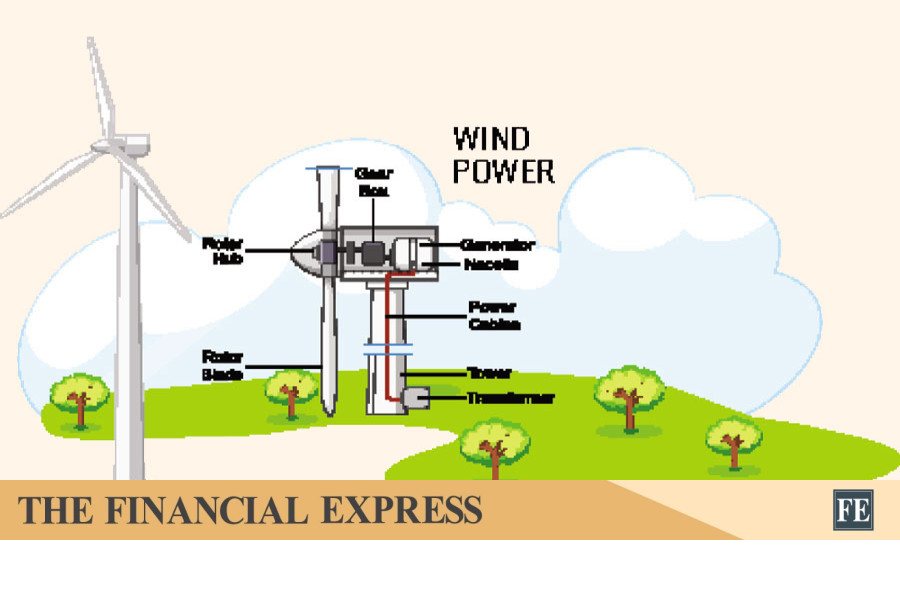
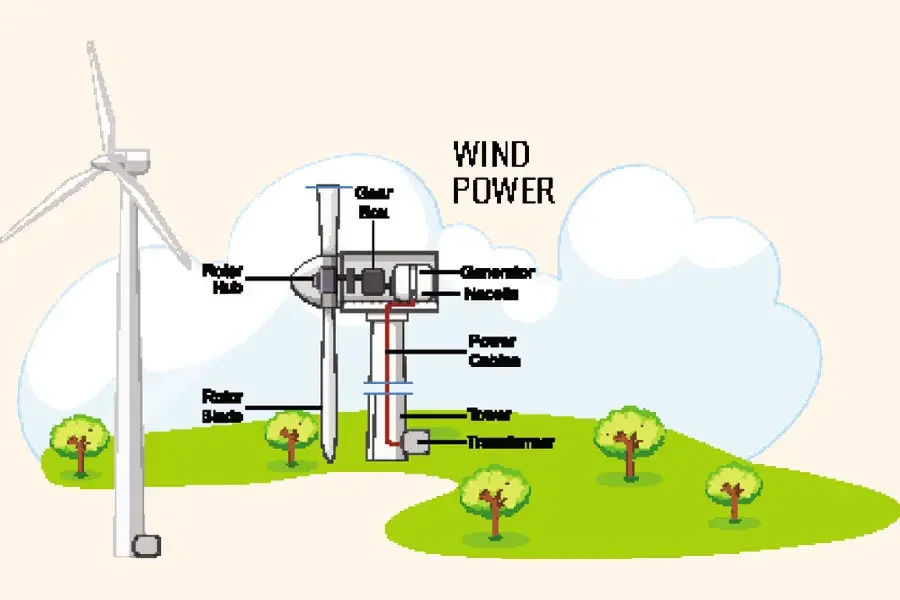
Unlocking the potential of wind power


1791329054514.webp


As energy security rises ever higher on the government's agenda, exploring every viable source of energy has become an imperative. Leaving any potential energy source unexplored is no longer an option. Against this backdrop, the government's decision to introduce comprehensive guidelines for developing onshore wind-power projects marks a timely and potentially transformative step towards diversifying the country's energy mix.

The newly unveiled framework seeks to establish a clear and transparent pathway for the development of land-based wind power projects. Industry leaders have welcomed the initiative, expressing optimism that the guidelines will encourage greater private-sector participation while enabling Bangladesh to unlock what many believe to be its still largely untapped wind-energy potential. More importantly, the framework reflects growing policy recognition that achieving long-term energy security will require the country to move decisively beyond its overwhelming reliance on conventional fuels.

Wind energy has long been regarded as one of the world's most promising renewable resources. It is clean, inexhaustible and increasingly cost-competitive as technological advancements continue to improve turbine efficiency and reduce generation costs. Unlike fossil-fuel-based power plants, wind farms emit no greenhouse gases during operation and require no imported fuel. For a country like Bangladesh, which spends billions of dollars annually on importing coal, liquefied natural gas and petroleum products, the economic significance of such a resource extends well beyond environmental considerations. Every additional megawatt generated from domestic renewable sources lessens the country's vulnerability to international fuel-market shocks and contributes to greater energy independence.

According to the Sustainable and Renewable Energy Development Authority (SREDA), Bangladesh possesses modest but commercially viable onshore wind resources. These are concentrated primarily along the country's 710-kilometre coastline, the Chittagong Hill Tracts and selected open plains in the north-west. Extensive wind-resource mapping conducted jointly by SREDA and international partners has identified several promising sites where average annual wind speeds range between 5.0 and 7.5 metres per second at hub height-sufficient for utility-scale electricity generation using modern wind-turbine technology.

Yet despite this encouraging resource assessment, Bangladesh has barely begun to harness wind energy. At present, the country generates only 62 megawatts of electricity from wind out of a total renewable-energy capacity of 1,807 megawatts. The figure is strikingly small when viewed against the government's ambitious targets under the Renewable Energy Policy 2025, which aims to generate 20 per cent of the country's electricity from renewable sources by 2030 and 30 per cent by 2040.

The newly adopted guideline therefore deserves attention not merely as another regulatory document but as an effort to remove many of the uncertainties that have historically discouraged investment in renewable energy projects. Investors are often reluctant to commit capital where regulatory procedures remain ambiguous or project risks are difficult to assess. By laying down technically robust minimum standards aligned with internationally recognised benchmarks such as IEC 61400-1, IEC 61400-12 and the IFC Performance Standards, the government aims to provide developers, financiers and lenders with greater confidence that projects can be implemented under predictable rules.

Renewable-energy projects typically require substantial upfront investments and depend heavily on long-term financing. Financial institutions are far more willing to support projects where regulatory requirements, land acquisition procedures, environmental compliance and grid-access arrangements are clearly defined. In this respect, the guideline attempts to reduce uncertainty by establishing a transparent regulatory pathway from project conception to commissioning.

The provisions relating to land acquisition and project implementation are particularly significant. Developers are required to ensure that all lands needed for turbines, substations, access roads, meteorological masts, cable routes and related infrastructure are legally available and comply with existing land-use regulations and environmental restrictions. Where the government allocates land for wind development, developers will have three years to complete project development and begin commissioning, although extensions may be granted in justified circumstances. Such provisions seek to strike a balance between preventing speculative land occupation and allowing sufficient flexibility for genuine investors facing unforeseen delays.

Another notable feature is the requirement to verify technical and commercial feasibility of grid connectivity before making investment commitments. This addresses one of the persistent challenges confronting renewable-energy projects worldwide. Electricity generation alone cannot ensure project success unless adequate transmission infrastructure exists to evacuate power efficiently.

The guideline also rightly encourages the integration of energy-storage systems alongside wind farms. As renewable-energy penetration increases, maintaining grid stability becomes increasingly important because wind generation naturally fluctuates with weather conditions. Battery storage technologies can smooth these variations, improve electricity dispatch, reduce curtailment and enhance overall grid reliability. Such integrated systems are rapidly becoming an essential component of modern renewable energy development across the world.

However, regulatory reform alone will not guarantee success. Wind-power development will ultimately depend on policy consistency, competitive financing, efficient approval processes and continued investment in transmission infrastructure. The government must also strengthen institutional capacity, ensure timely project implementation and maintain investor confidence through transparent decision-making. At the same time, local communities should be meaningfully engaged throughout project development to minimise social conflicts and ensure that environmental safeguards are rigorously observed.

The road ahead will undoubtedly present challenges. But every successful energy transition begins with the creation of credible institutions and sound policies. The new onshore wind-power guideline is one such building block. If implemented with sincerity, consistency and long-term vision, it can help transform Bangladesh's abundant coastal winds from an overlooked natural phenomenon into a dependable source of clean electricity and environmental stewardship.​
 

Bangladesh’s solar growth: Will the incentives be enough?

Moshahida Sultana Ritu

Bangladesh is betting on rooftops to help power its energy future—but will the promise of a guaranteed payment be enough to make people invest? In 2026, the government launched a special incentive package for rooftop solar, particularly systems paired with battery storage. The ambition is bold: expand renewable energy, ease pressure on the national grid, and strengthen energy security. Under the scheme, eligible consumers can sell surplus electricity to the grid for Tk 10.50 per unit. That rate starts with a benchmark generation cost of Tk 8, then adds a 20 percent profit margin and an 11.25 percent premium. Consumers who can generate power for less than the benchmark cost keep the difference as extra profit. But behind the attractive headline rate lies a bigger question: can this incentive deliver the solar growth Bangladesh is counting on?

The incentive is time-limited. Rooftop systems installed by February 28, 2027, qualify for the tariff, with payments continuing for three years, until February 28, 2030. The scheme also requires solar equipment—including panels, batteries, inverters and meters—to meet technical standards set by the Bangladesh Standards and Testing Institution and the Sustainable and Renewable Energy Development Authority. Distribution utilities will record electricity supplied to and received from the grid, and incentive payments will be made through bank accounts or mobile financial services.

A tariff alone, however, cannot overcome the financial, regulatory and practical risks that shape investment decisions. Several features of this policy may limit how much solar growth it produces.

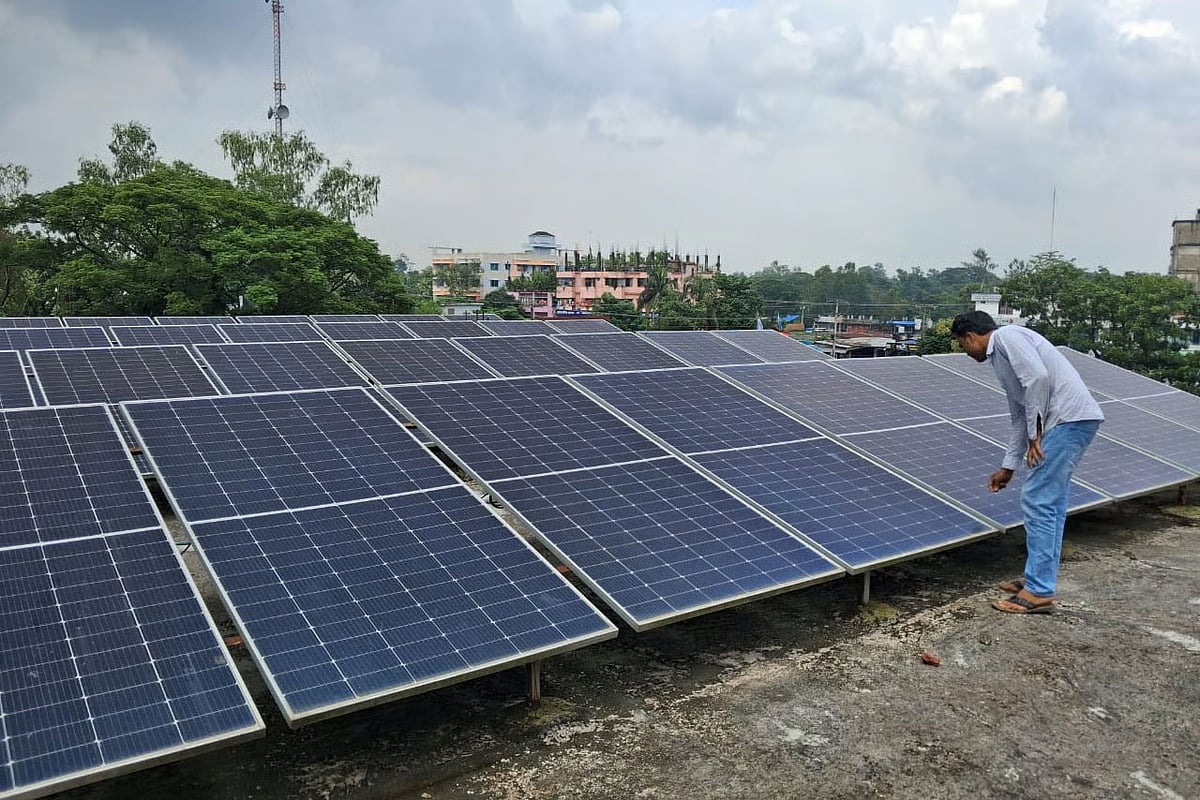
1791416397563.webp

Workers install a rooftop solar panel, as Bangladesh seeks to expand solar generation through new incentives. Photo: Star.

Tk 10.50 may not be enough to justify the investment

The first question is whether Tk 10.50 per unit offers a strong enough return to encourage consumers and businesses to invest. The figure may look attractive, but the purchase tariff is only one part of the investment calculation. Rooftop solar systems with battery storage require substantial upfront capital. Investors must also account for financing costs, equipment replacement, maintenance, installation and the possibility that project costs will rise.

The return also depends on how much electricity a system can supply to the grid. A household or business will generally use some of its solar power on site; only the surplus is eligible for the purchase tariff. The resulting revenue may therefore be lower or less predictable than the headline rate suggests. Battery storage adds cost, and its performance and replacement needs affect the project’s long-term economics.

Investors also consider the opportunity cost of their capital: money spent on solar cannot be used for other business or household purposes. A three-year guaranteed payment may not be enough to compensate for the upfront investment and the risks involved, particularly if the project’s overall financial return depends on what happens after the guaranteed period ends.

A short eligibility window can discourage careful investment

The second concern is the short time available to qualify. The scheme applies to systems installed by February 28, 2027, giving consumers a limited window to decide, secure finance, obtain approvals, procure compliant equipment and complete installation. A deadline can prompt action, but it can also encourage rushed decisions or exclude viable projects because of delays beyond investors’ control.

The timing compares unfavourably with approaches that give developers more time to respond. Vietnam, for instance, offered a time-bound feed-in tariff for one year. A longer eligibility window can give households, businesses and installers time to understand the rules, arrange financing and build projects without sacrificing quality. In Bangladesh, where procurement, approvals and installation can take time, a short deadline may reduce participation rather than accelerate it. Projects rushed to meet the deadline may also fall short of the required standards and end up as stranded investments.

A limited window is especially problematic when investors are uncertain about what happens after it closes. Consumers may be reluctant to make a major purchase if the guaranteed tariff is available only to systems completed by a particular date, because a project started in good time may still finish late. Short deadlines may also create bottlenecks, as applicants all seek approvals and equipment in the run-up to the deadline.

Three years of revenue certainty may not be enough

The third issue is the duration of the guaranteed price. The scheme offers Tk 10.50 per unit for three years, through February 2030. That commitment provides some predictability, but rooftop solar systems and batteries are long-term assets. Investors need to consider returns over a much longer period than the tariff’s guaranteed term.

Vietnam’s feed-in tariff was guaranteed for 20 years, giving investors a far longer period of revenue certainty. Such commitments helped make projects financeable, particularly as solar technology costs gradually declined. When investors can estimate revenue over many years, they can compare it more confidently with installation costs, financing payments and operating risks.

In Bangladesh, uncertainty about future electricity prices complicates that calculation. The government has recently increased oil and furnace-oil prices, while coal prices remain exposed to international volatility and geopolitical disruption. If the cost of conventional electricity rises, the government may eventually increase the price consumers pay for electricity or revise the value of power supplied to the grid. Investors may therefore wonder whether Tk 10.50 will remain attractive. If electricity prices rise above that level in the next few years, a three-year guarantee may seem too short to justify investing now.

This uncertainty creates two kinds of risk. Investors might expect higher future electricity prices but have no assurance that the solar purchase tariff will rise with them. They may also fear that a change in policy will alter the terms under which their project was approved. A predictable long-term framework is often more valuable than a nominally attractive tariff whose future is uncertain.

Incentives cannot substitute for risk-reducing policy

The fourth issue is the wider investment environment. Financial incentives can influence a decision, but they are most effective when supported by clear rules that reduce risk. In Bangladesh, prospective investors may still face uncertainty about future electricity prices, potential cost escalation, bureaucratic delays, the time required to complete projects and the process for receiving payments.

These risks matter because an incentive’s headline value is not the same as guaranteed profit. A business calculates expected earnings after considering the chance that costs will rise, approvals will be delayed or a project will miss the eligibility deadline. Unclear procedures may raise financing costs, while delays can postpone revenue and undermine returns. Requiring compliant equipment is sensible for safety and performance, but standards and certification processes must be transparent and readily accessible.


1791416485207.webp

Bangladesh’s 2026 rooftop solar package offers Tk 10.50 per unit for surplus electricity, but short timelines and policy uncertainty may limit investment. Visual: Artificial Intelligence.

The government could strengthen the scheme by clarifying application procedures, setting predictable timelines for approvals and payments, and explaining how tariff eligibility will be treated when delays are outside an applicant’s control. It should also communicate what happens after February 2030 and whether future projects will receive a similar arrangement. Such steps can lower perceived risk without necessarily increasing the purchase tariff.

Merchant solar faces additional barriers

The incentive package must also be assessed alongside the challenges faced by merchant power plants—solar projects built to sell electricity to buyers, unlike rooftop systems that mainly serve their owners. These projects may need land, grid access and dependable buyers. Acquiring agricultural land for large solar plants raises concerns about competing land uses, livelihoods and food production. Even where suitable sites exist, developers need clear rules and a credible process for obtaining land and permits.

Open-access rules allow private generators to use the grid to deliver power to customers, in return for wheeling charges. But those charges can erode solar’s price advantage. The 2026 framework lists transmission wheeling charges of about Tk 0.46 per unit at 230 kV, Tk 0.49 at 132 kV and Tk 0.79 at 33 kV. Additional distribution and injection charges are reported at Tk 0.97–1.58 per unit, depending on voltage. These fees may reflect network costs, but they add to the delivered price and complicate project economics.

A proposed benchmark price of Tk 6.48 per unit for solar merchant power plants may also be too low to attract investment. Developers must absorb land, financing, grid and administrative costs, and they bear risks that the benchmark may not reflect.

The incentive fails to account for solar’s cost advantage over other energy sources

The case for solar becomes clearer when its price is viewed alongside the cost of other electricity sources. Recent estimates put furnace-oil generation at roughly Tk 20.69–27.39 per unit, with higher costs reported during peak or emergency use. Coal-based generation is estimated at around Tk 13.20–15 per unit. Domestic gas-fired electricity can cost about Tk 7.09 per unit. Electricity produced with imported or spot LNG is far more expensive: estimates range from Tk 30 to Tk 50 or more per unit. These estimates are not perfectly comparable, as costs vary by plant, contract, fuel prices and operating conditions. Still, they show that solar, at a benchmark generation cost of Tk 8 per unit, can be cheaper than several of the alternatives Bangladesh relies on.

The power system may therefore pay for the availability of fossil-fuel plants as well as for the electricity they generate. Solar investors, by contrast, put up their own capital and are paid only for the electricity they actually supply.
The comparison matters even more because many conventional power plants receive capacity charges for keeping generating capacity available, even when they are not producing electricity. Rooftop solar receives no capacity payment. The power system may therefore pay for the availability of fossil-fuel plants as well as for the electricity they generate. Solar investors, by contrast, put up their own capital and are paid only for the electricity they actually supply.

Solar’s lower generation cost and the absence of a capacity charge should make it attractive from the perspective of system costs. Yet the Tk 10.50 purchase tariff, the short eligibility window and the limited three-year guarantee may not provide enough certainty or return to attract investment at scale. The low cost of solar does not automatically translate into a strong business case for households and firms if they bear substantial upfront costs and risks.

Policy certainty is essential for growth

Bangladesh’s 2026 rooftop solar package is a welcome effort to create demand and reward consumers who supply surplus electricity to the grid. It recognises that solar can help diversify the power mix and reduce reliance on costly imported fuels. Yet its impact will depend on more than the purchase tariff. Investors need to know that revenues can justify capital costs and risks, that rules will be applied consistently, and that projects can be completed and connected on time.

The country’s broader energy plans also matter. If the government intends to add more coal-based power plants and LNG terminals, it sends a mixed signal to solar investors. It may suggest that the long-term strategy remains centred on fossil fuels, even as the government offers incentives for renewables. That ambiguity can weaken confidence in the durability of solar support.


1791416539156.webp

Rooftop solar can ease pressure on the national grid, but high upfront costs and uncertain returns remain barriers to investment. Photo: Star.

This tension is especially significant in a country with excess generation capacity, where consumers already face high electricity prices driven partly by capacity charges. New generating assets may add to system costs even when they are not fully used. Expanding solar is therefore not only a matter of offering an incentive; it is also a question of whether planning, procurement and grid policy consistently favour least-cost and reliable options.

The three-year Tk 10.50 tariff and limited eligibility period may help some consumers install rooftop systems, but they may not be enough to trigger growth at scale. A stronger policy would combine fair compensation with longer-term predictability, efficient approvals, transparent grid-access rules and a credible plan for integrating renewable energy into future power planning. Policy certainty is essential. Without it, even a promising incentive may fail to turn solar potential into a significant investment.

Dr Moshahida Sultana is an energy researcher and Associate Professor in the Department of Accounting at the University of Dhaka.​
 

Stabilising domestic oil prices
Faizul Latif Chowdhury 08 October, 2026, 00:00

1791417888259.webp


THERE is no arguing that the government is currently caught in a severe macroeconomic impasse. The escalation of regional geopolitical conflicts has driven international petroleum, oil and lubricants prices upward, exhausting foreign currency reserves and exacerbating domestic inflation. Concurrently, critically low domestic revenue collection limits the government’s capacity to offer any further fiscal relief.

The current 25.9 per cent cumulative ad valorem (percentage-based) tax structure on fuel imports compounds this crisis by creating a ‘passive windfall’ for the National Board of Revenue at the direct expense of the consumer. As global import prices spike, the absolute tax collected per litre automatically balloons, feeding a destructive domestic inflation loop. Tis may be discontinued right away.

A structurally neutral, counter-cyclical alternative is abolishing the ad valorem architecture at the port, and replacing it with a specific duty, meaning flat-rate tariff per litre in the taka. This transition untethers the state budget from international volatility, provides predictable revenue for sovereign debt service, protects the productive economy (agriculture and mass transit) from hyper-inflation and simplifies customs administration at the Chittagong port.

Bangladesh’s fiscal policy space is heavily constrained by structural vulnerabilities. It is difficult to hold NBR responsible for the widening revenue deficit. The country possesses one of the lowest tax-to-GDP ratios in South Asia, leaving no room to simply cut taxes without violating fiscal sustainability and international financing safeguards.

The current 25.9 per cent import tax structure is calculated sequentially, meaning taxes multiply upon other taxes rather than applying as flat fees. First, customs duty is collected at the rate of 6.0 per cent on the ‘assessable value’ at port of entry. Then import VAT is calculated at the rate of 15 per cent, based on the duty-paid value (assessable value plus customs duty).

Thirdly, advance tax is realised at the rate of 2.0 per cent. This causes upfront liquidity pull. No one clearly understands the logic behind introducing advance tax, over and above advance income tax.

Finally, advance income tax is collected at the rate of 2.0 per cent, to be adjusted later.

Altogether, the incidence turns out to be 25.9 per cent. When the international cost of refined diesel stands at an assessable value of Tk 70.00 per litre, the NBR bags Tk 37.00 per litre in cumulative duties. If global disruptions drive the assessable value up to Tk 90.00 per litre, the 25.9 per cent progressive structure automatically forces the tax collection to surge to Tk 47.00 per litre. No customs officer can claim credit for this additional collection.

This passive state profit acts as an aggressive, regressive consumption tax. To mitigate the shock, the Bangladesh Petroleum Corporation (BPC) is forced to run steep commercial deficits or pass the costs onto the refuel stations, stunting sluggish investments and raising transport and irrigation costs.

In this context, we propose replacing the multi-tiered percentage calculation with a single, statutory flat BDT rate assessed purely against the physical volume of fuel unloaded at the port. The ministry of finance should abolish the percentage-based customs duty, VAT, advance tax, and advance income tax system on fuel imports, replacing it with a singular, uniform specific duty denominated in fixed taka per physical litre at port of entry. Based on average historical revenue generation, the optimal baseline is proposed as follows:

(a) High-speed diesel and furnace oil: A flat, immutable Tk 35.00 per imported litre.

(b) Octane and petrol: A flat, immutable Tk 45.00 per imported litre.

Under this scheme, customs officers will calculate state revenue based entirely on physical volume unloaded from vessels rather than volatile international monetary valuation invoices.

The first layer of the proposed reform would be to eliminate the 6 per cent customs duty, 15 per cent VAT on duty-paid value, 2 per cent advance tax, and 2 per cent advance income tax on energy imports.

The second step should be to put in place and institutionalise a flat tariff of Tk 35.00 per litre for diesel (the primary driver of the productive economy) and Tk 45.00 per litre for octane/petrol at the import stage.

As the third step, the Bangladesh Petroleum Corporation should be declared fully exempt from upfront advance tax and advance income tax liquidity obligations, instantly freeing up state-level foreign exchange capacity.

Transitioning to a volumetric specific duty structure provides the National Board of Revenue with critical leverage to stabilise the broader macroeconomy without compromising structural fiscal discipline. Needless to emphasise that it will enhance sovereign fiscal credibility of the business scenario. On the other hand, by establishing a guaranteed, floor revenue of Tk 35.00 per imported litre, the NBR guarantees a reliable stream of non-devaluing domestic cash. This ensures the treasury can comfortably meet high domestic debt service liabilities without relying on inflationary central bank money printing.

This will reign in the inflationary feedback loop due to uncontrollable rise of petroleum in the international market. Because diesel drives mass passenger transit, commercial logistics and agricultural irrigation (powering water pumps across rural grids), any increase in its cost has an immediate multiplier effect on the consumer price index and food security. A flat BDT tax stops the tax architecture from artificially inflating these essential sectors during global energy shocks.

Exempting the BPC from upfront advance collections removes unnecessary internal administrative bottlenecks. It prevents the state from efficiently choking its own energy supply chain’s liquidity, helping preserve scarce foreign currency reserves for international settlement rather than tying it up in internal tax escrow accounts.

Will this be a freeze on the collection of customs duty from imported petroleum, oil and lubricants? This is certainly a relevant question for the government exchequer. The answer is yes. The amount collected at the port of entry will not change unless there is an increase in import volume. Historically the import of petroleum, oil and lubricants has increased every year since the birth of Bangladesh.

Let us not forget that instituting a flat-rate specific duty, replacing the ad valorem one, will eliminate passive windfalls, allowing the retail pump price to remain significantly closer to the actual cost of fuel. Budgetary revenue becomes a direct function of physical consumption volume, ensuring steady funds for the government exchequer. At the port, the customs officials will simply verify the physical volume unloaded from the tanker and apply the flat multiplier, and the clearance procedure will be truly simplified. The Bangladesh Petroleum Corporation will know in advance how much will be the duty liability at the port. The government will not be forced to deploy massive universal subsidies to shield consumers against international price hike. The new system will put in place a clean domestic retail pricing while ring-fencing treasury baseline in a transparent way. Good governance does not need windfall gain in revenue owing to international price hike.

Faizul Latif Chowdhury teaches economics and business at the Independent University Bangladesh.​
 

Solar power cheaper than oil and coal, focus shifts to solar

Mohiuddin
Dhaka

1791504131677.webp

Solar panels installed on the roof of Jorargonj Bouddha High School in Mirsarai, Chattogram Prothom Alo

A 100-megawatt solar power plant was commissioned in Bhabanipur, Pabna, in 2024. The plant was built on 400 acres of land on the vast sandy char of the Padma River. During the day, the plant supplies solar-generated electricity to the national grid.

As rising global prices of fuel oil and gas and supply shortages have made it increasingly difficult and costly to operate the country’s fossil fuel-based power plants, the solar power plant on the Padma char is supplying electricity to people. Solar power does not require fuel imports using foreign currency, nor does it cause air pollution. It is also relatively cheaper.

The Bhabanipur solar power plant was developed by Paramount Group. Under a 20-year power purchase agreement signed with the company in 2021, the price of electricity is 11.5 US cents per unit, equivalent to around Tk 13 at present. By contrast, the cost of electricity from furnace oil-fired power plants is more than Tk 28 per unit. The cost of coal-fired power is around Tk 15 per unit. Coal also carries the risk of environmental pollution.

On the other hand, during the tenure of the Awami League government, which was ousted in the July mass uprising, approvals for solar power plants were granted without competitive tenders. Equipment for solar power plants was also more expensive at the time.

As a result, electricity prices were higher. After the fall of the Awami League government, the interim government invited tenders and was able to sign contracts for solar power at less than Tk 8 per unit. This shows that solar power is cheaper than electricity generated from coal and oil.

Despite these advantages, Bangladesh remains behind in renewable energy. During the Awami League government’s 15-and-a-half-year rule, one power plant after another was built relying on fossil fuels.

Renewable energy, however, did not receive sufficient attention. Towards the end of the Awami League government’s tenure, some greater emphasis was placed on solar power amid growing difficulties in the sector.

Between 2010 and 2023, around $30 billion was invested in the power sector, equivalent to Tk 3.7 trillion at current prices. Only 3.3 per cent of that investment went to renewable energy.
According to data from the Bangladesh Power Development Board (PDB), contracts were signed for the construction of a total of 136 power plants during the Awami League government’s tenure, most of them based on fossil fuels.

The country’s total power generation capacity now stands at 28,347 megawatts.

Of this, 19 power plants based on renewable energy sources—solar, hydro and wind—have a combined generation capacity of 1,089 megawatts.

Only 4 per cent of the total electricity connected to the grid comes from renewable sources. PDB data show that renewable energy accounted for 2.58 per cent of power generation capacity in fiscal year 2012–13.

However, according to data from the Sustainable and Renewable Energy Development Authority (SREDA), many companies and organisations generate electricity from rooftop solar systems and feed it into the grid.

As a result, a total of 1,492 megawatts of electricity from renewable sources is currently connected to the grid. Even taking this figure into account, renewable energy accounts for only 5 per cent of total power generation capacity.

The target was to generate 10 per cent of the country’s total electricity from renewable sources by 2021. That target was not achieved. The deadline was later extended to 2025, but that target was also missed because of inadequate investment in the sector.

Between 2010 and 2023, around $30 billion was invested in the power sector, equivalent to Tk 3.7 trillion at current prices. Only 3.3 per cent of that investment went to renewable energy.

The new BNP government is stepping up efforts to increase solar power generation and is offering various incentives to the sector.

State Minister for Power, Energy and Mineral Resources Anindya Islam Amit told Prothom Alo that the government is giving the highest priority to renewable energy. He said rooftop solar was being prioritised to rapidly increase power generation before next summer, so that people would not face the kind of hardship they experienced last summer.

Alongside rooftop solar, initiatives have been taken to build power plants on government land through partnerships. He said there is strong interest among both domestic and foreign investors. The government has already approved a 442-megawatt solar power plant at the site designated for a coal-fired power plant in Rampal, Bagerhat.

Solar power gets a boost amid crisis

The Awami League government built one power plant after another, relying on imported gas, coal and fuel oil. After the Russia-Ukraine war began in 2022, energy prices in the global market rose sharply.

The target was to generate 10 per cent of the country’s total electricity from renewable sources by 2021. That target was not achieved. The deadline was later extended to 2025, but that target was also missed because of inadequate investment in the sector.
Foreign exchange reserves continued to decline as the country spent more to import fuel. The price of the dollar rose, as did the prices of electricity, gas and fuel oil in Bangladesh.

Despite having many power plants, people then had to endure load-shedding. In such circumstances, the government of the time was forced to place greater emphasis on renewable energy. Towards the end of the Awami League government’s tenure, consent letters were issued for 37 solar power plants.

In the process of building power plants, the government first issues a consent letter to an investor, followed by a power purchase agreement. The consent given to the 37 power plants towards the end of the Awami League government’s tenure was cancelled during the interim government’s term.

The stated reason was that the Awami League government had issued the consent letters without inviting tenders under the Special Provisions Act for the Quick Enhancement of Electricity and Energy Supply. The High Court repealed the special powers law on 14 November 2024. As a result, there was no scope to sign agreements with those plants.

On 18 November 2024, the Bangladesh Power Development Board (PDB) informed 31 companies by letter that it would not purchase any electricity from them. Between December and January, 15 companies filed 11 writ petitions with the High Court challenging the government decision. Meanwhile, the interim government invited tenders in several rounds and signed agreements for 11 solar power plants—seven on 25 January and four on 29 January. These plants have a combined generation capacity of 818 megawatts.

Since the new BNP government took office, tenders have so far been invited for the construction of 10 solar power plants. However, the deadline for submitting bids has been extended several times. As a result, it is not known how many bids have been submitted or which companies have expressed interest.

During the Awami League government’s tenure, sovereign guarantees were provided for foreign loans taken for power plants. The interim government scrapped the practice. Sources at the PDB and private power plants say foreign lenders are reluctant to provide loans without sovereign guarantees. There have also been difficulties in purchasing land for the past two years. The companies that have recently secured power plant projects have limited experience.

In addition, imports of power plant equipment have been disrupted by the war in the Middle East. Taken together, these factors mean there is little prospect of obtaining electricity from the newly contracted solar power plants within the next year or two.

Confidence Group won contracts to build three solar power plants after participating in tenders during the interim government’s tenure. Group Chairman Imran Karim told Prothom Alo that some problems had arisen over land purchases and bank financing. It could take until mid-2028 to begin generation. However, he said the new government was providing certain assurances for the projects, which would make financing easier.

According to PDB data, work is currently under way on 19 renewable energy-based power plants in the private sector, with a combined generation capacity of 1,042 megawatts. Six solar power plants are under construction in the public sector, with a combined capacity of 110 megawatts.

An agreement for one of these plants, with a capacity of 100 megawatts, was signed in 2023. During the interim government’s tenure, agreements were signed for five publicly owned plants with a combined solar generation capacity of 10 megawatts. In addition, a consent letter has been issued for a 100-megawatt solar power plant in Cox’s Bazar, and the agreement is under process.

Investors left in a difficult position

A report published by the Centre for Policy Dialogue (CPD) in April said that if the 31 solar power plants whose consent letters were cancelled in the private sector had been implemented, they would have generated 3,287 megawatts of electricity and attracted $6 billion in investment. Fifteen of the companies had already purchased land. However, there were questions over the price at which electricity from those plants would be sold.

Sources in the Power Division said the average price of solar power under the 10 tenders conducted during the interim government’s tenure was 21 per cent lower than that of the power plants whose consent letters were cancelled.

The average price had previously been 10.47 US cents per unit, or around Tk 13. Following the tenders, it fell to an average of 8.27 cents, or slightly more than Tk 10. One agreement was signed at as low as 7.49 cents per unit, or slightly more than Tk 9.

After the consent letters were cancelled, Chinese companies also proposed renegotiating the price of electricity. The government, however, has yet to consider the proposal. The Ministry of Power did form a committee in May to review the claims of the cancelled solar and renewable energy projects. Little progress has been made by the committee so far.

People familiar with the matter say some of the cancelled power plants could be contracted after negotiating lower prices. This would make it possible to obtain solar power quickly.

For example, two plants—a 50-megawatt facility in Dimla, Nilphamari, and a 100-megawatt facility in Dinajpur—could begin commercial generation within next year if necessary. Everything needed for the two plants had already been completed, and even draft power purchase agreements had been prepared. However, work came to a halt after their consent letters were cancelled.

Sources said the cancelled power plants involved investment from several countries. One of the investors was among China’s top five power companies. It had received consent for two power plants with a combined capacity of 150 megawatts. In addition, agreements for several more plants with a combined capacity of 600 megawatts were at an advanced stage of negotiation, including a 200-megawatt floating solar power plant. Some companies, unable to invest in Bangladesh, have instead invested in the Philippines and Vietnam over the past two years. The Chinese company is also working on a $7 billion investment plan in Indonesia.

Several officials associated with the cancelled power plants told Prothom Alo on condition of anonymity that if fresh tenders were invited, the plants would not begin generation for another five years.

Instead, they said, the government could quickly scrutinise the cancelled projects and allow genuine investors whose plants had made sufficient progress to proceed.

On the matter, State Minister Anindya Islam Amit said some of the projects whose consent letters had been cancelled had already made progress. He said the government was reviewing which power plants had genuinely secured projects in compliance with the rules and made investments, with a view to bringing them into generation.

Experiences of Three Countries

In 2006, neighbouring India brought renewable energy under a separate institutional framework by establishing the Ministry of New and Renewable Energy.

According to a statement issued by the country’s Press Information Bureau (PIB) on 8 April, renewable energy meets 51.5 per cent of India’s 203 gigawatts of electricity demand.

Vietnam had only 86 megawatts of solar power capacity in 2018. By the end of 2025, that figure had risen to more than 19,000 megawatts. Pakistan has also made significant progress in solar power. As electricity prices rose sharply in the country, many people began installing rooftop solar systems.

Grid-connected rooftop solar capacity has surpassed 6,000 megawatts. Various sources, however, say the actual amount of rooftop solar power is several times higher, as much of it is not connected to the grid and is used directly by consumers.

Potential in Bangladesh

The current government has announced a target of generating 10,000 megawatts of electricity from renewable energy by 2030. People familiar with the sector say the target is achievable. Import duties on equipment for solar power plants have already been reduced to 1 per cent.

The government has also introduced substantial incentives for rooftop solar power. It will purchase rooftop electricity at Tk 10.50 per unit, creating considerable interest in the market. Alongside rooftop systems, the government now needs to accelerate the construction of large-scale solar power plants on land. It has planned to allocate government land for solar power plants through public-private partnerships.

Experts say electricity can be generated from renewable sources at a lower cost than from nuclear power plants. Building a nuclear power plant can take 10 to 12 years, whereas a solar power plant can be built within one and a half years.

Land acquisition, however, remains a major challenge. Bangladesh has around 3.6 million acres of khas land and 1.8 million acres of non-agricultural land. Of this land, there is an opportunity to use 30,000 acres of char land to generate 10,000 megawatts of solar power. The PDB also owns around 6,000 acres of land that could be used to build solar power plants.

The cost of generating solar power is also declining. An investment of around $35 million is required to build a 50-megawatt power plant. The investment can be recovered within six to seven years.

Khondaker Golam Moazzem, president of the Knowledge Hub Institute, told Prothom Alo that the government’s efforts to promote small-scale solar power generation, starting with rooftop systems, were encouraging.

Some private-sector companies are also generating solar power on the rooftops of industrial facilities. However, he said, the construction of large-scale solar power plants needs to be accelerated.

He said the government should quickly submit the report of the committee formed to evaluate the power plants cancelled by the interim government. If necessary, he added, appropriate foreign companies could be given an opportunity to proceed after negotiating an agreement on electricity prices.​
 

Govt secures $3.1b loan to keep fuel and LNG flowing

Indicative interest rate is about 5.38%

Star Business Report

1791591126715.webp


Bangladesh has secured a $3.1 billion non-concessional loan to finance fuel oil and liquefied natural gas imports, as the government moves to safeguard energy supplies from disruption.

The Standing Committee on Non-Concessional Loan -- the body responsible for approving commercial-rate foreign borrowing -- formally approved the facility on Wednesday, according to finance ministry officials.

The financing comes from the Jeddah-based International Islamic Trade Finance Corporation (ITFC), the trade-finance arm of the Islamic Development Bank Group.

The loan is split between the two state-owned energy companies. The Bangladesh Petroleum Corporation will use $2.5 billion to import fuel oil, while Petrobangla will use $600 million to purchase LNG.

The deal is structured as co-financing. ITFC will provide $600 million from its own resources, while Bangladesh Bank will provide the remaining $2.5 billion, or about 80 percent of the total.

The loan carries an interest rate of six-month term SOFR plus 1.70 percentage points, along with an annual administrative fee of 0.20 percent. Officials said the margin is 0.05 percentage points lower than last year’s.

Based on the six-month SOFR rate of 3.68 percent on October 1, the indicative interest rate is about 5.38 percent.

Each drawdown must be repaid in full in a single payment after six months. As the loan is expected to be rolled over at the end of each period, the central bank’s outstanding exposure would be about $195 million at any one time, according to a committee document.

The exposure could rise to a maximum of $1.25 billion if repayments were delayed.

To ensure uninterrupted fuel imports, the committee’s chair cleared the proposal on an urgent basis, following which the full committee approved it.

The two sides reached a preliminary agreement on the financing amounts at a negotiation meeting on June 29.

Bangladesh classifies a loan as non-concessional when its grant element -- a measure of how far its terms are softer than market rates -- falls below 25 percent.

Such loans face tighter scrutiny under the government’s debt rules, which cap annual debt servicing on this type of borrowing at the lower of 10 percent of export earnings or 15 percent of revenue.​
 

PKDefense Forums: Country-by-Country Military Discussions

Log In Register Forums
Latest
Back