Bangladesh Defense

Saif
Senior Member
- Joined
- Jan 24, 2024
- Messages
- 22,283
- Likes
- 9,869
- Nation

- Axis Group


Experts suggest for long-term policy certainty
A webinar titled “Bangladesh's Renewable Energy Transition: Closing the Gap to 2030, and the Economic Opportunity Ahead” was organised by the Dacca Institute of Research and Analytics (daira) on Friday to discuss Bangladesh’s renewable energy targets, the challenges of implementation, and the...
 en.prothomalo.com
Experts suggest for long-term policy certainty
Prothom Alo English Desk

A webinar titled “Bangladesh's Renewable Energy Transition: Closing the Gap to 2030, and the Economic Opportunity Ahead” was organised by the Dacca Institute of Research and Analytics (daira) on Friday to discuss Bangladesh’s renewable energy targets. Collected
A webinar titled “Bangladesh's Renewable Energy Transition: Closing the Gap to 2030, and the Economic Opportunity Ahead” was organised by the Dacca Institute of Research and Analytics (daira) on Friday to discuss Bangladesh’s renewable energy targets, the challenges of implementation, and the policy and infrastructure requirements for accelerating the country’s transition toward renewable energy, says a press release.
Speakers at the webinar highlighted the existing gap between Bangladesh’s renewable energy ambitions and its current capacity to deliver them.
The discussion focused on the need for grid modernisation, energy storage, reliable and accessible energy data, institutional coordination, private-sector investment, and long-term policy certainty.
Speakers also examined the economic and energy-security implications of Bangladesh’s continued dependence on imported fossil fuels.
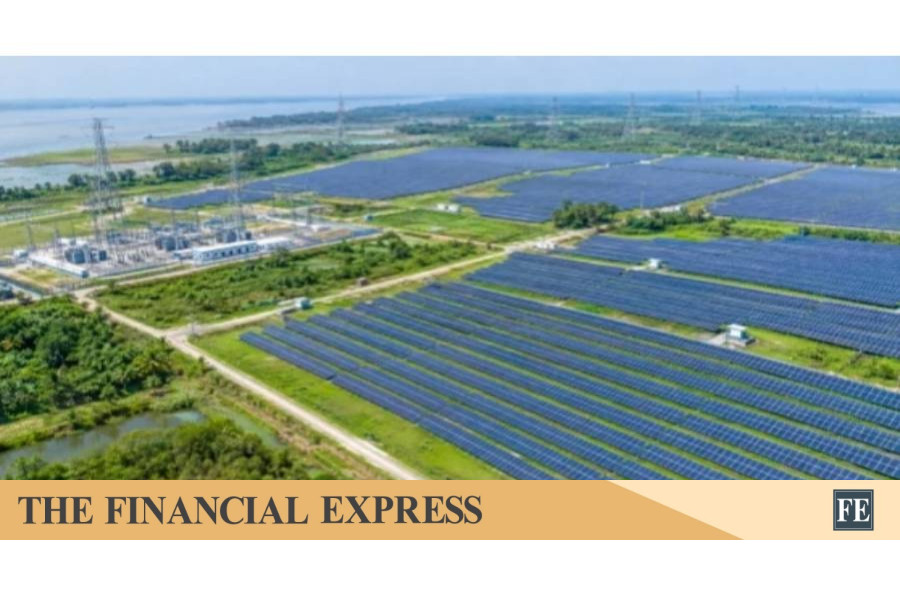
The session began with a presentation of a policy brief by daira researcher Suborna Akther Laboni. The presentation highlighted that renewable energy currently accounts for approximately 2.3 per cent of Bangladesh’s grid electricity, while the government has set a target of achieving a 20 per cent renewable energy share by 2030.
The presentation noted that solar power costs approximately Tk 9.5 per unit, compared with around Tk 25 per unit for oil-fired generation, highlighting the economic potential of renewable energy.
The presentation further noted that only around 358 MW of renewable energy capacity was under construction as of February 2026, while approximately 760 MW would need to be added annually to remain on track toward the 2030 target.
Meeting the target would require an estimated US$933–980 million in annual investment through 2030. The presentation also highlighted the employment potential of rooftop solar, which generates approximately 26.6 jobs per MW, compared with around 2.1 jobs per MW for utility-scale solar.
The policy brief also examined the challenges surrounding Bangladesh’s electricity grid and renewable energy financing. It noted that a US$515 million World Bank grid programme was rated 'moderately unsatisfactory' in December 2024, having enabled approximately 0.04 GW of renewable energy capacity against a 0.15 GW target.
The presentation also discussed recent policy developments, including the cancellation of 31 renewable energy projects with a combined capacity of approximately 3,300 MW in September 2024, their reopening for review in April 2026, duty relief introduced in the FY2027 budget, and the rooftop solar incentive launched in September 2026.
Speaking on the institutional dimensions of Bangladesh’s energy transition, John Fluharty, Resident Programme Director at the International Republican Institute, emphasised the importance of transparency, accountability, and institutional trust.
He argued that a sustainable energy transition requires institutions capable of bringing different stakeholders into the decision-making process and ensuring clear oversight of public funds.
He stated, “The idea that transparency and accountability equals bureaucracy is just a bad way to look at it.”
He further emphasised that publishing information and establishing shared processes can strengthen trust and facilitate more effective decision-making.
Discussing the technical challenges facing Bangladesh’s electricity system, Mohammad Subail Bin Alam, COO of Rancon Infrastructures and Adjunct Faculty Member at the University of Liberal Arts Bangladesh, stated, “We are not ready.”
He explained that Bangladesh’s existing grid was primarily designed around a limited number of large power plants and one-way electricity flows. The expansion of rooftop and distributed solar, he noted, would require two-way distribution networks, upgraded transformers, advanced monitoring systems such as SCADA, and greater battery-storage capacity.
He further argued that transmission, generation, and monitoring infrastructure must be planned together if Bangladesh is to add the volume of renewable capacity required to meet its targets.
Referring to the experience of Pakistan, he noted that rapid solar expansion without adequate storage and grid planning could create additional pressure on the electricity system.
He also called for policy certainty of at least five years, greater coordination among institutions including SREDA and the Bangladesh Power Development Board, and increased access to concessional financing.
Highlighting the importance of transparency and reliable information, Md Ismail Ali, Editor of The Daily Jatiyo Arthoniti, called for the establishment of a centralised and publicly accessible digital energy database.
He suggested that such a system should be updated regularly and enable policymakers, investors, researchers, and citizens to compare renewable energy targets, installed capacity, and actual electricity generation.
He also raised concerns about short-term policy incentives, arguing that investors require greater certainty when making investments in infrastructure with long operational lifespans.
According to him, renewable energy projects cannot be effectively financed when policy commitments remain limited to short periods.
The moderator, Sakib Bin Amin, Senior Research Fellow at daira and Professor of Economics at North South University, highlighted the importance of addressing inefficiencies across Bangladesh’s wider electricity system.
He noted that transmission and distribution losses of nearly 10 per cent, compared with approximately 2–3 per cent globally, indicate significant scope for improving system efficiency.
Amin proposed greater use of public-private partnerships, including build-operate-transfer models, alongside the establishment of a national energy data centre and an environmental quality council.
He also emphasised the importance of strengthening energy storage capacity, monitoring subsidies to ensure they reach their intended beneficiaries, and promoting energy efficiency and demand-side management to reduce pressure on imported fuel.
The discussion also highlighted the importance of establishing a predictable policy environment for renewable energy investment.
Speakers emphasised that frequent changes in incentives, unclear institutional responsibilities, inadequate infrastructure, and limited access to affordable financing could undermine Bangladesh’s ability to translate renewable energy targets into actual projects.
Concluding the discussion, Sakib Bin Amin emphasised that Bangladesh’s challenge is increasingly one of implementation rather than target-setting.
He stated, “We need to connect policy with projects, projects with finance, finance with infrastructure, and generation with a grid capable of absorbing and delivering that electricity reliably.”
The webinar brought together representatives from academia, the private sector, media, research, and policy institutions to discuss the opportunities and challenges surrounding Bangladesh’s renewable energy transition.
The discussion formed part of daira’s broader engagement on sustainable development, economic policy, energy security, and emerging policy challenges in Bangladesh.
Prothom Alo English Desk
A webinar titled “Bangladesh's Renewable Energy Transition: Closing the Gap to 2030, and the Economic Opportunity Ahead” was organised by the Dacca Institute of Research and Analytics (daira) on Friday to discuss Bangladesh’s renewable energy targets. Collected
A webinar titled “Bangladesh's Renewable Energy Transition: Closing the Gap to 2030, and the Economic Opportunity Ahead” was organised by the Dacca Institute of Research and Analytics (daira) on Friday to discuss Bangladesh’s renewable energy targets, the challenges of implementation, and the policy and infrastructure requirements for accelerating the country’s transition toward renewable energy, says a press release.
Speakers at the webinar highlighted the existing gap between Bangladesh’s renewable energy ambitions and its current capacity to deliver them.
The discussion focused on the need for grid modernisation, energy storage, reliable and accessible energy data, institutional coordination, private-sector investment, and long-term policy certainty.
Speakers also examined the economic and energy-security implications of Bangladesh’s continued dependence on imported fossil fuels.
The session began with a presentation of a policy brief by daira researcher Suborna Akther Laboni. The presentation highlighted that renewable energy currently accounts for approximately 2.3 per cent of Bangladesh’s grid electricity, while the government has set a target of achieving a 20 per cent renewable energy share by 2030.
The presentation noted that solar power costs approximately Tk 9.5 per unit, compared with around Tk 25 per unit for oil-fired generation, highlighting the economic potential of renewable energy.
The presentation further noted that only around 358 MW of renewable energy capacity was under construction as of February 2026, while approximately 760 MW would need to be added annually to remain on track toward the 2030 target.
Meeting the target would require an estimated US$933–980 million in annual investment through 2030. The presentation also highlighted the employment potential of rooftop solar, which generates approximately 26.6 jobs per MW, compared with around 2.1 jobs per MW for utility-scale solar.
The policy brief also examined the challenges surrounding Bangladesh’s electricity grid and renewable energy financing. It noted that a US$515 million World Bank grid programme was rated 'moderately unsatisfactory' in December 2024, having enabled approximately 0.04 GW of renewable energy capacity against a 0.15 GW target.
The presentation also discussed recent policy developments, including the cancellation of 31 renewable energy projects with a combined capacity of approximately 3,300 MW in September 2024, their reopening for review in April 2026, duty relief introduced in the FY2027 budget, and the rooftop solar incentive launched in September 2026.
Speaking on the institutional dimensions of Bangladesh’s energy transition, John Fluharty, Resident Programme Director at the International Republican Institute, emphasised the importance of transparency, accountability, and institutional trust.
He argued that a sustainable energy transition requires institutions capable of bringing different stakeholders into the decision-making process and ensuring clear oversight of public funds.
He stated, “The idea that transparency and accountability equals bureaucracy is just a bad way to look at it.”
He further emphasised that publishing information and establishing shared processes can strengthen trust and facilitate more effective decision-making.
Discussing the technical challenges facing Bangladesh’s electricity system, Mohammad Subail Bin Alam, COO of Rancon Infrastructures and Adjunct Faculty Member at the University of Liberal Arts Bangladesh, stated, “We are not ready.”
He explained that Bangladesh’s existing grid was primarily designed around a limited number of large power plants and one-way electricity flows. The expansion of rooftop and distributed solar, he noted, would require two-way distribution networks, upgraded transformers, advanced monitoring systems such as SCADA, and greater battery-storage capacity.
He further argued that transmission, generation, and monitoring infrastructure must be planned together if Bangladesh is to add the volume of renewable capacity required to meet its targets.
Referring to the experience of Pakistan, he noted that rapid solar expansion without adequate storage and grid planning could create additional pressure on the electricity system.
He also called for policy certainty of at least five years, greater coordination among institutions including SREDA and the Bangladesh Power Development Board, and increased access to concessional financing.
Highlighting the importance of transparency and reliable information, Md Ismail Ali, Editor of The Daily Jatiyo Arthoniti, called for the establishment of a centralised and publicly accessible digital energy database.
He suggested that such a system should be updated regularly and enable policymakers, investors, researchers, and citizens to compare renewable energy targets, installed capacity, and actual electricity generation.
He also raised concerns about short-term policy incentives, arguing that investors require greater certainty when making investments in infrastructure with long operational lifespans.
According to him, renewable energy projects cannot be effectively financed when policy commitments remain limited to short periods.
The moderator, Sakib Bin Amin, Senior Research Fellow at daira and Professor of Economics at North South University, highlighted the importance of addressing inefficiencies across Bangladesh’s wider electricity system.
He noted that transmission and distribution losses of nearly 10 per cent, compared with approximately 2–3 per cent globally, indicate significant scope for improving system efficiency.
Amin proposed greater use of public-private partnerships, including build-operate-transfer models, alongside the establishment of a national energy data centre and an environmental quality council.
He also emphasised the importance of strengthening energy storage capacity, monitoring subsidies to ensure they reach their intended beneficiaries, and promoting energy efficiency and demand-side management to reduce pressure on imported fuel.
The discussion also highlighted the importance of establishing a predictable policy environment for renewable energy investment.
Speakers emphasised that frequent changes in incentives, unclear institutional responsibilities, inadequate infrastructure, and limited access to affordable financing could undermine Bangladesh’s ability to translate renewable energy targets into actual projects.
Concluding the discussion, Sakib Bin Amin emphasised that Bangladesh’s challenge is increasingly one of implementation rather than target-setting.
He stated, “We need to connect policy with projects, projects with finance, finance with infrastructure, and generation with a grid capable of absorbing and delivering that electricity reliably.”
The webinar brought together representatives from academia, the private sector, media, research, and policy institutions to discuss the opportunities and challenges surrounding Bangladesh’s renewable energy transition.
The discussion formed part of daira’s broader engagement on sustainable development, economic policy, energy security, and emerging policy challenges in Bangladesh.