Home Watch Videos Wars Login

[🇧🇩] Energy Security of Bangladesh

[🇧🇩] Energy Security of Bangladesh
515
17K
More threads by Saif

G Bangladesh Defense

Land Scarcity for Solar Power in Bangladesh
It’s a myth


1734052944930.webp
  • 10pc of govt land can make 100pc solar energy​
  • Only 2.07 lakh acres required​
  • 25.73 lakh acres govt khas land available​
  • 4.02 lakh acres solarisable​

Using just 10 percent of the government's khas lands nationwide could meet the country's entire electricity demand through solar power, as per a study by Coastal Livelihood and Environmental Action Network.

The study said that if the government plans to get 100 percent electricity from solar, they will require a total of 2.07 lakh acres of space, while the country's total available khas land is around 25.73 lakh acres.

The study excluded certain forests, rivers and agricultural lands that are unsuitable from the total 25.73 lakh acres of khas land and calculated that around 4.02 lakh acres are "solarisable".

Speakers at an event yesterday said the idea of land scarcity in regards to solar power expansion in Bangladesh is a myth.

"We are not demanding that 100 percent of renewables will come from solar, as there is potential for at least 30,000 MW from wind alone. But if the government plans to get 100 percent from solar, they would be able to keep 1.95 lakh acres of solarisable land for other purposes, after achieving the target," said SK Reason, research officer at CLEAN, while presenting the findings.

The remarks came on the second day of the Bangladesh Energy Prosperity 2050 Conference at the capital's BIAM auditorium in a session, titled "Land Constraints for Renewable Energy in Bangladesh".

"Outside of the existing solarisable land, there are also water bodies and rooftops where solar systems can be set up. Additionally, some agricultural lands could be used to set up agrivoltaics systems to increase the power production," SK Reason said.

It is possible to generate around 1,35,929 MW of electricity from solar systems against the government's total power generation target of 84,858 MW in 2050, he concluded.

BRAC University's Assistant Professor Rohini Kamal said the government has a policy to not use agricultural land for other purposes. However, agrivoltaics may be a solution.

"Dual use of land for both farming and solar energy generation [agrivoltaics] can be a win-win situation," she said, adding that they have initiated pilot projects to calculate how much compensation would be required per acre if such initiatives were taken.

Bahlul Alam, Learning and Advocacy Officer at An Organization for Socio-Economic Development (AOSED), described their own findings on how the land grabbers have been grabbing agricultural lands in the name of solar power installation.

Shahriar Ahmed Chowdhury, chairman at Center for Renewable Energy Services Ltd, said there are thousands of acres of land available which have not been used as agricultural lands.

"We have built a power system where the government has to subsidise around Tk 40,000 crore a year. With this one year's investment, we can build solar power plants that would generate around 4,000MW, without requiring any fuel," he said.

Lawyer Qazi Zahed Iqbal chaired the session and Senior Coordinator (Programme) at Manusher Jonno Foundation Wasiur Rahman Tonmoy moderated it.

The closing ceremony of the three-day conference will take place at 2:30 pm today. This morning, separate sessions will be held on topics including the role of marginalised communities in the energy transition, the creation of 100,000 new jobs in the renewable sector, and decarbonising Bangladesh's apparel and transport sectors.​
 
Analyze

Analyze Post

Add your ideas here:
Highlight Cite Fact Check Respond
  • Like (+1)
Reactions: Bilal9

An overhaul of power policy long overdue
13 December, 2024, 00:00

AN UNEVEN development of the power sector, riding on a wrong policy and supported by the now-repealed energy indemnity law, is more pronounced with a decline in the power demand since the onset of the winter. A low demand for power shows the abnormal extent of power overcapacity. About three quarters of the installed power generation capacity have remained unused since the winter set in. The current installed power generation capacity is 27.74GW while the minimum power demand on December 11 was only 6.77MW, suggesting a 75 per cent overcapacity. Even in the summer, when the demand for power is at its peak, the overcapacity hovers around 50–60 per cent. What is ironic in the situation is that even with such overcapacity, the government cannot meet the demand as many power plants sit idle round the year while others produce only a portion of their capacity. What is problematic in the situation is that the government needs to pay the power plants capacity charge irrespective of whether they produce power. The government paid Tk 104,000 crore to 82 independent and 32 rental power producers in capacity charges in 2009–22.

What the situation shows is that the Awami League government followed a wrong energy policy to channel public money into private pockets. The recently released white paper on the state of the Bangladesh economy that a government committee prepared has also highlights how the power sector was a hub of corruption. What the situation further shows is that the authorities did not follow a pragmatic course and invested heavily in increasing power generation capacity, without taking into consideration the growth in demand, transmission and distribution capacity. When a maximum of 15 per cent overcapacity is considered pragmatic, the authorities increased it to 60–75 per cent. The Awami League government invested $33 billion in the power sector, increasing the power generation capacity by more than fivefold, but it was a lopsided development. For example, in 2021–22, distribution lines increased by only 2.5 per cent while power generation capacity increased by 16 per cent, that too against a 2 per cent increase in demand. What has also compounded the situation is a steady decline in power demand in the industrial sector, where the demand is largely met with captive power produced independently by using gas at a subsidised cost. The supply of gas to captive power is also responsible for deteriorating the fuel crisis in the power plants generating power for the national grid.

It is high time the government attended to the paradox in the power policy and ensured a balance between overcapacity and demand. The government should also withdraw from the binding capacity payment agreement and expand the transmission and distribution lines to better use the power. The authorities should also review the agreements that the Awami League government made with power plants, many of which are believed to be bleeding the economy without benefitting the people.​
 
Analyze

Analyze Post

Add your ideas here:
Highlight Cite Fact Check Respond
  • Like (+1)
Reactions: Bilal9

Making hydrocarbon exploration bids attractive
Mushfiqur Rahman
Published :
Dec 12, 2024 23:48
Updated :
Dec 12, 2024 23:48

1734055328462.webp


International Oil Companies (IOCs) did not respond to Petrobangla's invitation for participation in oil and gas exploration bidding in the Bay of Bengal offshore blocks. Earlier Petrobangla floated open tender for bidding on March 10, 2024. The deadline for submission of bidding documents for exploration of oil and gas under the Production Sharing Contract (PSC) was set initially for September 2024. It was further extended until December 9, 2024. Petrobangla invited 55 IOCs for participation in the bidding process for 9 offshore blocks in the shallow sea and 15 deep sea blocks. As per Petrobangla information, seven IOCs bought tender documents and nine IOCs bought seismic survey and other geological data offered by Petrobangla prior to submission of the bidding documents. Geologists have been considering the Bay of Bengal offshore area of Bangladesh as very attractive for oil and gas field discovery. However, no response for Petrobangla bidding for leasing out Bangladesh offshore blocks have surprised Petrobangla and energy sector officials. Also, the question emerged, whether the high expectations for attractive oil and gas field discovery in the maritime area of Bangladesh are really justified. Experts believe this 'no response' will further delay the oil and gas exploration process in the country. As a result, the country's dependence on costly primary fuel import will increase further.

Currently, Indian oil company ONGC has been engaged in two shallow offshore blocks for oil and gas exploration under PSC Contract with Petrobangla. The last International bidding for offshore blocks was organised by Petrobangla in 2016. The PSC with ONGC was signed in 2012. For deep offshore blocks (DS-10 and DS-11) Petrobangla signed PSC with ConocoPhillips following PSC bidding process in 2008. But the company relinquished the blocks after exploration campaigns during 2012-2013. Since then Bangladesh received little interests from IOCs for exploration in the deep offshore blocks in the maritime area of Bangladesh.

After several amendments in the Model PSC documents and seismic survey carried out in the offshore area for identifying oil and gas potentials, different IOCs including ExxonMobil, Chevron, PETRONAS, TGDS and Schlumberger, Inpex Corporation, JOGMEC, SPA, Chinook Energy Inc, KrisEnergy Ltd. and ONGC expressed their interests for participation in oil and gas exploration. These companies expected modifications of the Model PSC Contract Terms and more financial benefits for investors in the oil and gas sector. Petrobangla has amended a number of times the Model PSC document to make it flexible and investment friendly. Also, seismic survey data was gathered ( a two dimensional multi-client seismic survey) and offered with the help of international contractor in the Bangladesh maritime area to better understand the geological potentials for oil and gas exploration in the offered blocks.

Sector experts believe that the existing political situation, depressed market of oil and gas in the international arena may have discouraged participation in the tender process for Bangladesh offshore blocks. Petrobangla Chairman Zannedra Nath Sarker considers that the situation needs thorough assessment and further consultations with the potential IOCs.

Bangladesh desperately needs investment and advanced technological assistances from experienced IOCs for oil and gas exploration in its maritime area. The country has so far 29 discovered gas fields. Among the known gas fields, 20 fields produce natural gas with the help of 107 production wells. Present domestic gas production is approximately 1,872-1,960 mmcfd. As per the estimate of the Hydrocarbon Unit, there are approximately 9 Trillion cubic feet (TCF) (proven and probable) gas reserve unutilised in the country. LNG has been imported and approximately 820 mmcfd (re-gasified LNG) are being added daily. On the contrary, the demand for gas stands at approximately 4,000 mmcfd. The present gas consumption practices indicate that electricity generation units are the major consumers (43 per cent) of natural gas in the country. Other consumers include industries (18 per cent), captive generators (17 per cent), residential (11 per cent), fertiliser factories (5 per cent), CNG (5 per cent).

As the natural gas production from the domestic sources has been declining rapidly, demands for LNG import have been increasing to ensure primary energy supply. Importing LNG and its processing costs at the FSRU are costly. The existing re-gasification capacity for LNG remains restricted (two installed FSRU with a total maximum capacity to re-gasify 1,100 mmcfd gas). Alternative available sources of commercial primary energy are costly and import based too. In the current year, approximately 6.9 million tonnes of liquid petroleum was imported and supplied to different consumers (transport, power, industry, agriculture, domestic and others sectors) in the country.

Primary energy supply shortages have been causing pains for carrying out economic activities in the country. Business and industry owners have been demanding smooth and quality supply of energy for maintaining industrial production and projected growth. Adviser for Energy and Mineral Resources Muhammad Fouzul Kabir Khan in a seminar organised by the DCCI on December 7, 2024 said that ' we need 4,000 mmcfd gas but the supply is lower than 3,000 mmcfd'. To reduce the demand and supply gap, the Adviser suggested enhancing gas exploration activities in the country.

Experts believe that the 'unexpected' outcome of the PSC bidding process in 2024 for the offshore blocks calls for objective assessment of the situation. As Bangladesh has no record of major oil and gas field discovery in the Bay of Bengal and available data do not offer attractive enough indications for oil and gas field discovery so far, the conventional invitation for tender may not help Petrobangla to find technically competent and financially strong partners for oil and gas exploration (especially in the deep offshore blocks). Also, complicated geology there may require flexible approach for awarding PSC. Prior consultation with the potential IOCs, assessing their expectations from Petrobangla are important preparatory works to be done before floating tenders. Flexible, attractive and balanced package from Petrobangla may help find appropriate PSC partner for exploration activities in the offshore blocks.

 
Analyze

Analyze Post

Add your ideas here:
Highlight Cite Fact Check Respond
  • Like (+1)
Reactions: Bilal9

Bangladesh needs energy sovereignty for sustainable development: Rizwana
FE Online Report
Published :
Dec 13, 2024 20:44
Updated :
Dec 13, 2024 20:44

1734135799967.webp


Bangladesh needs energy sovereignty and an inclusive energy transition to meet its sustainable development goals (SDGs), Environment Adviser Syeda Rizwana Hasan said on Friday.

She emphasised that the country’s energy future should focus on clean, affordable, and reliable systems while addressing climate change and ensuring energy equity.

Speaking at the closing programme of the 2nd Conference of "Bangladesh Energy Prosperity 2050" at the BIAM Foundation Complex in Dhaka on Friday, she also noted that an opportunity for change has emerged in the energy sector.

"We need to find a way to achieve energy sovereignty. The government will continue to meet the demands of civil society, and there needs to be a dialogue on whether the energy policy should be revised or changed,” she added.

“We must find a pathway to achieve energy sovereignty. The government should remain responsive to the demands of civil society, and there must be a dialogue on whether the current energy policy requires revision or reform,” she added.

The adviser highlighted the need for innovation, capacity building, and regional cooperation to harness renewable energy potential.

She said, “Our journey towards energy prosperity in 2050 requires collective efforts from policymakers, industry leaders, researchers, and citizens.”

The conference includes discussions on renewable energy, energy efficiency, and innovative financing mechanisms.

Participants explored ways to reduce dependency on fossil fuels while ensuring energy access for all.

Professor Ijaz Hossain of BUET, Dr Iftekharuzzaman, executive director of TIB, and Zahidul Islam, vice president of the Bangladesh Solar and Renewable Energy Association, were present.

Hasan Mehedi, member secretary of the Bangladesh Working Group on Energy and Development, presented the conference's declaration.

The event brought together policymakers, academics, and industry experts to develop actionable strategies for a sustainable energy future.

The closing session concluded with a commitment to strengthening collaboration among stakeholders and accelerating the adoption of clean energy solutions in line with Bangladesh's national priorities.​
 
Analyze

Analyze Post

Add your ideas here:
Highlight Cite Fact Check Respond
  • Like (+1)
Reactions: Bilal9

Oil to be transported from Chattogram to Dhaka by pipeline in March
Sujoy Chowdhury
Chattogram
Published: 14 Dec 2024, 18: 14

1734224671346.webp


The project launched to transport fuel oil from Chattogram to Dhaka through pipeline is ending this running month. As much as 250 kilometres of pipeline has been installed already.

Bangladesh Petroleum Corporation (BPC) is planning to transport fuel oil through this new pipeline from March. Once it goes into operation, around Tk 2.36 billion (Tk 236 crore) will be saved.

BPC officials say that the cost of transporting oil will be reduced by this project. Besides, the supply system will be smoother while it will be possible to prevent environment pollution as well.

As much as 2.7 million tonnes (27 lakh tonnes) of diesel would be transported through the pipeline annually. Currently, the demand stands at 2.14 million tonnes (21.4 lakh tonnes).

According to project documents, the project was approved in October 2018. In the beginning, the duration of the project was till December 2020 but the work of the project actually started in 2020.

The project duration was extended till December 2022 in the first go and then till December 2024 in the second go. Initially, the project cost was estimated to be Tk 28.62 billion (Tk 2,862 crore).

However, the cost has now escalated to Tk 36.99 billion (Tk 3,699 crore). This project undertaken by the BPC is being implemented by 24 Engineer Construction Brigade of the Bangladesh Army.

On the matter of the construction starting late, project director Colonel Md Jahangir Hossain told Prothom Alo that some changes were brought in the project after the main construction had begun. After including those changes, the project was approved again in 2020.

The construction had also started the same year but then the work was suspended for almost a year because of the Corona pandemic. That’s why it took four years to complete the project.

While speaking on the matter of cost escalation, this project director said 90 per cent of the equipment for the project is being imported from different European countries.

Also the import procedure is being disrupted because of the Russia-Ukraine war. The price of dollar as well as the equipment has gone up. The project cost has gone up because of all these reason, he added.

According to the documents, there are two sections of the pipeline. One section runs from Chattogram’s Patenga to Godnail Depot in Narayanganj via Feni, Cumilla, Chandpur and Munshiganj.

The other section travels from Godnail to Fatulla in Narayanganj. Apart from the pipeline, there are other equipment including booster pump and nine generators under the same project.

Investment to return in 16 years

It has been learnt from BPC sources that on average the annual demand of fuel oil in the country stands at 6.5 million (65 lakh) tonnes. Meanwhile, 6.7 million (67 lakh) tonnes had been supplied in the last 2023-24 fiscal year. As much as 75 per cent of that was diesel after all.

About 40 per cent of the total demand of fuel oil is used in Dhaka division alone. To transport oil to Dhaka in the current method, it is first transported from Chattogram’s Patenga to Godnail and Fatulla depots in Narayanganj through the waterways.

Then that oil is transported from Narayanganj to Dhaka by road. Around 150 small and large ships are used every month for the transportation. As much as Tk 2 billion (Tk 200 crore) is being spent on this every year.

Project documents say that the project will generate Tk 3.26 billion (Tk 326 crore) in revenue every year. Meanwhile, Tk 900 million (Tk 90 crore) will be spent on different sectors including operation, maintenance, fuel, electricity bill and rent for the land. In this way Tk 2.36 billion (Tk 236 crore) will be saved per year. So, the investment will return within just 16 years.

When asked, BPC-designated project director Md Aminul Haque told Prothom Alo that the construction of the project will be completely finished by December. Then after finishing the commissioning work, it will be possible to start the supply of fuel in full swing.

However, BPC director (operation and administration) Anupam Barua has stated that the transportation of oil through the pipeline will start by next March.

He told Prothom Alo that the commissioning of the project will be done in January. Then there will be staff recruitment and training activities. And, the transportation of oil will begin in March. Once this project has ended, it will save both money and time.
 
Analyze

Analyze Post

Add your ideas here:
Highlight Cite Fact Check Respond

AIIB to give $159m for power project

The interim government has signed an agreement with Asian Infrastructure Investment Bank (AIIB) to avail a $158.89 million loan to implement a power transmission infrastructure project through Power Grid Bangladesh.

The loan has a maturity period of 32 years, including a seven-year grace period, and will come in several currencies. The lion's share, $109.78 million, will be provided in the form of the greenback.

The interest rate will be the secured overnight financing rate (SOFR) plus variable spread for the US dollar, six-month euro interbank offered rate (EURIBOR) plus variable spread for the euro, and 3-month Shanghai interbank offered rate (SHIBOR) plus variable spread for the Chinese Renminbi.

A "variable spread" is a percentage added to a benchmark interest rate (like SOFR) that adjusts over time based on factors such as credit risk, market conditions, or predefined terms in a financial agreement.

In addition, the front end fee will be 0.25 percent of the loan amount (one-time) and commitment fee will be 0.25 percent of the undisbursed amount.

The front end fee on a loan means a charge levied by a lender when a loan is set up or when the first payment of the loan is taken. It may be a commitment fee, an establishment fee, or a documentation fee.

Mirana Mahrukh, additional secretary to Economic Relations Division, and Rajat Misra, AIIB's acting vice-president for Investment Clients Region I and Financial Institutions and Funds, Global, signed the agreement on the "Southern Chattogram and Kaliakoir Transmission Infrastructure Development Project" on December 10.​
 
Analyze

Analyze Post

Add your ideas here:
Highlight Cite Fact Check Respond

Payra power plant halts production for tests of new facility
Production cost at new facility to be lower than that of Adani, other plants

1734565034443.webp


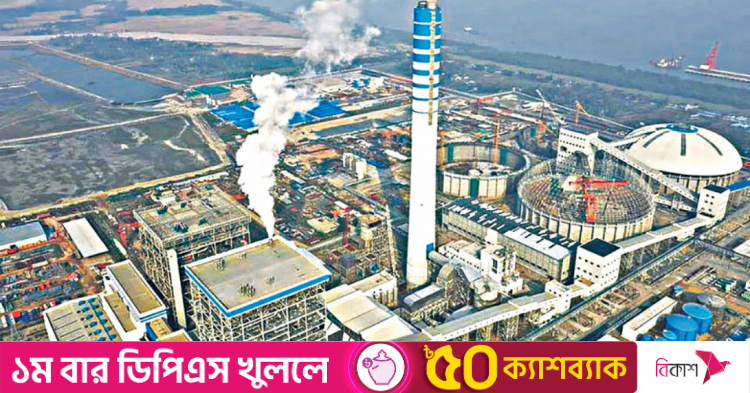
The Payra thermal power plant in Kalapara upazila of Patuakhali has halted production to conduct maintenance and facilitate the test commissioning of a neighbouring facility, according to officials of the 1,320-megawatt (MW) coal-fired power station.

They informed that the plant's first 660 MW unit was shut down for seven days from December 16 for the test commissioning of the nearby power plant run by RPCL- NORINCO International Power Limited (RNPL).

Meanwhile, the second unit was shuttered earlier on November 9 for three months for conducting major maintenance works, said Shah Abdul Mawla, project officer of the Payra power plant.

He said the newly-built RNPL power plant will begin production on a trial basis in January.

As such, power generation at the Payra power plant was halted to allow testing of the transmission lines of the new facility in Amtoli upazila of Barguna, he said.

The new plant is located on the banks of the Ramnabad river, just two kilometres north of the Payra power plant. Costing about $2.5 billion, its construction began in 2019 on some 950 acres of land.

The RNPL is a joint venture of Bangladesh's state-owned Rural Power Company Limited and China's state-owned Norinco International Cooperation Limited, with each having an equal stake.

To enable the test for commissioning the RNPL-run plant, the authorities of the Payra power plant allowed for their thermal power transmission lines to be kept shut, he added.

Selim Bhuiyan, managing director of the RNPL, said each unit of the two units of the new power station can produce up to 660 MW of electricity.

"But to begin operations, it is now necessary to conduct the test. For this, the Payra-Gopalganj 400 kV power transmission line will have to be shut down. Then, it will take up to 75 days for the commissioning," he added.

Bhuiyan also said they expect the new plant to begin contributing to the national grid on the first week of March and production at its second unit of equal capacity was expected to begin by the end of May.

Sources close to the project said the total installed capacity of the grid-based power plants in the country is about 27,740 MW.

Of this, the capacity of coal-based power plants is 5,683 MW. If the capacity of the RNPL-run plant is added, the total capacity of coal-based power plants would stand at 7,000 MW, they said.

Regarding coal stocks for the new power plant, Bhuiyan said when the plant starts generating electricity, 12,000 tonnes of coal would be required on an average per day for the two units.

An agreement has already been reached with Singaporean company Yantai to supply 1 million tonnes of coal.

Under that agreement, 1.28 lakh tonnes of coal have reached the new power plant. More coal will arrive in January. In this way, coal will be imported in phases according to demand.

He said in an attempt to minimise environmental damage, high-quality coal from Indonesia would be used in this new plant. It is a state-of-the-art power plant, where more electricity will be generated by burning less coal compared to conventional power plants.

Regarding the price of electricity, he said the production cost of this new plant will be lower than that of Adani, Rampal, Banshkhali and other thermal power plants.

Considering the current price of coal ($77), the price of electricity per unit can be around Tk 9.85 on an average.

Md Toufiq Islam, project director and chief engineer of the RNCL-run plant, said if everything goes well, the first unit would be fully operational by early March and the second unit by June.​
 
Analyze

Analyze Post

Add your ideas here:
Highlight Cite Fact Check Respond

Govt won’t raise power tariff despite pressure from IMF: energy adviser

1734652165805.webp


The interim government will not increase power tariffs despite a recommendation from the International Monetary Fund (IMF), said Power and Energy Adviser Dr Fouzul Kabir Khan today.

"We will not raise power tariff despite IMF's suggestion," Fouzul told reporters after a meeting with an IMF delegation at the finance ministry.

The delegation, led by IMF Mission Chief to Bangladesh Chris Papageorgiou, held a meeting as part of the IMF's third review under the Extended Credit Facility (ECF), Extended Fund Facility (EFF), and Resilience and Sustainability Facility (RSF). Finance Adviser Dr Salehuddin Ahmed and Fouzul were present during the discussions.

The energy adviser explained that while the IMF recommended a tariff hike to ease the subsidy burden in the power sector, the government emphasised the adverse effects such a move would have on citizens already grappling with high inflation.

The government is focusing on reducing subsidies by cutting production costs in the energy sector, the adviser said.

He also highlighted several reforms aimed at improving efficiency and transparency in the power sector.

The government has repealed the Speedy Increase of Power and Energy Supply (Special Provision) Act, 2010, and removed bureaucrats from the boards of directors in various power companies, he noted.​
 
Analyze

Analyze Post

Add your ideas here:
Highlight Cite Fact Check Respond

Members Online

Latest Posts

Back
 
G
O
 
H
O
M
E