[🇧🇩] Energy Security of Bangladesh

[🇧🇩] Energy Security of Bangladesh
595
21K
More threads by Saif

G Bangladesh Defense

The farce of fixing LPG prices

Atiqul Kabir Tuhin

Published :
Apr 05, 2026 00:22
Updated :
Apr 05, 2026 00:22

1775347803148.webp


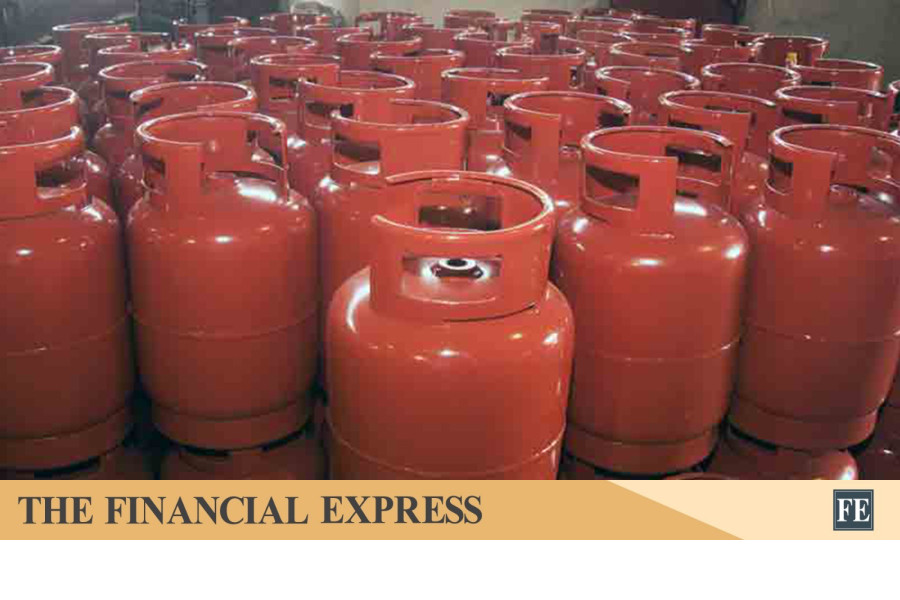
For millions of households already grappling with surging inflation, the sharp increase in the price of liquefied petroleum gas (LPG) - an essential cooking fuel - could not have come at a worse time. Adjusted monthly in line with international market trends, LPG prices witnessed the steepest single-month increase in the country's history in April.The surge has been driven by lingering war in the Middle East, which has disrupted global energy markets. Just last month, prices were set based on an import cost of $542 per tonne; this has now jumped to around $783. The country is almost entirely dependent on imports to meet the growing demand for cylinder gas. This heavy dependence on import makes domestic prices highly vulnerable to international shocks. However, when tough policy decisions become unavoidable, ensuring fair market practices becomes critical.

This is where the system is apparently failing. The irony of the LPG pricing mechanism is that even though the Bangladesh Energy Regulatory Commission (BERC) routinely fixes LPG prices, it appears to exercise little to no control over how these prices are implemented at the consumer level. For example, the 12 kg LPG cylinder, which is the most widely used, is now fixed at Tk 1,728 after a Tk 387 increase. But it is not available in the market at the government fixed rate. Even before the latest price adjustment, 12 kg LPG cylinders were being sold in the market at Tk 2,050 to Tk 2,200. There is no uniform pricing-while in some areas a 12 kg cylinder costs around Tk 2,000, in others it goes up to Tk 2,500. Retailers are charging as much as they can. Thus the government's LPG pricing framework has virtually become a cruel fun with the consumers already grappling with high inflation.

Over the last one decade or so, LPG has become an essential cooking fuel for millions of households across the country. As domestic natural gas reserves dwindle, authorities have been encouraging domestic use of LPG as an alternative. New residential gas connection has remained suspended for years, and is unlikely to resume in the foreseeable future. Even many households that still have pipeline connections are forced to keep LPG cylinders on standby, as stoves connected to the grid remain dry for the better part of the day. As a result, cylinder gas has become an essential part of daily life, from rural villages to major cities. However, the recent volatility in the LPG market, coupled with private sector dominance and rampant profiteering, has exposed how people have been made dependent on a commodity over which the government has no effective control.

For low- and middle-income families, the rising price of LPG is all the more painful. The latest hike will only intensify financial strain, particularly for those already struggling with the rising cost of essentials. The added cost frequently forces them to cut back on essential expenditures and reduce consumption in order to cope. The impact extends beyond households. As cooking fuel becomes more expensive, food prices in restaurants are also rising, adding another layer of pressure on consumers.

There is no denying the constraints the government faces. Global energy prices are volatile, and fiscal space is limited. However, even within these limitations, there is scope for more effective intervention. Measures such as fast-tracking the government-to-government (G2G) import, streamlining the local distribution channel and ensuring stricter enforcement of fixed prices could help shield ordinary people from the mounting inflationary pressure.​
 

Tackling the energy crisis
It requires more than mobile courts and police

Rushad Faridi

Published :
Apr 05, 2026 00:20
Updated :
Apr 05, 2026 00:20

1775348529052.webp

A vigilance team seized some drums of fuel, stored illegally at a hidden place in Sylhet last month —Agency Photo

It was entirely predictable that the onset of the Iran-Israel conflict would send shockwaves through the global energy market. With supply chains disrupted, particularly through the Strait of Hormuz, global crude oil prices have nearly doubled. Bangladesh imports roughly 95 per cent of its fuel, almost all of it from the Middle East. Consequently, for an import-dependent economy like ours, this regional war has rapidly escalated into a national crisis.

This crisis, however, is not unique to Bangladesh. Almost every nation relies on Middle Eastern energy to some degree, and our neighbours are grappling with similar challenges. Yet, compared to most of our neighbours, let alone the developed world, Bangladesh's economic resilience and energy security remain fragile. This underlying weakness makes the current shock far more severe for us.

Despite this, the government's response thus far lacks a sense of urgency. A month into the conflict, we have yet to see any meaningful adjustment in fuel prices. Even as international crude prices have skyrocketed, the domestic market remains insulated, standing in stark contrast to almost all other Asian nations, including our neighbours, which have already implemented price hikes.

THE COST OF UNSUSTAINABLE SUBSIDIES: To be fair, the government's reluctance is not entirely unfounded. A spike in fuel prices triggers inflation across the board, affecting everything from food to transportation. This disproportionately hurts low-income citizens. While shielding them is a valid goal, keeping prices artificially low across all sectors also subsidizes the affluent, leading to a massive waste of state resources. Ultimately, the burden of these colossal subsidies falls back on the ordinary taxpayer.

The sheer scale of this waste is staggering. Throughout March, diesel was sold domestically at 100 Taka per liter, while it cost the Bangladesh Petroleum Corporation Tk 189. Octane retails at Tk 120 against an actual cost of Tk 150. If this trajectory continues, the Energy Minister estimates the government will bleed an additional Tk 310 billion by June 2026. If this subsidy were exclusively targeted at low-income households, agriculture, or critical sectors, it might be justifiable. Under the current blanket system, however, it is entirely unsustainable.

REGIONAL COMPARISONS AND SMART RATIONING: This is why India's approach of sector-specific price adjustments is instructive. Rather than placing the burden directly on low-income earners, the Indian government selectively raised prices on premium fuels and bulk industrial supplies. State-owned oil companies increased premium fuel prices by Rs 2 to Rs3 per litre, while keeping standard petrol and diesel prices stable for everyday consumers. Essentially, those who can afford luxury vehicles bear the cost, protecting public transit and agriculture. Meanwhile, 'bulk diesel' sold to large industries and commercial enterprises saw a price hike of roughly 25 per cent.

Conversely, Pakistan, burdened by a severe foreign exchange crisis and strict IMF mandates, took a drastic route. Within a week of the war's outbreak, Islamabad hiked fuel prices by up to Rs 55 per litre, triggering a severe cost-of-living crisis and widespread public outrage. Bangladesh, too, is only just beginning to recover from the economic wreckage left by the previous Awami League administration. It is inevitable that we will not be able to freeze fuel prices for much longer. While we must avoid Pakistan's extreme shock therapy, we can adopt India's nuanced strategy: aligning the price of octane-predominantly used in private vehicles-with global markets, while capping increases on the diesel that powers our public transport and agricultural sectors.

Beyond market-driven pricing, there are innovative, non-market strategies to consider. Following its unprecedented economic collapse in 2022, Sri Lanka successfully leveraged technology to manage its fuel supply. They introduced the 'National Fuel Pass,' a QR-code-based digital rationing system that allocated weekly quotas for specific vehicle types. This initiative not only curbed hoarding but effectively eliminated the black market and the agonizing queues at gas stations.

Other nations are also adopting behavioural and administrative measures. Some are moving to four-day workweeks to conserve energy. In Thailand, office workers are encouraged to swap suits for t-shirts to reduce the need for air conditioning, alongside mandates to keep government office temperatures at 26-27 degrees Celsius. Vietnam has curtailed domestic flights and expanded 'work from home' policies, while large tech companies are urging employees to bring packed lunches to save the LNG used in corporate cafeterias.

THE LIMITS OF LAW ENFORCEMENT IN ECONOMICS: While Bangladesh has floated similar ideas, the government's primary strategy still relies on unsustainable subsidies and heavy-handed administrative crackdowns. Neither approach is viable long-term. Prolonged, massive subsidies will inevitably drain our national reserves. Meanwhile, to combat hoarding and artificial shortages, the government has deployed police force and mobile courts. Nearly 300 mobile courts are currently scouring the country, handing out fines and jail sentences for fuel hoarding.

Deploying law enforcement to police markets is a tired and ineffective playbook in Bangladesh. Whenever prices rise, the default narrative from authorities and the media is that a 'syndicate' of greedy businessmen is manufacturing an artificial crisis. The prevailing logic assumes that arresting these 'criminals' will magically stabilise prices. We saw this repeatedly during the Awami League era: police raids and harsh penalties aimed at controlling prices. Yet, every single time, these measures failed, often exacerbating the very crisis they sought to solve.

When a market faces a genuine supply shortage and the government enforces artificial price caps, the natural economic response is to hoard goods in anticipation of future price hikes. This inevitably fuels a black market where commodities are sold closer to their true, market-clearing value. Furthermore, if prices are significantly higher in neighbouring countries, it creates a powerful, lucrative incentive for cross-border smuggling.

These are fundamental economic realities that cannot be legislated or policed away. A genuine supply deficit is an economic problem; treating it as a criminal issue to be solved by law enforcement is fundamentally flawed. In fact, administrative coercion often breeds panic among suppliers, further constricting market availability. Sri Lanka's recent success clearly demonstrates that data-driven digital monitoring and rational demand management are vastly superior to the blunt force of police raids and mobile courts.

Moreover, Bangladesh's current policy of adjusting fuel prices just once a month is ill-suited for the present volatility. While a monthly review works in stable times, in a crisis where global prices fluctuate daily, it creates a massive incentive for speculative hoarding. Vendors naturally restrict sales at the end of the month, waiting for the anticipated price hike to maximise profits. This is a basic business strategy. To counter this, the government should transition to adjusting prices weekly-or even every few days-for specific fuels, as outlined earlier.

ESCAPING FOSSIL FUEL DEPENDENCY: Simultaneously, the country must look beyond immediate fire fighting and address the structural roots of our energy vulnerability. The primary reason Bangladesh is hit harder than its neighbours is its near-total reliance on fossil fuels. While India relies on fossil fuels for roughly 90 per cent of its needs, Pakistan 81 per cent, and Sri Lanka 77 per cent, Nepal has remarkably reduced its dependence to just 26 per cent.

Nepal and Bhutan are leveraging their geography and hydroelectric resources as a vital shield in this 2026 energy crisis. Rather than remaining shackled to imported oil, they are exporting surplus electricity to India and utilising the Indian grid to supply power to Bangladesh. This regional integration not only boosts their foreign exchange reserves but significantly cushions them against global oil shocks. By prioritising renewable energy, they are forging a sustainable security model that offers long-term dividends for the entire South Asian region.

In stark contrast, Bangladesh is lagging miles behind. Its 2008 renewable energy policy set an ambitious target of generating 10 per cent of our power from solar and other clean technologies by 2020. More than a decade and a half later, we are struggling to generate even 1 per cent from renewables. At that time, our geographical location positioned us as a potential powerhouse for solar energy. Tragically, under the extractive economic governance of the Awami League, those prospects were systematically dismantled.

To make matters worse, our domestic energy landscape has only deteriorated. The supply of natural gas from local fields has plummeted due to a glaring lack of state investment in exploration and extraction. To plug this growing deficit, the country began importing expensive liquefied natural gas (LNG) from the Middle East in 2018, alongside an increasing reliance on imported coal.

Cumulatively, these failures have left Bangladesh dangerously exposed to any disruption in the global energy market. We must treat this Middle Eastern conflict as a definitive wake-up call. If the newly elected BNP government can successfully navigate the short-term turbulence while decisively pivoting away from our crippling dependence on fossil fuels in the long run, this crisis may yet prove to be a blessing in disguise.

The writer is a Faculty, Department of Economics, University of Dhaka.​
 

The missing link in our renewable energy transition lies in quality assurance

5 April 2026, 12:00 PM

Md Razib

1775436386545.webp

The absence of a robust solar components testing facility creates yet another barrier to renewable energy expansion in Bangladesh. FILE PHOTO: HABIBUR RAHMAN

Geopolitical crises have repeatedly exposed Bangladesh’s excessive dependence on imported fossil fuels, driving up energy prices and depleting foreign exchange reserves. The ongoing war in the Middle East has once again highlighted this structural vulnerability. To mitigate such external shocks, Bangladesh must urgently expand its domestic renewable energy capacity. But to what extent does the government demonstrate genuine commitment to a renewable energy transition? And if such intent exists, are current policies and strategies being implemented effectively? The answer, unfortunately, appears to be no. While financing constraints, investment gaps, and taxation remain the primary barriers to renewable energy expansion in Bangladesh, another critical issue has received far less attention: barriers related to imported renewable energy components.

Renewable energy systems typically rely on high-quality components that can deliver efficient, stable, and durable performance under challenging environmental conditions. A robust solar components testing facility is, thereby, essential to ensuring that these products meet international safety and performance standards. Proper testing ensures optimal energy conversion and storage, and safe operation in challenging environmental conditions. It improves system efficiency, reduces failure risks, and ensures maximum return on investment for end users.

Bangladesh needs its own dedicated renewable energy components testing institute for a successful renewable energy transition. Countries currently leading in renewable energy transition—such as Germany, Italy, the US, China, and India—all have their own specialised testing institutes for renewable energy components. Even Pakistan, which has recently achieved a 46 percent share of renewable energy in its electricity generation mix as of September 2025, established a state-of-the-art solar panel testing facility in collaboration with South Korea in December 2025.

However, there is no single dedicated renewable energy components testing institute in Bangladesh. Neither does the country have its own comprehensive solar components testing facility, although approximately 78 percent of the total renewable energy capacity comes from solar power in Bangladesh. The Bangladesh Standards and Testing Institution (BSTI) has performed a limited role in this area, but its capacity remains significantly constrained. For instance, its capabilities for testing solar inverters are negligible, and it does not offer testing services for other solar components.

Normally, solar panels are certified based on internationally recognised standards, which are enforced by national testing authorities. Unfortunately, Bangladesh has not developed its own certification framework for solar panels. Instead, it adapts different international standards such as the International Organization for Standardization (ISO), the International Electrotechnical Commission (IEC), etc. Moreover, BSTI’s testing system is mainly documentation-based. It is not based on direct physical testing. Usually, a company imports solar components and submits the certificates to BSTI, and then BSTI reviews them to determine compliance with the required standards. If approved, the product is listed in BSTI’s database. Once a specific model is listed, subsequent imports of the same model do not require further testing. However, bureaucratic delays often complicate the process. Sometimes, even with BSTI certifications, the Sustainable and Renewable Energy Development Authority (SREDA) conducts unnecessary and lengthy documentation checks that may take three to four months. As a result, importing companies cannot install solar panels for the customers on time, escalating project costs and diminishing efficiency.

Another major concern is that BSTI lacks adequate modern and advanced testing equipment for testing solar panels and solar inverters. Without proper testing infrastructures, imported solar panels and inverters often fail to meet their claimed quality and performance standards: for example, a solar panel advertised as having a capacity of 500 watts delivers only 300 watts. Therefore, the current government should urgently establish a separate testing institute for renewable energy components, if the funds for such a project are available. If not, the existing capacities of BSTI should be strengthened, modernised, and upgraded. Also, BSTI must introduce direct physical testing-based methods for all renewable energy components, rather than a purely documentation-based system. Another solution could be to establish port-based testing facilities that could significantly decrease delays by enabling rapid testing of imported products upon arrival. Otherwise, several months are wasted in bringing these components to Dhaka and distributing them among the city’s few testing labs.

As technology is changing rapidly around the world, BSTI’s testing equipment needs to be updated and modernised accordingly. In addition, the government should encourage the establishment of testing laboratories in the private sector to enhance capacity and encourage competition.

Md Razib is research associate at South Asian Network on Economic Modelling (SANEM).​
 

No let-up in fuel oil crisis

Finance minister says pressures mounting on exchequer, Energy Division dismisses supply shortage

Staff Correspondent 06 April, 2026, 00:37

1775436928172.webp


Finance and planning minister Amir Khasru Mahmud Chowdhury on Sunday said that pressures were mounting on the exchequer because of keeping the fuel oil prices unchanged on the local market while the Energy Division again dismissed any supply shortage, but consumers were struggling to collect petroleum products across the country.

Foreseeing price hikes of all types of commodity items because of the price hike of fuel oils on the global market following supply disruptions amid the ongoing war in the Gulf region, the finance minister said that the newly elected government of Bangladesh had not made any upward adjustment of fuel oil prices to keep the people free from the pressure.Human rights reports

The minister made the remarks while talking to reporters at the Planning Commission in the capital Dhaka after a meeting on the country’s graduation from the least developed countries’ bloc.

On March 31, the government decided to keep the current prices per litre diesel at Tk 100, kerosene Tk 122, petrol Tk 116 and octane Tk 120 unchanged for April.

Amir Khasru doubted how long the government would able to sustain the pressures.

Dismissing any supply shortage of fuel oils at the present moment, state minister for power, energy and mineral resources Anindya Islam said that they were working to keep the fuel stock for three months in line with the government decision.

The three-month stocks of petrol and octane have already been ensured while efforts for ensuring the stock of diesel for the same duration are going on, said Anindya while taking to reporters at the secretariat in the capital.

The state-minister said that the demand for diesel would ease after the second week of this month with the conclusion of the irrigation for boro, the single biggest cereal in the country.

Expressing optimism about getting the waiver from the United States for buying oils from Russia, he said that foreign minister Khalilur Rahman had a meeting with US officials in his recent visit to Washington.

A decision to increase the shopping hours by an hour until 7:00pm was made on the day following an appeal by businesses, said Anindya.

On April 2, the cabinet had asked shop owners to close their outlets by 6:00pm as part of austerity measures on the back of the ongoing war in the Gulf region disrupting supply of fuel oils.

As most fuel oils consumed in the country are imported, many traditional sources called force majeure — a common contractual clause that frees parties from liability or obligation — in the wake of the ongoing war, he said.

Responding a query about long queues at filling stations for fuel oils, the state minister said that the government had to be rational on supply of the items to check hoardings and smuggling.

On Saturday, 41,700 litres of diesel and 1,010 litres of petrol were seized from hoarders, according a press release issued by the Energy Division on Sunday.

The diesel recovery included a lot of 1,100 litres from the city’s Basundhara area, added the press release.

A China-flagged ship carrying over 34,000 tonnes of diesel from Malaysia has arrived at Chattogram port’s Dolphin Jetty for unloading.

In the capital Dhaka, consumer on Sunday continued to suffer as they had to wait for hours in queues at the filling stations for buying octane and petrol.Geographic Reference

Many consumers said that the suffering was increasing every day as only a few pumps operated fully and the rest briefly.

The Finance Division on Sunday issued a circular, stating austerity steps taken in the wake of the current war in the Gulf.

It asked all ministries and divisions to spend not more than 50 per cent of the allocations for entertainment, local trainings and internal decoration.

Slapping a ban on all kind of foreign training on public fund, the circular said 70 per cent of the allocations for fuel oils and power consumption could be spent.

Expenditure for arranging conferences and symposiums should be limited to 80 per cent of the allocation and 50 per cent for entertainment.

The Finance Division circular was issued three days after a cabinet meeting on April 2 scaled up the austerity steps because of war threating the fiscal measures.

Suspension on the procurement of vehicles and vessels along with computers and land acquisition under the non-development budget has been imposed, said the circular.

For the construction of buildings, fund allocation has been limited to 50 per cent with exception for those with 70 per cent implementation rate by the approval from the Finance Division.

Interest-free loan for purchasing cars by public officials will be suspended, said the circular.​
 

Latest Posts

Back