[🇧🇩] Energy Security of Bangladesh

[🇧🇩] Energy Security of Bangladesh
610
21K
More threads by Saif

G Bangladesh Defense

Government forms Cabinet committee to review electricity prices

bdnews24.com

Published :
Apr 13, 2026 23:15
Updated :
Apr 13, 2026 23:15
1776125961807.webp


The government has formed a cabinet committee to prepare proposals for adjusting wholesale and retail electricity tariffs in response to the ongoing global energy situation and rising pressures in the sector.

The Cabinet Division announced the decision in a notification issued on Apr 9.

The committee has been formed at a time when the legal framework for determining electricity and energy prices has undergone multiple changes in recent years.

Finance Minister Amir Khosru Mahmud Chowdhury will lead the six-member committee, which also includes Power, Energy and Mineral Resources Minister Iqbal Hassan Mahmood Tuku, Commerce Minister Khandakar Abdul Muktadir, the secretary of the Finance Division, the secretary of the Power Division, and the secretary of the Energy and Mineral Resources Division.

According to the notification, the committee will review the current energy situation in detail and submit specific proposals on adjusting wholesale and retail electricity tariffs for consideration at a cabinet meeting.

The panel may co-opt additional members if needed, hold meetings as required, and will receive secretarial support from the Power Division.

At the end of 2022, an amendment to the Bangladesh Energy Regulatory Commission (BERC) Act introduced Section 34(A), allowing the government to adjust electricity, gas and fuel prices through executive orders without public hearings.

In early 2023, the government used this provision, citing the need for quicker decision-making.

However, during the interim government period, an ordinance issued on Aug 27, 2024 repealed Section 34(A), restoring the requirement for public hearings and returning pricing authority to BERC.

As a result, after about one and a half years, the authority to increase or decrease prices of gas, electricity and other fuels reverted to the commission.

Meanwhile, BERC has been setting monthly liquefied petroleum gas (LPG) prices since Apr 2021, replacing the earlier system where private companies determined prices independently.

The current system aligns domestic prices with international market rates through monthly adjustments.

During the interim government period, pricing authority for Jet A-1 fuel and furnace oil was also transferred to BERC, as per a gazette issued on Sept 15, 2024.

Previously, these prices were set by the Bangladesh Petroleum Corporation (BPC).

However, diesel, octane and petrol prices continue to be set administratively by the government, with BPC implementing the decisions.

An automatic pricing mechanism linked to international markets has been introduced for these fuels, although final control remains with the government.

In recent months, the government has continued to issue separate notifications to fix consumer-level fuel prices.

Following the formation of the new parliament, 133 ordinances issued during the interim government period were sent to a special committee.

These ordinances must be passed within 30 days of the session’s start to retain legal validity.

Among them are amendments related to BERC, the Bangladesh Gas Act, and the repeal of special provisions for quick enhancement of electricity and energy supply.​
 

Building a strategic fuel oil reserve

SYED FATTAHUL ALIM

Published :
Apr 13, 2026 23:59
Updated :
Apr 13, 2026 23:59

1776126443616.webp


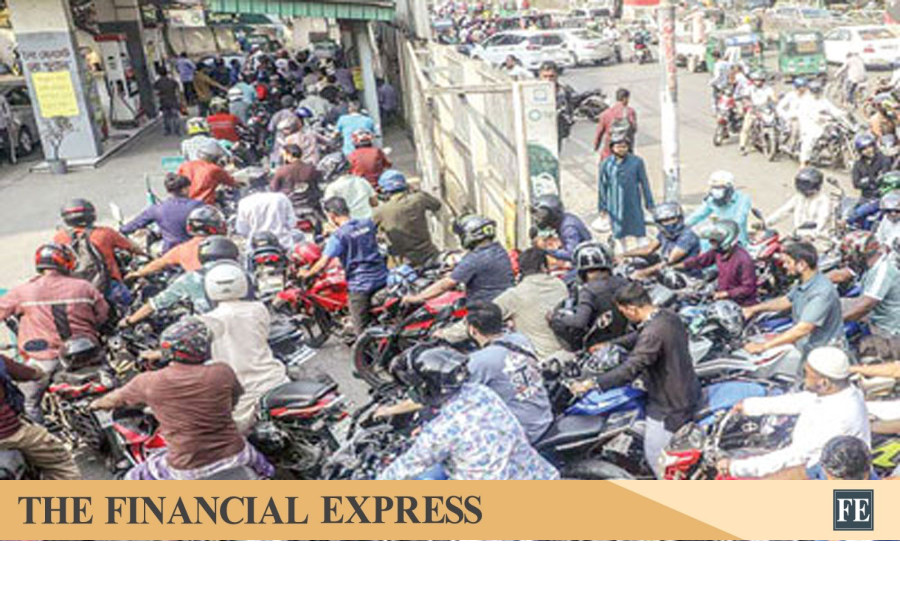
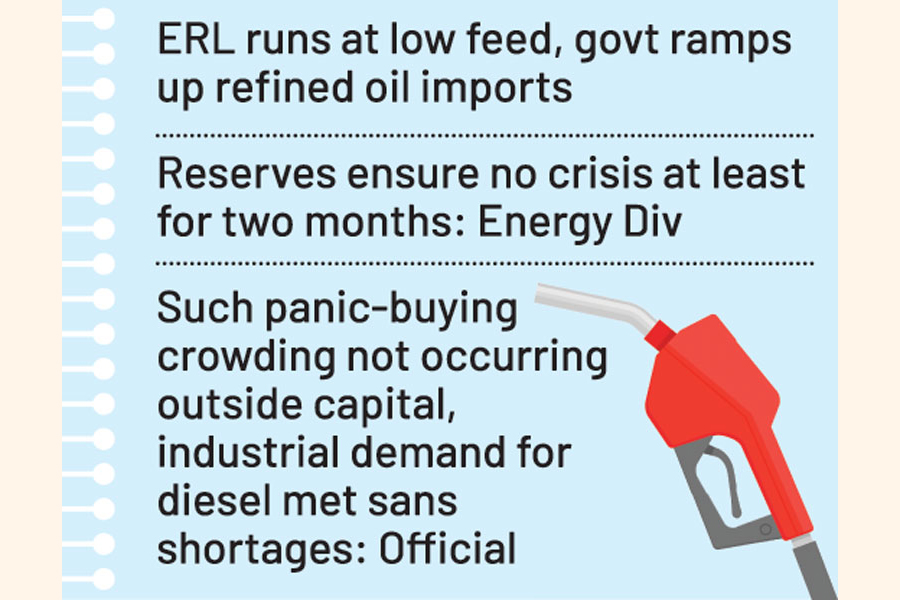
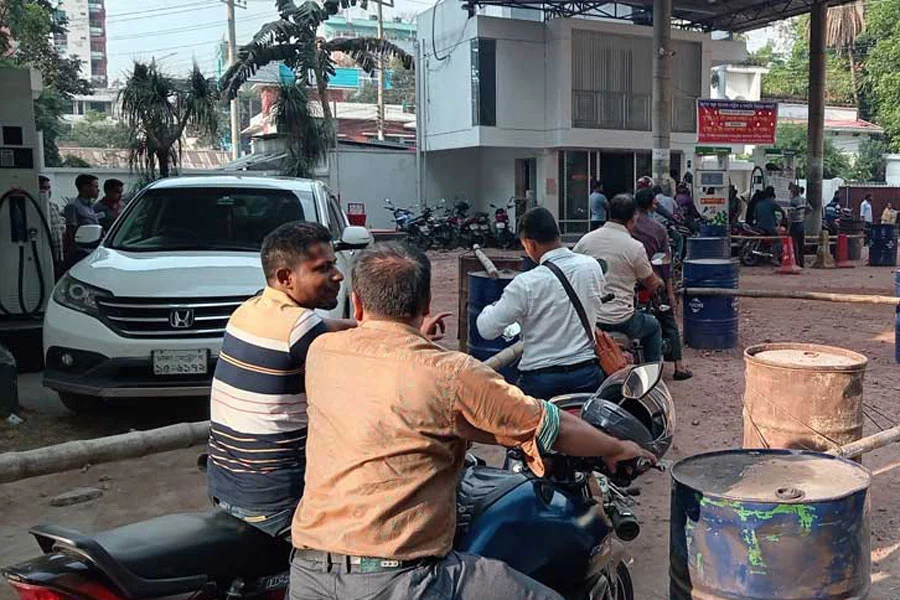
Bangladesh’s vulnerability to any disruption in the global energy supply chain has been amply demonstrated during the US-Israel’s war on Iran. For, as soon as Iran, in retaliation for the attack, blocked the narrow maritime chokepoint, called the Strait of Hormuz through which ships carrying fuel oil, Liquefied Natural Gas (LNG) and fertilizers pass, Bangladesh felt the shock. That the shock has been severe could be observed from the panic buying by the public, hoarding of fuel oil by unscrupulous traders and the long, unending queues of private cars and motorbikes at the filling stations. This is the truth, despite the repeated reassurances from the government that it has adequate stockpile of fuel oil. Even if the government’s present stock can meet, say, a month’s energy need, then what is going to happen if the present crisis in the Gulf becomes a prolonged one? The war has already crossed 40 days. In that case, it is bad news for the oil-dependent industries, power plants, irrigation pumps, etc. There are also the land, water and air transports, to name but a few of the fuel oil hungry vehicles.

So, the government’s first priority should have been to take into account the geopolitics of energy, especially in the Middle East, and orient its foreign policy accordingly. That is to ensure that the flow of energy from the Gulf nations is not interrupted under any circumstances. For, nearly 95 per cent of the country’s fuel oil requirement is met through imports mainly from the Middle East, while 30 per cent of gas (LNG) comes from the same source. Had the government been able to pursue a balanced foreign policy, the flow of fuel oil from the Strait of Hormuz would not have stopped. The foreign policy of a sovereign nation cannot be beholden to any foreign countries no matter how friendly they are. Our response to emerging global crises, for instance, the ongoing war in the Gulf, should have been able to demonstrate that. But it couldn’t. Unsurprisingly, the Iranian authorities on April 10 denied permission to the Bangladesh-flagged vessel, MV Banglar Joyjatra, to pass through the Strait, despite a recent cessation of hostilities. As a result, the ship carrying 31 crew members has been forced to anchor near the UAE. But it should not have been the case. Notably, the ship has been remaining stuck in the Gulf for 40 days due to the war. This is unfortunate. Now, given the country’s overdependence on imported energy and the dwindling reserve of natural gas at home, there should have been an energy strategy in place.

The core of that strategy should be to progressively increase the proportion of renewable energy, which at present is between 5.25 per cent and 5.40 per cent of the nation’s total power generation mix, which is well over 31, 000 MW. It is worthwhile to mention that the total installed renewable energy capacity is around 1690 MW. Of this amount, solar power contributes 80 per cent followed by hydro and wind power. But of the renewable mix, hydro and wind are yet to contribute significantly so far as its present installed capacity is concerned. In the revised renewable Energy Policy (2025), the government aims to produce 20 per cent of the toral power from the renewables by 2030 and 30 per cent by 2040. But to meet 2030’s target, Bangladesh must produce 760 MW of renewable power every year between 2026 and 2030. But given the current capacity, the target is too ambitious. So, what other options is the government left with? In this connection, the government may take note of China’s policy. Fuel oil meets only 18 to 19 per cent of the country’s energy need. The rest comes from the renewables. Even so, it has built a strategic reserve of 1.2 to 1.3 billion barrels of crude oil. Over time, we should also create a satisfactory strategic reserve of fuel oil to meet emergencies. Even so, our primary focus should be on gradually increasing renewable capacity, preferably based on solar power.​
 

How Bangladesh can tackle the current energy crisis

12 April 2026, 01:33 AM

Ramisa Rob

As Bangladesh makes headlines for the energy crisis from the Iran war, Dr Ijaz Hossain, former Dean of BUET, speaks to Ramisa Rob of The Daily Star about the oil, gas crisis, and energy conservation and efficiency.

What is a solution for Bangladesh’s oil crisis and Eastern Refinery facing a production crisis?

Diesel is 100 percent imported, so the root of the problem is our import-dependency. We only have the Eastern Refinery, which refines about 1.3 million tonnes of oil a year. From that, we get more than half a million tonnes of diesel, but the rest of it is imported from Singapore, which is also very affected, with companies having declared force majeure. India has promised to supply diesel and is trying to give us more; the government has looked into Kazakhstan and so on. We are looking into any countries that have diesel to spare.

Building another refinery is a measure the government can take. But that does not decrease our dependence, per se, as we would still have to import crude oil. It would only improve our supply situation in the long-run and save money from buying expensive refined oil — bought at a premium price during times of global crisis periods. We are currently facing both price and supply shocks. Even at high prices, there is scarcity and of course, whether the ship would safely reach the shores, is another matter to consider.

1776129660588.webp

Dr Ijaz Hossain

Are there any viable solutions for the issues we are facing from disruptions to LNG?

Importing LNG and creating the current dependency was a disastrous decision as we are seeing now. We should not put all our eggs in one basket. India’s industries do not run on gas, and there are other examples across the world.

We also don’t have enough facilities, such as regasification plants. Our demand was already higher than what we are able to import and domestically produce per day.

Bangladesh had an energy crisis even before this war. We also need the dollars to buy imported gas, adding another layer to the current disruptions from the closure of the Strait of Hormuz.

The “100 wells programme” was started by the Awami League government, due to a huge human cry from civilians. The same people who abandoned gas exploration began offshore bidding. The interim government gave a lot of lip service to continue this programme.

Files were sitting there for funding in the planning division, they were not getting funds, but gas exploration didn’t stop. Our one success story is in the Bhola region, and within a month’s time, I believe we will be able to know how much gas was found. In the meantime, the government is also planning on floating the tenders for deep offshore, which is an unexplored area. A lot of us are hoping that we will find at least a bit of gas to alleviate some of the problems we are currently facing. Regarding challenges to acquiring requisite funds for gas exploration, big companies are also very much affected. But they might still be interested in Bangladesh, as they might be able to get out of the dependency in the Middle East. Companies have been successful in the Philippines, Angola and other places. India has found gas, Myanmar has also found gas.

Is Bangladesh going to be the first country to run out of oil supply, as a British paper has reported?

We will certainly be amongst the countries categorised in that bracket. Other import-dependent nations, such as the Philippines, for example, may run out before us. It appears that our customers who are panic-buying, especially those on motorbikes, will not easily be convinced with the government merely saying that we have enough oil supply. The crisis at the petrol pumps could have been dealt with earlier on. The government should look seriously into how they distribute petrol and octane. Again, petrol and octane are not the issues here — diesel is. The government should be a bit more honest about what the crisis is, as people don’t completely believe the government’s narrative. In order to do that, the government can take journalists to the depot, show them where the petrol is coming from, get experts to do roundtables and engage with companies facing issues.

What do you make of the austerity measures compared to other countries?

Rationing is always a good measure if done properly. In some countries, there have been digital methods such as QR Codes used, so Bangladesh needs to use the full extent of digitalisation for supply chain management. The government must study the whole crisis to design systems which we are seeing in our neighbouring countries to streamline the delivery of fuel.

Overall, I am not pleased with Bangladesh’s austerity measures, such as the justification to save energy by reducing office hours and shopping hours, which will not yield in saving liquid fuel. Sri Lanka’s measure to completely shut down work for one day, is more productive. Road transport, liquid fuel will be used everyday in Bangladesh, if we don’t have an enforced holiday or work from home.

On the other hand, all the aforementioned measures affect electricity, so they mainly affect furnace oil. If you shut down offices, and commercial establishments, the electricity savings will not be too significant. It is better to enforce load-shedding, in my opinion. Forced conservation is a guaranteed method of saving energy.

1776129700839.webp

INFOGRAPH: Dr Ijaz Hossain/Star Visuals


What are some policies and behavioural patterns that can lead to energy conservation?

Energy conservation and efficiency must be the cornerstone of our consumption policy. It’s imperative to note the difference between the two. Conservation is what you do for yourself, and energy efficiency needs some investment, such as buying different fans, so energy efficiency always requires some sort of government sponsorship.

Industries can take their own austerity measures. Often we see lights on in offices and factories, and we’re not sure if that’s needed. AI-assisted automation would be able to handle that more efficiently. It is possible to implement such measures at cheaper prices, cut costs and also improve productivity.

Another simple example of daily energy conservation is the usage of fans, which is the device that uses the highest concentration of electricity. Brainless-direct-current (BLDC) fans consume much less energy than the fans that we are using currently. This is a doable option, but of course, people aren’t going to throw their fans away. The government has to give the right incentives for this shift.

Conservation is akin to preaching a religion of sorts, to people, and they have to reach people’s mindsets. There are many lifestyle changes that can be encouraged by the government, and yield economic outcomes. In general, to reduce imported oil, we can take these measures: electrification, specifically EV and batteries; solar irrigation; car restrictions and traffic management to reduce congestion; less AC use in cars and regular maintenance.

Most importantly, we simply must have strategic reserves, which are only touched in deep crises like these. Right now, if we had strategic reserves, we would have been able to contain the chaos arising from the octane, diesel and petrol crisis. If people knew that Bangladesh has 30 days of octane, diesel and petrol, then we would not be in the current precarious state.

Renewable energy is cheaper, but advancements were not made during the Awami League government, the interim government, so the current government has to do something now. Pakistan reduced their LNG-imported demand with a significant consumer-driven solar energy boom in only two years. The city of Sialkot and similar industrial areas in Pakistan with high solar output can meet local demand without energy from the grid. It is a very good opportunity for the current government to implement these productive measures now.

Ramisa Rob is Geopolitical Insights editor at The Daily Star.​
 

Latest Posts

Back