[🇧🇩] Energy Security of Bangladesh

[🇧🇩] Energy Security of Bangladesh
678
23K
More threads by Saif

G Bangladesh Defense

Power efficiency before expansion

1780363091865.webp

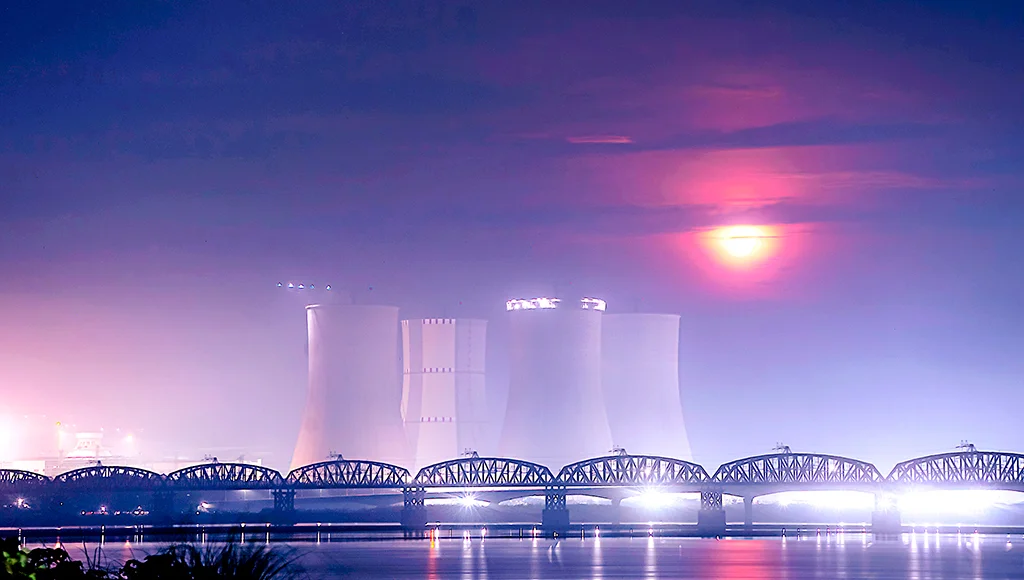
Rooppur Nuclear Power Plant. | Wikipedia

THE power sector presents a difficult paradox. Over 15 years, Bangladesh has significantly expanded its electricity generation capacity, reaching 27,414 megawatts by June 2025 through billions of takas in public spending. On paper, the figures suggest progress and ambition. Yet, beneath the impressive statistics lies a deeper institutional and structural failure that policymakers can no longer afford to ignore.

The crisis is not simply about how much electricity Bangladesh can generate, but about how much electricity disappears before it even reaches consumers. The Bangladesh Energy Regulatory Commission has set a benchmark of 2 per cent for system loss, yet actual losses remain far above that limit. According to the Bangladesh Power Development Board, the overall transmission and distribution system loss stood at 10.13 per cent in 2024-25, while distribution loss alone reached 6.68 per cent. These are not minor technical irregularities. They reflect a persistent governance failure that continues to drain public resources while weakening the reliability of the power system itself.

Overcapacity, underpayment

THE financial implications of this crisis are becoming increasingly difficult to justify. Bangladesh’s power sector is currently operating with nearly 40per cent overcapacity, far above the internationally accepted reserve margin of around 8–10per cent. In 2024–25, peak generation reached only 16,603MW against an installed capacity of 27,414MW, leaving almost 11,000MW sitting unused.

Yet, instead of gradually phasing out idle quick rental power plants, successive governments continued signing contracts for new plants, including additional rental-based generation. The result has been mounting financial pressure on the Bangladesh Power Development Board. The board’s net loss rose to Tk 17,021 crore in the 2024–25 financial year, almost double the loss recorded the previous year. Much of this burden comes from capacity charge payments made to private producers even when plants remain idle. Public money is being spent not only on electricity generation, but also on maintaining unused infrastructure that contributes little to solving the country’s actual energy problems.

At the same time, the country’s distribution infrastructure remains severely outdated. Ageing transformers, inadequate transmission networks, faulty metering systems, and widespread illegal connections continue to weaken grid stability. In practical terms, Bangladesh is paying twice for electricity: once to produce it, and again through losses that generate no economic return.

Economic, social consequences

THE consequences of energy inefficiency extend well beyond the power sector itself. International climate finance institutions such as the World Bank, the Asian Development Bank and the Green Climate Fund are increasingly linking concessional financing to measurable improvements in energy transition and efficiency. Bangladesh’s inability to reduce system loss weakens its credibility as a reliable borrower at a time when global competition for green financing is intensifying. Other developing economies are already improving grid efficiency and strengthening accountability mechanisms to secure long-term climate investment.

The economic impact is also visible domestically. Despite surplus installed capacity, industries and households continue to face recurring load-shedding and supply disruptions. For manufacturers, unreliable electricity raises production costs and undermines investor confidence in Bangladesh’s industrial sector. For ordinary citizens, especially lower-income households, the burden appears in the form of rising tariffs and declining service quality. The Tk 17,021 crore loss accumulated by the power board does not disappear in isolation; ultimately, the public bears the cost.

System loss also sustains a broader culture of institutional weakness. Illegal connections thrive where enforcement is weak, billing discipline collapses where accountability is absent, and corruption becomes embedded within distribution networks when theft is tolerated for years without consequence. In that sense, the crisis is not merely technical or financial. It reflects the gradual erosion of governance standards within the energy sector.

Arithmetic of efficiency

THE economic logic behind reform is straightforward. Reducing system loss is significantly cheaper than continuously expanding generation capacity. Even a 1 per cent nationwide reduction in transmission and distribution loss can create the equivalent practical benefit of adding hundreds of megawatts of usable electricity to the grid.

Bangladesh’s peak electricity demand in 2025 was approximately 17,000MW. If system loss could be reduced from 10.13 per cent to the 2 per cent benchmark set by the Bangladesh Energy Regulatory Commission, the amount of electricity saved would be enough to serve millions of additional households without constructing a single new power plant.

This is where investment priorities require urgent reconsideration. Grid modernisation through smart metering, transformer replacement, underground cabling in urban areas, and automated distribution management systems can deliver measurable benefits within a relatively short time. According to the USAID South Asia Regional Initiative for Energy Integration, investment in reducing system loss can produce five to eight times more usable electricity per unit cost compared to equivalent investment in new generation capacity.

Yet Bangladesh’s policy focus continues to revolve around adding the next megawatt of generation while the system quietly loses vast amounts of electricity every day through inefficiency, theft and weak infrastructure.

Urgent reforms

BANGLADESH cannot stabilise its power sector simply by building more plants. The immediate priority must shift towards governance reform, infrastructure efficiency, and accountability. Several policy interventions deserve urgent attention.

First, the Bangladesh Energy Regulatory Commission must move beyond merely setting system loss thresholds and begin enforcing them rigorously. Distribution utilities that consistently exceed the benchmark should face automatic penalties, while quarterly public reporting should become mandatory. Transparency is essential if accountability is to mean anything in practice.

Second, the government should establish a dedicated enforcement unit under the power, energy and mineral resources ministry with legal authority to investigate electricity and gas theft. Mobile court operations, led by trained officers working under energy law, could target large-scale illegal connections across distribution zones. Enforcement alone will not solve the problem, but when theft carries real legal and financial consequences, the incentives sustaining illegal networks begin to weaken.

Third, Bangladesh should expand prepaid and smart metering systems beyond Dhaka into secondary towns and rural growth centres through co-financing arrangements with international lenders. Smart metering not only reduces theft but also improves billing efficiency and monitoring capacity.

Fourth, the government should impose a temporary suspension on new capacity contracts until plant utilisation rates improve substantially. With existing plants operating well below capacity, further expansion should require parliamentary review and a clear demonstration that demand cannot be met through efficiency improvements alone.

Finally, capacity charge agreements with private producers require revision. Payments should depend not simply on idle availability, but also on operational performance, efficiency standards, and maintenance reliability. Otherwise, the state will continue rewarding underutilised infrastructure at enormous public expense.

Bangladesh does not fundamentally suffer from a power generation shortage. It suffers from a governance and infrastructure crisis within the energy sector. Continuing to spend billions on new power plants while system losses remain alarmingly high represents a poor use of public resources.

The country cannot keep pouring water into a leaking bucket and call it progress. The lights will stay on not because Bangladesh builds endlessly at the top, but because it finally repairs what is broken underneath.

For policymakers, the real question is no longer ambition versus caution. It is whether development is producing genuine efficiency and public benefit, or merely the appearance of progress through increasingly unsustainable spending.

Abrar Azizul Hasan Buhiyan is an undergraduate teaching assistant at the economics department in the North South University.​
 

Power tariff hikes for lifeline users annulled
Staff Correspondent 04 June, 2026, 19:11

1780630560292.webp

Representational image | Collected photo

The Bangladesh Energy Regulatory Commission on Thursday annulled its decisions of hiking retail power tariffs for two bottom-placed household consumers, according to officials of the Power Division.

The regulatory body revised the decision a day after it stipulated that the lifeline consumers using up to 50 units would pay Tk 5.32 per one kWh of electricity in place of the previous Tk 4.63 per one kWh.

The BERC also decided to impose Tk 6.18kWh power tariff instead of the previous Tk 5.26kWh for consumers using up to 75 units, falling under the first slab of the seven categories of household clients.

Acting on a recommendation earlier on the day by the Energy Division amid criticisms from economists and rights groups on power tariff hikes, the BERC took the new decisions of keeping rates unchanged for the bottom-placed consumers.

A press release issued by the Energy Division in this connection also said that the government would compensate losses by the power distributing companies because of the new decisions.

On the same ground, the retail power tariff on weighted average will now stand at Tk 10.40kWh in place of the previous Tk 10.63kWh, added the Energy Division.​
 

Can Bangladesh achieve energy sovereignty?

Chowdhury F. Rahim

Bangladesh stands at a critical developmental crossroads, paralysed by an acute and systemic energy crisis. Recent global shortages in fossil fuels have exposed the severe vulnerabilities of the nation’s energy architecture. Across urban and rural centres, gasoline-reliant vehicles and autorickshaws endure queues lasting 12 hours or more just to purchase a few litres of fuel, stripping drivers of their daily livelihoods. Simultaneously, the vital ready-made garment sector, the backbone of the national export economy, is suffering widespread factory closures due to intense electrical power cycling. For most of these facilities, domestic backup power sources are either nonexistent or financially ruinous due to the soaring costs of diesel and Liquefied Natural Gas (LNG).

To break this cycle of economic volatility, Bangladesh must urgently transition away from fossil fuels and cultivate a diversified, self-reliant power-generation strategy. While the newly elected government has announced a commendable goal to generate 10,000 megawatts of electricity from renewable sources by 2030, the physical realities of the country’s climate and geography present severe headwinds to achieving this target through traditional renewables alone.

The realities and limitations of renewable energy

While alternative energy paths are essential, mass-scale reliance on solar and wind power face structural obstacles within Bangladesh’s unique deltaic environment:

● Thermal losses and solar degradation: Commercial solar cells operate at a base efficiency of only 10% to 15%, a metric calibrated for moderate temperatures around 27°C. During Bangladeshi summers, temperatures frequently exceed 35°C, triggering severe thermal losses that degrade cell efficiency.

● Seasonal intermittency: Bangladesh’s intense rainy season spans 30% to 45% of the calendar year, a prolonged period during which solar arrays fail to generate significant grid power. Currently, solar power accounts for only 2.3% of the total national grid supply.

● High capital expenditure for wind turbines: Wind power has a theoretical potential of at least 30 gigawatts (GW) across the delta. However, the nation’s installed capacity languishes at just 66 megawatts (MW), representing a negligible portion of generated power. This stagnation is driven by high capital expenditures of $1,900 to $2,100 per kilowatt (KW), alongside unfavourable localised wind patterns, extreme cyclone exposure, and bureaucratic regulatory bottlenecks.

● The peak load mismatch: The most profound flaw of solar and wind installations is their inability to serve the nation’s peak operational needs. Solar energy is unavailable at night, precisely when industrial demand peaks during the garment sector’s high-output period. Wind patterns remain unpredictable outside localised coastal zones, such as the 22-turbine Cox’s Bazar Wind Power Project developed via Chinese investment.

To overcome these limitations, both technologies require massive, cost-prohibitive electrical storage facilities that demand large tracts of real estate, a luxury that a highly congested nation cannot afford.

Traditional large-scale nuclear power and the Rooppur bottleneck

1780716801688.webp

While alternate energy paths are essential, mass-scale reliance on solar and wind power faces structural obstacles within Bangladesh’s unique deltaic environment. Visual: Rehnuma Proshoon

Faced with these land and atmospheric constraints, Bangladesh has turned to nuclear energy as a sustainable, low-carbon, zero-emission baseload source. The nation is on the verge of becoming the third country in the subcontinent to deploy nuclear power as the Rooppur Nuclear Plant nears operational status. Once both Rooppur I and II become operational—projected for 2028—they will inject a vital 10% baseload supply into the National Grid.

However, the Rooppur project highlights the immense vulnerabilities inherent to traditional, large-scale Gen-III pressurised water reactors.

Financial and timeline overruns: Exacerbated by geopolitical disruptions such as the war in Ukraine, the project has suffered a minimum 5-year delay beyond its original 2022 completion target. This has inflated initial feasibility budgets, with current estimates projecting the final cost to exceed $20 billion once interest is factored in.

Spatial inefficiency: Traditional plants require sprawling territories; the Rooppur complex alone occupies 4.3 square kilometres (1,962 acres) of premium land. A similar project in any other place would inevitably result in the eviction of many people, which is undesirable.

High-volume water dependencies: The Rooppur plant’s water-cooled design requires a staggering 455,000 gallons of cooling water per minute, continuously drawn from the Padma River. Because India controls the upstream flow via the Farakka Barrage, summer diversions could reduce river levels to critical lows. A subsequent “loss of coolant” event introduces the catastrophic risk of a core meltdown, mirroring the 2011 Fukushima disaster.

Sovereign and fuel dependencies: Bangladesh is heavily reliant on Russian entities for the supply of fuel rods, initial operations, maintenance, and nuclear waste management. Without a rapid transfer of technical expertise to local engineers, the plant risks long-term unprofitability and strategic vulnerability.

With national demand projected to skyrocket to 60,000 MW by 2041, Rooppur alone cannot solve the energy deficit. Bangladesh cannot simply replicate these massive, decades-long mega-projects elsewhere. Instead, it must look toward decentralised, innovative alternatives, such as Small Modular Reactors (SMRs).

The SMR and HTR-PM revolution: Safer by design

High-Temperature Gas-Cooled Reactor-Pebble Bed Module (HTR-PM) technology represents a paradigm shift in nuclear engineering. Rooted in historical German AVR and THTR-300 architectures from 1969–1980, this Gen-IV technology was initially sidelined by Western nations following high-profile disasters like Three Mile Island, Chornobyl, and Fukushima. However, researchers in China systematically analysed those historical failures to pioneer a modern, inherently safe reactor variant that completely redefines nuclear security and efficiency. The safety and operational advantages of HTR-PM reactors over traditional plants are profound:

Inherent meltdown immunity: Unlike conventional reactors that utilise high-pressure water and vulnerable fuel rods, HTR-PM reactors rely entirely on passive physics and material properties. The nuclear fuel is encased in multilayer ceramic shells to form tennis-ball-sized pellets, which are then enclosed in pyrolytic graphite moderators. These pebbles withstand extreme temperatures exceeding 1,600°C without degrading, operating safely above the reactor’s standard 650°C to 700°C thresholds.

Passive heat dissipation: The reactor core features an exceptionally large surface-to-volume ratio, allowing decay heat to escape naturally faster than it can be generated. Furthermore, the physics of the core dictates that the nuclear chain reaction automatically slows down and drops to safe levels as temperatures rise. Chinese engineers demonstrated this at the commercial-scale Shidaowan Nuclear Plant in Shandong, proving that, under simulated total failure, the reactor safely cooled itself to a stable temperature within 40 hours without any human intervention or backup power.

Radical footprint reduction: An HTR-PM facility requires only one-tenth of the land area of a conventional plant like Rooppur. This compact nature makes it possible to deploy them near high-density urban populations, industrial zones, river ports, or even aboard medium-sized ships.

Eradication of water reliance: Because these reactors utilise gas or salt coolants rather than open-loop river water, Bangladesh can break free from geopolitical dependencies on neighbouring nations regarding transboundary river flows.

Technical coolant dilemmas and global alternatives

While the benefits are clear, deploying SMR technology requires evaluating competing international cooling methodologies, each presenting distinct engineering trade-offs:


1. High-pressure inert helium gas

Pioneered by China’s Institute of Nuclear and New Energy Technology (INET) at Tsinghua University, this method is deployed commercially at the Shidaowan project. Helium does not react with neutrons or corrode the internal reactor shell, making it exceptionally safe. However, helium is expensive, is commercially controlled by a few nations, and presents mechanical challenges due to the high operating pressures required. Using cheaper alternatives, such as carbon dioxide, causes long-term structural degradation of the graphite core, while nitrogen reacts to form toxic gases.

2. Molten fluoride salts (FHR)

Advocated by companies like Kairos Power in the United States, molten fluoride salt heat reactors (FHR) operate at low, nominal pressures around 650°C. Because the salt vaporises above 1,400°C, the liquid state eliminates any risk of a high-pressure gas explosion. However, molten salts are highly corrosive and will destroy standard metal alloys, requiring advanced nickel-based structural metals. Furthermore, Kairos has yet to demonstrate a commercial-scale project, making it an unproven option for meeting Bangladesh’s immediate cost objectives.

3. Liquid sodium pools (Natrium)

Developed by Bill Gates’ company, TerraPower, this architecture submerges the nuclear core in a pool of liquid sodium. TerraPower is constructing a flagship facility in Wyoming, USA, though it will be several years before real-world operational data can be compared against China’s established commercial track record.

Domestic barriers: The crisis of the national grid

Even if Bangladesh acquires the world’s most advanced modular reactors, the technology will fail to rescue the energy sector unless the state addresses its broken domestic distribution network. While successive political administrations have steadily expanded electricity generation capacity, the national transmission infrastructure has lagged far behind, creating a severe bottleneck.

The critical nature of this bottleneck is visible today: as the Rooppur plant prepares to come online, the essential transmission lines required to transfer its power to Dhaka and major industrial centres via the national grid are not ready. Furthermore, the grid lacks modern automation and a “smart grid” system. In the past, single substation trips have caused cascading domino failures across the country because the grid could not manage sudden surges or drops in demand.

Major load centers in Dhaka and Chattogram are frequently overloaded and operate at their absolute thermal limits. For modular distributed power to succeed, grid modernisation must be legally and operationally synchronised with reactor deployment.

Economic evaluation and geopolitical navigation

Financially, the choice between international SMR options reveals a steep divide in capital efficiency:

● The Shidaowan HTR-PM model: China’s scaled-up six-reactor design (HTR-PM600) achieves a net capacity of 600 MWe for an estimated cost of $1.5 billion. This translates to an optimal cost of roughly $2,500 per KW, making it highly competitive with traditional fossil-fuel plants.

● The TerraPower Natrium model: The U.S. alternative carries a staggering $4.0 billion price tag for a lower capacity of 345 MWe, resulting in a substantially higher cost per kilowatt. The following projects can become more cost-effective.

From a purely financial standpoint, the Chinese architecture is vastly superior for a developing economy. However, procurement is complicated by geopolitical policy. A recent reciprocal trade agreement between Bangladesh and the United States reportedly seeks to bar the purchase of nuclear technology from “non-market economies” like China. Violating this agreement could trigger severe retaliatory tariffs on Bangladesh’s vital clothing exports.

To navigate this geopolitical minefield, Bangladesh has three strategic pathways:

1. Negotiate a U.S. waiver: Formally petition the United States on the grounds that civilian pebble-bed architecture has no military application and is not built commercially by Western nations.

2. Deploy American SMRs: Partner directly with Bill Gates’ TerraPower group to build local engineering proficiency through Western-approved channels.

3. Partner with Indonesia: Collaborate with Indonesia, which has launched a 40MW thermal fourth-generation HTR-PM reactor and successfully built fuel pellets, allowing Bangladesh to procure the IP and technical channels while bypassing direct Western trade barriers.

Policy recommendations

As the 2023 IEEE President, Prof. Saifur Rahman noted, achieving deep carbon reductions and self-reliance over the next quarter-century is fundamentally impossible without nuclear power, given the spatial limitations of solar and wind energy. Distributed SMR networks offer the ideal blueprint for Bangladesh’s future, balancing intermittent fields by functioning as massive thermal batteries. When solar and wind power are active during the day, the HTR-PM system can store excess heat in its molten salt beds, releasing it to steam turbines during peak night hours when manufacturing sectors need it most.

To realise this vision within the next decade, the Government of Bangladesh must immediately implement a tripartite policy framework:

1. Academic mobilisation: Establish targeted nuclear engineering programs at BUET and other Universities of Engineering and Technology (UETs) to build a domestic workforce of several hundred specialised engineers within five years.

2. Diplomatic orientation: Actively pursue the architectural waiver from the U.S. while simultaneously initiating technology transfer talks with Indonesian and American private nuclear firms.

3. Unified infrastructure mandate: Legally bind all future power generation approvals to mandatory, synchronised upgrades of the national automated smart grid.

By moving deliberately, resolving the grid bottleneck, and embracing distributed fourth-generation nuclear technology, Bangladesh can secure a clean, resilient, and sovereign energy solvent status for the 21st century.

Chowdhury F. Rahim is a distinguished electrical engineer and semiconductor pioneer with over four decades of innovation.​
 

JS special committee places 12-point recommendations to address energy crisis

FE ONLINE REPORT

Published :
Jun 07, 2026 20:18
Updated :
Jun 07, 2026 20:18

1780875330826.webp


A special parliamentary committee formed to review the country’s recent energy situation, on Sunday, submitted a 12-point set of recommendations aimed at strengthening Bangladesh’s long-term energy security, including expanding strategic fuel reserves to cover at least three months of demand, diversifying import sources, and introducing full digital monitoring of the energy supply system.

The committee, established during the first session of the 13th Parliament on April 26, submitted its report to Parliament after reviewing measures required to address emerging energy challenges.

Among its key recommendations, the committee called for increasing the country’s strategic fuel oil reserves to ensure a minimum three-month supply capacity, diversifying sources of energy imports, and implementing full automation and digital monitoring across the fuel supply chain.

The committee also recommended strengthening legal measures to prevent illegal stockpiling and smuggling of fuel products, expanding the use of alternative energy sources including LNG and renewable energy, and accelerating the implementation of major infrastructure projects such as the Dhaka-Chattogram pipeline, the Single Point Mooring (SPM) project and the Eastern Refinery Limited (ERL)-2 project.

Other recommendations include intensifying public awareness campaigns on energy conservation, conducting studies on allowing private-sector participation in fuel imports alongside the Bangladesh Petroleum Corporation (BPC), and making rooftop solar panel installations mandatory while ensuring effective monitoring of their operation.

The committee further urged the government to formulate and implement plans to reduce system losses in the energy sector and to adopt an integrated strategy for electricity generation from a diversified mix of energy sources, including oil, gas, coal, solar and wind power.

It also recommended incorporating any proposals submitted by opposition lawmakers relating to the committee’s terms of reference into the final report.

The committee observed that the recent energy situation has created an important opportunity for Bangladesh to reassess its energy security framework. Against the backdrop of volatility in global energy markets and evolving geopolitical realities, it stressed the need for a more resilient, diversified and technology-driven energy policy, infrastructure network and supply system.

According to the report, while the country has been able to manage the current challenges successfully, ensuring long-term energy security will require structural reforms, infrastructure development, diversification of energy sources and the adoption of a coordinated national strategy.

The committee expressed confidence that timely government actions, effective parliamentary oversight, the use of modern technology and public cooperation would help build a stronger, more stable and sustainable energy system in the future.

The 10-member committee was chaired by Power, Energy and Mineral Resources Minister Iqbal Hasan Mahmud Tuku. Other members included State Minister for Power, Energy and Mineral Resources Anindya Islam Amit, Whips ABM Ashraf Uddin (Nizan) and Mia Nuruddin Ahammad Apu, and MPs Moinul Islam Khan, Md Saiful Alam, Md Nurul Islam, Md Abdul Baten, Md Abul Hasnat (Hasnat Abdullah) and Mohammad Abul Hasan.

The committee held meetings on May 3 and May 19. Energy and Mineral Resources Division Secretary Mohammad Saiful Islam, Bangladesh Petroleum Corporation Chairman Md Rezanur Rahman, Petrobangla Chairman Erfanul Haque and Joint Secretary Monir Hossain Chowdhury attended the meetings to assist the committee.

The committee’s tenure was 30 days from the date of the notification establishing it.​
 

Target to generate 30pc of electricity from renewables by 2040

UNB

Published :
Jun 07, 2026 20:00
Updated :
Jun 07, 2026 20:00

1780875431565.webp


The government has set a target to generate 30 percent of the country’s electricity from renewable sources by 2040 as part of its long-term strategy to establish a sustainable and environmentally friendly energy system.

Minister for Power, Energy and Mineral Resources Iqbal Hassan Mahmood said this in parliament while replying to a scripted question from ruling party lawmaker Khairul Kabir Khokon (Narsingdi-1) during the day’s question-answer session.

The minister said the country’s installed renewable energy generation capacity currently stands at 1,781.09 megawatts (MW).

He informed the House that under the Renewable Energy Policy 2025, the government aims to meet 20 percent of total electricity demand from renewable sources by 2030 and 30 percent by 2040.

The minister said the policy encompasses grid-connected solar power projects, rooftop solar systems and floating solar power plants to accelerate the country’s transition toward clean energy.

He also noted that under the Policy for Enhancing Private Sector Participation in Renewable Energy-Based Power Generation, 2025, private investors will be allowed to establish renewable energy power plants and sell electricity either through the infrastructure of government power distribution utilities or directly to large and bulk consumers under their own arrangements.

Iqbal Hassan Mahmood said 26 renewable energy-based power plants with a combined generation capacity of 1,172 MW are currently under construction across the country.

In addition, the tendering process is underway for 15 renewable energy projects with a total capacity of 665 MW, which are expected to be connected to the national grid by 2029, he added.

The minister further said the government has already set a long-term goal of achieving 10,000 MW of renewable energy generation capacity, reflecting its commitment to expanding clean energy and reducing dependence on conventional fuels.​
 

Energy transition is becoming a new industrial revolution

Manmohan Parkash

Published :
Jun 07, 2026 23:29
Updated :
Jun 07, 2026 23:29

1780876132934.webp


For much of the past decade, the global energy transition was framed largely as a climate challenge. Governments set decarbonisation targets, investors channelled capital into renewable energy, and international diplomacy revolved around reducing emissions.

That framing is becoming insufficient.

What is now unfolding is not merely an energy transition, but the emergence of a new industrial order - one shaped as much by electricity infrastructure, artificial intelligence and geopolitical fragmentation as by climate policy itself.

The defining issue is no longer simply how to generate clean power. It is whether economies can build the electrical, digital and industrial systems required to support an increasingly electrified world.

Recent developments across global markets point to the scale of this shift. Electricity demand is rising far faster than many planners anticipated. Artificial intelligence (AI), hyperscale data centres, semiconductor manufacturing, industrial electrification and battery production are transforming power consumption patterns across advanced and emerging economies alike.

The International Energy Agency estimates that electricity demand from data centres, AI and cryptocurrencies could more than double globally by 2026. In the United States, large technology companies are already becoming some of the country's largest marginal power consumers. Similar pressures are beginning to emerge across Europe, the Gulf and parts of Asia.

This is forcing a reassessment of assumptions that shaped energy policy over the past two decades.

For years, many advanced economies expected relatively modest electricity demand growth as efficiency gains offset industrial decline. Instead, the global economy is entering a phase of structurally rising power consumption.

What matters now is not merely generation capacity, but the infrastructure required to deliver electricity reliably and at scale.

That is where the real bottlenecks increasingly lie.

Transmission systems across much of the world are ageing and congested. Grid interconnection is lagging renewable deployment. Storage capacity remains inadequate. In many developing economies, transmission and distribution losses remain extraordinarily high.

The result is a growing recognition that the energy transition is becoming less about renewables alone and more about infrastructure resilience.

Electric grids are rapidly emerging as strategic national assets.

The International Energy Agency estimates that annual global investment in grids will need to double to more than $600bn by 2030 if countries are to meet both energy security and climate objectives. Yet permitting delays, financing constraints and political fragmentation continue to slow expansion.

This challenge is becoming geopolitical as much as economic.

Recent tensions in the Middle East and disruptions around the Strait of Hormuz have reinforced the vulnerability of globally traded fossil fuel systems. Nearly one-fifth of global oil supply passes through this narrow corridor. Even temporary instability can rapidly transmit inflationary pressure across continents.

As a result, energy security is returning to the centre of economic policymaking.

For much of the last decade, governments prioritised efficiency and cost optimisation. Today, resilience is becoming equally important. Policymakers are increasingly focused on domestic generation capacity, supply-chain security, strategic reserves and grid stability.

This shift is also reshaping attitudes towards energy technologies themselves.

Natural gas, LNG infrastructure, nuclear power, hydropower and battery storage are increasingly viewed not as competing alternatives to renewables, but as complementary components of a more resilient energy system.

The transition is becoming more pragmatic.

Artificial intelligence is likely to accelerate this shift further.

AI requires extraordinary computing capacity. Computing capacity requires electricity - not intermittently, but continuously and reliably. This is increasing the premium on baseload stability, advanced grid management and digital power systems.

The implications extend far beyond the energy sector.

Countries with reliable and scalable electricity infrastructure will enjoy growing advantages in attracting advanced manufacturing, semiconductor production, AI infrastructure and digital investment. Energy systems are becoming deeply intertwined with industrial competitiveness.

In effect, electricity infrastructure is becoming the foundation of economic power in the twenty-first century.

This dynamic is likely to be especially important for emerging markets.

Much of the future growth in electricity demand will come from Asia, Africa and Latin America, where urbanisation, industrialisation and rising incomes are driving rapidly expanding energy needs. Yet many of these economies continue to face weak transmission systems, inadequate generation capacity and limited financing.

This creates one of the largest infrastructure investment opportunities of the coming decades.

The scale extends far beyond renewable generation itself: transmission corridors, regional power pools, battery storage, smart grids, digital load management systems and resilient urban electricity networks will all require unprecedented levels of capital.

The role of multilateral development banks, sovereign wealth funds and institutional investors is therefore likely to become increasingly important.

What is emerging is not simply a cleaner energy system, but a broader reconfiguration of industrial infrastructure.

Earlier industrial revolutions were built around railways, steel, electricity networks and mass production. Today's transition is creating a new architecture based on grids, semiconductors, AI systems, battery storage, critical minerals and digital infrastructure.

The countries that adapt fastest will shape the next phase of global economic leadership.

Those that fail to modernise infrastructure risk falling behind, regardless of how ambitious their climate targets may be.

Decarbonisation remains essential. Climate risks continue to intensify. But the energy transition has evolved into something much larger than an environmental agenda alone.

It is increasingly about economic resilience, industrial competitiveness, technological leadership and geopolitical influence.

In that sense, the energy transition is becoming a new industrial revolution - one that will redefine not only how economies produce energy, but how they compete and exercise power in the decades ahead.

Manmohan Parkash is a former Senior Advisor in the Office of the President and former Deputy Director General for South Asia at the Asian Development Bank (ADB).​
 

Pay now or pay forever: What should Bangladesh's energy budget priorities be?

Moshahida Sultana Ritu

Bangladesh stands at a crossroads: a mounting subsidy burden to ensure necessary electricity and fuel supplies today, and a strategic choice about energy independence for tomorrow. In the upcoming budget proposal, Petrobangla now seeks Tk 27,000 crore to shore up LNG supplies for the first six months of the fiscal year. The annual requirement could exceed Tk 50 thousand crore if current market conditions persist. The Power Division is asking for about Tk 59.45 thousand crore for costly power purchases and imports in fiscal year 2026–27. These sums expose a grim truth: our import-dependent power and energy system imports not only fuel but also price risk, supply shocks, and fiscal instability.

The macroeconomic reality is stark. Global LNG and oil prices remain elevated and volatile, the taka has depreciated against the dollar, and key long-term suppliers have invoked force majeure amid geopolitical tensions. The result is that Petrobangla and BPDB are pushed into expensive spot-market purchases, rental and quick-rental plants impose significant capacity-charge costs on the state, and subsidies balloon merely to prevent rationing during the hot months when demand peaks. Policymakers therefore face a painful, immediate trade-off: either absorb massive short-term fiscal transfers or impose rationing and accept economic disruption. Neither option is desirable.

1780877971198.webp

The budget must prioritise meaningful capital and capacity funding for BAPEX to lead domestic gas exploration and production. Photo: Collected

The government has already chosen the undesirable path. The recent electricity tariff hike has already begun to bite ordinary people. Retail prices rose by 16.68%, from Tk 9.11 to Tk 10.63 per kWh. Consumers now pay more, with mid- and high-use households seeing bills up to 19% higher. The rise comes as fuel, LPG, and other commodity prices have also jumped following the US–Israel–Iran conflict, squeezing household budgets. Small businesses, farms (with irrigation costs up 15%), hospitals, and industries face steep cost increases, too. This price hike will add to already high inflation and hit low-income people hardest, especially since it was approved quickly without a formal economic impact assessment and while longstanding inefficiencies and capacity-charge issues remain unaddressed.

A well-planned budget should do both: provide a tightly targeted short-term solution to ensure supply and protect economic activity, while funding a medium-term strategic shift to reduce dependency and fiscal strain. Therefore, the government must establish immediate and medium-term budget priorities and consider the following measures.

Avoid further lock-in to imported LNG infrastructure

The government should refrain from allocating funds to build new LNG terminals that would deepen long-term import dependence. New import terminals magnify exposure to global price shocks and institutionalise recurring subsidy demands. Unless accompanied by a credible plan to reduce imports over time, such projects risk converting a temporary crisis into a permanent fiscal drain.

Keep domestic gas resources under national control

Bangladesh’s onshore and offshore gas resources remain underexploited. The budget must prioritise meaningful capital and capacity funding for BAPEX to lead domestic exploration and production. Where offshore expertise or equipment is required, foreign firms should serve primarily in consultancy or infrastructure roles rather than through production-sharing contracts (PSCs), which effectively require the country to buy back its own gas at commercial rates, leaving the fiscal burden largely unchanged. The government should also accelerate pipeline investments, notably connecting Bhola and other productive fields to Dhaka and industrial zones, so that discovered gas can be used domestically to reduce dependence on expensive imports.

Aggressively renegotiate PPAs, capacity charges, and rental contracts

A major and immediate lever for relieving fiscal pressure is to cancel some power purchase agreements for power plants that remain largely underutilised, yet continue to incur costly capacity-charge payments. Where this is not possible, the government should actively renegotiate power purchase agreements (PPAs) with independent power producers (IPPs) and rental and quick-rental plants. Capacity charges have accumulated into massive liabilities for BPDB, constraining its ability to import fuel on time and undermining the sector’s creditworthiness. Practical renegotiation tactics—such as swapping capacity payments for take-and-pay contracts or conducting financial audits—can materially reduce outstanding liabilities, free fiscal space, and restore BPDB’s balance-sheet health.

Prioritise rooftop solar and enable finance

Given Bangladesh’s land constraints, rooftop solar offers the most immediate and scalable route to domestic, low-cost generation. The budget should extend targeted tax exemptions on imported solar components where they demonstrably lower production costs for rooftop systems. Critically, the PDB must provide government-backed offtake guarantees for rooftop generation so that entrepreneurs can secure bank finance. Parallel measures—subsidised loans, a time-bound feed-in tariff policy, credit guarantees, and streamlined permitting—will accelerate adoption while protecting public funds.

1780878031344.webp

Given Bangladesh’s land constraints, rooftop solar offers the most immediate and scalable route to domestic, low-cost power generation. File Photo.

Invest in agro-photovoltaics (APV) R&D and pilot projects

Bangladesh should explore agro-photovoltaic systems tailored to local weather patterns, soil types, indigenous shade-tolerant crop varieties, and climatic conditions. In a land-scarce nation like Bangladesh, APV offers multiple uses for the same land: food production, irrigation, electricity generation, cold storage, and crop drying. The budget should fund a set of pilot projects and research programmes to test APV configurations, crop compatibility, shading regimes, and low-cost mounting solutions using domestic materials. Successful pilots could create localised manufacturing opportunities, reduce reliance on imports for mounting structures, and lower system costs, opening a pathway to integrated rural, agro-based livelihoods and energy production.

Phase renewables sensibly; invest in the grid and storage

A transition to renewables cannot be anarchic. The budget should fund a phased roadmap: rapid scale-up of rooftop solar and distributed generation, selective utility-scale projects in less constrained zones, and targeted investment in grid upgrades and storage to accommodate variable generation. Budgetary allocations for smart-grid infrastructure, demand-response programmes, and battery storage incentives will be necessary to maintain system stability as renewables grow. To encourage investment in merchant power plants, the government must strengthen the Palli Bidyut Samity distribution network to ensure an uninterrupted electricity supply in rural areas where such plants may be located. The government may also consider increasing battery storage capacity during the daytime to help stabilise the grid as renewable capacity expands in the future. This would also support electric-vehicle battery charging and ensure reliable electricity availability.

1780878073613.webp

Visual: Anwar Sohel

Protect fiscal space with a medium-term consolidation plan

Any short-term subsidy package, whether to support LNG purchases or bridge BPDB payments, must be conditional on a publicly disclosed medium-term consolidation plan. This plan should set milestones for renegotiation outcomes, increases in domestic production, additions to renewable capacity, and subsidy rationalisation, tied to budgetary triggers. Conditional, time-bound assistance preserves social stability now while committing to structural change.

Why this combination matters

Subsidies on the current scale crowd out public investment that could build long-term resilience—pipelines, domestic extraction capability, grid upgrades, and enabling finance for distributed solar and APV. Yet allowing immediate fiscal pressures to cascade into energy shortfalls would cripple industry, threaten food supply chains, and impose significant social costs. The budget must therefore act as both an emergency stabiliser and a strategic instrument to reduce future vulnerabilities.

A final word

Energy policy is strategic national policy. The new budget must prioritise: (a) strengthening national control over gas extraction and infrastructure; (b) avoiding further lock-in to imported LNG terminals; (c) renegotiating costly PPAs and capacity-charge obligations; (d) catalysing rooftop solar and agro-photovoltaic R&D and pilot projects; and (e) building institutional capacity so that incentives work in practice. If the government acts decisively and coherently across these fronts, the current crisis can be converted into a pathway towards energy sovereignty, reduced subsidy dependence, and fiscal sustainability. While securing short-term supply, we must remember the long-term cost of today’s inaction. If we do not invest now, we will have to keep paying for expensive fuel indefinitely.

Dr Moshahida Sultana is an Associate Professor of Economics in the Department of Accounting at the University of Dhaka and an energy researcher.​
 

Latest Posts

Back