[🇧🇩] Energy Security of Bangladesh

Afghanistan Albania Algeria Andorra Angola Antigua Austria Azerbaijan Bahamas Bahrain Bangladesh Barbados Canada China Egypt Finland Germany India Iran Israel Japan Lebanon North Macedonia Pakistan Palestine Qatar Russia Syria Turkey Ukraine United Kingdom United States Yemen
[🇧🇩] Energy Security of Bangladesh
693
25K
More threads by Saif

G Bangladesh Defense

No legal bar to foreign investment in deep-sea oil and gas exploration as chamber court stays HC order

UNB

Published :
Jun 25, 2026 23:05
Updated :
Jun 25, 2026 23:13

1782430623471.webp


The Chamber Court of the Appellate Division on Thursday has ruled that there is currently no legal bar to foreign investment in the exploration of oil, gas and other mineral resources in the deep sea of the Bay of Bengal, staying an earlier High Court order on the matter.

The chamber court fixed June 29 for a hearing before the full bench of the Appellate Division.

The latest order allows the government's offshore bidding round and the participation process of foreign companies to continue for the time being.

Earlier, the High Court had issued a rule and several directives after holding a preliminary hearing on a writ petition challenging the legality of allowing foreign companies to explore oil, gas and mineral resources in the deep sea.

The state subsequently filed an appeal with the Chamber Court against the High Court order.

During the hearing, lawyers for the state argued that the government had invited international tenders for offshore blocks to ensure the country's energy security.

They said deep-sea exploration would be difficult without foreign investment and technological expertise and that the government's ongoing initiatives would be hampered if the High Court order remained in force.

On May 24, the government announced the "Bangladesh Offshore Bidding Round-2026," under which international oil companies (IOCs) were invited to bid for exploration rights in 26 blocks in the Bay of Bengal, including 15 deep-sea and 11 shallow-sea blocks.

To attract foreign investment, the government has also introduced a revised Production Sharing Contract (PSC), tax incentives and other benefits.

According to the Energy and Mineral Resources Division, domestic gas production has been declining steadily, increasing the country's dependence on imported energy.

The government's objective is to strengthen energy security by discovering and developing new gas fields in offshore areas.

With the chamber court's latest order, there is currently no legal obstacle to the participation of foreign companies in Bangladesh's offshore exploration activities. However, the final decision will depend on the outcome of the hearing before the full bench of the Appellate Division on June 29.​
 

Expanding renewable energy in Bangladesh

Muhammad Zamir

Published :
Jun 29, 2026 00:39
Updated :
Jun 29, 2026 00:39

1782692687175.webp

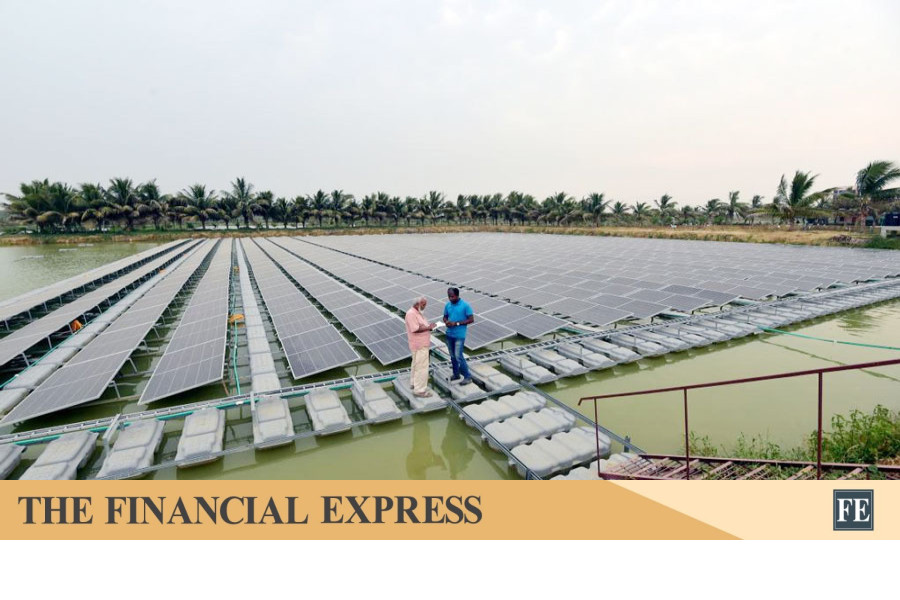
Staffers work at the floating commercial solar power plant in Chapainawabganj district, Bangladesh, June 5, 2023 —Xinhua Photo

We need to remember that decisions about renewable energy and potential energy investments, can and will, influence not only electricity supply, but also industrial competitiveness, public health, climate resilience, and the sustainability of future growth

Currently, Bangladesh's power sector stands at an important crossroad. Expanding electricity generation to support economic growth is viewed as obligatory. Bangladesh has succeeded in building generation capacity, yet the next phase of development will depend on how sustainably, competently, and durably that energy is produced. This needs to be taken forward to generate a win-win scenario. It will then assist in improving the daily lives of citizens while opening major strategic and fiscal opportunities for the government.

It has been pointed out that the government's Renewable Energy Policy 2025 reflects a shift. It sets a target of sourcing 20 per cent of electricity from renewable energy by 2030 and 30 per cent by 2040. These targets represent an important milestone in Bangladesh's energy journey, but they also highlight the scale of the task ahead.

According to the Sustainable and Renewable Energy Development Authority, the country has a total installed renewable energy capacity of approximately 1,781 MW. Solar energy accounts for the overwhelming majority of this capacity at around 1,488 MW, including approximately 1,105 MW of on-grid generation and 383 MW of off-grid installations.

While these achievements demonstrate growing momentum, they also underscore the scale of expansion required to meet the targets outlined in the Renewable Energy Policy 2025.

Even after years of investment, renewable energy still represents only a modest share of Bangladesh's overall installed generation capacity, which exceeds 30,000 MW. Meeting the government's target of sourcing 20 per cent of electricity from renewable energy by 2030 will therefore require a significant acceleration in project development, grid integration, and private-sector investment. This relates not only to an equation pertaining to climate stability but also to an economic dimension.

It needs to be noted that as electricity demand grows alongside industrialisation, urbanisation, and rising living standards, reducing these vulnerabilities has become a strategic priority. At the same time, Bangladesh remains vulnerable to the impacts of climate change. Rising temperatures, erratic rainfall, riverbank erosion, flooding, salinity intrusion, and increasing pressure on agriculture and water resources are already affecting communities and economic activity across the country.

While Bangladesh contributes only a small fraction of global greenhouse gas emissions, it bears a disproportionate share of climate-related consequences. According to the World Bank, climate change could reduce Bangladesh's GDP by up to 9 per cent by 2050 under severe climate scenarios if adaptation measures are not adequately implemented. The significance of renewable energy lies in its ability to address both challenges simultaneously.

Among renewable technologies, solar power has emerged as one of the most practical opportunities available to Bangladesh. More importantly, solar power generates electricity without fuel combustion, produces no air pollutants during operation, and emits no greenhouse gases while generating power. As concerns about air quality, public health, and climate resilience continue to grow, these environmental benefits also carry increasing economic value potential.

Bangladesh is already witnessing what large-scale solar deployment can achieve. Recent utility-scale solar projects, including the Teesta Solar 200 MW facility in Gaibandha, have already supplied hundreds of millions of units of clean electricity to the national grid-thereby demonstrating that large-scale solar generation is both technically and commercially viable in Bangladesh.

However, the Centre for Policy Dialogue (CPD) has referred to a significant challenge ahead. It has been estimated that Bangladesh requires US Dollar 35.2 to US Dollar 42.6 billion to achieve the 30 per cent renewable electricity target by 2040, with most financing needed between 2025 and 2035 if it is to remain on track towards achieving the renewable energy targets. Such environmental investment should in fact be seen as an investment in energy security, economic resilience, industrial competitiveness, and long-term national development.

As global supply chains place greater emphasis on sustainability and environmental performance, expanding renewable energy capacity can strengthen Bangladesh's attractiveness as an investment destination while supporting the long-term competitiveness of its export-oriented industries.

Bangladesh entered its renewable energy era in 2017 with the launch of a 3MW solar power plant in Sarishabari, Jamalpur, currently, as of 2024, 459 Megawatts were being generated from 10 solar power plants in Bangladesh. The largest is the Teesta 200 MW Solar Park in Gaibandha which was launched in 2023.

This underlines that with decisive policy implementation, institutional reform, and investment support, Bangladesh has the potential to emerge as a regional leader in distributed renewable energy development.

Bangladesh is entering a decisive phase in its energy transition. To meet some of the ambitious targets -- including generating 40 per cent of electricity from renewable sources by 2041 -- the government has recently announced sweeping reforms aimed at accelerating solar energy deployment.

These initiatives include a target of 10,000 MW of solar power generation by 2030, mandatory rooftop solar installation on public buildings, tax exemptions for renewable energy producers, and expanded access to solar systems for urban households.

Bangladesh has historically applied feed-in tariffs (FiTs) mainly to selected utility-scale renewable energy projects. However, in recent years, the government has gradually shifted toward competitive reverse auctions for large-scale solar procurement to reduce electricity generation costs and improve market efficiency. Despite these transitions, FiT may still remain relevant for small and medium-sized rooftop solar projects, particularly during the early expansion phase of the renewable energy sector.

Analysts have pointed out that to support such transformation, Bangladesh could increasingly rely on two key policy mechanisms: feed-in tariff (FiT) and net metering (NEM). Both are designed to encourage private-sector participation and decentralized electricity generation, although they differ significantly in structure and economic impact.

FiT is a policy mechanism designed to accelerate investment in renewable energy technologies by guaranteeing renewable energy producers a fixed, long-term payment for every kilowatt-hour (kWh) of electricity supplied to the national grid. By contrast, net metering allows electricity consumers who generate their own solar power to offset their electricity bills by exporting excess electricity to the grid.

Bangladesh currently operates a net-metering framework where consumers can install solar systems up to 100 per cent of their sanctioned load capacity. While NEM promotes self-consumption and reduces electricity costs, it generally does not provide the additional financial incentives associated with FiTs.

Given Bangladesh's urgent renewable energy goals, a hybrid approach combining net metering with targeted feed-in tariffs may offer the most effective pathway toward rapid solar expansion.

The government has also recently announced a series of sweeping tax incentives ahead of accelerating the adoption of renewable energy and electricity vehicles. Under the proposed measures, the government plans to introduce a zero percent tax for the solar power sector until 2035 to encourage environmentally friendly and affordable electricity generation.

The benefits of renewable energy in Bangladesh through expanding the capacity in the electricity sector can be achieved cost-effectively through clean energy options (renewables and energy efficiency), which not only reduce greenhouse gas emissions, but also increase jobs and improve human health by reducing air pollution. According to a report from the Low Emission Development Strategies Global Partnership (LEDS GP) and based on detailed modeling analysis, the benefits of increasing clean energy in Bangladesh's power generation mix relative to 'business-as-usual' could generate the following cumulative results by 2030-- reduce greenhouse gas emissions by up to 20 per cent and generate domestic employment of up to 55,000 full-time equivalent jobs

Though the government has reduced import duty, regulatory duty, supplementary duty, and advance tax on essential solar power components to zero percent until June 30, 2031, the benefits are not being extended equally across the solar industry. The Statutory Regulatory Order (SRO) framework which dictates tax exemptions and mandatory installation policies for solar projects issued by the National Board of Revenue immediately after the Budget, favours only a number of companies.

Solar energy remains Bangladesh's most viable pathway towards sustainable development. With decisive policy implementation, institutional reform, and investment support, the country has the potential to emerge as a regional leader in distributed renewable energy development.

Muhammad Zamir, a former Ambassador is an analyst specialised in foreign affairs, right to information and good governance.​
 

Japan signals support for raising energy assistance to $500m: PM's deputy press secretary

PM Tarique Rahman, Japanese delegation discuss energy crisis, airport terminal, and Rohingya repatriation

Star Online Report

1782951658802.webp

Photo: PMO Bangladesh

Japan has responded positively to Bangladesh’s request to increase its assistance from $312 million to $500 million to help address the country’s ongoing energy crisis.

The development was confirmed during a meeting between Prime Minister Tarique Rahman and a Japanese delegation led by Parliamentary Vice-Minister for Foreign Affairs Shimada Tomaki at the Prime Minister’s Office today.

PM's Deputy Press Secretary Md Zahidul Islam confirmed the outcome, noting that both sides discussed progress on several JICA-funded development projects, including the Matarbari deep-sea port, MRT lines, and the third terminal of Hazrat Shahjalal International Airport.

The prime minister expressed hope that work on the terminal would be completed on schedule, aiming for an opening in December.

The Japanese delegation also announced that Japan would provide five patrol boats to the Bangladesh Navy. Both parties reaffirmed their commitment to expedite the Bangladesh-Japan Economic Partnership Agreement.

The Rohingya crisis was a key topic of discussion. Prime Minister Tarique Rahman sought Japan’s continued support and a more active international role in ensuring safe, voluntary, dignified, and sustainable repatriation of Rohingya refugees.

The delegation invited the prime minister to visit Japan, and Tarique Rahman expressed hope to do so at a convenient time.

Bangladesh’s side included Finance Minister Amir Khosru Mahmud Chowdhury, Foreign Minister Dr Khalilur Rahman, advisers Rashed Al Mahmud Titumir and Humaiun Kobir, and Special Assistant for Foreign Employment in the Asia-Pacific Region Dr Md Shakirul Islam Khan.

The Japanese side was represented by Ambassador Saida Shinichi, International Cooperation Bureau Director Hirose Aiko, JICA President Dr Tanaka Akihiko, and JICA Bangladesh Chief Representative Takahashi Junko.​
 

OFFSHORE GAS: Theft abroad or failure at home?

1783136249448.webp


| — United News of Bangladesh

A CLAIM is moving from social media chatter into mainstream discussion: Bangladesh’s gas, it is said, is being stolen from beneath the Bay of Bengal. The fear is easy to understand. People watch India and Myanmar produce offshore oil and gas on either side of our waters while Bangladesh keeps importing expensive liquefied natural gas and leaves its own sea largely untested. Before dismissing the rumour, it is worth asking why it sounds believable to so many.

Start with one comparison. In five decades, Bangladesh has drilled about a hundred wells in search of gas. India drilled 545 in a single year. On the Indian side of the maritime line, oil began flowing from a deep-water field in early 2024. Off the Rakhine coast, Myanmar has produced gas since 2013 and pipes much of it to China. Neither neighbour found this easy. Both spent years, took risks and paid for data and wells. But both eventually moved from paperwork to rigs and platforms at sea.

On our side, the sea is quiet. These are waters Bangladesh won fair and square, against Myanmar at an international tribunal in 2012 and against India in 2014. Yet today the country has not a single producing offshore gas well. So the honest question is not first whether someone is stealing our gas. It is why Bangladesh has failed to turn legal victory into steady offshore production since the Sangu field ran dry.

The uncomfortable answer begins at home. For the 2025-26 fiscal year, Petrobangla reportedly set aside roughly Tk 580 billion to import LNG, while the money for finding our own gas was only about Tk 11 billion. That is a gap of about fifty to one. Imported LNG is also far costlier than local gas, and in 2024-25 the import bill crossed Tk 407 billion even as domestic output kept falling. This is not a geological mystery alone. It is a policy choice. A gap that wide is not a foreign conspiracy. It is the difference between an exploration effort that kept drilling and one that did not.

Idleness, though, is a symptom rather than a cause, and the cause has a paper trail. After winning its maritime boundaries, Bangladesh leased two promising shallow-water blocks, SS-04 and SS-09, to a consortium led by India’s ONGC Videsh and Oil India in 2014. The blocks remained with that consortium for more than a decade, and the contract was extended three times. Only one well, Kanchan-1, was drilled, and it did not show commercially viable gas. In February 2025, after the remaining work commitments were not completed, Petrobangla invoked the companies’ bank guarantees. The Indian firms then exited, having written off tens of millions of dollars.

This record should not be treated as a routine business disappointment. A foreign consortium held strategically important Bangladeshi acreage for fourteen years, failed to deliver a commercial discovery, did not complete the promised work programme and left. That does not, by itself, prove cross-border theft or a sabotage plot. But it does raise serious questions. Why were promising offshore blocks allowed to remain tied up for so long? Whose interests were served by repeated extensions and weak enforcement? Were there only commercial misjudgements, or were there political calculations, undue influence or corruption that kept Bangladesh behind? These questions deserve investigation. They also explain why many citizens now ask whether Bangladesh’s gas is being taken from outside, or whether the country was deliberately kept from testing and developing its own side of the sea. Either way, the outcome was the same: lost time, lost data and no offshore production.

Nor was this an isolated failure. Santos of Australia, ConocoPhillips of the United States and South Korea’s Posco-Daewoo also walked away, the last after seismic work indicated potential but before drilling, amid disputes over pricing and terms. The wider pattern shows that Bangladesh’s offshore problem cannot be reduced to one company or one country. Still, the Indian-led blocks matter because they sit at the centre of the public suspicion: India developed offshore resources on its own side while an Indian-led consortium delivered no producing result on Bangladesh’s side. That contrast is not evidence of cross-border extraction. It does, however, justify hard questions about contract design, state oversight, political bargaining and the cost of delay.

The failed 2024 offshore round made the same point at the system level. The government offered 24 offshore blocks. The geology drew real interest. Seven companies bought bid documents, and majors such as ExxonMobil and Chevron reviewed the data. Then not one placed a bid. They had studied our seabed and judged the terms not worth the risk. Even with pricing moved towards Brent, the gas price was still seen as too low. Pipeline costs and tariffs remained a worry, a 5 per cent workers’ profit levy sat on top, and the data package was too thin for a multi-billion-dollar frontier decision. The point is not to replace the rumour with another one. It is to show how clauses, delays and policy choices made at home priced exploration out of reach.

The encouraging part is that this can be fixed, and some of the work has begun. Over the past year the terms were rewritten. Gas prices are now linked to Brent crude with a floor and a ceiling. The new model adds tax relief, a pipeline-tariff mechanism, a lighter levy and conditional export rights subject to Petrobangla’s first right of refusal. In May 2026, a fresh round for 26 blocks opened, with bids due by November 30. But a better contract is not a working well. The test is no longer the wording on paper. It is whether the country can carry it all the way to a rig in the water.

Recent diplomacy also points in the right direction, but it should be read with caution. In Kuala Lumpur, Dhaka invited Malaysian firms into Bay of Bengal exploration and encouraged direct talks between Petronas and Petrobangla. In Beijing, the agenda covered connectivity and a proposed Bangladesh-Myanmar-China economic corridor. If realised, such a corridor could open new possibilities for regional connectivity, infrastructure and energy cooperation. But it would not, by itself, solve Bangladesh’s offshore gas problem. Any route through Rakhine would face a hard security reality: much of the state and the border with Bangladesh are now shaped by conflict, while China’s older Myanmar corridor has already faced years of delay and uncertainty. Other major powers would also watch such a route closely, because infrastructure through the Bay of Bengal is never only about trade or energy; it is also about strategic influence. The deals Bangladesh should chase, therefore, are those that bring competitive drillers into its own offshore blocks, not those that turn a difficult corridor into a substitute for exploration at sea.

China’s offshore capability is real, and Bangladesh needs partners with technology, capital and deep-water experience. Chinese firms should be part of that conversation if they compete on fair and transparent terms. The real issue is over-reliance on any single partner, whether Chinese, Western, Malaysian or Indian. In offshore energy, data, infrastructure and pricing terms can shape future choices. That is why every deal must preserve Bangladesh’s bargaining power through competition and transparency, starting with a clean, open tender that keeps Petronas, Chinese majors, ExxonMobil, Chevron and other credible operators in the race. Caution is necessary, but it should not become paralysis. Fourteen years of Indian-led blocks delivered nothing, and over-caution now risks losing another decade. There is also a quieter question: who benefits when domestic exploration stalls and imports grow? Imported liquefied natural gas has built a large trading and regasification chain, while Bapex, the national exploration company, remains underfunded and without offshore drilling experience. Whichever flag the company flies, what matters is a fair process that serves Bangladesh’s interest and moves quickly.

This brings us back to the rumour. The claim that India and Myanmar are quietly sucking Bangladesh’s gas across the boundary, draining our reserves as if with a vacuum, is not supported by geology or evidence. Gas can be drawn across a boundary only where one continuous reservoir crosses it. Repeating the vacuum version does not protect Bangladesh; it weakens the argument. But the anxiety underneath the rumour is not foolish. It is badly explained. Gas reservoirs do not respect political borders and neighbouring discoveries matter. Myanmar’s Rakhine Basin to the east and India’s Mahanadi and Krishna-Godavari systems to the west show that gas-bearing petroleum systems sit on both flanks of our waters. That does not prove a shared reservoir. It does make Bangladesh’s failure to test its own blocks far harder to defend.

The real loss is not proven cross-border theft. It is strategic delay. Neighbours are proving reserves, producing gas and building markets while Bangladesh has not turned its maritime rights into a single producing well. When global gas was cheaper and offshore drilling looked costly, importing liquefied natural gas may have seemed practical. Since 2018, however, that bet has become a vulnerability. A single year’s LNG import bill now runs past Tk 400 billion, and dependence turns dangerous whenever distant wars or shipping disruptions move the market. Even a fraction of that money, spent earlier on seismic work and drilling, could have left Bangladesh with more data, more bargaining power and a stronger supply position today.

The way forward is not mysterious: finish the seismic surveys; make the data package bankable; hold bidders to firm drilling deadlines instead of repeating endless extensions; give Bapex the resources and partnerships it needs to become the national company it was meant to be; and turn winning bids into a dated drilling programme, not another file of promises. Bangladesh did not lose these waters. It won them. But sovereignty is not only a line on a map. It is the ability to explore, prove and use the resources that may lie within that line. The regional geology has already given Bangladesh enough reason to act. The only open question now is whether it can finally test its own side of the line.

Md Syful Islam is a PhD research fellow in the maritime, transport law and politics departmenbt at Ankara University in Türkiye. Dr Zobayer Ahmed is an associate professor at the Bangladesh Institute of Governance and Management.​
 

External financing crucial to power green transition

Mir Mostafizur Rahaman

Published :
Jul 06, 2026 23:56
Updated :
Jul 06, 2026 23:56

1783389657568.webp


The global transition to clean energy is often presented as an environmental imperative. For climate-vulnerable countries such as Bangladesh, however, it is something far more fundamental: an economic necessity, a development strategy and, increasingly, a matter of national security. Yet despite ambitious national commitments and a growing policy push toward renewable energy, one undeniable reality remains. Without predictable, grant-based climate finance from developed nations, the green transition in the world’s most vulnerable economies risks stalling before it truly begins.

Bangladesh has recently unveiled the country’s largest-ever package of incentives for renewable energy, sending one of the strongest signals yet that it is serious about moving away from fossil fuels. Under the latest national budget, the government announced a series of tax and customs incentives aimed at reducing investment costs and encouraging private sector participation.

Among the measures are a zero-duty regime on imports of solar power generation equipment until 2031 and corporate income tax exemptions for renewable energy projects until 2035. The objective is clear: attract investment, accelerate renewable energy deployment and strengthen Bangladesh’s long-term energy security while meeting its climate commitments.

These policy initiatives deserve recognition. They demonstrate political willingness to embrace clean energy despite fiscal constraints and competing development priorities. But incentives alone cannot finance a transition of this magnitude.

At present, renewable energy contributes only a small share of Bangladesh’s electricity generation. Transforming that energy mix requires enormous investment — not only in solar and wind generation but also in modern transmission networks, battery storage, smart grids, resilient infrastructure and climate adaptation.

Government estimates suggest that billions of dollars will be needed annually to modernize the national grid, expand renewable electricity, strengthen coastal protection and build climate-resilient agricultural and urban infrastructure.

Bangladesh has committed to generating 20 per cent of its electricity from renewable sources by 2030. Under its updated Nationally Determined Contributions (NDCs), it has also pledged to reduce greenhouse gas emissions by up to 21.85 per cent, provided adequate international support is available.

The emphasis on international support is not incidental. It is central to the country’s climate strategy.

Unlike many developed economies, Bangladesh did not become prosperous through centuries of coal-fired industrialization or oil-driven economic expansion. Its contribution to cumulative global greenhouse gas emissions remains negligible. Yet it finds itself among the countries suffering the gravest consequences of climate change.

Sea-level rise threatens coastal communities. More powerful cyclones regularly destroy homes and livelihoods. River erosion displaces thousands of families every year. Salinity intrusion undermines agricultural production. Heatwaves increasingly affect productivity, public health and food security.

Climate change has become an economic challenge before it has become an environmental one.

That reality underpins the principle of climate justice.

For decades, developed countries have acknowledged their historical responsibility for the bulk of global carbon emissions. Under the Paris Agreement and successive UN climate negotiations, they have repeatedly committed to mobilising financial resources to help developing countries both reduce emissions and adapt to climate impacts.

Yet delivery has consistently lagged behind promises.

According to a report, global climate finance reached approximately US$2 trillion in 2024, but much of that investment remained concentrated within advanced economies and large emerging markets. The countries facing the highest climate risks continue to struggle to secure affordable financing for adaptation and renewable energy projects.

The World Bank committed US$41.2 billion in climate finance during 2024, including US$11.5 billion dedicated to adaptation. While these figures represent meaningful progress, they remain insufficient when measured against the scale of global need. More importantly, uncertainty continues to surround the long-term availability of climate finance.

Geopolitical tensions, fiscal pressures in donor countries and shifting domestic political priorities increasingly threaten future funding commitments.

That uncertainty comes at precisely the wrong time.

Countries such as Bangladesh cannot design decade-long renewable energy strategies if financing remains subject to annual political debates in capitals thousands of miles away. Investors also hesitate when concessional finance remains unpredictable.

The result is slower deployment of clean energy and prolonged dependence on imported fossil fuels.

This uncertainty is particularly concerning as governments prepare for the UN Climate Conference (COP31) in Antalya, Türkiye. The conference should move beyond declarations and focus on delivering reliable financial mechanisms capable of supporting vulnerable economies over decades rather than electoral cycles.

Climate finance should not be viewed as aid.

It is an investment in global stability.

Every solar park built in Bangladesh, every resilient embankment protecting vulnerable coastlines and every renewable-powered industrial zone contributes to global emissions reductions while strengthening regional economic resilience.

Failure to finance these transitions carries costs that extend far beyond national borders.

Climate-induced displacement, food insecurity and economic disruption ultimately become international challenges.

Bangladesh, for its part, must continue improving the investment climate for renewable energy.

Financial incentives alone will not be sufficient if structural bottlenecks remain unresolved.

Limited transmission capacity continues to constrain renewable integration into the national grid. Battery storage remains underdeveloped. Land scarcity complicates utility-scale solar development. Lengthy approval processes delay investment decisions and increase project costs.

These barriers require coordinated institutional reform.

Faster permitting, stronger regulatory coordination, expanded public-private partnerships and investment in modern electricity infrastructure will determine whether the newly announced incentives achieve their intended impact.

Equally important is the development of a pipeline of bankable projects.

International financiers are more likely to support projects that are technically sound, financially viable and institutionally prepared for implementation.

Policy announcements must therefore be matched by implementation capacity.

Ultimately, climate finance should increasingly shift toward grants and highly concessional financing rather than additional debt.

Many climate-vulnerable countries already face rising debt burdens while simultaneously financing adaptation to a crisis they did little to create. Asking these countries to borrow commercially to respond to climate change undermines the very principle of climate justice.

Grant-based, predictable and long-term financing remains the most equitable path forward.

As COP31 approaches, Bangladesh and other climate-vulnerable nations should speak with a united voice.

Their message should be clear.

Global climate goals cannot be achieved if the countries most exposed to climate impacts are denied the financial resources necessary to pursue clean energy transitions.

The world has already accepted the scientific case for climate action.

The policy frameworks largely exist.

The technologies are increasingly affordable.

What remains missing is the political courage among wealthy nations to fulfil the financial commitments they have repeatedly made.

The transition to green energy will not be won through speeches at climate summits alone. It will be won when climate finance becomes reliable, accessible and commensurate with the scale of the challenge.

For countries like Bangladesh, that financing is not merely desirable. It is indispensable.

Without it, the promise of a just global energy transition will remain little more than an aspiration. With it, climate-vulnerable nations can become active partners in building a cleaner, more resilient and more equitable future for the world.​
 

Building an investable renewable energy market

Tariq Alam

Published :
Jul 06, 2026 23:51
Updated :
Jul 06, 2026 23:51

1783390022098.webp

This photo taken on Feb. 17, 2024 shows a 50 MW photovoltaic power plant in Mymensingh District, Bangladesh - Agency Photo

Bangladesh’s draft National Renewable Energy Development Strategy (2026-2030) has the potential to unlock one of the country’s largest private infrastructure investment opportunities of the coming decade. It establishes an ambitious vision for renewable energy to contribute 20 per cent of national electricity generation by 2030, requiring approximately 27,000 GWh of renewable electricity annually and an estimated 10,000-12,000 MW of additional renewable energy capacity. Central to this ambition is the deployment of 5,500 MW of rooftop solar, 4,500 MW of utility-scale solar, together with wind, waste-to-energy, floating solar, agrivoltaics and other emerging renewable technologies.

These are ambitious targets. Delivering this vision is likely to require around US$8-10 billion of investment across renewable generation, battery storage, transmission infrastructure, grid modernisation and associated energy systems.

Mobilising capital at this scale will require not only continued support from international development finance institutions and foreign investors, but also increasing participation from Bangladesh’s own commercial banks, financial institutions, capital markets and domestic private sector. Viewed in this context, the strategy is far more than an energy policy. It is an investment strategy. Its success will therefore depend not only on the renewable energy targets themselves, but equally on Bangladesh’s ability to create an investment environment capable of attracting long-term private capital at competitive financing costs.

Encouragingly, the draft strategy reflects a significant evolution in policy thinking. Unlike previous renewable energy policies, it recognises that achieving meaningful scale requires financing, battery energy storage, transmission planning, carbon markets, energy efficiency, institutional coordination and private sector participation. It also candidly acknowledges that previous renewable energy ambitions have been constrained by financing challenges, administrative complexity, investment barriers and fragmented implementation.

As the strategy remains under consultation, there is now an opportunity to strengthen several areas before it is finalised. The objective should be to strengthen the investment and implementation architecture that will determine whether these ambitions translate into completed projects.

LEARNING FROM INTERNATIONAL EXPERIENCE: International experience consistently demonstrates that ambitious renewable energy targets alone rarely deliver large-scale deployment. Successful renewable energy markets have generally combined clear policy direction with predictable regulation, bankable procurement frameworks, coordinated institutions and mechanisms that progressively reduce investment risk.

Among emerging economies, India provides one of the clearest examples. When the National Solar Mission was launched in 2010, installed solar capacity was approximately 10 MW. Today, installed solar capacity exceeds 150,000 MW, while total renewable energy capacity has surpassed 220,000 MW. Over little more than fifteen years, the sector has attracted more than US$100 billion of investment while renewable electricity costs have fallen dramatically through competitive auctions, improved project bankability and lower financing costs.

The significance of India’s experience lies not simply in the scale of deployment, but in the policy framework that enabled it. Competitive auctions increased transparency and investor confidence. Standardised contracts reduced contractual uncertainty. Solar Parks lowered development risk by addressing land acquisition before projects reached investors. Green Energy Corridors ensured transmission infrastructure expanded alongside renewable generation. Dedicated institutions coordinated procurement and implementation, while manufacturing incentives supported the development of domestic industry. Together, these measures systematically reduced investment risk, enabling projects to secure lower-cost financing and deliver increasingly competitive electricity tariffs.

The lesson for Bangladesh is not to replicate another country’s model. Every energy market has its own institutional, regulatory and economic context. Rather, the lesson is that successful renewable energy markets are deliberately designed to attract long-term investment. Financing costs fall when projects become more predictable. Investors commit capital when procurement is transparent, institutions are capable and project risks are appropriately allocated. Over time, these improvements reinforce one another, lowering electricity costs while accelerating renewable energy deployment. This distinction is important because it reframes how the draft strategy can be viewed. The objective is not simply to deliver additional renewable capacity. It is to create an increasingly investable renewable energy market capable of attracting sustained private capital over many years.

From Financing To Project Bankability: The draft strategy appropriately recognises the importance of financing renewable energy investment. As Bangladesh moves from strategy towards implementation, one opportunity would be to explicitly recognise project bankability as a strategic policy objective. This does not necessarily require significant new fiscal commitments. Rather, it involves continuing to strengthen procurement documentation, contractual risk allocation and financing structures so that renewable energy projects can consistently secure long-term limited-recourse financing on competitive terms. Bangladesh has already established a strong contractual foundation through its standardised Power Purchase Agreements and Implementation Agreements. As renewable deployment accelerates, consideration could be given to periodic bankability reviews of these documents against evolving international project finance practice and lender expectations. Such reviews would not seek to redesign the contractual framework but rather ensure that procurement documentation continues to support competitive long-term financing as the market matures. Areas for periodic review could include payment security arrangements, lender protections, curtailment provisions, change-in-law mechanisms, refinancing flexibility and dispute resolution procedures.

Four Strategic Enhancements: Project bankability, however, is not determined by contractual provisions alone. It is shaped by the wider investment environment within which projects are developed, procured and implemented. Strengthening that wider ecosystem therefore becomes equally important. International experience suggests four complimentary enhancements that remain entirely consistent with the strategy’s existing direction.

Reduce Project Development Risk: One of the greatest barriers to renewable energy investment is that developers are often expected to assume significant development risk before projects become financeable. Securing suitable land, obtaining environmental approvals, undertaking grid studies, negotiating transmission access and completing permitting processes can take years before financing discussions even begin. Internationally, governments have increasingly sought to reduce these early-stage risks. Bangladesh’s proposal to identify suitable government land provides an excellent foundation that could be expanded into a comprehensive National Renewable Energy Project Pipeline. Rather than simply identifying potential sites, projects could be progressively prepared through preliminary environmental screening, land verification, transmission studies, indicative tender schedules and standardised technical documentation before being offered to investors.

Developers would then compete to construct projects rather than devote considerable time and capital to assembling projects from the ground up. This approach offers two important benefits. First, it reduces project development timelines. Second, reduced development risk generally results in more competitive bidding and lower electricity tariffs.

Equally important is procurement certainty. International experience demonstrates that investors commit capital more readily when governments publish transparent multi-year procurement programmes rather than relying upon individual project announcements. A visible pipeline provides confidence not only to developers, but also to manufacturers, contractors, lenders and equipment suppliers, encouraging investment throughout the wider supply chain.

Transmission planning deserves equal attention. Around the world, transmission infrastructure has become one of the principal constraints on renewable energy deployment. Renewable generation and transmission therefore cannot be planned independently. The strategy already recognises the importance of grid modernisation. This could be strengthened further through the identification of Renewable Energy Corridors, ensuring that transmission investment is planned alongside future renewable procurement rather than following it. Such coordination reduces connection delays, limits curtailment risk and provides significantly greater certainty for investors.

Build Domestic Renewable Energy Capability: Perhaps the greatest opportunity presented by the draft strategy extends beyond electricity generation itself. Countries that have benefited most from the renewable energy transition have not simply generated more renewable electricity. They have captured increasing shares of the renewable energy value chain.
The draft strategy appropriately recognises opportunities for local manufacturing. This represents an important starting point. However, Bangladesh’s long-term opportunity extends beyond manufacturing solar modules or importing renewable technologies. A broader renewable energy ecosystem could encompass engineering services, EPC contractors, operations and maintenance, testing and certification, digital monitoring systems, specialised financial services, technical training, research capability, battery assembly, mounting structures, switchgear, transformers, electrical equipment and associated supply chains. Such an ecosystem would generate skilled employment, attract foreign direct investment, strengthen domestic engineering capability and support wider industrial development beyond the electricity sector.

Create Long Term Market Demand: The draft strategy rightly recognises the important role of net metering in accelerating rooftop solar deployment. This is particularly significant given the strategy’s ambitious target of deploying 5,500 MW of rooftop solar by 2030. Unlike utility-scale projects, achieving this objective will depend primarily on investment by factories, commercial buildings, industrial parks, universities, hospitals, airports and other large electricity consumers, making private sector participation fundamental to success.

As deployment accelerates, there may be value in periodically reviewing the net metering framework to ensure it continues to support investment at scale while maintaining efficient grid operation. Complementing this with streamlined grid interconnection procedures, commercial financing solutions and standardised rooftop solar implementation processes could further accelerate distributed renewable energy deployment.

Looking further ahead, the strategy could also signal the future development of an enabling framework for Corporate Power Purchase Agreements, particularly for commercial and industrial consumers. Across many renewable energy markets, Corporate PPAs have become an increasingly important mechanism through which businesses procure renewable electricity while supporting investment in new generating capacity. As international buyers increasingly seek lower-carbon supply chains, these will become an important competitiveness tool for Bangladesh’s export industries.

As Bangladesh’s renewable energy market evolves, the strategy could also consider a phased pathway towards Renewable Purchase Obligations (RPOs) for large electricity consumers. Combined with an enabling framework Corporate PPAs, RPOs can create predictable demand for renewable electricity, stimulate private investment and support the expansion of rooftop solar.

Strengthen Delivery and Implementation Capability: Large infrastructure programmes rarely succeed because of policy alone. They succeed because institutions are capable of delivering them. The draft strategy already allocates responsibilities across multiple ministries and agencies. Given the scale of implementation required, consideration could also be given to establishing a Renewable Energy Investment and Delivery Unit within the Power Division. Major infrastructure programmes often fail not because policy is weak, but because no single institution is responsible for driving implementation across multiple agencies.

The purpose would not be to create another institution or layer of regulation. Rather, it would provide dedicated coordination across project preparation, procurement, investment facilitation, transmission planning, implementation monitoring and inter-agency cooperation. Experience from infrastructure programmes around the world demonstrates that strong delivery capability often determines whether ambitious policies succeed or remain largely aspirational. Similarly, transparent implementation reporting could further strengthen investor confidence. An annual Renewable Energy Delivery Report tracking projects awarded, under construction and commissioned, investment mobilised, transmission infrastructure completed and implementation timelines would provide valuable transparency while reinforcing accountability.

From Strategy to Delivery: Bangladesh’s draft National Renewable Energy Development Strategy represents an important step forward. The consultation process provides an opportunity to strengthen this foundation further. Explicit recognition of project bankability, the development of an investment-ready project pipeline, coordinated transmission planning, continued refinement of procurement frameworks, greater private sector participation and stronger implementation capability would complement the strategy’s existing direction while enhancing its ability to attract long-term investment.

The next challenge is to ensure that the final strategy delivers not only an ambitious vision for renewable energy, but also the institutional, regulatory and investment framework needed to realise it. Consideration could also be given to publishing a Renewable Energy Implementation Roadmap alongside the final strategy. Clear milestones for renewable project tenders, transmission expansion, rooftop deployment, institutional reform and investment mobilisation would provide greater certainty for investors while enabling transparent monitoring of progress. International experience demonstrates that predictable implementation is often as important as policy ambition in attracting long-term private capital. If these elements are brought together, Bangladesh will be well positioned not only to accelerate its renewable energy transition, but also to establish one of South Asia’s most attractive and investable renewable energy markets.

Tariq Alam PhD is a strategic consultant across technology, media and infrastructure industries​
 

Latest Posts

Back