Donate ☕
201 Military Defense Forums
[🇧🇩] - Everything about Hasina's misrule/Laundered Money etc. | Page 9 | PKDefense
Home Login Forums Wars Watch Videos
Serious discussion on defense, geopolitics, and global security.

[🇧🇩] Everything about Hasina's misrule/Laundered Money etc.

Reply (Scroll)
Press space to scroll through posts
G Bangladesh Defense
[🇧🇩] Everything about Hasina's misrule/Laundered Money etc.
261
8K
More threads by Saif

Sheikh Hasina was a classic autocrat: M Sakhawat Hossain
Published :
Aug 05, 2024 22:03
Updated :
Aug 05, 2024 22:03


1722901534183.png

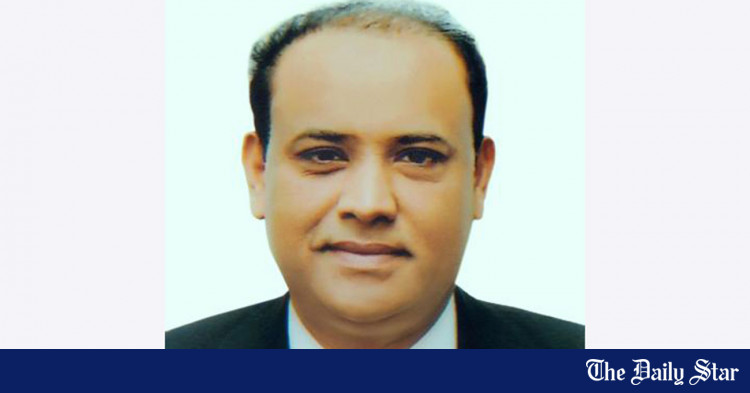
Sheikh Hasina was a classic autocrat who dismissed the people, and this disdain has led to her current predicament, according to Brigadier General (Retd) M. Sakhawat Hossain, an election analyst and former military officer. In a special interview with UNB news agency over the phone, he expressed these views.
He stated that today's events were inevitable and were bound to happen. "We have seen similar situations in Tunisia, Libya, and Syria. Popular uprisings are unstoppable. The student quota reform movement could have been resolved easily, but due to Prime Minister Sheikh Hasina's stubbornness, so many people lost their lives."

Hossain criticised the media's portrayal of the casualties, claiming that the true number is closer to 400, with a significant portion being students and young people. He questioned the whereabouts of the remaining bodies, mass graves, and the extent of innocent lives lost. "She has gone, but who will answer for this?" he asked.

He accused the ruling government of carrying out the "most heinous massacre" and of misleading the public by blaming criminals while those responsible were, in fact, their own countrymen. "Such things should not happen in a free country," he remarked.

Hossain also noted that for the past 15 years, people have been unable to vote properly, with widespread election fraud. He stated that Sheikh Hasina should have understood her and her party's unpopularity, and questioned who would be held accountable for the bloodshed. He criticized the severe lack of good governance, which he believes Sheikh Hasina failed to provide.

Furthermore, he alleged that Sheikh Hasina has created criminal gangs within the country and turned the police and Rapid Action Battalion (RAB) into her personal enforcers.

Reflecting on the plight of the family members of the so-called Father of the Nation, he questioned why they had to face such a tragic fate, attributing it to Hasina's arrogance and pride. He drew a parallel with the 2009 BDR mutiny, where 57 army officers were killed, and questioned who would answer for that incident as well.

He criticised Sheikh Hasina's control over TV media and her suppression of free speech, citing it as a reason he avoided talk shows. He claimed he had urged the Prime Minister in various meetings to ensure good governance, but was labelled as an 'agent of the opposition' for his criticisms.

"Today, Sheikh Hasina has fled the country, and now the army has had to take responsibility for the nation's situation," he concluded.​
 
Last edited:
Analyze

Analyze Post

Add your ideas here:
Highlight Cite Fact Check Respond
  • Like (+1)
Reactions: Bilal9

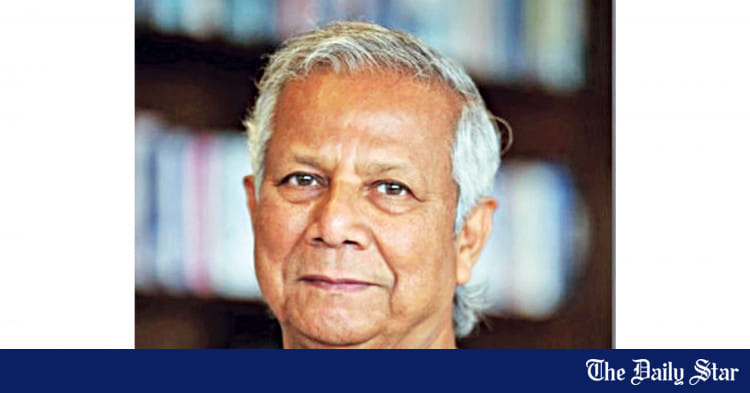
Past govt fuelled inflation by printing Tk 60,000cr: Yunus

1726104459913.webp


People are grappling with high inflation because of the fresh injection of Tk 60,000 crore into the market by Sheikh Hasina's government, Prof Muhammad Yunus, chief adviser to the interim government, said yesterday.

"One of the main goals of the interim government is to contain the unprecedented inflation," he said in a televised speech to the nation.

The chief adviser's comments came after inflation eased in August but remained at over 10 percent, reflecting that higher prices of goods and services are continuing to eat away at the purchasing power of consumers.

The inflation rate in Bangladesh has hovered above 9 percent since March 2023.

Last month, the Consumer Price Index (CPI), which measures changes in the prices paid by consumers over time, stood at 10.49 percent, according to data released by the Bangladesh Bureau of Statistics (BBS).

Yunus, who was sworn in after the Awami League government was toppled by a mass uprising on August 5, said the past 'fascist' government printed additional currency and released it into the market with the intention of 'looting'.

He added that the Bangladesh Bank had already hiked the policy rate to 9 percent to combat inflation.

"Distribution of essential commodities at fair prices through open market sales and food-friendly programmes are ongoing to cushion common people from inflation," he said.

The government has allocated Tk 5,800 crore to import rice and wheat. It has also allocated Tk 8,900 crore for domestic procurement of grains.

It also allocated Tk 7,360 crore in the current fiscal year to provide food subsidies to poor and low-income people under three programmes.

He said the central bank has made the exchange rate market-based to curb the volatility.

Yunus further said his government has cancelled the unethical provision to legalise black money. The previous government offered a unique amnesty that allowed anyone to whiten illegal gains without scrutiny by paying a 15 percent tax on assets, including cash, securities, deposits, financial schemes and instruments.

However, the interim government did not cancel the amnesty to whiten black money in case of investment in real estate -- flats, buildings and land -- on payment of a specific amount of tax depending on the size and location of the properties.

Yunus added that the government has also sought budgetary support from various development partners in order to bolster foreign exchange reserves.

It has sought an additional $3 billion from the International Monetary Fund, $1 billion from the World Bank, and $1 billion from the Japan International Cooperation Agency.

"Discussions with Russia are ongoing regarding advance payments for the construction of the Rooppur Nuclear Power Plant and clearing the dues," he said.

Yunus also said his government has taken the initiative to rationally cut operating and development spending to contain pressure on state coffers.

He added that extravagant projects were taken under the 'authoritarian' Hasina government.

"We have already started the process of reviewing all ongoing and proposed development projects. Depending on the stage of implementation, we will consider cutting spending. If necessary, we will cancel those."

Yunus, who won the Nobel Peace Prize in 2006, said the interim government would put an end to looting in the name of mega-projects and planned to increase allocations for the health and education sectors.

He said the government requested both Russia and China to reduce the interest rates of loans and extend the maturity period.

Moreover, the government has directed relevant agencies to publish actual data of economic indicators.

"We have taken steps to recover looted and laundered money," he said, adding that the government is going to form a banking commission to restore discipline to the financial sector.

"The boards of various banks have been restructured. Huge changes have taken place in the banking sector within a month. You must have noticed that."​
 
Analyze

Analyze Post

Add your ideas here:
Highlight Cite Fact Check Respond

Interview: Iftekharuzzaman
Laundered money can be retrieved even if the process is complex

1726535638998.webp


Dr Iftekharuzzaman is the executive director of the anti-corruption organisation Transparency International Bangladesh (TIB). As part of the process for state reform, the interim government recently formed six commissions. Iftekharuzzaman has been given charge of the anti-corruption reform commission. In an interview with Prothom Alo’s Sohrab Hassan, he talks about the prospects of a corruption-free and democratic society.

Prothom Alo : Recently you said at a seminar that the objectives of the movement carried out by the Students against Discrimination have not been fulfilled as yet. Do you see some shortfalls in this regard?

Iftekharuzzaman
As I said before, on 5 August one phase of the student-people’s uprising had ended. An end was brought to the autocratic rule. An unprecedented opportunity arose to run the country in a democratic manner. The building of a new Bangladesh, that is, state reforms, as envisaged by the leaders of the students’ movement, is essential and involves a matter of time. After the 1971 liberation war we had started our journey anew, but those dreams of ours were not fulfilled.

Many people from outside would ask me why there was no mass uprising against all the human rights violations that were being carried out, the corruption, the misrule. They would use Sri Lanka as an example. In the Sri Lanka movement a handful of people gave their lives. But not a single one of them was shot dead by the police. But we apprehended that if such a situation arose in Bangladesh, the police would shoot the protestors like birds. And that is exactly what happened. We cannot let these sacrifices of hundreds of people who gave their lives go in vain.

In our political culture, those in power cling on to power by whatever means. To that end, they render the state institutions ineffective. The students are talking about changing or reforming that system. The objective of state reforms must essentially be to take lessons from the essence of the movement against discrimination and free the country from the curse of power politics, to establish welfare-oriented politics. And it is the political parties that must take this basic responsibility.

Prothom Alo : 8 September marked one month of the interim government led by Dr Muhammad Yunus in power. What changes have you seen in this span of time?

Iftekharuzzaman
One month is too short a period to assess the success or failure of any government, and particularly so for an interim government. Even so, we can see quite a few positive steps that they have taken. Firstly, the initiative taken to rehabilitate the families of those killed and injured in the July-August revolution and forming the July Biplob Smriti Foundation. The government has also taken initiative to bring to trial those responsible for the killings. We said that the investigations should be carried out under the supervision of the United Nations. The government has acquiesced. The government is trying to improve the law and order situation, though it is still not normal as yet.

After the change of power, there were many instances of mob justice. There were forced resignations. This is unwarranted. State reforms mean reforms in the system. The government has made quite a few announcements regarding a crackdown on corruption. Measures are being taken against those who have siphoned money overseas. The provision to whiten black money has been abolished, though it is not clear how complete that has been. These are certainly positive steps. The people have great expectations from the government. It will take time to meet these expectations. After all, multifaceted misrule has been institutionalised.

Prothom Alo : TIB works with corruption. Who do you think are more responsible for the massive proportions that corruption has taken on in Bangladesh -- the bureaucracy, businesspersons or politicians? Political leadership may have changed with the change of government, but the civil servants and businesspersons are as before.

Iftekharuzzaman
Massive corruption has been carried out by the three categories you have mentioned. This is done with collusion among the three. But as politicians run the country, they have the greater liability. The bureaucrats and businessmen resort to corruption with political patronage and protection. With the change in power, legal action is being taken against the ministers and leaders of the former government. That does not mean that corruption has come to a halt or that it will come to a halt any time soon. We see that already extortion and forced occupation has started in various places. Those who think they have come to power or will be coming to power, are the ones involved in this. These are not good signs.

Those who think that this laundered money cannot be brought back, are very mistaken. But a long-winded and complex process must be followed if these funds are to be retrieved

Prothom Alo : How can corruption be uprooted from society?

Iftekharuzzaman
It doesn't take rocket science to end corruption. We can apply the experience of other countries. Corruption hasn't happened simply over the past 15 years. Corruption has been institutionalised by all the governments. We saw Bangladesh becoming the champion of corruption both during the Awami League government and the BNP government. Measures must be taken against everyone involved in corruption.

The institutions like the Anti-Corruption Commission (ACC) and the National Board of Revenue (NBR) that work with corruption but be freed from politicisation and their capacity must be increased. These institutions must be made accountable. It doesn't make a difference whether someone is in the government or not.

ACC has filed cases against over a hundred leaders and ministers of the last government. We had submitted details of their corruption to them earlier. But when they were in power, ACC took no action against them. ACC's work culture is that they won't do anything against those in power. In the meantime, top criminals are being released from jail. I have no idea how this is being done. That is why we are stressing on institutional efficiency and integrity.

Prothom Alo : How far has ACC's activities changed after the change in government? On one hand cases are being lodged against Awami League leaders and ministers, and on the other hand the cases against BNP leaders are being withdrawn. Why can't ACC file lawsuits against those in power?

Iftekharuzzaman
The change is now that they are displaying a flurry of activity. If the allegations brought about against the Awami League leaders and ministers are tenable, why were these not taken up all these days? ACC has had this propensity from the very beginning. They do not take note of the corruption of those in power. They only wake up when someone goes out of power. Actually ACC is held hostage by bureaucracy and have become a non-functional organisation. That is why we are calling for a restructuring of ACC.

Prothom Alo : Capital flight is one of the most talked-about issues in Bangladesh. Five institutions, including TIB, have sought assistance from various countries regarding the repatriation of funds that have been siphoned overseas. Have you received any response?

Iftekharuzzaman
Bangladesh is now in the forefront of countries that siphon money overseas. Massive sums of money are being illegally trafficked out of the country. Those who think that this laundered money cannot be brought back, are very mistaken. But a long-winded and complex process must be followed if these funds are to be retrieved. We have good laws against money laundering. Other than a fine triple the amount of the laundered money, there is also prison sentence.

The problem is that those who siphon money abroad are immensely powerful people. We have written to the countries where the money has been smuggled to, requesting them to free the financial assets so that the money launderers cannot withdraw their funds. Previously Switzerland was the main destination for laundered money, but now the UK, US, Canada, Malaysia, Singapore and the United Arab Emirates have been added to the list.

We have sought cooperation from these countries and are following the matter up. We expect good results. But it is ACC and BFIU as well as other concerned agencies that have the main role to play.

Prothom Alo : The owner of S Alam Group and his entire family have relinquished their Bangladeshi citizenship. Will that be an obstacle in bringing back the money he has sent out of the country?

Iftekharuzzaman
I do not think this is a problem at all. It does not matter of which country he is a citizen. What matters is whether he has illegally transferred money out of Bangladesh or not. Even if he has given up Bangladeshi citizenship, he will be tried if he has committed any crime. That applies to all other fugitive criminals. S Alam relinquishing his citizenship or Benazir Ahmed remaining a fugitive cannot be an obstacle to carrying out justice. Five organsations must work in coordination to bring back the laundered money. These are ACC, CID, NBR, Bangladesh Financial Intelligence Unit (BFIU) and the attorney general's office.

Prothom Alo : On behalf of TIB you have submitted certain recommendations for state reforms. For example, the same person cannot be prime minister for more than two terms. The same person cannot hold more than one top office. Then you have recommended an amendment of Article 70 of the constitution. Will the political parties agree to these proposals?

Iftekharuzzaman Some parties have already said that there are supportable recommendations. The interim government's view has been positive too.

But the main responsibility lies with the political parties. The interim government will create a legal and institutional framework. It is the political parties that will implement this, particularly those that ascend to power. In our recommendations we talk of political parties changing their culture. That has not been highlighted much. Most parties practice power-centric politics, politics centered on personal interests. They must break away from this.

We have said that the political parties must have a moral code of conduct. Leadership at all levels in a political party must be elected by means of open votes. Dynastic politics must come to an end. Autocratic leadership within the parties must be challenged. We have also spoken of proportional votes. This will put an end to the ruckus over candidates within the political parties.

Under the last authoritarian government there were multifarious instances of human rights violations. The demand for human rights was made into an offence

Prothom Alo : The anti-corruption reform commission is one of the six commissions created by the interim government for state reforms. You have been placed at the head of this commission. What are your plans in this regard?

Iftekharuzzaman
We will formulate the plans in discussion with all the members once the commission is completely constituted. But importance must be placed on ensuring that the appointment of the ACC chairman and commissioner is kept free of politicisation. Also, ways must be devised to free ACC from the grip of bureaucracy. Importance will be given to reforming the laws and regulations that are an impediment to the ACC act and ACC's ability to function independently. Certain new laws must also be drawn up, such as resolution of conflicts of interest, ownership transparency law, compliance to common reporting standards, etc.

Ways must be devised to free these institutions that are vested with the duty of controlling corruption including money laundering, of all party influence and also to increase their capacity. Above all, there is no way that the matter of reforming ACC can be seen as anything separate from the intensive reforms to be brought to politics and bureaucracy. After all, even if it is possible to establish an ideal ACC, unless there are fundamental changes in politics and bureaucracy, it would be meaningless to expect that ACC will be able to fulfill its mandate.

Prothom Alo : The Awami League government has curbed that right by means of the Digital Security Act (DSA), the Cyber Security Act (CSA) and various other laws. These laws remain in place even with the change of government. In Khulna a case has been filed against a student under this law. What are your comments on this?

I would say that under the last authoritarian government there were multifarious instances of human rights violations. The demand for human rights was made into an offence. That was done to extend the government's term in power. They used these laws to snatch away people's freedom of speech, to repress the political opposition and more. This was used even more during the anti-government movement.

When the interim government came to power it said that they would review these repressive laws and bring about necessary amendments. I want to have confidence in this. We are not surprised at what happened in Khulna. The recent movement has created unprecedented opportunities, but certain apprehensions too.

Prothom Alo : Thank you.

Thank you too.​
 
Analyze

Analyze Post

Add your ideas here:
Highlight Cite Fact Check Respond

S Alam seeks govt support to recover from business losses


1726617948327.webp


Chattogram-based business conglomerate S Alam Group has requested that the government provide financial, social and legal support for recovering the business it lost due to the freezing of its different bank accounts.

The business conglomerate made the request through a letter sent to the governor of Bangladesh Bank and the head of the Bangladesh Financial Intelligence Unit (BFIU) on September 12.

A copy of the letter, signed by Mohammed Delwar Hossain, general manager for accounts and finance at the S Alam Group, was also reportedly sent to the adviser to the finance ministry.

In the letter, the business conglomerate said different companies under the S Alam Group, owned by Mohammed Saiful Alam, have been maintaining accounts with banks and had sufficient funds to ensure business operations.

The group alleged that Islami Bank Bangladesh initially stopped providing services to the group's companies on August 8.

Gradually, other banks, including First Security Islami Bank PLC, Global Islami Bank PLC and Union Bank PLC, followed suit without providing prior notice.

"Those lenders have declined to send letters on the service suspensions and we believe that it is an arbitrary, discriminatory act on their part as well as a violation of the client-bank relationship," it said.

The letter said that after being contacted, the banks informed that the accounts were frozen as per verbal instructions from the BFIU.

Due to this, their companies are now facing difficulties and incurring huge losses.

The letter added that those companies were failing to pay salaries and wages timely, which may lead to labour unrest in many industrial areas.

Furthermore, the companies have been unable to pay utility bills, which could lead to line and service disconnections and consequently halt production in manufacturing units.

Moreover, the companies have been unable to deposit taxes and sales proceeds, transfer and receive funds from trade receivables, or pay for expenses, including for bank liabilities and foreign letters of credit (LCs), it said.

Contractual obligations with foreign and local suppliers and clients could not be honoured on time and interest is being charged for delayed payments, it said.

LCs relating to industrial raw materials for food and allied products have been cancelled by different scheduled banks, for which the country may face a crisis of food and other materials within a short time, warned the letter.

Non-payment of bank liabilities may lead to loan classification at any time, it said, adding that most employees were leaving.

A senior official of the BFIU confirmed to The Daily Star that they received the letter.

Husne Ara Shikha, executive director and spokesperson of Bangladesh Bank, confirmed that the central bank had received a letter after being contacted by The Daily Star.

The BFIU did not instruct banks to freeze or suspend the accounts of businesses or institutions of the group, she said, adding that it had instructed banks to freeze personal accounts related to the group.​
 
Analyze

Analyze Post

Add your ideas here:
Highlight Cite Fact Check Respond

Al Jazeera investigation reveals former land minister Saifuzzaman's global property empire

1726703132565.webp

Former Land Minister Saifuzzaman Chowdhury

Al Jazeera's Investigative Unit went undercover to reveal how a former government minister from Bangladesh built a half billion-dollar property empire on a modest official salary.

Strict currency laws restrict citizens from taking more than $12,000 a year out of Bangladesh, and tough government rules ban ministers from holding directorships or profiting from private businesses.

Al Jazeera reveals that Saifuzzaman Chowdhury, then a minister of land and a close ally of the now deposed Prime Minister Sheikh Hasina, bought over 360 luxury properties in Britain alone worth $250m.

His appetite for real estate spread to Dubai, New York, Singapore and Malaysia.

The politician boasted of his powerful connections.

"My father was very close to the Prime Minister (Sheikh Hasina), actually, and I am also... She is my boss... She knows I have a business here (in Britain)."

His property buying gained pace in 2017 when he set up UK companies but accelerated in 2019 when he became a government minister.

Sheikh Hasina is in exile in India following her government's brutal crackdown on student protests in July, and many of her ministers, including Chowdhury, have fled the country. Bangladesh authorities are now investigating claims that he laundered millions of dollars in the UK; they have frozen his bank accounts and taken control of his family-owned bank, UCBL, to protect depositors' money.

Posing as property investors, Al Jazeera journalists met the minister last year in his $14m London home where he bragged about spending thousands of dollars on hand-made crocodile shoes and tailored Italian suits from top London stores.

The politician gave undercover reporters a tour of his London house featuring a cinema, gym, private elevator and secure underground parking for his new Rolls-Royce.

Chowdhury told Al Jazeera that his properties were purchased with funds earned by his legitimate businesses in the UK, the UAE and America, and that he is the victim of a political witch-hunt.​
 
Analyze

Analyze Post

Add your ideas here:
Highlight Cite Fact Check Respond

Banks to freeze accounts of Orion chair, five others

1726703268220.webp


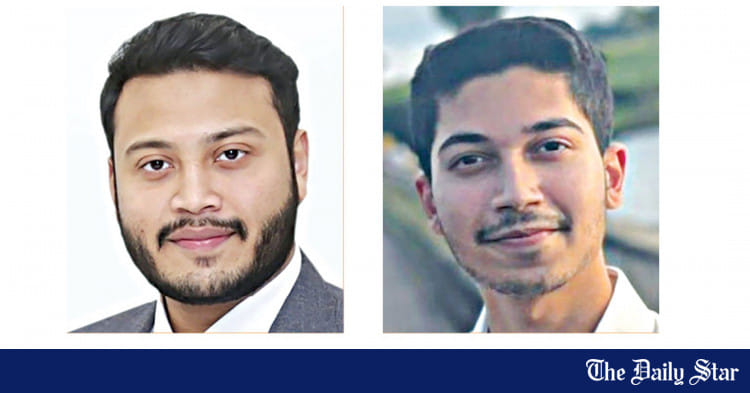
The Bangladesh Financial Intelligence Unit (BFIU) has instructed banks to freeze accounts owned by Orion Group Chairman Obaidul Karim and its Managing Director Salman Obaidul Karim.

Additionally, the bank accounts of Arzuda Karim and Zareen Karim, directors of Orion Group, as well as Mehadi Hasan and Rezaul Karim, relatives of the chairman with ties to the conglomerate, will be frozen.

The anti-money laundering agency recently sent a letter to the banks in this regard, directing lenders to keep those accounts frozen for the next 30 days. The BFIU also instructed banks to block them from locker and credit card facilities for 30 days.

The banks then asked the BFIU to provide updated information on the six individuals to find out if they are using any bank accounts under other names.

Orion Group, founded by Obaidul Karim, is one of the largest conglomerates in Bangladesh, with business interests in the pharmaceutical, chemical, infrastructure development, agribusiness, hospitality, textile and aviation sectors alongside many others.​
 
Analyze

Analyze Post

Add your ideas here:
Highlight Cite Fact Check Respond
⤵︎

Latest Posts

Latest Posts