Donate ☕
201 Military Defense Forums
[🇧🇩] - Everything about Hasina's misrule/Laundered Money etc. | Page 10 | PKDefense
Home Login Forums Wars Watch Videos
Serious discussion on defense, geopolitics, and global security.

[🇧🇩] Everything about Hasina's misrule/Laundered Money etc.

Reply (Scroll)
Press space to scroll through posts
G Bangladesh Defense
[🇧🇩] Everything about Hasina's misrule/Laundered Money etc.
261
8K
More threads by Saif

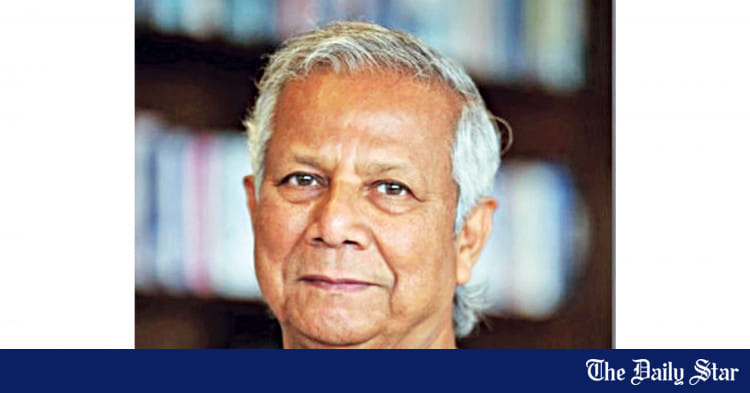
Sheikh Hasina was a classic autocrat: M Sakhawat Hossain
Published :
Aug 05, 2024 22:03
Updated :
Aug 05, 2024 22:03


1722901534183.png

Sheikh Hasina was a classic autocrat who dismissed the people, and this disdain has led to her current predicament, according to Brigadier General (Retd) M. Sakhawat Hossain, an election analyst and former military officer. In a special interview with UNB news agency over the phone, he expressed these views.
He stated that today's events were inevitable and were bound to happen. "We have seen similar situations in Tunisia, Libya, and Syria. Popular uprisings are unstoppable. The student quota reform movement could have been resolved easily, but due to Prime Minister Sheikh Hasina's stubbornness, so many people lost their lives."

Hossain criticised the media's portrayal of the casualties, claiming that the true number is closer to 400, with a significant portion being students and young people. He questioned the whereabouts of the remaining bodies, mass graves, and the extent of innocent lives lost. "She has gone, but who will answer for this?" he asked.

He accused the ruling government of carrying out the "most heinous massacre" and of misleading the public by blaming criminals while those responsible were, in fact, their own countrymen. "Such things should not happen in a free country," he remarked.

Hossain also noted that for the past 15 years, people have been unable to vote properly, with widespread election fraud. He stated that Sheikh Hasina should have understood her and her party's unpopularity, and questioned who would be held accountable for the bloodshed. He criticized the severe lack of good governance, which he believes Sheikh Hasina failed to provide.

Furthermore, he alleged that Sheikh Hasina has created criminal gangs within the country and turned the police and Rapid Action Battalion (RAB) into her personal enforcers.

Reflecting on the plight of the family members of the so-called Father of the Nation, he questioned why they had to face such a tragic fate, attributing it to Hasina's arrogance and pride. He drew a parallel with the 2009 BDR mutiny, where 57 army officers were killed, and questioned who would answer for that incident as well.

He criticised Sheikh Hasina's control over TV media and her suppression of free speech, citing it as a reason he avoided talk shows. He claimed he had urged the Prime Minister in various meetings to ensure good governance, but was labelled as an 'agent of the opposition' for his criticisms.

"Today, Sheikh Hasina has fled the country, and now the army has had to take responsibility for the nation's situation," he concluded.​
 
Last edited:
Analyze

Analyze Post

Add your ideas here:
Highlight Cite Fact Check Respond
  • Like (+1)
Reactions: Bilal9

S Alam sons: They used fake pay orders even to legalise black money

1726704928352.webp

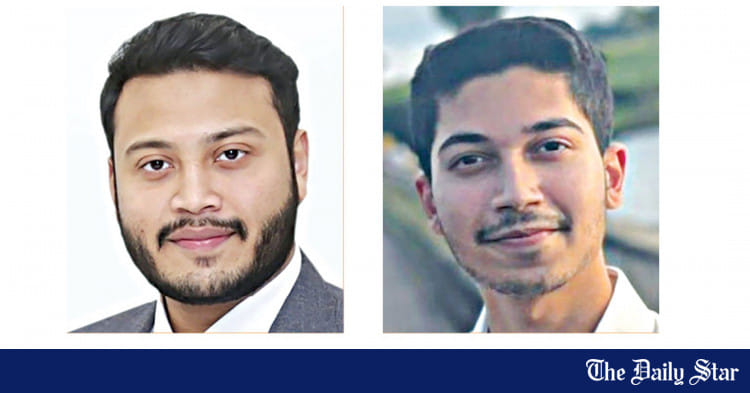
S Alam Sons Ashraful Alam and Asadul Alam Mahir

Ashraful Alam and Asadul Alam Mahir, two sons of controversial businessman Mohammed Saiful Alam, deprived the state of Tk 75 crore in taxes by legalising Tk 500 crore in undisclosed income, documents obtained by The Daily Star have revealed.

They even brazenly resorted to irregularities and exploited a bank controlled by S Alam Group, of which Saiful is the chairman, according to letters from tax officials to their higher authorities and the two brothers.

Ashraful and Asadul first used two pay orders, each worth Tk 25 crore, in a failed bid to whiten the black money within the fiscal year 2020-21, the documents show.

Their second attempt to make the payment again months after the expiry of the facility that fiscal year succeeded, which means the first two pay orders were erroneous.

Tax officials, however, gave them a clean chit, and the opportunity to whiten the black money after the deadline.

The Awami League government allowed legalising income from unknown sources by paying a 10 percent tax from July 1, 2020, to June 30, 2021.

A total of 2,311 taxpayers used the facility to whiten Tk 1,663 crore of black money in cash and bank deposits that financial year, according to the National Board of Revenue (NBR).

Tax officials said that if the maximum tax rate of 25 percent was taken into account at the individual level, the tax officials could have collected at least Tk 125 crore of income tax against the Tk 500 crore of undisclosed income of Ashraful and Asadul.

S Alam's two sons got the opportunity to legalise the black money in the tax file by paying only Tk 50 crore.

According to their tax returns, Ashraful and Asadul showed their net assets at Tk 250.15 crore and Tk 250.21 respectively in tax year FY21.

Ashraful's tin certificate mentions his status as "Bangladeshi without NID" while Asadul's as "Foreigner (non-Bangladeshi)".

S Alam, his wife Farzana Parveen and their three sons Ahsanul Alam, Ashraful and Asadul renounced their Bangladeshi citizenship on October 10, 2022, vernacular daily the Samakal reported last month.

The Bangla newspaper also said the family got approval for permanent residency in Bangladesh as foreign nationals on the same day.

Most of the family members had already been identifying themselves as foreigners or non-Bangladeshis in the tax files a year before they were granted permanent residency in Bangladesh as foreign citizens in October 2022, tax officials said.

The officials working under the circle, where the family submitted the returns, did not raise any questions on these issues.

Chattogram Tax Zone-1 Commissioner Md Samsul Arefin told The Daily Star on September 4 that he had no idea what happened before he joined in February.

"But recently I kept these two files in my custody for safety. After reading these two files, it seems that all sorts of procedures have been followed.

"But it is mysterious that two pay orders were not cashed within five to six months in a circle. It cannot be said if there was any irregularity without re-examining the entire matter," he added.

The 10 percent tax under the Income Tax Ordinance of 1984, which allowed individuals to legalise undisclosed income without facing any question, is only payable by pay order or by automated challan.

Ashraful and Asadul first applied for the facility with two pay orders on June 29, 2021, a day before the expiry of the facility.

The pay orders from the Khatunganj branch of Fast Security Islami Bank Limited (FSIBL) bounced after being submitted to Sonali Bank on July 1 for encashment and no money was deposited to the state coffer.

Tax officials then tried to contact FSIB and the two brothers several times but there was no response, officials said.

However, after nearly four months, Ashraful and Asadul submitted two new pay orders on October 18, 2021, to the same branch of the bank. That money was encashed on December 28, 2021.

Although the law had no opportunity to whiten black money after June 30, 2021, Assistant Tax Inspector Aminul Islam accepted and encashed these two new pay orders.

To justify the late collection, Joint Commissioner AKM Shamsuzzaman and Inspector Lokman Ahmed helped the two brothers make the first two pay orders appear correct by concealing the dates of the last two pay orders.

Shamsuzzaman issued a notice against the duo under section 120 of the Income Tax Ordinance 1984 as to why they delayed the payment of the taxes on June 27, 2022.

Three months after the issuance of the notice, Shamsuzzaman on September 29, 2022, suspended the notice based on an inspection report by Inspector Lokman.

Lokman submitted the report on July 3, 2022, stating that the first two pay orders were correct. He attached a statement from FSIBL's Khatunganj branch Manager Mohammad Helal Uddin to back his claim.

However, Lokman did not mention the date of the four pay orders submitted in two rounds.

FSIBL branch Manager Helal told The Daily Star on September 8, "We have informed the tax officials about the two pay orders that they wanted to know."

However, he did not give any answer when asked about the time when the money was deposited in these two pay orders.

Tax officials said that this happened because the matter was settled between the two parties.

Regarding the delay in receiving the pay orders, Assistant Tax Inspector Aminul who accepted the last two pay orders, confirmed to The Daily Star on September 10 that the money from the first two pay orders was not deposited after submission.

"Then we informed them (the two brothers) and they took some time and later gave two more pay orders," he said.

"Later, the joint commissioner issued a notice under section 120 of the Tax Ordinance since the money was not deposited within the stipulated time. I heard that the issue has also been settled," Aminul said.

He also claimed that he did not personally benefit from these incidents.

Joint Commissioner Shamsuzzaman hung up the phone, saying it was a "wrong number" when contacted for comments, although the tax officials' directory and other tax officials confirmed that it was Shamsuzzaman's number.

Inspector Lokman declined to comment.

Md Riazul Islam, Syed Mohammad Abu Daud, and Md Iqbal Bahar had served as commissioners in the tax zone in that time.

Riazul has been living abroad with his family since his retirement in 2022.

Contacted, Daud and Bahar said they were not informed about the matter by the circle, let alone receive any financial benefit from it.

"I was in charge of this tax zone both during the cashing of two pay orders from the circle office and later the issuance of the section 120 notices from the ranch office of the zone," Daud said.

He said he did not provide any advice to the relevant officials about such illegal activities nor did he benefit financially.

"I am surprised that even after the pay orders bounced, the matter was not reported to me as a commissioner," added the official, currently serving as a member of the NBR's International Tax Division.

Ashraful and Asadul did not receive calls for comments.​
 
Analyze

Analyze Post

Add your ideas here:
Highlight Cite Fact Check Respond

Govt seeks UK assistance to investigate overseas assets of Hasina, allies
Staff Correspondent 19 September, 2024, 00:00


1726705639673.webp


The interim government of Bangladesh has sought assistance from the United Kingdom to investigate the overseas wealth of allies of former prime minister Sheikh Hasina, as the new administration intensifies its crackdown on members of her ousted regime, according to a report by The Financial Times on Wednesday.

Ahsan H Mansur, Bangladesh’s new central bank governor, stated that the administration was probing whether Hasina’s government siphoned around Tk 2 trillion (£13 billion) from the banking system to foreign accounts. Mansur said that he had sought help from the UK and other countries, including the US, Singapore, and the UAE, to track these funds.

The British daily newspaper reported that Bangladeshi officials, in particular, were investigating a UK property portfolio worth £150 million, owned by former land minister Saifuzzaman Chowdhury.

The Financial Times found that the bulk of these properties were acquired between 2019 and 2022, coinciding with Saifuzzaman’s tenure as a land minister.

The properties include Emerson Bainbridge House in Fitzrovia, central London, 61 properties in Tower Hamlets, east London, and a Co-op supermarket site in Bristol.

The exact financing for these UK property purchases remained unclear, though charges registered at Companies House suggest the use of mortgage debt.

Earlier this year, Transparency International UK flagged Saifuzzaman’s British real estate portfolio as an example of ‘unexplained wealth’ that warranted further investigation, the report said.

Mansur praised the UK government’s cooperation, mentioning that British officials had offered technical support during discussions.

On the alleged laundering of nearly $17 billion, roughly Tk 2 trillion, Mansur remarked, ‘a heist of this scale could not have occurred without the prime minister’s knowledge.’ He, however, noted that the investigation was still in its early stages.

The inquiry came as Bangladesh’s interim leader, Nobel laureate Muhammad Yunus, prioritises recovering misappropriated funds.

Sheikh Hasina, who resigned as prime minister and fled to India on August 5 amid a student-led mass uprising, was under scrutiny for alleged corruption during her nearly two-decade rule.

The wealth of her allies, including Saifuzzaman, was under investigation.

Saifuzzaman denied any wrongdoing and claimed that his wealth was the result of legitimate business activities, according to the report.

The UK government, in line with its long-standing policy, declined to comment on whether any formal requests for legal assistance had been made by Bangladeshi authorities, the report said.​
 
Analyze

Analyze Post

Add your ideas here:
Highlight Cite Fact Check Respond

Bangladesh's foreign debts soar by $80b in 15yrs
Mostafizur Rahman 18 September, 2024, 22:37

1726705766308.webp


Bangladesh’s external debts skyrocketed to a staggering $103.78 billion by June 2024, a colossal leap from just $23.5 billion in 2009 when the Awami League-led government came to power.

This represents a staggering 341 per cent increase over the past 15 years, amounting to over $80 billion in new foreign loans.

Such an astronomical rise in external debts not only signals deepening financial mismanagement but also exposes the country’s alarming overdependence on foreign loans to finance its so-called development ambitions.

In Bangladeshi currency, these debts now stand at nearly Tk 12.45 lakh crore, a devastating burden compounded by a rapidly devaluing local currency.

The shocking data has come to the fore after Sheikh Hasina resigned as prime minister and fled to India on August 5 amid a student-led mass uprising.

Experts warn that such an unprecedented surge in foreign debts is a glaring sign of mismanagement.

By comparison, the exchange rate in July 2021 was Tk 84.80, underscoring the rapid depreciation of the taka in recent years.

The weakening currency exacerbates the debt crisis, as more takas are now required to service the dollar-denominated loans, further straining the national economy, experts said.

The most dramatic increase occurred between June 2020 and June 2023, when foreign debts skyrocketed by 51 per cent, rising from $65.27 billion to $98.93 billion in just three years — an alarming $33.6 billion increase in such a short period.

The accumulation of debts, driven by questionable fiscal policies and widespread inefficiency, has sent per capita debt soaring to $604 by June 2024 from $283 in June 2017, and ordinary citizens now bear the brunt of this financial misadventure, experts said.

The country›s external debt-to-GDP ratio hit 22.6 per cent by June 2024.

Bangladesh usually receives foreign loans from multilateral institutions such as the World Bank, the International Monetary Fund, the Asian Development Bank, the Islamic Development Bank, and major overseas commercial banks.

Of the $103.78 billion in external debts, $83.21 billion was borrowed by the public sector, with $71 billion borrowed directly by the government and the rest by government institutions.

The private sector›s short-term foreign loans also remained substantial, rising to $20.57 billion in June 2024, according to Bangladesh Bank data.

Meanwhile, buyers’ credit — an arrangement in which companies use foreign loans to finance imports — has also increased, with figures rising to $5.76 billion in June from $5.69 billion in March.

Experts have raised concerns about the sustainability of this debt load.

As external liabilities continue to mount, a growing portion of Bangladesh›s revenue must be allocated to service its debts, leaving fewer resources for critical social services, infrastructure, and development initiatives.

The crisis was compounded by allegations of massive corruptions and inefficiency in managing foreign loans during the Awami League regime.

Many of the large-scale development projects financed through foreign borrowing were marred by accusations of over-invoicing, project delays, and kickbacks to government officials and contractors.

Project returns continued to fall short, failing to justify the enormous cost.

Experts stressed the need for Bangladesh to carefully manage and prioritise its resources to ensure sustainable economic development, reducing excessive dependence on foreign borrowing.

The country’s foreign exchange reserves, already under immense pressure, plummeted to a dismal $20 billion as of mid-September, according to IMF guidelines.​
 
Analyze

Analyze Post

Add your ideas here:
Highlight Cite Fact Check Respond

Bangladesh in search of Tk 2tn laundered during Sheikh Hasina regime
Prothom Alo English Desk
Updated: 18 Sep 2024, 22: 23

1726707768474.webp

Bangladesh Bank governor Ahsan H Mansur Prothom Alo

The governor of Bangladesh Bank, Ahsan H Mansur, has reportedly sought help from authorities in the United Kingdom to recover money laundered to the country by members of the Sheikh Hasina government.

According to a report in the London-based broadsheet Financial Times, the governor had a meeting with the British high commissioner in Dhaka at his office, and the latter offered significant technical support in this regard.

The new administration in Bangladesh is investigating if the Sheikh Hasina regime diverted at least Tk 2 trillion abroad, particularly to the UK, the US, Singapore, and the UAE, from the country's banking system.

“We will seek help from the UK government to the extent these assets can be recovered,” the governor told the Financial Times.

He specifically mentioned that they aim to identify the source of funds used to purchase a UK property portfolio worth £150 million, owned by a former minister in Sheikh Hasina’s cabinet.

The governor also expressed suspicion that the top leadership in Bangladesh might have been aware of the issue, as “a heist of this order could not have taken place without the knowledge of the prime minister.”

In a press conference on 5 September, Ahsan H Mansur made similar remarks about money laundering and announced that the process to bring back the laundered money had been initiated.

He stated, “The corrupt people mainly laundered money to Dubai, Singapore and the US. We have already communicated with the US to bring back their foreign assets.”

The governor particularly highlighted money laundering to the UK, noting that a family of smugglers owns 500 to 600 homes in the country. “We will try to acquire their local assets and then we will bring back their foreign assets.”

Before the last parliamentary election in Bangladesh, anti-corruption watchdog Transparency International Bangladesh (TIB) revealed that a particular minister had more than Tk 23 billion in investments and business ventures overseas.

This minister was later identified as former land minister Saifuzzaman Chowdhury. It was discovered that he had opened companies in the name of his wife, Rukhmila Zaman, and daughter, Zeba Zaman.

According to a Prothom Alo report on 13 August, former minister Saifuzzaman Chowdhury and his wife Rukhmila Zaman Chowdhury had amassed substantial wealth and property in the United States and Dubai too.

They have huge sums of money deposited in foreign banks. Neither Saifuzzaman nor any member of his family have taken permission from Bangladesh Bank to take money abroad, giving rise to questions about this huge wealth amassed overseas.​
 
Analyze

Analyze Post

Add your ideas here:
Highlight Cite Fact Check Respond

Singapore seeks asset details of S Alam Group in Bangladesh
Staff Correspondent 20 September, 2024, 00:23

1726795482194.webp


Singapore’s Financial Intelligence Unit has urged the Bangladesh Financial Intelligence Unit to provide details on the local and foreign assets of S Alam Group and its owners.

Bangladesh Bank spokesperson and executive director Husne Ara Shikha said on Thursday that BFIU received a letter from FIU of Singapore about the issue.

BFIU officials said that they had been preparing the details on the controversial group and would send the information to the FIU of Singapore.

The BFIU, responsible for combating money laundering, terrorist financing, and the financing of weapons of mass destruction, is tasked with exchanging intelligence on illicit financial activities with foreign counterparts, they said.

Media reported that S Alam Group had amassed nearly $1 billion in suspicious assets in Singapore alone, despite having no significant business operations there, raising serious concerns about the legality of these properties.

S Alam group, under the patronage of the ousted Awami League-led government, allegedly withdrew around Tk 2 lakh crore from Bangladesh’s banking system and a large amount of these loans were allegedly laundered to foreign locations including Singapore and the UAE, BB officials said.

The group exploited its influence to seize control of eight banks, namely First Security Islami Bank, Social Islami Bank, Union Bank, Global Islami Bank, Islami Bank Bangladesh, Al-Arafah Islami Bank, National Bank, and Bangladesh Commerce Bank.

The group allegedly engaged in rampant irregularities in recruitment and loan disbursement while controlling the banks.

After Sheikh Hasina’s fall on August 5, these banks were freed from S Alam’s grip.

S Alam Group owner Saiful Alam and his family members had reportedly obtained citizenship in Singapore and Cyprus.

Bangladesh Bank, under the leadership of former governor Abdur Rouf Talukder, provided all possible kinds of liquidity support to these banks despite knowing that these banks continued to allow S Alam Group to withdraw money as anonymous loans.

After exhausting all legal avenues, Bangladesh Bank resorted to unethical and illegal means to provide these banks with additional liquidity.

Though the banks had no funds in their current accounts, the central bank then printed money to keep them afloat, according to Bangladesh Bank officials.

As criticism mounted from various corners, Bangladesh Bank was forced to halt this unsustainable practice and began searching for alternative methods to support the struggling banks.

At last, the central bank, based on a fake dollar purchase quotation, provided a total of $1.1 billion equivalent in financial support to Islami Bank Bangladesh between January and July.

The interim government, Bangladesh Bank, BFIU, and the Bangladesh Securities and Exchange Commission have recently taken some strict measures against the group.​
 
Analyze

Analyze Post

Add your ideas here:
Highlight Cite Fact Check Respond
⤵︎

Latest Posts

Latest Posts