Feed

[🇧🇩] Family, Farmer & e-Health Cards

G Bangladesh Defense
[🇧🇩] Family, Farmer & e-Health Cards
34
840
More threads by Saif


Preparing a failsafe list of family-card holders
1784761594088.webp


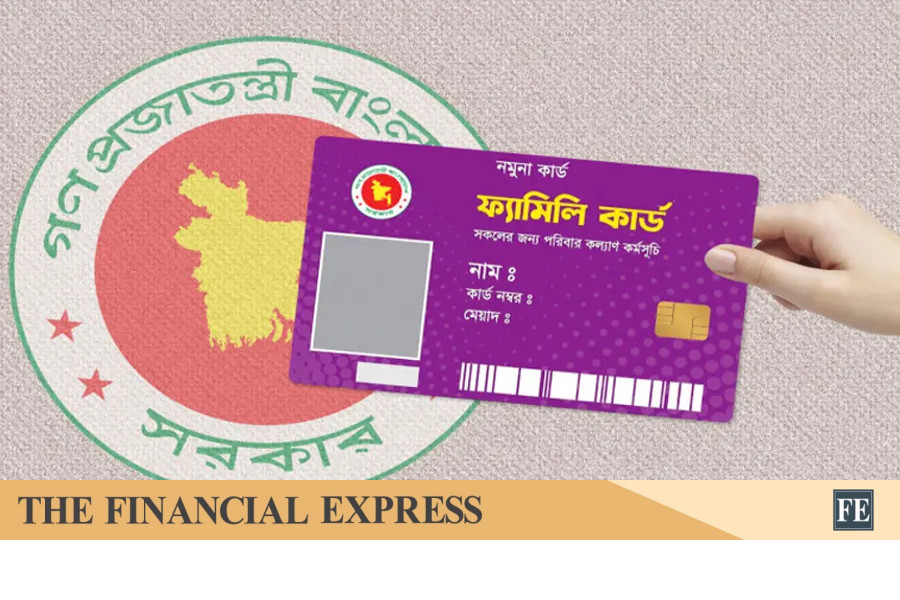
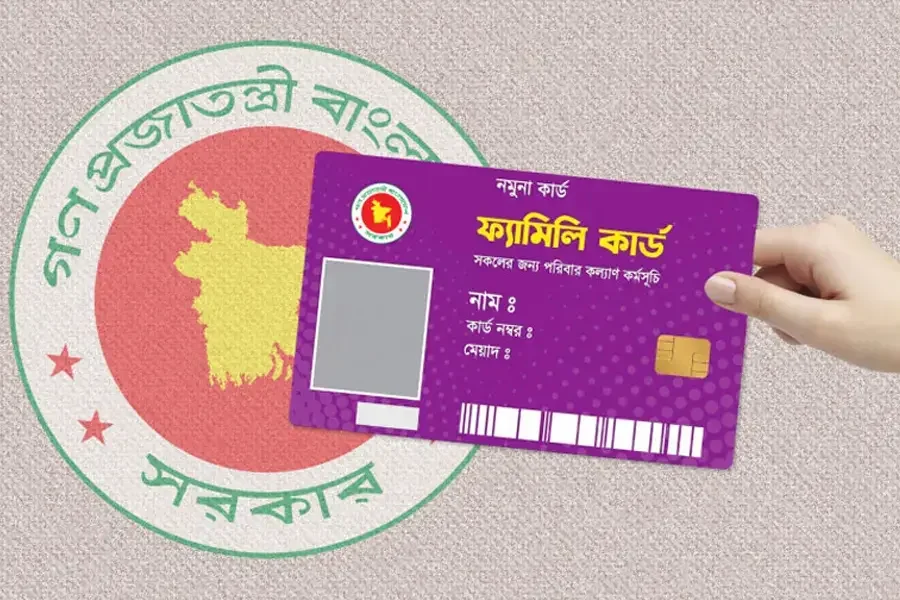
Successful execution of a government social-protection programme depends primarily on identification of deserving recipients. Over the past 18 years, billions of taka was distributed among people but only 50 per cent of the intended target poor received the benefits. The richest 20 per cent households grabbed 22 per cent of the benefits. This gross anomaly in distribution of allowance could happen, according to a report carried in the FE on Tuesday, in the absence of a comprehensive database of the country's poor households. Mooted in 2009 and initiated in 2013, a national household database (NHD) of households could be completed by the Bangladesh Bureau of Statistics (BBS) in 2022 at almost double the original cost jumping from Tk 3.29 to Tk7.27 billion. But the database is yet to be accessible because a management information system (MIS) could not be developed so far. In the absence of an MIS and application-programming interface (API), the database remains inoperable.

Now that the incumbent government has allocated Tk145 billion for distribution among 4.1 million households through family cards for the current fiscal year, the problem of finding the deserving candidates arises once more. A proposal has been advanced for carrying out a three-month nationwide census. A total of 60,000 enumerators will be recruited to complete the job. Economists and government officials have rightly questioned rationality of this move. First, the Department of Social Services is not the right agency to carry out such a census. It runs short of the manpower and the required expertise. The timeframe of three months to accomplish the job is far too short for the purpose. Here the prime minister's emphasis on transparency and reliability of the database comes to the fore. A casual approach to this highly important and sensitive issue will not do. Also, overlapping of programmes should be avoided.

What about the NHD prepared by the BBS in 2022? A random cross check of some of the data can give an idea about the authenticity or not of the database. If it is found that data were not manufactured but there is a genuine reflection of the things as they are, the NHD can be used for making a list of family card-holders. In that case development of an MIS and API will be necessary to make the database usable. It will save time and cost. If the NHD proves fallacious, a fresh census will have to be carried out for preparation of a failsafe database. To do this, required manpower and expertise have to be readied before starting the task. The BBS is best suited to accomplish the job.

If a comprehensive national database is prepared, it may have multiple uses. As an information bank, it can instantly identify families receiving benefits under existing social safety nets and even persons with criminal records. There is no point preparing a data pool time and again. Its updating system will take care of the changes that happen. Before the process of database preparation is launched, a provisional list of family card holders may be considered. Since the aim and objective are poor people-centric well-being, the programme for reaching succour to them should not wait. If integrity of local leaders is not compromised, finding the deserving recipients will not be difficult.​
 
Analyze

Analyze Post

Add your ideas here:
Highlight Cite Respond

Candidates allege JCD factions clashed during recruitment test for Family Card programme

Officials in Patuakhali’s Bauphal promise investigation

Our Correspondent, Patuakhali

1785108502529.webp

Photo: Courtesy

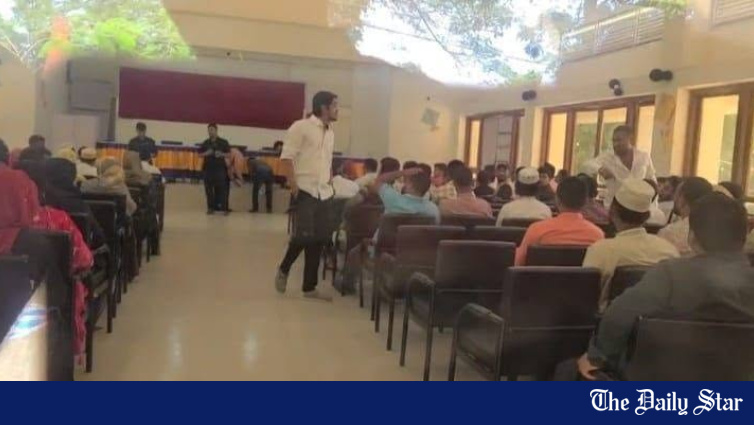
A scuffle broke out between two factions of the Jatiyatabadi Chhatra Dal (JCD) during a recruitment examination for the Family Card programme in Bauphal upazila of Patuakhali on Saturday, while several candidates alleged that outsiders entered the exam centre and attempted to influence the process.

The clash occurred during the recruitment test for data collectors, supervisors and ICT supervisors under the Upazila Social Services Office for selecting beneficiaries under the Family Card programme.

Tap Here to Add The Daily Star As A Trusted Source google-preferred-source-badge
Officials said a total of 1,155 candidates applied for the three posts, with the 40-mark MCQ exam held from 11:30am to 12:00pm at Bauphal Government Model Secondary School and the Upazila Parishad auditorium.

According to allegations, Akash Talukder, son of former BNP lawmaker Shahidul Alam Talukder, and Bauphal Upazila JCD President Abdullah Al Fahad entered the exam venue during the test, triggering tension that led to a clash between rival JCD groups.

Several candidates claimed the two remained inside the hall with mobile phones to help preferred candidates. Candidate Jasim Uddin Antu said the presence of outsiders raised serious concerns and disrupted the testing environment. He alleged that Fahad recorded videos on his phone during the exam.

Former Bauphal Municipal JCD member secretary Sadikuzzaman Rakib protested the alleged irregularities, which escalated into a scuffle. Rakib alleged he was assaulted after objecting to attempts to influence the exam.

Rejecting the allegations, Akash said he only visited the venue before the exam began to greet candidates. Fahad also denied being inside the venue during the test, calling the assault claim false and accusing a vested group of spreading propaganda.

Upazila Social Services Officer Mushfiqur Rahman confirmed that Akash entered the Upazila Parishad auditorium toward the end of the exam. He mentioned that the reported scuffle did not occur inside the exam hall.

Bauphal Upazila Nirbahi Officer (UNO) Saleh Ahmed said no one is allowed inside an exam hall without authorisation. “The allegations are being taken seriously. We will review CCTV footage, investigate the matter and take necessary action if irregularities are found,” he said.​
 
Analyze

Analyze Post

Add your ideas here:
Highlight Cite Respond

Can family, farmer cards offer protection?
1787357200991.webp

About 10 per cent of the population live in ultra-poor conditions in Bangladesh. | New Age

BANGLADESH’S social protection system is entering an important new phase. The FY2026–27 budget allocates Tk 1,44,338 crore to social protection, up from Tk 1,26,731 crore in the revised FY2025–26 budget — an increase of Tk 17,607 crore, or 13.9 per cent. The allocation is substantial, but the real test is whether these resources can protect vulnerable households from the continuing erosion of purchasing power caused by high food and non-food prices.

That question is particularly urgent because the World Bank estimates that Bangladesh’s national poverty rate increased from 18.7 per cent in 2022 to 21.4 per cent in 2025, while inflation remained around 8.5 per cent in FY2026. It also noted that the wages of low-income workers have not kept pace with prices.

Against this backdrop, the government’s new family card and krishok (farmer) card initiatives deserve close attention.

Family card: a promising shift in social protection

THE family card represents a significant conceptual change. Instead of designing assistance primarily around individuals, it treats the household as the core unit of social protection. The programme is intended to provide regular financial assistance through digital government-to-person transfers and gradually integrate different social protection services through a unified digital identity.

For FY2026–27, the Government has proposed Tk 14,500 crore for family cards, targeting approximately 41 lakh households. The monthly benefit is Tk 2,500, paid directly to the beneficiary’s mobile financial service account or bank account.

A poor household receiving Tk 2,500 every month receives Tk 30,000 a year. For households dependent on irregular day labour, informal employment or precarious livelihoods, such a transfer can help maintain food consumption, meet educational expenses, purchase medicine and avoid distress borrowing.

The emphasis on women is also significant. Issuing the card in the name of the female head of household can strengthen women’s control over household resources and potentially improve expenditure on children, nutrition and health. Digital delivery can also reduce the role of intermediaries and improve payment transparency.

Tk 2,500 has a vulnerability: inflation

THE greatest challenge is that cash assistance does not automatically preserve purchasing power. If inflation remains around 8.5 per cent, the real value of a fixed Tk 2,500 allowance declines. After one year of 8.5 per cent inflation, Tk 2,500 would have purchasing power equivalent to only about Tk 2,304 in today’s prices.

Therefore, a family card that does not respond to inflation could gradually become less effective even though the nominal allowance remains unchanged. The Government has indicated that allowance rates will be increased in line with inflation. This is encouraging, but it should become a transparent and predictable indexation mechanism, particularly for food inflation.

The targeting dilemma

ANOTHER challenge is targeting. Bangladesh needs to ensure that the poorest families actually receive the family card while preventing relatively better-off households from entering the programme. The government is developing a dynamic social registry and a single registry system to reduce duplication and improve beneficiary identification.

No targeting system is perfect. There can be exclusion errors, where genuinely poor households are left outside, and inclusion errors, where households that are not sufficiently vulnerable receive benefits. Poverty is dynamic: a household can move into poverty after illness, unemployment, natural disaster, crop loss or a sudden rise in food prices. The system must therefore be continuously updated rather than treating poverty status as permanent.

Farmer card: from protection to productive resilience

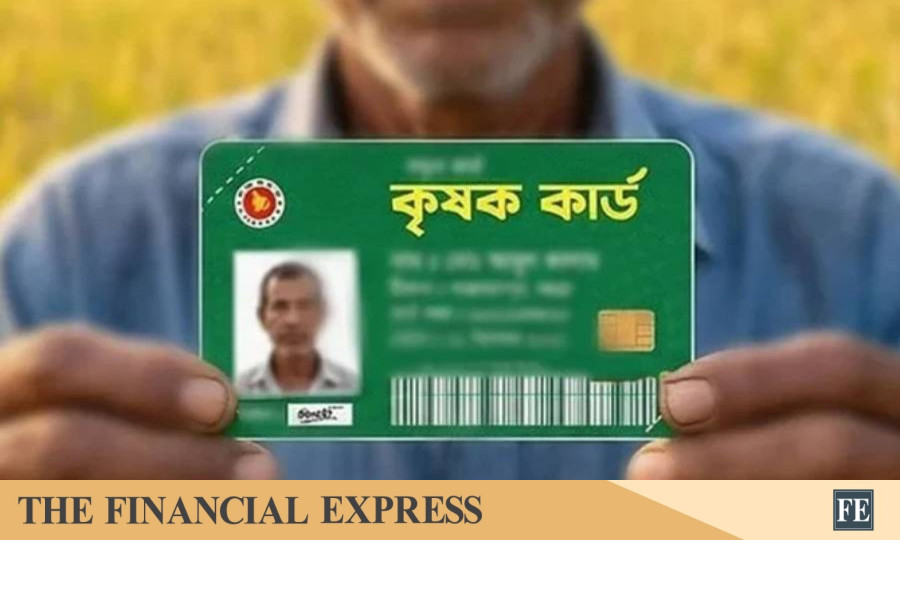
THE krishok card represents a different approach to social protection. Rather than focusing primarily on consumption support, it seeks to connect farmers with a wider package of productive services, including agricultural inputs, subsidies, incentives, credit, insurance, irrigation support, market information, weather information, training and extension services.

For FY2026–27, the programme has an allocation of approximately Tk 1,400 crore, with plans to scale up substantially. The longer-term target is around 2.27 crore farming households.

This is particularly important because rural vulnerability is closely connected with agricultural risk. A farmer may become poor not because of a permanent lack of income but because of crop failure, excessive input costs, climate shocks, weak market prices or indebtedness. The farmer card could therefore become an instrument of livelihood protection and economic empowerment.

The farmer card must include the landless

IMPLEMENTATION will determine whether the programme succeeds. The definition of a farmer should not be limited to formal landowners. Tenant farmers, sharecroppers, landless agricultural workers and vulnerable households engaged in fisheries and livestock activities also face serious economic risks.

The programme framework envisages coverage of landless, marginal and small farmers as well as fisheries and livestock households. This inclusive approach should be maintained during nationwide implementation. Otherwise, the people most exposed to rural economic insecurity may remain outside the system.

A large budget is not necessarily a pro-poor budget

ALTHOUGH the total social protection allocation is Tk 1,44,338 crore, the entire amount should not automatically be interpreted as direct poverty-reduction spending. The FY2026–27 framework contains 90 programmes, while 48 are classified as pro-poor, with allocations of slightly more than Tk 56,229 crore.

This distinction matters. A social protection budget should be assessed not simply by asking how much has been allocated, but also by asking how much reaches the poorest 20 per cent, how much reaches vulnerable households, how much leakage occurs and how much each taka of expenditure reduces poverty.

The fiscal challenge

THE family card could eventually become a very large programme. If it ultimately reaches 2 crore families and provides Tk 2,500 per family every month, direct cash transfers alone would require approximately Tk 60,000 crore annually.

This is not necessarily an argument against expansion. Rather, it highlights the need for a credible long-term financing strategy. Social protection cannot depend on short-term political commitments. It requires sustainable domestic revenue mobilisation, improved tax administration, reduced waste and better prioritisation of public expenditure.

From safety net to resilience

THE most promising feature of the FY2026–27 reforms is that Bangladesh appears to be moving from a narrow safety-net philosophy towards a broader social protection and resilience philosophy.

The family card can protect immediate consumption. The farmer card can protect productive livelihoods. Digital registries can improve targeting. Direct government-to-person payments can reduce intermediaries. Women-centred delivery can promote empowerment. But these reforms must work together.

A vulnerable family should not receive a cash transfer today only to fall back into poverty tomorrow because food prices rise, employment disappears, illness strikes or a climate shock destroys its livelihood.

What should be done?

First, family card allowances should be partially indexed to inflation, particularly food inflation.

Second, the dynamic social registry should be updated regularly and independently audited.

Third, beneficiary selection should be transparent, with an accessible grievance and appeal mechanism for excluded households.

Fourth, the Government should publish annual performance indicators — not merely expenditure figures. These should include poverty reduction, food security, school attendance, women’s economic empowerment, household debt, leakage, inclusion and exclusion errors.

Fifth, family card and farmer card databases should be interoperable. A poor farming household should not have to deal with two disconnected bureaucratic systems.

Finally, independent evaluation should become mandatory. The government should publicly release assessments of the family card’s impact on beneficiaries’ living standards, including health and education outcomes.

Conclusion

BANGLADESH’S FY2026–27 social protection budget is an important step forward. The Tk 1,44,338 crore allocation, the Tk 14,500 crore family card programme and the Tk 1,400 crore farmer card initiative demonstrate a clear attempt to modernise the country’s social protection architecture.

Yet Bangladesh is facing a difficult reality: poverty has risen to 21.4 per cent, inflation remains high, and low-income workers are struggling to maintain their purchasing power. Therefore, the country should judge the success of these programmes not by the number of cards distributed or the amount of money allocated, but by a much more fundamental question: Are vulnerable families actually becoming more secure?

The family card can protect consumption. The farmer card can strengthen livelihoods. But their ultimate success will depend on accurate targeting, inflation-sensitive transfers, fiscal sustainability, transparency and measurable improvements in human welfare.

The real objective of social protection should not be to keep poor people merely above the poverty line. It should be to help vulnerable citizens move from survival to security, from dependency to resilience, and ultimately from vulnerability to self-reliance.

Md. Noor Hossain is a researcher and policy analyst.​
 
Analyze

Analyze Post

Add your ideas here:
Highlight Cite Respond

Latest Posts

Back
PKDefense - Recommended Toggle