[🇧🇩] Footwear, Rubber and leather Industry in Bangladesh

[🇧🇩] Footwear, Rubber and leather Industry in Bangladesh
84
6K
More threads by Bilal9

G Bangladesh Defense

Non-leather footwear exports stall, miss global boom

Jagaran Chakma
1784419115125.webp


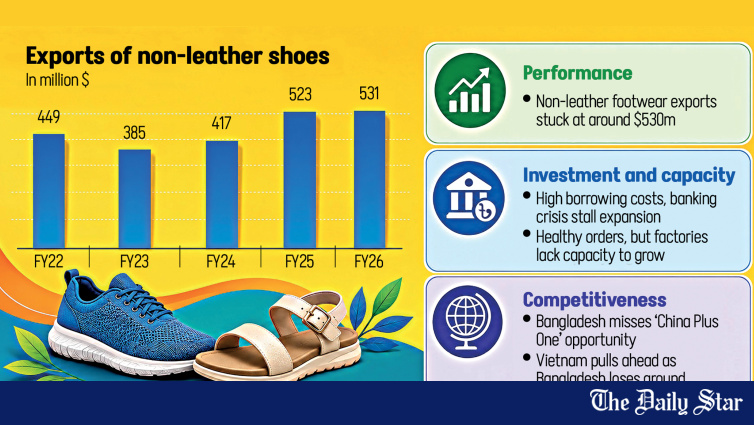
After rebounding strongly over two years, the non-leather footwear exports lost momentum in the last fiscal year, logging only 1.6 percent growth as manufacturers grappled with high borrowing costs, capacity constraints and lingering political uncertainty.

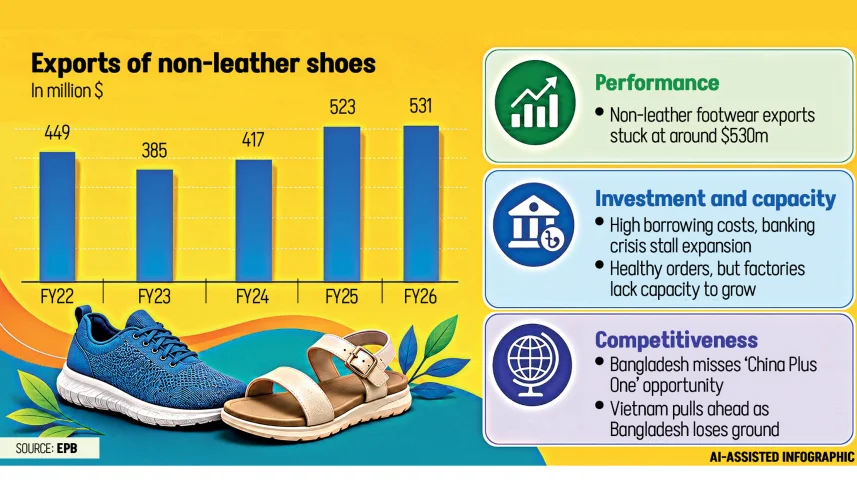
Exports under the “Other Footwear” category -- covering synthetic, rubber, plastic and textile footwear -- rose to $531 million in FY2025-26 from $522 million a year earlier, according to the Export Promotion Bureau (EPB).

The five-year trend reflects both recovery and stagnation. Exports fell from $449 million in FY22 to $385 million in FY23 amid weak demand in the US and Europe, before rebounding to $417 million in FY24.

The slowdown in FY26 comes despite the “China Plus One” strategy, under which global brands are diversifying production beyond China.

Combined with leather footwear exports of $691 million, Bangladesh’s footwear exports totalled only $1.22 billion in FY26, far lower than regional competitors. For instance, Vietnam exports more than $25 billion worth of footwear annually and Indonesia more than $6 billion.

The sector’s modest export growth reflects weak investment rather than weak demand, said Riad Mahmud, managing director of Shoeniverse Footwear.

“Most manufacturers are already operating at or near full capacity. Without new factories or capacity expansion, export growth will inevitably remain limited,” he said.

Mahmud blamed the prolonged banking sector liquidity crunch, saying manufacturers are struggling to secure financing for expansion.

“Our factory is running at full capacity and orders remain healthy. The question is why we are not expanding,” he said. “The simple answer is that bank financing is no longer available.”

He said Shoeniverse now plans to raise funds through the capital market by listing its footwear unit, Sunipun Footwear Ltd, and is preparing its prospectus.

“We have already announced our intention to go public. If the regulatory process becomes faster, as the authorities have indicated, it could provide an alternative source of financing for manufacturers,” he said.

He added that the stagnation in capital machinery imports also reflects slowing industrial investment. “The orders are there, but production capacity is not increasing because investment has slowed. That is the real bottleneck.”

Hasanuzzaman Hassan, chairman of BLING Leather Products Ltd, said inadequate banking support cost his company a major export opportunity last year.

He said the company spent nearly two months trying to open a letter of credit (LC) for a $2.2 million export order from buyers in the United States and Europe. However, the process stalled because the bank did not provide the required support, prompting the buyers to cancel the order.

“As the LC issue remained unresolved, the buyers had already moved elsewhere,” Hassan said.

He also linked the sector’s slow growth in the last FY to economic and political uncertainty during the interim government’s tenure, which disrupted business operations and weakened buyers’ confidence.

“When buyers see uncertainty, they become cautious. Some delayed orders, while others shifted sourcing to competing countries,” he said.

Hassan expects conditions to improve under the elected government as a more stable political atmosphere is likely to boost buyers’ confidence. “If the policy environment remains stable and banks become more supportive, many of those buyers are likely to return.”

Md Nasrullah, general manager and head of international business at Apex Footwear, attributed the slowdown to rising production costs, political uncertainty and weaker buyer confidence, particularly in the European market.

“Running a factory has become much more expensive,” he said, citing higher gas and electricity tariffs, annual wage increases and lending rates of 12-13 percent.

He estimated gas-related production costs alone have risen by more than 40 percent.

Md Nasir Khan, chairman of Jennys Shoes, said the industry has already invested heavily in expanding capacity but cannot fully utilise it because of supply-side bottlenecks.

“The industry has brought in machinery worth billions of dollars and built the capacity to grow. But many factories are producing only a fraction of what they are capable of because raw materials are not reaching them on time,” he said.

Delays in importing raw materials, unreliable electricity supply and cumbersome regulations are disrupting production and raising costs, Khan said. Frequent power outages also make it harder to meet delivery schedules.

“When shipments are delayed, buyers lose confidence. Instead of expanding by 20 to 30 percent a year, the industry risks slipping into negative growth,” he warned.​
 

Govt eyeing double-digit growth in leather, agro-processing sectors: Muktadir


1784675618156.webp


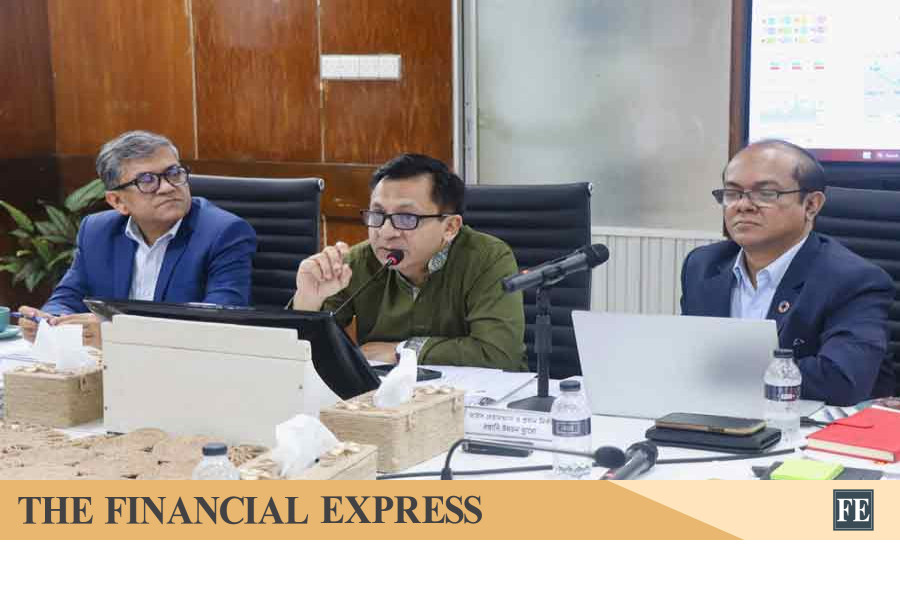
Commerce Minister Khandaker Abdul Muktadir on Tuesday said the government is working on a priority basis to push Bangladesh's potential export sectors, including leather, agro-processing and light engineering, toward double-digit growth in the near term.

"Each of the sectors we have identified as priority export sectors, including leather, agro-processing and light engineering, has the potential to become a major export sector through double-digit growth," the minister said while presiding over the 149th board meeting of the Export Promotion Bureau (EPB) at its conference room in the afternoon.

The minister said the government has taken initiatives to create a business-friendly environment to attract fresh investment into the economy and steps are underway to simplify the process of starting and running businesses. "The practical outcomes of this will be visible within the next two to three months."

The present government is working to develop the economy, generate fresh investment and expand business activities, he said. "Not just in words, the necessary steps are being taken to create a favourable environment for implementing investment."

He said the government is working to make business start-up processes simpler and faster, which will help make Bangladesh a more attractive destination for both local and foreign investors.

Stressing the need to create opportunities for new entrepreneurs and start-ups to enter international markets, the minister noted that many of today's large exporting firms once started small.

Young entrepreneurs need support in connecting with international buyers, participating in overseas markets and building export capacity, he said.

Many new business owners lack the financial capacity to travel abroad for market research or buyer contacts, Muktadir said, adding that they need cooperation and support at this stage.

The EPB, he said, will play an active role in taking young entrepreneurs forward.​
 

BB launches Tk 2,000cr scheme for leather sector
Staff Correspondent 31 July, 2026, 00:12

1785455242158.webp

AFP file photo

The Bangladesh Bank launched a Tk 2,000 crore pre-finance scheme to support the development and expansion of the country’s leather and leather goods industry, aiming to boost exports, improve environmental compliance, and enhance competitiveness. Bangladeshpolitical analysis

According to a circular issued on Thursday, the fund has been created from the central bank’s own resources to help transform the leather sector into a sustainable, environmentally friendly, and globally competitive industry.

The scheme would finance the construction and expansion of factories, procurement of machinery and installation of environmental facilities such as effluent treatment plants , sewage treatment plants, dumping yards and solid waste management systems.

It would also support compliance costs for obtaining Leather Working Group certification, modernisation of existing tanneries, and the domestic production of chemicals, accessories, and other ancillary products for the leather industry.

Under the scheme, borrowers would receive loans at a maximum interest rate of 7 per cent, while the Bangladesh Bank would provide participating banks with refinance at 4 per cent.

The fund would remain in operation for three years on a revolving basis, the circular added.

Term loans for new factory construction would be available for up to seven years, including a two-year grace period, while modernisation loans would have a tenure of up to four years, including a six-month grace period.

Working capital loans would be provided for one year and might be renewed for up to three years.

All scheduled banks in Bangladesh could participate in the scheme by signing agreements with the Bangladesh Bank’s SME and Special Programmes Department.

Loan ceilings have been set at Tk 30 crore for new leather processing facilities, Tk 20 crore for new leather goods manufacturing infrastructure, Tk 10 crore for modernisation of existing facilities and Tk 5 crore for working capital for manufacturers of auxiliary products.

To promote sustainable production, the Bangladesh Bank has attached several conditions to the scheme.

Leather processing units must obtain LWG certification within two years of receiving financing, while beneficiary institutions must ensure that at least 10 per cent of their electricity demand is met through solar power within the same period.

Companies would also be required to adopt measures to eliminate occupational health risks for workers.

Borrowers classified as defaulters under the Bank Company Act, 1991 would not be eligible for financing.

Businesses already receiving support from the Bangladesh Bank’s Export Development Fund or Green Transformation Fund for the same purpose would also be excluded from the scheme, said the circular.​
 

Can BB's prefinance scheme make leather competitive?

1785711900207.webp


The Bangladesh Bank (BB) has launched a Tk 20 billion pre-finance scheme to develop the country's leather and leather goods industry. Created from the central bank's own resources, the fund will remain in operation for three years on a revolving basis. Banks will receive BB funds at 4.0 per cent interest and lend those to eligible enterprises at a maximum rate of 7.0 per cent. It may finance new or expanded tanneries and leather goods factories, machinery, cold storage for hides and Effluent Treatment Plants (ETPs), Sewage Treatment Plants (STPs), dumping yards and solid-waste management systems. Loans will also cover modernisation and the cost of obtaining Leather Working Group (LWG) certification. It also promises employment. With costly bank credit stifling investment, the initiative is no doubt a welcome one. But will the availability of cheaper money by itself turn this old yet underperforming industry into a vibrant export sector?

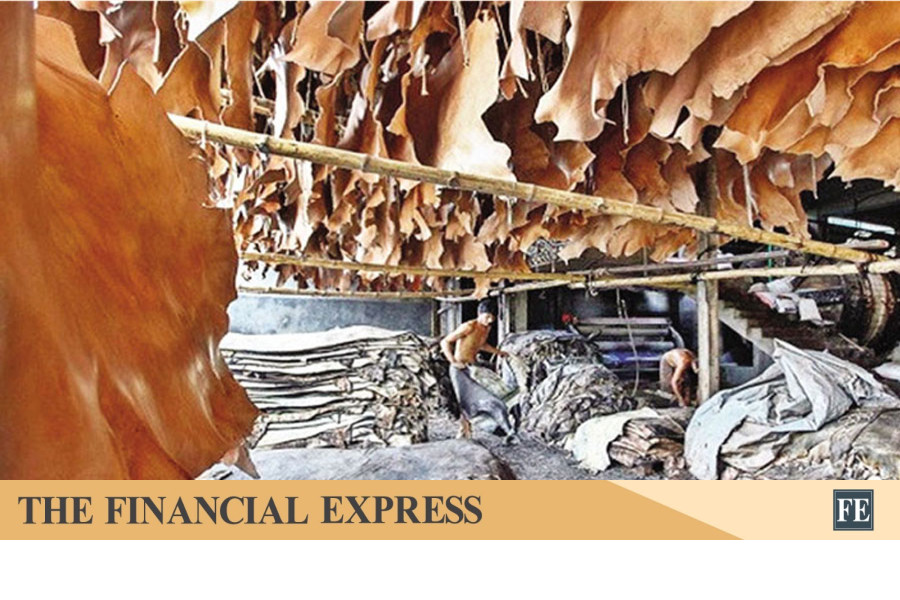
Leather is not a new entrant to the country's industry. The first tannery emerged in Narayanganj in the 1940s before Hazaribagh became the tanning centre for half a century. Bangladesh also has a natural advantage many competitors lack: a large domestic supply of bovine as well as goat and sheep hides from its livestock sector. A recent policy study says the country produces more than 180 million square feet of raw hides and skins annually. Much is collected during Eid-ul-Azha. Yet bumper supply has often proved anything but a blessing for seasonal traders and small collectors. Inadequate preservation, scarcity of salt, unscientific flaying, rough transportation and manipulation by middlemen cause hides to lose value or rot. As the proverbial cup and lip may have many a slip, so does the journey from the slaughtering point to the tannery. The first task, therefore, is to preserve the quality and value of this locally available raw material.

Despite the advantages, leather has failed to grow like the Readymade Garment (RMG) industry. It earns around US$1.0 billion annually, a small fraction of merchandise exports, while garments continue to account for more than four-fifths of the export basket. Global demand for footwear, bags, belts, wallets and other leather goods is not lacking. On the contrary, Bangladesh has remained stuck in the lower rungs of the value chain, selling raw, wet-blue or crust leather at low prices while countries with better finishing, design and compliance facilities convert similar material into expensive branded products. The country produces the raw material, but others pocket the larger share of its value. The apparel industry received decades of policy continuity, bonded-warehouse facilities, export incentives, skilled workers and close links with international buyers. Leather has for years on end been promised roadmaps, targets and industrial estates, but their implementation has repeatedly fallen short.

The most glaring example is the Savar Tannery Industrial Estate. Relocating tanneries from Hazaribagh was to end Buriganga pollution and make the industry environmentally compliant. But Savar's Central Effluent Treatment Plant (CETP) and waste-disposal facilities have never met the required standard. Pollution was shifted from one river to another and most local tanneries remained unable to obtain Leather Working Group (LWG) certification, the passport to premium international markets. Without it, buyers either avoid Bangladeshi leather or offer lower prices. The fund rightly makes ETPs, clean technology, solid-waste management and certification eligible for finance. It also requires leather processors to secure LWG certification and meet at least 10 per cent of their electricity demand from solar power within two years. However, how can an individual small or medium unit meet global standards on its own premises when the common CETP and the estate's central infrastructure remain deficient? Private borrowing cannot repair a public failure.

But will the intended small and medium enterprises (SMEs) actually access the fund? All scheduled banks may participate, but they traditionally prefer established borrowers with collateral, audited accounts and environmental clearances. Many small leather goods makers, component producers, hide collectors and ancillary businesses operate informally and possess few of those credentials. The scheme's loan ceilings-up to Tk 30 crore for a new leather-processing facility, Tk 20 crore for a new leather-goods factory and Tk 10 crore for modernising an existing unit-are generous. Even so, unless the application process is simple and transparent, larger and better-connected businesses may make the smaller ones hard to access the fund while the truly credit-starved enterprises remain outside. In this connection, the BB should publish disbursement data by enterprise size, location, gender of ownership and purpose of loan. Participating banks should also be evaluated not merely by how much money they disburse, but by how many viable SMEs they help become compliant exporters.

The credit should support an integrated plan for the entire value chain. Cold storage and collection centres are needed in rawhide-producing districts. A scientific grading system and transparent auction mechanism would protect small traders and tanners from artificial price manipulation. Workers require training in flaying, preservation, tanning, cutting, finishing and modern product design. Domestic production of chemicals, moulds, accessories and packaging materials must be encouraged to reduce lead time and import costs. Universities and technical institutes should work with the industry on leather engineering, cleaner production and fashion development. Occupational health, fair wages and safe working conditions cannot be sacrificed in the name of competitiveness. Most importantly, the government has to make the Savar CETP fully functional and create common testing, certification and design facilities that SMEs cannot afford individually. Export promotion missions should then connect compliant manufacturers with established brands and buyers in Europe, North America and East Asia.

So, how far can this Tk 20 billion scheme take the leather industry? It can remove a major barrier-expensive and inadequate finance-and encourage investment in technology, preservation and environmental facilities. Its focus on domestic hides may also help seasonal traders receive better prices and reduce waste. But cheap credit is a means, not an industrial strategy. If the common infrastructure remains faulty, certification elusive, skills outdated and market links weak, concessional loans may add fresh liabilities to the balance sheets of struggling enterprises. The fund should, therefore, be implemented as part of a time-bound leather-sector action plan with measurable targets for LWG certification, value addition, SME participation, employment and export growth. That is the challenge before policymakers. Tk The Tk20-billion pre-finance scheme of the Bangladesh Bank will help the leather sector only if cheap credit goes hand in hand with environmental compliance, modern technology and the conversion of locally available hides into high-value products.​
 

Bangladesh targets $5bn footwear exports as Trump tariffs erode China’s US market share


1789533229201.webp


Bangladesh’s footwear industry is starting to benefit from a shift in global trade triggered by higher US tariffs on China, with exporters betting they can turn the opening into a multibillion-dollar expansion.

Exports of both leather and non-leather footwear are rising, while China, long the dominant supplier to the US market, is losing ground.

Industry players say Bangladesh could lift export earnings from the sector to $5 billion within two years if persistent energy shortages are resolved and the government provides the policy support needed to expand production.

The latest data point in that direction.

Bangladesh earned $258.45 million from leather and non-leather footwear exports in July and August, the first two months of the 2026-27 financial year, according to the Export Promotion Bureau.

That was 11.5 per cent more than a year earlier. At the current exchange rate of about Tk 123 to the dollar, the exports were worth more than Tk 30 billion.

Export Picture

Footwear exports reached a record $1.23 billion in the financial year that ended on Jun 30, up 2.35 per cent from the previous year, according to an analysis of EPB data.

When raw hides and other leather goods are included, total export earnings from the broader leather and footwear sector rose to roughly $1.76 billion.

The growth has continued into the new financial year. Leather footwear exports generated $151.03 million in July and August, up 8.91 per cent from the same period a year earlier.

Non-leather footwear grew faster, rising 15.29 per cent to $107.42 million.

The figures underline a gradual change in an industry once overwhelmingly associated with leather. Synthetic, textile, and other non-leather footwear are becoming an increasingly important part of Bangladesh’s export mix.

China’s Retreat

The US is Bangladesh’s single biggest market for footwear.

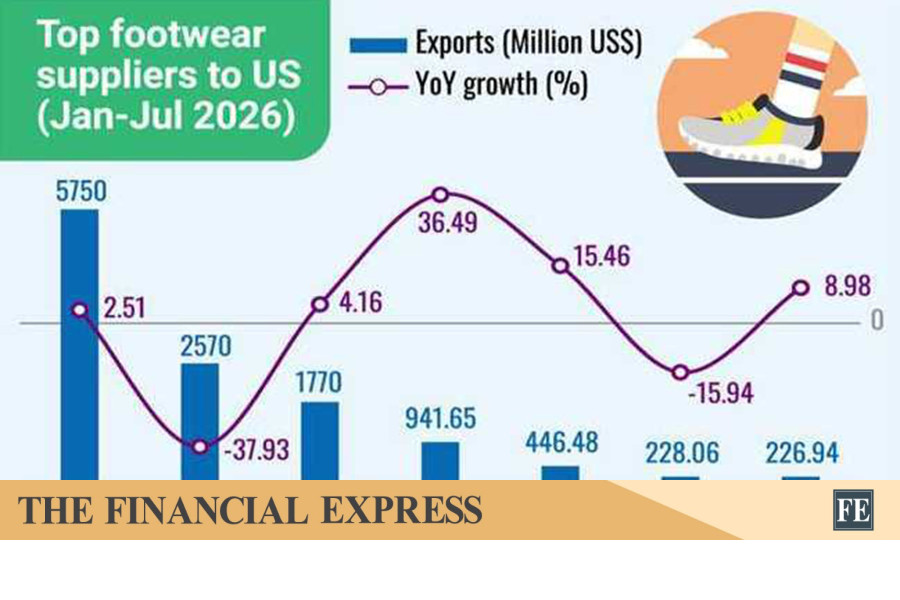
US Department of Commerce data from the Office of Textiles and Apparel (OTEXA) show that the country imported $226.9 million worth of footwear from Bangladesh in the first seven months of 2026.

That was 9 per cent more than in the same period last year.

The bigger shift is happening around China.

Only a few years ago, China controlled more than 60 per cent of the US footwear market. Higher tariffs imposed as part of Washington’s trade confrontation with Beijing have begun to eat into that dominance.

China’s footwear exports to the US fell by about 38 per cent in the first seven months of this year, according to OTEXA data cited by industry officials.

Vietnam, Indonesia, Cambodia, and India have been among the main beneficiaries. Bangladesh sees room to join them.

Nasir Khan, vice-president of the Leathergoods and Footwear Manufacturers & Exporters Association of Bangladesh (LFMEAB), said more than 30 per cent of Bangladesh’s footwear and leather-goods export earnings come from the US.

“Trump’s tariffs have shaken China’s near-monopoly, and that creates a golden opportunity for us,” he said.

Nasir added that the tariff burden on Chinese goods was now more than four times that faced by Bangladesh under the US reciprocal tariff structure.

Footwear is also highly labour-intensive, giving Bangladesh an advantage because of its lower labour costs, he said.

“If we can capture even 2 to 3 per cent of the market China is losing, we can reach $5 billion in export earnings within two years.”

Apex Footwear is seeing the same change in its order book.

Md Nasrullah, chief operating officer of the company’s export unit, said the tariff shift had created significant new opportunities.

“Trump’s tariffs have brought a lot of potential for us,” he said.

“We achieved double-digit export growth last financial year. We are receiving a huge number of orders, so many that we cannot take all of them.”

Bottlenecks and Fixes

The opportunity is considerable. So are the constraints. For manufacturers, energy remains the most immediate problem.

“The main issue is gas and electricity,” Nasrullah said. “We have no electricity for four to five hours a day.”

Factories are increasingly relying on diesel generation when grid power is unavailable, pushing up production costs.

That makes it harder for Bangladesh to compete with rivals such as Vietnam and Cambodia, he said.

The leather segment has another problem, which is the central effluent treatment plant at the Savar leather industrial estate.

Foreign buyers are unhappy with the facility, according to exporters, forcing some manufacturers to source raw materials from outside the estate or import them instead.

That adds further cost to production.

Nasrullah said removing those obstacles would do more than strengthen footwear exports. It could also help Bangladesh reduce its overwhelming dependence on readymade garments, which continue to account for the vast majority of merchandise export earnings.

Non-leather Footwear: New Frontier

One of the industry’s fastest-growing areas is non-leather footwear.

Demand is rising globally for shoes made from synthetic and other materials because they can be fashionable, durable, and relatively inexpensive.

Bangladeshi manufacturers are expanding quickly to capture that market.

National Polymer Group (NPoly) has built a large non-leather footwear factory at Bhaluka in Mymensingh.

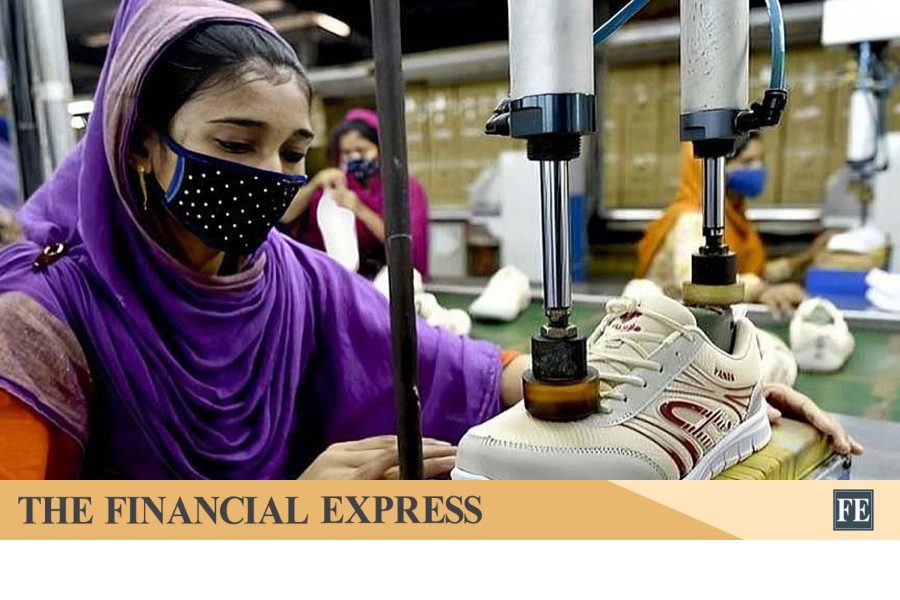
The Shoeniverse Footwear plant produces about 400,000 pairs a month and exports more than $3 million worth of shoes on average each month, according to Managing Director Riad Mahmud.

Around 4,000 people work at the factory.

The company doubled production capacity at the beginning of last year after seeing stronger export prospects.

Now the additional capacity is filling up.

“We have orders covering our full production capacity through February next year,” Riad said.

“Big companies are turning away from China and moving towards Bangladesh.”

The challenge, according to him, is ensuring the industry has enough raw materials and skilled workers to meet that demand.

Export-focused factories are also emerging outside Bangladesh’s established industrial centres.

In 2017, brothers Mohammad Hasanuzzaman and Mohammad Selim set up Bling Leather on 3.84 hectares of land in Taraganj, Rangpur. Selim later died.

The factory is now fully export-oriented, shipping footwear to markets including Poland, Turkey, Germany, Canada, the US, and India.

Managing Director Hasanuzzaman said the business was originally established partly to create jobs for women in rural communities.

Its ambitions have since grown.

The company now plans to expand production to 50,000 pairs of shoes a day.

Hasanuzzaman said Bling Leather also intends to build its presence in Bangladesh’s domestic market.

Another part of the expansion drive is aimed at reducing dependence on imported components.

Jennys Group has developed an industrial park called Bangladesh Shoe City Ltd, or BSCL, on 14.16 hectares of land at Mouchak in Gazipur.

Nasir Khan, the group’s chairman, said about 50 important footwear components and materials are being manufactured at the site.

“We export both leather and non-leather footwear. We designed this city so that every type of raw material needed to make shoes can be available here, without having to import it,” he said.

That could become increasingly important if Bangladesh wins more orders from global brands moving production away from China.

China still dominates global footwear exports, with around 60 per cent of the market, according to industry estimates cited in the report.

Vietnam, Indonesia, Germany, Turkey, and India are among the other major exporters. Bangladesh’s share remains small.

But manufacturers argue the combination of changing trade flows, low-cost labour, expanding non-leather capacity and a growing supply chain gives the country a rare chance to move much higher up the global rankings.

Their $5 billion ambition rests on whether Bangladesh can move quickly enough.

Orders, exporters say, are already appearing.

The harder task is supplying the power, gas, raw materials, skills, and policy support needed to fill them.​
 

Latest Posts

Back