[🇧🇩] Forming Election Commission/Conducting Elections

[🇧🇩] Forming Election Commission/Conducting Elections
297
7K
More threads by Saif

G Bangladesh Defense

Election preparations underway: 150,000 police to be trained
Staff Correspondent Dhaka
Published: 28 Jul 2025, 18: 46

1753751968687.webp

Chief adviser’s press secretary Shafiqul Alam and deputy press secretary Abul Kalam Azad Majumder briefed the newspersons after the meeting on Monday. Prothom Alo

The government has taken initiative to strengthen coordination among law enforcement agencies as part of its extensive security preparations ahead of the upcoming general elections.

A total of 150,000 police personnel will be given special election-related training in phases from September to November.

The decision was taken in a top level meeting on law and order, preventing disinformation and administrative preparations for the upcoming polls at the state guest house Jamuna today, Monday.

Several other major decisions also came up from the meeting presided over by chief adviser Dr. Muhammad Yunus.

Chief adviser’s press secretary Shafiqul Alam and deputy press secretary Abul Kalam Azad Majumder briefed the newspersons after the meeting.

Press secretary Shafiqul Alam quoted the inspector general of police (IGP) as saying, “They (police) will be working as the striking force and play the major role to maintain law and order.”

“The army is already active at the field level with magistracy power since 5 August last year,” he said adding that 60,000 army personnel will be deployed during the polls.

Shafiqul Alam said the government is considering forming a ‘National Information Centre’ as the spread of rumours and misinformation tends to rise during elections.

“The centre will quickly identify and counter rumours and deliver accurate information to the public,” he said, adding, “It will also help promote the positive and immediate actions taken by law enforcement agencies, which often go unnoticed due to a lack of publicity.”

Speaking regarding the recent criticism centering the intelligence failure to provide any information before the unrest that unfolded in several parts of the country in recent times including Gopalganj, Shafiqul Alam said, “The government has already formed a probe commission headed by a former Supreme Court justice over the matter.

He said intelligence agencies have been instructed to work in a more coordinated manner and gather information in advance to avoid such failures in the future.

Election-related administrative reshuffles also came up at the meeting. On this, deputy press secretary Abul Kalam Azad said, “There will be changes not across the board, but only where necessary.”

He added that law enforcement agencies have been instructed to swiftly identify potential election ‘hotspots’—areas where violence or unrest could occur. They have also been directed to send reports on the situation in those areas to the centre so that additional security measures can be taken if needed.

At the start of the day, US Chargé d’Affaires Tracy Ann Jacobson held meetings with top government officials. The discussions focused on counterterrorism efforts, political dialogue through the consensus commission, and tariffs, press secretary Shafiqul Alam said.

“The government is maintaining a zero-tolerance policy on counterterrorism and giving top priority to election security,” he added.

The press secretary expressed hope that with strong coordination among the army, police, and civil administration, the country is moving towards a safe and fair election.​
 

EC holds meeting on delimitation of constituencies, code of conducts of candidates

Published :
Jul 29, 2025 23:53
Updated :
Jul 29, 2025 23:53

1753831615447.webp


The Election Commission (EC) today held a meeting on delimitations of parliamentary constituencies, specification of polling centres and code of conducts of political parties and candidates ahead of the 13th parliamentary polls.

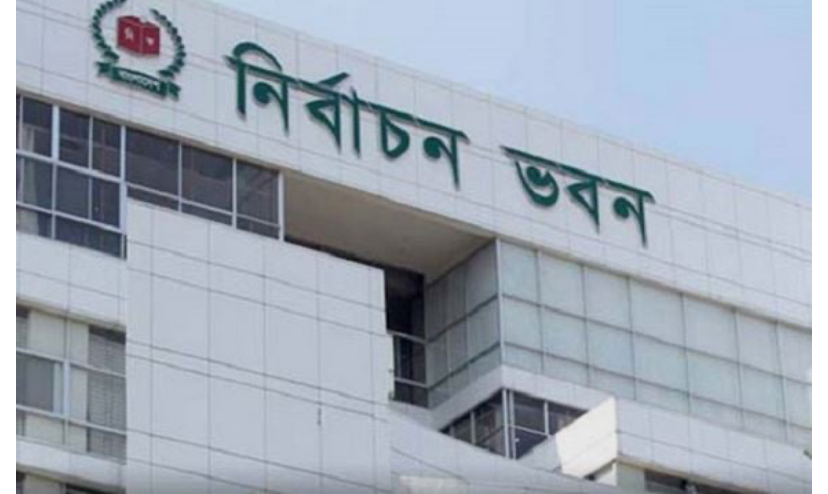
The meeting was held at the Nirbachon Bhaban in the capital this afternoon with Election Commissioner M Anwarul Islam Sarker in the chair, BSS reports.

The meeting held a threadbare discussion on delimitations of 79 parliamentary constituencies and other relevant agendas. A draft on the delimitation of parliamentary constituencies was prepared based on received application, population, administrative area and election commission policy, sources said.

However, the decision of the today’s meeting will be put forward to the commission’s meeting for taking final decision in this regard, an EC source familiar with the development told BSS today.

Meanwhile, the committee led by Election Commissioner Md. Anwarul Islam Sarkar was formed on delimitation of parliamentary constituencies, registration of the political parties, and preparation of national and local government election. Today was 12th meeting of the committee.​
 

Govt working to deliver ‘inclusive, credible’ election: Prof Yunus
UNB Dhaka
Published: 29 Jul 2025, 22: 47
BSS

1753834818833.webp


Chief Adviser Prof Muhammad Yunus on Tuesday said they are working to build a broad national consensus around a renewed political system—one that delivers ‘inclusive, participatory and credible’ elections.

"The goal is clear: to establish a society where all Bangladeshis can live in peace, with pride, with freedom, and with dignity," he said while speaking at the 'commemoration and dialogue event’, marking the anniversary of the July 2024 events.

Prof Yunus said their work is far from finished. "Alongside our reform agenda, we are pursuing legal accountability for those responsible for gross violations."

But, Prof Yunus said, justice is not only about punishment. "Justice is also about ensuring that state power can never again be used to suppress, silence, or destroy its own people," he said.

Political representatives, representatives of victims’ families, BNP Secretary General Mirza Fakhrul Islam Alamgir and Jamaat Ameer Dr Shafiqur Rahman also spoke at the event.

Prof Yunus said as they reflect on this past year, they remember those who gave their lives in pursuit of that vision. "Their sacrifices paved the way for a new chapter in our history. They have created a new Bangladesh, one that is rooted in hope, human rights and democratic renewal," he said.

The United Nations Human Rights Mission in Dhaka organised the event that brought together senior political leaders, civil society members, youth representatives and international partners.

At the request of the Chief Adviser, the Office of the United Nations High Commissioner for Human Rights (OHCHR) undertook an independent fact-finding mission into the events of July-August 2024.

The report of the mission, released on 12 February 2025, presented comprehensive findings and outlined key recommendations aimed at ensuring non-repetition of similar incidents.

"On behalf of the people of Bangladesh, I thank the United Nations for standing with us in our darkest hour, and I look forward to the continued partnership as we move forward," Prof Yunus said.

All gathered at the event to mark the first anniversary of the July Uprising—a moment of profound significance in Bangladesh history.

"It was a moment when thousands of Bangladeshi men and women—most of them young—stood up against tyranny and reclaimed the dignity and future of our country. Their courage spoke not only for our people, but for humanity," Prof Yunus said.

He recognised the steadfast support of the international community, particularly the United Nations, which has always stood beside Bangladesh—from the War of Independence in 1971, to the Rohingya crisis and again during the dark days of July and August last year.

In the aftermath of the Second World War, the United Nations set out to define and defend the inalienable rights of all human beings—irrespective of race, religion, sex, or status.

"The Universal Declaration of Human Rights emerged as a moral compass for our world, and its principles have long been embedded in our own constitution, Bangladesh’s Constitution," said Prof Yunus.

Over the past 16 years, Prof Yunus said, these rights were repeatedly denied to the citizens.

"Our institutions were captured. Freedoms were curtailed. Violence became the prime tool of governance. Last July, our society stood united in rejecting this reality," said the Chief Adviser, adding that the people of Bangladesh reclaimed their rights with clarity, resolve and immense bravery.

Immediately after the establishment of the Interim Government in August last year, Prof Yunus formally requested the Office of the High Commissioner for Human Rights (OHCHR) to conduct an independent fact-finding mission to investigate allegations of human rights abuses between 1 July and 15 August.

"We believed that an impartial and credible accounting of the truth was essential—not for justice alone, but also for healing," Prof Yunus said.

The UN High Commissioner’s report, released in February 2025, revealed the staggering scale of the atrocities: an estimated 1,400 lives lost in just a few weeks.

The report described the violence as systematic, directed and coordinated from the highest levels of the previous regime. "It raised urgent concerns about potential crimes against humanity," said Prof Yunus.

These findings have been further corroborated by international investigative journalism, including reports by the BBC and Al Jazeera.

"We are grateful to the office of the High Commissioner for not only documenting these abuses, but for offering a comprehensive set of recommendations to help ensure that such violations never, never happen again," said the Chief Adviser.

He said they have taken these recommendations to heart—not out of obligation to others, but out of responsibility to ourselves.

Since assuming office, our government has begun implementing wide-ranging reforms.

"We have amended the Code of Criminal Procedure and acceded to the International Convention for the Protection of All Persons from Enforced Disappearance. Earlier this month, we signed a Memorandum of Understanding with the OHCHR to establish a facilitating mission in Dhaka," he said.

This Mission will provide technical support for reform initiatives, as well as capacity-building for government institutions, local authorities and civil society actors working to safeguard most precious thing, human rights.

From the earliest days of the interim government, the United Nations has been a vital partner in our transition.

"I thank Secretary-General António Guterres for his unwavering support and for his solidarity and his visit to Bangladesh in March of this year," Prof Yunus said.

He also extended his deep appreciation to High Commissioner Volker Türk, the members of the OHCHR Fact-Finding Team, Gwyn Lewis, the UN Resident Coordinator, and of course his friend Huma Khan, Senior Human Rights Adviser, for their extraordinary and historical contributions.​
 

Election ‘date’ within days: Asif Nazrul

Published :
Jul 31, 2025 18:56
Updated :
Jul 31, 2025 18:58

1754007065820.webp


Amid widespread discussions over the election roadmap, Law Affairs Adviser Prof Asif Nazrul on Thursday said the ‘date’ for the polls will be announced within a few days.

He made the remarks while talking to reporters on reforms and contemporary affairs at a press conference at the Secretariat, reports UNB.

Replying to a question that people could not cast vote in three to four national elections, the adviser said, “Of course, you will be; all will be able to vote this time.”

Replying to another question, he said even the 2008 election was questionable as you (reporter) will find terrific information if you work on it.

“The election commission will oversee the electoral process. I can only talk about the intentions of our government. Our intention is to provide the best election in the history of Bangladesh; this is what Sir (Chief Adviser) always tells us,” the adviser added.​
 

Election will certainly be held in February: CA's press secretary

UNB Dhaka
Updated: 31 Jul 2025, 16: 52

1754011050017.webp

Chief adviser's press secretary Shafiqul AlamFile photo

The next five or six days are very important for the interim government, press secretary to the chief adviser Shafiqul Alam said on Thursday.

He made the remarks while speaking at a views-exchange meeting with the Secretariat Reporters Forum (SRF) at the Bangladesh Secretariat in the afternoon.

The press secretary said the election will certainly be held in February and there is no possibility of deferring it.

“We are still on track. There won’t be even a day’s delay. We hope this election will be held in a very festive and smooth environment,” he said.

“Professor Yunus initially mentioned early April. Later, during discussions in London, we said that if several reforms are implemented and progress is made, then the election could be held in February. We are still aligned with that position. There will not be a single day's delay,” he added.

“We hope this election will be held in a highly festive atmosphere. While some level of violence occurs in every election, we will make our utmost effort to bring it down to zero,” said Shafiqul.

Chief Information Officer Mohammad Nizamul Kabir also addressed the event, presided over by BSRF President Masudul Hoque. BSRF General Secretary Ubaydullah Badol moderated the session.​
 

We want elections by February: Mirza Fakhrul
Staff Correspondent Dhaka
Published: 01 Aug 2025, 23: 02

1754094710242.webp

BNP Secretary General Mirza Fakhrul Islam Alamgir addresses a rally at Rabindra Sarani in the capital’s Uttara, organised by BNP’s Dhaka North City unit in memory of those killed during the 2024 mass uprising on 1 August 2025 Prothom Alo

Bangladesh Nationalist Party (BNP) Secretary General Mirza Fakhrul Islam Alamgir has said that the people of Bangladesh want the country to be run under an elected government.

“Our chief adviser has already announced that elections will be held in February… and that is the election we want. The people want it too,” he stated.

He made the remarks on Friday afternoon while addressing a rally at Rabindra Sarani in the capital’s Uttara, organised by BNP’s Dhaka North City unit in memory of those killed during the 2024 mass uprising.

Pointing out why elections are needed, Fakhrul said, “If I face any problem now, I have nowhere to go. Who do I turn to? There are no MPs. Is there anyone? Who will raise my voice in parliament? There’s no one. That’s why we urgently need elections, we need a parliament where we can voice our concerns.”

Referring to the end of what he called a “brutal autocracy”, the BNP leader added, “The liberation will be complete only when those who looted the banks and extorted people are eradicated politically. We cannot compromise with them. They must not be allowed to return to power under any circumstances.”

“Once again the Awami League will come to power, along with other parties, and plunder the nation - we won’t allow this any longer. We want democracy. And what is democracy? It’s where ordinary people can express their opinions and vote to elect their representatives. Those representatives will run the country. No more elections where votes are cast at night, no more dummy votes, no more MPs being selected by Hasina’s whims, no more billions siphoned abroad or banks being looted. We want to see an end to this.”

Addressing concerns over the interim government, Fakhrul said, “Many people criticise them—they have made mistakes, they lack experience. We had hoped they would, within a year, compile a proper list of the martyrs and ensure their rehabilitation. Sadly, they haven’t done all of it. But they are trying. Only yesterday, the final round of reform talks concluded. We hope to receive the complete report in a few days.”

Referring to reduced US tariffs, he said, “There’s some good news: the US had imposed a 35 per cent tariff on our exports. The interim government and advisers have managed to reduce it to 20 per cent. We thank them for that.”

‘Slogans and applause are outdated, people want action’

Mirza Fakhrul continued, “Mugdha’s father and Jafar’s mother are here today. They lost their children in the anti-autocracy movement a year ago. And it wasn’t just one or two—we’ve lost hundreds a year ago, and even more in the last 15 years. Jafar’s mother told us he was an excellent student, who dreamt of becoming an engineer. Mugdha was serving water to protesters. He kept asking, ‘Do you need water? Does anyone need water?’ Don’t forget these stories so quickly.”

Addressing the party activists, the BNP secretary general said, “Don’t forget their sacrifices just within a year. They sacrificed their lives for us, for the country, for a better future. Remember them sincerely. Unless this realisation comes from within—unless you feel it—nothing will change. No matter how many slogans you chant, how many posters you hang, it won’t make a difference. You must truly want to change the country. You must hate tyranny. Ensure that Hasina can never return, that she can never again have our children killed.”

He also noted that the public is tired of mere slogans and applause: “Slogans and clapping are old habits—people don’t care about those anymore. It’s disheartening to see ongoing unrest in the country, even after so much sacrifice by our young people and working-class citizens. We had hoped—and we still hope—to build a beautiful Bangladesh together. But we have to work together for that. That is why I say: just clapping, carrying posters, or chanting a leader’s name isn’t enough.”

In his speech, Dhaka North City BNP convener Aminul Haque said, “Through the people’s uprising, we’ve rid ourselves of a dictatorship—Sheikh Hasina is gone. But we are not yet fully free of authoritarianism. We are on the threshold of democracy but have yet to fully establish it.”

He also warned, “THe interim government we, the people of this country supported, some new parties and former collaborators have infiltrated that interim government and are trying to revive fascism. But Bangladesh comes first. The country will be governed according to the people’s will.”

Addressing the event, BNP’s Dhaka North City unit member-secretary Mostafa Zaman said, “Our party is being harmed because of some of our activists. In some of our local areas—like Uttara West and Turag—a few individuals have repeatedly been arrested by the army, only to be released and then arrested again. Some of our so-called godfathers are working to get them released again. Stay aware: anyone who tarnishes the image of BNP—whether he’s a party member or a leader—will not be spared.”

Mugdha’s father, Mir Mostafizur Rahman, and Jafar’s mother also spoke at the rally.

Leaders from various BNP-affiliated wings—Jubo Dal, Swechchhasebak Dal, Chhatra Dal, and Sramik Dal—were present.

The rally was held on a temporary truck-stage erected on Rabindra Sarani in Uttara.

The southbound lane was fully blocked, and the northbound lane also became inaccessible due to the large crowd.

The gathering caused inconvenience to patients and relatives at Crescent Hospital’s maternity and paediatric unit, located directly behind the rally stage.​
 

Ensuring law and order in the upcoming polls
Mir Mostafizur Rahaman
REUTERS
Published :
Aug 05, 2025 00:08
Updated :
Aug 05, 2025 00:08

1754351546790.webp


As Bangladesh moves steadily toward its 13th national parliamentary election, the urgency to ensure a peaceful and orderly electoral environment has never been more pronounced. In any democratic setup, law and order constitute the bedrock upon which fair and free elections are built. Citizens must be able to exercise their franchise without fear, obstruction, or coercion. For a nation that has long grappled with political unrest and questions over the credibility of its electoral process, it is imperative to restore public confidence through robust law enforcement.

In recent weeks, there has been growing anticipation over the announcement of the election schedule. Now, an announcement to this effect is expected to take place in early August. Yet, even before the dates are officially confirmed, the conversation has shifted to a more fundamental concern -- whether the nation's law enforcement apparatus is adequately prepared, both morally and operationally, to manage a volatile political climate surrounding the polls.

This concern is not without merit. The July mass uprising, which shook the foundations of the previous regime, left the country's police force with a deep institutional scar. Allegations of partisanship, suppression of dissent, and the use of force against civilians during previous political crises have tarnished public trust in law enforcement. As a result, restoring the moral credibility and operational discipline of the police force has become a central task for the interim administration.

Against this backdrop, the recent high-level law and order meeting chaired by Chief Adviser Dr. Muhammad Yunus was of crucial importance. Attended by top brass from various law enforcement and intelligence agencies, the meeting marked a turning point in Bangladesh's election preparation narrative. Several critical decisions were taken, with the potential to decisively influence the security landscape ahead of the polls.

One of the most significant steps announced was the special training programme for around 150,000 police personnel, to be conducted between September and November. This training will specifically address election-related duties, crowd management, protection of polling centres, and emergency response protocols. The goal is to depoliticise and professionalize the force -- arming officers not just with batons and shields, but with a democratic understanding of their roles.

In addition, a formidable deployment of approximately 60,000 army personnel is planned during the election period. These troops will function as striking forces, standing by to act swiftly in any area where law and order might deteriorate. Historically, the presence of the military has acted as a deterrent against electoral violence and ballot manipulation. However, the key lies in ensuring that such deployments remain neutral and disciplined, avoiding any perception of interference.

The decision to form a National Information Centre also deserves appreciation. In today's digital age, misinformation spreads faster than bullets. Rumours -- whether about rigging, violence, or false announcements -- can provoke unrest within minutes. A centralized information unit that can monitor, verify, and counteract false narratives in real time will be essential in preserving a calm and informed electorate.

Another important component of the preparation is the upcoming administrative reshuffle. In a polarised political environment, the neutrality of administrative officials -- from Deputy Commissioners to Upazila Nirbahi Officers -- can influence perceptions of electoral fairness. A strategic yet impartial reshuffling could be pivotal in restoring faith in the process.

While these measures inspire hope, they are not immune to scepticism. Many observers have raised legitimate concerns about whether the upcoming election can truly be conducted in a free and fair manner, especially given the long shadow of previous flawed polls. The presence of conspirators, both internal and external, might try, to destabilise the electoral environment. Such a possibility cannot be ruled out. However, it is encouraging to note that the interim government is seemingly aware of these threats and is working proactively to neutralise them.

It is worth remembering that Bangladesh has not witnessed a truly fair national election in many years. That democratic void was a central grievance behind the July uprising. The people rose not only against corruption and autocracy, but also for the restoration of their voting rights. Therefore, the stakes for this election are not merely political -- they are existential for the nation's democratic future.

The roadmap ahead includes a government formed through elections that must undertake systemic reforms to strengthen democratic institutions. Only by reinforcing these foundations the country can stop the re-emergence of autocracy under a different guise. The upcoming polls will be a crucial test in that direction.

From a logistical standpoint, one idea that merits serious consideration is the staggered election model. Under this system, voting could be held in phases -- perhaps in half the constituencies of a district on the first day and the remaining half on the next. This model has several advantages. It would allow for better mobilisation and concentration of law enforcement resources. In practice, the same personnel could be redeployed across multiple phases, effectively doubling the strength in each area without additional manpower.

Such an approach would not only enhance security but also give the Election Commission greater flexibility in managing logistics and addressing any irregularities that may arise in the initial phases. It would also reduce pressure on the communication, transport, and administrative systems, all of which are stretched thin during national elections.

Looking ahead, the Chief Adviser is expected to address the nation at the beginning of August, where the official election date is likely to be declared. According to the joint statement issued after the London meeting between the Chief Adviser and BNP Acting Chairman Tarique Rahman, the 13th parliamentary election could be held in the first half of February -- before the holy month of Ramadan.

Given this timeline, the next six months will be crucial. The interim government must not only maintain law and order but also foster a political environment conducive to free participation. Dialogue among political parties, transparency in electoral management, and a strict code of conduct for candidates and their supporters will be essential. All institutions -- from the Election Commission to the lowest tiers of administration -- must work in synergy to build trust and ensure credibility.

Finally, let us not forget that the primary responsibility of the interim government is to create an enabling environment for elections and ensure their timely and credible execution. Failure to do so risks pushing the country into deeper political uncertainty. Conversely, success in conducting a fair election could become a defining moment in Bangladesh's democratic journey -- marking the end of a dark chapter and the beginning of a new era rooted in legitimacy, accountability, and popular will.

In conclusion, ensuring law and order in the run-up to the national elections is not just a tactical necessity -- it is a moral imperative. A peaceful election is the cornerstone of democracy. The people of Bangladesh deserve to cast their vote freely, without intimidation or manipulation. And it is the solemn duty of the state to make that happen.​
 

Govt sends letter to EC for election arrangements

Published :
Aug 06, 2025 21:39
Updated :
Aug 06, 2025 21:45

1754525516687.webp


The Office of the Chief Adviser on Wednesday sent a letter to the Election Commission requesting it to complete all preparations to hold the next parliamentary election before Ramadan in February 2026.

“With this letter, the formalities of the government’s request to the Election Commission to arrange the election have been completed,” said a media release from the Chief Adviser’s Press Wing on Wednesday night.

In the letter sent to Chief Election Commissioner AMM Nasir Uddin, Chief Adviser’s Principal Secretary M Siraz Uddin Miah requested him to take all necessary measures to arrange a “free, fair, peaceful and festive” national election of the expected quality within the specified time, reports UNB.

This move came a day after Chief Adviser Professor Yunus’ announcement in his televised address to the nation on August 5, the Day of Mass Uprising, where he said the government would formally request the Election Commission to arrange the election before Ramadan, beginning in February next.

Referring to the address to the nation, the letter said the Chief Adviser in his speech talked about the immediate start of all preparations and institutional arrangements in this regard (election arrangements).

The Chief Adviser had emphasised on making arrangements so that the next election would be memorable as a day of great joy and festivity in the context of citizens not being able to vote in the last fifteen years.

He also assured the EC of the government’s full cooperation in arranging an expected “fair, free, peaceful, and festive” election.​
 

Latest Posts

Back