[🇧🇩] India's Water Terrorism Against Bangladesh

Quick Reply ✓ Posted!
[🇧🇩] India's Water Terrorism Against Bangladesh
321
16K
More threads by Saif

G Bangladesh Defense

বন্যা শুধু পানি ব্যবস্থাপনা না, বাংলাদেশের নিরাপত্তার দৃষ্টিতে দেখার সময় এসেছে
বিশেষজ্ঞদের মত, কেবলমাত্র ভারী বৃষ্টি বন্যার একমাত্র কারণ না। ভারত ব্যারেজ খুলে দেওয়ায় উজান থেকে নেমে আসা পানি বাংলাদেশের অন্তত আটটি জেলা ক্ষতিগ্রস্ত করেছে।

1724371056141.webp

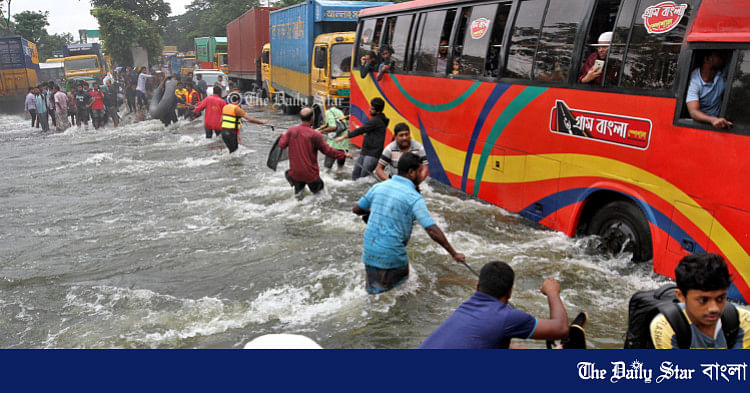
ফেনীর বন্যার চিত্র | ছবি: রাজীব রায়হান/স্টার

একাধিক সংস্থা ও আবহাওয়াবিদরা গত জুলাইয়ে আশঙ্কা করেছিলেন আগস্টে বন্যা হতে পারে। সক্রিয় মৌসুমি বায়ুর প্রভাবে চলতি মাসের শুরু থেকেই দেশের উপকূলীয় এলাকায় বাড়ে বৃষ্টিপাতের প্রবণতা। এর মধ্যে পশ্চিমবঙ্গ ও বাংলাদেশের উপকূলীয় এলাকায় একটি লঘুচাপের সৃষ্টি হয়। এর প্রভাবে জমতে শুরু করে মেঘ। সেই মেঘ ভূখণ্ডে ঢুকে বাড়ায় বৃষ্টির পরিমাণ।

তবে বিশেষজ্ঞদের মত, কেবলমাত্র ভারী বৃষ্টি বন্যার একমাত্র কারণ না। ভারত ব্যারেজ খুলে দেওয়ায় উজান থেকে নেমে আসা পানি বাংলাদেশের অন্তত আটটি জেলা ক্ষতিগ্রস্ত করেছে।

আজ বৃহস্পতিবার দ্য ডেইলি স্টারের সঙ্গে আলাপকালে জলবায়ু বিশেষজ্ঞ ও ব্র্যাক ইউনিভার্সিটির ইমেরিটাস অধ্যাপক আইনুন নিশাত, নদী ও ব-দ্বীপ গবেষণা কেন্দ্রের (আরডিআরসি) চেয়ারম্যান ও নদী বিশেষজ্ঞ মোহাম্মদ আজাজ ও দুর্যোগ ব্যবস্থাপনা বিশেষজ্ঞ গওহার নঈম ওয়ারা এই বন্যা নিয়ে তাদের পর্যবেক্ষণ জানিয়েছেন।

মোহাম্মদ আজাজ বলেন, 'নিশ্চিতভাবেই অতিবৃষ্টি এখানে বন্যার একটি বড় কারণ। বাংলাদেশে এখন বর্ষায় প্রচুর বৃষ্টি হয় এবং এই অঞ্চল থেকে মেঘালয় পর্যন্ত বৃষ্টিপাত হয়। আমাদের দেশে যত বন্যা হয়, সেটি মূলত উজান থেকে নেমে আসা পানিতে বন্যা হয়। উজানের পানি ভাটিতে নামবে, এটা স্বাভাবিক ব্যাপার। ফেনী, নোয়াখালী ও কুমিল্লার একটি অঞ্চলে রাতারাতি যে পানির স্রোত, এটা স্বাভাবিক না।

'এটা দেখলেই বোঝা যায়, কোথাও না কোথাও পানিটা ধরে রেখে তারপর হঠাৎ করে ছেড়ে দেওয়া হয়েছে। পরে আমরা অনুসন্ধান করে দেখেছি, গোমতী নদীর ঠিক উপরেই একটি ছোট্ট হাইড্রো প্রোজেক্ট আছে তিন মেগাওয়াটের। সেই গেটগুলো কিন্তু খোলা। আরও কিছু ছোট ছোট ব্যারেজ আছে,' বলেন তিনি।

আজাজ বলেন, 'প্রশ্ন উঠতে পারে দায় কার? আমাদের আন্তঃসীমান্ত নদীগুলো দেখাশোনা করার জন্য একটি জয়েন্ট রিভার কমিশন আছে। এই কমিশনের কাজ হলো, শুষ্ক মৌসুমে আমরা আমাদের অধিকার অনুযায়ী পানি পাচ্ছি কি না দেখা এবং বাংলাদেশের পক্ষে নেগোশিয়েট করা। সেটা গত ১৫ বছরে সিস্টেমেটিক্যালি অকেজো করে দেওয়া হয়েছে, যেন কথা না বলতে পারে।

'এই কমিশনের আরেকটি কাজ হলো বর্ষায় যখন প্রচুর বৃষ্টি হবে, তখন বন্যার পূর্বাভাস দেওয়া। যেহেতু পানি সব সময় আসবেই, আমরা জানি। ভাটিতে পানি আসার আগে পূর্বাভাস দিলে আমরা প্রস্তুতি নিতে পারি। সেটা কিন্তু হয়নি। ভারতের পক্ষ থেকে বন্যার কোনো পূর্বাভাস আমরা পাইনি। বাংলাদেশও সেটা নিয়ে সম্পূর্ণ নির্বাক। এই যে চর্চা, ইচ্ছা হলেই আমরা পানি ছেড়ে দিচ্ছি, পানির ঢল নেমে আসছে বাংলাদেশে—এই চর্চা গত ১৫ বছরে আমরা অনেক বেশি দেখতে পাই,' যোগ করেন তিনি।

নদী বিশেষজ্ঞ এই নদী বিশেষজ্ঞ বলেন, 'আজকে গোমতী ও ফেনী নদীতে যেটা ঘটলো, একই ঘটনা বারবার তিস্তায় হয়। তিস্তায় এখন বছরে তিনবার বন্যা হয়! সিলেটেও হয়। এর বড় কারণ হলো, উজানে প্রতিটি নদীর ওপর ড্যাম প্রোজেক্ট আছে। ছোট ছোট অনেক হাইড্রো ড্যাম আছে। এই ড্যামগুলোর যদি আমরা ভারতের ইকোনোমিক ভ্যালু দেখি, গোমতী নদীর ওপর যে ড্যামটি আছে মাত্র তিন মেগাওয়াট। এই বিদ্যুতে একটি ছোট গ্রামও আলোকিত করা যায় না কিন্তু তিন মেগাওয়াট বিদ্যুৎকেন্দ্র যে পরিমাণ পানি ধরতে পারে, সেটি পাশের যে কোনো ধরনের এলাকাকে ক্ষতিগ্রস্ত (নুইসেন্স) করতে পারে। এটি অস্ত্র—বিদ্যুৎ প্রকল্প না।'

তিনি বলেন, 'গত ৫৩ বছরে ৫৪টি আন্তঃসীমান্ত নদীতে ৩০ থেকে ৪০ হাইড্রো ড্যাম কমিশন হয়েছে। আন্তঃসীমান্ত নদীতে কোনো ধরনের প্রকল্প বাংলাদেশের অনুমতি ছাড়া ভারত করতেই পারে না। গত ৫০ বছরে কোনো সরকারের আমলে আমরা রাষ্ট্রীয়ভাবে উদ্বেগ প্রকাশ করতে দেখিনি। যে কারণে ড্যাম তারা করে ফেলেছে। এখন তারা এটা অস্ত্র হিসেবে ব্যবহার করে।

'আমি মনে করি, বন্যা শুধুমাত্র পানিসম্পদ ব্যবস্থাপনার দৃষ্টিতে না দেখে, আমাদের নিরাপত্তার দৃষ্টিতে দেখার সময় এসেছে। আগেই দেখা উচিত ছিল, আমরা দেখতে পারিনি। তিস্তার বন্যা, সিলেটের বন্যা, এখন এখানে বন্যা—ভারত ইচ্ছা মতো পানি ছাড়ে এবং আমরা কোনো প্রতিবাদ করি না; গত ১৫ বছরে আমরা প্রতিবাদ করিনি, সেই কারণে এটি ভারতের সাধারণ চর্চায় পরিণত হয়েছে যে, চাইলেই আমি পানি ছেড়ে দিতে পারি, চাইলেই আমি এখানকার লোকজনকে বানে ভাসিয়ে দিতে পারি এবং পুরো এলাকাটাকে ভালনারেবল করে ফেলতে পারি,' বলেন তিনি।

আজাজ বলেন, 'গত ১৫ বছরে চর্চা তৈরি হয়েছে কোনো কথা বলা যাবে না। ভারতের সঙ্গে আন্তঃসীমান্ত নদী নিয়ে কথা বলা নেই। এমনকি প্রধানমন্ত্রী থাকাকালে শেখ হাসিনা তিস্তার বন্যার পক্ষে কথা বলেছেন, বন্যা তো খারাপ না, বন্যা হলে তো কৃষকের জমি উর্বর হয়। এগুলো জনগণের সঙ্গে তামাশা করা। যেখানে আমাদের অধিকার-অস্তিত্ব ঝুঁকিতে ফেলবে, সেখানে তারা ভারতের পক্ষে সাফাই গেয়েছে। এগুলো কারণে জয়েন্ট রিভার কমিশনের সাহস হয়নি যে, তারা এই নেগোশিয়েট করবে। ফলে একটি অকেজো জয়েন্ট রিভার কমিশনের কারণে আরও কিছু সমস্যা হয়েছে।'

অভ্যন্তরীণ সমস্যা তুলে ধরে তিনি বলেন, 'ঠিক আছে ফ্ল্যাশ ফ্লাড নামবে, আমাদের এখানে অসংখ্য নদী-খাল আছে, সেগুলো দিয়ে আমরা পানি বের করে দেবো। গত ১৫ বছরে শুধু কুমিল্লা, নোয়াখালী, লক্ষ্মীপুর ও ফেনীতে প্রায় ১৮ হাজার নদী দখলদার সরকারের তালিকায় আছে, যারা আওয়ামী লীগ করে। রাষ্ট্রীয় তত্ত্বাবধানে আওয়ামী লীগের নেতাকর্মীরা যদি অভ্যন্তরীণ সব নদী খেয়ে ফেলে, তাহলে পানিটা যাবে কোন দিক দিয়ে!

'যত ফুটেজ দেখা যাচ্ছে, স্কুল ডুবে গেছে, মসজিদ ডুবে গেছে, বাড়ি ডুবে গেছে, এই সবগুলোর পাশেই কিন্তু খাল আছে। এই পুরো অঞ্চলে প্রত্যেকটা হাট-বাজার খালের পাশে। নোয়াখালীর ভৌগলিক বৈশিষ্ট্যই এ রকম—খালের পাড়ে হাট-দোকান, পেছনে খাল, সামনে স্কুল, রাস্তার দুপাশে খাল। এগুলো সব ভরাট করে গিলে ফেলেছে রাজনৈতিক দৌরাত্ম্যে এবং এটার বিরুদ্ধে কেউ কথা বলেনি। নদী রক্ষা কমিশন একটি তালিকা প্রকাশ করে রেখে দিয়েছে, কোনো বাস্তবায়ন আমরা লক্ষ্য করিনি। ফলে প্রাকৃতিকভাবে এই দুর্যোগ আমি মোকাবিলা করতে পারবো না। আমরা একটি ক্ষেত্র তৈরি করেছি গত ১৫ বছরে, যাতে অস্ত্রটা আমি প্রতিবেশীর হাতে তুলে দিয়েছি,' যোগ করেন আজাজ।

তিনি আরও বলেন, 'এখন আমাদের ভাবতে হবে, পুরো পাশে ভারতের যে বিনিয়োগ হয়েছে সেটার প্রকৃতি কী রকম এবং আমরা এটাকে কীভাবে মোকাবিলা করতে পারবো।'

1724371115446.webp


মৌলভীবাজারের বন্যার চিত্র | ছবি: মিন্টু দেশোয়ারা/স্টার

এক নজরে বন্যার ক্ষতি

দুর্যোগ ব্যবস্থাপনা ও ত্রাণ মন্ত্রণালয়ের দুপুর ১টা পর্যন্ত তথ্য অনুসারে, আটটি জেলা—ফেনী, কুমিল্লা, চট্টগ্রাম, খাগড়াছড়ি, নোয়াখালী, মৌলভীবাজার, হবিগঞ্জ ও ব্রাহ্মণবাড়িয়ার ৫০টি উপজেলা প্লাবিত হয়েছে এবং ৩৫৭টি ইউনিয়ন ক্ষতিগ্রস্ত হয়েছে।

এসব জেলায় পানিবন্দি আছেন চার লাখ ৪০ হাজার ৮৪০টি পরিবার। ক্ষতিগ্রস্ত মানুষ ২৯ লাখ চার হাজার ৯৬৪ জন। এখন পর্যন্ত ফেনীতে ও ব্রাহ্মণবাড়িয়াতে দুইজন মারা গেছেন।

কক্সবাজার থেকে থেকে দ্য ডেইলি স্টারের প্রতিবেদক জানিয়েছেন, বন্যায় এদিন সকালে রামু উপজেলায় আরও অন্তত একজনের মৃত্যু ও দুইজন নিখোঁজ হয়েছেন।

দুর্যোগ ব্যবস্থাপনা ও ত্রাণ মন্ত্রণালয় আরও জানিয়েছে, এক হাজার ৫৩৪টি আশ্রয়কেন্দ্রে আজ দুপুর দেড়টা পর্যন্ত ৭৫ হাজার ৬৭৮ জন আশ্রয় নিয়েছেন। আশ্রয়কেন্দ্রগুলোতে প্রায় সাড়ে সাত হাজার গবাদি পশু আশ্রয় নিয়েছে। আটটি জেলাতে মোট ৪৪৪টি মেডিকেল টিম কাজ করছে। ফেনীতে সেনাবাহিনী ও নৌবাহিনী কাজ করছে।

1724371151321.webp

ফেনীর বন্যার চিত্র | ছবি: রাজীব রায়হান/স্টার

সতর্কতার অভাব

অধ্যাপক আইনুন নিশাত বলেন, 'আমাদের এখানে বন্যার প্রধানতম কারণ বাংলাদেশ অংশে ভারী বৃষ্টি। পাশাপাশি উজান থেকে পানি এসেছে।'

তিনি বলেন, '১৯৬২ সালে কাপ্তাই ড্যাম তৈরির আগে এর ভাটিতে রাউজান কিংবা এর পাশের এলাকায় প্রতি বছর প্রচণ্ড বন্যা হতো। কাপ্তাই ড্যাম হওয়ার পরে বন্যা নিয়ন্ত্রণে আছে। একই ঘটনা গোমতীতেও হচ্ছে। উজানে তারা ড্যাম তৈরি করেছে বিদ্যুৎ উৎপাদন ও বন্যা নিয়ন্ত্রণের জন্য। গত ৩০-৪০ বছরে এর ভাটিতে কোনো বন্যা হয়নি। ভারতের ত্রিপুরা ও বাংলাদেশের কুমিল্লা অঞ্চলে বন্যা কমে গেছে,' বলেন তিনি।

এই জলবায়ু বিশেষজ্ঞ বলেন, 'জলাধারগুলো বর্ষার প্রথমেই পানি দিয়ে ভর্তি করে ফেলার চেষ্টা করা হয়। বর্ষার শেষে বৃষ্টি নাও হতে পারে। বর্ষায় বৃষ্টি হওয়ার কথা, হয়েছে। তবে এবার অস্বাভাবিক অতি বৃষ্টি হয়েছে। ৩০০-৩৫০ মিলিমিটার বৃষ্টি হয়েছে। ভারতেও প্রচুর হচ্ছে।
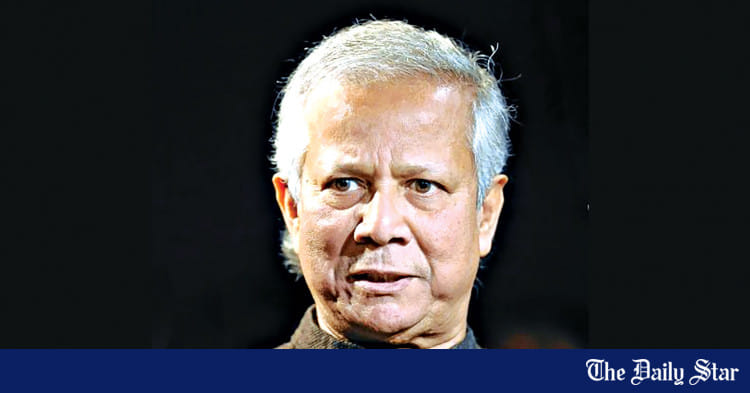
'দিল্লিতে আবহাওয়া অধিদপ্তর অরেঞ্জ অ্যালার্ট দিয়েছে। ত্রিপুরা প্রশাসন রেড অ্যালার্ট জারি করেছে। অর্থাৎ মানুষকে তারা প্রস্তুত করেছে। আমাদের এখানে আবহাওয়া দপ্তর গত ৫০ বছর ধরে যেভাবে বলে চলেছিল, সেভাবেই বলে চলেছে "ভারী বৃষ্টি হতে পারে"। এটা তো স্থানীয়ভাবে সতর্কবাণী দিতে হবে! এ রকম ৩০০ মিলিমিটার বৃষ্টি ঢাকাতেও হতে পারে, বর্ষায় যে কোনো সময় হতে পারে। এ রকম বৃষ্টি ত্রিপুরায় হয়েছে, ফেনীতে হয়েছে,' যোগ করেন তিনি।

আইনুন নিশাত বলেন, 'ত্রিপুরার কিছু পানি নামছে গোমতী দিয়ে, যেটা জলাধারে ধরা ছিল। জলাধার খুলে দিতে হয়েছে, কারণ তাছাড়া জলাধার ঝুঁকি তৈরি করবে। প্রশ্ন হচ্ছে তারা রিজার্ভারের গেট খুলে দিয়েছে কি না? এই তথ্যটা বাংলাদেশকে সঙ্গে সঙ্গে জানিয়েছে কি? গেট খুলে দিতে হতে পারে কিন্তু তথ্যটা আমাদের দিলে আমরা পূর্বাভাস দিতে পারি, প্রস্তুতি নিতে পারি। আমার ধারণা, পানি উন্নয়ন বোর্ডের কাছে এই পূর্বাভাস আছে। তারা যদি পূর্বাভাস প্রচার না করে, তাহলে তো কোনো লাভ নেই।'

পর্যাপ্ত প্রস্তুতি ছিল?

আবহাওয়া অধিদপ্তর বেশ কয়েক দিন আগেই বন্যার পূর্বাভাস দিয়েছিল বলে জানিয়েছেন দুর্যোগ ব্যবস্থাপনা ও ত্রাণ মন্ত্রণালয়ের অতিরিক্ত সচিব কে এম আলী রেজা।

তিনি বলেন, 'সে অনুযায়ী আমরা প্রস্তুতি নিয়েছি। কন্ট্রোল রুম চালু করা হয়েছে। বিভিন্ন পর্যায়ে প্রয়োজন কমিটিগুলো সক্রিয় হয়েছে। বন্যা শুরুর আগেই আমরা ত্রাণ সামগ্রী পাঠিয়ে দিয়েছি।'

তবে বন্যা কবলিত এলাকায় পর্যাপ্ত সহায়তার ঘাটতি দেখা গেছে।

দুর্যোগ ব্যবস্থাপনা বিশেষজ্ঞ গওহার নঈম ওয়ারা বলেন, 'মেঘ জমছে, বৃষ্টি হবে সেই পূর্বাভাস আবহাওয়া অধিদপ্তর আগেই দিয়েছিল। অথচ সে অনুযায়ী ব্যবস্থা নেওয়া হয়নি।'

তিনি বলেন, 'ভারতের উচিত ছিল অন্তত পাঁচ ঘণ্টা আগে জানানো যে, আমাদের এখানে পানি বাড়ছে, আমরা ব্যারেজ খুলে দেওয়ার কথা চিন্তা করছি। সেটাও তারা করেনি।

'ভারতের ব্যারেজ নির্মাণ ঠেকানো সম্ভব না হলেও, আমাদের উচিত ছিল তাদের সমঝোতায় বাধ্য করা যে, তারা পানি ছাড়ার আগে আমাদের জানাবে। কতটুকু পানি ছাড়বে সেই ধারণা দেবে। তাহলে আমরা এক রকম প্রস্তুতি রাখতে পারতাম। পানি কোন দিক দিয়ে যাবে সেটা নির্ধারণ করে জায়গাগুলো খালি রাখা যেত। সেই রুটে অপরিকল্পিতভাবে বাড়ি-ঘর উঠেছে,' বলেন তিনি।

গওহার নঈম আরও বলেন, 'নতুন প্রজন্ম জানে না, বন্যা পরিস্থিতি কেমন হয়। প্রবীণদের দায়িত্ব ছিল তাদের জানানো।'

সারা দেশ থেকে ফায়ার সার্ভিসের কর্মীদের বন্যা কবলিত এলাকায় পাঠানো প্রয়োজন মন্তব্য করে তিনি বলেন, 'এই বর্ষাকালে আর আগুন লাগবে না। অত্যাবশ্যক সংখ্যক কর্মী রেখে বাকিদের উদ্ধার কার্যক্রমে সম্পৃক্ত করা দরকার। কারণ এই পরিস্থিতি উদ্ধার কার্যক্রম পরিচালনার পেশাদার মানুষ দরকার।'

গওহার নঈম বলেন, 'বন্যা কবলিত এলাকায় বিদ্যুৎ নেই। মোবাইল ফোনগুলো অকেজো হয়ে গেছে। এখন বিশেষ উদ্যোগ নিয়ে মোবাইল কোম্পানিগুলোর উচিত চার্জড মোবাইল ফোন পৌঁছে দেওয়া। চাল-ডাল কবে দেবেন সেটা পরের ব্যাপার।'

অমানবিকতার পরিচয় দিয়েছে ভারত, ব্যারেজ খোলার অভিযোগ অস্বীকার পররাষ্ট্র মন্ত্রণালয়ের

কোনো ধরনের আগাম সতর্কতা ও প্রস্তুতি নেওয়ার সুযোগ না দিয়েই ব্যারেজ খুলে দিয়ে ভারত অমানবিকতার পরিচয় দিয়েছে এবং বাংলাদেশের সঙ্গে অসহযোগিতা করছে বলে মন্তব্য করেছেন অন্তর্বর্তী সরকারের তথ্য উপদেষ্টা নাহিদ ইসলাম।

তিনি বলেন, উজানের পানি বাংলাদেশে ধেয়ে এসে বন্যা পরিস্থিতির সৃষ্টি করেছে।

আজ বৃহস্পতিবার অন্তর্বর্তী সরকারের উপদেষ্টা পরিষদের বৈঠক শেষে রাষ্ট্রীয় অতিথি ভবন যমুনার সামনে এক সংবাদ সম্মেলনে তিনি এ কথা বলেন।

ভারত শিগগির বাংলাদেশের জনগণবিরোধী এ ধরনের নীতি থেকে সরে আসবে বলেও এ সময় প্রত্যাশা করেন।

এদিকে ত্রিপুরার গোমতী নদীর ওপর ভারতীয় ব্যারেজ থেকে পানি ছাড়ার কারণে বাংলাদেশের পূর্বাঞ্চলের বন্যা পরিস্থিতি তৈরি হয়নি বলে জানিয়েছে ভারতের পররাষ্ট্র মন্ত্রণালয়।

এক বিবৃতিতে জানানো হয় 'আমরা দেখেছি, ত্রিপুরার গোমতী নদীর উজানে ডুম্বুর ব্যারেজ খুলে দেওয়ায় পূর্বাঞ্চলীয় জেলাগুলোতে বর্তমান বন্যা পরিস্থিতির সৃষ্টি হয়েছে বলে বাংলাদেশ উদ্বেগ প্রকাশ করেছে। এটি তথ্যগতভাবে সঠিক নয়।'

ভারত ও বাংলাদেশের মধ্য দিয়ে প্রবাহিত গোমতী নদীর অববাহিকা এলাকায় গত কয়েক দিনে সবচেয়ে ভারী বৃষ্টিপাত হয়েছে বলে জানিয়েছে ভারতীয় পররাষ্ট্র মন্ত্রণালয়। তারা আরও জানিয়েছে, বাংলাদেশে বন্যা মূলত বাঁধের ভাটিতে এই বড় অববাহিকা থেকে নামা পানির কারণে।

বিবৃতিতে বলা হয়, ডুম্বুর ব্যারেজটি সীমান্ত থেকে বেশ দূরে—বাংলাদেশ থেকে ১২০ কিলোমিটার উজানে অবস্থিত। এটি একটি কম উচ্চতার (প্রায় ৩০ মিটার) ব্যারেজ, যা বিদ্যুৎ উৎপাদন করে একটি গ্রিডে সরবরাহ করে এবং বাংলাদেশও এখান থেকে ৪০ মেগাওয়াট বিদ্যুৎ কেনে।

এতে বলা হয়, গত ২১ আগস্ট থেকে পুরো ত্রিপুরা ও বাংলাদেশের আশপাশের জেলাগুলোতে ভারী বৃষ্টিপাত অব্যাহত রয়েছে। প্রচুর মেঘের কারণে স্বাভাবিকভাবে ভারী বর্ষণ হয়েছে।

প্রায় ১২০ কিলোমিটার দীর্ঘ এ নদীর অববাহিকায় তিনটি জায়গায় (অমরপুর, সোনামুড়া ও সোনামুড়া–২) পানি পর্যবেক্ষণ স্টেশন রয়েছে। গতকাল থেকে পুরো ত্রিপুরা এবং বাংলাদেশের সীমান্তবর্তী জেলাগুলোয় ভারী বৃষ্টি হচ্ছে। এ কারণে পানির চাপে ব্যারেজ থেকে স্বয়ংক্রিয়ভাবে পানি প্রবাহের ঘটনা দেখা গেছে।

অমরপুর স্টেশনটি একটি দ্বিপাক্ষিক প্রোটোকলের অংশ, যার অধীনে ভারত বাংলাদেশকে বন্যার রিয়েলটাইম তথ্য পাঠিয়েছে।

'গত ২১ আগস্ট দুপুর ৩টা পর্যন্ত পানি বাড়ার তথ্য বাংলাদেশকে সরবরাহ করা হয়েছে। সন্ধ্যা ৬টার দিকে বন্যার কারণে বিদ্যুৎ বিভ্রাট দেখা দেয়, ফলে যোগাযোগে সমস্যা হয়। তারপরও আমরা জরুরি তথ্য পাঠাতে অন্যান্য উপায়ে যোগাযোগ অব্যাহত রাখার চেষ্টা করেছি,' বলা হয় বিবৃতিতে।

এতে আরও উল্লেখ করা হয়, 'ভারত ও বাংলাদেশের অভিন্ন নদীগুলোর তীরবর্তী এলাকায় বন্যা একটি অভিন্ন সমস্যা। উভয় দেশের জনগণের দুর্ভোগের কারণ। এটি সমাধানে পারস্পারিক সহযোগিতা প্রয়োজন। যেহেতু দুই দেশের মধ্যে ৫৪টি আন্তঃসীমান্ত নদী রয়েছে, তাই নদীর পানি সহযোগিতা দ্বিপাক্ষিক সম্পর্কের একটি গুরুত্বপূর্ণ অংশ। দ্বিপাক্ষিক পরামর্শ ও কারিগরি আলোচনার মাধ্যমে পানিসম্পদ ও নদীর পানি ব্যবস্থাপনায় সমস্যা ও পারস্পারিক উদ্বেগ সমাধানে আমরা প্রতিশ্রুতিবদ্ধ।'

এ প্রসঙ্গে জানতে চাইলে আইনুন নিশাত বলেন, 'আমাদের ক্ষতি করার জন্য তারা ড্যাম খোলেনি। না খুললে ড্যামটা ক্ষতিগ্রস্ত হতো, সেটাকে রক্ষা করার জন্য তারা করেছে। তবে ড্যাম খোলার কারণে আমাদের এখানে প্রভাব পড়েছে এবং খুব স্বাভাবিকভাবেই পড়েছে। ড্যাম খুললে তার প্রভাব ভাটিতে পড়ে।'

যোগাযোগ করা হলে বন্যা পূর্বাভাস ও সতর্কীকরণ কেন্দ্রের নির্বাহী প্রকৌশলী সরদার উদয় রায়হান দ্য ডেইলি স্টারকে বলেন, 'বন্যার ভয়াবহতা সংক্রান্ত সব তথ্য আমরা এখনো পাইনি। এখন পর্যন্ত যা আছে, তা পানির সমতল বৃদ্ধির তথ্য। হবিগঞ্জ পয়েন্টে ২০১৭ সালের পরে এবার পানির সমতল বৃদ্ধি রেকর্ড ছাড়িয়েছে।'

তিনি বলেন, 'ভারতের বেশ কিছু পয়েন্টে পানির সমতল বৃদ্ধি অতীতের অন্তত ৪০ বছরের রেকর্ড ছাড়িয়ে গেছে।'

ত্রিপুরার গোমতী নদীর ওপর ভারতীয় ব্যারেজের জলকপাট খুলে দেওয়া হয়েছে কি না সে রকম কোনো তথ্য নেই জানিয়ে উদয় রায়হান বলেন, 'ভারত কখনোই আমাদের সঙ্গে এ ধরনের তথ্য আদান-প্রদান করে না। আমরা তাদের কাছ থেকে ওয়াটার লেভেল সংক্রান্ত তথ্য পাই।'

ভারী বর্ষণের সতর্কবাণী

সক্রিয় মৌসুমি বায়ুর প্রভাবে ঢাকা, ময়মনসিংহ, খুলনা, বরিশাল, চট্টগ্রাম ও সিলেট বিভাগের কোথাও কোথাও বৃহস্পতিবার সকাল থেকে পরবর্তী ৪৮ ঘণ্টা ভারী (২৪ ঘণ্টায় ৪৪-৮৮ মিলিমিটার) থেকে অতি ভারী (২৪ ঘণ্টায় ৮৯ মিলিমিটারের বেশি) বর্ষণ হতে পারে।

এছাড়া, বৃষ্টির কারণে চট্টগ্রাম বিভাগের পাহাড়ি এলাকার কোথাও কোথাও ভূমিধসের আশঙ্কা রয়েছে।

আবহাওয়াবিদ মো. তরিফুল নেওয়াজ কবির ডেইলি স্টারকে বলেন, 'গত ১৬ আগস্টের পর থেকে উপকূলীয় এলাকা, খুলনা, বরিশাল, চট্টগ্রাম, কুমিল্লা, ফেনী ও নোয়াখালী এলাকায় বৃষ্টি বাড়তে থাকে। আমরা মনে করছি, আরও দুএকদিন পরিস্থিতি এ রকম থাকতে পারে। তারপর বৃষ্টিপাতের প্রবণতা কমে আসবে এবং বৃষ্টি উত্তর-পশ্চিমাঞ্চলের দিকে চলে আসবে।'

গত ১৭ আগস্ট সকাল (পূর্ববর্তী ২৪ ঘণ্টার তথ্য) থেকে আজ সন্ধ্যা ৬টা পর্যন্ত কুমিল্লায় ৭০২ মিলিমিটার ও নোয়াখালীতে ৫০৬ মিলিমিটার বৃষ্টি রেকর্ড করেছে আবহাওয়া অধিদপ্তর। ২১ আগস্ট দুপুর ১২টা পর্যন্ত ফেনীতে বৃষ্টি হয়েছে ৫৪৪ মিলিমিটার। আবহাওয়া কেন্দ্রের যন্ত্রপাতি পানিতে তলিয়ে যাওয়ায় এর পরে তথ্য পাওয়া যায়নি।

আজ সন্ধ্যা ৬টা পর্যন্ত গত ২৪ ঘণ্টায় কক্সবাজারে সর্বোচ্চ ২৭৫ মিলিমিটার বৃষ্টি হয়েছে।​
 

India claims dam water released ‘automatically’
Staff Correspondent 23 August, 2024, 00:12

1724371637721.webp

Indian high commissioner to Bangladesh Pranay Verma calls on chief adviser Professor Muhammad Yunus at state guest house Jamuna in the capital on Thursday. | Star Mail photo

Indian High Commissioner to Bangladesh Pranay Verma, in a courtesy meeting with chief adviser to the interim government Professor Mohammad Yunus on Thursday, claimed that water was released ‘automatically’ from a dam due to rising water levels upstream in India amid reports of floods wreaking havoc in Bangladesh’s eastern and northeastern districts.

He described the flood in Tripura as something ‘very unprecedented’, causing the displacement of 50,000 people there, the chief adviser’s press secretary Shafiqul Alam told a press briefing at the Foreign Service Academy after the meeting.

The flooding has created havoc on both sides of Bangladesh and India, the press secretary said, quoting Pranay as saying in the meeting at the State Guesthouse Jamuna, now the Chief Adviser’s residence.

Chief Adviser Professor Yunus laid emphasis on high-level collaboration on water issues and on activating this in emergency situations.

Referring to the Indus Waters Treaty between India and Pakistan, he said that water-sharing of the joint rivers could be resolved through working together, according to the press secretary.

Earlier on the day, the Indian external affairs ministry claimed in a statement that the flood in Bangladesh was not caused by the opening of the Dumbur dam upstream of the Gumti River in the Indian state of Tripura but by ‘automatic releases’ of waters.

‘The flood in Bangladesh is primarily due to waters from the large catchments downstream of the dam,’ said the statement.

‘We have seen concerns being expressed in Bangladesh that the current situation of flooding in districts on the eastern borders of Bangladesh has been caused by the opening of the Dumbur dam upstream of the Gumti River in Tripura. This is factually not correct,’ it said.

The external affairs ministry pointed out that the catchment areas of the river Gumti that flows through India and Bangladesh had witnessed the heaviest rains of this year over the last few days.

‘The Dumbur dam is located quite far from the border - over 120km upstream of Bangladesh. It is a low height (about 30m) dam that generates power that feeds into a grid and from which Bangladesh also draws 40MW of power from Tripura,’ the statement said, adding that heavy rainfall has been continuing since August 21 in the whole of Tripura and adjoining districts of Bangladesh.

‘In the event of heavy inflow, automatic releases have been observed,’ it claimed.

The statement also said that, as the two countries share 54 common cross-border rivers, river water cooperation was an important part of bilateral engagement.

‘We remain committed to resolving issues and mutual concerns in water resources and river water management through bilateral consultations and technical discussions,’ the Indian external affairs ministry said in the statement.​
 

Demos demand fair share of water of common rivers
Staff Correspondent 23 August, 2024, 00:14

1724371743873.webp


Teachers and students held demonstrations at different universities across the country on Thursday demanding a fair share of water of the common rivers with India.

The demonstrations were held amid a serious deterioration in the flood situation in north-east districts due to the onrush of water from India.

On the Dhaka University campus, students under the Student Movement Against Discrimination platform protested against opening the gates of the Dumbur dam upstream of the Gumti River in Tripura without any prior warning or preparation during a relief collection programme at Teacher-Student Centre of the university, DU correspondent reported.

Criticising India for opening the gates of the dam without any prior warning or preparation, Hasnat Abdullah, a key coordinator of the platform, said that India’s current actions would determine the future of India-Bangladesh relations.

‘If you intentionally push us into a crisis, Bangladesh will take countermeasures,’ warned Hasnat.

Nusrat Tabassum, another coordinator of the platform, told journalists at the programme that people suffered for floods every year.

‘Sometimes it happens due to opening of dams,’ she added.

Teachers and students, meanwhile, demonstrated on the Jahangirnagar University campus protesting at the opening of the gates of the dam in Tripura by the Indian authorities triggering ‘flooding’ in Bangladesh’s vast areas, JU correspondent reported.

Terming the opening of sluice gates across Bangladesh-India border during favourable situation of India as an aggression policy, the demonstrators held India liable for the worsening flood situation in the country.

Under the banner of the Student Movement Against Discrimination, the demonstrators brought out a procession from the altar of the university’s central Shaheed Minar and held a rally in the Battola area.

Professor Jamal Uddin of the university’s environmental sciences department said, ‘The main rivers in Bangladesh lose water receptivity due to construction of Indian dams on almost every common river. Thus, an onrush of water from upstream in the rainy season causes floods.’

New Age staff correspondent in Rajshahi reported that several hundred students and teachers of various educational institutions blocked the Dhaka-Rajshahi highway in front Rajshahi University main gate demanding a fair share of the water agreement with India.

They also protested at opening the gates of the Dumbur dam upstream of the Gumti River in Tripura.

Gholam Kibria Mohammad Meshkat Chowdhury, a coordinator of the Students Movement Against Discrimination, said, ‘India has deprived us of our right to the fair share of water. They constructed dams illegally on various rivers without any discussion with Bangladesh.’

He also warned the Indian government that people of Bangladesh would never be sold into slavery to India.

RU physics professor Saleh Hasan Naqib said that the ousted fascist government had turned Bangladesh into an unwritten colony of India.

‘Good relations should always be maintained with neighbouring countries. But that should be bilateral,’ said Naqib.

Criticising former prime minister Sheikh Hasina’s relations with the Indian government, he said, ‘The Indian government has to understand whether they will be friends of Sheikh Hasina or whether the people of Bangladesh.’

Besides, students of Patuakhali Science and Technology University in Patuakhali, Bangamata Sheikh Fojilatunnesa Mujib Science and Technology University in Jamalpur and students under the Student Movement Against Discrimination platform in Bhola, among others, also held demonstrations demanding the fair share of water of the common rivers with India.

A greater part of Bangladesh including Feni, Cumilla, Noakhali has been inundated due to relentless rainfall and a rise in the water level of rivers following a onrush of water from upstream, leaving over 3.6 million people marooned.​
 

India claims dam water released ‘automatically’
Staff Correspondent 23 August, 2024, 00:12

View attachment 7720
‘We remain committed to resolving issues and mutual concerns in water resources and river water management through bilateral consultations and technical discussions,’ the Indian external affairs ministry said in the statement.​

There won't be any MUTUAL resolution with current administration of India on water resources.

Their only approach right now is to attack Bangladesh in any way they see possible.

We need to keep that in mind and look for defensive strategies.
 
Last edited:
There won't be any MUTUAL resolution with India on water resources.

Their only approach is to attack Bangladesh in any way they see possible.

If militarily we were not as weak as we are, we would have declared a war against India for their water terrorism against us. We should seriously think about acquiring Nuke from China to stop India from conducting water terrorism against Bangladesh.
 
If militarily we were not as weak as we are, we would have declared a war against India for their water terrorism against us. We should seriously think about acquiring Nuke from China to stop India from conducting water terrorism against Bangladesh.

Well in the present situation (interim govt.) such a move is unlikely. A lot of folks in the Armed forces during Hasina's time have been politically brainwashed to be heavily supportive of Indian whims and influence in Bangladesh. She appointed a lot of Awami people into the army. That will take time to correct/normalize but it will happen.

Meanwhile we can still do a total trade boycott of Modi's exports, especially ban any Adani or Ambani related exports to Bangladesh (Adani's Rupchanda brand cooking oil is one such product, there are scores of other products Like Emami and Parachute which alone do hundreds of million in business in Bangladesh). That is more likely and will happen much sooner.

An effective trade boycott for Indian exports to the tune of about $45 Billion annually is perfectly legal and there is nothing that Modi and Company can do about it. Avoid Kolkata for medical treatments altogether - these are a bunch of hyper nationalist Modi supporters. Popularize medical treatment in Malaysia and Thailand.
 

We must reduce our vulnerability to flood
Signs of resilience as severe flooding tests the nation

1724456118544.webp

VISUAL: STAR

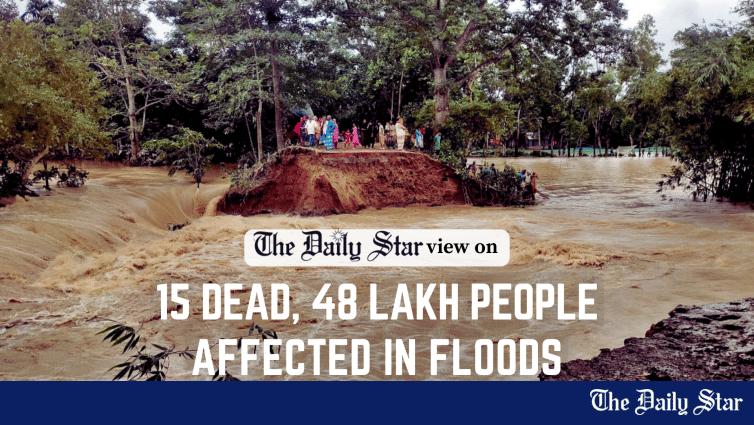
The ongoing flood has once again highlighted the need for taking decisive actions to reduce our vulnerability to seasonal disasters. With climate change, our internal river management problems, and unresolved external issues with India exposing the fault lines for a country otherwise known for its disaster preparedness, the time has come for Bangladesh to approach this issue with the urgency that it deserves, especially considering the huge human and economic tolls. Reports coming from the ground are quite alarming: at least 15 lives lost and 48 lakh people affected in 11 districts as of Friday afternoon. Earlier, it was reported that over 887,000 families were marooned, with about 77 upazilas under water.

The Feni and Cumilla situations remain as dire as before. In Cumilla, the collapse of an embankment on the Gumti River has left about 500,000 people stranded. People in other districts including Khagrachhari, Noakhali, Chattogram, Moulvibazar, Habiganj, Brahmanbaria, Sylhet, Lakshmipur and Cox's Bazar are also facing severe challenges. Despite all that, one reason to be hopeful about the direction in which Bangladesh is going at present is the spontaneous response of people to help with the aid and rescue efforts. Besides government initiatives in collaboration with the military, coast guard, and emergency services, private platforms and student volunteers have turned up in large numbers, reflecting the nation's solidarity at this moment of crisis. They are working despite considerable hurdles, including lack of electricity and mobile network and impassable roads, with a large number of people in flood-hit districts still disconnected.

That said, we must turn our focus to what's causing the severe flooding and how to reduce our vulnerabilities. Since August 19, the country's eastern region has experienced extremely heavy rainfall for three consecutive days, the highest in 53 years. This, combined with upstream flooding and the narrowing of water drainage paths in Bangladesh, has rapidly deteriorated the situation. This was compounded by inadequate early warning systems. A critical factor in this is the lack of warning about upstream water flows from the Indian authorities, which experts say has exacerbated the situation. Effective cross-border water management and better coordination with India are essential to improve our response. The Joint River Commission and the National River Conservation Commission (NRCC) have a huge role to play in this regard, which they must do.

In addition to cross-border river issues, encroachments and blockages in Bangladesh's river systems are another major concern. The estimates given by the NRCC about river encroachers show how the latter have encroached river land across the country, exacerbating the impact of flooding. Going forward, we must bring these encroachers to book and improve water flow in our rivers. A comprehensive approach to flood management is necessary. This includes restoring natural river channels, addressing encroachments, and strengthening regional cooperation and the effectiveness of relevant institutions to prevent future disasters. Given the repetitive nature of flash floods caused by upstream flows, experts have also said it is time the government approached floods not just from the perspective of river management but also that of security.​
 

Protesters in Bangladesh demand fair share of water from common rivers with India
Staff Correspondent 24 August, 2024, 01:26

1724457373261.webp

The Save the River Movement forms a human chain, protesting at India’s aggressive water diplomacy, in front of the National Press Club in the capital on Friday. | New Age photo

Students and different organisations in Dhaka held demonstrations on Friday demanding fair share of water of the common rivers with India.

The demonstrations were held amid the deterioration of flood situation in the north-eastern districts due to onrush of water from India, the protesters alleged.

On the Dhaka University campus, students under the banner of Inqilab Mancha held a procession protesting against India, alleging that because they opened the Dumbur dam in Tripura the flood situation in Bangladesh aggravated, Dhaka University correspondent reported.

Protesters demanded removal of all the ‘illegal’ and unilateral dams by India on international rivers.

Sharif Islam Bin Hadi, the spokesperson of the Inqilab Mancha, said, ‘India released water in the night to kill people of Bangladesh violating diplomatic protocols.’

He announced that they would conduct a long march with ten trucks from Shahbagh towards Cumilla and the Dumbur dam on Tuesday.

Besides, students under the platform of ‘Baishammyabirodhi Sammilita Bishwabiddyalay Theatre Jote’ organised a rally in front of the arts faculty building Kala Bhaban protesting at the alleged opening of the Dumbur dam and India’s water invasion.

Meanwhile, students of Jahangirnagar University staged a demonstration on the campus blaming India for the flash floods in Bangladesh, university correspondent reported.

They brought out a procession from the university’s central Shaheed Minar and held a rally in the Battola area on the campus.

The speakers at the rally sought speedy diplomatic action from Dhaka to ensure that India fully follows the existing water-sharing agreements and also emphasised actions to mitigate the damages suffered by the flood-affected regions.

‘Dhaka should raise its voice against India’s policy of aggression that has thrown millions of people into danger. India is using the water at their reservoirs as a weapon to kill Bangladeshis,’ said Zahir Faisal at the rally.

Water security and climate related platform ‘Save The River Movement’ held a rally in front of the National Press Club, protesting at India’s water invasion of Bangladesh.

The participants of the rally demanded equal distribution of water of all trans-boundary rivers according to the international laws.

Political party Khelafat Majlish and banned extremist outfit Hizb ut-Tahrir also brought out separate processions in Paltan areas after Friday prayers in the afternoon protesting at India’s alleged water invasion.

A greater part of Bangladesh, including Feni, Cumilla, Noakhali and Chattogram, has been inundated due to relentless rainfall and onrush of water from the upstream leading to a rise in the water level of rivers, leaving 15 people dead and over 48 lakh people affected as of Friday evening.​
 

India did not notify in advance before opening sluice gates: Rizwana
Published :
Aug 23, 2024 21:58
Updated :
Aug 23, 2024 22:33

1724458163300.webp

File photo

Syeda Rizwana Hasan, advisor for the Ministry of Environment, Forest and Climate Change, criticised India on Friday for failing to notify Bangladesh before opening the gates of the Dumboor Hydroelectric Plant in Tripura.

She said that although India is supposed to provide advance notice before releasing water, this time, the protocol was not followed.

She made this remark while speaking to journalists after visiting flood-affected areas along the Khowai River in Habiganj, UNB reports.

"The government will ensure that Bangladesh, as the downstream country, is notified before India releases water from shared rivers," she said.

She noted that the issue was discussed in a recent meeting between the chief advisor and the Indian high commissioner.

Bangladesh plans to communicate with India through the Ministry of Foreign Affairs to prevent future man-made disasters, she added.

When asked whether the government has any plans to address the loss of navigability in international rivers due to a lack of dredging, she explained that Bangladesh's approach, as a downstream country, differs from that of upstream countries. The decision on whether to dredge rivers or manage silt through other methods requires careful consideration, she said.

"We do have plans regarding this, but no emphasis was given to it in the past," she said.

She emphasised the importance of protecting the Khowai River to save Habiganj town, stating that a small-scale project would be initiated to safeguard the river. If additional funds are needed in the future, they will be allocated, she added.

She also stressed the need to free the old Khowai River from encroachment, describing it as "crucial." She announced that the government would launch a continuous, and planned campaign against illegal encroachers along river paths.

"Although the flooding in Feni has started subsiding, the narrowing of the river path due to illegal constructions is obstructing water drainage," she said.

Earlier in the day, she met with district administration officials and the Water Development Board at the Habiganj Circuit House to discuss the flood situation. Local dignitaries and coordinators of the Anti-Discrimination Student Movement also attended the meeting.​
 
শেখ হাসিনার চক্রান্ত | শেখ হাসিনার ফানি কার্টুন |শেখ হাসিনা বনাম ইবলিশ শয়তান

 
The following video talks about Teesta Mega Project proposed by China. It is my understanding that if Bangladesh gives a go ahead to Chinese proposal, it will bring enormous economic, environmental and strategic benefits to Bangladesh. Hope the Interim Government takes prompt action to award the contract to China.


In conversation with Syeda Rizwana Hasan: ‘It’s been most challenging to reach those marooned in Feni’

1724543107143.webp

VISUAL: STAR

Syeda Rizwana Hasan, adviser to the Ministry of Environment, Forests and Climate Change, discusses the severity of the floods, challenges of rescue efforts in Feni and next steps of the interim government in addressing this unexpected national crisis in an interview with Sushmita S Preetha of The Daily Star.

Flooding has taken a dire turn in the country within a very short time. Feni, in particular, has not faced such a critical situation in living memory. What's the latest update from the ground?

We are hearing the same thing on the ground. There has been flooding in Feni before, but never to such an extent. Feni locals are not used to such terrible flash floods, neither are government and non-government authorities. Now we are hearing that water is coming into the city as well, which is a matter of great concern. The most challenging aspect has been reaching remote areas and carrying out rescue operations. On Wednesday night, there was no electricity or mobile network, so the rescue mission became very difficult. We could not restore electricity as there was the risk of electrocution. Most of the rescue operation has to be conducted during the day, so the situation really is severe in those areas.

What immediate measures are the interim government taking to help the affected communities?

There is enough relief to provide immediate support, as per government data. But the real issue, as I said before, is accessing the affected people. One of the demands coming out of the flood-affected areas has been to use helicopters to rescue those who are marooned, but we are not able to do so because the weather is still quite treacherous, so helicopters still cannot reach those areas. There is also a demand that helicopters be used to provide relief; even that is not possible at the moment because 1) there is too much water, and 2) when you drop relief from a helicopter, people rush towards it and there is a risk of loss of life, which we must avoid. Right now, we are taking urgent measures to rescue people; the Bangladesh Inland Water Transport Authority (BIWTA) is sending boats, the army is there, a lot of volunteers are working; but then again, they are faced with difficulty in accessing places where people are trapped.

Excessive rain and hillside runoff are causing the flood. But many are also speculating that the situation has worsened because a dam in India's Tripura has been opened. What is your take on this?

This is not a matter of personal opinion. It is a government-to-government matter. There has been a lot of rain, and as a result, some dams have been opened on the Indian side. What we are trying to figure out is whether we were told before the [Tripura] dam was opened. We may not have a treaty on this particular river, but there are international treaties—such as the no-harm principle, principle of cooperation—on how to manage transboundary or shared resources between countries. Our chief adviser is set to speak with the Indian prime minister and raise these concerns.


The other issue is, why do we only have agreements on eight rivers when we share so many rivers with India? The chief adviser will address what happened in this particular instance, but he will also discuss and prioritise how to prevent such things from happening in the future.

The climatic threats should be taken as an opportunity to start dialogue and reach agreement for basin wide river management. The challenges include involving all basin countries within the framework of existing agreements, getting consent of the upper riparian countries that are naturally placed in advantageous position, adhering to the principles, norms and processes prescribed in the 1997 UN Convention as none of the riparian countries is a party to it and of course putting in place an effective dispute resolution mechanism.

How is the shuffling of the local government going to affect disaster and relief management?

A local government is, of course, of tremendous help in such situations. Even though there has been a reshuffling in local government, it is not that it has collapsed. Someone from each of those local government offices has been appointed as the administrator. And during disasters, as you also know, one institution may be tasked with the primary role, but all institutions must come together and give their all. To ensure that all departments and ministries can work effectively and urgently together, the disaster management ministry, along with the ministries of fisheries and livestock, agriculture, health, etc, is taking coordinated efforts at the field level as well as the national level.

The adviser for disaster management and relief, who could not go earlier because of bad weather, went to Feni today. He may not have been able to visit the remote areas, but he will oversee the coordination from a nearby area.

Besides Feni, there are other districts such as Cumilla, Khagrachhari, etc, which have also been affected by the flash floods. What steps are you taking there?

The situation in Feni is particularly bad, so we are giving our utmost attention there. But local government agencies, ministries, and the army have all been instructed to do their due diligence in other affected areas, and they are being deployed in the places where the embankments have not broken yet, and to ensure that they are ready with whatever is necessary to tackle the situation. Every area is getting attention, but we are particularly worried about Feni because the communication system there has broken down completely.

Many have also questioned the government's poor river conservation and management initiatives amid the increasing intensity and frequency of floods in the country.

Today, we discussed in a meeting that in many areas, water is not receding because of the arbitrary way in which embankments, bridges and/or culverts have been constructed. Since this is a flash flood, when the rain lets up, the rainwater is supposed to recede quickly. There may be river erosion at that time. However, when the water recedes, there must be no obstruction. So, the bigger concern as to whether we have done adequate river management keeping in mind how flood-prone we are was discussed, though the immediate focus is now on rescue and rehabilitation. I have long been saying that our rivers are losing navigability. We have to address these wider concerns in the long run.​
 

In conversation with Syeda Rizwana Hasan: ‘It’s been most challenging to reach those marooned in Feni’

View attachment 7770
VISUAL: STAR

Syeda Rizwana Hasan, adviser to the Ministry of Environment, Forests and Climate Change, discusses the severity of the floods, challenges of rescue efforts in Feni and next steps of the interim government in addressing this unexpected national crisis in an interview with Sushmita S Preetha of The Daily Star.

Flooding has taken a dire turn in the country within a very short time. Feni, in particular, has not faced such a critical situation in living memory. What's the latest update from the ground?

We are hearing the same thing on the ground. There has been flooding in Feni before, but never to such an extent. Feni locals are not used to such terrible flash floods, neither are government and non-government authorities. Now we are hearing that water is coming into the city as well, which is a matter of great concern. The most challenging aspect has been reaching remote areas and carrying out rescue operations. On Wednesday night, there was no electricity or mobile network, so the rescue mission became very difficult. We could not restore electricity as there was the risk of electrocution. Most of the rescue operation has to be conducted during the day, so the situation really is severe in those areas.

What immediate measures are the interim government taking to help the affected communities?

There is enough relief to provide immediate support, as per government data. But the real issue, as I said before, is accessing the affected people. One of the demands coming out of the flood-affected areas has been to use helicopters to rescue those who are marooned, but we are not able to do so because the weather is still quite treacherous, so helicopters still cannot reach those areas. There is also a demand that helicopters be used to provide relief; even that is not possible at the moment because 1) there is too much water, and 2) when you drop relief from a helicopter, people rush towards it and there is a risk of loss of life, which we must avoid. Right now, we are taking urgent measures to rescue people; the Bangladesh Inland Water Transport Authority (BIWTA) is sending boats, the army is there, a lot of volunteers are working; but then again, they are faced with difficulty in accessing places where people are trapped.

Excessive rain and hillside runoff are causing the flood. But many are also speculating that the situation has worsened because a dam in India's Tripura has been opened. What is your take on this?

This is not a matter of personal opinion. It is a government-to-government matter. There has been a lot of rain, and as a result, some dams have been opened on the Indian side. What we are trying to figure out is whether we were told before the [Tripura] dam was opened. We may not have a treaty on this particular river, but there are international treaties—such as the no-harm principle, principle of cooperation—on how to manage transboundary or shared resources between countries. Our chief adviser is set to speak with the Indian prime minister and raise these concerns.


The other issue is, why do we only have agreements on eight rivers when we share so many rivers with India? The chief adviser will address what happened in this particular instance, but he will also discuss and prioritise how to prevent such things from happening in the future.

The climatic threats should be taken as an opportunity to start dialogue and reach agreement for basin wide river management. The challenges include involving all basin countries within the framework of existing agreements, getting consent of the upper riparian countries that are naturally placed in advantageous position, adhering to the principles, norms and processes prescribed in the 1997 UN Convention as none of the riparian countries is a party to it and of course putting in place an effective dispute resolution mechanism.

How is the shuffling of the local government going to affect disaster and relief management?

A local government is, of course, of tremendous help in such situations. Even though there has been a reshuffling in local government, it is not that it has collapsed. Someone from each of those local government offices has been appointed as the administrator. And during disasters, as you also know, one institution may be tasked with the primary role, but all institutions must come together and give their all. To ensure that all departments and ministries can work effectively and urgently together, the disaster management ministry, along with the ministries of fisheries and livestock, agriculture, health, etc, is taking coordinated efforts at the field level as well as the national level.

The adviser for disaster management and relief, who could not go earlier because of bad weather, went to Feni today. He may not have been able to visit the remote areas, but he will oversee the coordination from a nearby area.

Besides Feni, there are other districts such as Cumilla, Khagrachhari, etc, which have also been affected by the flash floods. What steps are you taking there?

The situation in Feni is particularly bad, so we are giving our utmost attention there. But local government agencies, ministries, and the army have all been instructed to do their due diligence in other affected areas, and they are being deployed in the places where the embankments have not broken yet, and to ensure that they are ready with whatever is necessary to tackle the situation. Every area is getting attention, but we are particularly worried about Feni because the communication system there has broken down completely.

Many have also questioned the government's poor river conservation and management initiatives amid the increasing intensity and frequency of floods in the country.

Today, we discussed in a meeting that in many areas, water is not receding because of the arbitrary way in which embankments, bridges and/or culverts have been constructed. Since this is a flash flood, when the rain lets up, the rainwater is supposed to recede quickly. There may be river erosion at that time. However, when the water recedes, there must be no obstruction. So, the bigger concern as to whether we have done adequate river management keeping in mind how flood-prone we are was discussed, though the immediate focus is now on rescue and rehabilitation. I have long been saying that our rivers are losing navigability. We have to address these wider concerns in the long run.​

It is good that these concerns about dam sluice gates were raised with India, but the accountability (what will happen if they fail to notify us) goes un-addressed.

They must call the Joint River Commission immediately and notify Indian side of their failure and consequences of what will happen if they keep ignoring Bangladesh concerns which they have for fifteen years under Hasina.

Enough is enough. It will NOT be business as usual anymore. We have plenty of leverage against India (trade and otherwise) and we will have to use them.
 

India opens all 109 gates of Farakka Barrage
Suvojit BagchiKolkata
Updated: 26 Aug 2024, 23: 09

1724718916402.webp

Farakka BarrageFile photo

The authorities have opened all 109 sluice and spillway gates of Farakka Barrage in Murshidabad district in the Indian state of West Bengal as the water level in the Ganges river in Bihar has increased abnormally.

A government source confirmed this to this correspondent that the water level has crossed the danger level of 72 feet. The water was flowing at 76 feet, the source added.

However, it is uncertain whether this opening of Farakka gates would create any flood like situation in the downstream areas since the water is being released in a controlled way.

The source in the Indian government told Prothom Alo Monday, “The meaning of controlled release here is that the gates have not been opened at equal height. Some of the gates have been opened at 10-12 feet height and some of them at 3-4 feet. As a result, water is not being released equally through all the gates.”

This was done keeping in mind so that no flood-like situation appears anywhere, the source stated.

India opened the gates on 24 August to release the Ganges water but no significant changes in the water level in the related rivers have been reported in the last two days, the source added.

To prove the point, the source said, “Had the water level risen, Farakka Block at the north of Murshidabad and parts of Samserganj Block would have washed away before the rise in water level in Padma River. But that did not happen in the last two days.”

The water level has not risen in the two downstream districts of Farakka Barrage due to releasing water in such a controlled manner, the source reiterated.

However, a note of caution has also been issued saying that it cannot be said in advance about what would happen in the coming days if water level continues to rise in the Ganges River in Bihar.

The water levels have not risen in the feeder canals through which water released through Farakka Barrage reaches South Bengal and Kolkata via Bhagirathi River and other areas of Murshidabad.

Speaking about this, Sardar Uday Raihan, executive engineer at Flood Forecasting and Warning Centre of Bangladesh, told Prothom Alo, “Any rise in the water levels was not seen at the points through which water enters into Bangladesh from Farakka Barrage. But the water level could rise in the rivers in Khulna and Barishal due to an increase in rainfall, the weather forecast said.”​
 

India denies Bangladesh minimum info on common rivers
Emran Hossain 27 August, 2024, 23:40

1724802549225.webp


Bangladesh remains exposed to devastating floods, thanks to India not sharing minimum information on the 54 common rivers, some of them the largest in the world, even after arbitrarily obstructing their courses upstream at numerous locations through dams and barrages.

India only shares the information of the daily water level records of eight of the 54 common rivers, according to the Joint Rivers Commission, the bilateral working group set up by Bangladesh and India in 1972 for the management of the common rivers for mutual benefits.

In more than the five decades since the commission came into being only one major treaty for sharing water in the Ganges River was signed, but India is accused of regularly violating it.

India’s arbitrary control of water by building dams and barrages on nearly all the common rivers impacts the rivers’ flow of water in the downstream Bangladesh, bringing adverse consequences for the country’s agriculture-based livelihoods of millions of people. Such impacts are most pronounced, among other areas, in the northern districts, known as Bangladesh’s rice basket, caused chiefly by the Gazaldoba barrage raised on the Teesta River in the Brahmaputra basin in the Indian state of West Bengal, triggering drought every summer and waves of floods every monsoon.

Even the latest spell of flash flood that lasted for nine days until Tuesday was partly compounded by India reportedly releasing water from its hydroelectric project in Dumboor in Tripura following a spell of extreme rainfall in the Indian state.

At least four other barrages built within 52km of Bangladesh on the Muhuri, Gumti, Khowai and Manu rivers have caused the latest flash flood, while the public perception in Bangladesh is that the Indian authority opened the barrages following the heavy rain spell.

‘India never shares any information with us other than the water levels in the eight common rivers despite our repeated requests,’ said Mohammad Abul Hossen, member, Joint River Commission, referring to the Ganges, Teesta, Dharla, Dudhkumar, Brahmaputra, Manu, Gumati and Kusiyara.

The consensus to share information about the water levels in these rivers twice a day was reached in the 3rd meeting of the commission after its commencement five decades ago.

Abul Hossen said that India constructed over 100 obstructions in the Ganges River alone without ever caring to inform Bangladesh for its consent or bothering to provide information about the infrastructure, such as warning before the opening of dams’ gates.

India even never shares information on opening the gates at the Farrakka Barrage, which is only 18km from Bangladesh in the Ganges basin though there is a water sharing agreement on the river signed in 1996.

‘India ignored for long our request of information on dams and barrages built within 100km of Bangladesh,’ said Abul Hossen.

Flood that supplied nutritious soil was once regarded a blessing for Bangladesh, the world’s largest delta built with silt carried by rivers over millions of years from the great Himalayas, experts said.

But the blessing turned a curse when human interventions of dams, barrages, embankments and other establishments began obstructing the natural course of rivers, according to experts.

For instance, the Teesta has lost its navigability along with the disappearance of 90 per cent of its fish resources as India withholds water from it during summer, reducing the river into a braid of sand beds, interrupted by tiny water pools. Over the last decade, experts have said that researches show fishing as a profession has become almost extinct among people living in the Teesta basin, robbing thousands of their livelihoods.

In monsoon, the Teesta assumes a completely different look overnight after India opens the Gazaldoba barrage, swelling several feet within hours, sweeping away everything in its way—humans, from thatched huts to multi-storey concrete buildings, roads, bridges, standing crops and fish and poultry farms.

People in Bangladesh were accustomed to living with natural riverine flooding and had rice varieties that rose in height keeping up with flood level rise. But sudden release of water leading to several metres of swelling in a day exposes people to an incompatible man-made disaster.

‘India acts as an enemy state considering how it deals with trans-boundary rivers,’ said Tuhin Wadud, director of Riverine People, a knowledge-based civil society movement to restore and conserve rivers, warning, ‘India is pushing Bangladesh on a course of conflict by denying fair share of water.’

‘Before long people will rise against India for destroying Bangladesh’s economy and environment by arbitrarily controlling common rivers,’ he said.

Instances are there of common rivers swelling four metres or even higher in a day in the past, indicating a sudden surge in the supply of water, Tuhin Wadud said.

Salinity moved inland, especially down the Padma River, affecting biodiversity and agriculture, since the Farakka barrage was built, experts said, explaining that the vacuum created by the withdrawal of freshwater gets filled with saline water, particularly amidst the sea level rising.

Saline water intrusion downstream the Padma River has been so intense that it paved way for an acute drinking water crisis across many districts where people travel miles to get a pitcher of drinking water.

‘International laws treat rivers as a resource that must not be divided and taken care of all along its course,’ said Md Khalequzzaman, who teaches geology at the Lock Haven University in the US.

‘The premise of international laws is equitable, just and fair share of water and sediment in rivers,’ he said.

The UN convention on the law of the non-navigational uses of international watercourses affirms the importance of being a good neighbour in using international watercourse in an equitable and reasonable manner.

The convention recognises the importance of sharing geographical, ecological, climatic, hydrological, hydrogeological and meteorological information among countries with common rivers for ensuring equitable and reasonable use of watercourses.

The convention prohibits taking any action by a country that can bear social and economic consequences for peoples and other states. The convention allows no harm to rivers and has provision for compensation in such case.

Without informing other countries with adequate technical evidence and environmental impact assessment, a country cannot plan any measure on a common watercourse, the convention says, adding that a certain time for other countries to evaluate the plan must be allowed.

In case of an emergency, which may result in flood in other states, the convention says, the state where the emergency is originating must notify other potentially affected states without delay and by the most expeditious means available.

Any dispute over international watercourse can be negotiated through a third party or taken to the International Court of Justice under the convention containing 37 articles.

‘Bangladesh should immediately ratify international conventions,’ said Khalequzzaman, who was also the current global coordinator of Bangladesh Environment Network, explaining that these legal instruments could be used to exert pressure on India, even it did not ratify the laws.

The United Nations Economic Commission for Europe’s convention on the protection and use of trans-boundary watercourses and international lakes says, ‘Water resources shall be managed so that the needs of the present generation are met without compromising the ability of future generations to meet their own needs.’

The riparian parties shall cooperate on the basis of equality and reciprocity, the convention says, making it mandatory for the parties to engage in the widest exchange of information, as early as possible.

The convention says a warning system must be in place to share information with parties about a critical situation without any delay. The convention also makes it mandatory for making some information available for free to the public.

The conventions are effective only on countries ratifying them. Successive governments in Bangladesh never took an initiative to ratify the conventions, Khalequzzaman said.

‘It reveals the subservient stance of our politicians. They never dared to anger powerful India to hold onto power,’ said M Inamul Haque, former director general of the Bangladesh Water Development Board.

He also accused government officials in the Joint River Commission and Water Development Board of negligence in carrying out their duties.

‘Government officials were always shy of playing a proactive role in solving the problem. They were busy pleasing their bosses,’ he said.​
 
ভারত থেকে নেমে আসা পানির ঢলেই বাংলাদেশে বন্যা, জাতিসং'ঘের বিবৃতি

 
[H3]ভারতের দাবি মানতে নারাজ বৈষম্যবিরোধী ছাত্র আন্দোলন[/H3]


Dhaka must shore up sharing common river info with Delhi
29 August, 2024, 00:00

INDIA’S denial to convey minimum information on the 54 common rivers that it shares with Bangladesh and its arbitrarily obstructing water flow on numerous locations upstream with dams and barrages have all along exposed Bangladesh to devastating flooding. Such controls of dams and barrages upstream in contravention of the international laws have negatively affected the water flow of the rivers downstream, leaving an adverse impact on agriculture and fishing in Bangladesh. The situation also triggers droughts during the dry season when India holds water and waves of flooding during the monsoon season when India opens the stop gates. One such continued happening is the River Teesta which causes drought, gradually leading to the desertification of Bangladesh’s north, and almost routinely causes flooding as India controls the water flow of the river in the Brahmaputra basin with its Gazaldoba barrage upstream. Even in the latest spell of flooding, India’s reported release of water from its hydroelectric project at Dumboor in Tripura amidst a spell of extreme rainfall is said to have compounded the situation. India is also alleged not to have conveyed information on the release of water to Bangladesh authorities in time.

India shares with Bangladesh only information on water levels of eight common rivers, as the Joint River Commission that was set up in 1972 for common river management to mutual benefits says, keeping to the consensus reached at the third meeting of the commission after its beginning five decades ago. India has constructed more than a hundred structures on the Ganges alone without ever having cared to seek Bangladesh’s consent or to provide Bangladesh with information on the structures. India has not also shared information on the management of the stop gates on the Farakka Barrage, erected on the Ganges basin only 18 kilometres off Bangladesh despite having a sharing agreement on the water of the river since 1996. India is even additionally blamed for having regularly violated the agreement. International laws, which treat rivers as a resource that must be taken care of all along its course and must not be divided, could be a remedy as they are premised on an equitable, just and fair share of water and sediment in rivers. The UN Convention on the Law of the Non-navigational Uses of International Watercourses prohibits any action by a country that can bear social and economic consequences for peoples and other states. But Bangladesh has yet to ratify the international convention, which experts say has happened because of subservient policies of successive governments which became highly capitualistic towards India during the authoritarian regime of the Awami League, which was overthrown through a student-mass uprising on August 5.

Bangladesh must, in such a situation, shore up issues of the sharing of information on common rivers with India. It must also ratify the international convention related to international watercourses paving the way for a legal remedy of the situation. It must also see whether Joint River Commission and Water Development Board officials have been negligent in carrying out the duty.​
 

Integrated joint management of 54 rivers must to save Bangladesh from disasters: International Farakka Committee
UNB
Published :
Aug 29, 2024 21:57
Updated :
Aug 29, 2024 21:57

1724977318816.webp


The International Farakka Committee (IFC) has called for an agreement for integrated joint management of all rivers shared with India in view of the devastating floods that have hit the southeast, east, northeast and north regions of Bangladesh, affecting hundreds of millions of people.

In a joint statement, the IFC leaders said that this time the Ministry of External Affairs of India has given an explanatory reply after many days to the allegations of the unusual floods in Gumti and the opening of the sluice gates of the Farakka Barrage.

Regarding Gumti, they said the opening of the gates of Dumbur Dam in Tripura cannot be blamed for severe floods caused by heavy rains. On the other hand, regarding the Ganga, they said that opening the gates of the Farakka Barrage and releasing the flood water caused by heavy rain upstream into the ‘Ganga/Padma’ river is a normal development during the wet season.

There was no statement about the Teesta, although two or three waves of severe floods in the basin of this river cause not only crop loss in Bangladesh every monsoon, but thousands of families are also left homeless due to the breach of the banks.

However, during the dry season, the entire Teesta water is being diverted from West Bengal’s Gazal Doba Barrage.

On the Gumti floods, India’s think tank, SANDRP (South Asia Network on Dams, Rivers and People), said the flood would have been less severe had the release of water from the reservoir above Tripura’s Dumbur dam started at least two days before the water level crossed the danger level.

In this regard, they have raised the question of negligence or human error. Moreover, it was not possible to transmit flood warning messages for two days due to the lack of electricity in the water measuring station located downstream of the dam due to the flood. That means Bangladesh did not receive the warning message on time.

The IFC said that this flood disaster was not only caused by global warming but also by negligence/error in taking timely action.

The only way to reduce the disaster in the downstream country as a result of such human error in the upstream country is joint management from the origin of the river to its outfall into the sea. This is the opinion of all water experts in the world today.

Of the 54 shared rivers that flow through Bangladesh and India, there is an agreement only on the Ganges, that too on the basis of an outdated notion of water sharing at the border. The agreement will expire in 2026.

The two countries have been talking about an agreement on the Teesta for the past 13 years. But practically nothing happens.

The situation is such that Bangladesh has to take flood water in monsoon, but it has no right to water in the dry season. International law does not support this.

The IFC leaders have called on the Bangladesh government to take initiatives for integrated basin-wide joint management of 54 rivers to save the country from disasters.

The joint statement was signed by IFC New York Chairman Sayed Tipu Sultan, General Secretary Mohammad Hossain Khan and Organizing Secretary Ataur Rahman Ata; IFC Bangladesh President Prof. Dr Jasim Uddin Ahmad, General Secretary Syed Irfanul Bari and IFC Coordinator Mostafa Kamal Majumder.​
 
People\ from India have raised their voice against Farakka barrage as it is playing havoc with the ecological balance of Bihar and West Bengal. Will the Indian Govt. tear down Farakka barrage to save Bihar?


Can India do whatever it wants with common rivers?
Tuhin Wadud
Published: 30 Aug 2024, 12: 41

1725066020722.webp


Floods have swept across all the districts in the eastern hilly regions of the country over the past few days. The situation in Feni, Comilla, Noakhali, and the hill districts is devastating. While heavy rainfall is a significant cause of these floods, India cannot evade responsibility for the damage. There are dams and barrages on the Gumti and Muhuri rivers. On the one hand there was heavy rainfall and on the other the sudden release of water without prior notice has caused immense damage to Bangladesh. India, however, does not feel the need to inform Bangladesh in advance.

According to the United Nations International Watercourses Convention, an upstream country has to discuss with the downstream country for constructing infrastructure on the common rivers. If an upstream country constructs infrastructure that causes harm to the downstream country, it is required to provide compensation for any damage. India has done neither. India as an upstream country cannot do whatever it wishes. Moreover, it is against the norms of good neighborliness.

Discussions on Bangladesh-India transboundary or shared rivers are virtually non-existent. Bangladesh’s foreign policy on river issues remains subservient, and there is a lack of diplomatic effort. Whatever India has wanted to impose on Bangladesh in the past has been accepted by every previous government.

I have never heard any government official speak out against India’s anti-Bangladesh water policies. A few advisors of the interim government have voiced concerns, but those must be specific.

No office in Bangladesh knows the exact number of Bangladesh-India trans boundary rivers. The commonly accepted figure is 54, but this is just the recognized count. The number of unrecognized rivers could exceed 200. In my book, "Responsibility in River Protection," I mentioned 69 rivers that are not included in the recognized list. We must first ascertain the actual number of these rivers to negotiate with India on transboundary rivers.

None of India’s actions regarding rivers as an upstream country prove that it is a friend of Bangladesh. In some cases, it seems many times as if India wishes for Bangladesh's demise.

I want to mention an incident from October 2021. At that time, there was no rain in Bangladesh. One night, India opened all the gates of the Teesta Barrage at Gajoldoba in West Bengal. This sudden release caused unprecedented damage to Bangladesh during the off-season. No protest was made by Bangladesh. While it is natural for water to flow downstream when there is rain upstream, the method in which the water is released is inhumane.

There is a Teesta Irrigation Project in Dalia, Nilphamari. Although it was designed to irrigate 111,000 hectares of land, it has never been possible to cultivate more than 90,000 hectares. In 2014, only 65,000 hectares were cultivated.

Before 2014, the water that flowed into the Teesta every year was partially used to maintain the river's flow, with the remaining water used for cultivation. In 2014, India unilaterally withdrew all the water. The cries of the farmers under the irrigation project that year did not reach Dhaka, let alone Delhi. Since 2014, India has tried almost every year to withdraw 100pc of the water.

When rivers are dammed upstream in India to hold back water, it causes two types of damage downstream. During heavy rainfall, they suddenly open all the gates, causing the violent current to damage houses, trees, ponds, and the river itself. In the dry season, when there is no water in the river, the groundwater level drops significantly. This disrupts the normal structure of the soil on the riverbanks. When water flows in with great force during the monsoon, erosion is much more severe than under normal conditions.

The unilateral withdrawal of water from the Teesta River was a test case. India wanted to see how Bangladesh would react if all the water from a river was withdrawn. The previous government did not protest India's actions, so now they are working on withdrawing water from the Dharla River. They plan to divert the Dharla's water to the Teesta. India will also withdraw water from the intermediary rivers between the Dharla and the Teesta.

Bangladesh has not yet taken the necessary steps to seek legal redress. In 1997, the United Nations passed a Watercourses Convention, which stated that the convention would come into effect once 35 countries ratified it.

After the 34th country ratified it, the convention remained in limbo for a long time. Bangladesh highly needs this convention. Yet, Bangladesh has not ratified it till date. The convention came into force in 2014 when Vietnam became the 35th country to ratify it. Unfortunately, Bangladesh has still not participated in it. By ratifying the convention, Bangladesh has the opportunity to seek redress through the United Nations.

It is unacceptable that different rivers in the country will continue to suffer various types of damage, and Bangladesh will merely stand by and watch.

Therefore, it is essential to establish basin-based and rights-based bilateral management for each of the approximately 200 shared rivers. If India does not agree, Bangladesh must seek redress through the United Nations as per the International Watercourses Convention.

*Tuhin Wadud is a professor at the Department of Bengali at Begum Rokeya University and the director of the river protection organization Riverine People.​
 

Teesta water issue has to be solved
Says Yunus, calls for humanitarian approach to flood management

1725688609113.webp


Chief Adviser Muhammad Yunus has emphasised the need to resolve the longstanding transboundary river water-sharing issue between India and Bangladesh in line with international norms.

In the second part of the interview with Press Trust of India, conducted at the CA's official residence in Dhaka last Sunday, Yunus said lower riparian countries like Bangladesh have specific rights that must be respected.

Google News LinkFor all latest news, follow The Daily Star's Google News channel.
The second part of the interview was released yesterday.

The chief adviser said Bangladesh's interim government would continue working with India to resolve differences over the long-pending Teesta water-sharing treaty, which has been in limbo since 2011.

"By sitting over this issue [water sharing], it is not serving any purpose. If I know how much water I will get, even if I am not happy and sign it, it would be better. This issue has to be resolved."

Asked about the interim government's stance on fast-tracking the Teesta treaty, Yunus clarified, "Push is a strong word. I wouldn't say we will push, but we will pursue it. Both sides need to sit down and settle it."

The Teesta water-sharing agreement has faced opposition from West Bengal Chief Minister Mamata Banerjee, who has cited water shortages in her state's northern region.

Yunus acknowledged the complexity of the situation, noting that while the Indian central government was prepared to finalise the deal, the state government's resistance has held it back. "This issue predates Bangladesh's independence. It's time to finalise it."

He proposed a humanitarian approach to manage flood crises, even in the absence of a formal treaty between Bangladesh and India.

"When the Indian high commissioner met with me, I suggested better coordination to control flood situations. This can be done on humanitarian grounds, without needing a treaty. Such cooperation would ease the suffering of the people," the chief adviser said.

On the contentious issue of border killings, Yunus strongly condemned the deaths of Bangladeshi citizens along the India-Bangladesh border.

"Killing is not a solution. There are legal avenues for dealing with border issues. Those being shot are not invaders but couriers. This is sheer callousness, and it must stop."

'WILL TRY TO MEET MODI'

Yunus said he will try to meet Indian Prime Minister Narendra Modi on the sidelines of the UN General Assembly session in New York later this month.

He also revealed his plans to gather the heads of the SAARC nations for a symbolic photo opportunity.

"SAARC was formed for a great cause. It now exists only on paper and is not functioning. We have forgotten the name of SAARC; I am trying to revive the spirit of SAARC."

The chief adviser said South Asian Association for Regional Cooperation (SAARC) has not held a summit for a long time, and pointed out the potential benefits of renewed cooperation among the member countries.

"The SAARC summit has not taken place for quite a long time. If we come together, a lot of problems will be resolved," he said.

Modi is expected to address the UNGA on September 26, according to a provisional list of speakers issued by the UN.

Yunus emphasised the need to revive the "spirit of SAARC", stating that the eight-member bloc holds the potential to address many of the region's pressing issues.

SAARC comprises Afghanistan, Bangladesh, Bhutan, India, the Maldives, Nepal, Pakistan, and Sri Lanka.

Drawing a comparison with the European Union, Yunus noted, "The European countries have achieved a lot through the European Union. We have to ensure that SAARC works…. If there is a problem regarding Pakistan, other ways can be worked out. But the functioning of SAARC must not stop."

On the Rohingya crisis, the chief adviser called for assistance from India and China in convincing Myanmar to repatriate the displaced population.​
 

Dying rivers in independent Bangladesh
Pavel Partha 07 April, 2024, 21:55

1725755273206.webp


DURING the liberation war, people of this land chanted, ‘[The River] Padma, Meghna, Jamuna is our destiny (Padma, Meghna, Jamnuna, tomar amar thikana’). Bangladesh — the birth of the nation and the struggle for its independence were inspired by the rivers of this land. As we celebrate 53rd Independence Day, do we dare to ask how the rivers that bore witness to the heroic struggles and sacrifices of our freedom fighters and carried the dead bodies of ordinary citizens when families were not allowed to bury their dead are doing? Are streams of our rivers enjoying the freedom of flowing freely in an independent nation? Has the geography of the rivers been evolving without any hindrances in the past decades? The environmentally insensitive anti-river development policy has paved the way for the slow death of many rivers. Many rivers are now part of forgotten history. Every day, almost every day, newspapers are burdened with stories of their deaths. The silent cries of dying rivers are ringing, but the state remains unperturbed. Rivers are stolen in plain sight. Barely anyone cares. No brave environmental court is there to speak for the rights of the dying rivers.

Have we always been an anti-river nation? Vernacular history does not say so. Historically, our lives revolved around the rivers of Bangladesh. Yet, a recent report by the National River Conservation Commission says that of the 770 rivers that historically flowed through the country, only 405 have survived. More than 100 rivers have been lost since independence. How did it happen? On Independence Day, we must raise the river question to understand the lost love for our rivers. Why are rivers disappearing? It is because economic development is happening at the cost of our ecological integrity. The neo-liberal development model that successive governments adopted failed to recognise the historical significance of the river for Bangladesh and its people. Sadly, the government celebrates the country’s graduation from the least developed country to a developing nation, standing on the graves of many rivers.

NATURE, ecosystem, life-philosophy, economy, and politics in our country evolved around the river system. All the rivers — Brahmaputra, Padma, Surma, Teesta, Meghna, Karnaphuli, Naaf, Sitalakhya, Mogra, Feny, Dakatia, Monu, Rakti, Kopotakhya, Langla, Dhaleshweri, Karotoa, Ichamoti, Raymangal, Sangkha, Halda, Kangsha, Titas, Piyan, Ubdakhali, Jadukata, Simsang, Boral, Baleswar, Garai, Turag and many more — are either dying or struggling to maintain their mark on our national map.

In the river basins, different forms of production systems developed. The development of capital and the expansion of trade relations also followed the river basins. In 1722, almost 300 years ago, the construction work of the Kantajee temple began in Dinajpur. The terracotta on the walls of this temple has scenes from many boat journeys. Not too far from this temple is the River Tepa, which is now in really bad shape. The way the River Ganga is the god of water, Khoyaz Khizir and Badar Gazi are similarly the prophets of water. This is how the river remains central to the belief system of the subaltern lives. The history of Muslin and Zamdani is intrinsically linked with the river basins of Buriganga and Sitalakhya. Many weaving traditions in Bangladesh — Pabna taat, Tangtail taat, Bana taat of Hajongs and many weaving techniques from the Chittagong Hill Tracts — are also dependent on the local rivers. Many varieties of paddy and diverse agricultural traditions are embedded in the history of the river in Bangladesh. The saying that Bengalis live on rice and fish (‘Mache-bhate Bangali’) is situated in this unique history.

The neoliberal development process has defied the natural growth and life of a river and disrupted the economy dependent on the river system in Bangladesh. In the 1960s, Norman Ernest Borlaug, an American agronomist, was awarded the Noble Peace Prize for his discovery of high-yield crops, which then prompted what is now known as the Green Revolution. This mode of agriculture is technology-dependent and encourages groundwater extraction and the use of chemical fertilizers. In the long run, this mode of agriculture has proven to be harmful for the farmland and ecology in general. Before the introduction of high-yielding agricultural systems, farmers were dependent on rivers, ponds, rainwater, and other forms of natural sources of water. People were following the grammar and philosophy of nature. However, in independent Bangladesh, successive governments uncritically adopted the philosophy and technology of the green revolution, discrediting farmers’ knowledge, silencing the voices of subaltern people, and killing their relationship with the river and their surrounding nature. In the name of food security, through the farming of high-yield crops, subsidised access to chemical fertilisers poisoned the farm land, and the unregulated extraction of groundwater depleted water resources. When rivers and other water bodies are considered the lifeline of forests and biodiversity, the agricultural policy of the government launched an implicit and explicit destructive campaign.

ONE after another, industrial units are established. The largest multinational corporate apparel units, such as Adidas, Hilfiger, Philip Maurice, and Nike, supplied from Bangladesh. These factories serve the profit-seeking interests of the global and local business elite but have no regard for our rivers as they are discharging their industrial waste into rivers. The tanneries in Hazaribagh were responsible for the death of the River Buriganga. The shrimp industry in the north-western region destroyed the river system in the region. The commercial tea gardens, tobacco farming, aggressive acacia and eucalyptus gardens, and farming of hybrid corn contributed to the slow death of our rivers. All these were continued in the name of economic development.

All economic and industrial sectors — agriculture, fishery, apparel — one way or another are responsible for the death of our rivers. Such is the state policy. No one is made accountable; no one is brought to justice. As if the death of rivers would liven up our economy and improve our GDP. And the calculation of GDP follows the logic of capitalism. In the way neo-liberal corporate capital penetrates our economy, it invades our development philosophy with an anti-river mentality.

THE origins of the main rivers of Bangladesh are in India, Myanmar, Tibet, or China. Hence, the violence against rivers is not restricted within national boundaries. Neighbouring countries are equally oppressive and violent towards transboundary rivers. The Farkka barrage, the Teesta barrage, the Tipaimukh dam, and many hydropower projects in India have obstructed river flows, caused flash floods, or contributed to serious water crises in Bangladesh. The corporate-sponsored unplanned coal mining in north-eastern India also influenced our river system, particularly in the Sylhet division. Yet, river diplomacy in Bangladesh is not river-friendly. The state takes pride in not signing the UNECE Convention on the Protection and Use of Transboundary Watercourses and International Lakes (the Water Convention) and promotes pro-dam development policy.

Scientific studies now confirm that the arbitrary withdrawal of water upstream across the border by India is slowly but steadily killing Bangladesh’s two major rivers and associated socio-economic and aquatic systems. Recent research conducted by a group of national and international researchers observed that the river’s health has progressively deteriorated since the opening of the Farakka Barage across the River Ganga in India. In the past decades, the water flow in the river Padma has decreased by 26 per cent and the river’s permanent water area has shrunk by 50 per cent during the dry season. The study conducted on a 70-kilometre area of the Padma from Godagari to Sarada in Rajshahi concluded that nearly one-third of the native fish species that were available in 1982 had disappeared. The permanent water area and the depth of the river have also significantly reduced, from 140 square kilometres in 1984 to 70 square kilometres in 2019. India has diverted an increased proportion of flow to the river Hooghly through the Farakka Barrage, which has contributed to the declining river health in Bangladesh.


The anti-river neoliberal development psyche of the state must be challenged. The tide and ebb of a river is its natural right to live that a state must protect. The rivers of Bangladesh can liven up Bangladesh’s sovereign, self-reliant economy. Rivers are not private property or any form of material property that can be owned, but the state’s indifference towards the ecological life of rivers has allowed vested quarters to feast on rivers. There is a High Court directive declaring rivers as legal entities and assigning the National River Protection Commission as the legal guardian to act as their parents in protecting the rights of waterbodies, canals, beels, shorelines, hills, and forests. Yet, violence against rivers continues unabated.

In riverine Bangladesh, how much more injustice to our river should we tolerate? We need real ecological emancipation of our rivers. In this struggle for emancipation, in which the ecological and environmental integrity of the nation will be treated as equally significant as the national economy, we must commit to the cause of our rivers. On the occasion of the 53rd Independence Day of Bangladesh, if we want to remain true to the historic slogan, ‘Padma, Meghna, Jamuna (also Karnaphuli, Simsung) is where we belong’, we must commit to the cause of rivers and resist any violence against our rivers.​
 

River water is about diplomacy, not just politics
Says Rizwana

1727049065149.webp


Syeda Rizwana Hasan, adviser to the Ministry of Environment, Forests and Climate Change, and the Ministry of Water Resources, yesterday called for immediate action on river water management between Bangladesh and its upstream neighbour.

Speaking during a visit to the flood-damaged Ballamukha embankment in Parshuram upazila of Feni, she emphasised that the time for government inaction on such critical issues is over.

"River water is not just about politics; it's about diplomacy and economics," she said during her visit.

"We are here to understand the suffering and expectations of our people and to engage in meaningful talks with the upstream country accordingly," she added.

The adviser highlighted the longstanding challenges surrounding the Teesta River, noting that despite 53 years of negotiations, no formal water-sharing agreement has been reached.

She urged both countries to prioritise the humanitarian aspect of the issue and work toward a consensus on water management and disaster response.

"Even if an agreement results in less water for us, we must save the people of our country. Our neighbour cannot ignore this demand," the adviser said.

She added that a framework for future discussions has been outlined and will be finalised after further consultations.​
 

PKDefense Forums: Country-by-Country Military Discussions

Log In Register to Post
Videos
Back