New Tweets

[🇮🇳] India's weapon development, Testing, Purchase, sale, upgrade, Collaborations and Joint venture in Defense sectors.

G   Indian Defense
[🇮🇳] India's weapon development, Testing, Purchase, sale, upgrade, Collaborations and Joint venture in Defense sectors.
More threads by Krishna with Flute

After iPhones, India eyes to add missiles, helicopters and battleships to its export basket with cheap loan offer​

Story by Firstpost
• 1d•
6 min read
1744882003675.webp


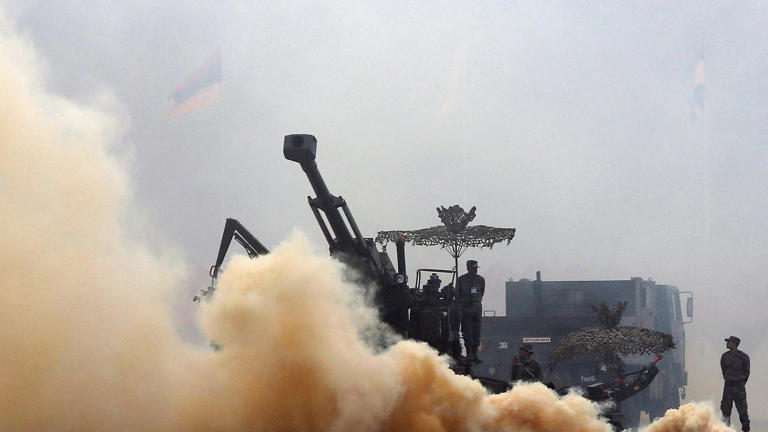
Indian Army soldiers participate in a mock drill exercise during the Army Day parade in New Delhi, India. File image/ Reuters

Indian Army soldiers participate in a mock drill exercise during the Army Day parade in New Delhi, India. File image/ Reuters© Copyright (C) https://firstpost.com. All Rights Reserved.
Prime Minister Narendra Modi's bid to transform India into a global factory floor has produced billions of dollars of low-cost iPhones and pharmaceuticals. Now he hopes to add missiles, helicopters and battleships to the shopping carts of foreign governments.

The world's largest importer of weapons after Ukraine is expanding the ability of the state-owned Export-Import Bank (EXIM) to offer long-term, low-cost loans to clients, including those whose political or credit risk profiles may limit their access to conventional financing, according to two Indian officials and three industry sources.

STABILO Flow Fountain Pen - Active Black


FirstCry IndiaSTABILO Flow Fountain Pen - Active Black

Ad

New Delhi will also sharply increase the number of defense attachés in its foreign missions as part of a new program that will see the government directly negotiate some arms deals, four Indian officials said. India is particularly targeting governments which have long relied on Russia for arms, two of the people said.

India's plans, which were detailed to Reuters by 15 people and have not been previously reported, mark an unprecedented effort by the government to inject itself into the recruitment and financing of foreign buyers as the world is rearming and longstanding geopolitical relationships are being recast.

Indian bureaucrats have long focused more on buying fighter aircraft from Russia's Sukhoi and howitzers from the United States to ward off China and Pakistan, Delhi's two nuclear-armed neighbors. While India has long had a small-arms production sector, its private firms have only recently started to make higher-end munitions and equipment.


Related video: India builds its electronics edge despite tariff threats (WION)
All right, India is quietly emerging as a global electronics
Loaded: 13.20%


The Indian defense and external affairs ministries, as well as Modi's office, did not respond to requests for comment. EXIM declined to comment.

“India is marching towards achieving the target of increasing defence exports,” defense minister Rajnath Singh wrote on X this month.

One turning point was Russia's invasion of Ukraine in February 2022, according to an Indian official tasked with growing arms exports. Like most of the people interviewed by Reuters for this story, the official spoke on condition of anonymity to discuss sensitive government matters.

Spare Western arsenals were shipped to Kyiv while Russia's factories churned out munitions almost exclusively for its war effort. That left other nations that had historically relied on Washington and Moscow - the world's two largest arms exporters - scrambling for alternatives.

With its history of buying and absorbing arms technology from both the West and Russia, Delhi started to get more inquiries, the official said.


In response to Reuters' questions, Russian state arms exporter Rosoboronexport referred to previously issued statements that said it was in talks with India about jointly producing and promoting equipment to third-party states that are "friendly to Russia."

The Pentagon had no comment.

India produced $14.8 billion of arms in 2023-2024 fiscal year, up 62% since 2020, government data show. Some Indian-made artillery shells were found on the frontline in Ukraine in support of Kyiv's defense, Reuters previously reported.

Delhi has started brokering meetings between visiting delegations and domestic arms contractors, as well as demonstrating more sophisticated equipment like combat helicopters during military exercises, four officials said.

Viraj Solanki, a research fellow at London's International Institute for Strategic Studies think-tank, said India faced challenges selling its newer and more high-end wares.


"Unless it starts using its indigenous equipment more frequently and demonstrating its effectiveness, it is likely to struggle to convince potential buyers," he said.

Fast and cheap

Modi's government has set a target of doubling arms-and-equipment exports to $6 billion by 2029. It hopes sales will go beyond the ammunition, small arms and defense-equipment components that currently compose much of its military exports.

Delhi missed its target of $3.5 billion in arms sales for the latest fiscal year by about a third, but that still marks a significant increase from the $230 million in weapons and defense components it exported a decade ago.

At a time of stretched global budgets and burgeoning defense demand, India is pitching itself partially as a relatively low-cost producer.

India can produce 155 mm artillery ammunition for about $300 to $400 a piece, two Indian sources said, while European equivalents sell for upwards of $3,000.


Indian firms have also sold howitzers for about $3 million each, one of them said, or roughly half what a European-made version costs.

While Western nations that reduced artillery and other defense production after the Cold War are rushing to restart factories, state-owned Munitions India was among the Indian firms that kept such capacity.

Delhi - which has in recent years faced off with Pakistan and China in combat - had a different strategic scenario, said retired naval Cdr. Gautam Nanda, who leads KPMG's Indian aerospace and defense consulting practice. "There were no cuts on our production capacity."

Private manufacturers like Adani Defence and Aerospace and armor-and-ammunition maker SMPP are beginning to produce 155 mm artillery shells, which they said had already been ordered by foreign governments.

"With this changing scenario, definitely we see a huge, massive demand for artillery ammunition," said SMPP chief executive Ashish Kansal, whose company is setting up a plant to manufacture large caliber 155 mm artillery ammunition.


Higher-end weapons

India plans to use increased financing of arms exports via EXIM, which had a loan portfolio of $18.32 billion in the 2023-24 fiscal year, to move its products up the value chain.

Such financing will largely be conducted by EXIM's commercial business, which has the state as a backstop but doesn't draw solely from the national budget. Indian arms makers lobbied heavily for the move, an industry source said.

Most banks in India have been unwilling to offer commercial loans for arms exports because they don't want to deal with countries that may have higher credit and political risks, one Indian diplomat told Reuters.

That has long hampered India from competing on big deals with countries like France, Turkey and China, whose packages come with financing or credit guarantees, the diplomat said.

One market India is hoping to expand in is Brazil, where EXIM opened an office in January.


Delhi is in talks to sell Akash missiles to Brasília, according to two industry sources and two Brazilian officials. Even as India faces shortfalls in its own shipbuilding capacity, it is also pursuing a deal to build battleships for Brazil, according to the two Brazilian officials and an Indian official.

India's Bharat Electronics, which develops components for the Akash missile system, opened a marketing office in São Paulo this year, two Indian industry sources said.

EXIM was expected to help finance some of the deals in Brazil, they added.

Brazil's army said in an email to Reuters that the developers of Akash had responded to a request for information and that it had not made a decision on the purchase.

Bharat Electronics did not respond to requests for comment.

Strategic autonomy

Delhi is focusing its arms-export strategy on countries in Africa, South America and Southeast Asia.


India plans to dispatch at least 20 new defense attachés to foreign embassies by March 2026, three Indian defense officials said. Their host nations include Algeria, Morocco, Guyana, Tanzania, Argentina, Ethiopia, and Cambodia, they said, adding that Delhi believed it had the ability to significantly expand arms exports to those governments.

One of the officials said this would be accompanied by a reduction in the number of defense attachés posted to Western embassies, who would be sent elsewhere.

The attachés have been tasked with promoting Indian weapons and were given resources to analyze the arms requirements of their host governments, the officials said.

Like India, many of these nations have a history of buying military equipment from the Soviet Union and Russia, which differs from the NATO standards adopted by many Western producers.


One early success story is Armenia, where India posted a defense attaché for the first time last year.

India has already eroded Russia's monopoly over arming Armenia, which was part of the Soviet Union but has since said that it cannot rely on Moscow.

It sold 43% of the arms Armenia imported between 2022 and 2024, according to data from the Stockholm International Peace Research Institute, up from almost nothing between 2016 and 2018.

Rosoboronexport said in March that SIPRI, which relies on open-source information, does not have comprehensive data.

 
Analyze

Analyze Post

Add your ideas here:
Highlight Cite Respond

After Philippines, Vietnam Set To Buy BrahMos Missiles From India​

Story by Neeraj Rajput
• 1h•
2 min read
1744885481860.webp

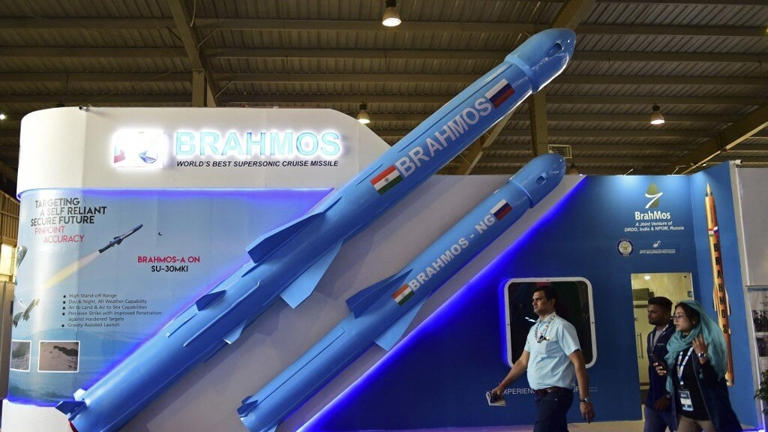
Vietnam is on track to become the second Asian nation, after the Philippines, to acquire India's powerful BrahMos supersonic cruise missiles. According to sources, the defence deal is estimated at around $700 million (approximately ₹5,990 crore), and a major decision on the agreement is expected soon.


Much like the Philippines, Vietnam faces ongoing maritime tensions with China in the South China Sea. Strengthening its defence capabilities has become a priority, and in recent years, India and Vietnam have significantly deepened their military ties.

Back in January 2022, the Philippines signed a $375 million- (₹2,700 crore) contract with India for the shore-based anti-ship BrahMos system. The deal included the delivery of three missile batteries.

The BrahMos missile boasts a range of 290 kilometres and travels at a blistering speed of Mach 2.8 — over two and a half times the speed of sound. India has also developed extended-range versions of BrahMos capable of hitting targets up to 450-500 kilometres away.

BrahMos is among the select few Indian weapons systems deployed by all three branches of the armed forces — Army, Navy, and Air Force. It has been successfully integrated into frontline fighter jets like the Sukhoi and developed domestically with assistance from Russia.


candi.solarTake advantage of solar - Solar, made simple - Immediate savings benefit


The Army uses BrahMos in its artillery units, while the Navy has equipped its warships with the missile, making them even more lethal with the ability to strike both land and sea targets with precision.

India's Defence Exports Soar 30x In A Decade

According to recent data from the Ministry of Defence, India's defence exports have surged nearly 30 times over the past decade. From just ₹686 crore in 2013–14, exports have skyrocketed to over ₹23,622 crore in 2024-25.

Between 2014 and 2024, India exported defence equipment worth ₹88,319 crore — 21 times higher than the ₹4,312 crore exported between 2004 and 2014. India’s growing defence export portfolio includes bulletproof jackets, Dornier aircraft, Chetak helicopters, fast interceptor boats, and lightweight torpedoes.

India Aims For ₹50,000 Crore in Defence Exports By 2029

Defence Minister Rajnath Singh recently stated that under Prime Minister Narendra Modi’s leadership, India is advancing toward the ambitious goal of reaching ₹50,000 crore in defence exports by 2029.

 
Analyze

Analyze Post

Add your ideas here:
Highlight Cite Respond

India nears $700 million BrahMos missile deal with Vietnam, Indonesia likely next​

Story by Shivani Sharma

India nears $700 million BrahMos missile deal with Vietnam, Indonesia likely next

India nears $700 million BrahMos missile deal with Vietnam, Indonesia likely next
India is set to finalise a defence deal with Vietnam for the sale of the BrahMos supersonic cruise missile, months after successfully delivering the same system to the Philippines.

According to reports, the negotiations are at an advanced stage and the agreement is likely to be sealed in the coming months. The deal, valued at approximately $700 million, will significantly boost Vietnam's maritime defence capabilities.


Vietnam is reportedly looking to procure the BrahMos coastal battery system, similar to the one acquired by the Philippines. The missile's precision strike capability, with a range of 290 kilometres, will enable Vietnam to secure its maritime boundaries and counter any potential threat from Chinese warships in the South China Sea.

BrahMos will give Vietnam an ability to keep its maritime boundaries safe as it can target any Chinese warship in the South China Sea within a radius of 300 kilometres.

After the Philippines, Vietnam will become the second country to induct the BrahMos missile into its naval arsenal.

India signed a $375 million deal with the Philippines in 2022, marking the first international sale of the BrahMos missile. Vietnam's acquisition underscores the rising demand for the weapons system in the Indo-Pacific region, especially amongst nations facing territorial disputes with China.


Talks are also underway with Indonesia for a possible BrahMos missile deal. In addition to Southeast Asian nations, countries from Central Asia, South America, and the Middle East have also expressed interest in acquiring the BrahMos system, further expanding its global footprint.

India's membership in the Missile Technology Control Regime (MTCR) in 2016 paved the way for extending the BrahMos' range. Under international law, countries are prohibited from exporting missiles with ranges exceeding 300 kilometres. When the missile was jointly developed by India and Russia, its range was capped at 290 kilometres to comply with these norms.

Following MTCR membership, India began work to extend the BrahMos' strike range. Russian assistance continues to support India's efforts to enhance the missile's capabilities. Indian scientists are currently working on upgrading its range to 400â600 kilometres.


Recently, the Indian Air Force successfully tested an extended-range version of the BrahMos from a Sukhoi fighter jet, achieving a strike distance of over 400 kilometres.

The expansion of BrahMos capabilities and its growing international demand have raised concerns for China, which continues to assert aggressive territorial claims in the South China Sea. China's strained ties with the Philippines, Vietnam, Taiwan, and Malaysia stem from its expansive "nine-dash line" map, which claims parts of their exclusive economic zones (EEZs).

Watch Live TV in English


@Saif , @Bilal9 , @Sharma Ji
 

Attachments

  • 1744887626578.webp
    1744887626578.webp
    72 bytes · Views: 22
Analyze

Analyze Post

Add your ideas here:
Highlight Cite Respond
Negotiations are still ongoing on Indonesia's BrahMos cruise missile deal with India and discussions about the procurement still continuing. However, bureaucratic hurdles and budget constraints have been noted as challenges in finalizing the deal.

The Philippines armed forces are wholly incapable of launching Brahmos type missiles (C4ISR issue). This is what India does, sell things to immature countries who are incapable of judging merits of their weapons.


Meanwhile, what does it say about a country that 'mistakenly' launches Brahmos to enemy territory in Pakistan? Brother @Mainerik and @PakistanProud?

 
Last edited:
Analyze

Analyze Post

Add your ideas here:
Highlight Cite Respond

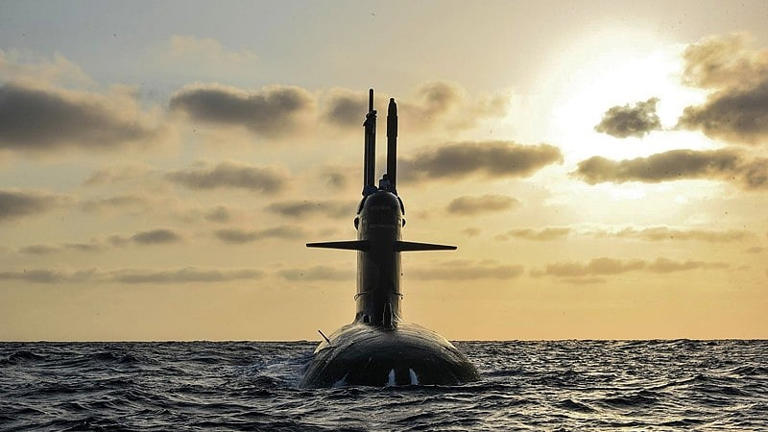
Indian Navy To Deploy Underwater Sensor Network To Monitor Chinese Submarines In Indian Ocean​

7h•
2 min read
1744953883800.webp


Submarines

Submarines
The Indian Navy, in collaboration with the Defence Research and Development Organisation (DRDO), plans to deploy advanced underwater sensors to detect submarine movements—an ambitious move aimed at bolstering maritime security in the Indian Ocean Region (IOR), which is critical for India’s geopolitical and economic interests amid the growing presence of foreign submarines, particularly from China.


The new strategic plan focuses on creating a network of underwater sensors capable of detecting submarine activity in the Ninety East Ridge, the Andaman and Nicobar Islands, and the Bay of Bengal. These sensors include advanced hydroacoustic systems, similar to those used by the United States and Japan in their "Fish Hook Undersea Defense Line" in the Pacific, which stretches from Japan to Southeast Asia. The Indian Navy plans to deploy similar systems at the northern and southern tips of the Andaman and Nicobar Islands to provide early warning of Chinese submarine activity in the region.

“India faces significant challenges from the People’s Liberation Army Navy (PLAN) expanding its submarine operations in the region. The four-week survey of the Ninety East Ridge by China’s ‘silent’ research vessel Dong Fang Hong 3 last month has heightened concerns about mapping underwater environments for submarine operations,” said a senior naval intelligence official, adding that Chinese vessels frequently enter the IOR under the guise of scientific research, which is often linked to intelligence-gathering missions.


The Ninety East Ridge, a linear intraplate rise ideal for submarine navigation, has been a focal point of concern for India due to its strategic importance in monitoring and preventing undetected incursions by foreign submarines.

“The troubled waters of the IOR are further complicated by Pakistan’s acquisition of eight Yuan-class submarines with air-independent propulsion (AIP) systems from China,” added the senior naval officer.

While the Indian Navy's current submarine fleet—comprising 13 conventional diesel-electric submarines, including nine Sindhughosh-class and four Shishumar-class vessels—lacks the numerical and technological edge to effectively counter underwater threats from Pakistan and China, the development of underwater sensors marks a critical step toward enhancing India’s anti-submarine warfare (ASW) capabilities and maintaining its strategic pre-eminence in the IOR.


BIG Boost For Indian Navy! Mega Deal To Procure 26 Rafale Marine Jets From France Cleared By Cabinet Committee: Report

The vast expanse of the IOR includes key chokepoints like the Malacca Strait and the Sunda Strait, making underwater domain awareness (UDA) vital for regional security.

The indigenous underwater sensors under development include passive and active sonar systems, magnetic anomaly detectors (MAD), and superconducting quantum interference devices (SQUIDs).

While passive sonar systems, which detect noise emitted by submarines without emitting signals, will be crucial for stealth surveillance, the deployment of active sonar systems will enable precise detection and ranging in high-threat scenarios.

 
Analyze

Analyze Post

Add your ideas here:
Highlight Cite Respond

India nears $700 million BrahMos missile deal with Vietnam, Indonesia likely next​

Story by Shivani Sharma

India nears $700 million BrahMos missile deal with Vietnam, Indonesia likely next

India nears $700 million BrahMos missile deal with Vietnam, Indonesia likely next
India is set to finalise a defence deal with Vietnam for the sale of the BrahMos supersonic cruise missile, months after successfully delivering the same system to the Philippines.

According to reports, the negotiations are at an advanced stage and the agreement is likely to be sealed in the coming months. The deal, valued at approximately $700 million, will significantly boost Vietnam's maritime defence capabilities.


Vietnam is reportedly looking to procure the BrahMos coastal battery system, similar to the one acquired by the Philippines. The missile's precision strike capability, with a range of 290 kilometres, will enable Vietnam to secure its maritime boundaries and counter any potential threat from Chinese warships in the South China Sea.

BrahMos will give Vietnam an ability to keep its maritime boundaries safe as it can target any Chinese warship in the South China Sea within a radius of 300 kilometres.

After the Philippines, Vietnam will become the second country to induct the BrahMos missile into its naval arsenal.

India signed a $375 million deal with the Philippines in 2022, marking the first international sale of the BrahMos missile. Vietnam's acquisition underscores the rising demand for the weapons system in the Indo-Pacific region, especially amongst nations facing territorial disputes with China.


Talks are also underway with Indonesia for a possible BrahMos missile deal. In addition to Southeast Asian nations, countries from Central Asia, South America, and the Middle East have also expressed interest in acquiring the BrahMos system, further expanding its global footprint.

India's membership in the Missile Technology Control Regime (MTCR) in 2016 paved the way for extending the BrahMos' range. Under international law, countries are prohibited from exporting missiles with ranges exceeding 300 kilometres. When the missile was jointly developed by India and Russia, its range was capped at 290 kilometres to comply with these norms.

Following MTCR membership, India began work to extend the BrahMos' strike range. Russian assistance continues to support India's efforts to enhance the missile's capabilities. Indian scientists are currently working on upgrading its range to 400â600 kilometres.


Recently, the Indian Air Force successfully tested an extended-range version of the BrahMos from a Sukhoi fighter jet, achieving a strike distance of over 400 kilometres.

The expansion of BrahMos capabilities and its growing international demand have raised concerns for China, which continues to assert aggressive territorial claims in the South China Sea. China's strained ties with the Philippines, Vietnam, Taiwan, and Malaysia stem from its expansive "nine-dash line" map, which claims parts of their exclusive economic zones (EEZs).

Watch Live TV in English


@Saif , @Bilal9 , @Sharma Ji
Brahmos is basically an Indian version of Russian Yakhont anti ship missile. Brahmos is the creation of Russia. Russia transferred the technology, set up a factory and trained the Indians so that they can manufacture Brahmos on their own.
 
Analyze

Analyze Post

Add your ideas here:
Highlight Cite Respond

US approves $131 million maritime tech sale to India amid heightened Indo-Pak tensions​


US approves $131 million maritime tech sale to India amid heightened Indo-Pak tensions

US approves $131 million maritime tech sale to India amid heightened Indo-Pak tensions
Washington DC, May 1 -- In a significant move to bolster India's naval capabilities, the Trump administration has cleared the sale of advanced maritime technology to New Delhi, valued at $131 million.

The Defence Security Cooperation Agency (DSCA) formally notified the US Congress about the deal, which includes the Indo-Pacific Maritime Domain Awareness package and associated components.

The DSCA said the sale would deepen strategic defense cooperation between the two countries and described India as a "major defense partner" and a key stabilizing force in South Asia and the broader Indo-Pacific region.

Deal follows spike in Indo-Pak tensions

The approval comes at a time of rising friction between India and Pakistan, following the deadly Pahalgam terror attack, in which 26 people were killed, most of them Hindu tourists.

The attack, conducted by The Resistance Front (TRF)-a proxy of the Pakistan-based Lashkar-e-Taiba-marked by chilling religious profiling, drew global condemnation.

India's investigative agencies have claimed the attackers were trained in Pakistan - a charge Islamabad has denied.

Tensions have further escalated along the Line of Control, where Indian forces say Pakistan has violated the ceasefire 17 times in the past week alone - a record number for such a short period.


Attachments

  • 1746166676112.webp
    1746166676112.webp
    72 bytes · Views: 29
Analyze

Analyze Post

Add your ideas here:
Highlight Cite Respond
Brahmos is basically an Indian version of Russian Yakhont anti ship missile. Brahmos is the creation of Russia. Russia transferred the technology, set up a factory and trained the Indians so that they can manufacture Brahmos on their own.

This has been discussed and responded many time here. What is the point in repeating this again and again.
 
Analyze

Analyze Post

Add your ideas here:
Highlight Cite Respond

Latest Posts

Back
PKDefense - Recommended Toggle