
 Bangladesh Defense
Saif
Senior Member
- Jan 24, 2024
- 21,615
- 9,794
- Nation

- Residence
- Axis Group

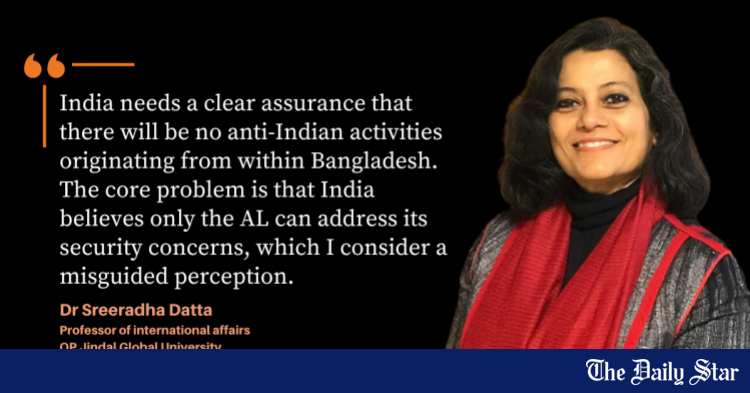
'India needs a clear security assurance from Bangladesh'
If Dhaka assures Delhi that it will address India's security concerns, this could serve as the foundation for a strong relationship.
'India needs a clear security assurance from Bangladesh'

The India-Bangladesh relationship experienced some strains in the aftermath of the Awami League's fall and Sheikh Hasina being sheltered in India. Prof Sreeradha Datta, a South Asian expert who teaches international affairs at the Hariyana-based OP Jindal Global University, shared her views on the future of Bangladesh-India relations with The Daily Star's Diplomatic Correspondent Porimol Palma.
How is India looking at Bangladesh after Bangladesh's recent political change?
Historically, we have supported the Awami League (AL). We perceive that there is a possibility of an Islamist party takeover in Bangladesh if the AL is not in power. However, that is not the current reality in Bangladesh. It is true that India has worked extensively with the AL, which has increased bilateral trade volume and has also benefited Bangladesh. However, India does not have any policy that would prevent it from collaborating with any other government in Bangladesh.
The relationship with a sovereign state must be based on equity. This principle has been repeatedly emphasised by the current leadership in Bangladesh. Nevertheless, claims that India was responsible for the recent floods in Bangladesh's southeastern region are unfounded. Additionally, some senior Indian leaders have made remarks that were unnecessary and did not benefit either side.
What should be the immediate steps to improve the relations?
I believe Dhaka and New Delhi are already in contact. I propose that both countries hold formal dialogue at the earliest opportunity to resolve any outstanding issues. India needs a clear assurance that there will be no anti-Indian activities originating from within Bangladesh. The core problem is that India believes only the AL can address its security concerns, which I consider a misguided perception. If Dhaka assures Delhi that it will address India's security concerns, this could serve as the foundation for a strong relationship. At the same time, the interim government can also communicate to India which issues it should urgently address regarding Bangladesh.
The interim government has not said anything that can create such a perceived threat for India. So, why is India worried about it?
There have been attacks on Hindus in Bangladesh recently, and we understand the reasons behind these incidents. However, many other events are occurring that are not receiving adequate attention. What we are observing is that the BNP seems to be becoming quite vocal. Although the BNP is separate from the interim government, it appears that the party is gaining strength. The interim government should have the authority to manage any aggressive rhetoric, as it conveys the wrong message. Some experts argue that religious fundamentalism is not a big factor in Bangladesh, and I share this belief.
Dhaka said the Indian media has exaggerated the events of attacks on minorities. What is Delhi's understanding?
I agree that there is a lot of disinformation. However, a perception has developed in India that Hindus in Bangladesh are coming under attack because Hasina is not in power. While we know that such incidents are not as prevalent as portrayed in the media, the general public has developed a negative perception. On August 15, Prime Minister Narendra Modi spoke about the persecution of Hindu minorities in Bangladesh, but he failed to mention that others were also killed. He could have addressed that point. It's important to understand that this matter is related to our domestic politics. What I'm saying is that a negative perception is being cultivated. Therefore, the leaderships should meet and issue a joint statement affirming that the relationship will be as it should be between two sovereign states.
Border killings and water issues have been thorns in the relationship. How do you see it?
Border killings can be stopped if the two countries work together. Even if the number of killings is low, they should not occur between two friendly nations. In 2010, we stated that we would establish an agreement for the basin-wide management of our transboundary rivers and address the problems of other rivers, if not the Teesta. Why has this not been implemented? India must resolve the water issue. Just as security is important for India, water is equally important for Bangladesh. Even if there had been an interim arrangement for water sharing, the typical anti-India sentiment would not be as strong as it is now. Given that the water-sharing issue has always been an emotional one for Bangladesh, India must do the right thing.
There is a perception that India benefited more from the agreements or MoUs signed during the AL regime. There is a discussion those may be reviewed.
It may not look good to India, but Bangladesh can certainly review those agreements. I know that many MoUs may not have been discussed in parliament. I believe that the connectivity projects implemented thus far benefit both countries. However, if Bangladesh wants to review any deal, such as the one concerning transit, it is entitled to do so. India has not acted in a non-transparent manner. In fact, I think it would be beneficial for the MoUs to be revisited. Doing so will clarify whether the MoUs are useful or not.
Work of some projects under the Line of Credit remains suspended as Indian contractors are yet to restart working. Why?
I believe it is due to a lingering sense of fear. While we are not certain yet, the information we are receiving is somewhat unnerving. If the Bangladeshi authorities assure India that they have no security concerns, then things will proceed.
The interim government said it may take steps to bring back Sheikh Hasina for legal reasons. Will it create any friction in the relationship?
I believe there are various aspects to consider—both from legal and technical perspectives. Bangladesh needs to take these into account. Sheikh Hasina will not be extradited simply because Bangladesh wishes it. We cannot disregard India's relationship with the AL or Sheikh Hasina. Nevertheless, we would like to work with Bangladesh.
Our foreign adviser said India's relationship needs to be with the people of Bangladesh, not only with AL. What are your thoughts?
I agree 100 percent. India should work with whichever government is in office in Bangladesh. The problem arose with the government that was in power from 2001 to 2006, which soured relations. Later, we found that the AL was friendly towards India. In a multiparty system, any government can be elected to office. Why should India not work with it?
Sadly, it was the BNP that fostered anti-India sentiment in Bangladesh from 2001 to 2006. During the BNP-Jamaat regime, a large quantity of arms and ammunition, reportedly meant for the Indian separatist organisation ULFA (United Liberation Front of Assam), was seized in Chattogram in 2004.
The interim government wants to revitalise SAARC. What's your view?
SAARC is important for cooperation in South Asia, but Pakistan needs to change its behaviour. We have always said we are willing to work with Pakistan if it does so, but it hasn't.
The India-Bangladesh relationship experienced some strains in the aftermath of the Awami League's fall and Sheikh Hasina being sheltered in India. Prof Sreeradha Datta, a South Asian expert who teaches international affairs at the Hariyana-based OP Jindal Global University, shared her views on the future of Bangladesh-India relations with The Daily Star's Diplomatic Correspondent Porimol Palma.
How is India looking at Bangladesh after Bangladesh's recent political change?
Historically, we have supported the Awami League (AL). We perceive that there is a possibility of an Islamist party takeover in Bangladesh if the AL is not in power. However, that is not the current reality in Bangladesh. It is true that India has worked extensively with the AL, which has increased bilateral trade volume and has also benefited Bangladesh. However, India does not have any policy that would prevent it from collaborating with any other government in Bangladesh.
The relationship with a sovereign state must be based on equity. This principle has been repeatedly emphasised by the current leadership in Bangladesh. Nevertheless, claims that India was responsible for the recent floods in Bangladesh's southeastern region are unfounded. Additionally, some senior Indian leaders have made remarks that were unnecessary and did not benefit either side.
What should be the immediate steps to improve the relations?
I believe Dhaka and New Delhi are already in contact. I propose that both countries hold formal dialogue at the earliest opportunity to resolve any outstanding issues. India needs a clear assurance that there will be no anti-Indian activities originating from within Bangladesh. The core problem is that India believes only the AL can address its security concerns, which I consider a misguided perception. If Dhaka assures Delhi that it will address India's security concerns, this could serve as the foundation for a strong relationship. At the same time, the interim government can also communicate to India which issues it should urgently address regarding Bangladesh.
The interim government has not said anything that can create such a perceived threat for India. So, why is India worried about it?
There have been attacks on Hindus in Bangladesh recently, and we understand the reasons behind these incidents. However, many other events are occurring that are not receiving adequate attention. What we are observing is that the BNP seems to be becoming quite vocal. Although the BNP is separate from the interim government, it appears that the party is gaining strength. The interim government should have the authority to manage any aggressive rhetoric, as it conveys the wrong message. Some experts argue that religious fundamentalism is not a big factor in Bangladesh, and I share this belief.
Dhaka said the Indian media has exaggerated the events of attacks on minorities. What is Delhi's understanding?
I agree that there is a lot of disinformation. However, a perception has developed in India that Hindus in Bangladesh are coming under attack because Hasina is not in power. While we know that such incidents are not as prevalent as portrayed in the media, the general public has developed a negative perception. On August 15, Prime Minister Narendra Modi spoke about the persecution of Hindu minorities in Bangladesh, but he failed to mention that others were also killed. He could have addressed that point. It's important to understand that this matter is related to our domestic politics. What I'm saying is that a negative perception is being cultivated. Therefore, the leaderships should meet and issue a joint statement affirming that the relationship will be as it should be between two sovereign states.
Border killings and water issues have been thorns in the relationship. How do you see it?
Border killings can be stopped if the two countries work together. Even if the number of killings is low, they should not occur between two friendly nations. In 2010, we stated that we would establish an agreement for the basin-wide management of our transboundary rivers and address the problems of other rivers, if not the Teesta. Why has this not been implemented? India must resolve the water issue. Just as security is important for India, water is equally important for Bangladesh. Even if there had been an interim arrangement for water sharing, the typical anti-India sentiment would not be as strong as it is now. Given that the water-sharing issue has always been an emotional one for Bangladesh, India must do the right thing.
There is a perception that India benefited more from the agreements or MoUs signed during the AL regime. There is a discussion those may be reviewed.
It may not look good to India, but Bangladesh can certainly review those agreements. I know that many MoUs may not have been discussed in parliament. I believe that the connectivity projects implemented thus far benefit both countries. However, if Bangladesh wants to review any deal, such as the one concerning transit, it is entitled to do so. India has not acted in a non-transparent manner. In fact, I think it would be beneficial for the MoUs to be revisited. Doing so will clarify whether the MoUs are useful or not.
Work of some projects under the Line of Credit remains suspended as Indian contractors are yet to restart working. Why?
I believe it is due to a lingering sense of fear. While we are not certain yet, the information we are receiving is somewhat unnerving. If the Bangladeshi authorities assure India that they have no security concerns, then things will proceed.
The interim government said it may take steps to bring back Sheikh Hasina for legal reasons. Will it create any friction in the relationship?
I believe there are various aspects to consider—both from legal and technical perspectives. Bangladesh needs to take these into account. Sheikh Hasina will not be extradited simply because Bangladesh wishes it. We cannot disregard India's relationship with the AL or Sheikh Hasina. Nevertheless, we would like to work with Bangladesh.
Our foreign adviser said India's relationship needs to be with the people of Bangladesh, not only with AL. What are your thoughts?
I agree 100 percent. India should work with whichever government is in office in Bangladesh. The problem arose with the government that was in power from 2001 to 2006, which soured relations. Later, we found that the AL was friendly towards India. In a multiparty system, any government can be elected to office. Why should India not work with it?
Sadly, it was the BNP that fostered anti-India sentiment in Bangladesh from 2001 to 2006. During the BNP-Jamaat regime, a large quantity of arms and ammunition, reportedly meant for the Indian separatist organisation ULFA (United Liberation Front of Assam), was seized in Chattogram in 2004.
The interim government wants to revitalise SAARC. What's your view?
SAARC is important for cooperation in South Asia, but Pakistan needs to change its behaviour. We have always said we are willing to work with Pakistan if it does so, but it hasn't.


