
 Bangladesh Defense
Saif
Senior Member
- Jan 24, 2024
- 21,479
- 9,743
- Nation

- Residence
- Axis Group

Not allowing Hasina to land would have created a different situation: Dinesh Trivedi
Indian High Commissioner to Bangladesh Dinesh Trivedi has said, “There was no alternative but to allow former Bangladesh prime minister Sheikh Hasina to land in Delhi. If we had not allowed her to land, a completely different situation would have arisen.” He made the remarks during a...
 en.prothomalo.com
Not allowing Hasina to land would have created a different situation: Dinesh Trivedi
Diplomatic Correspondent
Dhaka
Updated: 03 Oct 2026, 21: 58
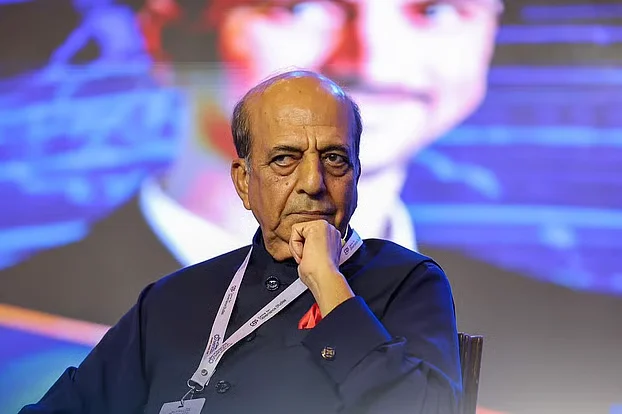
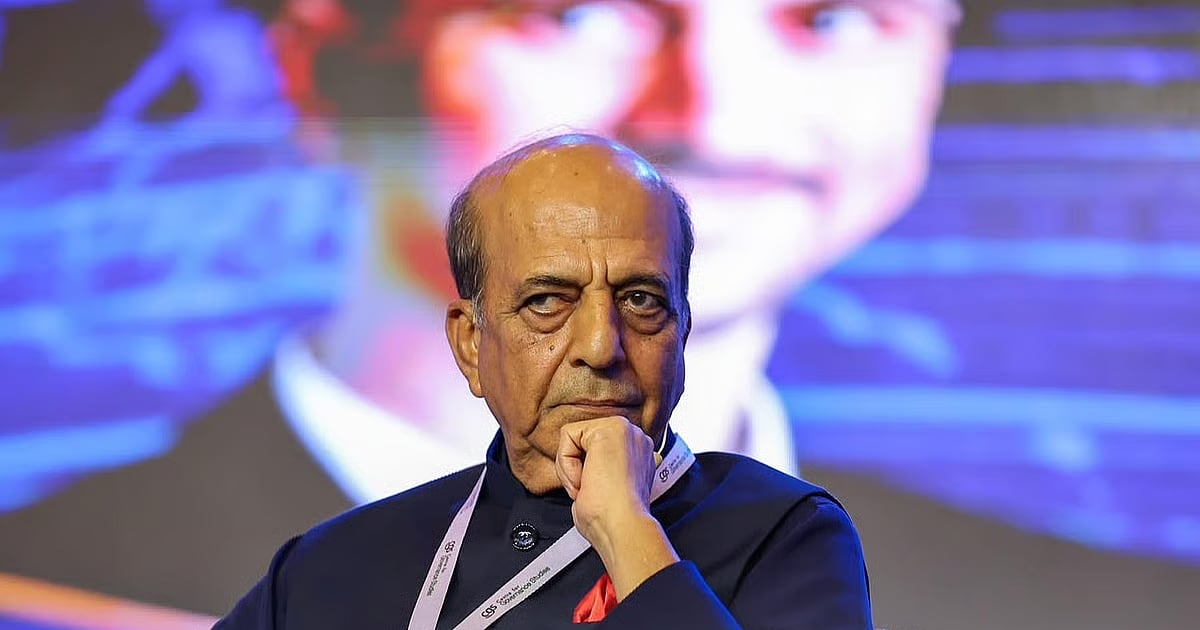
Indian High Commissioner to Bangladesh Dinesh Trivedi at a session of the Bay of Bengal Conversation 2026 at a hotel in Dhaka on 3 October 2026. Prothom Alo
Indian High Commissioner to Bangladesh Dinesh Trivedi has said, “There was no alternative but to allow former Bangladesh prime minister Sheikh Hasina to land in Delhi. If we had not allowed her to land, a completely different situation would have arisen.”
He made the remarks during a question-and-answer session at a working session of the Bay of Bengal Conversation 2026 at a Dhaka hotel on Saturday afternoon. The three-day international conference is being organised by research institute Centre for Governance Studies (CGS).
In response to a question from the audience, when India would extradite Bangladesh’s ousted prime minister Sheikh Hasina, Dinesh Trivedi said, “Hasina ji was not brought by the IAF (Indian Air Force) or the Indian Army. She came because of the tragic events in Bangladesh at that time. Such an incident should not have happened, in which innocent people lost their lives. We hope and pray that such incidents never happen again, where innocent people lose their lives, no matter where in the world they occur.”
Mentioning that “She was taken to India on a Bangladeshi military aircraft”, Dinesh Trivedi further said, “When she (Sheikh Hasina) left Dhaka, she was the prime minister of Bangladesh, and India was not prepared for this situation. If we had not allowed her to land, a completely different situation would have arisen.”
The Indian High Commissioner said, “When the military aircraft arrived in India, India was not prepared. I was watching television, and a scroll at the bottom of the screen was saying that she was going to another country. Hasina ji was still the prime minister of Bangladesh. As a neighbouring country, we had very few options other than accepting the reality.”
“Because sometimes situations take a turn for which you are not prepared in advance. What choice did we have? If we had said, ‘No, we will not allow you to land’, I do not know what the situation would have been. So, that is the historical reason for it,” he added.
Regarding the extradition of Sheikh Hasina, Dinesh Trivedi further said that the Indian government had repeatedly answered the question through its Ministry of External Affairs spokesperson, saying that there is a process for that. The process involves legal matters and is based on a specific framework. Therefore, the relevant legal process is currently underway. As the courts are involved, no one can give a specific timeline for the matter.
Expressing the expectation that Bangladesh would respect that legal process, the Indian High Commissioner said, “Just as Bangladesh is a vibrant democracy, India is also a living democracy. You will respect the legal system, and that legal process is currently underway.”
The Indian High Commissioner said, “I think there was a question about friendship with India. We have extremely good relations between the two countries. We have arrangements for cooperation at various levels. Personally, I cannot imagine a situation in which things would turn into hostility overnight. What we should do is maintain engagement as equal friends in favour of our national interests.”
In response to the moderator’s question about what’s India’s views on whether Bangladesh should change its policy towards relations between the two countries, Dinesh Trivedi said, “The relationship between Bangladesh and India is very deep-rooted, and it is difficult for other countries to understand. Our relationship is based on very strong social and societal foundations.”
“Bangladesh is an independent and democratic country, so it has every right to make decisions in the interests of its people. No country should advise Bangladesh on what it should do. In India’s case, our bilateral relationship with Bangladesh does not depend on what kind of relations Bangladesh has with other countries. As good neighbours, the key is to maintain mutual respect and dignity,” he added.
The Indian High Commissioner said that, just as there can be minor disagreements or problems within a family, it is natural for two countries in a democratic system to have issues or differences. These differences can only be resolved through dialogue, conferences and mutual trust.
Problems in a relationship cannot be resolved from a distance. He expressed the hope that, given the love and warmth between the people of the two countries, the progress in their relationship would continue.
Diplomatic Correspondent
Dhaka
Updated: 03 Oct 2026, 21: 58
Indian High Commissioner to Bangladesh Dinesh Trivedi at a session of the Bay of Bengal Conversation 2026 at a hotel in Dhaka on 3 October 2026. Prothom Alo
Indian High Commissioner to Bangladesh Dinesh Trivedi has said, “There was no alternative but to allow former Bangladesh prime minister Sheikh Hasina to land in Delhi. If we had not allowed her to land, a completely different situation would have arisen.”
He made the remarks during a question-and-answer session at a working session of the Bay of Bengal Conversation 2026 at a Dhaka hotel on Saturday afternoon. The three-day international conference is being organised by research institute Centre for Governance Studies (CGS).
In response to a question from the audience, when India would extradite Bangladesh’s ousted prime minister Sheikh Hasina, Dinesh Trivedi said, “Hasina ji was not brought by the IAF (Indian Air Force) or the Indian Army. She came because of the tragic events in Bangladesh at that time. Such an incident should not have happened, in which innocent people lost their lives. We hope and pray that such incidents never happen again, where innocent people lose their lives, no matter where in the world they occur.”
Mentioning that “She was taken to India on a Bangladeshi military aircraft”, Dinesh Trivedi further said, “When she (Sheikh Hasina) left Dhaka, she was the prime minister of Bangladesh, and India was not prepared for this situation. If we had not allowed her to land, a completely different situation would have arisen.”
The Indian High Commissioner said, “When the military aircraft arrived in India, India was not prepared. I was watching television, and a scroll at the bottom of the screen was saying that she was going to another country. Hasina ji was still the prime minister of Bangladesh. As a neighbouring country, we had very few options other than accepting the reality.”
“Because sometimes situations take a turn for which you are not prepared in advance. What choice did we have? If we had said, ‘No, we will not allow you to land’, I do not know what the situation would have been. So, that is the historical reason for it,” he added.
Regarding the extradition of Sheikh Hasina, Dinesh Trivedi further said that the Indian government had repeatedly answered the question through its Ministry of External Affairs spokesperson, saying that there is a process for that. The process involves legal matters and is based on a specific framework. Therefore, the relevant legal process is currently underway. As the courts are involved, no one can give a specific timeline for the matter.
Expressing the expectation that Bangladesh would respect that legal process, the Indian High Commissioner said, “Just as Bangladesh is a vibrant democracy, India is also a living democracy. You will respect the legal system, and that legal process is currently underway.”
The Indian High Commissioner said, “I think there was a question about friendship with India. We have extremely good relations between the two countries. We have arrangements for cooperation at various levels. Personally, I cannot imagine a situation in which things would turn into hostility overnight. What we should do is maintain engagement as equal friends in favour of our national interests.”
In response to the moderator’s question about what’s India’s views on whether Bangladesh should change its policy towards relations between the two countries, Dinesh Trivedi said, “The relationship between Bangladesh and India is very deep-rooted, and it is difficult for other countries to understand. Our relationship is based on very strong social and societal foundations.”
“Bangladesh is an independent and democratic country, so it has every right to make decisions in the interests of its people. No country should advise Bangladesh on what it should do. In India’s case, our bilateral relationship with Bangladesh does not depend on what kind of relations Bangladesh has with other countries. As good neighbours, the key is to maintain mutual respect and dignity,” he added.
The Indian High Commissioner said that, just as there can be minor disagreements or problems within a family, it is natural for two countries in a democratic system to have issues or differences. These differences can only be resolved through dialogue, conferences and mutual trust.
Problems in a relationship cannot be resolved from a distance. He expressed the hope that, given the love and warmth between the people of the two countries, the progress in their relationship would continue.


