[🇧🇩] Save the Rivers/Forests/Hills-----Save the Environment

[🇧🇩] Save the Rivers/Forests/Hills-----Save the Environment
621
23K
More threads by Saif

G Bangladesh Defense

Pollution sources identified, Dhaka rivers still dirty
Sadiqur Rahman . Dhaka 27 September, 2026, 01:05
1790468464430.webp

New Age file photo

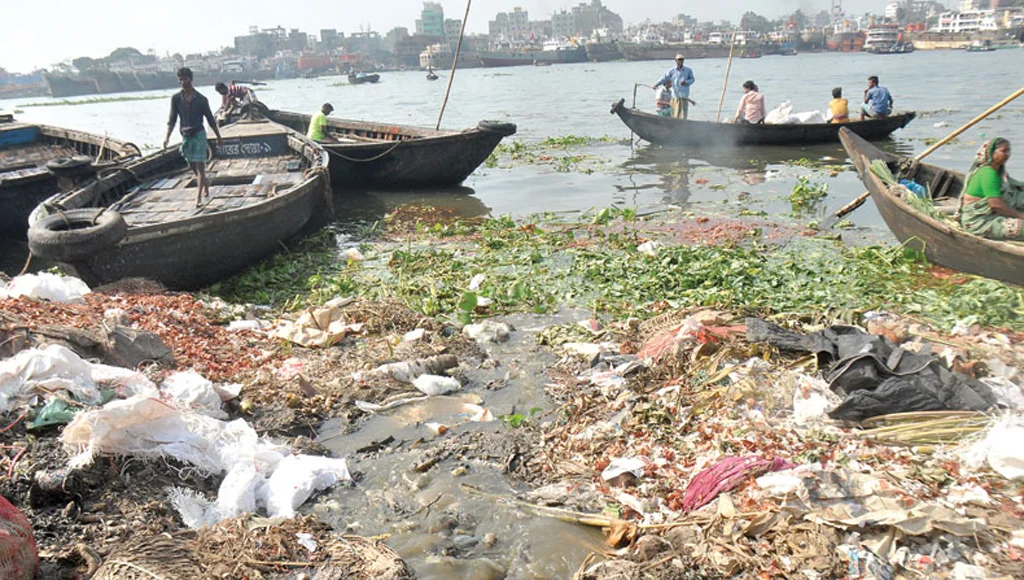
Despite years of planning, projects and investment, the five major rivers around Dhaka remain heavily polluted, with government agencies repeatedly identifying the sources of pollution but failing to stop untreated waste from reaching the waterways.

The Buriganga, Shitalakhya, Dhaleshwari, Turag and Balu rivers continue to receive industrial effluents, untreated sewage and solid waste despite successive initiatives to restore them.

In the latest move, the government has identified 424 major sources of untreated wastewater and more than 550 discharge points that are continuously polluting the five rivers.

Water resources ministry, in a letter on August 4, identified 232 liquid-waste sources from 225 entities under industries ministry, 191 sources from 20 entities under local government division, 138 sources from 138 entities under textiles and jute ministry, four sources from four power plants under power division and two sources from one entity under defence ministry.

The ministry asked environment ministry to take action against 257 polluting entities and requested Bangladesh Inland Water Transport Authority to take preventive measures against waste dumping by passenger and cargo vessels.

In December 2021, the National River Conservation Commission identified 280 polluters and 693 pollution sources along the Buriganga, Turag, Balu and Tongi canal.

Environmentalists say repeated identification of pollution sources has not produced significant results because efforts by government agencies remain fragmented, while some agencies responsible for managing urban services are themselves contributing to river pollution.

‘Identifying the pollution sources is important. But integrated waste collection, segregation and reduction is very important. Otherwise, revitalisation of the river system of Dhaka cannot be achieved,’ said Malik Fida A Khan, former executive director of Center for Environmental and Geographic Information Services under water resources ministry.

Greater Dhaka, covering Dhaka city and parts of Gazipur and Narayanganj, produces around 4,000 million litres of wastewater every day, including about 2,400 million litres of industrial discharge and 1,500 million litres of residential sewage, much of which reaches rivers untreated, he said, citing several studies.

Sheikh Rokon, secretary general of Riverine People, said that pollution control efforts had repeatedly failed because government agencies themselves appeared to be major sources of pollution.

He alleged that Dhaka Water Supply and Sewerage Authority continued to discharge untreated sewage into rivers, while the Dhaka city corporations had failed to prevent wastewater from flowing through city canals into rivers.

The government has undertaken several projects over the years, spending crores of taka, much of it in the form of loans, to improve sanitation and restore the rivers.

The latest is the World Bank’s $370 million Metro Dhaka Water Security and Resilience Programme, approved in February. The project is being implemented by Dhaka North City Corporation, Dhaka South City Corporation, Narayanganj City Corporation and Dhaka WASA to address solid waste dumping, direct sewage discharge into drainage networks and industrial effluent discharge into rivers and canals.

In 2020, the government began implementing a Tk 3,855.60-crore project funded by the World Bank and the Asian Infrastructure Investment Bank to improve Dhaka’s sanitation network. Under the project, the Pagla Sewage Treatment Plant is being expanded to a capacity of 200 million litres a day.

The World Bank says only about 20 per cent of Greater Dhaka residents have piped sewer connections, while just 2 per cent use functional faecal sludge management systems.

The 500 million litres per day Dasherkandi Sewage Treatment Plant currently treats around 280MLD during the dry season. The existing 120MLD Pagla plant operates at only 30-40 per cent capacity because parts of its sewer collection and transmission network are damaged or clogged, according to studies.

In early September, the government also formed a 37-member central cell to prevent encroachment and pollution of rivers around the capital and maintain their navigability.

State minister for environment, forest and climate change Shaikh Faridul Islam, one of the cell’s advisers, said that river pollution continued despite rules and regulations as many polluters had failed to establish effluent treatment plants.

‘The environment ministry is committed to stopping river pollution and is strict against polluters who must be held responsible,’ he said.

His assurance comes as the world observes World Rivers Day on Sunday with Dhaka’s rivers still struggling under untreated sewage, industrial waste and solid waste.​
 

Combatting environmental pollution
Mehrab Hossain 28 September, 2026, 00:00

RECENTLY, a 21-year-old boy in India came into the limelight by cleaning up a trash-filled, polluted river single-handedly. What prompted him to take on this great job? Perhaps it was his strong sense of civic responsibility, and undoubtedly, it is one of the paramount examples of what a citizen can do. This thought-provoking incident inspired me to write this article about civic responsibility in general, and fighting environmental pollution in particular.

Combating environmental pollution is one of the most discussed civic responsibilities, which many of us deem as the sole duty of the government. There is no doubt that the government has strong levers at its disposal to address this universal problem. However, citizens from all walks of life also have an important role to play, which we have been ignoring intentionally or unintentionally over the years. At the same time, environmental pollution is not merely the result of individual behaviour; it is also connected with waste management, industrial activities, construction and effective enforcement of laws. In light of these circumstances, let me share three scenarios with you.

Every morning, when I go jogging on the walkway along the bank of the Karatoya River — once a mighty river through which hundreds of commercial ships and passenger boats used to navigate — my heart fills with sorrow when I see the colour of the water transform into semi-black instead of transparent. It seems to me that the river is crying while carrying tons of garbage on its chest.

This is due to the unscrupulous activities of people who throw away everything, ranging from industrial waste and sewage to packaging of chips and biscuits, into this river, eventually contaminating the water. But individual behaviour is only part of the problem; proper waste management, monitoring of pollution sources and enforcement of environmental laws are equally important. This scenario is equally true for many rivers and water bodies across the country.

When I go to the office every day, I see hundreds of vehicles crowding the roads and using hydraulic horns, which beep and roar rampantly. There are many hospitals and educational institutions here in Bogura city. No doubt, such noise can exceed recommended limits and is detrimental to patients and students alike. Apart from road traffic noise, reckless construction activities have emerged as another key source of sound pollution, wreaking havoc on inhabitants in residential areas and increasing the difficulties faced by patients and students.

As Bogura is a densely populated city, construction work is running round the clock in various parts of the city to accommodate and generate employment for its vast population. However, these unplanned and colossal activities may apparently seem benign, but their impacts are malign. To be more specific, if you visit these construction sites, you will definitely find construction materials such as sand and bricks kept in the open air, which results in air pollution on a massive scale. This is a matter of utmost concern as air pollution is one of the prime factors responsible for deaths worldwide, which many of us are not aware of.

If we put these three scenarios together, they lead to gross environmental degradation, which undoubtedly destabilizes the natural ecosystem of our beloved motherland. Now, the question arises: is it possible to combat environmental pollution by government alone? Let us find the answer.

Perceiving the significance of environmental protection, the Government of Bangladesh, through the 15th Amendment in 2011, incorporated Article 18A into the Constitution of the People’s Republic of Bangladesh: ‘The state shall endeavour to protect and improve the environment and to preserve and safeguard the natural resources, biodiversity, wetlands, forests and wildlife for the present and future citizens.’ To address environmental degradation, the Bangladesh government has introduced several laws and rules, such as the Bangladesh Environment Conservation Act, 1995, the Bangladesh Water Act, 2013, the Sound Pollution (Control) Rules, 2006, the Air Pollution (Control) Rules, 2022, and so on.

Interestingly, as an Executive Magistrate, I have conducted many mobile courts applying these laws and fined people for non-compliance. Unfortunately, the outcome is not satisfactory, as people continue to do the same thing again and again. This experience shows that punishment alone cannot solve the environmental problem. At the same time, citizens cannot expect the government to solve every problem without changing their own behaviour.

Now, let us think in the reverse way. If we, as citizens, become proactive and stop throwing waste into rivers, cover construction materials while construction work is underway and refrain from using hydraulic horns unnecessarily on the streets, we can certainly contribute to combating environmental pollution. But these individual actions need to be supported by effective government intervention, proper waste management, regular monitoring and enforcement of environmental laws.

This is the striking point where government should intervene by raising awareness pertaining to civic responsibility through mobilising various government apparatus, especially educational institutions, the Department of Environment, municipalities and the Department of Public Health Engineering, as well as engaging print, electronic and social media in disseminating relevant information about environmental pollution. It is worthwhile to mention here that Bangladeshi media are playing a pivotal role in covering news regarding environmental pollution and creating awareness among citizens. Thus, the bottom line is that fighting environmental pollution will not bring satisfactory outcomes unless we, as citizens, act spontaneously to perform our civic responsibilities properly and sincerely, while government agencies and other institutions fulfil their responsibilities through effective regulation, monitoring and enforcement.

Mehrab Hossain is an executive magistrate at the office of the deputy commissioner, Bogura.​
 

Bangladesh’s urban climate crisis
Hassan Siddiqui and Habib Siddiqui 02 October, 2026, 00:00


1790898236638.webp


ON SEPTEMBER 3, The New York Times published a sobering investigative report titled ‘Is Your City Prepared for Climate Disaster?’ The article summarised a new global resilience index developed by AlphaGeo, ranking 72 major cities on their preparedness for climate shocks — floods, heat waves, droughts, wildfires and coastal storms. Nine of the ten least resilient cities in the world are located in South Asia, a region that has contributed minimally to global greenhouse gas emissions yet bears a disproportionate share of climate impacts. As major governmental, non-profit, corporate and civil society actors converged in New York City for the United Nations General Assembly and Climate Week, these findings cast a long shadow.

Among the least resilient cities were Dhaka, ranked 4th least resilient and Chittagong, ranked 9th. For Bangladeshis, these rankings were painful but unsurprising. They reflect a reality long understood by residents, planners and policymakers: our cities are not failing — they are under siege, especially as deepening climate change escalates climate disasters. The South Asian region as a whole is now experiencing cascading climate shocks that interact across borders, creating shared vulnerabilities that no single nation can address alone.

This essay examines why Dhaka and Chittagong scored so poorly, what structural forces shape their vulnerability and what realistic pathways exist to strengthen their resilience. It also situates Bangladesh’s urban crisis within a broader regional context, including Nepal’s recent climate catastrophe, which has reignited global debates about climate compensation and justice.

Why Dhaka and Chittagong are so vulnerable

Geography they cannot escape: Bangladesh’s geography is both a blessing and a curse. Its fertile delta supports millions, but it also places its cities directly in the path of climate extremes. Dhaka sits atop the Ganges–Brahmaputra–Meghna floodplain, surrounded by rivers that swell during monsoon season. The city is naturally prone to riverine flooding, waterlogging, drainage congestion and heat stress. Climate change magnifies these risks, making rainfall more erratic and extreme precipitation more frequent. Chittagong’s position as Bangladesh’s primary port city exposes it to cyclones, storm surges, coastal flooding, salinity intrusion and landslides in its hilly settlements. Rising sea levels threaten both residential neighbourhoods and critical port infrastructure. As Nepal’s recent disaster shows, even mountainous regions once considered natural buffers are now generating climate shocks of unprecedented scale.

Population pressures they cannot slow: Dhaka is one of the densest cities on Earth, with some wards exceeding 50,000 people per square kilometre. Chittagong, though less dense, is still heavily crowded. High density amplifies climate risk: evacuation becomes difficult, drainage systems are overwhelmed, informal settlements expand into hazard-prone zones and infrastructure is chronically overloaded.

Dhaka’s population exploded from roughly one million in 1970 to over 20 million today. No city — regardless of wealth — has successfully adapted to climate risks while growing at this pace. Rapid urbanisation also limits the ability of governments to invest in long-term climate resilience, as resources are diverted to immediate service delivery and congestion management.

Infrastructure gaps they cannot close overnight: Bangladesh has made impressive strides in rural disaster management — cyclone shelters, early warning systems and community preparedness. But urban adaptation has lagged behind.

Dhaka’s drainage system is overwhelmed every monsoon. Encroachment on canals and wetlands, clogged stormwater drains, insufficient pumping capacity and uncoordinated urban expansion have created a systemic failure that magnifies every climate shock.

Chittagong’s port is the country’s economic lifeline. Cyclones can disrupt shipping, damage port facilities, flood industrial zones and cause billions in economic losses. Infrastructure upgrades are underway, but the scale of risk is immense.

Nepal’s catastrophe illustrates how infrastructure gaps can turn climate hazards into mass-casualty events. When a glacier partially collapsed in Tibet, the resulting landslide and flood surged into Nepal at nearly 180 km/h, wiping out towns and severing highways. More than 6,000 people were dead or missing. The tragedy underscores how fragile infrastructure across South Asia is when confronted with climate-amplified disasters.

Governance structures they inherited

DHAKA’S governance is famously fragmented. Multiple agencies — city corporations, Rajdhani Unnayan Kartripakkha, Water Supply and Sewerage Authority, Bangladesh Water Development Board, Dhaka Transport Coordination Authority and various ministries — share overlapping responsibilities. This fragmentation leads to slow decision-making, weak enforcement of zoning laws, poor coordination during emergencies and infrastructure projects that contradict one another. Chittagong faces similar challenges, though less severe.

Nepal’s disaster response also revealed governance gaps: remote districts remained disconnected for days, complicating rescue efforts and highlighting the need for regional coordination mechanisms that transcend national borders.

Economic constraints

BANGLADESH’S urban governments operate within tight fiscal boundaries while juggling pressing development priorities — housing, transportation, education, healthcare and industrial growth. These demands compete for limited public resources, leaving little room for large-scale climate adaptation.

Climate-resilient infrastructure is expensive. Major drainage overhauls, river restoration, coastal defences, elevated port facilities and heat-resilient urban design require billions of dollars — far beyond municipal budgets. Domestic financing alone cannot meet the scale of investment required to protect these cities from intensifying climate threats.

Bangladesh is among the world’s lowest per-capita emitters, yet it must spend disproportionately on adaptation simply because of where its people live and how global emissions have reshaped their environment. Nepal’s demand for $20 million in climate compensation reflects a growing regional consensus: countries that contributed least to global emissions should not bear the full financial burden of adaptation and recovery.

Realistic pathways forward

DESPITE these constraints, meaningful action is possible. The challenge is to distinguish realistic strategies from idealistic ones. The multi-faceted nature of resilience is being realised across the world. Boston Consulting Group, recently published an assessment ‘Redesigning Climate Resilience for a World of Financial Tipping Points’, which highlights how the fault-lines across climate, financial and societal risk can be traced in high-income countries. Some lessons can be applied to Bangladesh:

Short-term priorities (0–5 years)

Restore wetlands and canals: Dhaka’s natural drainage system has been compromised by decades of encroachment and waste accumulation. Enforcing existing laws and rehabilitating key canals can dramatically improve monsoon resilience.

Upgrade drainage in flood-prone wards: De-silting drains, widening channels and installing pumps can reduce waterlogging and prevent the city from grinding to a halt every monsoon season.

Improve informal settlements: Raised walkways, improved drainage, sturdier roofing and community-managed shelters can save lives without mass displacement.

Implement heat action plans: Cooling centres, public alerts, shaded corridors and reflective roofs can reduce heat-related mortality.

Create municipal resilience taskforces: Small, empowered teams can coordinate projects across agencies, reducing fragmentation and improving emergency response.

Bangladesh should also explore regional early-warning systems with Nepal, Bhutan and India, especially for glacial lake outburst floods and upstream river surges.

Long-term strategy (5–25 years)

Strengthen secondary cities: Bangladesh must rebalance its urban system by strengthening Khulna, Rajshahi and Sylhet to reduce pressure on Dhaka and Chittagong.

Restore rivers and expand nature-based solutions: Retention basins, river dredging and mangrove belts can create ecological buffers that reduce flood peaks and storm impacts.

Build coastal and port resilience in Chittagong: Elevated infrastructure, surge barriers and diversified logistics are essential to protect national economic stability.

Integrate climate into urban planning: Master plans must legally protect floodplains, wetlands and high-risk hillsides. Stronger enforcement of building codes and zoning laws is essential.

Mobilise private sector investment: Public-private risk pools and resilience-linked loans can spur investment in adaptation.

Leverage international climate finance: Accessing global adaptation funds is not charity — it is climate justice. Nepal’s compensation demand should embolden Bangladesh to push for structured regional climate finance mechanisms, including Himalayan disaster funds and Bay of Bengal resilience bonds.

Conclusion: a call for justice and pragmatism

DHAKA and Chittagong’s low resilience rankings are not indictments of their people or their governments. They are reflections of structural injustice: cities punished for emissions they did not cause, struggling against climate forces they did not unleash.

Yet these cities are not helpless. With targeted short-term interventions and ambitious long-term planning, they can reduce suffering, strengthen resilience and reshape their future.

Climate resilience in Dhaka and Chittagong is not merely a national priority — it is a global responsibility. These cities are on the frontlines of a crisis created elsewhere. Their struggle is a reminder that climate justice is not an abstract principle but a lived reality for millions.

Bangladesh’s cities are under siege. Yet with vision, coordination and global support, they can endure — and even thrive — in the climate-challenged decades ahead.​
 

When medicines become pollution: Bangladesh’s rivers face pharmaceutical crisis


1791068747553.webp
 

Tk 75b WB-funded project to protect coastal communities in 14 districts


1791157029948.webp


The government has taken the initiative to implement a TK 75 billion project to protect vulnerable communities in 14 coastal districts from floods and climate change-related risks and improve their living standards.

Funded by the World Bank, the five-year project will be implemented from the next fiscal year, with various activities planned for infrastructure development, flood control and disaster risk reduction in the districts.

The project was discussed at a meeting between LGRD and Cooperatives Minister Dr. Abdul Moyeen Khan and a nine-member World Bank delegation led by Jean Pesme, Division Director for Bangladesh and Bhutan, at the Bangladesh Secretariat today.

Local Government Division Secretary Md. Shahidul Hassan was present at the meeting.

The meeting underscored the need to ensure the safety of vulnerable coastal communities, enhance their capacity to cope with climate-induced disasters and ensure sustainable development.

Discussion also took place on improving the living standards of vulnerable people, strengthening social safety nets and creating employment opportunities.

The project will also focus on improving water treatment and safe water facilities to address salinity in coastal areas, while increasing the use of surface water to reduce pressure on groundwater.

The initiative aims to ensure water security for coastal communities and build their long-term capacity to cope with floods and the impacts of climate change.

Director General of the Planning, Monitoring, Evaluation and Inspection Wing, Shibir Bichitra Barua and senior officials of the ministry were present at the meeting.​
 

Polluted water from govt power plant flowing into Sangu River, DoE test finds

Fisheries official warns contamination could kill aquatic life and eventually reach people through fish

Sifayet Ullah

1791158607090.webp

Water of the Sangu river has turned black as sludge of oil and grease from a power plant entered it through a canal in Satkania upazila of Chattogram. Photo: Courtesy

Water discharged from a government-run power plant in Chattogram and flowing into the Sangu River through a canal contained oil and grease at 3.1 times the permissible limit, according to a Department of Environment test.

The level of suspended solids was 4.4 times the permissible limit, while chemical oxygen demand, an indicator of water pollution, was 3.9 times higher than the standard. The pH level was also below the permissible range.

The DoE’s Chattogram office disclosed the findings Sunday after testing a water sample collected from Moillya canal near the Chattogram-Cox’s Bazar highway. The canal, a branch of the Sangu, flows south of the power plant.

“If the level of oil and grease is high, aquatic animals may have difficulty breathing and could die from a lack of oxygen,” Salma Begum, district fisheries officer of Chattogram, told The Daily Star.

“High levels of suspended solids can also harm aquatic animals. If pollutants accumulate in fish, they can enter the human body when people eat those fish, which can be harmful to health,” she said.

During floods in southern Chattogram in July this year, sludge stored at the power plant spread into nearby farmland and residential areas, according to plant officials and locals.

Residents held a human chain on September 12 and later submitted a complaint to the plant manager demanding an end to the pollution.

Abdul Gafur, a member of Kaliaish union parishad, said, “People use its water for farming. The power plant must permanently stop its waste from entering the canal. I have informed the administration so that action can be taken.”

The Power Development Board’s Dohazari-Kaliaish 100MW power plant is located in Kaliaish union of Satkania. Built on six acres, it began operation in 2011.

Plant manager and BPDB Superintendent Engineer Md Abdul Mannan said the plant uses furnace oil to generate electricity and produces sludge as a by-product.

“We store the sludge in a pond for several months and later sell it through a tender. During the floods in Satkania in July, the pond inside the plant went under water. The sludge mixed with the floodwater and spread through the canal into nearby areas,” he told The Daily Star.

“We came to know about the matter from local farmers in September,” he added.

Moinuddin Faisal, an inspector at the DoE’s Chattogram district office, inspected the plant on September 16.

“We collected a sample of the blackish water flowing through a drain from inside the plant into the canal. We also visited the point where the canal meets the river and saw the blackish water spreading there,” he told The Daily Star.

“All four parameters tested were outside the permissible limits. We will soon recommend action against the power plant under environmental laws,” he said.

1791158657312.webp

Photo: Courtesy


The Sangu River originates in the Arakan Hills of Myanmar and flows through Bandarban and Chattogram before emptying into the Bay of Bengal. The river is about 294km long, with around 170km flowing through Bangladesh.

A study published in July this year identified 75 fish species in the river.

Under the Bangladesh Environment Conservation Act, measures must be taken to control the release of wastewater or waste containing pollutants above permissible limits. The law also provides for punishment for violations.

Asked what measures had been taken, Mannan said the plant had started collecting the sludge using temporary workers.

“We have already recovered around 150 litres of sludge. The remaining sludge is also being collected,” he said.

Zamir Uddin, director of the DoE’s Chattogram regional office, said action would be taken against the responsible establishment in accordance with the law.​
 

Latest Posts

Back