Bangladesh Defense
Saif
Senior Member
- Jan 24, 2024
- 21,704
- 9,794
- Nation

- Residence
- Axis Group


Dhaka urges global action on Rohingya crisis at commonwealth meeting
Urging the international community to come forward to resolve the long-pending Rohingya crisis, chief adviser Professor Muhammad Yunus has said if this crisis is not resolved, not only Bangladesh but the entire region will also fall into trouble...
 www.newagebd.net
Dhaka urges global action on Rohingya crisis at commonwealth meeting
Bangladesh Sangbad Sangstha . New York 25 September, 2024, 01:14

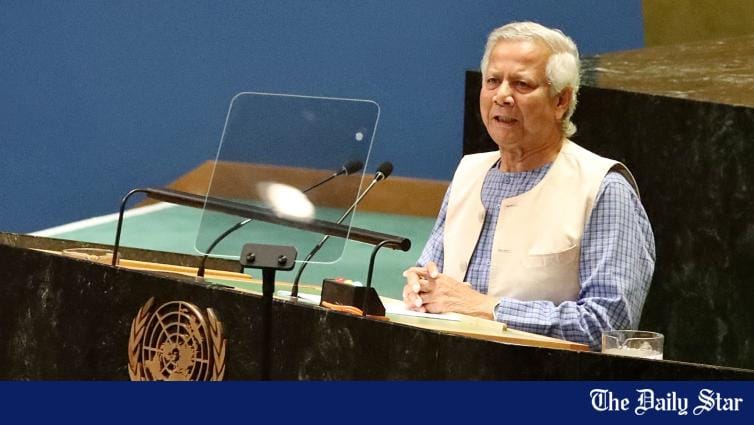
Professor Muhammad Yunus | UNB file photo
Urging the international community to come forward to resolve the long-pending Rohingya crisis, chief adviser Professor Muhammad Yunus has said if this crisis is not resolved, not only Bangladesh but the entire region will also fall into trouble.
‘We have to be careful...we must pay attention to this,’ he said while speaking at a high-level discussion about the Rohingya crisis on the sidelines of the annual session of the United Nations General Assembly in New York on Tuesday evening. Foreign affairs adviser Md Touhid Hossain, High Commissioner for Refugees Filippo Grandi, ICC prosecutor Karim AA Khan and IOM director general Amy Pope, among others, spoke at the event.
Speaking on the occasion, Prof Yunus proposed rethinking the solution to the Rohingya crisis to the international community.
‘First of all, we want the UN Secretary General to organise a conference on the Rohingya crisis in the presence of all parties involved as soon as possible,’ he said.
Reviewing the overall situation of the Rohingya crisis, the chief adviser said a new and far-sighted solution should be proposed to resolve the crisis.
Secondly, he said, there is a need to revive the ‘Joint Response Plan’ programme conducted jointly by the United Nations and Bangladesh.
Since there is a lack of funds to spend on Rohingyas, the process of raising money should be strengthened with political decisions, Prof Yunus said.
In the third proposal, he said the international community should come forward with sincere support to ensure justice for the crimes of genocide committed against the Rohingya people.
To ensure long-term peace and security in Myanmar, justice for these Rohingyas, who were persecuted by Myanmar’s military junta, must be ensured, he said.
High Commissioner for Refugees Filippo Grandi said he was honoured to participate in the discussion on Rohingya crisis led by Prof Yunus.
‘Like every year, the event was held but the presence of Dr Yunus and his vision made this discussion particularly important. We must continue our efforts to end discrimination, statelessness and forced displacement of the Rohingya people,’ he added.
IOM Director General Amy Pope said the Rohingya people should not be forgotten, so all should do more to resolve this crisis and continue the necessary support and long-term process of solution to this crisis.
The IOM chief said it is committed to doing everything possible to achieve this goal.
While participating in the high-level UNGA sidelines event on the Rohingya crisis, US Under Secretary of State for Civilian Security, Democracy, and Human Rights Uzra Zeya announced nearly $199 million in new assistance for Rohingya refugees and communities hosting them.
Meanwhile, during the ongoing UN General Assembly session, some Rohingya refugees in Bangladesh sent a message to world leaders asking ‘Do not make us frustrated’.
They, in the video message, said the Rohingya community should not be forgotten.
Later, at a reception, chief advisor Muhammad Yunus has sought cooperation from foreign friends to build a new Bangladesh dreamt by youth folks.
‘Through the sacrifice of lives and indomitable leadership of the youth, revolutionary changes have taken place in Bangladesh. They sacrificed their lives to build a discrimination-free society and a prosperous country,’ he said.
Yunus said this at a reception hosted marking the 50th year of Bangladesh’s membership in the United Nations Tuesday evening.
The chief adviser said: ‘The sacrifice of young people has created a great opportunity for us.
We don’t want to miss this opportunity. The youth want to build a new Bangladesh through a drastic change in the existing state structure and institutions. We need all of your support to implement it.’
Pakistan prime minister Shahbaz Sharif, US Assistant Secretary of State for Central and South Asia Donald Lu and representatives of various countries attended the event.
On September 17 in 1974, Bangladesh became a full member of the United Nations.
Foreign affairs adviser Md Touhid Hossain, energy adviser Muhammad Fouzul Kabir Khan, permanent representative of Bangladesh to the UN Ambassador Muhammad Abdul Muhith, principal coordinator (SDGs affairs) Lamiya Morshed, chief adviser’s special assistant Mahfuj Alam and chief adviser’s press secretary Shafiqul Alam were present, among others.
Professor Yunus and photographer Shahidul Alam unveiled the covers of two books written on the events of the student-led uprising.
Recalling the sacrifice of the students, Yunus said the whole nation is united today.
The chief adviser said his government is working to put in place a new electoral system through institutional reforms.
Addressing the foreign friends, the Nobel laureate said the courage and determination the Bangladeshi youths showed has overwhelmed all.
Standing in front of bullets, the youths did not hesitate to accept disability, Prof Yunus said, adding ‘We want you (foreign friends) beside us in building democratic Bangladesh cherished by the youth’.
The chief adviser will address the UNGA session on September 27.
International Monetary Fund managing director Kristalina Georgieva has pledged support to Bangladesh’s reform initiatives, saying the Washington-based lender has sent a team to Dhaka to hold talks with the stakeholders over the matter.
The IMF managing director expressed her support at a meeting with the chief adviser at the UN headquarters in New York on Tuesday.
‘It is a different country. It is Bangladesh 2.0,’ Kristalina Georgieva told the chief adviser when he gave a short briefing on the student-led mass uprising which ousted the previous autocratic regime.
The IMF chief executive extended her support for the initiatives, saying the lender would fast-track financial support for the Bangladesh government.
She said she sent an IMF team ‘quickly’ to Bangladesh and it is in Dhaka at the moment. The team would place its report to the IMF management board next month, he added.
Georgieva said the IMF board could initiate a new lending programme for Bangladesh based on the report of the team, or it could also extend more lending under the existing support programme launched early last year.
Energy, power and transport adviser Fouzul Kabir Khan and eminent economist Debapriya Bhattacharya attended the meeting.
Adviser Fouzul Kabir Khan told the IMF chief that the Bangladesh interim government took just a week to ‘dismantle the architecture of crimes’ in the power and energy sector.
Debapriya stressed the need for IMF support to bolster the country’s balance of payments.
He said the role of the IMF would be critical to stabilising exchange rates.
Meanwhile, Italian prime minister Giorgia Meloni meets the chief adviser on the sidelines of the annual session of the UN General Assembly on Tuesday (local time).
During the meeting, Professor Yunus gave a brief outline of the student-led mass uprising which, he said, has created new opportunities for Bangladesh, pressing ‘the reset button’ for the entire nation.
Meloni said Italy would support the Prof Yunus-led interim government in its move to carry out vital reforms in key sectors.
The chief adviser urged the Italian leader to formalise migration from Bangladesh, paving the way of entry of more Bangladeshi workers in Italy through legal channels, which he said would cut risky illegal migration.
Meloni agreed, saying both nations should work together to stop irregular migration and conduct training for people planning to work in Italy.
Bangladesh Sangbad Sangstha . New York 25 September, 2024, 01:14
Professor Muhammad Yunus | UNB file photo
Urging the international community to come forward to resolve the long-pending Rohingya crisis, chief adviser Professor Muhammad Yunus has said if this crisis is not resolved, not only Bangladesh but the entire region will also fall into trouble.
‘We have to be careful...we must pay attention to this,’ he said while speaking at a high-level discussion about the Rohingya crisis on the sidelines of the annual session of the United Nations General Assembly in New York on Tuesday evening. Foreign affairs adviser Md Touhid Hossain, High Commissioner for Refugees Filippo Grandi, ICC prosecutor Karim AA Khan and IOM director general Amy Pope, among others, spoke at the event.
Speaking on the occasion, Prof Yunus proposed rethinking the solution to the Rohingya crisis to the international community.
‘First of all, we want the UN Secretary General to organise a conference on the Rohingya crisis in the presence of all parties involved as soon as possible,’ he said.
Reviewing the overall situation of the Rohingya crisis, the chief adviser said a new and far-sighted solution should be proposed to resolve the crisis.
Secondly, he said, there is a need to revive the ‘Joint Response Plan’ programme conducted jointly by the United Nations and Bangladesh.
Since there is a lack of funds to spend on Rohingyas, the process of raising money should be strengthened with political decisions, Prof Yunus said.
In the third proposal, he said the international community should come forward with sincere support to ensure justice for the crimes of genocide committed against the Rohingya people.
To ensure long-term peace and security in Myanmar, justice for these Rohingyas, who were persecuted by Myanmar’s military junta, must be ensured, he said.
High Commissioner for Refugees Filippo Grandi said he was honoured to participate in the discussion on Rohingya crisis led by Prof Yunus.
‘Like every year, the event was held but the presence of Dr Yunus and his vision made this discussion particularly important. We must continue our efforts to end discrimination, statelessness and forced displacement of the Rohingya people,’ he added.
IOM Director General Amy Pope said the Rohingya people should not be forgotten, so all should do more to resolve this crisis and continue the necessary support and long-term process of solution to this crisis.
The IOM chief said it is committed to doing everything possible to achieve this goal.
While participating in the high-level UNGA sidelines event on the Rohingya crisis, US Under Secretary of State for Civilian Security, Democracy, and Human Rights Uzra Zeya announced nearly $199 million in new assistance for Rohingya refugees and communities hosting them.
Meanwhile, during the ongoing UN General Assembly session, some Rohingya refugees in Bangladesh sent a message to world leaders asking ‘Do not make us frustrated’.
They, in the video message, said the Rohingya community should not be forgotten.
Later, at a reception, chief advisor Muhammad Yunus has sought cooperation from foreign friends to build a new Bangladesh dreamt by youth folks.
‘Through the sacrifice of lives and indomitable leadership of the youth, revolutionary changes have taken place in Bangladesh. They sacrificed their lives to build a discrimination-free society and a prosperous country,’ he said.
Yunus said this at a reception hosted marking the 50th year of Bangladesh’s membership in the United Nations Tuesday evening.
The chief adviser said: ‘The sacrifice of young people has created a great opportunity for us.
We don’t want to miss this opportunity. The youth want to build a new Bangladesh through a drastic change in the existing state structure and institutions. We need all of your support to implement it.’
Pakistan prime minister Shahbaz Sharif, US Assistant Secretary of State for Central and South Asia Donald Lu and representatives of various countries attended the event.
On September 17 in 1974, Bangladesh became a full member of the United Nations.
Foreign affairs adviser Md Touhid Hossain, energy adviser Muhammad Fouzul Kabir Khan, permanent representative of Bangladesh to the UN Ambassador Muhammad Abdul Muhith, principal coordinator (SDGs affairs) Lamiya Morshed, chief adviser’s special assistant Mahfuj Alam and chief adviser’s press secretary Shafiqul Alam were present, among others.
Professor Yunus and photographer Shahidul Alam unveiled the covers of two books written on the events of the student-led uprising.
Recalling the sacrifice of the students, Yunus said the whole nation is united today.
The chief adviser said his government is working to put in place a new electoral system through institutional reforms.
Addressing the foreign friends, the Nobel laureate said the courage and determination the Bangladeshi youths showed has overwhelmed all.
Standing in front of bullets, the youths did not hesitate to accept disability, Prof Yunus said, adding ‘We want you (foreign friends) beside us in building democratic Bangladesh cherished by the youth’.
The chief adviser will address the UNGA session on September 27.
International Monetary Fund managing director Kristalina Georgieva has pledged support to Bangladesh’s reform initiatives, saying the Washington-based lender has sent a team to Dhaka to hold talks with the stakeholders over the matter.
The IMF managing director expressed her support at a meeting with the chief adviser at the UN headquarters in New York on Tuesday.
‘It is a different country. It is Bangladesh 2.0,’ Kristalina Georgieva told the chief adviser when he gave a short briefing on the student-led mass uprising which ousted the previous autocratic regime.
The IMF chief executive extended her support for the initiatives, saying the lender would fast-track financial support for the Bangladesh government.
She said she sent an IMF team ‘quickly’ to Bangladesh and it is in Dhaka at the moment. The team would place its report to the IMF management board next month, he added.
Georgieva said the IMF board could initiate a new lending programme for Bangladesh based on the report of the team, or it could also extend more lending under the existing support programme launched early last year.
Energy, power and transport adviser Fouzul Kabir Khan and eminent economist Debapriya Bhattacharya attended the meeting.
Adviser Fouzul Kabir Khan told the IMF chief that the Bangladesh interim government took just a week to ‘dismantle the architecture of crimes’ in the power and energy sector.
Debapriya stressed the need for IMF support to bolster the country’s balance of payments.
He said the role of the IMF would be critical to stabilising exchange rates.
Meanwhile, Italian prime minister Giorgia Meloni meets the chief adviser on the sidelines of the annual session of the UN General Assembly on Tuesday (local time).
During the meeting, Professor Yunus gave a brief outline of the student-led mass uprising which, he said, has created new opportunities for Bangladesh, pressing ‘the reset button’ for the entire nation.
Meloni said Italy would support the Prof Yunus-led interim government in its move to carry out vital reforms in key sectors.
The chief adviser urged the Italian leader to formalise migration from Bangladesh, paving the way of entry of more Bangladeshi workers in Italy through legal channels, which he said would cut risky illegal migration.
Meloni agreed, saying both nations should work together to stop irregular migration and conduct training for people planning to work in Italy.