Donate ☕
[🇧🇩] - Insurgencies in Myanmar. Implications for Bangladesh | Page 47 | PKDefense

[🇧🇩] Insurgencies in Myanmar. Implications for Bangladesh

Reply (Scroll)
Press space to scroll through posts
G Bangladesh Defense
[🇧🇩] Insurgencies in Myanmar. Implications for Bangladesh
380
13K
More threads by Saif


Rohingyas fleeing Arakan Army persecution
13 lakh refugees now in Bangladesh

1745892747678.webp

Rohingya refugees near Cox's Bazar, Bangladesh, in 2017. Photo: Reuters

Amid escalating violence in Myanmar's Rakhine State, Rohingyas are trespassing into Bangladesh every day, crossing the border allegedly to escape the brutality of Myanmar's rebel group, the Arakan Army (AA).

Rohingya sources said back in Rakhine State, they faced killings, enforced disappearances, torture and forced recruitment into the rebel group as human shields against junta forces and were used as forced labourers for construction works.

Md Mizanur Rahman, Refugee Relief and Repatriation Commissioner (RRRC), said, "Currently, a large number of Rohingyas are fleeing from Rakhine State and taking shelter in various refugee camps in Cox's Bazar. Since November 2023 until now, 1.13 lakh Rohingyas have entered Bangladesh. Of them, most arrived since June last."

The RRRC said, "Speaking to the fleeing Rohingyas, we learnt that they are escaping to Bangladesh after facing persecution by the Arakan Army. In the homes they leave behind, people from other communities are settling. These accounts have been consistently shared by the fleeing Rohingyas. We have not been able to independently verify this information."

Official sources confirmed that Bangladesh authorities and the United Nations High Commissioner for Refugees (UNHCR) have taken fingerprints of the 1.13 lakh Rohingyas who entered Bangladesh since November 2023.

With these new arrivals, the total number of Rohingyas officially sheltered in Bangladesh now stands at least 13 lakh.

To arrange accommodation for the new arrivals, UNHCR has sent a letter to Bangladesh. The letter was sent last week to the Office of the Refugee Relief and Repatriation Commissioner.

Regarding the matter, Mizanur said, "We have received a letter from UNHCR requesting arrangements for the accommodation of more than one lakh new Rohingyas. We do not have space to build houses for such a large number."

"This effort to build new shelters will make Rohingya repatriation more difficult, as it will encourage more Rohingyas in Rakhine to come to Bangladesh," he added.

Md Zubair, chairman of Arakan Rohingya Society for Peace and Human Rights, said, "Arakan Army is carrying out atrocities against the Rohingyas living in Rakhine State. Rohingyas are called to Arakan Army camps and forced to work as labourers. They are picking Rohingyas for recruitment into their forces to fight against the military junta. They are also detaining many Rohingyas, accusing them of having links with the junta forces. Some of these Rohingyas were killed, and others, brutally tortured. Many Islamic scholars from the Rohingya community were victims of enforced disappearance.

"Recently, the Arakan Army has started evicting Rohingyas from their houses and resettling Rakhine people (Mogh) from other countries like Bangladesh, Nepal and India into those areas."

That is why Rohingyas are fleeing to Bangladesh, Zubair said.

He described the situation in Rakhine as dire and demanded immediate international intervention and investigation into the Rohingya persecution committed by the Arakan Army.

Until November 2023, around 1.2 million Rohingyas, most of whom fled a brutal military campaign by Myanmar's junta forces, had already taken shelter in Bangladesh.

Rohingyas alleged that during that time, Rakhine people also took part in the persecution alongside the Junta forces.

The Arakan Army, representing the Rakhine community, launched a campaign against the junta forces in November 2023. They announced victory over 80 percent of Rakhine State, capturing 14 of the 17 townships.

Following their victory, the entire 270-kilometre border with Bangladesh went under their control.

During the fighting between the AA and Junta forces, many Rohingyas fled to Bangladesh after allegedly being targeted by both sides through bombings, torture and killings.

After the Arakan Army established control over most of Rakhine State, the Rohingyas reportedly became victims of further torture killings, and enforced disappearances by the AA.​
 
Analyze

Analyze Post

Add your ideas here:
Cite Fact Check Highlight Respond
রাখাইনে মানবিক করিডোর কি বাংলাদেশের জন্য নিরাপত্তা ঝুঁকি তৈরি করবে? (If Bangladesh allows a humanitarian corridor for the UN to help the Rohingya in Myanmar, it could pose a serious security threat for Bangladesh. More Rohingya may come to Bangladesh to escape Arakan Army's persecution.)


Analyze

Analyze Post

Add your ideas here:
Cite Fact Check Highlight Respond

ROHINGYA CRISIS: Bangladesh engages with parties in Rakhine: UNHCR
Staff Correspondent 29 April, 2025, 23:20

1745972504653.webp

File photo

United Nations High Commissioner for Refugees Filippo Grandi on Tuesday told the UN Security Council that the Bangladesh interim government chose to engage with the parties to the conflict in the Rakhine state to pursue a solution to the Rohingya crisis that remained stagnant for the past eight years.

‘But there is now an opportunity to break this dangerous inertia. The interim government of Bangladesh has chosen to engage with the parties to the conflict in Rakhine State in pursuit of a solution there—where it rightly lies,’ said the UN Refugee Agency chief while addressing the UN Security Council in New York.

‘Many will immediately say that such a solution today is impossible for all the reasons we know: too much blood has been shed, discrimination continues, and there are too many competing interests to balance. Many will say that the root causes will never be effectively addressed, and that may well be the case,’ he added.

He expressed his hope that the Security Council would continue to focus robustly on the situation in Myanmar, including the plight of the Rohingyas, saying, he looked forward to the conference planned for September in New York.

‘But we have been down the path of stagnation for eight years in respect of the Rohingya situation—it is a dead end,’ said Filippo Grandi, adding that from the perspective of pursuing solutions to the Rohingya plight.

‘..and in order to start recreating conditions for the return of refugees, dialogue with all parties is a critical first step so that humanitarian agencies, including UNHCR can reestablish their presence and resume providing desperately needed humanitarian relief—safely and freely,’ he added.

‘That, in turn, would provide a basis on which to restart discussions on the eventual return of displaced Rohingya—I stress: voluntarily, in safety and dignity—once the security situation in Rakhine allows, and from where other legal rights could also be pursued,’ he said.

‘For the last eight years, for example, stagnation has defined the response in Myanmar. The fighting between the Tatmadaw and different armed groups has caused immense suffering and large-scale displacement throughout the country and the region,’ he mentioned.

The plight of the Rohingya minority, in particular, has become even worse. Fighting in Rakhine State with the Arakan Army has been particularly vicious— 1.2 million Rohingya are refugees today, mostly in Bangladesh, in the camps around Cox’s Bazaar, according to the UN High Commissioner for Refugees.

‘We must thank Bangladesh and its people for having provided them refuge over the years. But Rohingya refugees languish in the camps, without work, deprived of agency, entirely dependent on humanitarian aid, which grows ever more precarious,’ he said

The UN Security Council’s permanent members are China, France, Russian Federation, the United Kingdom, and the United States, and the current 10 non-permanent members elected for two-year terms by the General Assembly are— Algeria, Denmark, Greece, Guyana, Pakistan, Panama, Republic of Korea, Sierra Leone, Slovenia and Somalia.​
 
Analyze

Analyze Post

Add your ideas here:
Cite Fact Check Highlight Respond

Rohingyas fleeing Arakan Army persecution
13 lakh refugees now in Bangladesh

1745974786325.webp

Rohingya refugees near Cox's Bazar, Bangladesh, in 2017. Photo: Reuters

Amid escalating violence in Myanmar's Rakhine State, Rohingyas are trespassing into Bangladesh every day, crossing the border allegedly to escape the brutality of Myanmar's rebel group, the Arakan Army (AA).

Rohingya sources said back in Rakhine State, they faced killings, enforced disappearances, torture and forced recruitment into the rebel group as human shields against junta forces and were used as forced labourers for construction works.

Md Mizanur Rahman, Refugee Relief and Repatriation Commissioner (RRRC), said, "Currently, a large number of Rohingyas are fleeing from Rakhine State and taking shelter in various refugee camps in Cox's Bazar. Since November 2023 until now, 1.13 lakh Rohingyas have entered Bangladesh. Of them, most arrived since June last."

The RRRC said, "Speaking to the fleeing Rohingyas, we learnt that they are escaping to Bangladesh after facing persecution by the Arakan Army. In the homes they leave behind, people from other communities are settling. These accounts have been consistently shared by the fleeing Rohingyas. We have not been able to independently verify this information."

Official sources confirmed that Bangladesh authorities and the United Nations High Commissioner for Refugees (UNHCR) have taken fingerprints of the 1.13 lakh Rohingyas who entered Bangladesh since November 2023.

With these new arrivals, the total number of Rohingyas officially sheltered in Bangladesh now stands at least 13 lakh.

To arrange accommodation for the new arrivals, UNHCR has sent a letter to Bangladesh. The letter was sent last week to the Office of the Refugee Relief and Repatriation Commissioner.

Regarding the matter, Mizanur said, "We have received a letter from UNHCR requesting arrangements for the accommodation of more than one lakh new Rohingyas. We do not have space to build houses for such a large number."

"This effort to build new shelters will make Rohingya repatriation more difficult, as it will encourage more Rohingyas in Rakhine to come to Bangladesh," he added.

Md Zubair, chairman of Arakan Rohingya Society for Peace and Human Rights, said, "Arakan Army is carrying out atrocities against the Rohingyas living in Rakhine State. Rohingyas are called to Arakan Army camps and forced to work as labourers. They are picking Rohingyas for recruitment into their forces to fight against the military junta. They are also detaining many Rohingyas, accusing them of having links with the junta forces. Some of these Rohingyas were killed, and others, brutally tortured. Many Islamic scholars from the Rohingya community were victims of enforced disappearance.

"Recently, the Arakan Army has started evicting Rohingyas from their houses and resettling Rakhine people (Mogh) from other countries like Bangladesh, Nepal and India into those areas."

That is why Rohingyas are fleeing to Bangladesh, Zubair said.

He described the situation in Rakhine as dire and demanded immediate international intervention and investigation into the Rohingya persecution committed by the Arakan Army.

Until November 2023, around 1.2 million Rohingyas, most of whom fled a brutal military campaign by Myanmar's junta forces, had already taken shelter in Bangladesh.

Rohingyas alleged that during that time, Rakhine people also took part in the persecution alongside the Junta forces.

The Arakan Army, representing the Rakhine community, launched a campaign against the junta forces in November 2023. They announced victory over 80 percent of Rakhine State, capturing 14 of the 17 townships.

Following their victory, the entire 270-kilometre border with Bangladesh went under their control.

During the fighting between the AA and Junta forces, many Rohingyas fled to Bangladesh after allegedly being targeted by both sides through bombings, torture and killings.

After the Arakan Army established control over most of Rakhine State, the Rohingyas reportedly became victims of further torture killings, and enforced disappearances by the AA.​
 
Analyze

Analyze Post

Add your ideas here:
Cite Fact Check Highlight Respond

UNHCR for sheltering 1.13 lakh more Rohingyas
Staff Correspondent 30 April, 2025, 23:45

1746059484033.webp


The United Nations High Commissioner for Refugees has recently pressed the Office of the Refugee Relief and Repatriation Commissioner to ensure accommodation of 1.13 lakh more Rohingyas amid uncertainty of repatriation.

RRRC officials said that Rohingyas continued to enter Bangladesh as conflicts in Myanmar’s Rakhine state went on.

‘We received a letter from the UNHCR in the past week about ensuring accommodation of 1.13 lakh more Rohingyas who entered Bangladesh between November 2023 and April 27, 2025,’ RRRC top official Mohammed Mizanur Rahman told New Age on Tuesday.

Mizanur said that accommodating new arrivals of Rohingyas was impossible in the camps in Ukhiya and Teknaf upazilas in Cox’s Bazar.

He said that they had taken fingerprints of 1.13 lakh Rohingyas but yet to collect their iris images.

Mizanur also said that many newly arriving Rohingyas were staying at their relatives, learning centres and under the open sky. Some were living outside the camps.

Local people said that new arrivals were now living in villages and Cox’s Bazar town.

Ekramul Karim Bablu, a local resident at Balukhali in Ukhiya, told New Age that many Rohingyas were living outside the camps, in villages and towns.

‘We, the local people, are now cornered as the pressure of Rohingyas is increasing,’ he said.

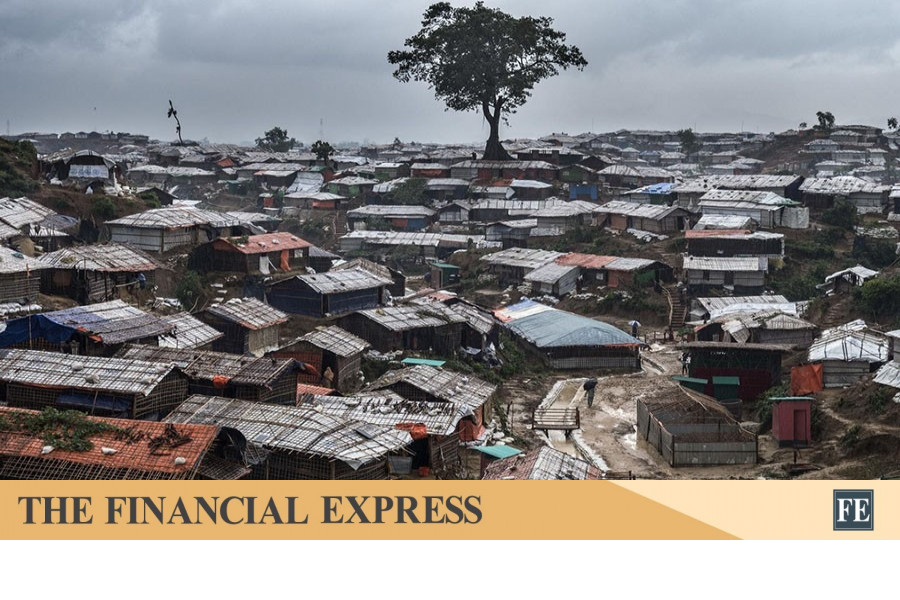
The Armed Police Battalion’s 16th Battalion commanding officer Kawser Shikdar, also an additional deputy inspector general of police, said that the Rohingyas were living in the camps in an extremely crammed condition with at least eight people living in a tiny room.

‘I don’t see any place to allow new arrivals in the camp. We need to create new sheds for them,’ Kawser.

Cox’s Bazar deputy commissioner Mohammad Salahuddin declined to comment on the accommodation of the new arrivals, saying that he had to first hold a meeting the RRRC.

Myanmar has identified 1,80,000 Rohingya refugees from a list of 8,00,000 sheltered in Bangladesh as eligible for repatriation, said a recent press release from the chief adviser’s press wing.

The information was disclosed on April 4 to Khalilur Rahman, high representative of the chief adviser of Bangladesh, by U Than Shew, deputy prime minister and foreign minister of Myanmar, at a meeting on the sidelines of the 6th summit of the Bay of Bengal Initiative for Multi-Sectoral Technical and Economic Cooperation, BIMSTEC in short, in Bangkok.

Many Rohingyas, however, have said that they are not willing to return to Rakhine until peace is restored.

Dhaka University international relations professor Syeda Rozana Rashid said that the repatriation process would not start overnight until a conducive environment for relocation in Myanmar was restored.

‘Our main goal is to repatriate them and we have been trying this for the past eight years. It will take time and let’s see what happens next,’ said Rozana, having more than twenty years of research experience on forced and voluntary migration.

She said that the Rohingya people could not be sent in Rakhine until the current volatile situation in which killings, setting fire to homes and tortures were being perpetrated, forcing them to cross the border to enter Bangladesh with whatever means they could manage.

The Rohingyas are using land and river routes along the border in Ukhiya and Teknaf upazilas in Cox’s Bazar and Naikhongchhari upazila in Bandarban to reach Bangladesh, community people and officials in Cox’s Bazar said. To enter Bangladesh they are paying local boatmen and brokers on both sides of the border.

More than 1.3 million (13 lakh) Myanmar nationals of the Rohingya community fled to Bangladesh amid brutal atrocities by the Myanmar military since 2017, according to government data.

On March 7, the United Nations World Food Programme in a press release warned of a critical funding shortfall for its emergency response operations in Bangladesh that might affect over one million displaced Rohingyas.

The monthly rations must be halved to $6 per person, down from $12.50 per person, it said.

RRRC chief Mizanur said that the UN shifted from its previous position and extended to providing $12 for per person till August this year.

United Nations High Commissioner for Refugees Filippo Grandi on Tuesday told the UN Security Council that the Bangladesh interim government chose to engage with the parties to the conflict in the Rakhine state to pursue a solution to the Rohingya crisis that remained stagnant for the past eight years.​
 
Analyze

Analyze Post

Add your ideas here:
Cite Fact Check Highlight Respond

ROHINGYA CRISIS: Bangladesh engages with parties in Rakhine: UNHCR
Staff Correspondent 29 April, 2025, 23:20

1746059758037.webp

File photo

United Nations High Commissioner for Refugees Filippo Grandi on Tuesday told the UN Security Council that the Bangladesh interim government chose to engage with the parties to the conflict in the Rakhine state to pursue a solution to the Rohingya crisis that remained stagnant for the past eight years.

‘But there is now an opportunity to break this dangerous inertia. The interim government of Bangladesh has chosen to engage with the parties to the conflict in Rakhine State in pursuit of a solution there—where it rightly lies,’ said the UN Refugee Agency chief while addressing the UN Security Council in New York.

‘Many will immediately say that such a solution today is impossible for all the reasons we know: too much blood has been shed, discrimination continues, and there are too many competing interests to balance. Many will say that the root causes will never be effectively addressed, and that may well be the case,’ he added.

He expressed his hope that the Security Council would continue to focus robustly on the situation in Myanmar, including the plight of the Rohingyas, saying, he looked forward to the conference planned for September in New York.

‘But we have been down the path of stagnation for eight years in respect of the Rohingya situation—it is a dead end,’ said Filippo Grandi, adding that from the perspective of pursuing solutions to the Rohingya plight.

‘..and in order to start recreating conditions for the return of refugees, dialogue with all parties is a critical first step so that humanitarian agencies, including UNHCR can reestablish their presence and resume providing desperately needed humanitarian relief—safely and freely,’ he added.

‘That, in turn, would provide a basis on which to restart discussions on the eventual return of displaced Rohingya—I stress: voluntarily, in safety and dignity—once the security situation in Rakhine allows, and from where other legal rights could also be pursued,’ he said.

‘For the last eight years, for example, stagnation has defined the response in Myanmar. The fighting between the Tatmadaw and different armed groups has caused immense suffering and large-scale displacement throughout the country and the region,’ he mentioned.

The plight of the Rohingya minority, in particular, has become even worse. Fighting in Rakhine State with the Arakan Army has been particularly vicious— 1.2 million Rohingya are refugees today, mostly in Bangladesh, in the camps around Cox’s Bazaar, according to the UN High Commissioner for Refugees.

‘We must thank Bangladesh and its people for having provided them refuge over the years. But Rohingya refugees languish in the camps, without work, deprived of agency, entirely dependent on humanitarian aid, which grows ever more precarious,’ he said

The UN Security Council’s permanent members are China, France, Russian Federation, the United Kingdom, and the United States, and the current 10 non-permanent members elected for two-year terms by the General Assembly are— Algeria, Denmark, Greece, Guyana, Pakistan, Panama, Republic of Korea, Sierra Leone, Slovenia and Somalia.​
 
Analyze

Analyze Post

Add your ideas here:
Cite Fact Check Highlight Respond

Myanmar junta rejects Jamaat-e-Islami’s 'Rohingya state proposal'
bdnews24.com
Published :
May 03, 2025 23:53
Updated :
May 03, 2025 23:53

1746318034515.webp


Myanmar’s military government has rejected a proposal reportedly made by Bangladesh’s Jamaat-e-Islami to establish a “separate state” for the Rohingya in Rakhine, calling it a threat to the country’s sovereignty.

The Irrawaddy, a media outlet run by Myanmar exiles, reported the development on Friday, citing a statement issued by the junta.

The proposal surfaced after a meeting between the Jamaat and Communist Party of China (CPC) held on Apr 27 in Dhaka’s Gulshan.

Following the meeting, several media outlets reported that Jamaat had suggested establishing an independent state in Rakhine for the Rohingya population.

The next day, Jamaat-e-Islami issued a statement clarifying its position.

Syed Abdullah Mohammad Taher, the party’s deputy chief, said: “In the press briefing, I mainly tried to convey that Rohingya refugees in Bangladesh should be repatriated with dignity and safety, and that a secure zone should be established for them in their homeland.”

Taher, speaking after the meeting with the CPC, had earlier told journalists: “As you know, there are around 1.1 or 1.2 million Rohingya in Bangladesh.

“They are living in inhumane conditions. We said that food, clothing, and shelter are not solutions. The real solution is to return the Rohingya to their homeland.”

He added, “We have therefore presented a proposal—to establish an independent Arakan (Rakhine) state in the area where the Rohingya are the majority.”

According to the Jamaat leader, “China can play the biggest role here because of its deep ties with Myanmar. They will inform their government about our new proposal and try to take the initiative.”

Six days after the Jamaat’s proposal, the Myanmar junta issued a statement saying it had undermined the sovereignty of Myanmar.

The junta’s statement claimed that Jamaat had been in contact with the CPC to seek political advantage.

“Myanmar has repeatedly articulated its stance on the repatriation of “Bengali” refugees,” it reads.

“Bengali” is a term used by the Myanmar military to refer to the Rohingya as interlopers from Bangladesh, The Irrawaddy noted.

The junta further said Myanmar’s deputy foreign minister has been holding regular meetings in Kunming with Bangladeshi officials on the refugee repatriation issue.

The regime said it had a policy of verifying and registering refugees before repatriation and had built enough accommodation for returnees.

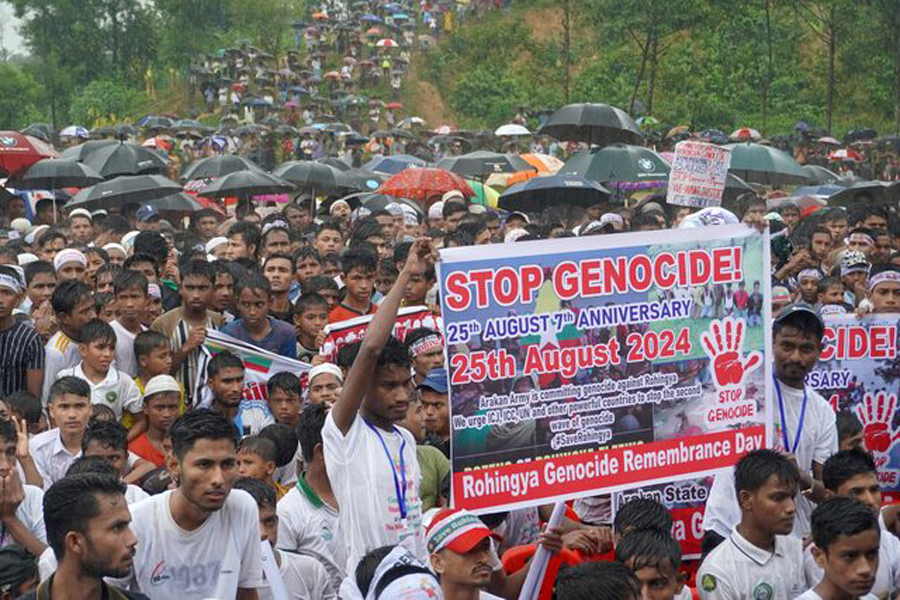
More than 750,000 Rohingya fled Myanmar’s Rakhine State and sought refuge in Bangladesh after Aug 25, 2017, in the wake of a military crackdown.

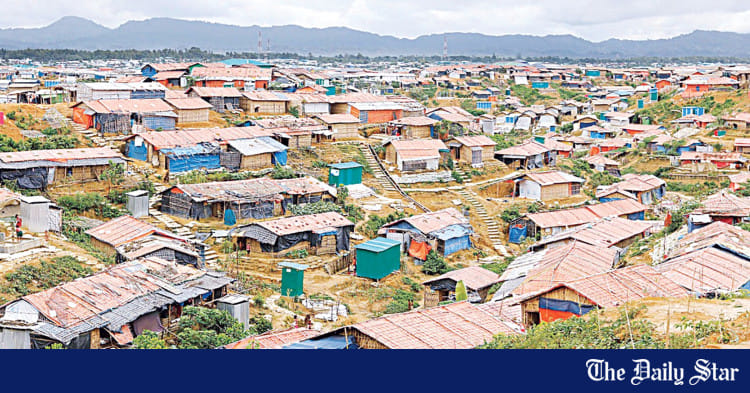
They joined an estimated 400,000 others already sheltering in overcrowded camps near Cox’s Bazar, a coastal district where one of the world’s largest refugee settlements now exists.

Under mounting international pressure, Myanmar’s then-government, led by Aung San Suu Kyi, signed a repatriation agreement with Bangladesh in late 2017.

But two attempts to return refugees in 2019 failed, as the Rohingya refused to go back without guarantees of safety and citizenship.

The situation deteriorated further in 2021 when Myanmar’s military, led by Gen Min Aung Hlaing, seized power in a coup, effectively ending any prospect of diplomatic negotiations.

Subsequent efforts mediated by China also collapsed.

The crisis has since been compounded by fresh violence in Rakhine State, leading to another wave of Rohingya arrivals in Bangladesh.

In a statement, Chief Advisor Muhammad Yunus said more than 80,000 additional refugees had crossed the border.

As ethnic armed conflict intensifies, the Arakan Army has taken control of nearly all areas along the Bangladesh-Myanmar border.

With rebel forces seizing key territory, Dhaka’s communication with Naypyidaw has also sharply declined.​
 
Analyze

Analyze Post

Add your ideas here:
Cite Fact Check Highlight Respond

Members Online

Latest Posts

Latest Posts