Bangladesh Defense
Saif
Senior Member
- Jan 24, 2024
- 20,650
- 9,645
- Nation

- Residence
- Axis Group


FM calls for ‘coordinated global initiative’ to solve Rohingya crisis
Foreign Minister Khalilur Rahman has called upon the international community to move beyond mere humanitarian aid and take proactive steps to ensure the safe, dignified, and voluntary repatriation of Rohingya refugees to Myanmar. Speaking at a discussion at the Antalya Diplomacy Forum in Turkey on
FM calls for ‘coordinated global initiative’ to solve Rohingya crisis
bdnews24.com
Published :
Apr 18, 2026 20:55
Updated :
Apr 18, 2026 20:55
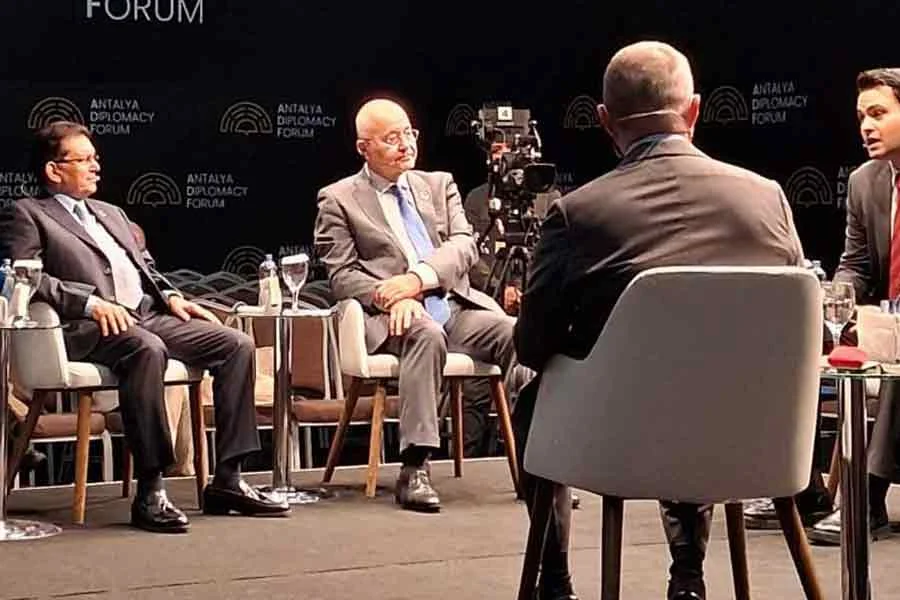
Foreign Minister Khalilur Rahman has called upon the international community to move beyond mere humanitarian aid and take proactive steps to ensure the safe, dignified, and voluntary repatriation of Rohingya refugees to Myanmar.
Speaking at a discussion at the Antalya Diplomacy Forum in Turkey on Friday, he emphasised that a sustainable solution to the crisis lies squarely within Myanmar's Rakhine State.
The minister stressed that the global community must play a more effective role in creating an environment conducive to repatriation.
He expressed deep concern over the dwindling international funding for the refugees and urged donors to increase financial support while taking urgent measures to ensure stability, security, and human rights in Rakhine.
Khalilur said both the Myanmar military government and the Arakan Army had welcomed him following his appointment, suggesting a potential diplomatic opening.
"The Rohingya crisis is a solvable problem, but it requires a coordinated global initiative and consistent international cooperation," he said.
The call for action comes as the number of Rohingya refugees in Cox’s Bazar continues to climb.
According to UNHCR data released in early March, the refugee population rose from approximately 1,006,107 in February 2025 to 1,184,864 by February 2026 -- an increase of nearly 179,000 in just one year.
While repatriation efforts began with a bilateral agreement in 2017 and saw failed attempts in 2019 due to a lack of trust of the refugees in the Myanmar government, the process faced further setbacks from the COVID-19 pandemic and the 2021 military coup.
The ongoing civil war in Myanmar has currently stalled formal talks, even as new waves of displacement enter Bangladesh.
On the sidelines of the forum, Khalilur held a bilateral meeting with Pakistan’s Deputy Prime Minister and Foreign Minister Ishaq Dar.
bdnews24.com
Published :
Apr 18, 2026 20:55
Updated :
Apr 18, 2026 20:55
Foreign Minister Khalilur Rahman has called upon the international community to move beyond mere humanitarian aid and take proactive steps to ensure the safe, dignified, and voluntary repatriation of Rohingya refugees to Myanmar.
Speaking at a discussion at the Antalya Diplomacy Forum in Turkey on Friday, he emphasised that a sustainable solution to the crisis lies squarely within Myanmar's Rakhine State.
The minister stressed that the global community must play a more effective role in creating an environment conducive to repatriation.
He expressed deep concern over the dwindling international funding for the refugees and urged donors to increase financial support while taking urgent measures to ensure stability, security, and human rights in Rakhine.
Khalilur said both the Myanmar military government and the Arakan Army had welcomed him following his appointment, suggesting a potential diplomatic opening.
"The Rohingya crisis is a solvable problem, but it requires a coordinated global initiative and consistent international cooperation," he said.
The call for action comes as the number of Rohingya refugees in Cox’s Bazar continues to climb.
According to UNHCR data released in early March, the refugee population rose from approximately 1,006,107 in February 2025 to 1,184,864 by February 2026 -- an increase of nearly 179,000 in just one year.
While repatriation efforts began with a bilateral agreement in 2017 and saw failed attempts in 2019 due to a lack of trust of the refugees in the Myanmar government, the process faced further setbacks from the COVID-19 pandemic and the 2021 military coup.
The ongoing civil war in Myanmar has currently stalled formal talks, even as new waves of displacement enter Bangladesh.
On the sidelines of the forum, Khalilur held a bilateral meeting with Pakistan’s Deputy Prime Minister and Foreign Minister Ishaq Dar.