New Tweets

[🇧🇩] Israel and Hamas war in Gaza-----Can Bangladesh be a peace broker?

G Bangladesh Defense
[🇧🇩] Israel and Hamas war in Gaza-----Can Bangladesh be a peace broker?
966
28K
More threads by Saif

PART VI: ANIMAL FOOD AND THE LIST


It was February 1. The town where he grew up was unrecognisable. It was grayer than the insides of the mullet they cooked during Eid. Their house was bombed for the second time, and only the entrance of it remained. They stayed there for a night in search of food. They walked around during the day, as no one was allowed to get out after 5pm. Night fell, and there were airstrikes. One day, as he walked around in search of food, Kamel found the home of his 10th grade Arabic teacher, Youssef, which had been struck the night before. His teacher was screaming under the rubble. Kamel and his family tried to pry him loose from under the debris for hours. He was dead by the time they recovered him.

1714692154930.webp

(L) View of Kamel's street in Beit Hanoun, in North Gaza in February, 2024; (M) Inside of Kamel's house photographed during the temporary truce from November 24 to November 30, 2023; (R) Bombed Umm al-Nasr Mosque in Beit Hanoun, where Kamel and his family prayed every Friday, captured on February 2024. Photo Collage: Nazifa Raidah

They walked over to the periphery of Northern Gaza, where his aunt lived. Her house was not fully bombed; a room was still inhabitable for the ten members of his family. They went near the Erez crossing, barricaded within a concrete wall and a heavily-fenced Israeli border. Anyone who steps within 1km of this barrier is in danger of being shot by the Israeli army. As he and his family walked across, the glimpses of the hinterland across the border made him crumble inside. He could see life: tall buildings, glass windows, and cars in Israel.

On his side of the border, they went 15 days without any food, drinking salt water from the beach, or from dirty tube wells. They picked grass from the wasteland and swallowed it. His family was in hypoglycemic shock, their pulses were weak. They would writhe and grimace in hunger. To treat hypoglycemic shocks, Kamel needed injections which he did not have. Each night they went to sleep, Kamel accepted that the prophesied doom was near: maybe the next day, or in a few hours, he would wake up and have to bury his brother, mother or father, if they didn't wake up. Or they would have to bury him.

Then his brother heard that some people were serving "food" somewhere nearby in a cart. It was animal feed, but they were so ecstatic, Kamel told me in a matter-of-fact way. They did whatever they could to survive.

1714692221204.webp

Animal feed fried for 20 people with old beans and rotten fruit. This is what Kamel and his family ate after returning to the North. PHOTO: COURTESY OF KAMEL ABU AMSHA


On March 24, Kamel's uncle came and woke him up. "Your name has been published on the list! Get up!" he shouted.

"What list? What list?" He'd responded.

That's when Kamel remembered, that around the beginning of the war, he had registered in a few student organisations which were helping students studying abroad to escape Gaza. The organisation would pay $5,000 to let him cross the border—that's how much it cost to cross Rafah to Egypt. (He's never met anyone in the organisation, he doesn't know how they pay, or who they pay to). He felt an electric shock through his chest.

"No," he told his uncle. "I'm not going." He refused to leave. Kamel and his family were starving, and he knew what his family was facing. They are not students, so they won't be allowed to leave with him. Kamel and his family didn't have any money let alone the amount needed to cross the borders.

"We know our fate, but you have a different fate. Go finish your journey," his father had said, "Go back, go become a doctor."

He was crushed, broken, but he knew he had to go. Kamel departed, knowing it could be the last time he sees them. But he doesn't want to think like that. "They're my life," he told me.​
 
PART VII: CROSSING DEADLY BORDERS

Kamel started off with the backpack he carried around. The only memory he took with him was the tape on his phone charger that his sister had put to mark theirs, when they were in the camps. The Israeli army was destroying the Al-Shifa hospital when he was coming back, and he had to cross Al-Rashid street dividing the North and South of Gaza. When he reached, he saw that the army had set up a temporary border between North and South Gaza with large shipping containers. He was frozen; how would he pass? He was alone on the street, as bombs exploded nearby. He then saw a girl and two boys, who were also students like him, studying in Algeria.

The girl had a heavy bag she was struggling with, so Kamel carried it. The boys entered the container before Kamel, and there was a camera inside. Outside of the container, there were dozens of soldiers, with tanks and jeeps. When the boys crossed over, the Israeli soldiers caught them. Kamel saw the soldiers force the two boys to take their clothes off, take their bags, and arrest them. The girl began to cry. Kamel was sure, it's over, but he whispered to her, "We have to pretend that we are a family, like husband and wife. We can pass."

They held hands and walked, looking straight ahead. The army didn't call them. They passed.

1714692329962.webp

Kamel after crossing Rafah to Egypt while fasting during Ramadan. Photo Courtesy: Kamel Abu Amsha

They walked kilometres and kilometres, as night settled, reaching the South in Nuseirat. The girl went to see her relatives, he does not know her fate.

Kamel stayed at his uncle's place for two nights in the South, which was like a "different country," he told me. "The north, where I'm from, and where my family is now—it is a complete ghost-town. There's still some life in the South."

He left the South to Rafah, where an imaginable number of people were clustered. "If Israel attacks and bombs Rafah the way they bombed the north, it will be a genocide in one day," Kamel told me, as we discussed Israel's current decision to advance in Rafah.

He arrived at the "6th of October city" in Egypt, and called his uncle, who had moved to Cairo 25 years ago. His uncle took him to his house. "It was a complete fantasy," Kamel said. It felt sickening too, to see life. "Why does everyone get to have a life but we don't? Why?"

In Cairo, Kamel showered and informed his college in Faridpur that he had reached Cairo, and they booked a flight for him on Gulf Air. He also managed to call his family, who had limited internet. They were alive too. "It felt like a liberation from war at the time, but it wasn't," he said.

1714692375431.webp


(L) Kamel's father Akram, stands in front of the grills of his bombed house in Beit Hanoun on April 26, 2024. He has lost more than 25 kgs since the war, and remains in starvation. (R) On the same day, Kamel set up the table to eat Makluva, which he cooked with his flatmates in Faridpur. He can't each much, his stomach has shrunk.​
 
PART VIII: DYING IS BETTER THAN THIS LIFE

Kamel has lost over 13 family members and eight friends, till date. Kamel's immediate family is still alive—except his brother Emad—as of May 2, 2024. They've faced three forced evacuations since he left. Once he hears that there's been a bombing in Beit Hanoun, he stays up all night worried for his family, calls journalists and everyone he knows in Gaza. "It's another prison, and punishment, living like this, leaving them there, seeing with my own eyes where I've left them. Dying is better than this life," Kamel told me, repeatedly, over the past three weeks.

"Oh, how I wish I could bring them here in Bangladesh," Kamel told me, sighing.

1714692481897.webp

"I don't wish this life on my worst enemy," Kamel Abu Amsha, 24, in Faridpur on April 26, 2024. His left eye has a corneal tear and keratitis. PHOTO: Ibrahim Khalil Ibu​
 

Bangladesh, Gambia for speedy resolution of Myanmar case at ICJ


1714778246420.webp

Photo: BSS

Bangladesh and the Gambia yesterday expressed hope to witness a speedy resolution of the case filed against Myanmar on the charge of Rohingya genocide with the International Court of Justice (ICJ).

The optimism was reflected at a meeting between Bangladesh Foreign Minister Hasnan Mahmud and Gambian Justice Minister and Attorney General Dawda A Jallow on the sideline of the preparatory meeting of the foreign ministers ahead of the 15th summit of Organization for Islamic Cooperation (OIC) in Gambia, said a foreign ministry press release.

During the meeting, Gambian minister expressed sincere thanks to the Bangladesh government for providing humanitarian shelter to forcibly displaced Rohingyas.

He also expressed his gratitude to the Bangladesh government for providing financial assistance to the Gambia for handling the Rohingya genocide case.

Hasan discussed Bangladesh government's steps to provide humanitarian shelter to Rohingyas as well as the future obstacles regarding the crisis.

He emphasised the repatriation of the Rohingyas, staying in Bangladesh, to their homeland Myanmar in order to find a sustainable solution to the crisis.

Jallow described the current scenario of the Rohingya case and expressed his confidence in proving the allegations of genocide against Myanmar.

However, he also raised the issue of insufficient funds to run the case with ICJ.

Hasan assured of providing necessary legal assistance and evidence from Bangladesh side to Gambia to continue the case.

In 2019, the Gambia filed a case against Myanmar with the ICJ alleging Rohingya genocide following a consensus of the OIC member states.​
 

Lessons from a Palestine solidarity encampment

1714779131620.webp

Police arrest a pro-Palestinian protester at the University of Texas in Austin, US on April 29, 2024. FILE PHOTO: REUTERS

Throughout the 1980s, thousands of university students across the United States participated in anti-apartheid protests on campuses to demand that their universities divest from companies operating in South Africa. They held sit-ins, took over campus buildings, and set up symbolic shantytowns on campuses. These protests had roots in the anti-Vietnam War movement of the 1960s.

There is historic precedence of students demanding more than symbolic gestures of solidarity with oppressed populations across the globe. Over the last several weeks, students at US university campuses have joined a global wave of student-led movements and demonstrations demanding ceasefire and an end to the war in Gaza. These demands have translated into increasing pressure on universities to divest from weapons manufacturers profiting from Israel's onslaught on Gaza, and disclose fundings received from Israel and the ends to which they have been used.

The Israeli defence industry has long been a key player in orchestrating and militarily supporting repressive regimes across the world. Historically, weapons sold by Israel—and made with US aid and investments—have sustained the apartheid state of South Africa, supported Rwandan and Rohingya genocides, and aided "counterinsurgency" forces in El Salvador, Guatemala and Costa Rica, to mention a few examples. The current demands of divestments are echoes of historical and transnational calls against this structural complicity, impunity, and annihilation of entire regions for the sake of economic and political domination of a few.

It is this unified call for "divestment from death" that university administrations have been trying to curb and silence every time they have called in law enforcement agencies to crack down on protesting students and labelled them as violent agitators and trespassers on their own campuses.

However, with every abhorrent accusation of anti-Semitism and violence, the resounding response of protesters chanting for the freedom of Palestine reminds us of solidarities that transcend the convoluted media propaganda and official state narratives. They remind us of the rights to life and liberation that can only be collectively gained from simultaneous demands for ceasefire, decolonisation, and divestment.

It is within the context of this systemic, historical, and transnational violence that current protests in the US and their malignment by the state and media alike must be understood.

While the deployment of police and state troopers in campuses from Columbia to the University of California, Los Angeles (UCLA) continues to be justified as a de-escalation measure, the absence of any force against pro-Israeli supporters brutally attacking protesters at UCLA in particular reveals the hollowness of the rhetoric of law and order behind which university administrators continue to hide.

Such selective crackdown on pro-Palestinian encampments and silence over pro-Zionist violence aim to drive home as well as outwardly project the country's official line on the ongoing war in Gaza. The state of Texas, for example, has twice sent law enforcement teams in riot gear and assault rifles to round up students, with the president of the University of Texas at Austin (UT Austin) proudly proclaiming in an email that "our campus will NOT be occupied" (emphasis ours).

However, despite the police repression against encampments last week, students of UT Austin, most of them undergraduates, have continued to reclaim the campus as a site of their protest. This week, protesters on campus announced a full day of teach-ins at the camp. Around 11am, we saw 50-60 students sitting on blankets in the lawn, a teach-in in session. The camp was set up on a big lawn facing south of the university tower. At 1:23pm, the UT Police Department (UTPD) sent out an email with a warning to disperse. Though intended to deter a congregation, even more people started showing up on the lawn.

Around 1:30pm, amid shouts of "You are being violent, we are being peaceful," police officials marched onto the lawn and formed a circle around the protest camp.

Later, we saw three men in state trooper uniforms carrying packs of Gatorade for their colleagues who had encircled the camp for several hours in the scorching sun. Meanwhile, voluntary medics pleaded with the police to allow them to access and treat protesters fainting from dehydration and heat. It took protesters chanting en masse to have the police, sipping on their Gatorade and biting into neatly sliced cucumbers and carrots, let medics retrieve and treat collapsing students.

Intermittently, we heard protesters shouting "Let them go!" in unison, indicating that the police had started arresting students again. Those being dragged and carried away shouted "Free Palestine," joined by swarms of protesters echoing their chant.

Amid cries of "Off our campus" and "Hands off our students," the police slowly took away all those encamping, leaving behind an assemblage of torn tents, scattered blankets, and overturned tables.

It was not long after the police evacuated the lawn that the students reconvened at the same location—cleaning the mess the police left behind and settling back in on the lawn, making it their own once again. One student picked up a cardboard placard to write "UT divest $45 billion from the machine of death."

While the state of Texas erroneously believes that it has one-upped the protesters and shown their allies whom they support, demonstrations countering the state's stance keep swelling and the momentum continues to build up. Since the campus protests began, the actions of the police in military gear have been met with chants of "APD, KKK, IDF are all the same."

The equating of Austin police with the US's ongoing legacy of the Ku Klux Klan and Israeli Defense Forces is a powerful statement from the protesters—one that must be thought through by the state and those supporting the crackdowns on students. To equate these three institutions is to reveal the interconnectedness of our oppressions and thus our struggles, both locally and transnationally. To call upon universities to divest from the Gaza genocide is to call for an end to the prioritisation of profits over life—theirs and ours.

The students at US campuses are thus joining and echoing the demands of liberation struggles across temporal and geographical divides. We are reminded, once again, that none of us can truly be free until we are all free.

Sarah Eleazar and Shafaq Sohail are graduate students at the Department of Anthropology in the University of Texas at Austin.​
 

Hamas negotiators begin Gaza truce talks; CIA chief also present in Cairo

1714864620528.webp

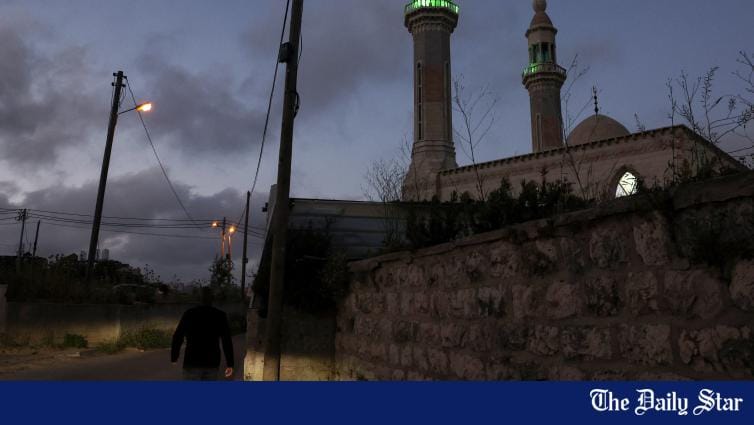
A Palestinian man walks down a street to a Mosque, amid the ongoing conflict in Gaza between Israel and the Palestinian Islamist group Hamas, in the Israeli-occupied West Bank city of Ramalla, May 3, 2024. Photo: Reuters/Shannon Stapleton

Hamas negotiators began intensified talks on Saturday on a possible Gaza truce that would see a halt to the fighting and the return to Israel of some hostages, a Hamas official told Reuters, with the CIA director already present in Cairo for the indirect diplomacy.

The Hamas delegation arrived from the Palestinian Islamist movement's political office in Qatar, which, along with Egypt, has tried to mediate a follow-up to a brief November ceasefire amid mounting international dismay over the soaring death toll in Gaza and the plight of its 2.3 million inhabitants.

Taher Al-Nono, a Hamas official and advisor to Hamas chief Ismail Haniyeh, said meetings with Egyptian and Qatari mediators had begun and Hamas was dealing with their proposals "with full seriousness and responsibility".

However, he reiterated the group's demand that any deal should include an Israeli pullout from Gaza and an end to the war, conditions that Israel has previously rejected.

"Any agreement to be reached must include our national demands; the complete and permanent ending of the aggression, the full and complete withdrawal of the occupation from Gaza Strip, the return of the displaced to their homes without restriction and a real prisoner swap deal, in addition to the reconstruction and ending the blockade," the Hamas official told Reuters.

An Israeli official signalled its core position on this was unchanged, saying "Israel will under no circumstances agree to ending the war as part of a deal to free our hostages."

The war began after Hamas stunned Israel with a cross-border raid on Oct. 7 in which 1,200 people were killed and 252 hostages taken, according to Israeli tallies.

More than 34,600 Palestinians have been killed - 32 of them in the past 24 hours - and more than 77,000 have been wounded in Israel's military operation, according to Gaza's health ministry. The bombardment has laid waste to much of the coastal enclave.

PRESSURE FOR DEAL

Before the talks began there was some optimism over a potential deal.

"Things look better this time but whether an agreement is on hand would depend on whether Israel has offered what it takes for that to happen," a Palestinian official with knowledge of the mediation efforts, who asked not to be named, told Reuters.

Washington - which, like other Western powers and Israel, brands Hamas a terrorist group - has urged it to enter a deal.

Progress has stumbled, however, over Hamas' long-standing demand for a commitment to end the offensive by Israel, which insists that after any truce it would resume operations designed to disarm and dismantle the faction.

Hamas said on Friday it would come to Cairo in a "positive spirit" after studying the latest proposal for a deal, little of which has been made public.

Israel has given a preliminary nod to terms which one source said included the return of between 20 and 33 hostages in exchange for the release of hundreds of Palestinian prisoners and a weeks-long suspension of fighting.

That would leave around 100 hostages in Gaza, some of whom Israel says have died in captivity. The source, who asked not to be identified by name or nationality, told Reuters their return may require an additional deal with broader Israeli concessions.

"That could entail a de facto, if not formal, end to the war - unless Israel somehow recovers them through force or generates enough military pressure to make Hamas relent," the source said.

Egyptian sources said CIA Director William Burns arrived in Cairo on Friday. He has been involved in previous truce talks and Washington has signalled there may be progress this time.

The CIA declined to comment on Burns' itinerary.

Egypt made a renewed push to revive negotiations late last month, alarmed by the prospect of an Israeli assault against Hamas in the southern Gaza city of Rafah, where more than 1 million Palestinians have taken shelter near the border with Egypt's Sinai Peninsula.

A major Israeli operation in Rafah could deal a huge blow to fragile humanitarian operations in Gaza and put many more lives at risk, according to U.N. officials. Israel says it will not be deterred from taking Rafah eventually, and is working on a plan to evacuate civilians.

Saturday's Cairo talks come as Qatar reviews its role as mediator, according to an official familiar with Doha's thinking. Qatar may cease hosting the Hamas political office, said the official, who did not know if, in such a scenario, the Palestinian group's delegates might also be asked to leave.​
 

Bangladesh wants OIC to act tough on permanently ending Israeli aggression against Palestine
FE ONLINE DESK
Published :
May 04, 2024 18:45
Updated :
May 04, 2024 18:45

1714868070320.webp


Foreign Minister Dr Hasan Mahmud on Saturday underlined the need for a united and tougher stance by the OIC member states to permanently end Israeli aggression against the Palestinian population.

He made the remark while holding a meeting with the Permanent Observer of the State of Palestine to the United Nations, Riyad Mansour on the sidelines of the preparatory meeting of the 15th OIC Summit in the Gambia on Friday, said a press release received in Dhaka.

During the meeting, Mansour briefed on the current situation in Palestine and requested Bangladesh's unwavering support for Palestine in international forums.

Hasan also informed about the deep support of Prime Minister Sheikh Hasina and the people of Bangladesh for the Palestinian people.

The foreign minister is leading the Bangladesh delegation at the preparatory meeting of foreign ministers.​
 

Hamas, Israel entrench Gaza truce positions as latest Cairo talks end

1714949947415.webp

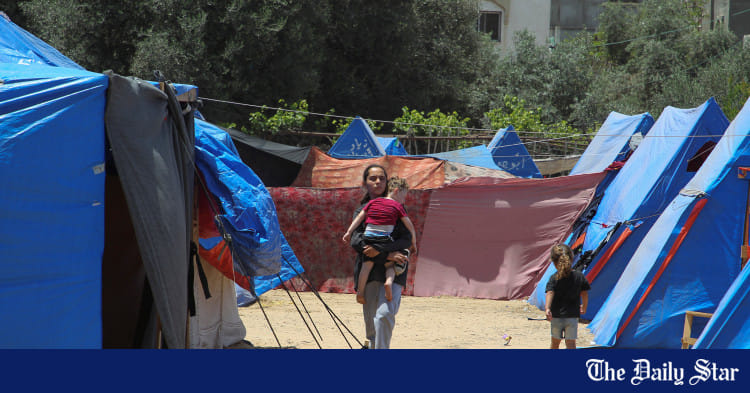
Displaced Palestinians, who fled their houses due to Israeli strikes, shelter at a tent camp, amid the ongoing conflict between Israel and the Palestinian Islamist group Hamas, in Rafah in the southern Gaza Strip, May 5, 2024. Photo: Reuters/Hatem Khaled

A Hamas official said Sunday the group's delegation for Gaza truce talks in Cairo was leaving for Qatar, after public disagreement with Israel intensified over demands to end their seven-month war.

Earlier, Israeli Prime Minister Benjamin Netanyahu said "surrendering" to a demand to end the war would amount to defeat.

The Qatar-based political chief of Hamas, Ismail Haniyeh, countered by accusing Netanyahu of sabotaging the talks.

The Hamas official, who requested anonymity to discuss the negotiations, told AFP that "the meeting with the Egyptian intelligence minister has ended and the Hamas delegation is leaving for Doha for further consultations".

The Hamas negotiators are due back in Cairo on Tuesday, said Al-Qahera News, a site linked to Egyptian intelligence services.

CIA director Bill Burns meanwhile was headed to Doha for "emergency" talks on mediation efforts with Qatari Prime Minister Mohammed bin Abdulrahman Al-Thani, a source with knowledge of the discussions told AFP.

Netanyahu on Sunday also announced a government decision to close operations in Israel of Qatar-based news channel Al Jazeera, which has broadcast round-the-clock coverage of the conflict.

It went off-air a short time later.

The network condemned Israel's decision as a "criminal act", and said it would take legal action.

Gaza's bloodiest-ever war began following Hamas's unprecedented October 7 attack on Israel that resulted in the deaths of more than 1,170 people, mostly civilians, according to an AFP tally of Israeli official figures.

Vowing to destroy Hamas, Israel's retaliatory offensive has killed at least 34,683 people in Gaza, mostly women and children, according to the Hamas-run territory's health ministry.

'Hopeless'

An AFP correspondent and witnesses reported shelling and gunfire in Gaza City Sunday, helicopter fire in central and southern Gaza, and a missile strike on a house in the Rafah area.

Israel's military said air strikes over the past day killed several militants including three in central Gaza who took part in the October attack.

"We want a ceasefire and for Gaza to return to how it was, or even better," said displaced woman Umm Jamil al-Ghussein in the southern city of Rafah, where about 1.2 million Gazans have sought shelter.

Arwa Saqr, displaced from Khan Yunis, said she has "lost hope that the negotiations will succeed".

The Palestinian civilian toll has strained ties between Israel and its main military supplier and ally the United States.

Nonetheless, Washington's Secretary of State Antony Blinken said Friday that "the only thing standing between the people of Gaza and a ceasefire is Hamas".

Negotiators met in Cairo Sunday without an Israeli delegation present.

Qatari, Egyptian and US mediators had proposed a 40-day pause in the fighting and an exchange of hostages for Palestinian prisoners, according to details released by Britain.

Any truce reached would be the first since a week-long November ceasefire saw a hostage-prisoner swap.

Protests

Netanyahu, whose coalition includes ultra-nationalist parties, faces regular protests at home, including thousands in Tel Aviv on Saturday night demanding a deal to bring home hostages still held in Gaza.

According to a statement from Netanyahu's office, he told his cabinet Israel would not let Hamas "take control of Gaza again, rebuild their military infrastructure and return to threaten the citizens of Israel".

"Israel will not agree to Hamas's demands, which mean surrender, and will continue the fighting until all its goals are achieved," he added.

Haniyeh said Netanyahu wanted to "invent constant justifications for the continuation of aggression, expanding the circle of conflict, and sabotaging efforts made through various mediators and parties".

Previous negotiation efforts had stalled in part because of Hamas's demand for a lasting ceasefire and Netanyahu's vows to crush its remaining fighters in Rafah.

Hamas in a statement insisted it maintained a "positive and responsible approach" and said it was determined to reach an agreement.

The statement mentioned that Hamas's key demands include "a complete end" to the fighting, Israeli withdrawal "from the entire Gaza Strip, the facilitation of the return of displaced people, the intensification of relief efforts", reconstruction efforts and a prisoner-hostage exchange deal.

Aid crossing shut

Netanyahu has vowed to invade Rafah regardless of any truce, and despite concerns from the United States, other countries and aid groups.

At the start of the war, Israeli Defence Minister Yoav Gallant said his country would impose a "complete siege" blocking food, water and other supplies.

Continuous appeals for greater access have, according to the UN, led to some improvements recently.

Israel in December reopened the southern Kerem Shalom border crossing for aid, but on Sunday the army said it was targeted with projectiles and "closed to the passage of humanitarian aid trucks".

Hamas's armed wing later claimed the rocket fire, saying militants had targeted troops.

The head of the UN agency for Palestinian refugees, which has been central to humanitarian operations in Gaza during the war, said Sunday that Israeli authorities had barred him from entering Gaza for a second time since the war began.

"Just this week, they have denied -- for the second time -- my entry to Gaza where I planned to be with our UNRWA colleagues," UNRWA chief Philippe Lazzarini posted on X.

In their October attack on Israel the militants seized hostages, of whom 128 remain in Gaza including 35 who the military says are dead.

On Sunday the Hostages and Missing Families Forum appealed to Netanyahu, telling him in a statement to "disregard all political pressure".

Some far-right members of the Israeli government have opposed the latest truce proposal and called for fighting to continue.

France's President Emmanuel Macron urged Netanyahu in a phone call Sunday to reach a deal in negotiations with Hamas, the French presidency said.

A resolution adopted at a meeting of the Organisation of Islamic Cooperation in Gambia called on "member states to exercise diplomatic, political and legal pressure" to stop Israel's "crimes" and war in besieged Gaza.​
 

Members Online

No members online now.

Latest Posts

Back
PKDefense - Recommended Toggle