Donate ☕
[🇧🇩] - Israel and Hamas war in Gaza-----Can Bangladesh be a peace broker? | Page 12 | PKDefense

[🇧🇩] Israel and Hamas war in Gaza-----Can Bangladesh be a peace broker?

Reply (Scroll)
Press space to scroll through posts
G Bangladesh Defense
[🇧🇩] Israel and Hamas war in Gaza-----Can Bangladesh be a peace broker?
944
24K
More threads by Saif


Hezbollah launches drones at Israel bases
Agence France-Presse . Beirut 23 April, 2024, 22:01

1713914260091.webp

The Israeli army had earlier on Tuesday claimed to have killed `two significant terrorists in Hezbollah's aerial unit' during the course of the previous day and night. | AFP photo

Lebanon's Iran-backed Hezbollah movement said it launched drone attacks on two north Israel bases Tuesday in retaliation for the killing of a fighter Israel described as 'significant'.

Since Hamas's unprecedented October 7 attack on Israel triggered war in Gaza, there have been near-daily cross-border exchanges of fire between Hezbollah and the Israeli army.

But Hezbollah has stepped up its rocket attacks on Israeli positions in recent days, with the latest assault targeting beyond the border area that the group usually strikes.

Hezbollah launched 'a combined air attack using decoy and explosive drones that targeted' two Israeli bases north of Acre, the group announced in a statement, while Israel said they did not hit their targets.

The Lebanese group added the attack was 'in response' to an Israeli drone strike that killed one of its members in south Lebanon earlier in the day.

Israel's army said it had 'successfully intercepted two suspicious aerial targets off the northern coast'.

On Tuesday morning, a source close to Hezbollah told AFP an Israeli drone strike deep into Lebanon killed an engineer working for the group's air defence forces as he was travelling in a vehicle.

The strike hit the Abu al-Aswad area near the coastal city of Tyre, some 35 kilometres from the border, an AFP journalist reported.

The fighter's vehicle was completely burnt out.

Hezbollah said one of its fighters had been killed by Israeli fire, adding he was a resident of the area where the vehicle was struck.

The group also said another fighter had been killed by Israel in a statement overnight.

Earlier Tuesday, the Israeli army had said it killed 'two significant terrorists in Hezbollah's aerial unit' on Tuesday morning and overnight.

The fighter killed Tuesday was 'heavily involved in the planning and execution of terrorist attacks against Israel,' it added.

On Sunday evening, Hezbollah shot down an Israeli drone, both sides said.

Since October 7, at least 378 people have been killed in Lebanon, mostly Hezbollah fighters but also 70 civilians, according to an AFP tally.

Israel says 11 soldiers and eight civilians have been killed on its side of the border.​
 
Analyze

Analyze Post

Add your ideas here:
Cite Fact Check Highlight Respond

Gaza could surpass famine thresholds in 6 weeks: WFP


1713999192588.webp

A family flees Rafah putting the children in the trunk of a car in the southern Gaza Strip yesterday. Fears are rising that Israel will soon launch an assault on Rafah, but aid groups warn any invasion would create an "apocalyptic situation". Photo: REUTERS

The Gaza Strip could surpass famine thresholds of food insecurity, malnutrition and mortality in six weeks, an official from the World Food Programme said yesterday.

"We are getting closer by the day to a famine situation," said Gian Caro Cirri, Geneva director of the World Food Programme (WFP).

"There is reasonable evidence that all three famine thresholds -- food insecurity, malnutrition and mortality -- will be passed in the next six weeks."

A UN-backed report published in March said that famine was imminent and likely to occur by May in northern Gaza and could spread across the enclave by July. On Tuesday, a US official said the risk of famine in Gaza, especially in the north, was very high.

Cirri was speaking at the launch of a report by the Global Network Against Food Crises, an alliance of humanitarian and development actors including United Nations agencies, the World Bank, the European Union and the United States.

A US official said the risk of famine in Gaza, especially in the north, is very high.

In its report, the network described the 2024 outlook for the Middle East and Africa as extremely concerning due to the Gaza offensive and restricted humanitarian access, as well as the risk of the conflict spreading elsewhere in the region.

"As for Gaza, the conflict makes it difficult and sometimes impossible to reach affected people," Cirri said. "We need to scale up massively our assistance... But under the current conditions, I'm afraid the situation will further deteriorate."

The United Nations has long complained of obstacles to getting aid in and distributing it throughout Gaza in the six months since Israel began an aerial and ground offensive against Gaza's ruling group Hamas.

Israel has denied hindering supplies of humanitarian aid and blames aid agencies for inefficiencies in distribution.

Israel's military campaign has reduced much of the territory of 2.3 million people to a wasteland with a humanitarian disaster unfolding since October 7.

Cirri said that the only way to steer clear of famine in Gaza was to ensure immediate and daily deliveries of food supplies. "They've been selling off their belongings to buy food. They are most of the time destitute," he said. "And clearly some of them are dying of hunger."

Meanwhile, the Red Cross said the evacuation of displaced Palestinians from Gaza Strip's Rafah is not possible under current conditions.

The statement from the top humanitarian agency comes as Isarel has signalled that the invasion of Rafah is in the offing. The Israeli military considers Rafah in southern Gaza to be the last bastion of Hamas.​
 
Analyze

Analyze Post

Add your ideas here:
Cite Fact Check Highlight Respond
Analyze

Analyze Post

Add your ideas here:
Cite Fact Check Highlight Respond

Israel's sense of moral immunity needs breaking

1714086459506.webp

Avnery crossed the front lines and met Yasser Arafat on July 3, 1982 during Israel's siege of Beirut. PHOTO: WIKIMEDIA COMMONS

The late Israeli academic, journalist, and politician Uri Avnery once famously described Israel as a small America and America as a huge Israel. If Avnery were alive today, he could be forgiven for including Europe as an extended part of Israel. Uri Avnery was among the founders of the Israeli Council for Israeli-Palestinian Peace. Shortly after the group's founding, Avnery was assaulted and stabbed several times—yet another graphic manifestation of the Zionist state's culture of intolerance to the truth.

Avnery crossed the front lines and met Yasser Arafat on July 3, 1982, during Israel's siege of Beirut. He is said to have been the first Israeli politician to have met personally with Arafat. He was tracked by an Israeli intelligence team that intended to kill Arafat, even if it meant killing Avnery at the same time once the latter had inadvertently led them to Arafat's hide-out. The operation, "Salt Fish," failed when the Palestine Liberation Organization (PLO) managed to lose their trackers in the alleyways of Beirut.

The late Robert Fisk, an English writer, journalist, and a major critic of United States foreign policy in the Middle East, interviewed Avnery shortly following the harrowing Sabra and Shatila massacre of 1982 and asked him how survivors of the Holocaust and their children could look on as 1,700 (the actual figure was said to have crossed 3,000) Palestinians, unarmed men, women, and children, were massacred in cold blood. Avnery replied, "I will tell you something about the Holocaust. It would be nice to believe that people who have undergone suffering have been purified by suffering. But it's the opposite, it makes them worse. It corrupts. There is something in suffering that creates a kind of egoism… You get a moral 'power of attorney,' a permit to do anything you want… This is a moral immunity which is very clearly felt in Israel."

The key question that remains unanswered, though, is how much of the global outrage for Gaza will impact Washington's attitude and its policy of blind and unconditional support for Israel. There are signs of slow but visible unease among the policymakers in the US capital. But with an election looming on the horizon and the gripping power of the Jewish lobby all across the land, how strongly, to quote Avnery, "a large Israel" can confront Israel and unshackle itself from its "most strategic ally" remains to be seen.

Gaza today is Sabra-Shatila multiplied many times.

But then some believe differently. Nothing but respect can there be for someone like Professor Norman Finkelstein, a son of Holocaust survivors. Both his parents were victims of Nazi persecution against the Jews, and still, that has not stopped him from speaking out openly about the truth in the face of denial of the ongoing Israeli genocide in Gaza. Finkelstein has, on more than one occasion, said he is dead against using the Holocaust card to justify Israel's atrocities against the Palestinians and has dared the Jews of the world to do the same if they have any heart.

The present state of Palestinian persecution has its roots in the Nakba of 1948. This historical tragedy finds little or no mention in the narrative that pervades in Western capitals. Israel's continued persecution in Palestine in general, and now the genocide in Gaza in particular, has been possible only because of the direct support from those governments in the West that profess the values of human rights and democracy across the globe but choose to exempt Israel from their list.

The words of Norman Finkelstein and those of the late Uri Avnery did prove that among all the mayhem and Western double standards, there exist voices of sanity; not that those have made much difference to the policymakers in the West. But maybe, just maybe, that could begin to change.

In a case filed by Nicaragua, the World Court will likely rule on Germany's support for Israel. This could be a sign of how geopolitics is shifting as a fallout from the genocide being committed by Israel in Gaza.

Steve Crawshaw, the former Russia and East Europe editor at The Independent and former UK director at Human Rights Watch, in an article in The Guardian on April 9, has said that Germany is under pressure. Crawshaw says that after October 7, Chancellor Olaf Scholz said that "there is only one place for Germany: at Israel's side." It was, Scholz said, "a perpetual task for us to stand up for the security of the state of Israel."

Crawshaw writes, "The good intentions that underlie that philosophy – Israel as Germany's 'raison d'état,' in the words of Scholz's predecessor Angela Merkel – are clear. But Germany's unquestioning support for Israel is becoming increasingly difficult to sustain. Germany sees itself as a global voice for human rights, yet it has continued to sell arms to Israel… German opinion polls have swung dramatically in ways that no politician can ignore. Critics of the Gaza assault have more than doubled to 69%; support for Israel's conduct of the war has collapsed to just 18%. Almost nine in 10 Germans now think there should be more pressure on Israel."

Germany's Green Foreign Minister, Annalena Baerbock, has also said that aid must immediately get into Gaza with "no more excuses." And even Scholz has begun to sound critical, asking on a visit to Israel last month, "No matter how important the goal, can it justify such terribly high costs? Or are there other ways to achieve your goal?" Meanwhile, German lawyers have reportedly brought a case calling for Germany to end its arms sales to Israel. Britain and other governments are facing similar pressures, while a Dutch court found a "clear risk" that exported F-35 jet parts to Israel could be used in breaches of international humanitarian law.

The key question that remains unanswered, though, is how much of the global outrage for Gaza will impact Washington's attitude and its policy of blind and unconditional support for Israel. There are signs of slow but visible unease among the policymakers in the US capital. But with an election looming on the horizon and the gripping power of the Jewish lobby all across the land, how strongly, to quote Avnery, "a large Israel" can confront Israel and unshackle itself from its "most strategic ally" remains to be seen.

In the meantime, Palestinians continue to pay with blood for the horrific crimes committed by Europe on the Jews for ages.

Bir Bikram Shamsher M Chowdhury is former Foreign Secretary of Bangladesh.​
 
Analyze

Analyze Post

Add your ideas here:
Cite Fact Check Highlight Respond

'My son is on the bulldozer'
Palestinians search for loved ones as bulldozers unearth bodies near Gaza hospital

1714086917883.webp

Palestinians mourn over the bodies of relatives killed in Israeli bombardment, at the al-Najjar hospital in Rafah in the southern Gaza Strip yesterday. Photo: AFP

Palestinian woman Reem Zidan had been searching for her son for months, and finally found his body on Wednesday as a bulldozer unearthed human remains outside a Gaza hospital.

"They told me to move away, but I said, 'my son is on the bulldozer'," Zidan told AFP from the southern Gaza city of Khan Yunis, crediting her "maternal instinct" for "knowing" it was the body of 22-year-old Nabil.

As combats subsided in Khan Yunis after Israeli forces withdrew from the area in their fight against Hamas, health workers have begun recovering bodies buried next to the city's Nasser Hospital -- southern Gaza's largest.

"I haven't seen him for three months, and today I found him", Zidan said, adding that Nabil was killed by shrapnel from an Israeli air strike.

Gaza's Civil Defence agency said Tuesday that workers had uncovered nearly 340 bodies over several days of people killed and buried by Israeli forces at the hospital.

"We were surprised that inside the Nasser Medical Complex there are mass graves made by the Israeli occupation" military, Civil Defence spokesman Mahmoud Bassal told AFP.

The Israeli army has denied troops had dug the graves. Some parents told AFP the bodies recovered had been buried by relatives.

Unlike Zidan, others who went to the Nasser complex in hope of recovering their relatives' bodies could not find them.

Sonia Abu Rajilah, 52, from Khan Yunis, said her son 29-year-old son Hazem was buried by his friends near the hospital, but that she and her other sons have not been able to find him.

"Now I wait among the bodies being pulled out, hoping to recognise his body," she told AFP.​
 
Analyze

Analyze Post

Add your ideas here:
Cite Fact Check Highlight Respond

The pitfalls of neutrality

1714259282576.webp

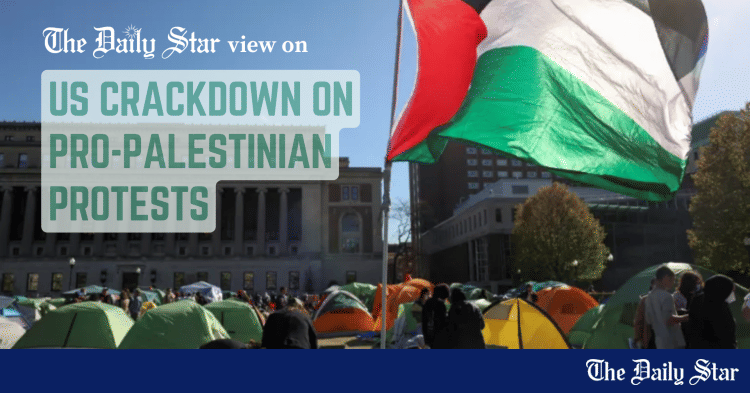
Protesters continue to maintain the encampment on the Columbia University campus after a tense night of negotiations in New York City, US on April 24, 2024. PHOTO: REUTERS

One of the grey areas in my professional life involves the debate surrounding the teaching of political consciousness in the classroom and the resistance to student activism. As a student of literature and culture, I believe that teaching students about political consciousness is essential to creating informed and engaged citizens. However, I have consistently avoided exposing my personal political ideologies in a classroom context, as I worry that my stated stance could result in the teaching of biased viewpoints. Ideally, as a teacher, I strive to act as a facilitator, promoting the discussion that the text demands. But there comes a moment when you have to identify what you think is just and fair. This may vary depending on the position of an organised political entity controlled by its attached strings, or that of a radical thinker who comes with macho-zealous baggage.

While I was doing my PhD at Birkbeck College at the University of London, I remember seeing a yellow sticky note left on the classroom door by my professor on April 10, 2003. It read, "Extraordinary times require extraordinary measures. No class today." My professor was going to the anti-war march to protest the attack on Iraq. We all joined. The ongoing campus protests in the US and other parts of the world have prompted me to reflect on the extraordinary roles that students are playing. It made me think of a novel that I sometimes teach: Don DeLillo's White Noise.

The novel, set in 1968, begins with students returning to campus after their spring break. The caravan of cars in which parents bring their children to College-on-the-Hill symbolises a tradition that defines a nation. The fun-loving students who come to pursue degrees remain oblivious to the 1968 protests that sparked a counterculture against the Vietnam War and a demand for civil rights. Hitler Studies is one of the College-in-the-Hill's signature academic programmes. The sham of academia is critiqued by DeLillo, who exposes the forgery of the most celebrated Hitler professor, who does not even know German, yet nobody can talk of Hitler without citing him. DeLillo's criticism pervades my consciousness like white noise, a constant background noise that drowns out other sounds. The inability to practise what we teach adds to the ambivalence.

Seeing the encampments spreading like wildfire in US universities has made me rekindle my passion. These students are occupying significant campus locations or setting up blockades, calling for universities to separate themselves from companies that advance Israel's military efforts in Gaza and, in some cases, Israel itself. Independent coalitions of student groups orchestrate these campus protests, drawing inspiration from peers at other universities. Columbia University arrested over 100 protesters and expelled many due to their convictions. Many of these students pay or have taken loans to pay almost $80,000 in annual tuition fees. They are jeopardising both their career and their future. Why? They feel that their government is aiding Israel in committing genocide in Palestine.

The students are advocating for the divestment of investments in companies and funds allegedly benefiting from Israel's actions in Gaza and the ongoing occupation of Palestinian territories. Companies like Google, which reportedly holds significant contracts with the Israeli government, and Airbnb, known for permitting property listings in Israeli settlements located in the Occupied West Bank, are among the targets. Then there is the issue of having the university's branch campus in Tel Aviv.

Emory University in Atlanta dismantled a camp on Thursday morning, with at least 17 people detained. Police used rubber bullets and tear gas to quell pro-Palestinian protests. The heavy-handedness led students in Atlanta to shout, "Stop Cop City." The situation turned brutal at the University of Texas, where police and state troopers made dozens of arrests and forced hundreds of students off the main lawn. The University of Texas at Austin aggressively detained dozens of protesters, making 34 arrests. The university's president, Jay Hartzell, vowed, "Our rules matter, and we will enforce them. Our university will not be occupied." Northwestern University hastily changed its student code of conduct to bar tents on its suburban Chicago campus, as anti-war student activists set up an encampment similar to pro-Palestinian demonstrations at colleges nationwide. The university enacted an interim addendum to its student code to bar tents, and warning of disciplinary actions including suspension, expulsion, and criminal charges.

Earlier, the University of Southern California cancelled its main stage graduation ceremony amid protests. The university faced criticism over its decision to axe a graduation speech by valedictorian Asna Tabassum after pro-Israel groups labelled her anti-Semitic for her social media posts supporting Palestinians.

While many pro-Israeli lobbyists have tried to thwart what they believe is rising anti-Semitism, many Jewish individuals have come to aid the pro-Palestine student groups. They believe that the extreme Zionists are libelling their culture. "Not in my name" is a popular slogan among the Jewish supporters of Palestine. Award-winning author and activist Naomi Klein, for instance, spoke at one gathering in New York recently, where she said, "Too many of our people are worshiping a false idol. They are enraptured by it. They are drunk on it. They are profaned by it. Zionism is a false idol."

Now, one may wonder why the noise is getting louder on the margin, outside the whale, where mainstream media harps on Biblical myth: to protect the promised land of one of the most persecuted races in history. But do the Jewish people have the moral height to preach about suffering once it has killed more than 40,000 people in a narrow strip of land, pounding it with thousands of 2,000-pound bombs—the extent that the world has not seen since Vietnam? The International Court of Justice has already taken the case of plausible genocide into cognisance. The veto power of the superpower makes the federal government out of sync with the people.

As the clamour of dissent grows louder, we stand on the precipice of historical reckoning. The student protests of 1968 heralded a paradigm shift in global consciousness, challenging entrenched power structures and reshaping the trajectory of history. Are we on the cusp of a similar watershed moment, where the voices of dissent converge to challenge the prevailing orthodoxy? Only time will tell.

Dr Shamsad Mortuza is professor of English at Dhaka University.​
 
Analyze

Analyze Post

Add your ideas here:
Cite Fact Check Highlight Respond

World has failed Gaza
Host Saudi tells global economic summit, reiterates its call for a Palestinian state

1714346982254.webp

Smoke rises after an explosion in Gaza, amid the ongoing conflict between Israel and the Palestinian group Hamas, as seen from Israel, March 14, 2024. REUTERS/Amir Cohen

Saudi Arabia on Sunday said the international community has failed Gaza and reiterated its call for a Palestinian state at a global economic summit attended by a host of mediators.

"The situation in Gaza obviously is a catastrophe by every measure –- humanitarian, but also a complete failing of the existing political system to deal with that crisis," Foreign Minister Prince Faisal bin Farhan said during the first day of a Saudi-hosted World Economic Forum special meeting.

Only "a credible, irreversible path to a Palestinian state" will prevent the world from confronting "this same situation two, three, four years down the line," he said.

US Secretary of State Antony Blinken, Palestinian leaders and high-ranking officials from other countries trying to broker a ceasefire between Israel and Hamas are attending the summit in Riyadh, capital of the world's biggest crude oil exporter.

Since October 7, Israel's offensive has killed at least 34,454 people in Gaza, mostly women and children, according to the Hamas-run health ministry.

Speaking in Riyadh, Palestinian president Mahmud Abbas said the United States "is the only country capable" of preventing Israel's long-feared invasion of Rafah city in southern Gaza.

"We appeal to the United States of America to ask Israel to stop the Rafah operation," he said, warning it would harm and displace civilians, and be "the biggest disaster in the history of the Palestinian people".

Earlier Sunday, Saudi Finance Minister Mohammed al-Jadaan called for regional "stability", warning of the effects of the war on global economic sentiment.

"I think cool-headed countries and leaders and people need to prevail," Jadaan said.

Diplomatic efforts to reach a long sought-after truce and hostage-release deal in Gaza appeared to intensify, as Hamas said it would respond to Israel's latest proposal on Monday.

WEF president Borge Brende said Saturday there was "some new momentum now in the talks around the hostages, and also for... a possible way out of the impasse we are faced with in Gaza".

Israel is not taking part in the summit.

The US State Department said Blinken will "discuss ongoing efforts to achieve a ceasefire in Gaza that secures the release of hostages".

Prince Faisal said any reconstruction plan for Gaza would need to be accompanied by a durable political solution to the conflict.

"This idea that we can talk about half measures and to discuss, 'Well where are the 2.5 million people of Gaza going to go?' without addressing how we make sure that something like this doesn't happen again, I think that's patently ridiculous," he said.

"And anybody who tries to take that approach I think is sincerely misguided."

From the outset Saudi Arabia has worked with other regional and global powers to try to contain the war in Gaza and avoid the type of conflagration that could derail its ambitious economic reform agenda known as Vision 2030.

The kingdom also remains in talks about a landmark deal under which it would recognise Israel for the first time while strengthening its security partnership with Washington, though analysts say the war has made it more difficult.

Saudi Arabia, home to the holiest shrines in Islam, is trying to open up to the world, luring business leaders and non-religious tourists.

Hosting international events such as the WEF meeting allows it to showcase social changes such as reintroducing cinemas and lifting a ban on women driving.

Yet questions persist about just how much of Vision 2030 will be achieved and when, with special focus on signature projects such as NEOM, a planned futuristic megacity.

In December, Jadaan said officials had decided to push the timeframe for some major projects past 2030, without specifying which, though he also noted that others would be accelerated.

Saudi Arabia is projecting budget deficits through 2026, and GDP growth was nearly flat last year after several oil production cuts.

Jadaan stressed Sunday that non-oil GDP growth was "very healthy" at 4.4 percent and that "Vision 2030 is about, actually, the non-oil GDP".​
 
Analyze

Analyze Post

Add your ideas here:
Cite Fact Check Highlight Respond

Members Online

Latest Posts

Latest Posts