โ˜• Support Us โ˜•
[๐Ÿ‡ง๐Ÿ‡ฉ] - Manpower Export: Prospects and Challenges. | Page 5 | PKDefense

[๐Ÿ‡ง๐Ÿ‡ฉ] Manpower Export: Prospects and Challenges.

Reply (Scroll)
Press space to scroll through posts
G Bangladesh Defense
[๐Ÿ‡ง๐Ÿ‡ฉ] Manpower Export: Prospects and Challenges.
43
1K
More threads by Saif


Protect migrant workers from fraudulent recruitment
OKUP findings deserve critical scrutiny

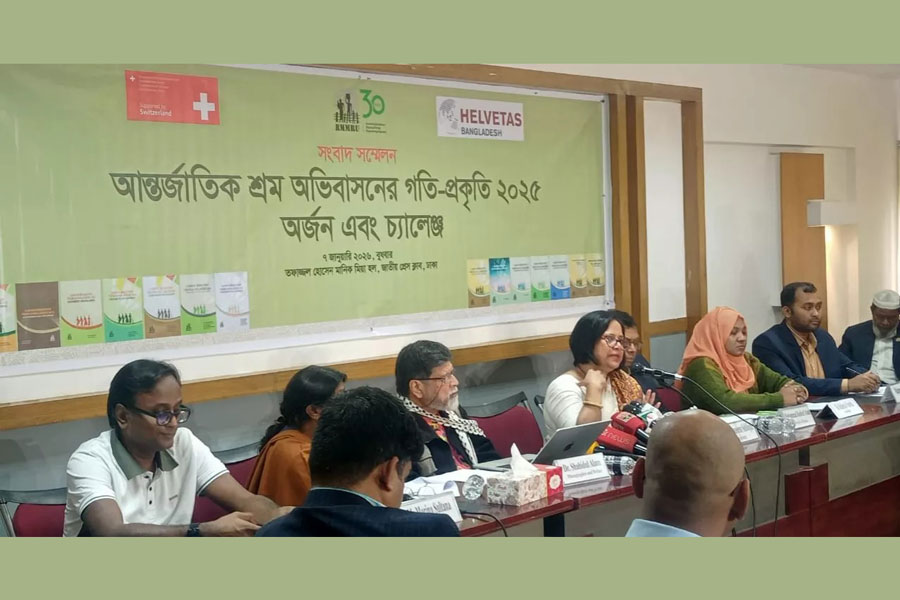
1752284497028.png

VISUAL: STAR

The scale of the exploitation our migrant workers have faced over the years is truly shocking. A recent study by the Ovibashi Karmi Unnayan Program (OKUP), based on 114 case studies of workers who sought legal help between January 2023 and October 2024, sheds light on just how systemic and devastating this exploitation has been. While the sample size may be modest, the patterns it reveals are consistent with what has long been reported anecdotally and through media investigations, pointing to a deeply entrenched and institutional neglect of responsibility in protecting our migrant workers.

As per the OKUP study, 36 percent of workers were forced to return home within just three months of migrating, crushing their hopes of a better future and even leaving many in deeper debt. Such abrupt, premature returns are only one side of a much larger problem, however. It includes contract substitution, lack of work permits, extortionate migration costs, etc. For example, 75 percent of workers left Bangladesh without receiving any prior employment contract while, shockingly, not a single female migrant received one before departure. Even among the 25 percent who did receive contracts, most got them just hours before their flight. Upon arrival, 47 percent of all migrants were denied work permits, and among those who received permits, only 24 percent were actually given the jobs they had been promised.

These findings point to a systematic betrayal of workers at every stage of the migration process, both at home and abroad. One revelation that almost all can relate to is that every male worker surveyed was charged migration fees well beyond the legal limitsโ€”often double for those heading to Saudi Arabia and six times higher for Malaysia. This is significant because these two countries are key destinations for our workers. Malaysia, in particular, has been in the news of late for exploitation-related cases. For instance, in May, 33 Bangladeshi workers filed a case in a Malaysian court against a recruitment firm and several government officials for alleged fraud. They said they were victims of human trafficking and job scams. In the first four months of 2025, over 3,500 Bangladeshis were also reportedly denied entry and sent back from Kuala Lumpur, many victims of such job scams. Also in May, another company revoked work permits of Bangladeshi workers after they aired concerns about its poor working conditions.

The OKUP study also raises serious questions about the effectiveness of the arbitration system for affected workers. While questioning the role of the Bureau of Manpower, Employment and Training (BMET) as being responsible for both issuing recruitment licences and settling disputesโ€”an inherent conflict of interestโ€”it reveals that there is currently no fair mechanism to ensure justice and no clearly defined standards for compensation or remedies. All these issues are interconnected and need to be resolved simultaneously to ensure the whole migration process is above board. OKUP's recommendations in this regard deserve serious consideration.

It is high time the interim government took comprehensive measures together with the authorities of destination countries to clean up this long-neglected process. Our migrant workers deserve dignity, protection, and justice. We must not let them be exploited any longer.​
 

Bangladesh High Commission notice
Malaysia to employ workers who failed to travel last year

Staff Correspondent Dhaka
Published: 01 Aug 2025, 22: 14

1754094551491.png

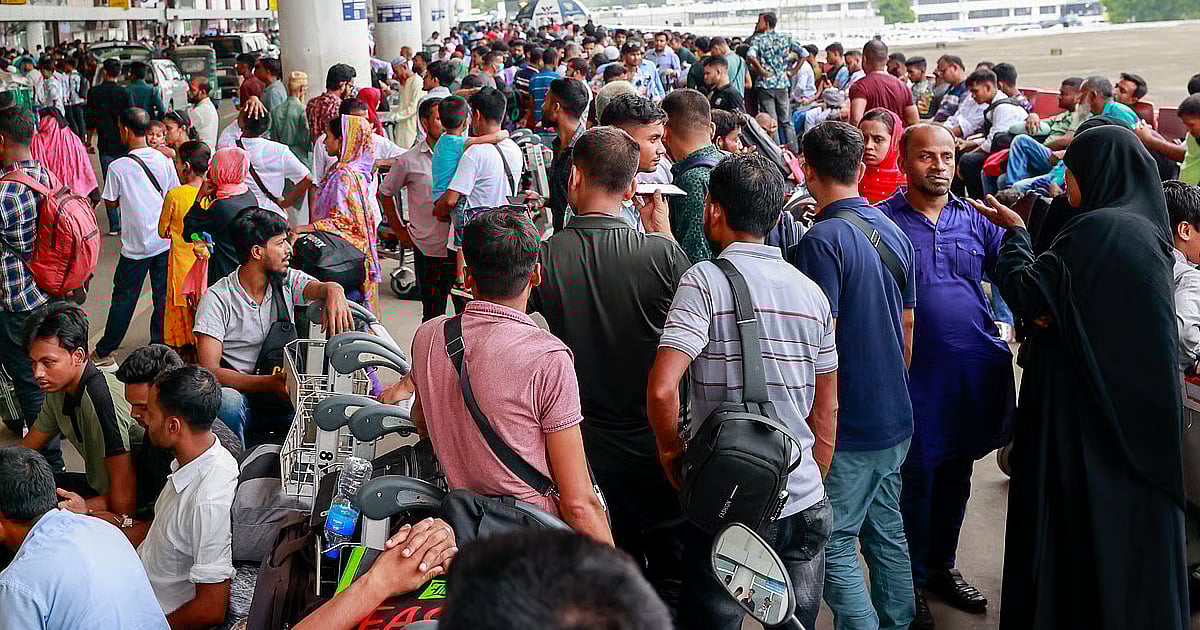
Workers who could not to Malaysia wait at the Dhaka airport in May last year File photo

Malaysia has decided to employ Bangladeshi workers who could not travel by May last year.

Bangladesh High Commission in Malaysia disclosed this information in a revised notice today, Friday.

According to the notice, Malaysia has granted approval for employment, through the Bangladesh Overseas Employment and Services Limited (BOESL), of those who were unable to arrive in Malaysia by 31 May last year.

The Malaysian authorities have decided to recruit those workers in the construction and tourism sectors, the notice added.

The notice calls for all required information for tourism sector workers to be submitted via the online portal of the countryโ€™s Foreign Workers Centralised Management System (FWCMS), following the attached checklist for verification of the demand letters.

For construction sector workers, all applications must be submitted through the Construction Labour Exchange Centre Berhad (CLAB), along with the necessary information on the FWCMS portal.

Apart from this, the original copies of all documents submitted to FWCMS, along with one set of photocopies, must be submitted to the Bangladesh High Commission.

It is worth noting that last year, despite completing all formalities and obtaining final clearance, as many as 16,970 workers could not travel to Malaysia.

Among them, some were unable to secure flight tickets, while others did not receive final confirmation from their employers in Malaysia.

In some cases, employers failed to send confirmation of their willingness to receive the workers from the airport.​
 

Malaysiaโ€™s conditions on labour migration โ€˜unacceptableโ€™: adviser
Overseas Employment Platform launched

Staff Correspondent 19 November, 2025, 22:37

Malaysia has reopened its labour market for Bangladeshi workers, but attached around a dozen conditions that Dhaka considers unacceptable, said expatriatesโ€™ welfare and overseas employment adviser Asif Nazrul.

According to a press release, adviser Nazrul made the remarks as chief guest at the launch of โ€˜Overseas Employment Platformโ€™ on Wednesday at a city hotel.

The Ministry of Expatriatesโ€™ Welfare and Overseas Employment launched the Overseas Employment Platform in order to promote safe migration and fair recruitment.

Developed under the ministry, the OEP is a joint initiative by the government of Bangladesh, the International Labour Organisation and the government of Switzerland.

The integrated national digital gateway is designed to connect all key actors in the labour migration cycle โ€“ including aspirant migrant workers, recruitment agencies, the Bureau of Manpower, Employment and Training, technical training centres, employers, immigration authorities and return and reintegration service providers.

At the launch, Nazrul said that Bangladesh had already conveyed its objections to several of the proposed conditions and would continue discussions with Malaysian authorities to secure a more favourable position for Bangladeshi workers.

Malaysiaโ€™s new criteria require recruiting agencies to have at least five years of operational experience, a record of sending a minimum of 3,000 workers in the past five years and experience sending workers to at least three countries.

Agencies must also hold a valid licence, a good-conduct certificate, operate their own training and assessment centre, present recommendation letters from at least five international employers, maintain a permanent office space of 10,000 square feet, and prove compliance with destination-country regulations, he said.

The adviser warned that enforcing such stringent conditions may pave the way for a syndicate.

โ€˜Only a handful of agencies would be able to send workers if these standards are enforced. We want an open and competitive labour market,โ€™ he said.

Asif Nazrul said that the platform was designed to ensure transparency in the recruitment process and help prospective migrant workers avoid fraud and exploitation, especially as Bangladesh continues discussions with Malaysia to secure fairer conditions for its workers.

In his remarks, Max Tunon, country director, ILO Bangladesh, said, โ€˜The OEP is a concrete step toward operationalising fair recruitment principles. By centralising information and processes, the platform supports better regulation of recruitment agencies, improves access to verified information for workers, and ultimately contributes to safer and more orderly migration.โ€™

Deipak Elmar, deputy head of mission, Embassy of Switzerland in Bangladesh, said, โ€˜Technology alone will not fix migration governance. The true success of this platform will come from how institutions, recruiting agencies, employers and migrants themselves engage with it. Its effectiveness will be determined by the commitment and responsibility of all stakeholders.โ€™

In his concluding remarks, programme chair Neyamat Ullah Bhuiyan, senior secretary of the ministry, reiterated the ministryโ€™s commitment to further strengthening and expanding the platform.

He said, โ€˜The launch of the OEP is not the end of a project; it is the beginning of a new phase in managing labour migration. We will continue to enhance its features, ensure institutional coordination, and work closely with our partners so that migrant workers can plan their journeys with dignity, safety and confidence.โ€™​
 

CA calls for broker, fraudulence free system to send workers abroad

BSS Dhaka
Published: 17 Dec 2025, 18: 41

1766021535374.webp


Chief adviser professor Muhammad Yunus spoke at a function at held in Osmani Memorial Auditorium marking International Migrants Day and National Expatriates Day-2025. BSS

Citing that Bangladesh is facing a deep and complex crisis in overseas employment due to entrenched broker syndicates, document forgery and systemic failures, chief adviser professor Muhammad Yunus today, Wednesday put emphasis on building a broker and fraudulence free system in sending workers abroad.

โ€œOverseas migration has become dangerously entwined with brokers and fraud. Until we are free from this, there is no reason to believe that meaningful progress has been made,โ€ he said.

Highlighting different initiatives of the government to resolve the deep-rooted migration challenges, the chief adviser said, โ€œDespite sincere efforts by the government, the scale of results we should have achieved has not been reachedโ€.

Many initiatives appear impressive on the surface, which are important too, but the government has so far been unable to penetrate the core of the broker-dominated system, he added.

Prof Yunus made the remarks while addressing a function at the Osmani Memorial Auditorium here marking the International Migrants Day and National Expatriates Day-2025. The day is observed on 18 December every year.

Recalling his experience with Grameen Bank, the chief adviser said he first came to know about the broker syndicate when requests started to come from rural women seeking loans from the bank to send their children abroad.

โ€œThe entire world is broker-controlled. It is nearly impossible to understand who took money from whom and for what reason. The government remains far away from this system,โ€ he said.

In this connection, the chief adviser said that this must be changed at any cost to take the country forward with earning remittances.

Expatriatesโ€™ Welfare and Overseas Employment adviser professor Dr Asif Nazrul spoke at the event as the special guest while senior secretary to the ministry Dr Neyamat Ullah Bhuiyan delivered the address of welcome.

At the function, a total of 86 Bangladeshi expatriates were honored as CIPs under three categories. Of them, one was honored for direct investment in Bangladesh's industries, 75 for sending the highest amount of remittance through legal channels and 10 for importing Bangladeshi products to different countries across the world.

Among the CIPs, Kallal Ahmed, Md Abdul Karim and Md Mahmudur Rahman Khan received a crest each under the three categories respectively from the chief adviser.

Prof Yunus distributed cheques of insurance benefits, medical assistance, financial aid, compensation and scholarships for meritorious children of expatriate workers at the event.

Raju Ahmed, an expatriate in Croatia, and Shahnara Akter Shanu, a returnee expatriate from Saudi Arabia, shared their experiences at the function.

At the outset of the event, a documentary was screened highlighting the role of the expatriate Bangladeshis in the 2024 July Uprising and boosting the countryโ€™s economy. It also manifested the governmentโ€™s efforts to ensure welfare for them.

At the event, professor Asif Nazrul handed over a Task Force report on reforms and strategic realignment of the ministry to the chief adviser.

Reflecting the government efforts to ensure welfare for the expatriate Bangladeshis, professor Yunus said, after assuming the office, his government took steps to release Bangladeshi migrants, who were jailed abroad for staging demonstrations expressing solidarity with the July Uprising in their homeland.

โ€œWe appealed (to those countries), saying they were not criminals. They violated laws emotionally, not maliciously,โ€ he said.

The expatriates knew the laws of their staying countries well and about the punishment for breaching those, the chief adviser said, adding, but they ignored it as they couldnโ€™t refrain themselves from doing something for their beloved country.

Prof Yunus also recalled discussions with Malaysian prime minister Anwar Ibrahim, when he came to Bangladesh last year, and solving the problem regarding thousands of Bangladeshi workers who failed to travel despite paying full costs.

Citing that Bangladesh is missing enormous global opportunities despite massive demand for workers, he said Japan alone could take hundreds of thousands of workers from the country.

Referring to his visit to Japan this year, the chief adviser said when he offered Japan to send one lakh Bangladeshi workers in the next five years there, they accepted it immediately.

โ€œIf we want to send five lakh people to Japan today, Wednesday, they would accept them,โ€ he said, adding, Japan requires only language and vocational skills.
โ€œImagine what would happen to someone who spends five years in Japan. Their destiny would completely change,โ€ the chief adviser said.

About document forgery in sending workers abroad, Prof Yunus said it has tarnished Bangladeshโ€™s image globally.

Referring to the ban of different Middle East countries on issuing visas for Bangladeshis on charge of document forgery, he said, โ€œBangladesh has become infamous worldwide for fake papersโ€.

The chief adviser cited examples where even seafarers were barred from disembarking at foreign ports due to mistrust of Bangladeshi documents, saying, โ€œThis is a tragic realityโ€.

However, due to the government's efforts, he said the problem of seafarers has been solved while the doors of some countries are being opened slightly.

Rejecting the notion of skill deficiency, Prof Yunus cited Bangladeshi expatriatesโ€™ success stories in Italy, the UK and elsewhere.

โ€œBangladeshi chefs are the best. Their skills were not learned in training centers but through sheer resilience and intelligence,โ€ he said.

โ€œOur people learn languages quicklyโ€”Italian, Russian, English. There is no shortage of talent,โ€ the chief adviser observed.

Calling Bangladesh a โ€œgold mine of youth,โ€ he said nearly 90 million people in the country are under the age of 27.

โ€œThe world is desperately searching for young people. They must come here to hire them,โ€ Prof Yunus said, adding, the youths are more valuable than oil or rare minerals.

He put emphasis on preparing the countryโ€™s youths for fulfilling the global demands of human resources and taking the country forward with their contributions, saying, โ€œWhen a person goes abroad, they take the country with themโ€”they donโ€™t leave it behindโ€.

Noting that the core challenge is not money but systems, the chief adviser said, โ€œThis is a question of discipline and governance. If we fail to use this gold mine, our destiny will never changeโ€.

In this context, Prof Yunus stressed on ensuring the best use of this โ€˜gold mineโ€™ by offering required opportunities to the youth.​
 

Members Online

Latest Posts

Latest Posts