☕ Support Us
[🇧🇩] - Manpower Export: Prospects and Challenges. | Page 7 | PKDefense

[🇧🇩] Manpower Export: Prospects and Challenges.

Reply (Scroll)
Press space to scroll through posts
G Bangladesh Defense
[🇧🇩] Manpower Export: Prospects and Challenges.
46
1K
More threads by Saif


Malaysia’s conditions on labour migration ‘unacceptable’: adviser
Overseas Employment Platform launched

Staff Correspondent 19 November, 2025, 22:37

Malaysia has reopened its labour market for Bangladeshi workers, but attached around a dozen conditions that Dhaka considers unacceptable, said expatriates’ welfare and overseas employment adviser Asif Nazrul.

According to a press release, adviser Nazrul made the remarks as chief guest at the launch of ‘Overseas Employment Platform’ on Wednesday at a city hotel.

The Ministry of Expatriates’ Welfare and Overseas Employment launched the Overseas Employment Platform in order to promote safe migration and fair recruitment.

Developed under the ministry, the OEP is a joint initiative by the government of Bangladesh, the International Labour Organisation and the government of Switzerland.

The integrated national digital gateway is designed to connect all key actors in the labour migration cycle – including aspirant migrant workers, recruitment agencies, the Bureau of Manpower, Employment and Training, technical training centres, employers, immigration authorities and return and reintegration service providers.

At the launch, Nazrul said that Bangladesh had already conveyed its objections to several of the proposed conditions and would continue discussions with Malaysian authorities to secure a more favourable position for Bangladeshi workers.

Malaysia’s new criteria require recruiting agencies to have at least five years of operational experience, a record of sending a minimum of 3,000 workers in the past five years and experience sending workers to at least three countries.

Agencies must also hold a valid licence, a good-conduct certificate, operate their own training and assessment centre, present recommendation letters from at least five international employers, maintain a permanent office space of 10,000 square feet, and prove compliance with destination-country regulations, he said.

The adviser warned that enforcing such stringent conditions may pave the way for a syndicate.

‘Only a handful of agencies would be able to send workers if these standards are enforced. We want an open and competitive labour market,’ he said.

Asif Nazrul said that the platform was designed to ensure transparency in the recruitment process and help prospective migrant workers avoid fraud and exploitation, especially as Bangladesh continues discussions with Malaysia to secure fairer conditions for its workers.

In his remarks, Max Tunon, country director, ILO Bangladesh, said, ‘The OEP is a concrete step toward operationalising fair recruitment principles. By centralising information and processes, the platform supports better regulation of recruitment agencies, improves access to verified information for workers, and ultimately contributes to safer and more orderly migration.’

Deipak Elmar, deputy head of mission, Embassy of Switzerland in Bangladesh, said, ‘Technology alone will not fix migration governance. The true success of this platform will come from how institutions, recruiting agencies, employers and migrants themselves engage with it. Its effectiveness will be determined by the commitment and responsibility of all stakeholders.’

In his concluding remarks, programme chair Neyamat Ullah Bhuiyan, senior secretary of the ministry, reiterated the ministry’s commitment to further strengthening and expanding the platform.

He said, ‘The launch of the OEP is not the end of a project; it is the beginning of a new phase in managing labour migration. We will continue to enhance its features, ensure institutional coordination, and work closely with our partners so that migrant workers can plan their journeys with dignity, safety and confidence.’​
 
Cite Fact Check Highlight Respond

CA calls for broker, fraudulence free system to send workers abroad

BSS Dhaka
Published: 17 Dec 2025, 18: 41

1766021535374.webp


Chief adviser professor Muhammad Yunus spoke at a function at held in Osmani Memorial Auditorium marking International Migrants Day and National Expatriates Day-2025. BSS

Citing that Bangladesh is facing a deep and complex crisis in overseas employment due to entrenched broker syndicates, document forgery and systemic failures, chief adviser professor Muhammad Yunus today, Wednesday put emphasis on building a broker and fraudulence free system in sending workers abroad.

“Overseas migration has become dangerously entwined with brokers and fraud. Until we are free from this, there is no reason to believe that meaningful progress has been made,” he said.

Highlighting different initiatives of the government to resolve the deep-rooted migration challenges, the chief adviser said, “Despite sincere efforts by the government, the scale of results we should have achieved has not been reached”.

Many initiatives appear impressive on the surface, which are important too, but the government has so far been unable to penetrate the core of the broker-dominated system, he added.

Prof Yunus made the remarks while addressing a function at the Osmani Memorial Auditorium here marking the International Migrants Day and National Expatriates Day-2025. The day is observed on 18 December every year.

Recalling his experience with Grameen Bank, the chief adviser said he first came to know about the broker syndicate when requests started to come from rural women seeking loans from the bank to send their children abroad.

“The entire world is broker-controlled. It is nearly impossible to understand who took money from whom and for what reason. The government remains far away from this system,” he said.

In this connection, the chief adviser said that this must be changed at any cost to take the country forward with earning remittances.

Expatriates’ Welfare and Overseas Employment adviser professor Dr Asif Nazrul spoke at the event as the special guest while senior secretary to the ministry Dr Neyamat Ullah Bhuiyan delivered the address of welcome.

At the function, a total of 86 Bangladeshi expatriates were honored as CIPs under three categories. Of them, one was honored for direct investment in Bangladesh's industries, 75 for sending the highest amount of remittance through legal channels and 10 for importing Bangladeshi products to different countries across the world.

Among the CIPs, Kallal Ahmed, Md Abdul Karim and Md Mahmudur Rahman Khan received a crest each under the three categories respectively from the chief adviser.

Prof Yunus distributed cheques of insurance benefits, medical assistance, financial aid, compensation and scholarships for meritorious children of expatriate workers at the event.

Raju Ahmed, an expatriate in Croatia, and Shahnara Akter Shanu, a returnee expatriate from Saudi Arabia, shared their experiences at the function.

At the outset of the event, a documentary was screened highlighting the role of the expatriate Bangladeshis in the 2024 July Uprising and boosting the country’s economy. It also manifested the government’s efforts to ensure welfare for them.

At the event, professor Asif Nazrul handed over a Task Force report on reforms and strategic realignment of the ministry to the chief adviser.

Reflecting the government efforts to ensure welfare for the expatriate Bangladeshis, professor Yunus said, after assuming the office, his government took steps to release Bangladeshi migrants, who were jailed abroad for staging demonstrations expressing solidarity with the July Uprising in their homeland.

“We appealed (to those countries), saying they were not criminals. They violated laws emotionally, not maliciously,” he said.

The expatriates knew the laws of their staying countries well and about the punishment for breaching those, the chief adviser said, adding, but they ignored it as they couldn’t refrain themselves from doing something for their beloved country.

Prof Yunus also recalled discussions with Malaysian prime minister Anwar Ibrahim, when he came to Bangladesh last year, and solving the problem regarding thousands of Bangladeshi workers who failed to travel despite paying full costs.

Citing that Bangladesh is missing enormous global opportunities despite massive demand for workers, he said Japan alone could take hundreds of thousands of workers from the country.

Referring to his visit to Japan this year, the chief adviser said when he offered Japan to send one lakh Bangladeshi workers in the next five years there, they accepted it immediately.

“If we want to send five lakh people to Japan today, Wednesday, they would accept them,” he said, adding, Japan requires only language and vocational skills.
“Imagine what would happen to someone who spends five years in Japan. Their destiny would completely change,” the chief adviser said.

About document forgery in sending workers abroad, Prof Yunus said it has tarnished Bangladesh’s image globally.

Referring to the ban of different Middle East countries on issuing visas for Bangladeshis on charge of document forgery, he said, “Bangladesh has become infamous worldwide for fake papers”.

The chief adviser cited examples where even seafarers were barred from disembarking at foreign ports due to mistrust of Bangladeshi documents, saying, “This is a tragic reality”.

However, due to the government's efforts, he said the problem of seafarers has been solved while the doors of some countries are being opened slightly.

Rejecting the notion of skill deficiency, Prof Yunus cited Bangladeshi expatriates’ success stories in Italy, the UK and elsewhere.

“Bangladeshi chefs are the best. Their skills were not learned in training centers but through sheer resilience and intelligence,” he said.

“Our people learn languages quickly—Italian, Russian, English. There is no shortage of talent,” the chief adviser observed.

Calling Bangladesh a “gold mine of youth,” he said nearly 90 million people in the country are under the age of 27.

“The world is desperately searching for young people. They must come here to hire them,” Prof Yunus said, adding, the youths are more valuable than oil or rare minerals.

He put emphasis on preparing the country’s youths for fulfilling the global demands of human resources and taking the country forward with their contributions, saying, “When a person goes abroad, they take the country with them—they don’t leave it behind”.

Noting that the core challenge is not money but systems, the chief adviser said, “This is a question of discipline and governance. If we fail to use this gold mine, our destiny will never change”.

In this context, Prof Yunus stressed on ensuring the best use of this ‘gold mine’ by offering required opportunities to the youth.​
 
Cite Fact Check Highlight Respond

Advancing safe, fair, and affordable labour migration

1766108156644.webp

Excessive recruitment fees are not just an economic burden on workers; they are a key indicator of exploitation. File Photo: Rashed Sumon

When Shafiqul boarded a plane to Saudi Arabia last year, he carried two things: a small bag of clothes and a debt his family had never imagined. To secure a modest construction job, he borrowed nearly $5,000—around Tk 5 lakh—demanded by brokers in his village.

His plan was simple: work hard, send money home, and repay the loan quickly. That did not happen. Earning $300-350 a month, close to the average wage for a low-skilled migrant worker, Shafiqul spent almost his entire first year abroad repaying debt. His migration journey did not move him forward; it barely brought him back to zero debt. His story is not an exception. It is all too common.

Labour migration remains one of Bangladesh's strongest engines of employment and growth. More than 1.3 crore Bangladeshi workers support economies across the Gulf, Southeast Asia, and beyond. In 2024, they sent home an estimated $26.9 billion, around six percent of the national GDP.

Yet this success masks a troubling reality. Bangladeshi workers pay some of the highest recruitment fees in the world. The Labour Force Survey 2024 shows that the average cost of migration exceeds $3,500 (Tk 462,000), which takes roughly ten months of work to recover.

Heavy debt forces workers to accept lower wages, unsafe conditions, and excessive working hours, while limiting their ability to negotiate or complain. Families back home face financial strain, and many returnees without savings feel compelled to migrate again through riskier channels, being trapped in a cycle of debt-driven migration.

Excessive recruitment fees are not only exploitative for the workers, but they also affect Bangladesh's competitiveness in the labour markets it depends on. Bangladeshi migrants to the Gulf Cooperation Council (GCC) and Malaysia pay two to three times more than Indian or Nepali workers for the same jobs. This disparity is well known to employers and governments abroad and affects Bangladesh's reputation. Workers remain under pressure to earn quickly, contributing to disputes, frequent employer changes, overstays, and irregular work. These outcomes are not choices; they are consequences of debt.

Global expectations are also shifting. As human rights and due diligence laws tighten in major markets, companies are increasingly accountable not just for working conditions, but for fair recruitment practices, pushing employers to source workers from countries with transparent, regulated recruitment systems.

High recruitment fees cannot be explained by demand alone. Many countries with large underemployed populations do not face costs at this scale. Fees rise when oversight is weak, unethical practices go unchecked, intermediaries operate without accountability, and enforcement fails across migration corridors.

The Labour Reform Commission has rightly prioritised recruitment fees. While steps such as digital verification and stronger welfare support are welcome, they must be matched with bolder action, including tighter regulation of recruiters, effective complaints mechanisms, and clear liability for excessive fees.

Overseas employment remains critical to easing Bangladesh's job crisis. Reducing recruitment fees must therefore become a national priority, alongside investing in workers' skills. Migration should not begin with debt and desperation. To protect workers' dignity and secure future labour market opportunities, Bangladesh must confront one of the greatest barriers to safe and sustainable migration: the cost of migration itself.

Max Tuñón is country director at International Labour Organization (ILO) Country Office for Bangladesh.

Lance Bonneau is chief of mission at International Organization for Migration (IOM) in Bangladesh.​
 
Cite Fact Check Highlight Respond

Ending the plight of female migrant workers

Published :
Dec 21, 2025 23:50
Updated :
Dec 21, 2025 23:50

1766363303965.webp


The sufferings of the Bangladeshi female migrant workers abroad, and the social isolation and depression many face on their return home, often hit the headlines and evoke widespread public concern. Driven by the hope of entering the workforce, improving their economic condition, many poor women seek domestic work overseas. Too often, however, their dreams turn into nightmares. Physical atrocity combined with constant mental torture pushes them into such desperate circumstances that many are ultimately forced to return home. The scale of this crisis is overwhelming. According to a BRAC report, about half a million Bangladeshi migrant workers have returned over the past six years after facing various forms of mistreatment and hardship. Among them, 67,199 women suffered sexual and physical abuse. Consequently, the number of outbound female migrant workers has plummeted. While more than 100,000 women sought work abroad annually a decade ago, that figure has since been cut in half.

For those who do return, the trauma rarely ends at the airport. On their return home, many shared their harrowing experiences abroad. In their desperation to find work, they had gone overseas by borrowing large sums of money or selling whatever little property they owned. On return, many discover that they have lost everything, sometimes even their families as some are not accepted by their husbands or in-laws. While the authorities concerned have done little to protect the rights of these hapless workers abroad, they have also failed to ensure the support necessary for their reintegration into their families.

Against this backdrop, speakers at a roundtable discussion organised by UN Women and Prothom Alo highlighted the need for sustainable reintegration of returnee female workers into their families with due attention to gender sensitivity. They called for the implementation of various programmes through coordinated efforts by government and non-government organisations. On a thorough assessment of these women's skills, employment opportunities for them should be created and thus their economic solvency will help their reintegration into mainstream society. It is imperative that the authorities develop gender-responsive migration policies to protect the rights of female migrant workers and take meaningful action to improve their lives upon their return. These vulnerable women require comprehensive medical care, psychological support and financial assistance to recover from their traumatic experiences.

Furthermore, the government must ensure that the migration process becomes more sustainable and secure. Rather than facilitating the migration of unskilled workers to traditional destinations in the Middle East as domestic helps, the authorities should prioritise training for aspiring migrants and explore opportunities in other prospective countries. Experts at the roundtable noted that there is a high demand for skilled workers in the caregiving and garment sectors in countries such as Japan, Hong Kong and Jordan. Bangladesh can readily train aspiring female migrant workers for these sectors. Sending skilled workers abroad can significantly reduce the vulnerabilities associated with unregulated domestic work. That said, foreign missions also need to take pro-active measures so that migrant workers can report abuse and the authorities concerned should respond promptly. Overall, the structural vulnerabilities faced by Bangladeshi women throughout the migration process must be addressed to replace a cycle of exploitation with a system of dignity and protection.​
 
Cite Fact Check Highlight Respond
Labour migration 11.54 pc up in 2025
KSA absorbs 67pc migrants, destination diversification, skill dev stressed

Rashad Ahamad 03 January, 2026, 23:03

1767510152648.webp

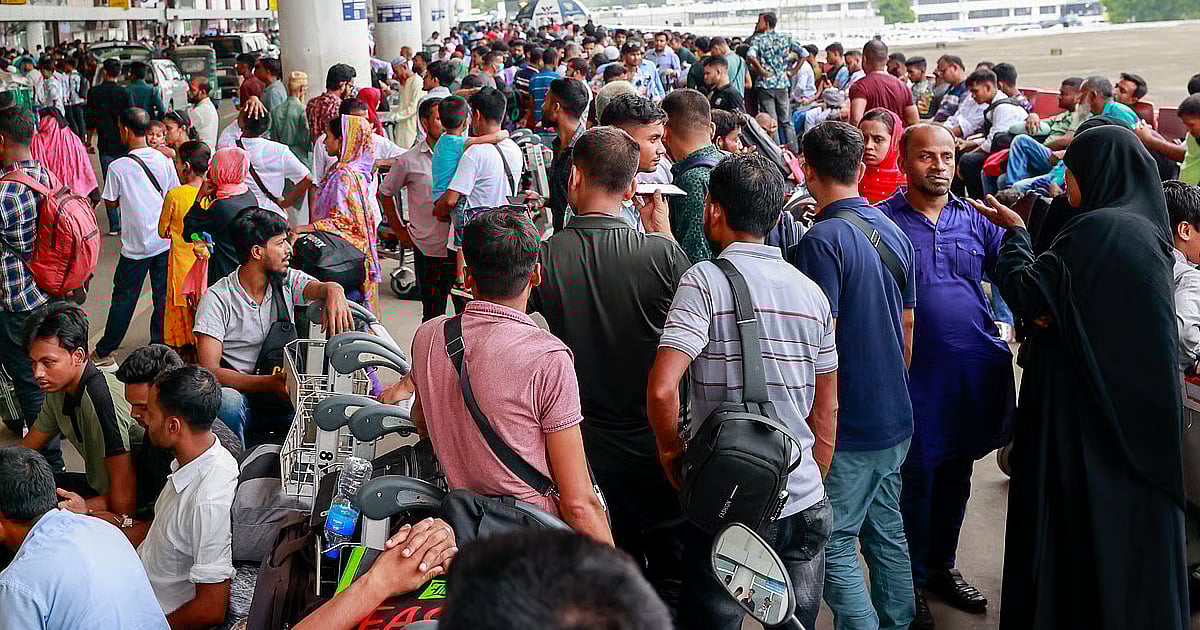
This file photo shows a crowd of workers waiting outside the Hazrat Shahjalal International Airport in the capital. | New Age photo

Labour migration from Bangladesh increased by 11.54 per cent in 2025, compared to 2024, but the overwhelming concentration of the migration to a single destination raised concerns among experts.

Sixty-seven per cent of the total 11, 28,641 workers migrated during 2025 went to the Kingdom of Saudi Arabia, despite years of official rhetoric about market diversification for such workers.


Labour migration analysts described the trend as risky and unsustainable, noting that Saudi Arabia primarily recruited low-skilled construction workers ahead of the preparations for hosting the FIFA World Cup 2034, rather than creating long-term, high-value employment opportunities.

Refugee and Migratory Movements Research Unit founding chair Tasneem Siddiqui said that Bangladesh’s migration flow had become dangerously concentrated to a single country.

‘Total migration is now focused on Saudi Arabia, which remains largely a destination for unskilled labour. This is not a healthy trend for migration sustainability,’ she said.

Echoing the concern, Ovibashi Karmi Unnayan Program chair Shakirul Islam warned that Bangladesh could face serious challenges once Saudi Arabia’s infrastructure projects are completed.

‘Once the construction phase ends, the scope for low-skilled migration will shrink. Many traditional destinations have already shut or tightened their doors to Bangladeshi workers,’ he said, urging the government to urgently explore alternative labour markets.


However, Ministry of Expatriates’ Welfare and Overseas Employment additional secretary Ahmadul Haque said that a sudden transition to skilled migration was not realistic.

‘Preparing skilled workers requires time, planning, and institutional capacity. While we aim to increase skilled migration, the demand for low-skilled workers can’t be ignored,’ he said.

He added that only 2.5 per cent of the workers trained at government-run technical training centres for overseas employment actually migrated, claiming that many trained individuals were reluctant to go abroad.

According to the Bureau of Manpower, Employment and Training, 11,28,641 people migrated to 142 countries in 2025. Of them, 61,977 were women, who migrated to 63 countries.

Saudi Arabia alone received 7,52,894 workers, including 44,578 women. Other major destinations included Qatar, which hired 1, 07,486 workers (including 2,319 women), and Singapore around 70,000 workers during the year.

In comparison, 10, 11,869 workers migrated in 2024, 13, 05,453 in 2023, and 11, 35,873 in 2022.

A trend analysis shows that while Saudi Arabia has long been Bangladesh’s top labour destination, its share reached an unprecedented high in 2025.

The migration to the kingdom accounted for 62 per cent of the total migration in 2024, 38 per cent in 2023, and 54 per cent in 2022.

Tasneem Siddiqui said that although granting voting rights to expatriate Bangladeshis was a positive step for migrant political inclusion, migration governance itself had not improved.

‘The sector needs qualitative transformation. Migrated workers remain one of the highest contributors to the national economy through remittance, yet governance reforms have lagged behind,’ she said.

She also criticised budget cuts in the migration sector, noting that allocation had fallen from Tk 1,200 crore to Tk 800 crore last year.

‘Without adequate budgetary support, no sector can grow or modernise,’ she said.

Despite growing global demand for women workers in caregiving, nursing, and healthcare, Bangladesh continues to send women migrants mostly as domestic workers to Saudi Arabia and Qatar, and garment workers to Jordan.

In 2025 alone, 10,487 Bangladeshi women migrated to Jordan to work in the apparel sector.

Ahmadul Haque said that the government was working to expand skilled migration to Japan, noting that the country could potentially absorb up to two million foreign workers due to its ageing population.

Although more than 10 lakh people migrate annually, a significant number of them return home prematurely. However, the government does not maintain comprehensive data on returnees, raising further concerns about policy planning and worker reintegration.

Shakirul Islam urged the government to pursue diversification in both destination countries and skill categories, while also strengthening migration governance to reduce excessive migration costs.

Currently, more than 1.5 crore Bangladeshi workers are employed overseas, predominantly in Middle Eastern countries. They remit over $20 billion annually, forming one of the strongest pillars of the Bangladesh economy.​
 
Cite Fact Check Highlight Respond

Members Online

Latest Posts

Latest Posts