[🇧🇩] Monitoring Bangladesh's Economy

[🇧🇩] Monitoring Bangladesh's Economy
1K
37K
More threads by Saif

G Bangladesh Defense
World Bank predicts 2026 GDP growth to improve slightly over forecasts

REUTERS
Published :
Jan 13, 2026 21:56
Updated :
Jan 13, 2026 21:56

1768350580152.webp

The global economy is proving more resilient than expected, with 2026 GDP growth expected to improve slightly over forecasts from last June, the World Bank said on Tuesday while warning that growth is too concentrated in advanced countries and overall too weak to reduce extreme poverty.

The World Bank's semi-annual Global Economic Prospects report shows that global output growth will slow slightly to 2.6 per cent this year from 2.7 per cent in 2025 before edging back to 2.7 per cent in 2027.

The 2026 GDP forecast is up two-tenths of a percentage point from the last predictions released in June, while 2025 growth will exceed the prior forecast by four-tenths of a percentage point.

The World Bank said about two-thirds of the upward revision reflects better-than-expected growth in the US despite tariff-driven trade disruptions. It predicts US GDP growth will reach 2.2 per cent in 2026, compared to 2.1 per cent in 2025 - up two-tenths and half a percentage point from the June forecasts, respectively.

After an import surge to beat tariffs early in 2025 held back US growth for that year, bigger tax incentives will aid growth in 2026, offset by the drag of tariffs on investment and consumption, the World Bank said.

But if the current forecasts hold, the 2020s are on track to be the weakest decade for global growth since the 1960s and too low to avert stagnation and joblessness in emerging market and developing countries, the global lender said.

"With each passing year, the global economy has become less capable of generating growth and seemingly more resilient to policy uncertainty," Indermit Gill, the World Bank's chief economist, said in a statement. "But economic dynamism and resilience cannot diverge for long without fracturing public finance and credit markets."

Gill added that global GDP per person in 2025 was 10 per cent higher than on the eve of the COVID-19 pandemic - marking the fastest recovery from a major crisis in the past 60 years. But he said many developing countries are being left behind, with a quarter of them saddled with lower per-capita incomes than in 2019, particularly the poorest countries.

CHINA'S ECONOMIC GROWTH EXPECTED TO SLOW

Growth in emerging market and developing economies will slow to 4.0 per cent in 2026 from 4.2 per cent in 2025, up two-tenths and three-tenths of a percentage point from the June forecasts, respectively. But excluding China, the 2026 growth rate for this group will be 3.7 per cent, unchanged from 2025, the World Bank said.

China's growth will slow to 4.4 per cent in 2026 from 4.9 per cent, but the forecasts are both up four-tenths of a percentage point from June due to fiscal stimulus and increased exports to non-US markets.

Growth in the euro zone is set to slow to 0.9 per cent in 2026 from 1.4 per cent in 2025 due to the drag from US tariffs but recover to 1.2 per cent in 2027 due to increases in European defense spending, the World Bank said.

Japan's outlook is much the same for 2026, with growth slowing to 0.8 per cent after a rise of 1.3 per cent in 2025, a year aided by the front-loading of exports to the US to beat President Donald Trump's tariffs. But slower consumption and investment in Japan will keep GDP growth unchanged at 0.8 per cent for 2027, the World Bank said.​
 
Reviving the capital market in Bangladesh

Waqar Ahmad Choudhury
Published :
Jan 13, 2026 23:38
Updated :
Jan 13, 2026 23:38

1768351372297.webp

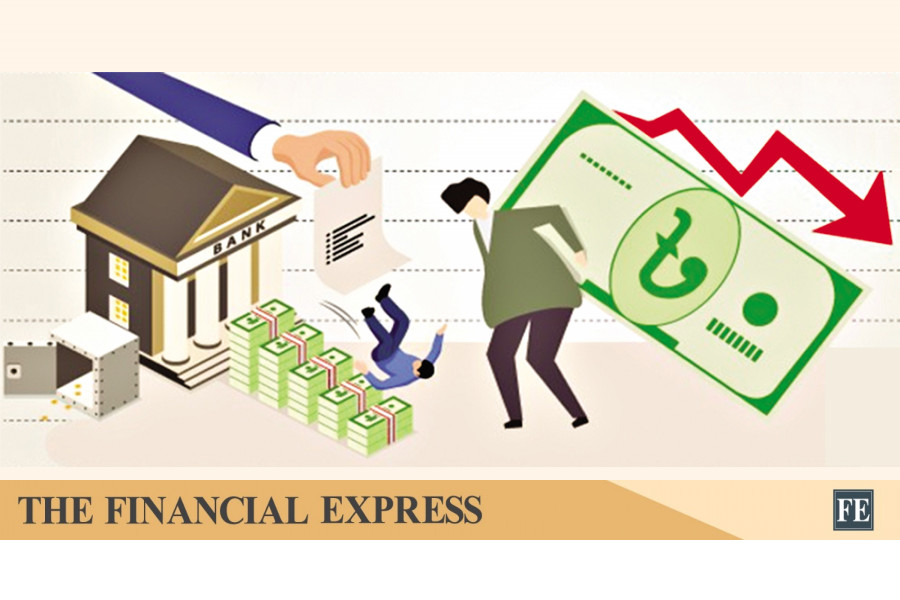
Bangladesh recorded nominal economic growth under the previous regime. The headline performance, however, concealed deep-rooted structural weaknesses from entrenched corruption, weak fiscal discipline, and severe governance failures. These deficiencies strained the economy, leading to a sharp build-up of public debt and one of the highest non-performing loan (NPL) ratios globally, estimated at 35.7 per cent. This alarming figure reflected widespread financial mismanagement and systemic abuse within the banking sector.

Foreign exchange reserves deteriorated rapidly, falling from US$34.3 billion at the end of 2022 to US$20.48 billion by July 2024, a nearly 40 per cent decline mainly due to capital flight and fund siphoning by politically connected entities. Inflation surged to a 12-year high of 11.66 per cent in July 2024. Despite these pressures, the government maintained a 9 per cent interest rate cap between April 2020 and June 2023. Even after the SMART lending rate framework was introduced, rates rose only to 11.52 per cent by June 2024, which was insufficient to contain inflation.

Bangladesh Bank worsened these pressures by aggressively expanding monetary policy, injecting about Tk 980 billion in FY23 to support distressed banks, especially those controlled by the S Alam Group. This liquidity injection coincided with a Tk 1 trillion decline in foreign assets, so monetary expansion added no real economic value and directly fuelled inflation. Weak data transparency obscured the true extent of these imbalances, preventing timely corrective action and eroding public trust.

Together, these failures led to acute economic distress and set the stage for the political upheaval that ultimately caused the collapse of the previous regime.

REFORM UNDER INTERIM GOVERNMENT: The Interim Government, which assumed power in response to public demand and the July uprising, has made tangible progress in macroeconomic stabilisation. A key priority was rebuilding foreign exchange reserves, which rose from US$21.4 billion in 2024 to US$28.1 billion in 2025, a 31 per cent increase supported by restrictive import policies and a surge in remittance inflows.

The introduction of a market-driven exchange rate stabilised the foreign exchange market and restored incentives for remittances, which increased by 31 per cent year-on-year as of November 2025. Inflation moderated to 8.29 per cent in November 2025 from its 2024 peak, easing pressure on household incomes and creating space for future monetary management also initiated reforms to address the NPL crisis through asset quality reviews and stricter loan classification and recovery standards, alongside efforts to improve data transparency and institutional accountability.

Despite these stabilisation gains, growth recovery has been weak. GDP growth for FY25 stands at 3.69 per cent, the lowest in five years, reflecting subdued business confidence and ongoing political uncertainty. Foreign direct investment in equity declined by 17 per cent, while low domestic investor participation underscores concerns about policy predictability and governance continuity.

THE PROSPECTS FOR GROWTH: Macroeconomic stabilisation has yet to translate into robust growth, mainly due to unresolved political uncertainty. The absence of a clear roadmap toward an elected government has weighed on investor sentiment, compounded by recent political developments that heightened uncertainty.

However, Tarique Rahman's return after 17 years in exile has brought greater clarity to the political landscape. As a leading political figure and potential prime ministerial contender, his re-emergence has reduced ambiguity around the electoral process. His public messaging emphasising stability, security, and national unity has resonated with investors seeking assurance after prolonged volatility.

With expectations of greater policy continuity under an elected administration, business confidence is likely to improve, supporting investment inflows and a gradual recovery in growth. Continued prudence in macroeconomic management should further ease inflation, allowing interest rates to decline and stimulate consumption and investment. The IMF projects GDP growth to rebound to 4.9 per cent in 2026.

BANGLADESH CAPITAL MARKET: Despite improving macro fundamentals, Bangladesh's capital market remains under severe stress. The DSEX traded around 4,880-4,960 points in late December 2025, down about 11 per cent from its September peak and near a five-year low reached earlier in the year. Valuations remain compressed at 9-10x P/E, well below the three-year average of 14.4x, reflecting risk aversion rather than earnings deterioration.

In contrast, regional peers have delivered strong returns. Pakistan's KSE-100 reached record highs after IMF-backed reforms, Sri Lanka's ASPI rose 42 per cent year-on-year after debt restructuring, and India's Sensex delivered high single-digit returns. Bangladesh's underperformance highlights country-specific challenges, including political uncertainty, liquidity constraints, and structural weaknesses.

Market depth indicators reinforce this divergence. Market capitalisation declined to Tk 3.49 trillion in January 2025, while foreign ownership in multinational stocks fell sharply, with net foreign outflows of US$66 million in early FY26. Although brief inflows followed recent political developments, sustained foreign participation remains elusive.

STRUCTURAL CRACKS: The market's prolonged weakness reflects deep structural deficiencies. No new IPOs have been listed in the past 18 months, as approval timelines exceed two years, far longer than regional peers. Combined with limited tax incentives and weak disclosure standards, this has left only 25-30 investable companies among nearly 400 listed entities. dominates corporate funding, with loans approved within months and minimal disclosure, while capital market fundraising has collapsed. High interest rates and attractive fixed-income instruments have diverted liquidity away from equities, while mutual funds remain underdeveloped, accounting for less than 3 per cent of market capitalisation. Since September 2024, nearly 80,000 investors have exited the market.

FUTURE PATH: These conditions have created a cycle of low liquidity, weak participation, and depressed valuations. Nevertheless, macroeconomic stabilisation, improving reserves, and emerging political clarity provide a narrow but meaningful window for capital market revival. However, sustained recovery requires coordinated reforms addressing structural bottlenecks and restoring institutional credibility as follows:

Tax Incentives & Fiscal Measures. Expanding the corporate tax gap to 10-15 percentage points would restore strong incentives for companies to list. Making dividends up to Tk 1 lakh tax-free would shift household savings toward equities. A 20 per cent tax rebate would stimulate bond issuance and the development of the fixed-income market. Tax exemptions on mutual fund dividends up to Tk 1 lakh would accelerate mutual fund growth.

Regulatory Efficiency & Market Operations. Streamlined, digitised disclosures would improve transparency and investor confidence. Reducing IPO approval time to 3-6 months would revive the listing pipeline. Mandatory independent directors would protect minority shareholders and improve governance. Stronger oversight and transparency would enhance market integrity. Institutional reforms would improve BSEC's credibility and enforcement. Strengthening ICB would restore counter-cyclical market support.

Bank & Credit Policy. Targeted incentives would encourage private firms to voluntarily list on public markets. Aligning savings rates would reduce liquidity diversion from equities. Moreover, higher insurance investment would add stable long-term capital. Faster approvals would support domestic bond market growth.

Investors Education. Inter-agency coordination would ensure policy consistency. Supporting the financial literacy and institutional investor development would reduce volatility and herd behaviour.

Mutual Fund. Higher quotas would anchor long-term demand for Mutual Funds. Lifting the 15 per cent cap on the fund would unlock institutional capital. Routing institutional funds through mutual funds would reduce volatility.

END NOTE: If implemented consistently, these reforms could drive valuation re-rating toward historical norms, delivering meaningful upside and attracting renewed foreign participation. With much-anticipated political stabilisation under an elected government, Bangladesh's capital market, now a regional underperformer, may have the opportunity to make a turnaround.


The writer is Waqar Ahmad Choudhury, Managing Director & CEO, Vanguard Asset Management Limited​
 
GDP growth accelerates, led by industrial expansion

Economy grew 4.5% in the first quarter of FY26 compared with 2.58% a year earlier


By Rejaul Karim Byron and Ahsan Habib

1768353035407.webp


Bangladesh's economy rebounded in the first quarter of the current fiscal year of 2025-26 due mainly to stronger agricultural and industrial production.


The overall output, or Gross Domestic Product (GDP), which measures the total value of goods and services produced in a given period grew by 4.50 percent in July-September, according to estimates from the Bangladesh Bureau of Statistics (BBS) released today.

This rate is higher than the 2.58 percent quarterly growth a year earlier.

The industrial sector led the expansion of the economy, posting 6.97 percent growth in the first quarter of FY26. The latest industrial growth is almost double the 3.59 percent recorded during the same period last year, when production was hit hard by mass uprisings and labour unrest.


Factory floors this year were noticeably busier compared with the corresponding quarter.

Agriculture, the largest employer in the economy, expanded by 2.3 percent, recovering from losses caused by repeated floods in 2024. The services sector, the country’s second-largest employer, also grew during the first quarter.

“This is an encouraging sign,” said Prof Mustafizur Rahman, distinguished fellow at local think tank Centre for Policy Dialogue (CPD). “The growth shows signs of recovery as the difference from last year is high.”


Rahman, however, said that this improvement is based on a low growth base from last year. And the growth in the service sector is not big, while agricultural output depends on the weather.

“There is a challenge in the sustainability of the growth,” said the economist.


Although the performance in the industrial sector was strong, export-oriented industries did not do well in the second quarter of the current fiscal year, which could have a negative impact, said Rahman.

Besides, imports of machinery and raw materials for export-oriented industries have not increased despite revived imports of capital machinery. “So, we have to wait to see whether this is a full recovery of the economy or not,” he added.

Zahid Hussain, another noted economist, described the overall recovery as “modest” compared with Bangladesh’s historical growth.

He said, “In the overall growth rate, a large contribution came from the agricultural sector.”

BBS data showed agricultural growth of 2.30 percent, up sharply from a negative 0.6 percent in the first quarter of the previous fiscal year.

Farming growth in the same quarter was also slight in 2023-24, at only 0.62 percent.

Last year, floods heavily affected Aus rice and Aman seedbeds, but this year production rebounded, said Hussain, a former lead economist at the World Bank’s Dhaka office.

Hussain said the sustainability of growth will depend on electricity supply and diesel availability.

According to him, while fuel imports are stable, electricity generation remains a concern. Investment remains lacklustre, and exports have slowed, adding to the challenges.

Historically, growth in the services sector ranges between 5 percent and 6 percent, higher than the current trend.

Disruptions from year-round street protests and a weak law and order situation have had a huge impact on services. High inflation has also reduced people’s purchasing power, limiting consumption of services, he added.

Headline inflation reached 8.49 percent in December, up from 8.29 percent in November and October’s 39-month low of 8.17 percent, according to BBS data.​
 
Yo crypto folks! I found a very informative article on latest blockchain insights.
It outlines the market dynamics in the crypto space. A must-see if you follow crypto.
Whether you’re a HODLer or day trader, this post will keep you in the loop.
Read now
 
Bangladesh receives $1.59b in remittances in first 13 days of Jan

UNB
Published :
Jan 14, 2026 21:15
Updated :
Jan 14, 2026 21:15

1768436726559.webp

The upward trend in remittances sent by Bangladesh expatriates has continued in January, with receiving over US $1.59 billion in 13 days of the month.

Bangladesh received $17.85 billion in inward remittances from July to January 13, 2026, in the current fiscal year, FY 2025-26. It was 14.7 billion in the same period of the previous FY2024-25, and saw a growth of 21.5 percent.

Blessings on the remittance, the gross forex reserves of Bangladesh cross $33 billion. As per the IMF standard BPM6, the forex reserves stood at $29 billion plus.

Arif Hossain Khan, Executive Director and spokesperson of Bangladesh Bank, confirmed that the expatriates have sent $1.59 billion in the first 13 days of January 2026, which was $926 million in the same period of January 2025. It means the remittance earnings grew by 71.8 percent in this time.

The growth is attributed to several factors, including incentives offered for sending money through legal banking channels, increased encouragement for using the formal system and the active role of exchange houses.

In FY2025-26, Bangladesh received $2.47 billion in remittances in July, $2.42 billion in August, $2.68 billion in September, $2.56 billion in October, $2.88 billion in November, and $3.22 billion in December.

The data revealed that the average inward remittance flow was over $2.42 billion in the last six months. This robust flow of remittance influences Bangladeshi policymakers to discourage lending from the IMF with tough conditions.​
 

Why does revenue stay low despite reforms?

SYED MUHAMMED SHOWAIB
Published :
Jan 17, 2026 00:00
Updated :
Jan 17, 2026 00:00

1768610266932.webp


Most people who file income tax returns in Bangladesh do so with a sense of anxiety rather than confidence. They worry about audits, paperwork and arbitrary decisions even as they try to follow the rules. That unease is not irrational because for decades the country's tax system has combined weak enforcement with wide discretion. While leaving honest taxpayers feeling vulnerable, this has also produced one of the lowest tax-to-GDP ratios in the world. In recognition of this problem and the need to improve it, policymakers have spent the past several years rolling out legal, institutional and technological reforms, opening up a rare opportunity to rethink how income tax actually works.

A foundational step was the replacement of the decades-old ordinance with a new Income Tax Act in 2023, which sought to modernise legal framework to align with contemporary economic realities. This was followed by the gradual move to mandatory online return submission under a self-assessment system. Most individual taxpayers now file through a digital platform that has reduced paperwork and curtailed many of the informal interactions that once defined tax compliance.

Digitalisation has also altered the way enforcement operates. Audit selection is now driven by centrally generated data rather than by the discretion of individual officers. Only those cases flagged by the system are called in for scrutiny which lowers the scope for arbitrary harassment and reduces compliance costs for those who try to stay within the rules. At the moment, the National Board of Revenue (NBR) is working to integrate information from the Central Depository Bangladesh Limited and banks so that data on capital market investments and interest income can be automatically reflected in tax returns, while digital Value Added Tax (VAT) filing is also on the way.

Yet this digital transition is not without significant gaps. The online platform does not allow the uploading of supporting documents at the time of filing even though salary figures and tax deducted at source of non-government employees remain outside the live data network. Taxpayers therefore have to declare key information in good faith while knowing that any later mismatch could trigger an audit and a demand to produce documents that the system itself never allowed them to submit in the first place. This also creates a deeper problem of enforceability. When taxpayers provide only minimal information about property in their online returns but later refuse to cooperate when verification is sought, tax officials are left without any reliable trail of information to trace their assets. Recording declarations without the supporting evidence clearly undermines the system's purpose instead of strengthening it.

Institutional reform has also been placed on the agenda post-July 2024 when the government moved to split the National Board of Revenue into two separate bodies under the Ministry of Finance, one responsible for revenue policy and the other for revenue management. The proposal triggered resistance from a section of officials who feared loss of authority under the new structure. Although the protests were eventually quelled, practical establishment of the two new entities remains pending due to unfinished procedural formalities, although completion remains a priority ahead of upcoming elections. The logic behind the separation is nevertheless sound. When the same authority both writes tax rules and enforces them, the temptation to issue special exemptions and tailor-made regulatory orders is high. Placing policy making and implementation in different hands can reduce that risk. Still, a cleaner institutional architecture on its own is neither a panacea for corruption nor will it solve the deeper problem of weak revenue mobilisation.

Each year the national budget grows larger and the revenue target for NBR rises with it, yet the gap between potential and actual collection persists. One major reason is the generous and often outdated web of tax exemptions. For example, the income tax exemption for software development, IT enabled services and related ICT activities was first introduced in July 2005 as a temporary stimulus but still in force today despite a very different economic reality. Two decades ago, the policy was justified by the hope that a dynamic domestic ICT industry would emerge, generating skills, innovation and globally competitive products. Regrettably, it has yielded scant evidence of success.

As of now, Bangladesh has not produced widely recognised homegrown ICT products or platforms that compete in international markets and most activity remains concentrated in importing and reselling hardware and software rather than creating original technology. Even limited domestic value addition has been scarce. This matters even more now that Bangladesh is set to graduate from the Least Developed Country category in November 2026, after which access to trade preferences will depend on stricter rules of origin that often require at least 50 per cent domestic value addition for non-apparel goods. A genuine ICT production base would have strengthened the country's position in that environment, but the tax break has mainly subsidised a trading business instead.

Similar scrutiny should apply to the deductibility of interest expenses from the taxable income of businesses, a rule that clearly favours debt over equity. Because interest payments reduce tax liability, companies are pushed towards borrowing even when it is neither necessary nor prudent. In an economy where banks are already weighed down by bad loans, this tax bias actively amplifies financial fragility rather than containing it. Highly indebted companies are more likely to fail during economic slowdowns while those financed with more equity can absorb shocks, making the current tax treatment of interest a risk to overall stability.

Emerging digital economies present another frontier for revenue mobilisation. Online businesses thrive with minimal formal oversight, often operating without physical premises and transacting via mobile wallets such as bKash, Nagad or cash-on-delivery. These channels evade routine scrutiny enabling significant concealment. As e-commerce expands, the revenue authority must adapt monitoring tools to capture these flows effectively.

None of this means that reform has stalled. Ongoing digital strides by the revenue body from online filings to mobile payments show a clear commitment to modernisation. However, complementing these with targeted reviews of unproductive incentives and enhanced oversight would only make tax system more effective, fair, and forward-looking than ever before.​
 

Restoring macroeconomic stability rests on revenue policy upgrade

Doulot Akter Mala
Published :
Jan 17, 2026 08:50
Updated :
Jan 17, 2026 08:50

1768696866602.webp


A time-bound structural and policy rejig of the revenue system is imperative for restoring and sustaining Bangladesh's macroeconomic stability as insufficient domestic resources upend government plans and generate overall volatility.

To this end, a multi-stakeholder taskforce on revenue reform is likely to recommend that the government complete major tax-policy reforms in near and midterms within next five years, beginning under the current interim government and finishing under the upcoming elected one.

The 'National Taskforce on Tax Restructuring', formed in October last following the political regime change, in order to review the country's revenue framework, is scheduled to submit its report by January 31, 2026, in line with its mandate.

The taskforce will focus on structural adjustments and development of the overall tax framework to help Bangladesh achieve its fiscal goals.

Talking to The Financial Express, Dr Zaidi Sattar, who heads the taskforce, said the report would place strong emphasis on revenue-policy reforms aimed at removing longstanding bottlenecks to trade and investment.

According to a notification issued in October last, the taskforce will prepare recommendations for raisin the tax-to-GDP ratio to a desired level and suggest both short- and long-term policy measures for a business- and trade-friendly tax regime that supports overall economic growth.

"Although we were asked to provide short- and long-term recommendations, we believe most of the reforms need to be implemented within the medium term," says the economist.

Dr Sattar, chairman of the Policy Research Institute (PRI), thinks the current interim government may be able to implement some of the recommendations but the bulk of the reforms would need to be carried forward by the next elected government.

Referring to the ongoing process of bifurcation of the revenue administration, he says the government is creating two separate divisions but the committee's recommendations would focus solely on the tax-policy division.

Responding to a query on the tax-GDP target up to 2035 set in the medium and long-term revenue strategy (MLTRS) framed by the National Board of Revenue, Dr Sattar said Bangladesh must raise the ratio in line with its transition from the least-developed country (LDC) status.

The NBR targets to raise Bangladesh's tax-to-GDP ratio to 10.5 by the fiscal year 2034-35, as part of its newly formulated 10-year revenue strategy.

"For a graduating LDC, the tax-to-GDP ratio should be upgraded to an average range of 15 to 20 per cent," he added.

The interim government formed the high-powered national taskforce to restructure the country's tax system with the aim of boosting revenue collection and raising the tax-GDP ratio to an acceptable level.

The other members of the panel include Dr. Sultan Hafiz Rahman, Professorial Fellow at BRAC Institute of Governance and Development (BIGD), Dr. Syed Mainul Ahsan, Professor Emeritus at Concordia University, Canada, Dr. Mohammad Zahid Hossain, Chairman of Bangladesh Krishi Bank, and Dr. Sajjad Zohir, Executive Director of the Economic Research Group (ERG).

In September last, the government dissolved the previous committee on NBR reform. The present taskforce was formed within a week of the dissolution of the committee.​
 

Bangladesh’s remittance soars 56.3pc in first 17 days of January

UNB
Published :
Jan 18, 2026 19:42
Updated :
Jan 18, 2026 19:42

1768782625833.webp


The upward trend in inward remittances continued and 56.3 percent growth in January, with receiving over US $1.86 billion in 17 days of the month.

Bangladesh received $18.12 billion in inward remittances from July to January 17, 2026, in the current fiscal year FY 2025-26. It was 14.96 billion in the same period of the previous FY2024-25, and saw a growth of 21.1 percent.

Blessed by strong remittances, Bangladesh’s gross forex reserves have surpassed $33 billion, up from $29 billion under the IMF’s BPM6 standard.

Arif Hossain Khan, Executive Director and spokesperson of Bangladesh Bank, said the expatriates have sent $1.86 billion in the first 17 days of January 2026, which was $1.19 million in the same period of January 2025. It means the remittance earnings grew by 56.3 percent in this time.

The growth is attributed to several factors, including incentives offered for sending money through legal banking channels, increased encouragement for using the formal system, and the active role of exchange houses.

In FY2025-26, Bangladesh received $2.47 billion in remittances in July, $2.42 billion in August, $2.68 billion in September, $2.56 billion in October, $2.88 billion in November, and $3.22 billion in December.

This data revealed that the average inward remittance flow was over $2.42 billion in the last six months. This robust flow of remittance influences Bangladeshi policymakers to discourage lending from the IMF with tough conditions.​
 

Latest Posts

Back