[🇧🇩] Monitoring Bangladesh's Economy

[🇧🇩] Monitoring Bangladesh's Economy
1K
33K
More threads by Saif

G Bangladesh Defense

IMF tranche delay posed no threat to Bangladesh’s economy: BB Governor

UNB
Published :
Jan 19, 2026 23:09
Updated :
Jan 19, 2026 23:09

1768869123412.webp


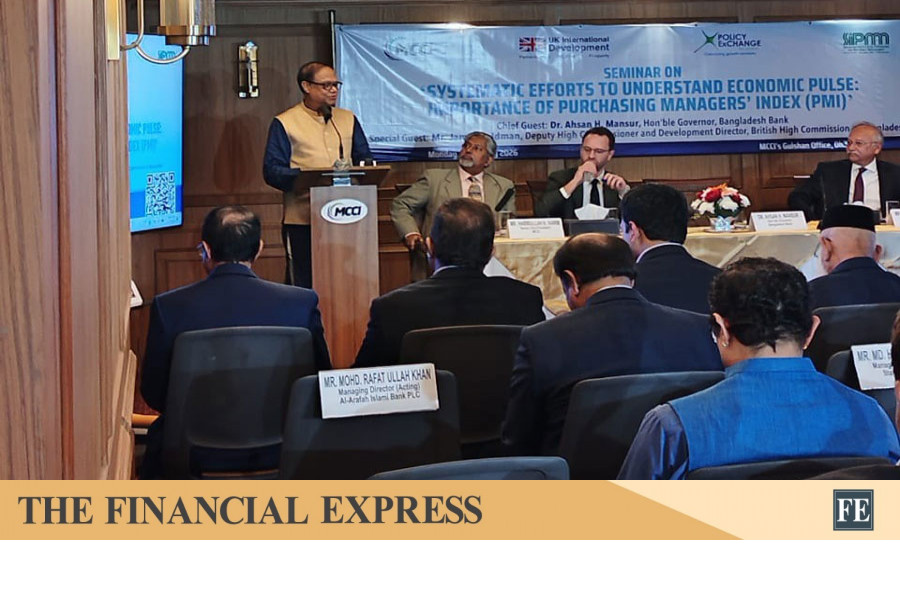
Bangladesh’s economy has not suffered any adverse impact despite the delay in receiving the sixth tranche of the International Monetary Fund (IMF) loan, Bangladesh Bank Governor Ahsan H Mansur said on Monday, stressing that the country has managed the economic challenges on its own strength.

Speaking at a seminar titled 'Systematic Efforts to Understand Economic Pulse: Importance of Purchasing Managers’ Index (PMI)', organised by the Metropolitan Chamber of Commerce and Industry (MCCI), the governor said Bangladesh Bank has purchased around $3.7 billion from local banks, an amount significantly higher than the pending IMF tranche.

“By making the taka attractive rather than weakening it, banks have voluntarily sold dollars to Bangladesh Bank,” he said, adding that as a result, Tk 45 billion has been injected into the domestic market in exchange for foreign currency.

Referring to the recent liquidity stress in the banking sector, Dr Mansur said the situation has started to ease, with deposits picking up at a satisfactory pace.

“Liquidity is the oxygen of the economy. For a long time, the market was suffocating due to a lack of oxygen. That phase is gradually ending and the situation is returning to normal,” he said.

The governor reiterated that the central bank aims to bring inflation below 5 percent, noting that any decision to reduce the policy rate would depend on trends in global commodity prices and domestic supply conditions.

“Once inflation comes down, the policy rate will also be reduced,” he said adding that Bangladesh Bank is considering a 2 percent policy rate concession for prime and creditworthy borrowers.

He, however, cautioned that the central bank would not abruptly cut rates in a way that could shock the market.

Dr Mansur also expressed confidence that the country’s foreign exchange reserves would cross $35 billion within the current fiscal year. “We will very comfortably achieve the targeted reserve level. Bangladesh Bank is currently in surplus in terms of balance of payments.”

Highlighting the central bank’s liberal economic approach, the governor said Bangladesh Bank does not discriminate on political or other considerations when extending support to businesses.

“We assist institutions that are currently in trouble but have the potential to recover. We have supported companies such as Gazi Tyre, Bashundhara and Monno Ceramics. We operate in a colour-blind, liberal manner, " he said.

On PMI data, the governor said Bangladesh Bank has no objection to the private sector being responsible for generating the data, but advised maintaining regularity in publication to ensure credibility.

He expressed optimism that Bangladesh’s economy would gain fresh momentum after the election, with improvements in the money market and an increase in large-scale investments.

At the event, British Deputy High Commissioner and Development Director to Bangladesh
James Goldman said the UK looks forward to continuing its cooperation with Bangladesh, particularly by maintaining trade preferences in the UK market for a certain period after Bangladesh’s graduation from the LDC category.

MCCI President Kamran T Rahman described PMI as an effective real-time economic index, calling it one of the best tools for navigating complex economic conditions and achieving evidence-based outcomes.​
 

Forex reserves to exceed $35b by FY26: BB chief

BSS
Published :
Jan 19, 2026 21:45
Updated :
Jan 19, 2026 21:45

1768869244056.webp


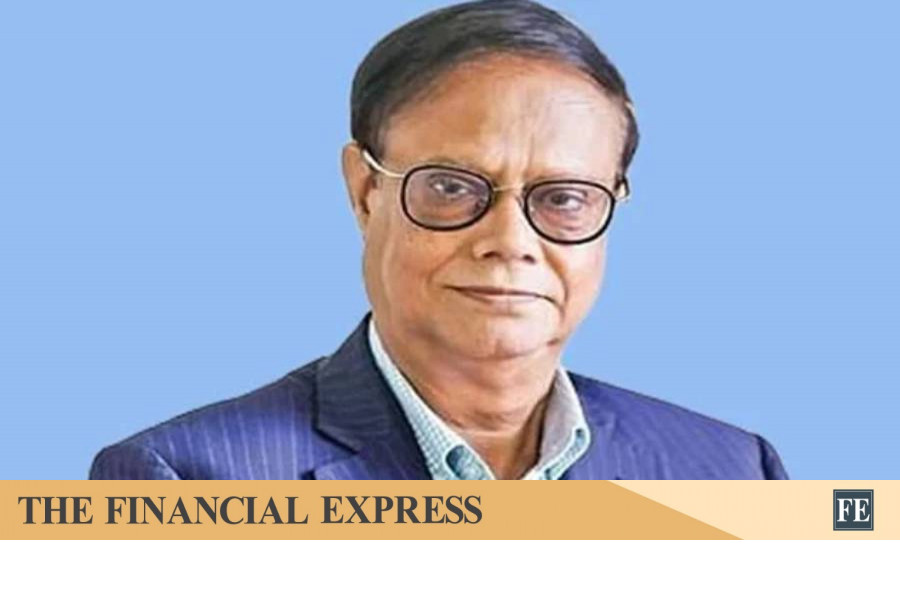
Bangladesh Bank (BB) Governor Dr. Ahsan H. Mansur on Monday expressed strong optimism regarding the country’s macroeconomic stability, projecting that foreign currency reserves are on track to meet and surpass US$35 billion by the end of the current fiscal year 2025-26 (FY26).

“Reaching the $35 billion mark would establish a very comfortable level for the economy,” he said while speaking at a seminar on “Systematic Efforts to Understand Economic Pulse: Importance of Purchasing Managers’ Index (PMI)” at Metropolitan Chamber of Commerce and Industry (MCCI) office in the city.

MCCI and Policy Exchange Bangladesh (PEB) jointly organised the seminar.

In his speech, Ahsan H. Mansur clarified that this target is expected to be met without relying on IMF money, stating that any additional external funding would simply be icing on the cake rather than a necessity for hitting the target.

The governor highlighted significant progress in the balance of payments and the external sector.

While acknowledging that the export sector is currently facing headwinds and remains a weak point, the governor pointed to favourable developments in global import prices.

He noted that the country has achieved terms of trade gains due to significantly reduced energy prices and generally stable or declining commodity prices.

“If you look at petroleum price for example the price average decline is about 30%,” the Governor stated, adding that this reduction represents a direct gain for the economy.

Consequently, while import payments have increased by approximately 5% to 6% this year, the actual volume of imports has risen much more significantly, he added.

He said this growth in volume is corroborated by data from the Chittagong port, which indicates strong increases in both tonnage and container numbers.

The governor addressed the very difficult liquidity situation the banking sector previously faced, which began with a shortage of foreign exchange.

He revealed that the central bank had to settle accumulated arrears totalling approximately $3.5 billion.

The Governor explained that a prior drop in reserves from $48 billion to $20 billion had caused a massive contraction in the money supply, with trillions of taka leaving the country.

This led to a severe deceleration in deposit growth, which stood at only 6.4% as of December 2024, creating a scarcity of funds for private sector financing, he added.

The Governor cited recent data showing that deposit growth has rebounded to 11%.

“With total deposits now standing at approximately 20 trillion taka, this growth rate translates to an influx of roughly 2.2 trillion taka into the system,” he added.

Emphasizing the importance of real-time analytics, the Governor remarked that policymakers do not have a crystal ball and must rely on high-frequency data—such as daily exchange rates, interbank interest rates, and remittance flows—to make decisions.

He shared positive news regarding remittances, noting that daily collection had recently topped $170 million, and monthly figures were tracking at roughly 70% of the previous month’s total at the time of the speech.

The governor also welcomed the introduction of the Purchasing Managers’ Index (PMI) as a new kid in town, thanking the MCCI and Policy Exchange for the initiative, noting that the addition of such indicators aids in the art of policymaking.

Deputy High Commissioner and Development Director, British High Commission to Bangladesh James Goldman attended the seminar as the special guest while MCCI President Kamran T. Rahman delivered the welcome speech.

PEB Chairman and CEO Dr. M. Masrur Reaz delivered the keynote presentation while Head of Prosperity and Economic Growth, FCDO Issam Mosaddeq delivered the Contextual Background on PMI.​
 

69 pc growth of remittance inflow till Jan 18

BSS
Published :
Jan 19, 2026 21:22
Updated :
Jan 19, 2026 21:22

1768869384694.webp


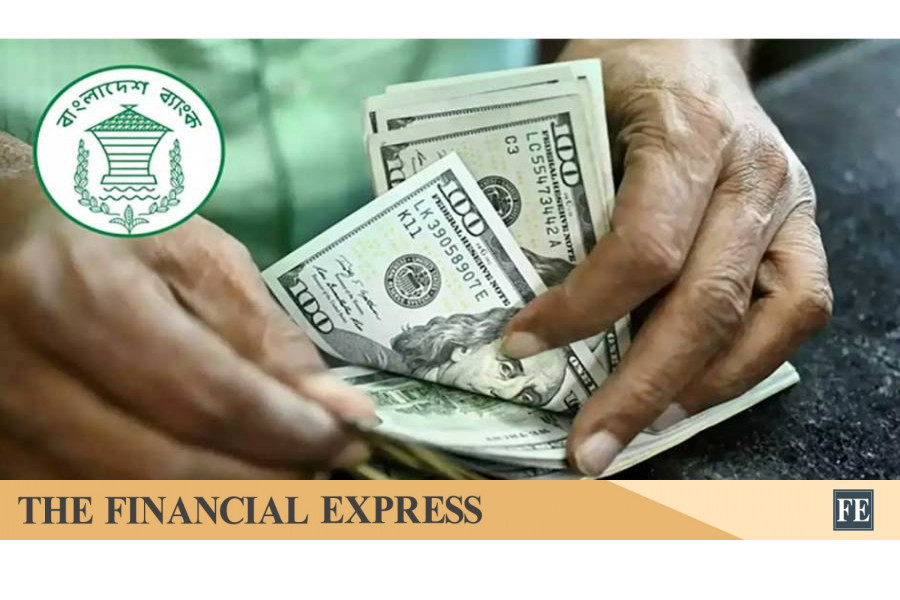
Inflow of remittances witnessed a year-on-year growth of 69 percent reaching US$2,040 million in the first 18 days of January, according to the latest data of Bangladesh Bank (BB) issued on Monday.

Last year, during the same period, the country’s remittance inflow was $1,207million.

During the July to January 18, 2026 of the current fiscal year, expatriates sent remittances of $18,305 million, which was $14,983 million during the same period of the previous fiscal year.​
 

We must ensure not only a fair election but also restore economic discipline

Fahmida Khatun
Published: 19 Jan 2026, 08: 28

1768870394338.webp


The national election scheduled for 12 February is extremely important for Bangladesh from both political and economic perspectives. This is because elections have not been able to serve as a genuine means of expressing the people's will for a long time.

The lack of participation from opposition parties, allegations of vote rigging, and the mere formality of holding elections have weakened democratic institutions and strengthened authoritarian governance.

An entire generation has been denied the opportunity to exercise their right to vote, leading to decreased public interest in politics, weakened accountability, and diminished trust in state institutions. This election presents a historic opportunity to move away from that situation.

However, simply ensuring a fair election will not solve all problems. The upcoming government will inherit a weak and pressured economy, where years of policy neglect, institutional weaknesses, and poor economic management have disrupted order.


Over the past 16 years, the lack of pressure on political leadership to maintain the economic condition for everyone has also harmed economic discipline.

In recent years, Bangladesh's economic momentum has slowed. Growth has decreased, inflation has been high for a long time, and the banking sector is burdened with non-performing loans. Private and foreign investments are low, public investment is often inefficient and wasteful, government debt has increased, real income is declining, and job creation has significantly decreased. These factors have created long-term pressure on the economy.

In this challenging reality, the new government must undertake major reform programmes to restore economic discipline, strengthen good governance, and improve the living standards of ordinary people. There is much to be done, but three things are most crucial and are closely linked with each other.

First, controlling inflation should be the top priority for the elected government. In recent years, the increase in food and energy prices has led to high inflation. More than half of the total expenses of low-income people go towards food. As a result, when food prices rise, their standard of living is severely affected.

With wage increases lagging behind inflation, people's real income has declined, savings have decreased, and middle-class households have been forced to cut expenses on education, healthcare, and nutrition. High inflation is also detrimental to the overall economy. It increases business uncertainty, reduces long-term investment, puts pressure on the currency, and diminishes public confidence in economic management. This is evident now.

Global factors as well as domestic policy weaknesses are responsible for inflation. Increases in international market prices have raised import costs. Although fuel prices have been kept low for a long time, they have increased significantly in recent years, raising production costs. Increased government borrowing from banks has also added to inflationary pressures. Additionally, the lack of competition, hoarding, and weaknesses in transportation systems have hindered food supply.

The new government must adopt a credible and coordinated strategy to control inflation. The Bangladesh Bank should be allowed to perform its inflation control duties independently. Interest rates and monetary policy need to be aligned with the real economy. Government borrowing from banks to cover deficits should be reduced, and revenue collection should be increased.

Competition in the food market needs to be enhanced, syndicates and hoarding should be stopped, conservation and transportation infrastructure should be improved, and agricultural production should be increased. A transparent and rule-based method for fuel price determination is necessary to prevent sudden price shocks.

Second, private investment is extremely vital for increasing growth, productivity, and employment; however, private investment has stagnated in recent years. Although public investment has increased, questions arise regarding the quality and efficiency of many projects. Foreign investment is also lower compared to neighbouring countries. Policy uncertainty, complex regulations, weak contract enforcement, infrastructure problems, bureaucratic complexities, and a weak banking sector have eroded investor confidence.

The banking sector currently cannot play a supportive role for investment. Due to political influence, weak governance, and repeated loan rescheduling during the previous government, the discipline in loan management has deteriorated. It has been observed that good companies do not get loans, yet influential figures get loans easily.

Thus, governance in the banking sector needs to be strengthened, recovery of non-performing loans ensured, asset quality assessments of banks completed, and weak banks reformed. Simultaneously, the business environment needs to be made easier, government services digitalised, and the tax system simplified. Infrastructure development should focus on not just large projects but also efficiency and reliability. Weaknesses in power, ports, customs, and logistics increase business costs and reduce export competitiveness.

Third, creating employment for the youth is the biggest challenge of this decade. Every year, approximately 2 million young people enter the labour market, but jobs are not being created accordingly. Youth unemployment is more than double the national average. Most new jobs are informal, low-paying, and less productive. Educated unemployment is increasing, reflecting the significant gap between education and the labour market.
Job creation depends on economic stability and increased investment. High inflation reduces wages and creates employment barriers. Therefore, a stable economy and business-friendly environment are essential.


Education and training need to be aligned with industry demands. There is a need for a major expansion in technical and vocational education. Easy access to credit for small and medium entrepreneurs and simplification of regulations are necessary.

Finally, the February 2026 election is not just about who will govern the country. How the country will be governed is also crucial for Bangladesh. Ensuring economic discipline, leadership, and accountability alongside democracy is essential. The decisions of the new government will determine the future of a generation. Leading the country with courage and responsibility can usher Bangladesh into a new chapter of stability, opportunity, and trust.

#Fahmida Khatun is Executive Director, Centre for Policy Dialogue (CPD)​
 

ADP implementation is crucial for accelerating development: Faruk E Azam

BSS
Published :
Jan 22, 2026 21:54
Updated :
Jan 22, 2026 21:54

1769128348954.webp

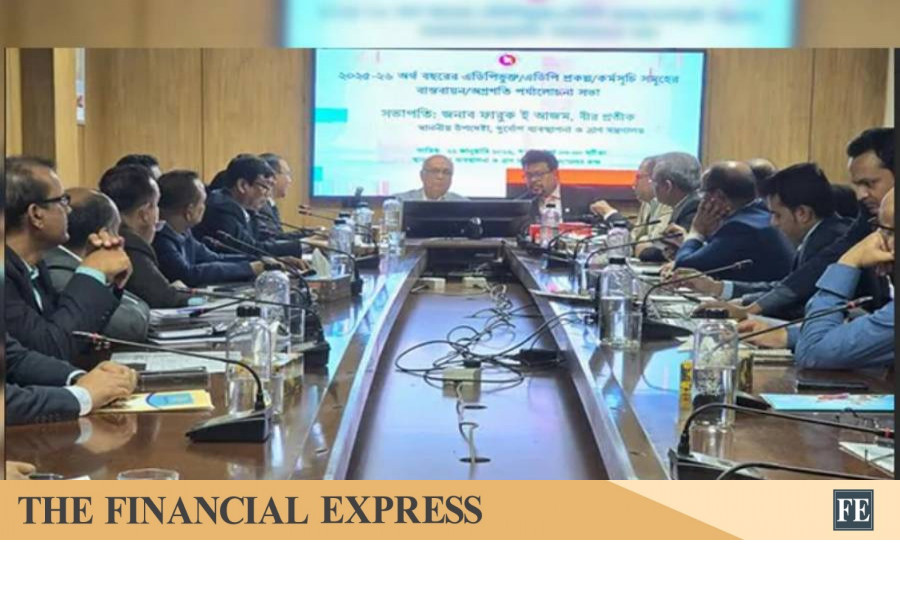
Adviser for the Ministry of Disaster Management and Relief Faruk E Azam, on Thursday said implementation of the Annual Development Programme (ADP) is one of the main tools for ensuring smooth in the country.

“Delivery of expected public services and development benefits depends on its successful execution, and so the implementation of ADP is a major tool to accomplish the government’s development projects with priorities,” the adviser said.

He made the remarks while chairing a review meeting on the implementation and progress of ADP-listed projects and programmes for the 2025–26 fiscal year at the Disaster Management and Relief Ministry conference room.

The adviser said the government is committed to implementing a timely, inclusive and sustainable development framework. “It is the collective responsibility of all concerned to ensure projects are implemented within stipulated time, cost and quality,” he said.

He noted that while some projects have achieved satisfactory progress, implementation of several others remains below expectations.

Urging project directors to maintain professionalism with efficiency and sense of responsibility, he directed that the causes of repeated delays in certain projects be identified and resolved promptly.

He also emphasised that ensuring proper utilisation of every penny of the projects is a moral and institutional responsibility, so that taxpayers’ money is translated into tangible development.

The adviser informed that the Disaster Management and Relief Ministry has a total of 11 projects, including 10 investment projects and one technical project.

For the current fiscal year, total allocation for these projects stands at Tk 21.08 billion (Tk 2,107.72 crore), of which Tk 5.51 billion (Tk 550.98 crore) was spent up to December 2025.

The average progress of the projects is 17.54 percent.

Secretary of the ministry Md Saidur Rahman Khan, additional secretaries, heads of departments, project directors and senior officials attended the meeting.​
 

Why a trillion-dollar economy not unrealistic
Subail Bin Alam &
Jyoti Rahman

1769130057357.webp


At least $10 billion of quality private investment is needed annually to stimulate the economy, Graphics: Created with the help of artificial intelligence

This was a few days ago. Jyoti Rahman, a co-writer of this column, spoke at a roundtable discussion organised by the Bangladesh Research Analysis and Information Network and Voice for Reform.

In the main article, he expressed optimism that, if everything goes well, Bangladesh might reach a trillion-dollar economy by 2035. In the same discussion, Professor Rashed Al Titumir referred to the year 2034 in his article. He also wrote about this in a book he published in 2023.

Recently, the discussion about a trillion-dollar economy has gained renewed momentum. The primary reason is that the BNP has announced a target to reach a trillion-dollar economy by 2034 in its electoral plan. This topic is being trolled on social media.

However, for those concerned with the economy, this issue is far more important than partisan debate. Regardless of political affiliation, it's crucial to discuss the realistic prospects and conditions for achieving this goal for the sake of the country.

According to the latest figures from the International Monetary Fund, Bangladesh's GDP will be approximately $519 billion in 2025. Real growth fell to 3.7 to 3.9 per cent in the fiscal year 2025, which is lower than the previous year. The growth projection for the fiscal year 2026 is set at 4.8 to 5 per cent.


This raises the question of the state's capability. Bangladesh's revenue-to-GDP ratio is currently about 7 per cent, the lowest in South Asia. It is much lower compared to Vietnam or India.

Without increasing this ratio to 14-15 per cent, the state cannot invest significantly in infrastructure, education, or health sectors.

If the current pace continues, GDP could surpass $700 billion by 2030. Reaching a trillion dollars from there is not impossible on paper.

Considering changes in inflation and the exchange rate of the Bangladeshi Taka against the dollar, achieving the target by 2034 might seem feasible.

However, in terms of a sustainable economy, these numerical calculations are not enough. To truly become a trillion-dollar economy, it must reach that size in today's prices.

For this, Bangladesh needs to maintain an average of 8 per cent real growth consistently over a decade. History suggests this is an extremely challenging task. With growth currently falling below 4 per cent, this goal is becoming more distant.

Investment, employment, and productivity

In reality, GDP primarily increases when three components are strong together: investment, employment, and productivity. Bangladesh is currently under pressure in all three areas. The country will graduate from the list of least-developed countries in 2026. As a result, there is a risk of losing duty-free benefits in exports and facing higher interest rates on foreign loans. The new government must manage the economy with this reality in mind.

The biggest obstacle is investment. Due to high interest rates, policy uncertainty, a weak banking system, and political risks, quality private investment is virtually stagnant. FDI increased slightly in the first three months of 2025. During this period, $865 million came in, a significant increase from the previous year.

Still, overall FDI hovers between just 0.4 to 0.5 per cent of GDP, much lower than in Vietnam or India. The BNP's proposal sets this ratio at 2.5 per cent.
In addition to foreign investment, domestic private investment is equally important. Investment comes from trust, which is built through policy continuity, quality of governance, and political stability. To stimulate the economy, at least $10 billion of quality private investment is needed annually.

This raises the question of the state's capability. Bangladesh's revenue-to-GDP ratio is currently about 7 per cent, the lowest in South Asia. It is much lower compared to Vietnam or India. Without increasing this ratio to 14-15 per cent, the state cannot invest significantly in infrastructure, education, or health sectors.

1769130150021.webp

Even though about 40 per cent of people work in agriculture, its contribution to GDP is 13–14 per cent.

Demographic advantage, but skill gap

Bangladesh's demographic structure is a significant opportunity. Every year, more than 2 million young people enter the labour market. The working-age population is about 68 per cent of the total population. This advantage will last until 2030. However, without creating sufficient employment, this population will become a burden rather than an advantage. Youth unemployment has already reached 11–12 per cent. The main issue is the lack of skills.

Spending on vocational and skill development is less than 0.1 per cent of GDP. Allocation for education is below 2 per cent. Allocation for health is less than 1 per cent. Without quality education and good health, productivity cannot be increased. According to the World Bank's analysis, if female labour force participation increases by 10 per cent, GDP could increase by 2–3 per cent in the long run.

GDP won't increase if these reforms are not implemented

Significant GDP growth is impossible without reforming certain sectors. First, the industrial sector. More than 80 per cent of Bangladesh's exports are still dependent on ready-made garments. Building a trillion-dollar economy with this singular structure is difficult because this sector has limited value-added and high global risks. Without increasing productivity in electronics, light engineering, pharmaceuticals, and agro-processing, substantial growth from the industrial sector will not occur.

Secondly, agriculture. Even though about 40 per cent of people work in agriculture, its contribution to GDP is 13–14 per cent. Without improving irrigation, cold storage, processing, and market access, agricultural labour will remain less productive.

Thirdly, the services sector. More than half of GDP comes from here. However, a significant portion is informal and less productive. If quality improvements can be made in IT, software, outsourcing, logistics, health, and education sectors, considerable growth can come from here. Yet, allocation for research and development is only 0.1 per cent of GDP.

There are major challenges in infrastructure and the energy sector as well. For sustainable growth, 9–10 per cent of GDP needs to be invested in infrastructure annually. Currently, it is limited to 6–7 per cent. Energy security is uncertain. The share of renewable energy is still below 3 per cent. The risk from climate change is even greater. According to the Asian Development Bank, this could reduce GDP by up to 9 per cent by 2050.

Banking, policy, and political economy

In terms of growth, the most overlooked but most detrimental issue is corruption and bureaucratic inertia. Corruption directly reduces growth. Bangladesh's position in international corruption indexes is steadily declining. At the same time, indecisive administration has become a major enemy of investment. Files move around, but decisions do not. Sometimes, the cost of this uncertainty becomes larger than the original investment.

The situation is further complicated by non-performing loans in the banking sector. With a large sum of money stuck, the flow of loans to the private sector has contracted. The market for corporate bonds for long-term financing is almost non-existent. Ultimately, the question is not only the size of GDP but also inequality, governance, and institutional capability.
A trillion-dollar economy must not become just a club for the wealthy. The experiences of Vietnam and Malaysia show that building a large economy is not possible without tough reforms.

On the path to a trillion-dollar economy, therefore, not only economic policy but also social and institutional revolution is needed. The examples of Vietnam or Malaysia illustrate that they strengthened the foundations of investment environment, education, administration, and good governance by implementing challenging reforms. The most urgent task for Bangladesh now is to create a national consensus on a ''reform agenda.''

Where political parties, the business community, and civil society will sit at one table. The dream of a trillion dollars is not just a partisan goal; rather, it is a question of national existence. Reforms mean some interests will be harmed. Therefore, the question is not technical but political economy—do we dare to break out of a bad equation?

Dreams need to be seen, plans need to be made to achieve anything. This dream is not just a partisan goal; rather, it is part of national existence. Now what is needed is a proper plan and implementation with a firm hand. Otherwise, we will grow in numbers, but in reality, remain stuck in a slow, unequal, and fragile economy. Chasing which, we will also fail to meet today's needs of the people, like keeping prices affordable, creating jobs, and ensuring justice.

Jyoti Rahman is an economist and IMF consultant

Subail Bin Alam is economic growth technical specialist​
 

Towards a Cashless Economy: A new lifeline for financial inclusion

21 January 2026, 01:02 AM
By Dr Ashikur Rahman and Samah Majid

1769131981504.webp


In a recent conversation at the Policy Research Institute, we asked a junior office assistant earning roughly USD 200 a month where he would turn for a loan to meet an urgent economic need. His response was stark. Formal retail banks were never an option; they do not exist in his economic reality. His choices were limited to high-interest borrowing from informal cooperatives or microfinance institutions; mechanisms that provide access, but often deepen vulnerability.

This is not an anecdote about individual exclusion. It is evidence of institutional failure and embedded financial exclusion. When a formally employed, salaried worker cannot access bank credit, the problem lies not in financial literacy or creditworthiness, but in the design of the financial system itself.

Almost as an afterthought, he showed his mobile phone. Based solely on transaction history, bKash had extended him a Tk 1,000 digital credit facility. The amount is small, but the signal is profound. A cashless platform, operating without branches, collateral, or paperwork, has recognised economic behaviour that traditional banks have ignored. The issue is no longer whether digital finance can reach the underserved, but whether cashless economic transformation can receive the necessary public policy support to emerge as a new lifeline for financial inclusion.

When formal banking fails the working poor

Globally, the shift toward cashless economies is no longer a distant aspiration; it is an active policy choice shaped by technology, demographics, and development priorities. India’s Unified Payments Interface (UPI) now accounts for nearly 49 per cent of all global real-time digital transactions, while mobile money platforms process over $4.6 billion in daily value worldwide. Brazil has pioneered branchless banking models through institutions like Nubank, which now serves over 80 million users, while Indonesia has leveraged digital platforms to scale nano-loans and expand access to credit for the underserved. Empirical evidence suggests such transitions not only enhance financial inclusion and reduce transaction costs but also contribute to economic formalisation. For Bangladesh, the imperative is clear: a well-sequenced cashless transformation must be viewed not merely as a technological upgrade, but as a strategic lever for inclusive development. Done right, a cashless transition can be transformative. Done poorly, it risks deepening existing inequalities.

Cashless systems as a tool for inclusion

Bangladesh has made notable progress in few avenues of the cashless economic space. Mobile financial services (MFS), introduced in 2011 under a central bank-led regulatory framework, have fundamentally changed how people transfer money. More specifically, if the current monthly trend prevails, MFS will process transactions of around $120 billion annually reflecting both its scale and growth with around 90 million active accounts. What began as a tool for simple person-to-person (P2P) payments has evolved into a broader ecosystem supporting wages, remittances, government transfers, and merchant payments. With a nationwide agent network reaching deep into rural areas, digital finance has proven cheaper, faster, and less constrained by geography than traditional banking.

Bangladesh’s uneven progress toward cashless finance

However, accomplishments on other notable avenues of the cashless space have been far limited. Bangladesh’s experience with QR-Code based transactions is far less impressive than countries such as Cambodia, Vietnam, India or China. Moreover, recent data underline both progress and enduring gaps. The 2024 Global Findex data for Bangladesh shows that only 43 per cent of adults (age 15+) have a financial account, whether through a bank, another financial institution, or mobile money, indicating that a majority of the population remains outside the formal financial system. While 21 per cent of adults hold a mobile money account and 23 per cent have a digitally enabled account, nearly half the adult population remains outside the formal financial system altogether. Card ownership is particularly low: just 8 per cent of adults have a debit card and only 2 per cent a credit card, limiting the growth of card-based payments. By comparison, China and India project a much more impressive performance, demonstrating what is possible when infrastructure, regulation, and consumer trust align.


Of late, Bangladesh is also entering the age of digital banks and has started disbursing nano loans through mobile financial service, but these new instruments are still in their nascent stage – and are in need for public policy support to effectively deliver.

Nonetheless, in spite of the notable attainments and visible weakness within the cashless economic space, the dynamism and prospects only in still hope. For Bangladesh, moving toward a cashless economy is not simply about replacing banknotes with apps or payment cards. It is about unlocking financial inclusion, lowering transaction costs and strengthening economic governance, without leaving anyone behind. This is especially pertinent when traditional banking system has experienced significant expansion without promoting real financial inclusion.

1769132099617.webp


Structural bias in the financial system

For instance, our recent research for International Growth Centre (IGC) reveals that Bangladesh’s financial system remains highly unequal in its geographic reach and impact. Our findings uncover an uncomfortable truth: a mere 1.2 per cent of loan accounts command over 75 per cent of total lending in the country, reflecting an extreme concentration of credit access. Spatially, Dhaka and Chattogram dominate the system; holding approximately 65 per cent of all deposits and 78 per cent of total disbursed loans in 2024. These patterns are not merely the result of economic agglomeration; they point to a structurally skewed financial architecture that fails to intermediate capital effectively across Bangladesh’s geographic and economic peripheries.

In this specific context, microfinance has been traditionally seen as the fallback option to reach the unbanked or underbanked segment of the population, especially women. Yet, its existing operating model has not fully replaced informal markets, nor can it meet the diverse financial needs of a growing, urbanising economy.

Consequently, serious and carefully calibrated public policy commitment to the cashless economic transition agenda remains a critical tool for breaking free from the structural and traditional biases of the banking sector - ensuring that financial expansion coexists with real inclusion within the social and economic space. Yet, the risks of an uneven transition are real.

1769132130855.webp


Regional Variation in Financial Account Ownership and Usage 2024 Global Findex

Large segments of the population, including older people, rural communities, informal workers, and women, face barriers ranging from limited internet access and high device costs to low digital and financial literacy. Gender gaps are particularly acute: many women lack access to mobile phones or control over digital accounts, resulting in lower usage even where services exist. There are also institutional risks. Information asymmetries between financial providers and first-time users can expose consumers to hidden fees, fraud, and data misuse. Weak grievance redress mechanisms and oversight gaps can quickly erode trust in digital systems. A prior PRI study for the Friedrich Naumann Foundation found that one in ten MFS users experiences financial fraud. If unaddressed, the shift toward cashless transactions risks reinforcing, rather than reducing, inequality.

Policy priorities for an inclusive cashless economy

A successful cashless transition, therefore, requires more than technological innovation. It demands coordinated public policy. Investment in nationwide digital infrastructure must be matched with efforts to ensure affordability, strengthen consumer protection, and expand financial literacy at scale. Regulation must strike a careful balance: encouraging competition and innovation while safeguarding stability and trust.

Most importantly, there must be a concentrated effort to ensure that the cashless financial ecosystem can harness Big Data from individuals, micro-entrepreneurs, small merchants, and low-income households to ensure that we move from traditional “physical collateral” to “information collateral” by creating a credible credit ratings ecosystem for the unbanked and underbanked population, so that digital banks and MFS can reach them effectively with their financial products.

On the whole, Bangladesh is at a pivotal moment in its financial evolution. While the infrastructure for digital finance is rapidly maturing, the trajectory of its cashless transition remains uncertain. A deliberate, inclusion-oriented approach is essential to ensure that digitalisation does not entrench existing inequalities. A cashless economy is not merely the digitisation of transactions: it is a reconfiguration of economic participation. If designed with equity at its core, it can democratize access to finance and enable shared prosperity. Without such intent, however, the shift risks becoming another uneven transformation that benefits the connected few and intensifying financial exclusion.

Dr Ashikur Rahman is a Principal Economist, Policy Research Institute (PRI)

Samah Majid is a Senior Research Associate, Policy Research Institute (PRI).​
 

Latest Posts

Back