[🇧🇩] Monitoring Bangladesh's Economy

[🇧🇩] Monitoring Bangladesh's Economy
1K
34K
More threads by Saif

G Bangladesh Defense

Bangladesh trade deficit exceeds $19bn as imports rise and exports fall

bdnews24.com

Published :
May 07, 2026 01:19
Updated :
May 07, 2026 01:19
1778110034206.webp


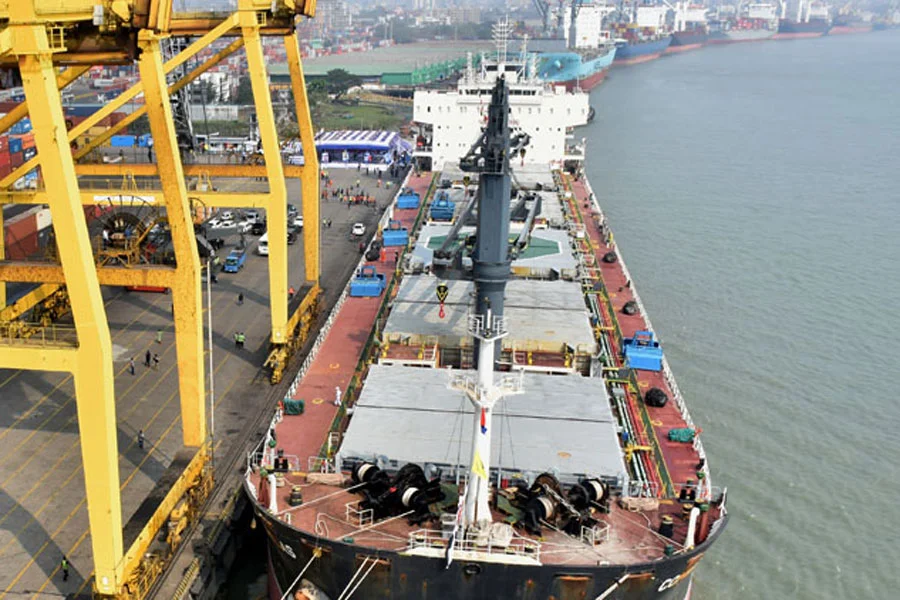
Bangladesh’s trade deficit has surpassed the $19 billion mark in the first nine months of the ongoing fiscal year, driven by a surge in imports and a simultaneous slump in export earnings.

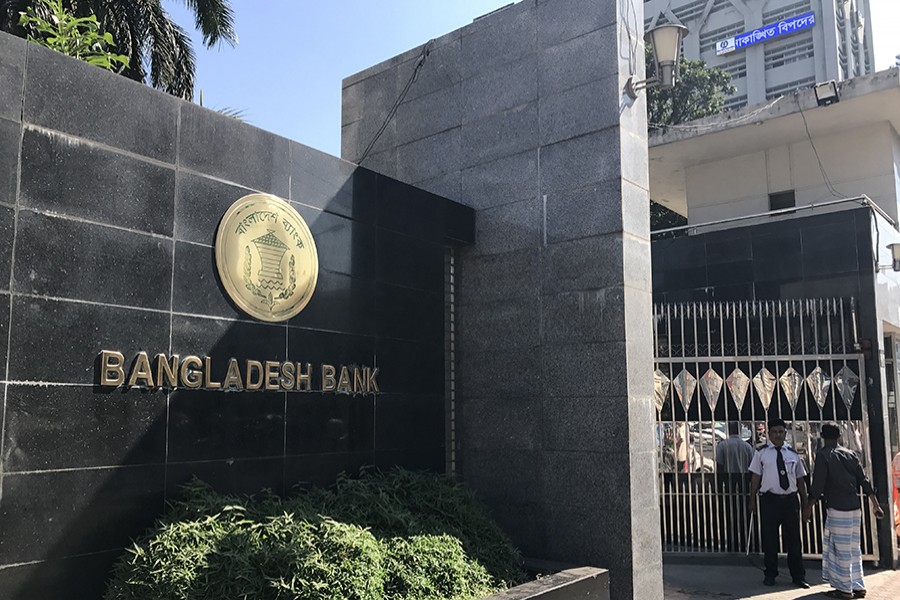
According to the latest data from Bangladesh Bank, the trade gap for the July-March period of the 2025-26 fiscal year reached $19.17 billion.

This represents a 24.14 percent increase compared with the same period in the 2024-25 fiscal year, when the deficit stood at $15.45 billion.

The widening gap marks a shift from the previous fiscal year, during which the ousted Awami League administration and the initial interim government maintained austerity measures on imports to manage the dollar crisis.

As those restrictions eased, rising import costs coupled with a significant hit to export income have pushed the deficit upward once again.

Central bank statistics released on Wednesday regarding the Balance of Payments (BoP) show that the country spent $51.56 billion on imports during these nine months -- a 4.6 percent increase from the $49.31 billion recorded during the same period last year.

In contrast, export earnings fell to $32.38 billion, marking a 4.4 percent decline from the previous year’s corresponding figure.

Historical data shows that the trade deficit had been on a downward trend recently, shrinking by 9 percent to $20.45 billion in the 2024-25 fiscal year.

This followed deficits of $22.43 billion in 2023-24 and a record $27.38 billion in 2022-23.

Despite the widening trade gap in goods, central bank officials noted that the deficit in the current account balance is showing signs of moderate improvement, providing some cushion to the overall foreign exchange volatility.​
 

Can Bangladesh ease dollar dependency without risking stability?

M Kabir Hassan

1778113467153.webp


The US dollar still dominates in foreign exchange markets, is used in around half of the international trade transactions, and has the deepest capital markets worldwide. FILE PHOTO: REUTERS

The current structure of the global monetary system, long characterised by the hegemony of the US dollar, reveals several signs of fracture. In the case of Bangladesh, a trade-oriented, remittance-dependent nation in transition, the consequences of de-dollarisation attempts cannot be overlooked.

Empirical data confirms the ongoing trend. According to figures released by the International Monetary Fund (IMF), the US dollar’s share of foreign currency reserves decreased from roughly 71 percent in 1999 to around 57 percent by the end of 2025, the lowest level recorded in the last 30 years. Central banks’ gold reserves are increasing rapidly; in 2025, the amount of gold held by central banks exceeded the total of US treasury securities on their balance sheets for the first time.

Moreover, the practice of using economic sanctions to impose a political agenda has only reinforced countries’ efforts to find alternatives. For example, the proportion of BRICS transactions in local currencies by Russia has reached 90 percent since the country invaded Ukraine in 2022. Meanwhile, the Cross-Border Interbank Payment System (CIPS), the Chinese counterpart of SWIFT, connects over 5,000 banking institutions across 190 countries.

Still, it would be inappropriate to say that the days of the US dollar are numbered. The currency maintains its dominance in foreign exchange markets, is used in around half of all international trade transactions, and has the deepest capital markets globally.

Bangladesh’s dependency on the US dollar is evident in several respects. Almost all export revenues are denominated in dollars; in FY2025, they totalled $39.35 billion of RMG exports alone. The country has attracted unprecedented remittance flows ($30.33 billion in FY2025), mostly received in dollar terms. Forex reserves are also primarily held in US dollars, amounting to $35 billion as of February 2026.

There are risks inherent in this reliance. Tighter monetary policy in the US results in depreciation of the taka against the dollar, higher import costs, and inflation, as seen in 2022-2024 when the taka’s value against the dollar fell from 86 to 121 and even further. Thus, Bangladesh was affected when Western sanctions on Russia made repayment of the $12 billion loan for the Rooppur Nuclear Power Plant project through SWIFT impossible. Bangladesh is not merely a passive observer here. As early as in April 2023, Dhaka and Moscow decided to settle the Rooppur loan payments—the first instalment amounting to about $318 million—in Chinese yuan via the CIPS.

Soon afterwards, Bangladesh Bank included the yuan in its RTGS system and considered joining CIPS. Further, in mid-2023, Bangladesh and India reached an agreement to settle their bilateral trade in rupees and taka using a nostro-vostro model. Subsequently, the Reserve Bank of India (RBI) issued a new currency swap programme for 2024-27, with a dedicated rupee swap window of 250 billion rupees—the facility available to Bangladesh.

Though the amounts are small, these transactions have significant implications as they indicate that Bangladesh’s policymakers now see currency diversification as strategic.

Engaging in a strategic de-dollarisation process offers the country multiple benefits. First, there is a significant reduction in transaction costs. In light of an import cost of $14 billion annually from India, when the dollar is used as the medium, the extra banking cost is high. Settling in rupees or yuan could eliminate a level of conversion, thus reducing banking fees and mitigating the risk of exchange rate changes.

Second, de-dollarisation serves as a means to hedge against fluctuations in the dollar’s value. It will therefore reduce dependency on dollar value fluctuations beyond Bangladesh’s control.

Third, de-dollarisation could create opportunities for new financing mechanisms. For instance, by targeting the BRICS New Development Bank’s lending portfolio in local currencies, which is set to rise to 30 percent by this year, Bangladesh could gain access to credit lines in currencies other than the US dollar.

However, the country should adopt a realistic view of de-dollarisation. China’s capital controls limit its capability as a global reserve currency. In line with former World Bank lead economist Dr Zahid Hussain’s analysis, Bangladesh’s $12 billion-plus trade deficit settled in rupees could be irrelevant unless Indians accept the taka. This is unlikely, since Indian exporters have little incentive to accept payment made in taka.

Additionally, there are issues regarding export markets. Over 80 percent of the country’s RMG exports go to the EU and US markets, which deal with the US dollar.

In geopolitical terms, it is worth noting that Bangladesh is participating in a $5.5 billion loan programme of the IMF. Therefore, the country should avoid anything that is viewed as destabilising the global dollar financial system. An example is the incident where US sanctions on NIKIMT led to a near-disruption of the yuan payment agreement in 2023.

Bangladesh does not have to take a side in the currency war. Instead, it needs a practical approach to diversifying its forex reserves. To do so, Bangladesh Bank should establish a reserve diversification policy under which holdings of the yuan, gold, and possibly even euros could increase over time, along with the development of an institutional arrangement for managing reserves across multiple currencies. The government needs to facilitate bilateral currency settlement arrangements with both India and China, and ultimately with all ASEAN countries, and to develop the relevant payment architecture to facilitate these transactions. Export diversification is essential as around 80 percent of our exports go to dollar-denominated regions. Expansion of our trade in Asia, Africa, and Latin America, where local currency settlements are increasingly feasible, will help us both financially and commercially.

Lastly, participation in multilateral talks on designing payment mechanisms, such as the BRICS and Saarc dialogues, or in ASEAN discussions, is critical to ensuring our involvement in the international trade rulemaking process. The process of de-dollarisation is neither a revolution nor an illusion. This is a long-term and gradual process, one that will take decades to be realised. What Bangladesh needs to do now is build the capability to navigate this new world order. It has taken the initial steps. Now comes the part on whether the country will proceed with purpose or simply flow with the tide.

Dr M Kabir Hassan is professor of finance and Moffett chair at the University of New Orleans in the US.​
 

Too many eggs in one basket

Shiabur Rahman

Published :
May 08, 2026 00:25
Updated :
May 08, 2026 00:25

1778197234588.webp


The export industry of Bangladesh has long stood on just one pillar - apparel. The sector has changed the country's economic landscape by providing employment to millions of people and has helped the country become the second largest apparel exporter worldwide. In fact, the apparel or readymade garments export sector accounts for more than 84 per cent of the country's overall export revenues. This achievement deserves appreciation. However, there exists a risk associated with this single-sector achievement.

The fact that a country may become vulnerable to risks posed by a highly uncertain global economy due to its over-reliance on a single export industry is not just a theory. There are several reasons why a country may become vulnerable -- uncertainty about global economic affairs, automation, changing behaviour of consumers, trade policies, and geopolitical events.

Despite all the talks and debates about export diversification, there has been no significant development on this front yet. The composition of the export basket of the country has remained very limited, and attempts to create alternative export sectors have moved at a snail's pace. Bangladesh is aiming big, with a goal of earning $100 billion annually through exports by 2030 from the existing level of roughly $50 billion a year. Reaching this goal without diversifying the exports will be a Herculean task.

The real issue here, thus, is not about diversification in need; it is rather about how this can be done. There is no easy way out of this puzzle. Export diversification needs coordinated actions from all concerned parties --- from government departments, regulators, entrepreneurs, banks and workers.

Successive governments have boasted the 'favourable' business environment and government incentives available in Bangladesh. But many, particularly the business community, consider the government's statement just rhetoric. Entrepreneurs often observe they do not feel encouraged to carry on or expand their businesses and cite factors --- bureaucratic red tape, policy shifts, underdeveloped infrastructure and harassment from the revenue department - as a deterrent. The unwillingness of the new generations of many successful business families to run businesses owned by their parents and their choice of new careers or even migration overseas justify their concern. It suggests the general distrust regarding the future business atmosphere. If even members of successful business families are unable to continue with the legacy, there must be problems with the business environment itself.

All these structural problems need to be resolved if export diversification is to take place. As long as bureaucracy cannot be streamlined and as long as consistent policies cannot be followed, nothing much can be done to ease the way of entrepreneurs.

In the same light, the issue of targeted incentives is crucial. The apparel sector has thrived and reached the present state not only because of low-cost manpower but also because the of successive governments' support for decades. Starting from the emergence of the industry in late 70s of the past millennium, the governments have used various incentives to facilitate development of the sector. The incentives included duty-free import of raw materials through bonded warehouses, cash incentives, back-to-back letters of credit, low-interest loans and tax exemptions.

The message is clear -- no industry will thrive just on rhetoric. Industries need to be sustained by a supportive policy framework and proper mechanisms.

There are several industries in Bangladesh that have great export prospects and have the potential to serve as major pillars of an export-led economy. Light engineering, leather and leather goods, pharmaceuticals and active pharmaceutical ingredients (APIs), agro-processing and food products, software and IT-enabled services (ITES), jute products, bicycles and motorcycles, and electronics and electrical goods are a few to name.

Diversification is more than just recognising those sectors. Diversification should aim at creating an environment where such industries would prosper. It means developing the infrastructure related to transportation, ports, energy, etc, making regulations more efficient, decreasing costs of doing business, and providing cash and policy incentives where necessary.

The future of Bangladesh economy should not entirely depend on one sector - apparel that is- no matter how successful it might be. The garment industry will certainly continue to be a key element of the national economy for years and play a major role in achieving the $100 billion annual export target. Yet, for sustainable and resilient growth, there is no alternative to export basket diversification.​
 

Tax evasion must be curbed instead of raising tax rates

Mamunur Rashid
Published: 07 May 2026, 08: 14

1778199107581.webp

NBR building File photo

Anyone who is informed about Bangladesh's development, budget, or public financing, or has followed discussions or news about Bangladesh in meetings of the World Bank or especially the IMF in April, knows the country's extremely weak revenue situation or the poor tax-to-GDP ratio. Due to the disappointing revenue collection situation, our development financing is becoming quite risky. There is a perception among many that our revenue-collecting agencies, under pressure from the government or due to this risk, are treading or might tread the wrong path.

The stagnation in investment in our economy over an extended period can no longer be denied. High inflation, increased business costs due to interest rate hikes, and foreign currency liquidity crises—these have collectively made the business environment challenging. In the midst of this, the inconsistency in tax policy has aggravated the situation further, akin to ''adding fuel to the fire.'' Even though the corporate tax rate has been gradually reduced to 27.50 per cent, the total tax burden still exceeds 40 per cent, which is neither investment-friendly nor encouraging.

If the government pursues the path of increasing turnover or transaction taxes, it would equate to aggravating the situation further. Business people fear that this would strain capital, reduce profits, and decrease new investments. In many sectors, including the SME sector engaged in product distribution, achieving a 1 per cent net profit amidst high business expenses or intense competition is nearly impossible. Ignoring this fundamental economic reality, any effort to increase revenue could ultimately backfire.

Lessons in public financing have shown that reasonable tax rates lead to spontaneous tax compliance and long-term revenue growth. The same applies to VAT. The current 15 per cent VAT is imposing pressure on both consumers and businesses in many cases. Undoubtedly, expanding the tax base with lower rates, instead of burdening a limited number of taxpayers with high rates, would be more effective and beneficial in the future.

Another major problem with our tax policy is its complexity and administrative weakness. Although there are over a million TIN (Tax Identification Number) holders in the country, less than half of them file tax returns. Even fewer actually pay taxes. This reflects not just tax aversion but also a crisis of trust.

Simplifying the tax payment process, integrating the TIN and NID (National ID) databases, and introducing a symbolic minimum tax for new individual taxpayers might play a positive role, as believed by many within the revenue department. They also think that integrating databases would enable the deduction of the remaining tax from individuals according to the slab or tax bracket, over and above the 10 per cent advance tax currently deducted from fixed deposits or savings certificates.

Moreover, addressing the inconsistencies within the tax structure is essential. On one hand, there is a declaration of reducing corporate taxes, whereas business people do not receive actual benefits due to various conditions and complexities in assessing indirect taxes. Strict conditions on cash transactions, high import duties, and withholding tax collectively increase the effective tax burden significantly. As a result, a gap emerges between the declared tax rate and reality. On the other hand, there is a record of extensive tax exemptions.

The plight of the export sector is not exempt from the impact of this tax policy either. Exports have been declining over the past nine months, which is alarming for the macroeconomy. In this situation, reducing the source tax and lowering duties on raw materials are critical. Otherwise, Bangladesh will fall further behind in international competition.

Simultaneously, considering tax policy from a social perspective is necessary. For example, high duties on essential products like sanitary napkins or children's diapers not only create economic issues but also public health problems. Providing or reducing tax on such products can directly contribute to improving people's standards of living. Similarly, other very essential sectors or subsectors can also be considered where there is little prospect of significant tax collection, but exemptions can create massive social impact.

On the other hand, considering commercial agriculture for new tax collection, as in many other competing countries, might be worthwhile. Even considering the difference in taxation between domestic and foreign institutions in the interest of investment is worth pondering. Records show a good tax payment history for foreign companies, and encouraging them can increase investment.

Therefore, the upcoming national budget should not merely be an occasion to meet revenue collection targets; it should outline a framework for investment and growth. Formulating supportive rather than punitive tax policy can break economic stagnation and bring about new momentum. Our revenue development authority needs to think out of the box and consider the experiences or state of revenue collection in competing countries with a cool head, going beyond conventional or historical structures.

Almost every year in pre-budget discussions, the revenue authorities engage with stakeholders, listen, and promise some changes, but these promises are rarely reflected finally. New taxes are imposed on those who pay taxes, or the procedure of tax payment is made more complicated and painful. Meanwhile, the burden of indirect taxes weighs heavily on the poor. We certainly want a change here. We need prevention of tax evasion and expansion of the tax sector.

#Mamun Rashid is an economic analyst.​
 

Thousands get jobs as PRAN-RFL revives abandoned mills

Md Asaduz Zaman


1778199814494.webp

Workers operate in organised rows at Barendra Rajshahi Textile Limited, formerly Rajshahi Textile Mills, revived by PRAN-RFL Group under a public-private partnership, creating thousands of local jobs and producing export-oriented goods. The photo was taken recently. Photo: Md Asaduz Zaman

A few years ago, Champa Begum moved from Rajshahi to Gazipur for factory work, leaving behind her young daughter. Today, the 30-year-old no longer has to make that choice.

Begum now works at a factory barely 12 km from her home in Paba upazila, Rajshahi. The move back home has reduced living costs and allowed her to rebuild her daily life with family.

Her story reflects a broader change underway.

PRAN-RFL Group has restarted three idle state-owned factories in Rajshahi, including Rajshahi Textile Mill and Rajshahi Jute Mill, under a public-private partnership (PPP) model. The initiative has already employed many locals, with plans to scale up, reducing the need for migration to major cities.

Workers say the opportunity to work close to home has brought both economic relief and personal stability.

Nearly 2,500 workers have secured jobs following the revival of the once-abandoned Rajshahi Textile Mill
Export goods -- non-leather footwear and luggage -- are being produced at the revived factories. Officials said utilising idle state-owned mills and land could boost foreign exchange earnings despite sectoral constraints.

A NEW LIFE

Nearly 2,500 workers have secured jobs following the revival of the once-abandoned Rajshahi Textile Mill, which began operations in 1979 but shut down in 2003 due to mounting losses. After more than two decades of inactivity, the factory has resumed production under a private-sector initiative to revive idle facilities through PPPs.

The factories now produce non-leather footwear, luggage, backpacks, trolleys, and women’s handbags. Over the past two years, RFL has invested approximately Tk 325 crore in the footwear and luggage sectors, with another Tk 200 crore planned this year and a further Tk 800 crore targeted over the next three years.

PRAN-RFL has already created 4,500 jobs across the three Rajshahi factories and plans to expand to more than 11,000. Nationwide, the company has generated around 12,000 jobs in footwear and luggage over the past two years and aims to create an additional 30,000 over the next three years.

Currently producing around 48 lakh pairs of shoes per month, the company plans to scale up to 1.5 crore pairs within three years to meet growing global demand. Rising production costs in China are prompting buyers to shift sourcing to Bangladesh, particularly for non-leather footwear.

The global footwear market is valued at $400 to $500 billion. In FY2024-25, Bangladesh exported footwear worth $1.19 billion, with non-leather footwear contributing $522 million-- growing over 25 percent year-on-year, according to the Export Promotion Bureau.

JOBS WHERE THEY ARE NEEDED

For workers like Champa Begum, the impact of such an initiative is immediate and personal.

“If we work far away, the child’s education suffers,” she said. “It’s much better when jobs are available locally,” she said.

Others share similar experiences. Rajshahi University graduate Sultana Khatun, 32, said the opportunity to work locally came at the right time.

“Amid higher inflation, this has somewhat reduced the burden on us.”

Mustafa K Mujeri, executive director of the Institute for Inclusive Finance and Development, welcomed the move to open up state-owned mills for private sector acquisition and reopening.

“Such measures are urgently needed to address the country’s unemployment challenge,” he said.

Amid persistently high inflation, the government should strike a balance between strengthening social protection and actively supporting the private sector to expand job creation, he noted.

Without a stronger push for employment generation, he warned, macroeconomic pressures could further deepen labour market vulnerabilities.

DECENTRALISING INDUSTRIAL DEVELOPMENT

PRAN-RFL operates eight footwear and luggage factories across Narsingdi, Rajshahi, Rangpur, and Pabna, with two more facilities in Chattogram under renovation.

The group exports to 45 countries, with the United States and Europe as key markets. Export earnings from non-leather footwear and luggage rose to Tk 177 crore in FY25 from Tk 92 crore the previous year-- an increase of over 90 percent.

“We are receiving strong purchase orders, but failure to deliver on time means losing opportunities. Reviving closed factories is our fast-track solution,” said Kamruzzaman Kamal, marketing director at PRAN-RFL Group.

He added that utilising idle government jute mills and unused land nationwide could significantly boost foreign exchange earnings.

RFL’s Rahat Hossain Roni said Bangladesh’s large rural workforce gives it a competitive advantage over rivals such as Vietnam and Cambodia, which are well-positioned to absorb production shifting out of China.

On wages, he said the company complies with national minimum standards and offers productivity-linked incentives.

“The fixed salary is just the entry-level; beyond that, earnings increase with performance,” he said.

He also noted that workers returning from Dhaka benefit from higher purchasing power in smaller cities.

“If someone comes from Dhaka to Rajshahi at the same wage, they’ve already gained roughly 30 percent in purchasing power.”

However, challenges remain. Skilled labour shortages persist in rural areas, and 30 to 40 percent of raw materials are still sourced from China, leading to delays of up to a month.

Roni urged the government to streamline customs and bonded warehouse processes to ease bottlenecks and enhance competitiveness.
 

Latest Posts

Back
Top Bottom