[🇧🇩] Monitoring Bangladesh's Economy

[🇧🇩] Monitoring Bangladesh's Economy
1K
42K
More threads by Saif

G Bangladesh Defense

Time for rebasing GDP


1787009644690.webp


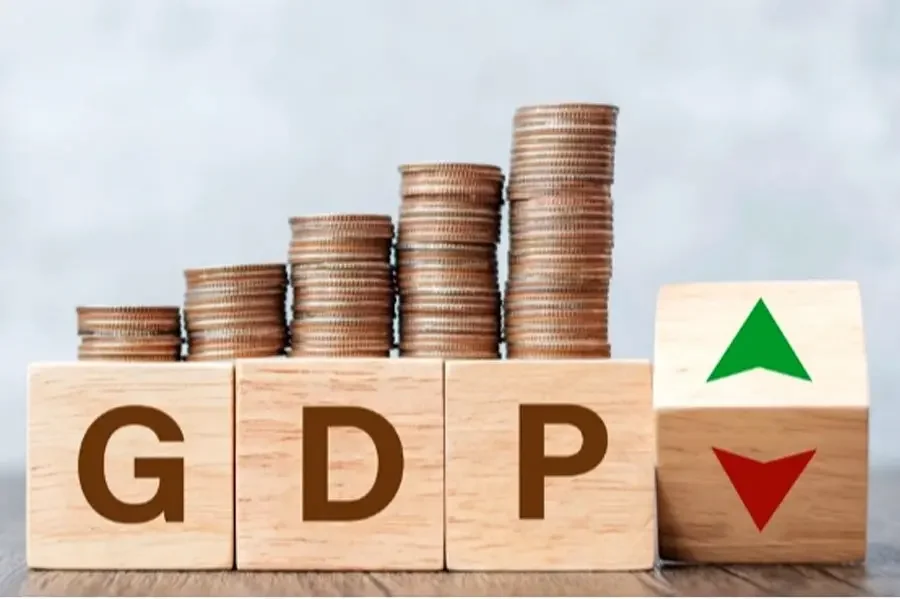
Replacement of the 2015-16 baseline price year used for calculating Bangladesh's economic output is overdue because of significant changes in its industrial sector and price weights. Countries the world over do this every five to ten years to include new industries, drop dead sectors, if any, and update outdated price weights. But the country proposes to do more this time. It wants updating the framework of the 2008 System of National Accounts (SNA) it has so far followed to compile GDP (gross domestic product). The Bangladesh Bureau of Statistics (BBS) seeks inputs from academics, economists, think tanks and major data providers for rebasing the GDP. In the past also, the statistical agency sought expert opinions from academics and economists but this time broader and extensive consultations have been planned to recalibrate the proposed framework as accurately as possible to measure the country's output.

The new baseline price year has to focus on modern technology including artificial intelligence (AI), digital services and new industries or manufacturing units that have undergone phenomenal transition by this time. Indeed, outdated SNA either leaves such productive sectors out of calculation or the old price weights of the traditional industries do not reflect the changes that have taken place in the intervening period. The effect of price changes is not reflected in the system. True, GDP was revised and rebased several times since the country's independence, but there was always an element of doubt about the methodology, data coverage and assumptions behind the estimates. There was always some credibility gap. This fresh attempt seeks to put such suspicions at rest. Now that the BBS has decided to approach experts from specialised institutions and academies for their considered opinions on the issue, there are good reasons to be optimistic about real-time data sets so crucial to tracking developments on the economic front. Such authentic data will help policymakers plan for measures aimed at meeting crises and advancing development programmes.

Updating statistical framework in effect means recalibration of data sets that no longer reflects the diversified economic activities with the introduction of advanced technology, machines and equipment. With the change in means of production, a whole new business ecosystem with development of backward linkage industries or sub-sectors appears on the scene. Calculation of GDP has to take into account the economic snowball effects. The backward linkage industries of the garment industry present a clear picture of such a development.

Bangladesh's economy may be overly reliant on readymade garments but digital services and products ranging from cell phone to semiconductor, e-commerce, logistics and modern agriculture etc., have added new dimensions to it. The government move to promote Bangla QR code among small retailers can be cited as an example of digital transactions demanding accommodation in the financial system. The records of transactions can effectively be a substitute for collateral for small enterprises to qualify for bank loans. Tracking their potential economic expansion is necessary to understand the growth of economy at the grassroots level. Integration of these small and marginal retailers into the mainstream economic channel can have a proper reflection in the GDP calculation. Inclusion of such areas of economy so far excluded from calculation will project a real picture of the GDP. The BBS must take such informal areas of economy into account while calculating the GDP.​
 

An emerging macroeconomic challenge for Bangladesh


1787010709058.webp


Bangladesh's economy is currently navigating a complex macroeconomic environment marked by persistently high inflation, subdued private sector credit growth, liquidity management challenges, and sluggish investment. Amid the policy focus on inflation, the exchange rate, and interest rates, one issue deserves equal attention - the unprecedented accumulation of physical currency held outside the formal banking system.

Despite the rapid expansion of mobile financial services (MFS), internet banking, agent banking, and the recently introduced Bangla QR payment system, Bangladesh is witnessing a historic surge in cash held outside banks. For an economy striving for greater financial inclusion and a modern digital payment ecosystem, this growing preference for cash is a serious macroeconomic challenge. Because it deprives the formal financial sector of liquidity, weakens monetary policy transmission, constrains private sector lending, and complicates the fight against inflation.

Bangladesh Bank data in this context reveal a remarkable upward trend over the past decade. Currency outside banks stood at approximately Tk 581 billion in 2011, and rose nearly fivefold to around Tk 2.91 trillion by June 2023. The figure held relatively steady at about Tk 2.96 trillion through mid-2025, before accelerating sharply. By May 2026, it had exceeded Tk 3.49 trillion, and recent Bangladesh Bank estimates put the number above Tk 3.8 trillion by July 2026. This is the highest amount of cash held outside banks in the country's history.

This acceleration can be attributed to several interconnected forces. Households, businesses, and segments of the informal economy are increasingly choosing to hold physical cash rather than keep funds in the formal banking system. The most direct driver is inflation. Since 2022, rising prices for food, transport, healthcare, and other essentials have pushed up the cash households need for daily transactions, so more money circulates in retail markets without returning to banks.

A second, less visible catalyst is the eroding confidence of depositors. Confidence is the cornerstone of any banking system, and frequent reports of loan irregularities, rising non-performing loans (NPL), and governance weaknesses at a handful of institutions have unsettled depositors more broadly. Although these problems may be concentrated within a limited number of institutions, they often create broader concerns across the financial sector, prompting precautionary withdrawals and increased cash holdings.

A third factor is the negative real return on savings whenever inflation outpaces deposit rates. Under these conditions, depositors reasonably feel that keeping money in banks erodes its purchasing power and so they turn instead to cash or physical assets, such as land and gold.

The consequences ripple through the financial system. Banks rely on deposits to fund lending; as deposits weaken, they turn to costlier interbank borrowing or Bangladesh Bank liquidity facilities, and higher funding costs eventually flow through to businesses and consumers as more expensive loans. Weaker deposit growth also directly limits banks' capacity to extend new loans, which in turn slows business expansion, industrial production, employment, and growth. Because Bangladesh Bank's policy rate and liquidity tools work mainly through the formal financial system, a large and growing pool of cash outside it also dulls the effectiveness of monetary policy itself.

The upside of reversing even part of this trend could be substantial. Additional deposits would strengthen banks' liquidity buffers, reduce reliance on expensive emergency funding, and support lending to manufacturing, SMEs, agriculture, and export industries. A stronger banking sector can also ease pressure on imports and support exchange rate stability over the medium term, while a smaller pool of informal liquidity gives Bangladesh Bank more traction over money supply and inflation through its usual tools.

Rebuilding public trust is the starting point, and it will take sustained effort from regulators, financial institutions, and the wider financial ecosystem. Depositors need to consider the right parameters to evaluate institutional strength, regulatory compliance, capital and liquidity adequacy, timely audited financial statements, board quality and management experience, transparency, and a clean governance record. Asset quality (particularly the level of NPLs), long-term reputation, and the quality of customer service and digital banking should be taken into consideration as well. Institutions with diversified funding, prudent risk management, strong internal controls, and a proven record of honoring obligations under stress are best placed to safeguard depositors' funds and earn back that trust.

The rapid increase in currency outside banks is a macroeconomic concern for Bangladesh with significant implications for liquidity management, private sector investment, inflation control, and sustainable economic growth. The ongoing digital transformation demonstrates that technology alone cannot change financial behavior. Public confidence, macroeconomic stability, sound governance, and attractive real returns on savings remain equally important. Maintaining confidence in the broader system is essential to preventing localized problems from triggering unnecessary contagion across the sector. Alongside this, stronger deposit protection, wider digital payment adoption, more inclusive financial products, and continued financial literacy efforts would all help draw savings back into the formal system.

A transparent, well-governed, and resilient banking sector is ultimately the most effective incentive for bringing Bangladesh's cash back into its banks, and back to work for its economy.

Nurul Karim Patwery, ACMA, is the Head of Treasury, IDLC Finance PLC.​
 

ADB to help Bangladesh become a trillion-dollar economy by 2034: Yingming Yang

BSS
Dhaka

1787011279300.webp

Asian Development Bank (ADB) Vice President Yingming Yang. File Photo

Asian Development Bank (ADB) Vice President Yingming Yang has said the Manila-based lending agency is ready to help Bangladesh realise its ambition of becoming a trillion-dollar economy by 2034.

"Our vision is to help Bangladesh realize its ambition of becoming an upper-middle-income country and a trillion-dollar economy by 2034. ADB remains committed to supporting a more productive, investment-driven, and resilient economy that creates opportunities across the country and improves the lives of all Bangladeshis," he said.

The ADB Vice-President for South, Central and West Asia said this in an exclusive interview with BSS after concluding his visit to Bangladesh from 9 August to 13 August.

During his visit, Yingming Yang held senior-level consultations on ADB's next Country Partnership Strategy (CPS), on key reform and investment priorities, and supporting the operationalization of the Integrated Growth Network Development (IGND) initiative.

He said Bangladesh has demonstrated considerable resilience, supported by strong remittance inflows, sustained services activity, and a dynamic private sector.

"The next opportunity is to translate this resilience into a deeper economic transformation," he said.

As macroeconomic conditions stabilize, inflation moderates, and investor confidence improves, Yingming Yang said ADB expects growth to gradually strengthen, with GDP projected to expand by 3.7 per cent in FY2026 and 4.5 per cent in FY2027.

He said maintaining this momentum will require continued progress on structural reforms. Recent steps to strengthen tax administration, improve banking sector governance, address non-performing loans, enhance financial sector discipline, and move towards a more market-based exchange rate framework are encouraging, he said.

"Looking ahead, Bangladesh can unlock stronger and more inclusive growth by improving the investment climate, expanding reliable and affordable energy, strengthening public investment management, diversifying exports, building workforce skills, creating opportunities for women and young people, and enhancing resilience," added the ADB Vice-President.

He noted that central to this agenda is private sector development and making markets investable so that private capital can flow into productive sectors, create jobs, and drive sustainable growth.

For the people of Bangladesh, Yang said this means better jobs, more competitive enterprises, improved services, and wider opportunities beyond traditional growth centers. These reforms will be critical for raising productivity, attract investment, and support sustainable long-term development.

When asked about the new Country Partnership Strategy for Bangladesh, he said ADB's partnership with Bangladesh has always evolved with the country's aspirations.

"As we prepare the next Country Partnership Strategy, our focus is on helping Bangladesh move toward a more diversified, competitive, inclusive, and resilient economy, anchored in private sector-led economic diversification and stronger resilience to shocks. In essence, our future partnership will support Bangladesh's move from resilience to transformation," he said.

Building on the current priorities, he said the ADB will support reforms and investments that strengthen the business environment, deepen financial and capital markets, expand access to reliable and clean energy, improve connectivity and logistics, accelerate digital transformation, and equip people with the skills needed for the jobs of the future.

"Our focus is to help create the conditions for private investment to thrive by addressing key policy and market constraints and fostering a more dynamic and competitive business environment," he added.

Yang said the Integrated Growth Network Development (IGND) initiative can serve as an important platform for advancing balanced regional development and mobilizing private investment so that new economic opportunities can reach more districts, firms, workers, and communities.

He said the IGND initiative is important because it provides a long-term framework for transforming Bangladesh's growth model from fragmented, project-based development into a more integrated, investment-led approach.

Endorsed by the Government in May 2026 and led by the Economic Relations Division with ADB's technical support, the initiative seeks to better connect production centers, logistics networks, urban hubs, energy systems, and trade gateways across the country. "This can help turn Bangladesh's geographic and economic potential into more productive investment, better jobs, and broader regional opportunities," he added.

By aligning infrastructure, industrial development, skills, and investment planning, Yang said IGND can help create a pipeline of priority, investment-ready projects that attract both public and private capital.

Mentioning that the initiative envisages approximately $80 billion in phased investments over the next two decades, Yang said the ADB has indicated support of up to $5 billion over the next five years.

He said successful implementation could strengthen connectivity, raise productivity, improve industrial competitiveness, diversify exports, and support the creation of millions of jobs over the next decade-across construction, manufacturing, logistics, services, agro-processing, and emerging industries.

By reducing logistics costs, expanding economic opportunities beyond major urban centers, and connecting businesses and workers to larger markets, the ADB Vice-President said IGND can help build a more competitive, diversified, and resilient economy capable of sustaining higher-quality growth and job creation. "It can also help ensure that the benefits of growth are more broadly shared across regions and communities," he said.

Regarding regional cooperation, the ADB Vice-President said Bangladesh is uniquely positioned between the large and rapidly growing markets of South and Southeast Asia.

During his visit to Bangladesh in May, ADB President Masato Kanda highlighted Bangladesh's great potential to become a regional hub for transportation, logistics, energy, and digital connectivity.

"By leveraging its strategic location, Bangladesh can strengthen trade, attract investment, integrate into regional value chains, and deepen its economic links with these regions. This is another important dimension of Bangladesh's transition from resilience to transformation," he said.

He said greater regional energy cooperation can strengthen energy security and support the transition to cleaner energy sources.

ADB's recently launched $20 billion Asia-Pacific Digital Highway initiative also offers Bangladesh an opportunity to strengthen digital connectivity, expand access to reliable broadband, and build digital and AI skills.

By working with the Digital Highway initiative, he said Bangladesh can further enhance its inclusive development agenda, addressing the needs of farmers, entrepreneurs, exporters, young workers, and women-led businesses. "Initiatives such as the IGND and the South Asia Sub-regional Economic Cooperation (SASEC) also provide important platforms for advancing these objectives," he added.

At the same time, he said deeper regional integration complements, rather than replaces domestic reform. "Strengthening competitiveness at home enables Bangladesh to benefit more fully from regional opportunities, while greater regional connectivity creates stronger incentives to invest, innovate, and reform."

Together, the ADB Vice-President said these efforts can help Bangladesh build a more connected, competitive, and opportunity-rich economy for the next stage of its development, one where private sector-led growth, innovation, and investment drive lasting impact.​
 

Stop raising tax load on existing taxpayers, expand scope
PM advises NBR as he shows means of revenue boosting


1787093698367.webp


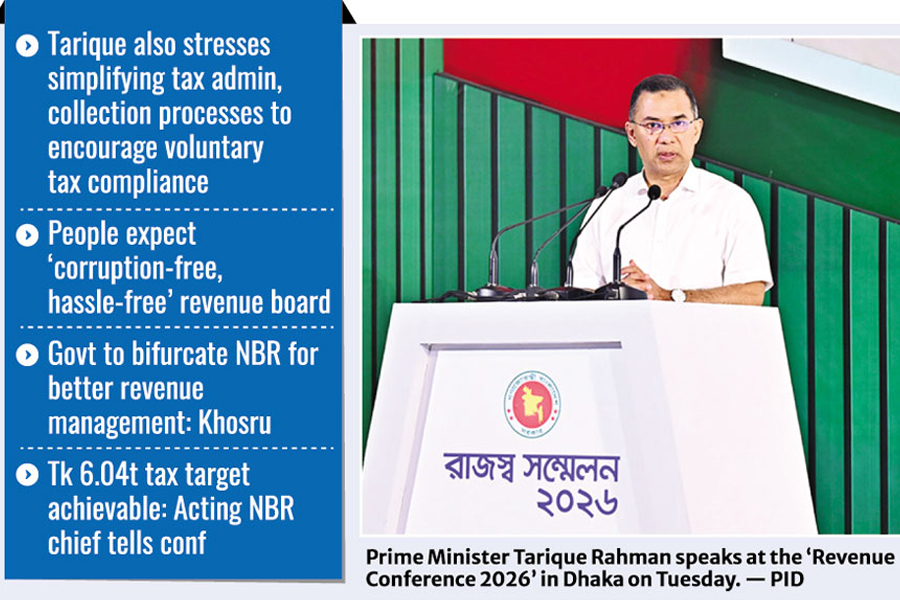
Cease repeatedly increasing the tax burden on existing taxpayers but, instead, identify eligible taxpayers who remain outside the tax net, Prime Minister Tarique Rahman Tuesday asked the revenue board while delivering numerous directions.

Addressing the 'Revenue Conference 2026', organised by the National Board of Revenue (NBR) at the Bangladesh-China Friendship Conference Centre in Dhaka, he said there was no alternative to building a digital, modern and data-driven tax administration to expand the tax net.

He also stressed simplifying tax administration and collection processes to encourage voluntary tax compliance.

On VAT collection, the prime minister instructed the NBR not to create obstacles for businesses and trade in realising the value-added tax.

"People expect a corruption-free and hassle-free NBR," he told the meet.

He noted that a modern tax administration should not only focus on collecting higher amounts of tax but also encourage people to pay taxes voluntarily.

Finance and Planning Minister Amir Khosru Mahmud Chowdhury told the revenue conference that the government has decided to separate the NBR into two divisions for better management of revenue mobilisation.

He sought cooperation from NBR officials to help the government overcome the country's debt burden through higher revenue mobilisation.

"The NBR's activities had been misused by the previous political government for its own purposes," he said.

Acting NBR Chairman Ahsan Habib said the target of Tk 6.04 trillion in tax revenue for the current fiscal year is achievable through intensified efforts.

He said the NBR collected higher revenue in the last quarter of FY26 and mobilised 12-percent more revenue than in the previous fiscal year.

Adviser to the prime minister on the Ministry of Finance and Planning Dr Rashed Al Titumir said the NBR started working with a new spirit under the leadership of the current government.

"It has already shown success by collecting higher revenue than in the previous fiscal year," he added.

In opinion-exchange session, Customs Commissioner Dr Nahida Faridy urged the prime minister to consider reinstating officials who faced suspension and disciplinary action following protests over the NBR-separation issue.

She said despite assurances from NBR high-ups that no such action would be taken and that the officials would be forgiven following mediation by business leaders, some officials had subsequently faced punishment.

Responding to the request, Tarique Rahman said he would look into the issue, but noted that strikes or work stoppages in an institution as important as the NBR are a matter of deep concern.

Shakila Farzana, additional commissioner for customs and VAT, proposed increasing budgetary allocations for the NBR to expedite its activities and mobilise higher revenues.

Income Tax First Secretary Jafor Imam said financial-transaction methods have changed significantly in the digital era, requiring tax officials to receive training in advanced technologies to trace money flows.

At the close of the conference, the prime minister visited different stalls showcasing service-delivery processes in income tax, customs and VAT.​
 

Stimulating rural economy through micro-economic zones


1787093828583.webp


Successive governments have stressed development of rural economy as a way of attaining overall growth as well as addressing poverty. But the challenge has been devising an appropriate strategy to that end. In this connection, a local NGO styled, 'Architecture Research and Development (ARD), has come up with an ambitious masterplan to establish 6,000 micro-economic zones across the country, bringing agriculture, small and medium enterprises (SMEs), storage, processing, marketing, training, etc., under one local framework. This is no doubt a novel idea. Under the proposal, each zone may eventually involve 100 entrepreneurs, creating a network of 600,000 entrepreneurs, while 333 businesses and income-generating activities would be selected depending on local resources and demand. At a time when global supply chains and transport costs remain uncertain, the idea that local people would act both as producers and consumers is eminently sensible. Its emphasis on using existing rural haat-bazaars may reduce the need for costly land acquisition.

However, a masterplan of such magnitude cannot assume that the rural backyard is an empty slate. For decades, NGOs, microfinance institutions, cooperatives and government departments have independently supported dairy, poultry, fisheries, handicrafts, home-based food processing, seed production, nursery, tailoring and various income-generating activities. Many have trained women and marginal farmers, formed borrower groups, developed market channels and created networks of field workers. But these activities often remain isolated, too small to bargain with buyers and lacking access to storage, quality certification, technology and branding. In that case, the new proposal would do well to first map what already exists and integrate the successful programmes with its zones instead of creating another parallel layer. The proposed centres could serve as common facilities for NGO-supported producers, cooperatives, SME clusters and entrepreneurs. Existing organisations, on their part, could provide social mobilisation, credit history, skills training and last-mile supervision. Such coordination would avoid duplication, lower the cost of implementation and convert scattered livelihood projects into durable local value chains.

Notably, Bangladesh's experience with economic zones is sobering. Close to a hundred such zones were approved under the Bangladesh Economic Zones Authority (BEZA), though only a small proportion became operational, prompting the government to prioritise a handful of state-run zones. A lack of utilities, road connectivity, investor readiness and feasibility assessment left much of the ambition on paper. Small wonder that the announcement of so many fresh zones by ARD raises the question of whether the country is going to repeat the old mistake of multiplying sites before making them functional. The inactive or underused economic-zone sites should therefore be brought within the scope of this new masterplan wherever their location, land and infrastructure suit agro-processing or SME clusters.

ARD, BEZA, local government bodies and the ministries concerned need to undertake a joint inventory and determine which facilities can be shared, repurposed or linked with nearby micro-zones. The point is not to force two distinct models into one, but to prevent public land and infrastructure from lying idle while fresh facilities are built nearby. Energy and finance will, however, decide whether the concept graduates from proposal to ecosystem. Though the NGO in question mentions renewables, each zone's energy design should reflect local resources. In livestock- and crop-intensive areas, biogas plants using cattle dung, poultry litter and farm waste could supply processing facilities and cold storages. Their slurry would provide organic fertiliser. Solar systems may complement them. Financing should not rely on government alone. Entrepreneur shareholding, cooperatives, banks, microfinance and NGO networks, CSR funds, businesses and diaspora capital should be mobilised, with green funds or guarantees reducing initial risks. Pilot zones must prove their markets, governance and financial viability before nationwide expansion. The proposal is welcome, but its success will lie not in announcing a large number of new sites but in connecting, energising and financing the productive strengths that already exist in rural Bangladesh. In fine, ARD and the government should first develop an integrated, locally financed and renewable energy-based pilot model before taking it nationwide.​
 

Revenue reforms to help Bangladesh fund development from domestic resources, says Khosru


1787094804793.webp


Bangladesh is moving towards financing its development with its own resources instead of relying on loans, Finance and Planning Minister Amir Khosru Mahmud Chowdhury has said.

He made the remarks while inaugurating the Revenue Conference 2026 at the Bangladesh-China Friendship Conference Center.

Addressing Prime Minister Tarique Rahman, Khosru said bold revenue reforms were being pursued under his leadership, laying the foundation for a modern, cashless and contact-free revenue system.

“Bangladesh will no longer remain a country dependent on loans. God willing, it is now moving towards development through its own financing,” he said.

Khosru said achieving the Tk 6 trillion revenue collection target was the government’s most important task, saying it would help build the prosperous Bangladesh envisioned by the prime minister.

He also expressed confidence that Bangladesh would overcome the challenge of graduating to a middle-income country by 2029 and build a trillion-dollar economy by 2034.

Referring to the restoration of democracy, Khosru said an elected government had been formed after a long struggle and sacrifice, making it their “sacred duty” to fulfil people’s aspirations.

Call to Businesses

Khosru described the business community as the driving force of the economy, saying development was impossible without investment and job creation. He pledged continued government support.

At the same time, he urged businesses to help meet the revenue target by paying taxes and VAT on time.

While acknowledging complaints over administrative complexity and officials’ behaviour, he said measures were being taken to address them. But he called for strict enforcement against persistent tax evaders to protect honest taxpayers and ensure a level playing field.

Khosru also stressed accountability among revenue officials, saying taxpayers must be treated impartially and respectfully.

“Harassing an honest taxpayer and giving undue benefits to a dishonest taxpayer are equally unacceptable,” he said.

The conference was jointly organised by the Finance Ministry’s Internal Resources Division and the National Board of Revenue.​
 

What will change when the fiscal year is shifted? What are the pros and cons?

Special Correspondent
Dhaka

1787095417648.webp

Prothom Alo illustration

The government has decided to change the country’s fiscal year. The new fiscal year will begin in April and end in March of the following year. Until now, Bangladesh’s fiscal year has run from July to June.

Once the new fiscal year is implemented, government planning will change. Development activities will follow a new schedule. People will also have to adjust some of their annual income and expenditure planning and tax-related arrangements. The accounting practices of private companies will also be affected.

What is a fiscal year, and what will the new fiscal year be?
A fiscal year is a one-year period used by the government for its financial accounting. Based on the fiscal year, the government prepares its budget, estimating how much revenue it will collect and how much it will spend. Allocations for development activities are also made according to the fiscal year, and the budget is implemented accordingly.

The size and growth of gross domestic product (GDP), inflation, the Annual Development Programme (ADP), customs duties and taxes, investment, domestic and foreign borrowing and liabilities, and the profit and loss accounts of government institutions are all calculated on the basis of the fiscal year.

The government decided to change the fiscal year at a Cabinet meeting yesterday, Monday. The new fiscal year will run from 1 April to 31 March of the following year. All accounts and calculations for fiscal year 2028–29 will be made according to this schedule.

The next fiscal year, 2027–28, will be a transitional year and will last only nine months. After that, the new fiscal year will begin in April 2028 and end in March 2029. The cycle will continue in this manner.

Why is the fiscal year being changed?

The government’s main argument is that the change will accelerate the implementation of development projects.

Bangladesh’s current fiscal year begins on July 1, at the onset of the monsoon. This makes it difficult to carry out infrastructure projects such as roads, bridges, drains and buildings. As a result, project implementation takes longer, costs rise and the quality of work suffers.

Under the new April–March fiscal year, the budget will take effect at the beginning of summer. This will allow construction work to move ahead during the dry season from April to June.

Another recurring problem is the surge in development spending at the end of the fiscal year. In June in particular, many contractors rush to complete projects. Every year, there are allegations that contractors hastily complete work and withdraw payments. Rainfall in June can also affect the quality of construction.

What benefits could the new fiscal year bring?

Infrastructure projects could begin as early as April, at the start of the fiscal year. The final four to five months of the fiscal year—from November to March—will also largely coincide with the dry season, potentially accelerating development work. This could reduce the disruption caused by the monsoon to infrastructure projects involving roads, bridges and buildings.

Moreover, since most of the second half of the fiscal year will fall during the dry season, the tendency to rush through construction work at the last moment simply to show projects as completed and withdraw funds could decline.

Consider an example. In fiscal year 2025–26, Tk 1.41 trillion was spent under the ADP. Of that, Tk 400 billion was spent in June alone—more than 28 per cent of the total expenditure in a single month.

Changing the fiscal year could make it easier for the government to implement development programmes, but it will also create some temporary challenges. The government’s accounting system will have to be aligned with the new fiscal calendar. Budget and financial management software and information systems will have to be modified. The accounting periods for profits and losses of both public and private organisations will also change.

What will happen to private companies?

Many private companies will also have to adjust their accounting systems following the change in the government’s fiscal year. Their tax arrangements and corporate accounting practices will need to be aligned with the new fiscal calendar.

Large companies conduct their accounting through software systems, and modifying these systems can be costly. With the change in the fiscal year, they will have to update their software, resulting in additional expenses.

Besides accounting software, private companies may have to adjust the schedules for budgeting, financial reporting and audits. The periods used to calculate their income, expenditure and taxes may also change.

However, the change in the fiscal year will not significantly alter how private companies calculate their profits and losses. Only the accounting period will change.

What will change for ordinary people?

The change in the fiscal year will not have any major direct impact on people’s everyday lives. However, as the tax year and fiscal year will coincide, the period used by individual taxpayers to calculate income tax will change.

At present, taxes are calculated on income earned during the July–June period. Under the new system, tax returns will be filed and taxes paid based on income earned from April to March. The schedule for filing income tax returns will also change somewhat. For example, return submissions will begin on 1 April.

The periods for making investments to claim tax rebates and receiving other tax-related benefits will also change.

What does history tell us?

The Bengali New Year was introduced during the reign of Mughal emperor Akbar. At the time, the fiscal year began in April from the perspective of revenue collection.

Later, during the colonial period, Scottish economist James Wilson of the East India Company presented India’s first budget on 7 April, 1860. The fiscal year began in April from then on, and the system continued until the partition of India in 1947.

India subsequently retained the April–March fiscal year. Pakistan, meanwhile, changed its fiscal calendar in the 1950s and began following a July–June fiscal year.

After independence, Bangladesh retained the same system and continued to follow a July–June fiscal year.

When do other countries begin their fiscal years?

In most countries around the world, the fiscal year runs from January to December. This is particularly common among developed countries. Countries that follow the January–December fiscal year include the United States, China, Japan, Germany, France, Brazil, Russia and South Korea. Neighbouring Sri Lanka also follows the January–December fiscal year.

Countries that follow a July–June fiscal year include Australia, Malaysia, Nepal and Pakistan. Countries with an April–March fiscal year include India and the United Kingdom. However, in many countries, the tax year and fiscal year do not necessarily coincide.

Expert opinion

Selim Raihan, executive director of the private research organisation South Asian Network on Economic Modeling (SANEM), told Prothom Alo that the decision to change Bangladesh’s fiscal year from July–June to April–March is a promising initiative for economic management. By reducing the mismatch between the monsoon season and the implementation schedule of development projects, the change could have a positive impact on the speed and quality of project implementation.

According to Selim Raihan, merely changing the fiscal calendar will not eliminate longstanding problems such as delays in development projects, delays in fund disbursement or weak implementation capacity. Rather, implementing the new framework will require significant coordination among budget planners, revenue authorities, government accounting systems and relevant institutions.

Therefore, while the decision should be viewed as a positive reform, attention must also be paid to how systematically and efficiently it is implemented. If adequate preparation, accountability and oversight are ensured, changing the fiscal year could become an important step toward making Bangladesh’s development activities and financial management more effective.​
 

Powering economic stability

Ahmed Humayun Murshed

1787097370644.webp

Photo: Representational image made with the help of AI

Ask a factory owner in Gazipur what keeps him up at night. He will not say exchange rates. He will not say interest rates either. He will say gas pressure, and that tells you something about where the real pressure points of this economy sit.

Energy sounds like a technical subject. It is not, not really. It is closer to a kitchen-table issue than anything in a policy brief. When gas flows the way it is supposed to, factories run full shifts, ships leave Chattogram on time, and families bring home a steady wage. Simple enough.

But when that flow breaks, the damage does not show up immediately. It moves through the economy quietly, and by the time it lands in an official chart, it has already been felt for months on the ground. That is why the current energy situation deserves more than a passing headline.

The numbers, at least, are blunt. We need somewhere between 3,800 and 4,000 million cubic feet of gas a day. What we actually get, on a good day, is closer to 2,600 MMCFD.

That gap was never comfortable, and it turned into something closer to a crisis when one of the floating LNG terminals went offline recently. Supply was gradually restored. But the episode showed how thin the margin has become between running normally and grinding to a halt.

Go to Gazipur, Ashulia, Savar, Narayanganj, wherever the factories are, and you will hear the same thing. Gas pressure is too low to run machines properly. Over a hundred spinning mills reportedly stopped production altogether, industry groups say, and others limped along at 60 to 70 percent capacity. Not a rounding error. Real output lost, real orders put at risk.

Why does this matter so much? Garments are not just another line item in our export basket; they basically are the export economy. RMG alone brings in more than 80 percent of merchandise export earnings and employs close to four million people directly.

Add the transport workers, packaging suppliers, bank staff processing LC payments, small vendors camped outside every gate, and the number of people whose income depends on this sector gets a lot bigger, fast.

Economic pain rarely stays where it starts, though. It spreads, and usually in a fairly predictable order.

Lower gas pressure slows production lines, delays shipments, and pushes factories towards diesel generators, which cost more and defeat the whole point. Buyers comparing Bangladesh with Vietnam or Cambodia are not only looking at price anymore. They are asking something simpler: will the order actually ship on time?

Then it hits paychecks. Less output usually means less overtime, fewer new hires, and expansion plans quietly shelved. Once household income tightens, spending slows well past the factory gates, at the tea stall, the local market, everywhere really.

And eventually, it works into the wider economy. Weaker exports mean fewer dollars coming in, which puts pressure on reserves and on the taka. A softer taka makes imported fuel and machinery pricier, which feeds right back into inflation. It is a loop, and not an easy one to break once it starts turning.

None of this happens on its own. We are still heavily dependent on imported LNG, so a flare-up in the Middle East or a shipping disruption thousands of miles away can quietly turn into a higher bill at home.

That exposure is not going away through wishful thinking. It can be managed: faster domestic gas exploration, stronger LNG infrastructure, less wastage in transmission, and a real push to diversify the energy mix before the next shock hits.

We have weathered worse, honestly. What is needed now is not more firefighting. It is foresight, so energy quietly goes back to being a strength instead of a headline, and businesses can get on with building rather than just keeping the lights on.

The writer is the co-founder and CEO of Accfintax and an associate director at Hoda Vasi Chowdhury & Co.​
 

Latest Posts

Back