Bangladesh Defense
Saif
Senior Member
- Messages
- 17,789
- Likes
- 8,502
- Nation

- Residence
- Axis Group

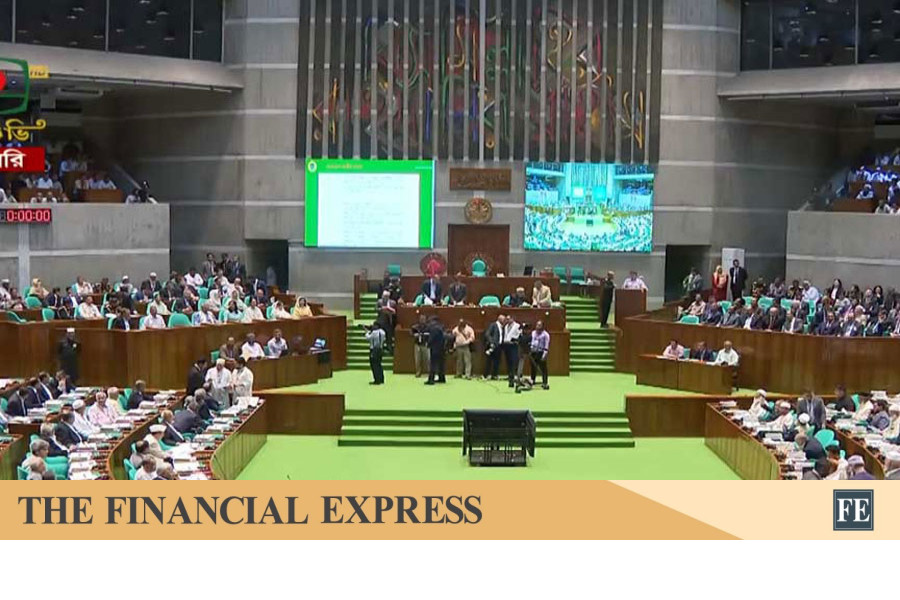
Democracy gets its House back
The maiden sitting of the 13th parliament was convened on Thursday after a long and difficult political journey. After fifteen years of authoritarian misrule that reduced successive parliaments to little more than rubber stamps, the country has now returned to a genuinely representative legislature
Democracy gets its House back
FE
Published :
Mar 14, 2026 23:37
Updated :
Mar 14, 2026 23:37

The maiden sitting of the 13th parliament was convened on Thursday after a long and difficult political journey. After fifteen years of authoritarian misrule that reduced successive parliaments to little more than rubber stamps, the country has now returned to a genuinely representative legislature. A transitional period of nearly two years under an interim government followed, serving as necessary, though often trying, passage between a discredited past and the promise of a democratic future. The election that produced the present House was widely expected to return representative politics to its rightful place at the centre of national life. Its first day proceeded through the customary steps that accompany the birth of a new legislature. A new Speaker and Deputy Speaker were elected and sworn in, and the formalities of an inaugural sitting were duly carried out. The chamber now includes an unusually large number of new lawmakers, many entering parliament for the first time. That reality will demand an adjustment period, but it also opens a window to restore the culture of debate and scrutiny that had long withered.
Yet this historic occasion was not without its contradictions and tensions. The opposition Jamaat-e-Islami and its allied parties staged a dramatic walkout during the presidential address chanting slogans, creating a moment of confrontation on what was otherwise a ceremonial day. Their objection was directed at President Mohammed Shahabuddin, whom they branded a collaborator of the deposed regime and labelled a traitor to the July uprising. The difficulty with this position is that the Speaker and Deputy Speaker of the very parliament in which these lawmakers sit both took their oaths of office administered by the same president, as did the Prime Minister himself and the entire cabinet. Home Minister Salahuddin Ahmed put the question plainly when he noted that opposition leaders had themselves engaged with the president on 5th and 6th August during the most critical hours of the political transition and that it was under his authority that the interim arrangement was constituted after all. To participate in a parliament whose entire constitutional architecture rests on oaths administered by the president while simultaneously declaring that president is unfit to address that parliament is not principled protest but rather a selective recognition of legitimacy, which is to say, no coherent principle at all.
Encouragement can nevertheless be drawn from the tone set by the prime minister in his opening remarks. He expressed a clear desire to see parliament function as the centrepiece of national discourse where all arguments and national problems would find resolution. That aspiration resonates deeply with the Bangladeshi public, which has borne the cost of its absence in full. What the country needs from this parliament, and what the Prime Minister's speech implicitly promised, is a legislature that debates with vigour, legislates with care and holds the executive to account with genuine independence.
This chamber inherits 133 ordinances from the interim period requiring parliamentary scrutiny and also carries the burden of institutional reform that demand serious law-making rather than political theatre. The ruling party's two-thirds majority is a democratic mandate of considerable weight but also a temptation toward unilateralism that must be consciously and consistently resisted. The opposition, for its part, must recognise that its role is not to delegitimise the chamber from within but to make it uncomfortable for power to be abused through argument and engagement. After all, Bangladesh has paid too high a price to see its hard-won parliamentary democracy reduced to contradiction and spectacle when so much serious law-making, deliberation and democratic work still lies ahead.
FE
Published :
Mar 14, 2026 23:37
Updated :
Mar 14, 2026 23:37
The maiden sitting of the 13th parliament was convened on Thursday after a long and difficult political journey. After fifteen years of authoritarian misrule that reduced successive parliaments to little more than rubber stamps, the country has now returned to a genuinely representative legislature. A transitional period of nearly two years under an interim government followed, serving as necessary, though often trying, passage between a discredited past and the promise of a democratic future. The election that produced the present House was widely expected to return representative politics to its rightful place at the centre of national life. Its first day proceeded through the customary steps that accompany the birth of a new legislature. A new Speaker and Deputy Speaker were elected and sworn in, and the formalities of an inaugural sitting were duly carried out. The chamber now includes an unusually large number of new lawmakers, many entering parliament for the first time. That reality will demand an adjustment period, but it also opens a window to restore the culture of debate and scrutiny that had long withered.
Yet this historic occasion was not without its contradictions and tensions. The opposition Jamaat-e-Islami and its allied parties staged a dramatic walkout during the presidential address chanting slogans, creating a moment of confrontation on what was otherwise a ceremonial day. Their objection was directed at President Mohammed Shahabuddin, whom they branded a collaborator of the deposed regime and labelled a traitor to the July uprising. The difficulty with this position is that the Speaker and Deputy Speaker of the very parliament in which these lawmakers sit both took their oaths of office administered by the same president, as did the Prime Minister himself and the entire cabinet. Home Minister Salahuddin Ahmed put the question plainly when he noted that opposition leaders had themselves engaged with the president on 5th and 6th August during the most critical hours of the political transition and that it was under his authority that the interim arrangement was constituted after all. To participate in a parliament whose entire constitutional architecture rests on oaths administered by the president while simultaneously declaring that president is unfit to address that parliament is not principled protest but rather a selective recognition of legitimacy, which is to say, no coherent principle at all.
Encouragement can nevertheless be drawn from the tone set by the prime minister in his opening remarks. He expressed a clear desire to see parliament function as the centrepiece of national discourse where all arguments and national problems would find resolution. That aspiration resonates deeply with the Bangladeshi public, which has borne the cost of its absence in full. What the country needs from this parliament, and what the Prime Minister's speech implicitly promised, is a legislature that debates with vigour, legislates with care and holds the executive to account with genuine independence.
This chamber inherits 133 ordinances from the interim period requiring parliamentary scrutiny and also carries the burden of institutional reform that demand serious law-making rather than political theatre. The ruling party's two-thirds majority is a democratic mandate of considerable weight but also a temptation toward unilateralism that must be consciously and consistently resisted. The opposition, for its part, must recognise that its role is not to delegitimise the chamber from within but to make it uncomfortable for power to be abused through argument and engagement. After all, Bangladesh has paid too high a price to see its hard-won parliamentary democracy reduced to contradiction and spectacle when so much serious law-making, deliberation and democratic work still lies ahead.