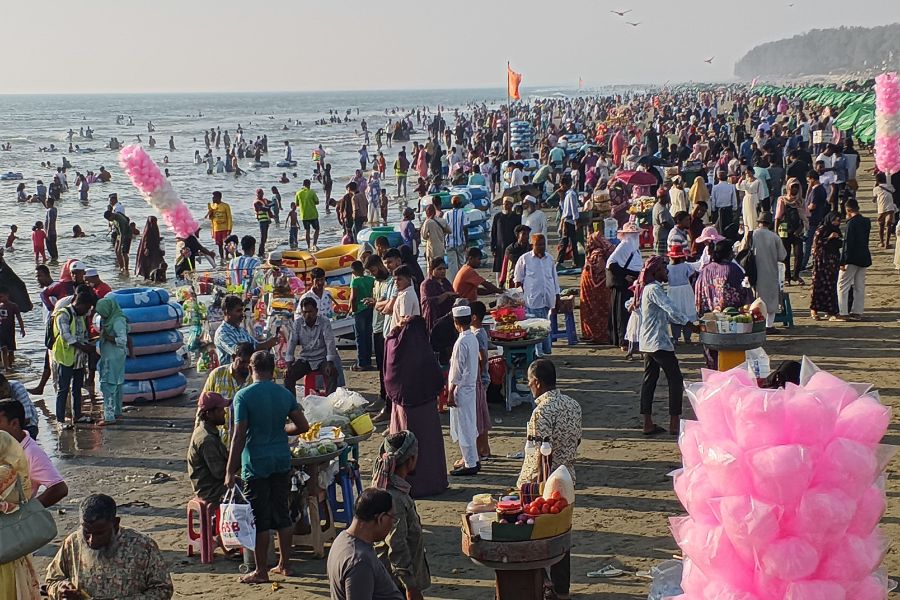
[🇧🇩] Bangladesh Tourism

[🇧🇩] Bangladesh Tourism
103
7K
More threads by Saif

G Bangladesh Defense

Sylhet gears up for massive tourist influx this Eid
Expects 15-20 lakh tourists, Tk 150cr turnover

1743208181093.webp


Sylhet is preparing for a massive influx of tourists during the nine-day extended Eid-ul-Fitr holiday, with around 80 percent of hotel and rest house rooms already booked.

Tourism-related businesses expect at least 15 to 20 lakh visitors, generating a turnover of up to Tk 150 crore.

Despite concerns over recent security incidents on highways and at tourist spots, law enforcement agencies and the administration have taken measures to ensure visitor safety.

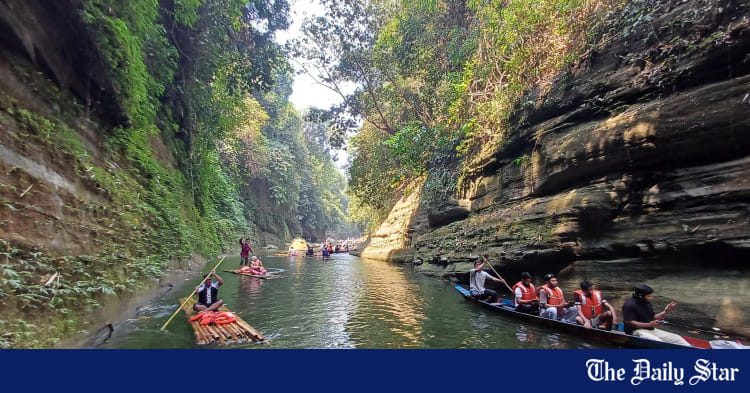
Sylhet's top attractions include the shrines of Hazrat Shahjalal (R) and Hazrat Shah Paran (R), tea gardens, Jaflong, Bichanakandi, Sadapathor, Ratargul, Lalakhal, Rangpani, and Pantumai. Many tourists also visit the tea gardens of Sreemangal and Madhabkunda in the Moulvibazar district.

During Eid, two types of tourists typically visit Sylhet -- local visitors from the four districts of Sylhet division, who explore multiple spots in a single day, and travellers from other parts of the country, who stay in hotels and resorts.

Foyez Hasan Ferdous, acting president of the Sylhet Chamber of Commerce and Industry, said Sylhet is the only district where multiple tourist destinations are located close together, allowing visitors to explore several sites in a day.

He noted that natural disasters and political instability had affected tourism in recent years but expressed optimism about this year's turnout.

He said the sector's success benefits various industries and called for government intervention to improve road infrastructure and security.

Sumat Nuri Jewel, former president of the Sylhet Hotel, Motel, and Guesthouse Owners' Association and managing director of Hotel Fortune Garden, said the response from tourists has been overwhelming, with almost all rooms booked in advance.

Mohammad Bashir Uddin, additional superintendent of police of the Tourist Police in Sylhet Region, said security measures have been strengthened across six zones, with Jaflong, Sreemangal, and Madhabkunda expected to receive the highest number of visitors.

He said coordination with district and local police has been ensured to provide a secure environment.

Md Anwar-Uz-Zaman, additional deputy commissioner (general) of Sylhet, said Upazila Nirbahi Officers in areas with tourist attractions have been instructed to take necessary precautions.

Relevant engineering departments have been directed to address minor road defects, while a control room with a hotline has been set up under the district administration to assist tourists.

He expressed confidence that visitors would enjoy a safe and uninterrupted holiday in Sylhet this year.​
 

Radhanagar in Sylhet: From a quiet village to major tourist destination

1743465707550.webp

Photo: Collected

Radhanagar, once a quiet village located just five kilometres from Sreemangal town in Moulvibazar district, has undergone a remarkable transformation due to the influence of tourism.

Md Islam Uddin, upazila nirbahi officer of Sreemangal, said there are about 100 hotels and resorts in the upazila, one of the country's most popular destinations.

Of these, approximately 60 percent are located in the Radhanagar area alone.

Today, the village is renowned nationwide and has even caught the attention of international publications like The Economist, which featured a report on a resort there.

The first impression of Radhanagar upon entering is one of growth and change.

The village's entrance is marked by the luxurious five-star Hotel Grand Sultan. As one moves further, one encounters resort after resort, with a total of 30 now established. Radhanagar has become the primary choice for tourists visiting Sreemangal, attracting both domestic and foreign travellers.

The village accommodates around 500 tourists daily.

According to the Srimangal Tourism Service Organisation, Radhanagar has become a preferred destination for those seeking an escape from the hustle and bustle of city life.

"In Radhanagar, you can explore tea gardens, enjoy nature walks, and visit nearby attractions like Lawachara National Park, Madhabpur Lake, and Baikka Beel Wetland Sanctuary," said Roza Islam, a tourist from Dhaka.

Tourism has fostered the construction of more resorts, with another 25 under development. This booming industry has created employment for over 1,000 local residents. Additionally, land prices have skyrocketed, increasing by 50 times over the past decade, as tourism entrepreneurs continue to invest in the area.

Historically, Radhanagar's economy was built on sugarcane cultivation, with traders and workers from across the country visiting the village. Over time, lemon and jackfruit orchards became popular, and the legacy of these agricultural practices still remains visible.

However, since around 2010, tourism has taken centre stage, with businesses continually emerging to cater to the growing influx of tourists. New restaurants, hotels, and handicraft shops are being built, and even a tea leaf sales centre has opened to showcase the area's main industry.

"Radhanagar is a shining example of how tourism can change the socio-economic landscape of a village. It is also a model for eco-tourism. We have given special importance to tourism development here. Tourists can travel safely day and night," UNO Islam Uddin said.​
 

Ctg's natural spaces, tourist spots abuzz with crowds

1743466563987.webp

Photo: Star

On the first day of Eid, after spending the morning with families and loved ones, many from Chattogram's port city and its upazilas have flocked to tourist spots as an escape from the regular humdrum life.

With pleasant weather and no rain, parks, the sea beach, Naval Academy Road, the banks of the Karnaphuli River, and Chattogram Zoo witnessed a massive turnout.

The Patenga Sea Beach is one of the most visited places for the people of Chattogram or anyone who is visiting Chattogram.

People with families and friends go to the beach for sightseeing on weekends and especially during the Eid holiday. Some were enjoying the tasty treats on the banks, while others were lounging on chairs or boulders. Some took a dip in the waters during a hot summer afternoon.

There is horse riding, balloon-shooting, and other amusement for kids.

Many are here to watch the sun set in the Bay of Bengal.

Near the sea beach is the Naval Academy Road, known just as Naval to Chattogram dwellers. It's a marine drive from the Shah Amanat International Airport to the Navy base, along the Karnaphuli river where it meets the Bay of Bengal.

People park their cars along the banks to enjoy the summer breeze with some samosa, shingara and fried crabs, which is a specialty of the roadside makeshift stalls.

Foy's Lake Concord Amusement World is one of the most sought after places for the people of Chattogram. The park is abuzz with people since the afternoon. Many have come with families and friends to the amusement park for a leisurely evening.

One such visitor is Mohammad Ismail who came to the park with his wife and daughter. He said he lives in Dhaka due to his job and came to the port city on the occasion of Eid.

"My wife and daughter wanted to visit the park," he said, adding, "They mostly enjoy the park's sea world section."

Many were also seen roaming around with friends.

Contacted, Bishwajit Ghosh, manager (marketing) of Foy's Lake Concord Amusement World, said the park has seen a huge turnout of visitors since the afternoon.

"We have arranged all sorts of amusement here in the park for the visitors for their enjoyment," he said.

"Around 4,000 visitors entered the park in the first two hours of the afternoon and we expect, the number will increase throughout the day... Also in the next seven days during the Eid vacation," he said.

The Chattogram Zoo is place, right beside Foy's Lake, where people usually visit on Eid.

The zoo is home to a total of 620 animals and birds of 66 species, including kangaroo, white tiger, lion, deer and peacock, said officials of the zoo.

The zoo also witnessed a huge turnout of visitors since the afternoon. Around a thousand visitors entered the zoo in first one hour.

Naznin Akter, a resident of city's Bahaddarhat area, was visiting the zoo with her six-year-old son.

"My son like kangaroos... He watches them on Animal Planet [a TV channel]," said Naznin, adding, "I am also excited to see the white tigers at the zoo."

Shahadat Hossain Suvo, curator of Chattogram Zoo, said the zoo has been decorated for the visitors during Eid."We expect a huge number of people everyday during the Eid holiday," he said.​
 

Tourism industry in Cox’s Bazar eyes Tk 700cr revenue during Eid

1743641600150.webp


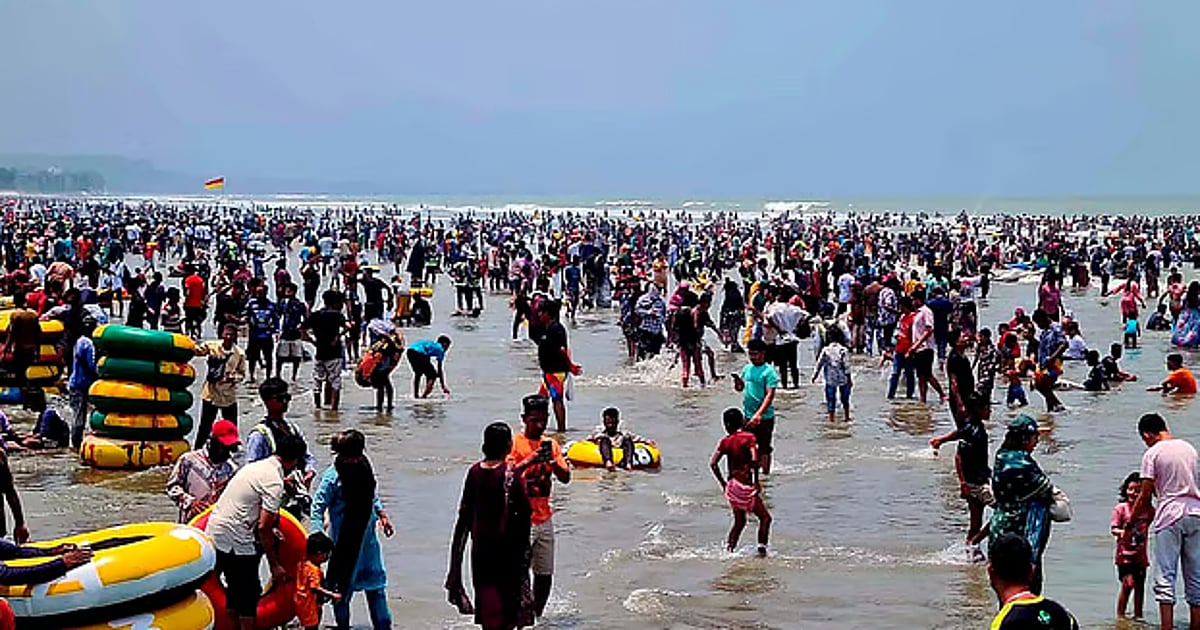
Businesses in Cox's Bazar have been expecting over Tk 700 crore in revenue following a massive surge in tourist arrivals on the Eid-ul-Fitr vacation.

After a month-long slowdown in the tourism industry due to Ramadan, the beach town is now bustling with visitors. More than 100,000 tourists are arriving daily, a trend likely to continue through next week, said Abul Kasem Sikdar, president of the Hotel, Motel, and Guest House Owners' Association in Cox's Bazar.

"While the influx of tourists this time is promising, it has not yet reached full capacity. Before Ramadan, Cox's Bazar saw a massive influx of tourists, which is why many have opted not to visit this time. As a result, only about 70 to 80 percent of hotel and motel rooms have been booked. Additionally, the hot weather has discouraged some travelers," Sikdar said.

"However, by Friday and Saturday, we expect hotel occupancy to reach 100 percent. Currently, over 100,000 people are visiting Cox's Bazar daily, with an estimated expenditure of around Tk 10,000 per person. This would bring the total income from the tourism sector to more than Tk 700 crore," he added.

Echoing similar projections, Abu Morshed Chowdhury, president of the Cox's Bazar Chamber of Commerce, estimated that the tourism industry would see a gross turnover of around Tk 700 crore within the first week after Eid. He emphasised that this revenue includes all sectors linked to tourism. Hoteliers have been urged to keep accommodation rates reasonable to ensure a positive experience for visitors, he noted.

With over 550 hotels, resorts, and guesthouses, Cox's Bazar can accommodate more than 150,000 tourists.

Sifat Saifullah, a supervisor at Sea Save Lifeguard, reported that more than 150,000 people visited Kolatoli, Sugandha, and Laboni beaches today from morning till evening. Many enjoyed bathing in the sea, while others admired the scenic beauty. The influx began at 9:00am and continued into the afternoon, with tourists spending their evenings strolling along the shore. He also mentioned that 27 Sea Save lifeguards were on duty to assist visitors.

Ensuring security remains a top priority, Inspector Jahangir Alam of Cox's Bazar Tourist Police said strict security measures have been implemented across the beach and hotel-motel zones. Uniformed officers, mobile patrols, and plainclothes detectives are actively working to ensure the safety of tourists.

Sharif Hossain, a newlywed from Dhaka's Rampura, shared his experience, "The view of the sea beach is breathtaking. You can't truly grasp its beauty without being here. Security arrangements are excellent, but due to high demand, hotel rents and food prices seem a bit expensive."​
 

'Beautiful Bangladesh Run 2025' enlivens Hatirjheel, promotes tourism
BSS Dhaka
Published: 25 Apr 2025, 17: 37

1745627704809.webp

The 'Beautiful Bangladesh Run 2025' was held in Hatirjheel with the aim of showcasing Bangladesh's tourism potential worldwide. BSS

The Hatirjheel area in the capital turned into a vibrant display of festivity and fitness this morning as the 'Beautiful Bangladesh Run 2025' was held to promote the country's tourism potential globally.

Organised by the Aviation and Tourism Journalists' Forum of Bangladesh (ATJFB), the marathon-style event drew more than 700 participants, including foreign diplomats, professional athletes, travel enthusiasts, and key stakeholders from the aviation and tourism sectors.

The run kicked off at 6:00 am from the Police Plaza end of Hatirjheel and concluded at the Hatirjheel Amphitheatre, where a festive award ceremony followed.

Chief executive officer of the Bangladesh Tourism Board (BTB) Abu Taher Mohammad Jaber, additional inspector general of Tourist Police Md Mainul Hasan, Nepalese ambassador to Bangladesh Ghanashyam Bhandari, the United Arab Emirates (UAE) ambassador to Bangladesh Abdullah Ali Abdullah Al Hamoudi, Philippine ambassador to Bangladesh Nina P Cainglet, Brazilian ambassador to Bangladesh Paulo Fernando Dias Feres and acting ambassador of Thailand to Bangladesh Panoam were present among others.

The event was powered by the Bangladesh Tourism Board, with Rhythm Group serving as the title sponsor.

Speaking on the occasion, BTB CEO Jaber said that this was a thoroughly enjoyable and meaningful event. "We believe such initiatives can significantly enhance Bangladesh's appeal as a global tourism destination," he added.

Rhythm Group managing director Sohagh Hossain and ATJFB president Md Tanzim Anwar also spoke, among others.

Other supporting organisations of the event included the Civil Aviation Authority of Bangladesh (CAAB), Tourist Police Bangladesh, Association of Travel Agents of Bangladesh (ATAB), Tour Operators Association of Bangladesh (TOAB), Electrolyte Drink Active, Dhaka WASA, Famous Specialized Hospital and Famous Creation.

Additional sponsors were Ethiopian Airlines, Bhaiya Group, Eastern Bank, FitsAir, Bengal Airlift, ShareTrip, Air India, American Tourister, TPC, Titan, Samsonite, Skin Perfume, US-Bangla Airlines, NOVOAIR, and Air Astra.

Two race categories were organised for adult participants: a 7.5-km competitive run and a 2-km fun run.

Winners of the 7.5-km (Men's Category):

1st - Elahi Sardar

2nd - Ashraful Alam

3rd - Sajjad Hossain

Winners of the 7.5-km (Women's Category):

1st - Sadia Shawlin Sigma

2nd - Swarna

3rd - Farzana

Winners of the 2-km Fun Run:

1st - Jisan

2nd - Abhi Islam

3rd - Zahurul

Trophies and awards were handed over to the winners at the end of the event amid applause and celebration.​
 

Why tourist deaths on Cox's Bazar beach cannot be prevented

Abdul Kuddus Cox's Bazar
Published: 10 Jun 2025, 20: 15

1749599102530.webp

Crowd of tourists at Sugandha Point of Cox's Bazar beach on Monday afternoon. Prothom Alo

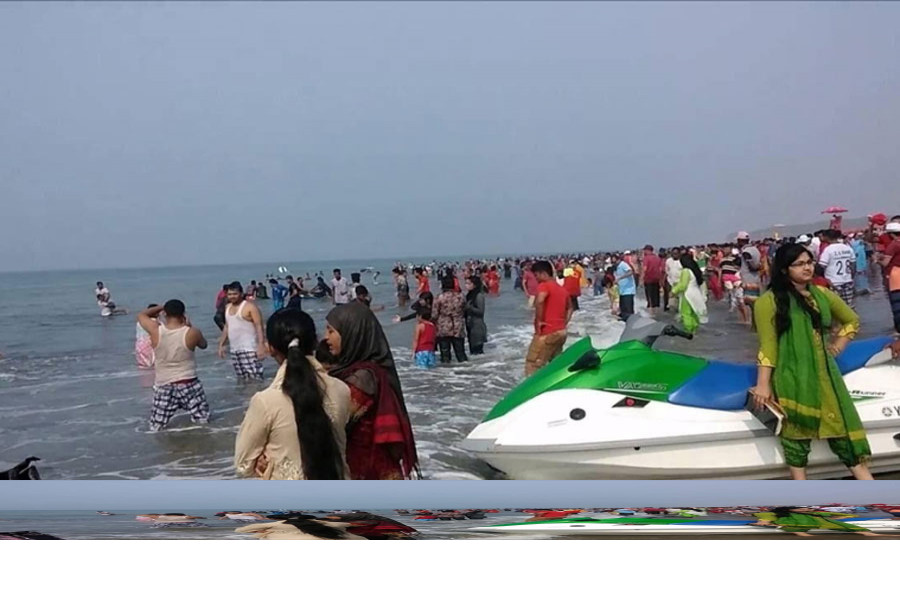
Over the two-day Eid holiday, six people, including tourists, have died after entering the sea at Cox's Bazar. Tourists are often unaware of the danger before entering the water due to erosion and hidden channels forming in multiple spots along the 120-kilometer long beach. The current rescue efforts are also insufficient, making it impossible to prevent deaths among those swimming in the sea. Despite various infrastructure developments, the lack of safe swimming facilities has frustrated tourism stakeholders.

According to hotel-motel authorities and the tourist police, at least 250,000 tourists visited Cox's Bazar during the Eid holiday over the past two days, with an additional 300,000 expected in the next two days. Of these visitors, 90 per cent go into the sea to swim. However, over the last three decades, no designated safe swimming areas have been established. Despite significant revenue generated from the tourism sector for both hotel-motel owners and the government, everyone remains indifferent to providing safe swimming arrangements. Only 26 staff members from a private organisation are available for rescue operations along a mere 5 kilometers (from Kolatoli to Laboni Point) of the 120-kilometer beach. The remaining 115 kilometers of coastline are left unprotected. Specifically, there's no one to conduct rescue operations if someone goes missing while swimming at beaches in Teknaf, Baharchara, Patuwartek, Inani, Himchhori, Darianagar, or Kolatoli Point.

Police and lifeguard personnel reported that yesterday, Monday, around 2:00pm, two tourists, Shahinur Rahman, 58, and Sifat Rahman, 20, both from Rajshahi and identified as father and son, drowned while swimming at Kolatoli Beach. The previous day, Sunday afternoon, a tourist named Md Rajib, 30, went missing after swimming at Laboni Point. His body resurfaced around midnight, seven hours later. Rajib, a graphics designer, was from Dewanbazar Bhorapukur in Chittagong city.

On the same afternoon, Nurul Islam, a resident of Baharchhara in the city, and an unidentified tourist went missing after swimming at Shaibal Point. Around 12:00pm on Monday, Nurul Islam's body was found at Nazirartek Point. At the same time, the body of another unidentified tourist was recovered from the mouth of the Bakkhali River, near the Khuruskul Ashrayan Project. Police suspect this might also be a tourist's body.

According to police, six bodies have been recovered from various points along the beach in the last two days. Among them, three were tourists, one was local, and the identities of the other two remain unknown.

The officer-in-charge (OC) of Cox's Bazar Sadar Model police station, Elias Khan, said that the sea is rough due to adverse weather conditions, and several hidden channels have reportedly formed at various points. Multiple red flags are being flown near these hidden channels to warn people against swimming, but tourists are disregarding these warnings and getting into trouble.

Sifat Saifullah, supervisor of Sea-Safe Lifeguard, noted that the risk to tourists has increased due to new hidden channels caused by recent rainfall. He explained that recent heavy rains have led to flash floods from the hills, causing erosion and creating hidden channels at different points along the beach. Red flags are being put up on the sandy shores where these hidden channels exist, and public announcements are made to raise awareness. However, people are not adhering to the restrictions.

Managing over 100,000 tourists daily is proving overwhelming for the 25 lifeguards, 25 beach workers, and 70-80 tourist police officers.
According to data from the Sea-Safe organization, five tourists died in August and September of last year after being swept away by currents or getting trapped in hidden channels. In the preceding six years, 49 tourists died after being swept away by currents.

1749599143883.webp

Red flags have been put up at Sugandha Point on Cox's Bazar beach to warn tourists. The photo was taken on Monday afternoon. Prothom Alo

Environmental organisations have advocated for sea-netting systems to ensure safe swimming at the beach. Fazlul Quader Chowdhury, president of the Cox's Bazar district branch of Dharitri, a non-governmental environmental organisation, said that tourists' primary attractions are swimming in the ocean and watching the sunset from the sandy beach. Over the past two decades, billions of taka have been invested around the beach, leading to the development of over six hundred multi-story hotels, resorts, guesthouses, and various businesses. However, no one is willing to spend millions of taka to establish a sea-netting system for safe swimming, even though it would protect tourists.

There's also no provision for compensation if a tourist dies while swimming in an unprotected area. Even transporting a body to the morgue incurs expenses for the tourist's family. Yet, the Beach Management Committee, led by the District Administration, collects substantial amounts of money annually from various beach activities, including umbrella and chair rentals (kitkot), beach bikes, horse rides, and shops.

Several hotel owners, who wished to remain anonymous, mentioned that they have built swimming pools in their hotels to meet tourist demand. They are ready to cooperate if the government initiates a sea-netting system in the ocean.

In this regard, Mukim Khan, general secretary of the Cox's Bazar Kolatoli Hotel Resort Owners Association, said that upon arrival, tourists are made aware of safety risks, including swimming in the sea. Despite this, many disregard the warnings and face danger by swimming in risky areas, which also embarrasses hotel owners.

A District Administration official stated that a decade ago, a safe swimming area for tourists was created at Laboni Point by enclosing it with a net. However, it was destroyed by waves within a few months. Sea erosion has also intensified over the past two years. In such a situation, research is needed to determine where safe swimming facilities can be established.​
 

Make tourism safe and sustainable
Incidents of obstruction in Sylhet tourist spots concerning

1749687581003.webp

VISUAL: STAR

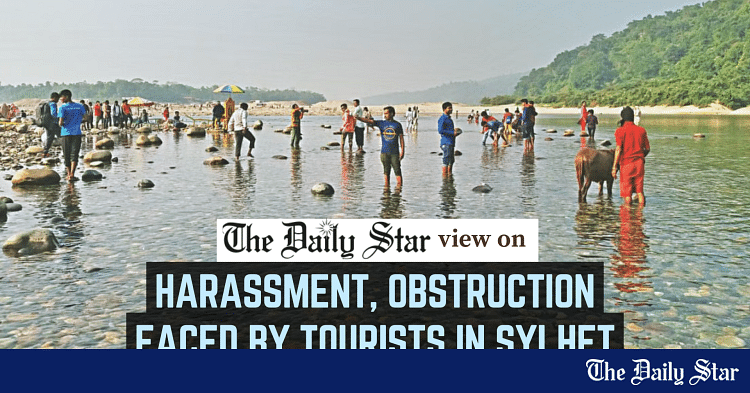
It is troubling to learn of some recent incidents of harassment and obstruction faced by tourists in Sylhet. While such incidents in tourist spots are nothing new, the latest development brought two issues to the fore: growing tension surrounding unregulated mass tourism, and the disturbing role played by religious actors in it. According to our report, people visiting the Utmachhara tourist spot in Companiganj on Sunday (the first day of Eid) were asked to leave by members of the Companiganj unit of Jubo Jamiat, the youth wing of Jamiat Ulema-e-Islam Bangladesh. In a video that has since gone viral, the group members are heard telling visitors of a local decision to bar tourism due to alleged "immoral activities" like drinking and indecent behaviour. The following day, a scuffle broke out between some locals and tourists near the Jaflong BGB camp, although no injuries were reported.

These issues demand critical reflection as mass tourism continues to boom in Bangladesh. There is clearly a fine line to walk here. First of all, tourism is vital for the local economy as it creates employment and supports small businesses. But with too many people rushing to the beauty spots accessible in a small country like Bangladesh, unregulated tourism can be hugely disruptive. We, therefore, must find a way to make this sustainable.

These incidents illustrate how mass tourism can sometimes overwhelm local communities. Complaints about environmental degradation, littering, and disruptive behaviour by visitors are natural in areas where tourist footfall has surged without adequate infrastructure or enforcement of behavioural norms. This creates resentment among locals, who may feel their culture and environment are being disrespected or exploited. But imposing restrictions on tourism—instead of seeking constructive solutions through regulation, education, or improved civic oversight—sets a dangerous precedent. What makes this especially alarming is the involvement of religious groups. While their concerns are shared by many in local communities, their actions—policing public behaviour and dictating who can access shared natural resources—undermine both the rule of law and the inclusive spirit of tourism.

These issues demand critical reflection as mass tourism continues to boom in Bangladesh. There is clearly a fine line to walk here. First of all, tourism is vital for the local economy as it creates employment and supports small businesses. But with too many people rushing to the beauty spots accessible in a small country like Bangladesh, unregulated tourism can be hugely disruptive. We, therefore, must find a way to make this sustainable. Part of the reason for the unregulated mass tourism in Bangladesh is its unregulated development—we cannot address one without addressing the other. Other issues underscored by recent trends involve safety both on the roads and while at the tourist spots. There have been reports of road crashes, criminal activities, and drowning as holidaymakers move to different locations, including Cox's Bazar, which has seen a huge footfall this holiday.

Clearly, to make tourism safe and sustainable, we need to address the persistent lack of safety infrastructure, enforcement of rules, and coordination among all stakeholders. Ensuring community voices are heard while also defending the right to safe and responsible tourism must be the priority. This calls for a comprehensive tourism policy that not only fosters economic opportunities but also protects local culture, the environment, and the safety of tourists. The government may also consider decentralising tourism by investing in new destinations to reduce pressure on existing hotspots. The rise in tourist numbers during holidays is welcome, but without proactive planning and inclusive governance, such growth will only bring more chaos. On their part, Sylhet local administrations must also prevent a repeat of what happened recently and hold to account anyone obstructing tourists.​
 

Tourists allowed back to Debotakhum as weather improves in Bandarban

1750898199252.webp

Photo: Mong Sing Hai Marma

The heavy rainfall in Bandarban has ceased, and with the weather now favourable, tourists will once again be allowed to visit Debotakhum -- a popular tourist destination in Rowangchhari upazila -- from today, according to the local administration.

Previously, due to continuous heavy rain and the risk of landslides, the upazila administration had imposed a one-week ban on visiting Debotakhum from June 18 to 25 to avoid putting tourists at risk.

Speaking to The Daily Star yesterday, Rowangchhari Upazila Nirbahi Officer (UNO) Md Saiful Islam said, "Rainfall has significantly reduced in Bandarban over the past few days. The weather appears stable, and the overall situation in the area is good. Therefore, from Thursday, there should be no problem visiting Debotakhum. Tourists can travel as they did before."

"Since it's monsoon season, the hills take on a different form during this time. However, sudden rainfall upstream can trigger flash floods. So, wearing life jackets is mandatory for everyone, and all visitors must travel with caution. We've already instructed the local guides accordingly," he added.

He also mentioned that if the weather deteriorates again due to rain, temporary travel restrictions may be reinstated.

Located in the Loi-ra-going or Kachhaptali area of Rowangchhari upazila, Debotakhum is about 30 to 35 kilometres from Bandarban town. Tourists typically travel by open jeep (locally known as chander gari) or three-wheelers/auto-rickshaws to Kachhapatali in Rowangchhari. From there, it takes about 40 minutes to an hour of trekking through hilly trails to reach the spot.​
 

Sylhet needs more focus for tourism: Naser
Zaman Monir . Sylhet 05 July, 2025, 22:31

1751847301010.webp


Despite having diverse natural environment and scenic places as well as many resorts and tourist spots, tourism in Sylhet region cannot fully flourish because of absence of proper infrastructural facilities and easy communication system.

Tourism-related business personalities of Sylhet urged the government to come up with urgent projects to build up sustainable infrastructural facilities and better communication system and focus on the needs of tourists.

Government extended its allout support to tourist spots in Chattogram and Cox’s Bazar region, but remained indifferent to nurturing the growing potentialities of tourism in Sylhert region, said Naser Rahman, a leading tourism entrepreneur and political personality of the region.

In particular, it is very crucial to strengthen the security of visitors, construct adequate number of quality wash blocks at all tourist spots and provide with tourism-oriented entertainment facilities, said Naser, son of former finance minister late Saifur Rahman.

With the development of tourism industry, employment opportunity can be created side by side with the enhancement of revenue, he commented.

New Age talked to Naser Rahman, owner of DuSai Resort and Spa, a quality tourist resort situated along Shrimangal Raod in Moulvibazar, about the prospects and dilemmas of tourism industry in Moulvibazar as well as in the Sylhet division.New Age merchandise

His spontaneous conversation brought out the overall scenario of the tourism sector in Sylhet region, its prospective and limitation. Along with Moulvibazar and Sylhet, he also talked about the overall tourism industry of the country, which could be helpful for further improvement of the sector.

Naser Rahman said that Sylhet division, the northeastern part of Bangladesh, is an ideal place for tourists because of its attractive natural landscape consisting diverse forests, hills, plain land and haors.Bangladesh-themed souvenirs

In 2008, the then caretaker government had recognized only two places of the country as tourist spots and these are Cox’s Bazar and Moulvibazar.

The previous government upgraded the Cox’s Bazar Airport to an international airport,

Chattogram-Cox’s Bazar Road to a national highway, constructed a fresh rail route and Cox’s Bazar-Teknaf Marine Drive Road, which the tourists enjoy much. ‘But, nothing has been done in Moulvibazar to attract tourists,’ Naser Rahman lamented.

‘Work is underway now to turn the Dhaka-Sylhet highway into six-lane. It’s a good initiative. Tourists could reach Moulvibazar within 3 hours and Sylhet in three and a half hours or 4 hours from Dhaka after completion of the ongoing project,’ he commented.

Another disappointing issue is the consistent crisis of train tickets as the online ticketing system has not actually benefited the travelers, he said demanding immediate step to increase the train compartments.

He said that the inter-city trains run on Dhaka-Sylhet and Chattogram-Sylhet routes do not have any air-conditioned coach for Moulvibazar. After a longstanding demand, recently a decision has been taken to allocate only one AC coach for Moulvibazar.

‘In this perspective, I have requested the interim government’s railway affair adviser to launch a tourist dedicated train to operate only between Shrimangal and Dhaka. Because, Shrimangal is the main tourism hub of Moulvibazar as train journey is cost-effective.

It, however, does not need any additional infrastructure, just a few AC coaches and sleeping berths would be sufficient. Because visitors do not want to travel by normal coach in summer, Naser Rahman commented.

Moreover, an airport is also needed if we want to develop Moulibazar as a popular tourist destination, he added. There is an Air Force Base here in Shamsher Nagar near the Moulvibazar twon. Civil aviation also had operated flights here during the Pakistan period. The Air Force Base was operative even after the War of Independence as well. Later, it abandoned in 1973, he stated.

‘following my proposal in this regard, civil aviation ministry already decided to make it operative again,’ Naser Rahman said, adding that they did not want an international airport like Cox’s Bazar, rather a small domestic airport will be sufficient.

Responding to a query, he said that not only the India, Thailand is also rejecting now the visa applications of outbound tourists of Bangladesh. Cashing in the situation, tourist spots of Sylhet region recently experienced a huge crowd of visitors. All resorts, quality hotels, motels and guesthouses were packed with tourists during the vacation of Eid-ul-Azha this year.Bangladesh-themed souvenirs

‘Eighty rooms of DuSai Resort were house full till June 14, the last day of the 10-day Eid holiday,’ he said, adding that it was a good sign for the tourism-oriented businesses.

Naser Rahman, however, observed that developing foreigner-oriented tourism in Bangladesh is very tough. Foreign tourists visit five countries out the seven South Asia countries, except Bangladesh and Pakistan.

Foreign tourists need entertainment along with sightseeing. After a whole day of touring, what is there for them to do at night? Most hotels of our country do not have a bar license because getting a license requires to offer bribe and face many hassles, Naser Rahman alleged.Bangladesh-themed souvenirs

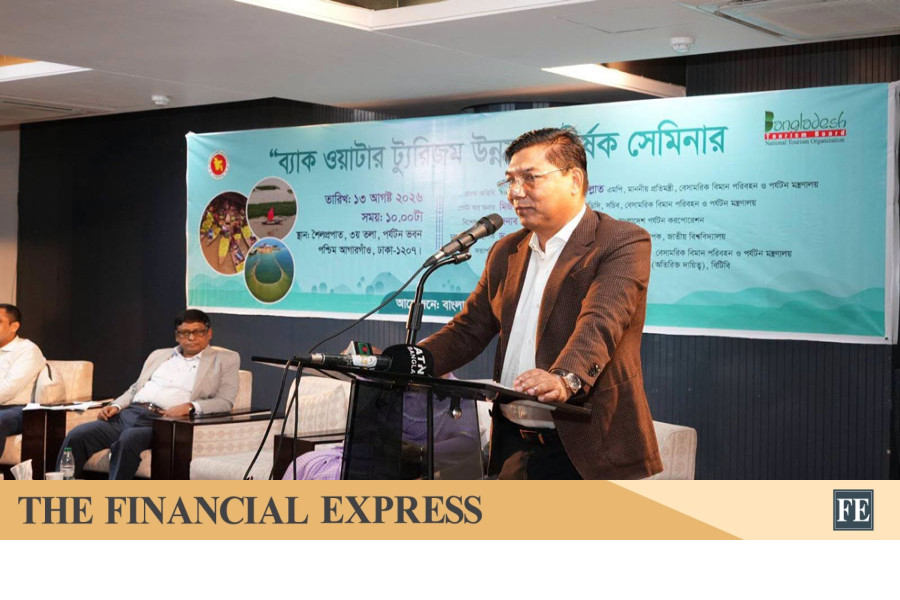
Various entertaining events like traditional music and dance shows as well as concert can be arranged for a certain period in our local cultural institutions like Shilpakala Academy. We can hold a two-hour programme every evening in the academy for tourists and that would be amazing to the foreigners, he continued.

Changing mindset also matters a lot in our society. Cause, only constructing a building and arranging some furniture is not sufficient to establish a quality resort. It needs some other aspects to make it attractive and enjoyable atmosphere for the foreign tourists.

There is no shortage of hotels in the Cox’s Bazar, but the number of standard hotels is very few. So we have to move in a planned way to develop scopes of quality entertainments to attract foreign tourists, he added.

‘Cox’s Bazar has the longest sea beach in the globe, it is a positive aspect. But steps have to be taken to make the environment there safer and more comfortable for foreigners’ movement,’ Naser Rahman commented.

Apart from these, he emphasised the importance of marketing globally the tourism industry of Bangladesh. He said foreign tourists need to be informed that why they should come to Bangladesh?Bangladesh-themed souvenirs

‘If we can overcome these shortcomings, I’m hopeful, Moulvibazar, Sylhet and Cox’s Bazar will one day become popular as gorgeous tourist destinations in the world,’ he added.​

 

INNOVATIONS FOR FAST-GROWING ECONOMIC SECTOR
Tourist havens overwhelmed, potential new products emergent


Jasim Uddin Haroon
Published :
Jul 12, 2025 00:30
Updated :
Jul 12, 2025 00:30

1752279961847.webp


Tourist havens like beaches and bewitching forests across Bangladesh being overwhelmed with backpackers, potential new tourism products are now envisaged for the fast-growing economic sector.

The country's tourism sector is evolving into a significant economic pillar, contributing around 4.0 per cent of GDP and supporting over 2.0 million jobs as of now.

Its projected market volume is worth US$3.46 billion by 2029, with revenue reaching US$2.40 billion. The hotels market is expected to be the largest within the sector, with a projected market volume of US$1.21 billion in 2025.

The country now needs a shift toward sustainable and alternative forms of tourism, such as agro-tourism, rural tourism, community-based tourism, and river tourism, to ease pressure on the buzzing tourist spots and ensure long-term preservation of its natural and cultural assets, according to tourism experts and operators.

They think these new and unconventional tourism models are gaining traction as the mainstream tourist spots - Cox's Bazar, the Chittagong Hill Tracts, the Sundarbans mangrove forests and Sylhet sites - are overwhelmed with visitor surges during peak seasons.

Such influxes not only strain local infrastructure and ecosystems but also degrade the quality of travel experience, they argue.

"Our iconic tourist destinations become overcrowded during peak periods, and visitors often no longer find the peace or relief they seek," says Md. Rafeuzzaman, President of the Tour Operators Association of Bangladesh (TOAB).

"For this reason, many prefer agro-tourism, rural and community-based tourism, river tourism, and even spiritual tourism where they get peaceful habitat."

These forms of tourism promote sustainability, diversify the travel experience, and generate economic opportunities in rural areas.

But industry stakeholders say coordinated government support and aligned policies are essential to scale these alternatives.

"We need the government to take this seriously - to develop detailed policies, improve infrastructure, and support training and marketing," he adds.

The tour operators say agro-tourism and community tourism in the CHT allow tourists to explore local farms, experience indigenous cuisine, and learn about organic "zoom" farming practices.

River tourism, meanwhile, could offer guided journeys through Bangladesh's vast crisscrossing river networks, blending scenic pastoral beauty with cultural immersion.

The International Centre for Integrated Mountain Development (ICIMOD), based in Kathmandu, has initiated community-based tourism projects in Bandarban's Ruma upazila, empowering indigenous communities to participate in and benefit from tourism.

"This type of tourism increases local income by involving communities in activities such as homestays, guiding, cultural performances, and handicrafts," says Md. Kabir Uddin, ICIMOD's Bangladesh representative.

Despite such early progress, tour operators say that government support remains inadequate.

"There are many resorts in places like Gazipur, greater Sylhet, and CHT," says Khabir Uddin Ahmed, the founder-president of the Tourism Resort Industries of Bangladesh.

"But a lack of road connectivity and basic infrastructure frustrates both domestic and foreign tourists. We offer green and rural tourism, but without support, we struggle to expand," Mr. Ahmed adds.

M. Nasir Uddin Badal, chairman of Aral Sea Limited, echoes similar sentiments about the prospects and necessary action for the income-and job-generating hospitality and recreation industry.

"We built a resort in Dakop upazila, called Sundori Eco Resort, where tourists enjoy viewing the Sundarbans by boat through the canals. Ecotourism is expanding fast, but it needs government facilitation."

Some tour operators have urged the interim government to include tourism-sector reforms in its policy initiatives.

"We have potential, but image issues and lack of facilitation hold us back," says Syed Habib Ali, president of the Tourism Developers Association of Bangladesh.

While several tourism master plans have been proposed over the years, implementation has been slow, often failing to prioritize sustainability or local community engagement.

The Bangladesh Resorts Association also warns that without proper zoning, quality standards, and investment in emerging destinations, the country risks overexploiting existing hotspots while leaving culturally rich areas underdeveloped.

Experts say Bangladesh urgently needs a national strategy that integrates environmental protection, economic inclusivity, and cultural preservation - a model that could relieve overcrowded destinations and provide tourists with more meaningful, authentic experiences.​
 

Govt prioritising sustainable, green tourism: Adilur
Bangladesh Sangbad Sangstha . Dhaka 04 August, 2025, 22:57

Industries adviser Adilur Rahman Khan today said that the interim government has been prioritising sustainable and green tourism by taking various initiatives to strike a balance between economic growth, environmental protection, and cultural conservation.

‘Despite its vast potential, the contribution of the tourism sector to Bangladesh’s national economy remains low. Compared to other countries, Bangladesh’s tourism sector is still lagging behind,’ he said.

The Industries Adviser made the remarks while inaugurating a four-day international workshop titled ‘Workshop on Sustainable Practices in Green Tourism’ at a hotel in Dhaka.

According to a press release issued by the Ministry of Industries, Chowdhury Ashik Mahmud Bin Harun, executive chairman of the Bangladesh Investment Development Authority (BIDA), attended the event, which was presided over by ministry secretary Md Obaidur Rahman.

Adilur said Bangladesh is home to the world’s largest mangrove forest-the Sundarbans-and the longest sea beach in Cox’s Bazar. The country also boasts historic sites like Mahasthangarh, Paharpur, Sonargaon, Rampal, Bajrayogini, and the naturally scenic Chattogram Hill Tracts, which attract both domestic and foreign tourists.

Speaking at the event, BIDA executive chairman Chowdhury Ashik Mahmud Bin Harun said green tourism is one of the fastest-growing sectors globally. He noted that the global eco-tourism market is worth around $600 million but remains largely concentrated in small communities.

Ashik emphasized that Bangladesh has significant potential for developing sustainable and green tourism.

The National Productivity Organization (NPO), Bangladesh, and the Asian Productivity Organization (APO), Japan, have jointly organized the workshop. Representatives, policymakers, researchers, and tourism entrepreneurs from 24 APO member countries are attending the event. Md. Nurul Alam, Director General of NPO, delivered the welcome address.

The four-day workshop will feature 15 sessions focused on tourism, sustainable eco-tourism, and climate change. Representatives from APO member countries will present research papers and concept notes on sustainable tourism.​
 

Treasure trove of tourism in Bangladesh still untapped
By Kamrun Nahar Sumy 04 April, 2024, 23:36

1764122516772.webp


Marzia Islam is a young professional with an unwavering passion for exploring her country whenever she can steal a break from her bustling life.

However, her solo adventures often leave her feeling weary due to security concerns, and she seeks the comforting company of her family or friends, even though the destinations are always teeming with enthusiastic travellers.

Many people involved in the tourism industry, including avid travellers like Marzia Islam, a schoolteacher in Dhaka, consistently express their frustration.

They believe that despite the immense potential of places ranging from enchanting coastlines to majestic mountains, religious, historical, or archaeological sites, Bangladesh is still struggling to showcase its treasures to foreign tourists who frequently visit other South and Southeast Asian countries in close proximity.

Despite recent improvements in connectivity and infrastructure development across the country, the tourism industry has yet to realise its full potential, primarily due to various lingering barriers.

They believe there should be a special focus on ensuring the safety and security of women travellers, considering that almost half of the country's population is female.

However, many believe that if Bangladesh could capitalise on the treasure trove of its scenic beauty, historical, religious, and archaeological potentials, the country could earn a significant amount of foreign currency, much like its counterparts in South and Southeast Asia.

People in the sector believe it could have been a game-changer.

With the recent development of transportation infrastructures and connectivity, there is also an added opportunity.

While domestic travel in Bangladesh has risen significantly in recent years, the vast potential to tap foreign currency through this sector mostly remains untapped due to the lack of branding, irregularities, and bureaucratic complexity.Best vacation packages

Bangladesh, endowed with scenic natural beauties and diverse historical and archaeological sites, along with various ethnic communities, has a broad scope to make tourism a major source of foreign exchange earnings and create employment opportunities, much like the Readymade Garments (RMG) industry, which is the main source of the country’s foreign currency earning.

According to the Bangladesh Bureau of Statistics, based on the data of the 2018-19 fiscal year, tourism's contribution to the gross domestic product (GDP) is estimated at 3.02 per cent or Tk 76,690.7 crore, with more than 90 per cent coming from domestic tourism. In contrast, tourism in neighbouring India accounts for 4.6 per cent of its GDP, Sri Lanka nearly 12 per cent, Nepal 6.7 per cent, and Maldives more than 28 per cent, with the majority coming from international tourists.

Although the country has witnessed a boost in domestic tourism, largely due to available information shared on social media, insiders in the tourism sector blame inadequate branding, visa complications, limited real-time online/offline information, a tendency to charge excessive prices from tourists, and social conservatism for the meagre number of foreign tourists.

The country currently ranks 100th out of 117 countries in the world on the Travel and Tourism Development Index 2021, released by the World Economic Forum in 2022, while Asian countries like Singapore, Thailand, India, Sri Lanka, and Pakistan rank 9th, 36th, 54th, 74th, and 83rd, respectively.

Shiblul Azam Koreshi, the president of the Tour Operators Association of Bangladesh (TOAB), highlighted that foreign tourists, especially those who arrive with visas on arrival, endure three to four hours of lengthy and complex procedures at airports.

These procedures naturally create a negative impression of the country.

Additionally, visiting the Chittagong Hill Tracts, one of the main tourist attractions, requires government permission due to security concerns in the region. It may take 15 to 20 days to obtain approval, and sometimes tourists have to return without visiting the area, noted the TOAB President.

He suggested easing visa-on-arrival, immigration, and customs procedures, introducing e-visas, and increasing the number of countries offering on-arrival visas.

He also proposed promoting Bangladesh abroad through high commissions and other means to encourage foreign tourists to consider Bangladesh as an extended destination.

Sohag Biswas, who frequently travels both domestically and internationally on a bicycle, mentioned that inadequate accommodation and poor hygiene outside Dhaka pose significant challenges for the tourism sector to flourish.

‘You may find accommodation in districts, but it is almost impossible to find accommodation in upazilas,’ said the excursionist.

Established in 1972 with the aim of transforming Bangladesh into an appealing tourist destination, Bangladesh Parjatan Corporation (BPC), a statutory board under the Ministry of Civil Aviation and Tourism, operates 23 hotels and motels, along with seven restaurants and 11 bars across the country, as per the BPC website.

Additionally, projects worth Tk 305 crore to establish hotels and motels are being implemented in some districts, including Bagerhat and Barishal.

Md. Rahat Anwar, the chairman of BPC, stated that BPC, which focuses on nature and archaeology-based tourism, has played a pioneering role in promoting tourism across the country by developing tourist destinations that have subsequently attracted investments from the private sector.

He believes that while BPC has made good progress as a profitable entity with 50 commercial units, initiatives to attract more domestic and foreign tourists need to be taken by enhancing accommodation facilities, food quality, and promotional activities.

To attract and facilitate tourists, especially foreigners, BPC has introduced several tourist buses with skilled tour guides, cultural programs presented by local ethnic communities, and souvenir shops. Most of these initiatives are currently available in Cox's Bazar and the Chittagong Hill Tracts.

Additionally, BPC has trained approximately 60,000 people through its National Hotel & Tourism Training Institute.

In 2022, around 529,000 foreigners visited the country on tourist visas, although there is no data on how many visited Bangladesh solely for touring purposes, according to an official from the Bangladesh Tourism Board.

The visitors were predominantly from India (around 80 per cent) and China (approximately 10 per cent).

In the country with a population of over 169.8 million, there are approximately two crore domestic travellers, and an estimated 38 lakh Bangladeshi residents travel abroad yearly, as per BTB data.

Tourism experts anticipate a significant increase in the number of domestic and foreign tourists, thanks to the recent inauguration of the Padma Bridge, which links 21 districts in the southern region of the country.

The forthcoming opening of the Dhaka and Dhaka-Cox's Bazar rail line and the Karnaphuli Tunnel are expected to enhance travel convenience to the popular tourist district further.

The Bangladesh Tourism Board (BTB), responsible for marketing and branding the tourism industry at home and abroad, has initiated a few promotional activities but has yet to complete a comprehensive travel database.Best vacation packages

Abu Tahir Muhammad Zaber, the CEO of BTB, mentioned that BTB currently has no promotional activities specifically for domestic travellers.

Instead, it promotes Bangladesh through social media sites, a website named 'Beautiful Bangladesh,' and high commissions to attract foreign tourists.

With the goal of attracting around 56 lakh international tourists and increasing employment to two crore and 20 lakhs by 2041 (from the current 51,30,000 formal and informal employees), Bangladesh has prepared its first-ever tourism master plan to develop sustainable tourism in the country.

The master plan identified 1,498 tourist spots in the country and laid out a strategy to promote them both domestically and internationally by setting up unique entertainment facilities with separate zones for foreigners, according to a BTB official.

The national tourism organisation, which promotes the country with slogans such as 'Beautiful Bangladesh' and 'Mujib’s Bangladesh,' is currently working on building a comprehensive travel database and developing an app.

This app will enable tourists to easily book hotels, flights, and rental cars and provide information about tourist attractions.

Professor Santus Kumar Deb, chairman of the Tourism and Hospitality Management Department at Dhaka University, emphasised that proper branding is crucial not only to generate foreign currency from this sector but also to attract more domestic tourists.

He pointed out that tourists are only aware of around 100 to 150 popular spots and stressed the importance of promoting other tourist destinations.

He added that promotion through digital marketing, especially social media, should be emphasised, as online travel marketing is considered an effective tool to reach many people at once.

In 2022, the online travel market in Southeast Asia was estimated to be about $17 billion, with forecasts indicating it could reach $44 billion by 2025.

Apu Nazrul, a tour operator at Bangladesh Tourism Guide, believes that Bangladesh has yet to establish sustainable tourism due to the unplanned commercialization of tourist spots, which is destroying the natural beauty of these locations. He also mentioned a tendency to charge excessive prices from tourists, especially during holidays and weekends when tourists visit with friends and family.

Furthermore, tourists and service providers often litter the sites, polluting the environment, causing disappointment.

Professor Santus emphasised the need to monitor hotels, motels, and restaurants to mitigate price-related issues and maintain quality hygiene.

Ensuring safety and security, establishing an adequate number of planned accommodations with reservations for female tourists, and implementing a proper waste management plan are essential steps to make the sector sustainable.

However, the tourism sector is yet to become female-friendly, considering that over 50.43 per cent or more than 8.57 crore of the country's population are females.

Nusrat Jahan Rizvy, a tour coordinator for a women's travel group with around 75,000 members named Vromonkonna- Travelettes of Bangladesh, stated that service providers seldom allow female travellers to book accommodation outside Dhaka. Female travellers can only secure rooms in hotels that are relatively expensive, such as 3-star hotels in popular spots like Cox's Bazar. She also mentioned that using public transportation at night, staying outside after evening hours, or exploring hard-to-reach areas poses significant challenges for female tourists due to security concerns and social norms.

The BPC chairman suggested that females can easily book accommodations offered by BPC.

He believes that district administrations should enhance security measures for tourists and establish a pricing chart for food, accommodation, and transportation, with regular monitoring in place.

While infrastructure development has improved the prospects of the tourism industry, unplanned infrastructure has also negatively impacted its success. Some regions have experienced unusual and prolonged floods attributed to this unplanned development and the ongoing climate crisis in recent years.

The BPC chairman noted that the number of tourists has declined due to floods in the CHT and recommended inter-departmental cooperation among government agencies for development plans.

The World Travel and Tourism Council forecasted that the sector would grow its GDP contribution to $15.5 trillion by 2033, representing 11.6 per cent of the global economy and employing 430 million people worldwide, with almost 12 per cent of the working population employed in the sector.

Bangladesh can also unlock its vast potential by implementing a sustainable tourism plan and adopting effective branding strategies, as the country owns three UNESCO World Heritage Sites – the world's largest mangrove forest housing the Royal Bengal Tigers in the Sundarbans, the historic Buddhist Vihara at Paharpur, and the iconic Saat Gombuj Mosque in Bagerhat – along with the world's longest sea beach, stunning mountains, picturesque rivers, and a culture rich in hospitality and local traditions.​
 

Tourism picks up as hotels, resorts report 60% occupancy

1765761928795.webp

Tourists capture photos and enjoy the views at Double Hands View Point on Bandarban-Thanchi road, as the tourism sector bounces back after last year’s dip. The photo was taken recently. Photo: Mong Sing Hai Marma

Hotels and resorts in major tourist destinations across Bangladesh are reporting 60 percent to 80 percent occupancy this December, showing strong demand and a busy holiday season.

Business owners said that political instability last December had caused a drop in tourism, but this year, visitor numbers have returned to normal levels.

The peak tourism season in the country runs from November to April. According to the Bangladesh Bureau of Statistics, tourism accounted for 3 percent of the country's GDP and 8 percent of total employment in the fiscal year 2018-19.

Abdul Awal, group director of sales and marketing at Sea Pearl Beach Resort in Cox's Bazar, said the resort is seeing a seasonal increase in business, with occupancy around 60 percent, similar to 2023.

"2024 was an exception due to political uncertainty, but the current performance reflects a return to normal patterns," he said.

Awal added that most visitors stay for two days, as Cox's Bazar has limited attractions beyond the beach. "Group bookings, conventions, and incentive travel continue to be our strongest business segments," he said.

Rana Karmakar, operations manager of Mermaid Beach Resort in Cox's Bazar, said that despite the upcoming election, business is doing well this December.

"Reservations are better than in 2024, which was an unpredictable year due to significant political uncertainty. Compared to 2023, reservations are also strong and broadly similar," he said.

Karmakar added that occupancy in December is currently around 80 percent, similar to December 2023, which is generally satisfactory.

However, he noted a decline in out-of-house restaurant guests, particularly foreign tourists. "Earlier, many tourists who could not stay at the resort would eat at the restaurant at least once during their visit, but that is no longer the case," he said.

He attributed this to reduced tourist movement caused by security concerns and poor road conditions.

Md Bahar Khan, senior supervisor of The Palace Luxury Resort in Bahubal, Habiganj, said that average occupancy this December is around 60 percent, slightly lower than December 2023.

"We are seeing a lower response this year due to political uncertainty and ongoing road construction on the Dhaka–Sylhet route, which has increased travel time," he said. Despite this, he described business as moderately stable during the peak season.

Imranul Alam, managing director of Tour Group Bangladesh, which runs resorts and other tourism businesses across the country, said business is performing reasonably well, but profits have dropped to about one-third of the level recorded in 2023.

"Although there is a demand for travel to Saint Martin's Island, the shortage of ship tickets and long, uncomfortable journeys have significantly discouraged tourists," he said.

Alam added that many regular visitors who previously travelled every year are no longer coming and have discouraged their friends and family based on recent experiences.

He further said, "The journey to Saint Martin's now takes more than six hours by sea, in addition to long boarding and disembarkation times and severe congestion at the jetty. These issues have reduced tourist mobility and shortened travel plans."

"Visitors are becoming more selective, opting for higher-end resorts to justify the increased travel expenses," he added.

"Overall occupancy for Sajek resorts in December is around 70 percent," said Suparna Deb Barman, president of the Cottage Malik Samity of Sajek, a forum of resort owners.

"Sajek is no longer empty at any time, with visitors coming even on weekdays. Fridays and Saturdays are the busiest, but tourist activity continues throughout the week. On dates like December 26 and 27, accommodations are fully booked," Barman said.

She added, "The season here gradually starts in August and lasts through February, with activity peaking during this period."

Md Rafeuzzaman, president of the Tour Operators Association of Bangladesh, said, "This December is performing better than December 2024, with bookings close to a normal season."

He added, "Although political tensions ahead of the upcoming election have slowed tourism, the sector is expected to improve further in 2026 once a new government is in place."​
 
Beautiful Rangamati

Rangamati is a district of exceptional beauty, where lush green hills blend harmoniously with blue lakes. Every year, a large number of tourists flock to the area. In the current season as well, Rangamati’s natural landscape has taken on a renewed charm. In particular, the surroundings of Kaptai Lake are radiating an abundance of natural beauty, accompanied by an increasing influx of visitors. The photographs were taken recently.​
 
Crew member dies as St Martins-bound vessel catches fire
Our Correspondent . Cox’s Bazar 27 December, 2025, 10:43

1766884841835.webp

A fire breaks out on a St Martins-bound vessel, Atlantic Cruise, docked on the Bakkhali River at Nuniachara in Cox’s Bazar on Saturday. | Focus Bangla photo

A crew member died on Saturday morning as a fire broke out on a St Martins-bound vessel Atlantic Cruise in Cox’s Bazar.

The incident occurred at around 6:45am at the Bangladesh Inland Water Transport Authority jetty in Nuniachhara of Cox’s Bazar Sadar where the vessel was docked on the Bakkhali River, according to the police and district administration officials.

The victim was identified as Nur Kamal, 25, son of Mohammad Ilias from Teknaf Damdamiya Border Guard Bangladesh Camp area, said Fire Service and Civil Defence deputy director Morshed Hossain.

‘The deceased crew member was taking rest alone in the engine room when the fire broke out,’ he said.

He also said that although the fire was brought under control at about 8:00am but it took three more hours to douse it completely after which the victim’s body was recovered from inside the burnt vessel.

Several police officials said that the fire originated from the engine room.

Cox’s Bazar deputy commissioner Md Abdul Mannan said that the vessel had been anchored at the BIWTA jetty since early morning for passengers to board for its next scheduled trip to the island.

‘Fortunately, there was no passenger in the ship when the fire broke out,’ he added.

He also said that they had already formed a seven-member probe committee headed by an additional deputy commissioner to investigate the fire.

Representatives from the Fire Service, Department of Shipping, Coast Guard and BIWTA were included in the committee, he added, saying that the committee was asked to submit its report within seven working days.

General secretary of the Sea Cruise Operators Owners Association of Bangladesh Hossain Islam Bahadur said that Atlantic Cruise reached the jetty in the morning to pick up tourists when suddenly smoke was noticed being spewed out from inside the vessel.

‘The fire spread quickly. Fire Service and other agencies immediately rushed to the spot and douse the fire,’ he said.

Hossain Islam also said that 194 tourists waiting at the jetty to board the vessel escaped the flame.​
 
Discovering the wonders of Bangladesh

SYED MUHAMMED SHOWAIB
Published :
Jan 10, 2026 00:56
Updated :
Jan 10, 2026 00:56

1768005775123.webp

Vacationing is no longer a luxury enjoyed by a select few but an increasingly routine part of contemporary life. That tourism has expanded so rapidly, aided by rising incomes and widespread digital connectivity, indicates required means and mindset of a growing number of people for travel. This transformation becomes most visible during the peak tourist season from November to March when mild weather, school breaks and clustered public holidays align perfectly to create an optimal window for movement and leisure. During this period, popular destinations regularly record full hotel occupancy while in some regions demand becomes so intense that prospective visitors struggle to secure accommodation. More than a simple pursuit of pleasure, it is a sign of a burgeoning middle class with disposable income and their insatiable desire to explore and appreciate the rich history, diverse cultures and breathtaking landscapes that the country has to offer.

The enthusiasm driving domestic travel is now spilling over to visitors from abroad. In recent years, Bangladesh has attracted a growing number of foreign social media creators and influencers, many of whom command audiences ranging from thousands to millions. Their content offers first-hand impressions of hospitality, accommodation and the warmth of local communities---perspectives often absent from conventional narratives. Understandably, this exposure matters far beyond mere entertainment. It projects a more relatable and credible international image of Bangladesh and introduces the country to global audiences in ways conventional advertising campaigns have never achieved.

The attention that Bangladesh is beginning to attract is rooted in an exceptional natural and cultural diversity uncommon for a country of its size. Within a relatively small area, rivers, wetlands, hills, forests, tea gardens, beaches, islands and archaeological sites exist side by side. This makes it possible to experience a wide variety of sceneries and activities within short distances. With such diversity on offer, it is hardly an exaggeration to say that Bangladesh has everything a traveller could ask for with the exception of snowfall.

This richness has certainly not escaped the attention of Bangladeshis themselves. The enthusiasm across Bangladesh was impossible to miss during the New 7 Wonders of Nature poll held between 2007 and 2011 when Cox's Bazar and the Sundarbans emerged as formidable contenders. The Sundarbans remained a leading candidate until the final vote. Although neither ultimately made it into the top seven, their strong showing demonstrated both the deep national enthusiasm for these natural treasures and the significant interest they generated on the global stage.

Further international validation comes from the Sundarbans' prestigious status as a UNESCO World Heritage Site, home to the planet's largest mangrove forest, a vital habitat for the iconic Royal Bengal Tiger and a remarkably complex ecosystem of diverse flora and fauna. Cox's Bazar, meanwhile, holds the distinction of possessing the world's longest uninterrupted natural sandy sea beach, while nearby Saint Martin's Island offers rare coral life and blue waters.

Interestingly, Bangladesh is not only endowed with scenic beauty but also rich in historical and archaeological heritage. Sites such as the Sixty Dome Mosque, Mahasthangarh, Sompur Mahavihara, the Natore Rajbari and Uttara Ganabhaban embody critical chapters of the nation's past, yet they attract relatively few visitors despite featuring prominently in educational curricula. A pronounced bias among younger travellers towards beach and hill destinations has left these sites outside the mainstream tourism circuit. Sadly, this underappreciation of heritage sites is taking its toll. Many historic structures have steadily deteriorated from years of inadequate maintenance and neglect while some others are close to irreversible damage.

A separate but equally pressing challenge stems from the dangers of unmanaged viral popularity. Destinations that suddenly go viral on social media often draw crowds far beyond the capacity of existing infrastructure, leading both to environmental strain and the overuse of facilities, as well as to inflated prices and a decline in visitor comfort. Sajek Valley and Tanguar Haor provide clear examples of how unchecked tourist surges can harm both the place and the experience. Managing tourist flows is therefore as critical as attracting visitors in the first place.

Another critical challenge for tourism is ensuring the safety of visitors, which remains fragile in some areas. Many routes just are not safe enough, especially for women travellers, and stories of harassment or lack of proper protection often stop people from even packing their bags. Even in the star attraction of the Sundarbans, the recent comeback of forest piracy has reignited serious safety concerns. Tourism simply cannot flourish when fear is stronger than the excitement of discovering something new. On top of that, not everyone in the tourism chain behaves the way visitors hope. While most people are hospitable and welcoming, a small segment of those involved in the industry take advantage with overcharging or outright scams. Complaints against transport operators and vendors become especially frequent during peak seasons when demand is sky-high. Those experiences stick and they really hurt trust. Foreign visitors, in particular, sometimes take one bad encounter and paint the whole country with the same brush.

Marketing is still a weak spot for the tourism sector as Bangladesh hasn't really put much effort into consistent international branding. The memorable Beautiful Bangladesh videos during the 2011 Cricket World Cup showed just how powerful quality promotion can be, yet nothing similar has appeared on an international scale since. Consequently, many of the country's unique spots and experiences stay off the radar for local and international travellers.

Tourism reveals how a country views its own identity and how confidently it chooses to share that identity globally. It falls upon the government and private sector to decide just how big they want to aim, and once that ambition is clear, the necessary policies and infrastructure start to fall into place. Clearly, Bangladesh has everything it takes to shine on the global tourism stage. The only question left is whether the country will step up and claim that spotlight.​
 

Can you hear 'cry of distress' of St. Martin?

Tayub Ullah
Published: 20 Jan 2026, 07: 59

1769044184795.webp


Saint Martin Island Courtesy: The author

A month and a half have passed since Saint Martin was opened to tourists this season. Let's discuss who benefited and who lost from this.

Saint Martin is Bangladesh’s only coral-rich island, known for its natural beauty. It is a favourite destination for tourists. While there was once uncontrolled tourism, since 2024, the government has regulated and limited tourism here. The government has imposed restrictions primarily to preserve the environment and biodiversity of Saint Martin Island and to prevent pollution, identifying it as an environmentally critical area.

The number of tourists is limited to two thousand per day, and overnight stays are only permitted for two months (December and January). Although visits are allowed in November, no tourists traveled to Saint Martin during that month due to the ban on overnight stays. Because it's not sensible to undertake such an expensive trip just for a day visit.

Due to strict government restrictions and conservation policies, there's a need to discuss the island’s environment, biodiversity, and the real situation of the local people. This article aims to highlight the reality by speaking with Saint Martin’s local residents.

Despite imposing strict restrictions, environmental pollution on the island has not been controlled. Unregulated construction of cottages and the cutting down of keya trees continue. Effective waste management has not been established. Instead, the area around the beach and roads has turned into a dump of plastic and polythene. There aren’t enough dustbins on the beach, no cleanliness activities, and no campaigns to raise awareness among tourists.

Tourists' suffering and inhumane conditions
Ships operate from Nunia Chhara Ghat in Cox’s Bazar. Their schedules depend on the tides of the Bankkhali River. It is commonly observed that ships arrive at St. Martin’s around 12:00 p.m. but depart at 5:00 or 6:00 p.m. Tourists are required to check out at noon to make room for new arrivals from Cox’s Bazar. As a result, returning tourists must wait for long hours at the jetty, yet the government has made no special arrangements for them. There are no passenger sheds or resting areas, no public toilets or changing rooms, and no facilities for feeding children.

In the intense cold, young children, the elderly, and women have to spend hours waiting for the ship, sitting or walking on the street or beach! This inhumane condition sometimes creates extreme chaos.

1769044251159.webp


A brightly lit ship can be seen in the distance. Passengers are returning from Saint Martin in the evening. The ship's destination is Cox’s Bazar. Courtesy: The author

Why do non-tourists need a travel pass?
Due to distance and limited seating, ship fares have increased. But tickets are not readily available. A middleman or ticket syndicate has formed.

This time, the worst system implemented is the mandatory travel pass for tour operators, journalists, investors, and Cox’s Bazar locals. This is unreasonable because the arrangement is meant for tourists.

Tour guides or hosts or tour operators do not travel as tourists, so providing them with a special registration and pass would have been sufficient. Moreover, those investing in the island need to enter regularly for various reasons. But the requirement for them to procure a travel pass to board the ship and considering journalists and other individuals who travel for reporting or research as tourists is not justified.

Many people from Cox’s Bazar have relatives on Saint Martin or maintain business or personal relationships with various individuals. If they wish to visit Saint Martin as needed, they fall under the travel pass requirement, thus categorised as tourists. This amounts to denying locals their rights, leading to resentment among them. Despite not being tourists, people from Cox’s Bazar are forced to travel to Saint Martin as tourists due to administrative stubbornness.

1769044303773.webp

Litter scattered across Chera Dwip. Courtesy: The author

How Island residents survive

The economic condition of the local people is deteriorating from miserable to extremely dire. One of the primary income sources for the 12,500 residents is tourism. However, as it has become limited and regulated, the islanders have lost their source of income and become jobless. Local homes that were rented out during the tourist season to make a living now have no income. With tourists limited to two thousand, there isn’t much pressure; hence local homes don''t get rented.

Resorts around the beach can accommodate over four thousand people. Due to limitations, beachside resorts offer special offers or discounts, so tourists prefer staying there. Moreover, major resorts and well-established ones are managed by many businessmen from Dhaka. Due to their good reputation and publicity, beachside resorts get booked in advance.

Consequently, disorganised, lower-quality resorts and unpublicised establishments owned by locals do not get any tourists.

I have observed that half of the rentable local homes haven’t had any rooms rented out this season. They couldn’t rent them out. As a result, the financial pressure on local people has reached indescribably unprecedented levels.

Operating a household in the current rising market is impossible by working for 2 months and remaining income-less for 10.

Apart from placing unbearable financial pressure on local people, this regulation and controlled tourism haven’t been beneficial. Locals have been forced to sell properties or jewelry to survive. Due to the lack of advanced technology and spaces, Saint Martin’s island lags in fisheries and agriculture. With small boats, it's impossible to venture into the deep sea for fishing.

And the limited size of the island restricts farming opportunities. Additionally, due to salinity, farming is not feasible.

No examination centre, no college

The economic stalemate is also negatively impacting the island’s education system. Many families are finding it difficult to bear their children’s educational expenses. School education on the island is already weak due to a lack of teachers or skilled teachers. Now, due to financial hardship, the opportunity for children to study outside the island is also gone.

Moreover, there’s no public examination centre on the island. Students have to rent rooms and purchase food in Teknaf for exams, incurring significant expenses throughout the examination period. But with the current economic conditions, many families couldn’t afford their children’s examination costs. There is no college on the island; students have to study outside. With limited income, sending children to study outside is impossible for many.

Dilapidated Healthcare System

Most residents of Saint Martin Island live below the poverty line, suffering from various ailments constantly. However, there is no proper medical facility on the island. Though there is a nominal 20-bed hospital, it has never been fully functional. There is a shortage of doctors throughout the year. Consequently, many people used to go to Teknaf or Cox’s Bazar for treatment. But with the decrease in income this time, it seems impossible for anyone to seek advanced treatment outside the island.

Talking to local people reveals their cries and demands. The people of Saint Martin want the tourism limitation (daily two thousand) abolished or alternative employment. They want assurance of basic rights, particularly education and healthcare. Island residents want eco-friendly tourism and expect civic amenities. They desire electricity, sea ambulances, sea trucks, food warehouses, sufficient schools, teachers, colleges, and cyclone shelters. It’s necessary to ensure employment by transforming unemployed youth into skilled manpower through training.

#Tayub Ullah is an activist and resident of Saint Martin​
 

How it feels to visit Saint Martin after restriction

ZAHID HASAN
Published :
Jan 21, 2026 12:58
Updated :
Jan 21, 2026 12:58

1769215710893.webp


For the first time in recent memory, Saint Martin's Island has gone quiet long before the season's end. The last tourist vessel left the Teknaf jetty on a warm Friday afternoon, and by the next morning, the island's waters carried only the sound of waves. The Ministry of Environment, Forests, and Climate Change imposed a strict nine-month suspension of vessel services to the island, effectively cutting it off from tourism until November.

Saint Martin's tourist season stretches from October to March, a window long celebrated by travellers eager to escape the city's dust and the winter's dullness.

This time, the government shut the door two months earlier. The decision came with a notification outlining twelve specific rules meant to protect the island's ecosystem, coral beds, and long-strained biodiversity.

For years, the island has been overwhelmed by thousands of daily visitors, unregulated boat traffic, and the persistent shadow of plastic waste. Now the government is trying to slow the damage by controlling access more tightly than ever.

Those rules, enforceable under the Bangladesh Environment Conservation Act, mandate that no vessel may head to Saint Martin's without prior approval from the ministry. Even when the island reopens, tourists will have to book their tickets through the Bangladesh Tourism Board's official portal, each carrying a QR-coded pass.

The daily number of permitted visitors will be capped at two thousand-a far cry from the overwhelming crowds that often trooped in during peak seasons.

While the changes feel radical, the island's decline has been gradual and painful, and officials argue that such restrictions are the only way to prevent irreversible harm.

Yet beyond the policy discussions and legal directives lie the people whose lives and memories are tied to the island's shores. Travellers returning from Saint Martin's in recent months carry mixed emotions-some disappointed, others hopeful.

JH Raju, who visited just weeks before the ban, sounded frustrated as he recalled how costly and limited the trip felt. "Previously, you could manage the whole trip within four to five thousand taka," he said. "But now, per person will cost around ten to twelve thousand, and the island has nothing to offer. You cannot go to Chera Dwip." For many like him, the new regulations, increased travel expenses, and restricted movement have stripped the island of its charm, making the journey feel heavier than the joy it once promised.

But not everyone shares the same disappointment. Another traveller, Fayaz Ahmed, described a very different experience, one shaped by an understanding of ecological necessity.

"My experience was good. From an environmental point of view, these restrictions are necessary," he said. "It seemed to me that restricting tourists made the beach and overall environment better than before." His observations touch on something that many regular visitors have felt in recent years: the more crowded the island grew, the less beauty it seemed to hold.

Cleaner beaches, quieter nights, and more transparent waters are becoming rarities, and the brief enforcement of stricter rules gave him a glimpse of what Saint Martin's could look like if treated gently.

Fayaz also reflected on the people who rely entirely on tourism for survival.

The island's population-small, resilient, and heavily dependent on visitors- now faces a long period of uncertainty. Hotels, tea stalls, boat operators, souvenir sellers, coconut vendors, and young workers who earn seasonally will all feel the impact of the prolonged ban.

"The people who fully depend on tourism have it the hardest," Fayaz said. "The government can place some extra charges on tourists to improve the lives of the islanders. This will create a sense of responsibility among visitors as well."

His comments did not stop there. Despite the new rules, some issues remain unresolved. "Single-use plastic still hasn't been fully controlled," he pointed out, adding that Bangladesh could learn from models used in Thailand, where refillable glass bottles replace disposable water bottles. "Saint Martin's is our national asset. It is our collective responsibility to protect it," he said in Bengali-a sentiment born out of both affection and urgency.

These sharply contrasting views from travellers mirror a larger tension surrounding the island itself. Saint Martin's is a place where beauty coexists with fragility.

Coral colonies-once vibrant and abundant-now struggle to recover. Turtles that come ashore to nest often encounter artificial lights or human disturbance. Waste clogs shallow waters, fishing nets tangle unseen life, and every season of excessive tourism pushes the ecosystem a little closer to collapse.

Environmentalists have been warning for years that unless the island is given time to heal, it may one day lose the very characteristics that make it special.

Yet memories of the island run deep. For generations, Saint Martin's has been the symbolic escape, the place of first solo trips, group adventures, family stories, honeymoon photographs, and early morning walks to Chera Dwip.

The idea that such a beloved destination could slip away feels almost personal to many Bangladeshis. The sudden quietness, then, is haunting not because it signals closure, but because it forces reflection. What does it mean to love a place? Does love mean visiting it endlessly, or stepping away long enough to let it breathe?

The islanders themselves now wait in suspended time. In the coming months, their fishing activities will continue, but the absence of tourists will be deeply felt.

Their rhythm of life, once tied to the movement of boats and the demand for hospitality, must adjust. Some hope the government will offer support; others fear being overlooked in the broader conservation push.

If the restrictions succeed in restoring ecological balance, many believe the island's long-term economic potential will be more substantial. But the pathway there is uncertain and filled with sacrifices they must shoulder today.

Meanwhile, the travellers who once flocked to Saint Martin's now watch from afar, carrying their divided impressions. Some will miss the island's easy access and affordable trips. Some will applaud the authorities for taking long-overdue action. Some will wonder if they will ever experience the island as they once did, spontaneous, carefree, full of movement. And others, like Fayaz, will hope that these hardships will eventually protect a place they consider part of their identity.

This pause-unexpected and uneasy-may offer the clearest opportunity yet to rethink how the island should welcome people going forward. Perhaps it will return in November cleaner, calmer, and more resilient. Possibly, travellers will approach it with greater respect.

Businesses may learn to balance profit with ecological sensitivity.

What is certain is that the island stands at a crossroads, shaped by the choices of those who visit, those who govern, and those who call it home. It remains a jewel of Bangladesh, but one whose shine dims with every careless footprint.

As the waves continue to break gently on an unusually empty beach, one truth rings louder than ever: saving Saint Martin's will require patience, cooperation, and a willingness to change not just how we travel, but how we value the natural world.​
 

St Martin’s closes for tourists from today

To reopen for tourism once again on November 1 this year


By UNB, Cox's Bazar

1769908950292.webp

Star file photo

St Martin’s Island, the country’s only coral island located in the north-eastern part of the Bay of Bengal, will remain closed to travellers for nine months from February 1 as part of a conservation measure.


As a result, tourists staying on the island are returning to their respective destinations on January 31 and February 1.

Although Saint Martin’s was opened to tourists for three months from December to January, overnight stays were permitted for only two months. In addition, the daily number of tourists was capped at 2,000, and entry without prior registration was not allowed.

Due to these restrictions, the local tourism business has suffered significantly.

Delwar Hossain, a local tourism entrepreneur, said business owners incurred losses during the shortened season.

Earlier, the government announced a nine-month suspension of tourism activities on St Martin’s Island in the interest of environmental protection.

According to a decision by the Ministry of Environment, Forest and Climate Change, tourism activities for the current season will officially end on Saturday. Consequently, no tourist vessels will operate to the island from Sunday.

Although tourists are usually allowed to visit Saint Martin’s from October 1 to March 31 each year, the travel period was reduced this year up to January 31 due to environmental risks.

Cox’s Bazar Additional District Magistrate Imran Hossain Sajib said the last tourist vessels would sail to Saint Martin’s today. “No tourist ships will be allowed to operate from Sunday. However, if the government revises its decision later, necessary measures will be taken accordingly,” he added.

Under government directives, lighting on the beach at night, playing loud music and organising barbecue parties were prohibited. Entry into the protected forest area, as well as the collection and sale of key fruits, were also completely banned.

Strict instructions were issued to prevent harm to biodiversity, including sea turtles, birds, corals, king crabs, snails and oysters. All types of motorised vehicles, including motorcycles, were prohibited on the beach.

Carrying single-use plastics, including polythene, was strictly restricted, while tourists were advised to bring reusable water flasks.

According to the administration, the prolonged absence of tourists will help corals, sea turtles, birds and other marine species recover their natural habitats. The long-term decision aims to restore biodiversity damaged by excessive tourist pressure and unregulated activities.

Authorities expressed hope that the initiative to protect the environment and biodiversity would play a positive role in maintaining the ecological balance of Saint Martin’s Island.

Meanwhile, local business owners said they had invested heavily in the tourism sector with expectations of a longer season.

However, tourism activities came to a halt after just three months.

Businessmen and residents have demanded that Saint Martin’s be opened for at least five months annually with a controlled number of tourists.​
 

Panchagarh’s tourism potential remains untapped
3 February 2026, 00:00 AM

Bahram Khan , KN Deya , and Sukanta Halder


1770168081863.webp

The file photo captures a mesmerising view of Kanchenjunga, clearly visible from several points in Panchagarh during autumn. While the district’s scenic spots continue to attract visitors from across the country, its tourism potential remains largely untapped. The photo was taken from Bhajanpur union in Tetulia upazila. Photo: Emdad Ali

Raju Ahmed, a businessman from Lalbagh, Dhaka, came to Panchagarh for sightseeing with his family in November 2025. His primary aim was to enjoy the iconic sight of Mount Kanchenjunga.

Bordered by India on three sides, Panchagarh sits at the base of the Himalayan foothills, a setting that gifts the district with distinctive weather and striking natural scenery. Panchagarh has long been known for an abundance of gravel beds. Thousands of acres of land were devoted to digging for the resource, bolstering the regional economy.

But over the years, quite a few tourist attractions in the region -- other than the breathtaking mountain view -- have started to draw attention. Locals trace this change back to the establishment of Banglabandha Land Port in 1997.

Tourist spots include the country’s only rock museum, Banglabandha Zero Point and Banglabandha Land Port, sprawling green tea estates, Debiganj Karatoya Bridge, Tetulia Dak Bungalow, and the Mahananda River.

Maharaja Dighi, Mirza Shah Mosque, Golokdham Temple, Bodeshwari Temple in Boda upazila, and Imambara Mosque in Atwari upazila also receive attention. The tulip garden in Tetulia’s Darjipara village and the ruins of Bhitargarh, an ancient fort city built around the 5th century, are also notable destinations.

Ahmed mentions that he has visited several tourist destinations in the country, but this is his first time in Panchagarh. The district is tourist-friendly, he observed, offering satisfactory lodging, food, and transportation at a significantly lower cost than other tourist attractions in the country.

Despite the inviting prospects, Panchagarh’s potential as a tourism hub remains lacklustre, years after it started to draw in curious tourists.


Mehedi Hasan Khan Babla, president of the District Residential Hotel Owners’ Association, reminisces about the year 2000 when a handful of tourists started visiting the area. As the infrastructure in the area improved, so did the number of visits. Tourism started picking up significantly in 2016. However, in the years since, the tourism sector’s growth in the area has not met expectations, the businessman said.

Banglabandha Land Port was established in the district in 1997. In 2011, an agreement was signed with neighbouring India to facilitate import and export activities. Subsequently, in 2017, trade with Bhutan began through this port. Since the establishment of immigration services at this land port in 2016, travel to India has become more convenient for Bangladeshi citizens.


Consequently, travelling to Panchagarh was also made easier as many new roads and bridges were constructed. Rail connectivity was enhanced, and inter-district travel also improved.

“Communication with Dhaka used to be very limited,” said Shafiqul Islam, former principal of Bhajanpur Degree College in Panchagarh. After the Jamuna Bridge opened, it prompted many changes, he mentioned.

While travel has been made easy, lodging has not seen improvements proportional to the tourist influx.

1770168131329.webp

Caption Photo: Md Quamrul Islam Rubaiyat

THOUSANDS OF TOURISTS, NOT ENOUGH HOTELS

According to local businesspeople, Panchagarh district has approximately 25 hotels in total; of these, 13 are located in Panchagarh Sadar, while the remaining are in Tetulia upazila. Meanwhile, Tetulia boasts 3 resorts and 10 to 12 homestays.

Mehedi Hasan Khan Babla, also a former president of the Panchagarh Chamber of Commerce and Industry, said most hotels are of moderate quality, with two 2-star hotels located in Panchagarh town.

Overall, he said, the tourism sector in Panchagarh collectively employs around 250 people and generates business worth approximately Tk 10 to Tk 12 crore annually.

Robiul Islam, the manager of Himalaya Residential Hotel in Tetulia upazila, said that many tourists used to be unable to find lodging after visiting the local attractions. In some cases, the lodging options they found were substandard.

This prompted the opening of the hotel in February 2024.

From October to December, around 20 tourists stay at the hotel over the weekend, from Thursday to Saturday, he added.

Afroz Shahin Khasru, the Upazila Nirbahi Officer (UNO) of Tetulia, said that during the tourism season, when Kanchenjunga becomes visible, nearly 10,000 tourists visit Tetulia each day.

However, the number of accommodation facilities compared to the number of tourists has remained disproportionately low, he said.

Consequently, the tourism sector has not grown as much as expected. The UNO stated that the private sector needs to come forward in this regard. Recently, construction work for several new resorts in the upazila has begun, he added.

Echoing his statement, Babla pointed out that if loans were made available under easier conditions for establishing tourism-centred businesses, the district’s potential could be better utilised.

He further noted that the district administration is attempting to brand Panchagarh in various ways, but these efforts need to be made more dynamic.

BYPASSING THE LODGING CHALLENGE

The lack of accommodation is a detriment not only for tourists but also for tour operators.

“When we organised our first tour in 2016, with a total of 36 tourists, Panchagarh was largely unknown as a tourist destination,” said Shafiqul Islam Polash, chief executive officer at Banglar Pothe, a tour operator.

He added that, at that point, accommodation options were extremely limited, with only a few basic hotels primarily catering to local businessmen.

Even now, the number of tourists outweighs the capacity of hotels in Panchagarh. The solution to this problem has been elusive for years, until some tour operators came up with the idea of “day-trips.”

Mostafa Hossain Munna, founder and CEO of the tour operator Panchagarh Tourist Management Centre, said the company has been organising tours to Panchagarh since 2021. After facing the difficulties of finding accommodation for all the tourists under his charge a few times, he started taking groups on “day-trips.”

This type of trip requires booking a bus for a group of tourists. The bus leaves Dhaka at around 7pm and reaches Panchagarh right around daybreak, perfectly on time for them to experience the magnificent sight of the first rays of the sun shining upon the peak of Mount Kanchenjunga.

The tour group then visits around ten other attractions scattered across the district, Munna said. At the end of the day, the group again boards a bus and returns to Dhaka by the next morning.

No hotel or resort booking is required for the entire trip, and therefore, the lack of accommodation in Panchagarh does not affect the tourists at all.

“This type of trip costs around Tk 2,000 to Tk 3,500 per person,” Munna told the Daily Star.

In case the tourists want to stay overnight despite the lack of vacancy in the hotels and resorts, there is another way to accommodate them, Munna said, referring to homestays.

Sensing that accommodation facilities were inadequate considering the rush of visitors, the district’s administration in 2021 took the initiative to develop “community tourism” with help from the Bangladesh Tourism Board. The concept refers to locals renting out one or two rooms of their houses, alongside providing food. Over time, this concept has evolved into the idea of “homestays” in the region.

TOURISM CONTINUES TO PROP UP LOCAL BUSINESSES

Hafizul Islam runs a tea stall next to a small pond in the border area of Magura union in Panchagarh Sadar upazila. The border between Bangladesh and India lies right beyond the pond. Tourists curious to peek at the border frequent his shop, and that’s how the tea seller earns his livelihood.

Tourists started coming to this area in 2020, and Islam decided to open the tea shop. The first year, nearly 2,000 cups of tea were sold daily, he recalls. Now, that number has risen to around 3,000 cups per day. The profit is not spectacular, he says, but he is comfortable.

The Jannat Hotel and Restaurant was opened at the beginning of 2022. The eatery, located at the Chaurasta Bazar in Tetulia upazila, also enjoys steady business.

At first, there were around 350 to 400 tourists eating there daily in peak season, and daily sales were around Tk 25,000. The number of customers increased to nearly 700 per day during the same period in 2025, and daily sales were around Tk 40,000.​
 

Major tourist spots gearing up for long Eid holiday

Mokammel Shuvo and Rikors Chakma

1773881914377.webp

Tourist spots in Rangamati town are awaiting a surge in visitors as the Eid-ul-Fitr holiday spans seven days. This photo shows the hanging bridge at the town’s Parjatan Holiday Complex. Photo: Rikors Chakma

Popular tourist spots in the country are preparing to host a massive influx of vacationers as the government has approved a 7-day holiday for Eid-ul-Fitr this year.

Hotel and resort operators in destinations like Cox’s Bazar and Sajek Valley are already seeing an uptick in advance bookings for the holiday, hoping to make up for earlier losses from a slowdown in business.

Throughout the holy month of Ramadan, hotel operators in Cox’s Bazar were able to retain meagre tourist footfall by offering discounts of as much as 70 percent on room rates. They are now eagerly awaiting the post-Eid season.

Mukim Khan, general secretary of the Cox’s Bazar Hotel-Motel-Resort Owners’ Association, said 60 to 70 percent of hotel bookings have already been completed. Occupancy is expected to reach 80 to 90 percent by the night before Eid.

“We expect around 500,000 to 700,000 tourists to visit Cox’s Bazar in the week following Eid.”

Political uncertainty surrounding elections had slowed down the tourism sector, but the situation has improved, he added.

“People are now more comfortable planning trips, so we expect a good Eid season for tourism.”

Imran Hossain, food and beverage manager at Sayeman Beach Resort, said their occupancy during Ramadan was around 20 percent.

“We offered up to 60 percent discounts throughout the month,” he said.

He added that discounts have now been reduced to 20 percent for the Eid period.

Around 90 percent of rooms in the resort have already been booked until March 26, with full occupancy expected for the first week after Eid.

Visits to hotel and motel zones in Cox’s Bazar showed that the area was not completely deserted, unlike in previous years. A noticeable number of tourists visited Cox’s Bazar even during the quieter Ramadan period.

At Sugandha Beach, businessman Bishwajit Roy from Dhaka’s Chawkbazar was seen vacationing with his family.

“Hotels offer special discounts during Ramadan, and the crowd is thinner. That’s why I chose this time to visit,” he said. He added that cooking facilities in hotels made food arrangements convenient.

Zahid Russell, manager of a mid-range hotel, Delowar Paradise, near Sugandha Beach, said they have 60 two-bedroom units. On average, only six to seven units were rented regularly during Ramadan.

“We have to pay over Tk 10 lakh in monthly expenses, but income was very low compared to that,” he said.

Russell added that discounts of up to 70 percent were offered. Although some units were rented, it only slightly reduced their losses, and profit was out of the question.

RANGAMATI HOTELS, RESORTS BOOKED IN ADVANCE

In Rangamati, hotel, motel, resort, and cottage owners have completed preparations to welcome visitors, with most accommodations already nearly fully booked.

Sajek Valley remains the most popular tourist destination in the Rangamati district. Every year, hundreds of thousands of tourists visit the destination.

This Eid, around 111 resorts and cottages in Sajek are ready to receive visitors.

“Bookings started five days ago. All resorts and cottages in Sajek are fully booked from March 22 to 27,” said Surpan Deb Barma, president of the Sajek Resort and Cottage Owners Association.

“Even if someone wants a room now, we cannot provide it, as nothing is available.”

He added that tourist turnout is expected to be higher than last year.

“Last year, business was affected due to political instability. This time, we expect better business as the Eid holiday is longer this year.”

Apart from Sajek, Rangamati town and other lake-centric tourist spots are also buzzing with anticipation for the holiday.

Kaptai Lake remains the main attraction, around which much of the district’s tourism industry has developed. Most resorts, hotels, and entertainment facilities are located along the lake.

Alok Bikash Chakma, manager of the Rangamati Tourism Holiday Complex, said, “We have 87 rooms in total, accommodating up to 170 guests. Around 80 percent of rooms are already booked from March 22 to 28.”

The iconic hanging bridge over the lake has been repainted ahead of Eid, he said.

“With the extended holiday, favourable weather, and improved security conditions, we expect a record number of tourists in Rangamati this year.”

Sumet Chakma, general secretary of the Rangamati Resort Owners Association and owner of Borgi Lake Valley, said, “All our resorts are fully booked from March 18 to 29. All 13 member resorts under our association are also fully booked from March 22 to 28.”​
 

Cox's Bazar ready to welcome tourists on Eid holidays

BSS
Cox's Bazar
Published: 19 Mar 2026, 18: 30

1773967105593.webp


As the long Eid holiday approaches, many are planning a break from city life, and at the top of their list is the world's longest beach, Cox's Bazar.

With its blue waters, scenic mountains, and sprawling sand dunes, the beach offers a picturesque getaway for families. This year, tourism stakeholders have prepared to welcome visitors not only to the popular Laboni, Sugandha, and Kalatali beaches but also to secluded beaches, nearby islands, and mountain-adjacent spots.

According to hotel and motel owners, approximately 970,000 tourists visited Cox's Bazar during last year’s Eid-ul-Fitr holiday.

This year, hotel bookings began as early as the second day of the Eid holiday.

Although the holiday continues until 23 March, many hotels have bookings through 30 March. Currently, 60 per cent of rooms in over 500 hotels, guesthouses, resorts, and cottages are already booked. The hotels have a daily capacity of 187,000 guests.

Hotel and motel owners estimated that at least 11,00000 tourists may visit Cox's Bazar during this Eid. The Cox's Bazar Chamber of Commerce projects that business worth around Tk 8 billion could be generated across 13 sectors related to hotels, restaurants, and tourism.

Abul Kashem Sikder, president of the Cox's Bazar Hotel Guesthouse Owners Association, said, “Last year, about 970,000 tourists visited during Eid-ul-Fitr. This year, given the country’s stable situation, we expect around 1100,000 visitors.”

Former president of Cox's Bazar Chamber of Commerce and Industries Abu Morshed Chowdhury Khoka added, “700,000–800,0000 tourists are expected during Eid. If the political situation remains stable, several hundred thousand more may arrive by 30 March.”

To ensure the safety and comfort of tourists, Inspector Parvez Ahmed, spokesperson for the Cox's Bazar Tourist Police, said, “We have strengthened security measures, with patrol teams, mobile units, and plainclothes detectives deployed on the ground to prevent untoward incidents.”

Cox’s Bazar Deputy Commissioner Md A. Mannan emphasized, “Tourism will bring life back to the town during Eid. Mobile courts will monitor hotels and restaurants to prevent overcharging, and immediate action will be taken if violations are found.”​
 

900,000 tourists expected to flock to Cox's Bazar

Abdul Kuddus
Cox's Bazar
Published: 20 Mar 2026, 22: 24

1774052292017.webp

Crowd of tourists at Sugandha Point of Cox's Bazar beach Prothom Alo file photo

Cox's Bazar has yet to have an alternative as a travel destination during the Eid holidays. It is the most preferred destination for people from various parts of the country, and this time was no exception.

From several days before the holy Eid-ul-Fitr, 80 to 90 per cent of rooms in hotels, motels, and resorts in Cox's Bazar have been booked in advance.

Hotel owners in Cox's Bazar say that tourists will start arriving from the second day of Eid, March 22nd.

Rooms have been booked continuously for 8 days until 29 March. It is estimated that at least 900,000 tourists will visit during this time.

Over five hundred hotels, resorts, guesthouses, and cottages in the city have been prepared for tourists to stay overnight. Currently, there are a few hundred tourists in the hotels, which is why the entire beach is empty.

Mokim Khan, the general secretary of the Cox's Bazar Hotel Resort Owners' Association, told Prothom Alo that today, Saturday, is the holy Eid-ul-Fitr.

Tourists do not typically arrive on Eid day. However, from the next day, 22 March, tourists will start arriving at the beach. An estimated 70,000 to 80,000 tourists are expected on that day.

From the following day, March 23rd, it is expected that 100,000 tourists will arrive daily. Based on this, more than 900,000 tourists are expected to visit during the 8 days following Eid.

This will revitalise businesses, including shops and restaurants that were closed during the holy month of Ramadan.

Mokim Khan stated that as of 10 AM last Wednesday, more than 95 per cent of rooms have been booked in advance in over 30 star-rated hotels and resorts.

Additionally, 70 per cent of rooms in over five hundred standard hotels, guesthouses, and cottages have been booked in advance. On average, 80 per cent of rooms have been rented.

To attract tourists during Ramadan, a special discount of up to 70 per cent on room rentals was announced. From the day after Eid, this discount has been withdrawn and reduced to a maximum of 20 per cent. The daily capacity of over five hundred hotels, resorts, and guesthouses is around 167,000.

Preparation for welcoming tourists

Institutions involved in the tourism business have started preparing to welcome tourists coming during the Eid holidays. On Wednesday, visiting Sugandha beach, it was observed that rental chair vendors are repairing chairs. Various restaurants are undergoing cleaning work. However, the number of lifeguards responsible for overseeing the safety of a large number of tourists has not increased.

Imtiaz Ahmed, the manager of Sea-Safe Lifeguards, told Prothom Alo that although there are 27 lifeguards over the five kilometers from Kolatoli to Laboni Point beach, there are no lifeguards available for rescue operations at Dariyanagar, Himchhari, Inani, Patwarterk, Baharchhara, or Teknaf beaches.

80 per cent of hotel rooms booked in advance

On Wednesday afternoon, visiting several hotels on Kolatoli and Sugandha roads in the city, it was seen that renovation and painting work is ongoing. Mohammed Alam, an employee of a hotel, said that his hotel had 29 employees. Since the first day of Ramadan, 26 employees have been sent on leave. The remaining 3 are in the hotel. All the employees on leave will return in the afternoon on Eid day. From the next day, everyone will be busy attending to tourists.

Kallol, a picturesque star hotel, is located at Laboni Point on the beach. This hotel has about 140 air-conditioned rooms. Starting from the second day of Eid, 90 per cent of the rooms in this hotel have been booked in advance for 6 consecutive days. Similarly, in at least 30 hotels and resorts, including Seagull, Jaltaranga, Cox-to-Day, Sayeman Beach Resort, Mermaid Beach Resort, Ocean Paradise, Bay Watch, and Royal Tulip, 90 per cent of rooms have been booked in advance. Overall, 80 per cent of the rooms have been booked in advance.

Yasir Arafat Rishad, the manager of the eco-friendly ecotourism resort, Mermaid Beach Resort, on the Patchar Island along the Marine Drive, mentioned that 95 per cent of their cottages have been booked in advance for 8 days post-Eid.

During the month of Ramadan, over five hundred restaurants in the city were closed. Mentioning that all restaurants are prepared for the tourists coming during the Eid holidays, Javed Iqbal, the general secretary of the Cox's Bazar Restaurant Owners' Association, said that measures have been put in place to prevent any restaurant from charging extra for food despite the rush of tourists. A price list will be kept on the table.

Abdus Shukkur, president of the Cox's Bazar Chamber of Commerce and Industries, mentioned that at least 1 million tourists are expected during the 8 days of the Eid holidays. This could result in business worth Tk 7 to 8 billion across 13 sectors, including hotels, restaurants, and over 3,000 shops, dried fish, and marine fish.​
 

Govt forms National Tourism Council

Council chaired by PM Tarique Rahman, includes key ministers as members

UNB, Dhaka

1777855516800.webp

Tourists capture photos and enjoy the views at Double Hands View Point on Bandarban-Thanchi road, as the tourism sector bounces back after last year’s dip. The photo was taken recently. Photo: Mong Sing Hai Marma/Star

The government has formed a National Tourism Council to ensure sustainable and coordinated development of the country’s tourism industry.

The Cabinet Division recently issued a gazette notification in this regard.

The council headed by Prime Minister Tarique Rahman includes LGRD Minister Mirza Fakhrul Islam Alamgir, Finance and Planning Minister Amir Khosru Mahmud Chowdhury, Home Minister Salahuddin Ahmed, Foreign Minister Khalilur Rahman, Environment Minister Abdul Awal Mintoo, Minister of Cultural Affairs Nitai Roy Chowdhury, Land Minister Md Mizanur Rahman Minu, Civil Aviation and Tourism Minister Afroza Khanam, Commerce Minister Khandakar Abdul Muktadir, Minister of Water Resources Shahiduddin Chowdhury Anee, Minister of Chattogram Hill Tracts Affairs Dipen Dewan and Shipping Minister Shaikh Rabiul Alam as members.

M Rashiduzzaman Millat, state minister for Civil Aviation and Tourism, will also serve as a member, while the secretary of the same ministry will act as member-secretary of the council.

According to the notification, the council will be responsible for supervising, coordinating and providing policy direction for the implementation of tourism development plans.

It will also provide advice on the expansion of the tourism sector at national, regional and international levels.

The body will formulate policy decisions related to tourism laws and administrative measures, determine strategies to attract domestic and foreign investment, and strengthen coordination among relevant ministries.

It will also guide public-private partnerships for the development of the sector.

The council will also review and approve recommendations of other tourism-related committees and monitor the progress of implementing election pledges related to the sector.

It will have the authority to take decisions on any important matters when necessary.

The notification said council meetings will be held as required, and new members may be co-opted if needed.

The Ministry of Civil Aviation and Tourism will provide secretarial and administrative support to the council.​
 

Introducing low-cost tourism to ensure equality

Mir Mostafizur Rahaman

Published :
May 26, 2026 21:50
Updated :
May 26, 2026 21:50

1779838435505.webp


For decades, Eid travel in Bangladesh meant one thing: going home. Ferries overflowing with passengers, trains packed beyond capacity, highways turning into rivers of buses and motorcycles -- all carrying people back to villages, parents, memories and roots. But quietly, another culture has emerged alongside this ritual of return. Increasingly, Bangladeshis are travelling not only to reunite with family, but to seek leisure, escape and discovery.

They are heading to the beaches of Cox's Bazar, the hills of Sajek Valley, the mangroves of the Sundarbans, the wetlands of the haor region and the waterfalls of the Chittagong Hill Tracts. Tourism, once considered a luxury of the affluent, is becoming woven into the social fabric of Bangladesh's expanding middle class.

The numbers tell the story of a country in transition. Millions now travel during every Eid holiday. Hundreds of thousands descend on Cox's Bazar within days. The economic activity generated during these festival seasons reaches tens of billions of taka. Tourism contributes around three per cent to GDP and sustains millions of livelihoods. Behind this boom lies a rapidly growing middle class empowered by rising incomes, digital booking platforms, improved infrastructure and the aspirational pull of social media.

Due to massive improvements in communication infrastructure, destinations once considered distant are now weekend possibilities. Facebook reels and TikTok videos have transformed remote waterfalls and village homestays into viral aspirations. Travel has become not just recreation, but identity -- a marker of participation in a modern consumer society.

Yet beneath this apparent success lies an uncomfortable truth: Bangladesh's tourism revolution is becoming deeply unequal.

During every major holiday, the same cycle repeats itself. Hotel prices triple overnight. Restaurants abandon printed menus. Tourists without advance bookings are forced into exploitative arrangements. Transport fares soar beyond affordability. Safety collapses under overcrowding. Beaches become hazardous. Hill stations exceed carrying capacity. Local communities are pushed to the margins while middlemen and opportunists extract short-term profit.

And for millions of poorer Bangladeshis, tourism remains something they can only watch through smartphone screens.

This inequality matters more than policymakers realise. Because tourism is not merely an economic sector. It is increasingly part of social citizenship -- tied to rest, dignity, mental well-being and the right to experience one's own country.

In many societies, access to leisure is treated as an extension of equality itself. The ability to travel, to see landscapes beyond one's neighbourhood, to allow children moments of joy outside economic struggle -- these are not trivial luxuries. They shape social belonging and quality of life. When only affluent or upper-middle-class families can meaningfully participate in tourism, leisure itself becomes another frontier of exclusion.

Bangladesh risks moving rapidly in that direction.

A garment worker earning daily wages may spend nearly an entire week's income simply reaching a tourist destination during Eid. A marginal farmer may find hotel prices utterly unimaginable. Elderly travellers, people with disabilities and transgender individuals encounter almost no inclusive planning. Tourism infrastructure assumes a narrow demographic: urban, digitally connected, financially secure and socially privileged.

But a different model is possible.

Across Asia, countries facing similar inequalities have begun treating tourism not solely as a profit industry, but as a tool of social integration. In Indonesia, subsidised ferry systems enable working-class families to travel between islands at affordable rates. In Bali, community-based homestays ensure tourism income reaches fishing families rather than only large corporations. In India, discounted railway tourism packages have expanded domestic travel opportunities for lower-income citizens. Thailand and Malaysia have increasingly prioritised visitor experience, safety and repeat tourism rather than uncontrolled seasonal profiteering.

Bangladesh has much to learn from these examples.

The country's tourism economy today suffers from dangerous concentration. A handful of destinations absorb overwhelming pressure while countless others remain ignored. Sajek becomes overcrowded while Tetulia stays nearly empty. Cox's Bazar struggles under impossible numbers while Birisiri receives little attention. The same tourists repeatedly rotate between the same over-marketed destinations because state planning has failed to diversify tourism geography.

This imbalance is not merely inefficient; it is environmentally destructive. Overcrowding accelerates coastal erosion, waste accumulation, deforestation and water scarcity. It weakens safety management and increases accidents. Every Eid season, drownings at Cox's Bazar become grim reminders of institutional negligence rather than unavoidable tragedy.

At the same time, untapped regions remain economically excluded from tourism's benefits. Places like Mainamati, Puthia, Ratargul Swamp Forest, river islands, wetlands and rural cultural zones possess immense potential for sustainable tourism. Yet they lack coordinated investment, transport integration, marketing and accommodation networks.

What Bangladesh needs now is not simply "more tourism," but a democratisation of tourism.

That begins with affordability.

The government should introduce low-cost Eid tourism schemes through Bangladesh Railway and Bangladesh Inland Water Transport Corporation. Special discounted trains and ferries to destinations such as Cox's Bazar and Kuakata could open travel opportunities for lower-income families who are currently priced out of tourism altogether.

Such programmes would not merely benefit travellers; they would stimulate local economies by expanding visitor diversity beyond affluent consumers. Tourism that depends exclusively on upper-income spending becomes economically fragile and socially narrow.

Bangladesh urgently needs regulation of seasonal price exploitation. Holiday pricing mechanisms are common globally, but unchecked profiteering destroys trust in tourism markets. Hotels, restaurants and transport operators should operate under transparent seasonal pricing frameworks with mandatory digital receipts and monitoring mechanisms. Consumers must know that travelling during Eid does not mean surrendering basic economic fairness.

Moreover, tourism development should move decisively toward community ownership. Instead of encouraging only corporate resort expansion, the state should support homestay economies through microcredit and local training. In coastal areas, wetlands and hill districts, local families should be able to convert parts of their homes into certified low-cost accommodation. This would decentralise income, reduce pressure on large hotels and ensure tourism benefits remain within communities.

This approach matters politically as well as economically. Tourism often displaces local populations while enriching external investors. Community-based tourism reverses that equation.

The authorities should keep in mind that accessibility must become central to planning. Public tourism infrastructure should include affordable sanitation, disability access, women-friendly facilities and safe public transport integration. Tourism cannot claim to represent national development while excluding vulnerable groups from participation.

Bangladesh needs a comprehensive national festival tourism strategy. Not an ad hoc response every Eid, but long-term planning grounded in sustainability, equity and environmental management.

Such a strategy should include live accommodation dashboards, crowd-management systems, emergency medical coordination, environmental carrying-capacity assessments and destination diversification campaigns. Tourism boards should actively promote under-visited regions rather than allowing social media algorithms alone to determine national travel flows.

The challenge facing Bangladesh is therefore larger than tourism itself. It concerns the kind of society the country is becoming.

Will leisure remain the privilege of a rising urban middle class while poorer citizens remain spectators? Or can tourism evolve into a genuinely democratic space where mobility, recreation and national belonging are shared more equally?

As Bangladesh grows wealthier and more connected, these questions will only become more urgent.

Because, ultimately, a nation's development is not measured only by bridges, GDP figures or hotel revenues. It is also measured by who are able to enjoy the country being built -- and who are left behind.​
 

Eid holidaymakers throng Sajek, other Rangamati tourist attractions

Kaptai Lake cruises remain popular; Sajek receives 3,500 visitors in a day

Our Correspondent, Rangamati

1780186435639.webp

Photo: Star

Tourist attractions of Rangamati, including Sajek, have become crowded during the Eid-ul-Azha holidays. Tourists from different parts of the country are visiting the scenic spots of Rangamati. Many are also visiting Kaptai Lake.

During a visit to the hanging bridge of the Rangamati Tourism Holiday Complex this afternoon, a large crowd of tourists was seen on the bridge. Many were seen taking pictures on the bridge. Tourists are renting boats from the side of the hanging bridge and travelling around Kaptai Lake.

Apart from the hanging bridge, tourists are also visiting the resort cottages centered around Kaptai Lake, including Polwel Park, DC Bungalow, Rangadip Resort, Asambasti Bridge, Asambasti-Kaptai connection road, and the hanging bridge. Additionally, the number of tourists has also increased in Sajek Valley.

Three friends -- Khorshed Alam, Sohel Rana and Habib -- who came from Feni, said, "We came to visit the hanging bridge in Rangamati for the first time. We used to see the pictures of the bridge on Facebook before, but now we feel very happy to see it with our own eyes."

Khaled Mahmud, who came from Dhaka, said, "I came to Rangamati once before. During last monsoon, there was water in the lake. Now the water in the lake has decreased, but it is still beautiful."

Lineman of the tourist boat ghat counter, Md Fakhrul Islam, said, "Currently, we have about 40 tourist boats plying on the lake. Of these, about 20 to 25 boats have been rented throughout the day today. A good number of tourists have arrived."

Alok Bikash Chakma, manager of Rangamati Parjatan Holiday Complex, said, “Today, on the third day of Eid, about 3,500 tourists travelled to the bridge. On the second day of Eid, 1,800 tourists travelled. The number of tourists today is more than the last two days. Besides, our hotel has about 60 percent bookings until June 1."

Suparna Deb Barman, president of Sajek Resort and Cottage Owners Association, said, “About 3,500 tourists have arrived today. We currently have 125 resort cottages, all of which are booked."​
 

Meaningful tourism key to unlocking Bangladesh's tourism potential: DIU roundtable


1784244563609.webp

​
Distinguished leaders of the tourism industry, including internationally renowned German tourism expert Professor Dr Wolfgang Georg Arlt (FRGS, FRAS), attend the roundtable discussion titled "Meaningful Tourism: Perspectives on Planning and Sustainability," organised by Daffodil International University on Tuesday.

A roundtable discussion on promoting sustainable and 'meaningful tourism' in Bangladesh brought together key stakeholders from the country's tourism sector on Tuesday (July 14), with speakers highlighting the need for strategic planning, improved service quality and sustainable practices to unlock the country's tourism potential.

The roundtable, titled "Meaningful Tourism: Perspectives on Planning and Sustainability," was held at the International Conference Room of Daffodil International University (DIU) in Savar, Dhaka, says a press release Wednesday.

Professor Dr Wolfgang Georg Arlt (FRGS, FRAS), an internationally renowned tourism expert from Germany, presented the keynote paper and shared recommendations on the future of Bangladesh's tourism sector.

The discussion focused on the concept of 'meaningful tourism' as a tool to promote sustainable development in the tourism and hospitality sectors while ensuring economic benefits and broader value for stakeholders.

The session began with a welcome address by Professor Dr Mohammad Rakibul Kabir, Dean of the Faculty of Business and Entrepreneurship at DIU, and was moderated by Associate Professor Mahabub Parvez of the same faculty.

Among the participants were Mohammad Hanif, president of the Tour Operators Association of Bangladesh (TOAB); Md Ziaul Haque Howlader, general manager of Bangladesh Tourism Corporation; Md Jalal Uddin Tipu of the Association of Travel Agents of Bangladesh (ATAB); Md Tawfiq Rahman, secretary general of PATA Bangladesh; Mofizur Rahman, managing director of Novoair; Rizwan Maruf, director (Marketing) of InterContinental Dhaka; Md Sakhawat Hossain, chief executive officer of The Westin Dhaka; and other leaders from the tourism industry.

Speakers said the global tourism industry is undergoing rapid transformation due to climate change, artificial intelligence (AI), and changing tourist preferences and behaviour. They noted that while many traditional business models are becoming obsolete, these changes are also creating opportunities to develop new tourism services and destinations.

They observed that Bangladesh currently attracts a negligible number of international tourists and ranks among the world's lowest countries in terms of per capita tourist arrivals.

The speakers said that if both the public and private sectors remain vigilant and learn from the experiences of other destinations -- including environmental and cultural degradation, the challenges of over-tourism and the outflow of a large share of tourism revenue abroad -- Bangladesh could turn these challenges into opportunities.

They also said that despite its rich cultural heritage, diverse landscapes and biodiversity, Bangladesh has yet to fully realise its tourism potential. In 2025, the country received around 650,000 foreign tourists, who spent about US$440 million.

Although Bangladesh is home to more than 2 per cent of the world's population, it attracts only 0.05 per cent of international tourists, the speakers noted.

They added that nearly half of the world's population lives within a four-hour flight of Bangladesh. By prioritising service quality over visitor numbers and developing specialised tourism products tailored to regional source markets, Bangladesh could significantly strengthen its position as an international tourism destination in the second half of the twenty-first century.​
 

PM wants ShareTrip to emerge as global travel brand​


Published: July 14, 2026 | 10:57 PM

2 min read

PM wants ShareTrip to emerge as global travel brand

Dhaka: Prime Minister Tarek Rahman has pledged government backing to help ShareTrip, the country's leading homegrown travel-tech platform, grow into a globally recognized brand, saying policy support would be extended to help local startups expand abroad.

He made the remarks on July 14 as chief guest at the "Youth, Startups and the Bangladesh of Opportunities" event, organized by the ICT Division at the University of Dhaka.

The Prime Minister said a national startup policy is being prepared and that steps are underway to let Bangladeshi diplomatic missions abroad actively support companies seeking overseas expansion.

Speaking about ShareTrip specifically, he said, "We want to take this company to the global stage. ShareTrip has worked hard and deserves it."

He added that a successful global push by ShareTrip could pave the way for similar backing to be extended to other Bangladeshi startups and tech firms.

Observers see the comments as a strong government endorsement of the country's expanding travel-tech sector and part of a wider push to diversify exports and strengthen digital services.

ICT Adviser Rehan Asad said he had suggested ShareTrip focus its expansion efforts on the Middle East, calling it the region with the most promising growth prospects for Bangladeshi travel-tech firms.

ShareTrip Co-Founder and CEO Sadia Haque also spoke at the event, walking attendees through the company's growth story and outlining policy changes she believes are needed to help Bangladeshi tech firms compete globally.

Haque said startups need more than capital to thrive, pointing to the importance of supportive regulation and an ecosystem that treats young companies as partners rather than rivals.

She also called on the government to introduce a comprehensive national startups and innovation policy and proposed formal recognition of local online travel agencies along with a streamlined e-visa system to support tourism.

Launched in 2019, ShareTrip has grown into the country's largest homegrown travel-tech company, with a user base exceeding 2.7 million. It is also one of the few travel platforms worldwide with direct integration into Saudi Arabia's Nusuk system, run under the Ministry of Hajj and Umrah.

The company counts Japan's Marubeni Corporation and state-backed Startup Bangladesh Limited among its investors.

Industry stakeholders say the Prime Minister's public support for ShareTrip could boost investor sentiment toward Bangladesh's digital travel space, and that follow-through on policy reform and overseas-expansion assistance would help local travel-tech firms build a stronger footprint across regional and global markets.
 

PM outlines plans to boost Bangladesh's tourism sector​


Published: July 15, 2026 | 02:21 PM

3 min read

PM outlines plans to boost Bangladesh's tourism sector

Dhaka: Prime Minister Tarique Rahman said the government considers tourism a central pillar for driving economic growth, creating jobs, and reducing poverty in Bangladesh, adding that authorities are drafting a long-term Tourism Master Plan to make the sector sustainable and better connected to the mainstream economy.

He said the upcoming master plan, based on the government's specific electoral pledges, will serve as the foundation for prioritizing and implementing future development projects. Simultaneously, work is progressing to update the National Tourism Policy to keep pace with shifting global trends.

The Prime Minister added that the Bangladesh Parjatan Corporation is working across the country to upgrade tourism infrastructure, expand facilities, and identify new destinations for visitors.

He made the comments on July 15 while answering a question from Cox's Bazar-3 Member of Parliament Lutfur Rahman during the 25th sitting of parliament's ongoing budget session.

The Prime Minister said the government has taken steps to transform Cox's Bazar into a world-class tourist destination, with international-standard tourism facilities planned on 132.44 acres of Bangladesh Parjatan Corporation land under a public-private partnership (PPP) model.

Alongside this, construction is underway on a modern Tourism Training Institute at the Motel Laboni compound in Cox's Bazar, intended to build a skilled, international-standard workforce for the tourism and hospitality industry.

He noted that plans for international-standard hotels on Bangladesh Parjatan Corporation land in Cox's Bazar, Sylhet, and Khulna have moved forward significantly, with demand and feasibility studies already completed by Dhaka University's Institute of Business Administration (IBA) through the Bangladesh Investment Development Authority (BIDA).

The Prime Minister said new Tourist Information Centers have opened at Hazrat Shahjalal International Airport and at Benapole, the nation's largest land port, to assist domestic and international travelers.

LED information boards are also being installed at major airports, land ports, and railway stations nationwide to make tourism-related information more accessible.

To keep visitors safe, volunteer teams have been deployed at popular tourist spots, and CCTV coverage is being expanded at these locations, the Prime Minister said, adding that feasibility studies for additional projects are ongoing, while virtual tours are also being prepared to promote the country's attractions to audiences abroad.

The government is working to create a more investment-friendly environment for both local and foreign investors in tourism, offering policy support to entrepreneurs while pushing major projects forward through public-private partnerships (PPP).

The Prime Minister added that efforts have also been intensified to promote eco-tourism, community-based tourism, and heritage and cultural tourism, alongside digital campaigns to strengthen Bangladesh's tourism brand internationally.

Participation in global tourism fairs and organized familiarization trips are also helping introduce the country's tourism offerings to audiences overseas, he said.

On improving service standards, the Prime Minister said the government regularly runs specialized training for tour operators, tourism entrepreneurs, amusement park staff, accommodation providers, and transport workers. Field-level training is also being offered to support community tourism, ethnic tourism, and water-based tourism, he said.

The National Hotel and Tourism Training Institute, run under Bangladesh Parjatan Corporation, remains the country's leading body for training tourism professionals. It currently offers programs such as a Diploma in Hotel Management, Tourism and Hospitality Management, Professional Chef Training, Front Office Operations, Housekeeping, and Food and Beverage Service.

The Prime Minister said the government has also launched an initiative to professionalize tour guiding, training guides specifically for archaeological, ethnic, and ecotourism sites. Under this program, the Parjatan Corporation trained 101 participants in May 2026.

He concluded by saying the government is coordinating closely with all relevant institutions to transform the country’s tourism sector into a modern, technology-driven, and foreign exchange-earning industry.
 

Tourism for development of creative economy in Bangladesh


1784330540376.webp


Creative economy means the development of products and services through the merit, creativity, imagination, and innovation capacity of the people, blending their values, beliefs, and willingness for the well-being of humans. This economic sector is contributing US$ 2 trillion to the global economy and is accountable for 5 crore global jobs. Our neighbouring countries, such as India (2.5 per cent), Indonesia (7.28 per cent), and the Philippines (7.34 per cent), have contributed to their GDP through the creative economy.

The common examples of creative economic activities are folk and traditional song, filmmaking, content creation, mobile games, YouTubing, local arts and crafts, traditional souvenirs, and traditional handicrafts. The main sectors for the creative economy are drama and film, song and performing arts, fashion and design, graphics and digital design, advertising, books and publications, photography, interior design, sports and entertainment, digital content, printing and sculpture, folk art and craft, and tourism activities.

The Government of Bangladesh (GOB) has allocated a special fund of Tk. 300 crores in the national budget of the 2026-2027 fiscal year for creative economy development in the country. This special allocation will be spent for digital service, entrepreneurship development, export facilitation in creative products, establishing creative zones and hubs, and a creative skill development programme based on arts, culture, and technology. The GOB has targeted that creative economy will contribute 1.5 per cent to GDP through diversification of the economy, new employment opportunities, and earning foreign currency. National Creative Centre (Creative Hub) and Shilpokola Academy of every district and upazila will take necessary initiatives according to government instructions in this regard. Moreover, the GOB will establish the 'Bangladesh Creative Development Authority' for promoting and highlighting the creative economy as well as special branding of the country.

Creative tourism needs to develop new concepts in ecotourism, cultural tourism, heritage tourism, festival tourism, and archeological tourism through innovation, creativity, and tangible and intangible contents. This tourism development involves the wider value chain network among the relevant stakeholders rather than a limited scope of collaboration. It gives experience in new technology, creative content, developing new products, as well as creative lifestyles. Linking tourism and creative industries through innovation, creative experiences, and collaborative support can make a significant contribution to the development of the creative economy. The government can play a vital role in creative tourism in terms of tourism cluster development, supporting introducing new products and services, enhancing innovation in networking, and creative entrepreneurship development. The tourism stakeholders support in skill and knowledge development for creative content development and displays on different platforms for creative tourism promotion. Tourists also share their creative experiences with others for flourishing and enhancing creative tourism development.

The GOB has identified tourism as a significant sector for creative economy development in the country. Several tourism segments, such as ecotourism, cultural tourism, heritage tourism, festival tourism, and archeological tourism have been selected as potential contributing tools for the creative economy. Special attention will be given to develop cultural tourism through highlighting tangible and intangible heritages, archeological treasures, and preparing the 'National Festival Calendar'. The GOB will promote potters, weaving shitalpati, prepare wood toys, ornaments, and terracotta, and other rural products to attract tourists under the 'One village one product' initiative.

Several challenges remain to the effective contribution of tourism to the development of the creative economy in Bangladesh. Firstly, lack of policy initiatives, proper regulation, accurate statistics, and coordination among the related government organisations. Secondly, necessary financing, investment opportunities, loan facilities, venture capital, and creative funds are absent to support the entrepreneurs. Thirdly, effective branding of the country is essential for creative tourism development. Moreover, proper marketing strategies and copyright trade are also important in this regard. Fourthly, a weak supply chain network and lack of creative infrastructure such as studios, lab facilities, and digital platform utilisation are creating challenges to creative tourism development. Fifthly, Bangladesh needs trained and qualified human resources for developing creative tourism in the country.

Bangladesh Tourism Board (BTB) would be included in the development of creative economy-related tourism segments in its upcoming 'Tourism Master Plan' for effective policy formulation and implementation of necessary initiatives. Moreover, this national tourism organisation is branding Bangladesh as a hub of creative tourism for tourists from home and abroad. Furthermore, BTB can take initiatives to build the capacity of tourism stakeholders for segment-based tourism development to contribute to the creative economy. The collaboration efforts between tourism administrations, regional authorities, and tourism stakeholders can ensure proper implementation of creative tourism development initiatives.

Bangladesh Investment Development Authority (BIDA) is the government organisation for seeking and facilitating investment in the country from home and abroad. The authority can formulate specific policies and strategies on the development and utilisation of growth opportunities in creative tourism. BIDA can prioritise the necessary initiatives for attracting local and international investments in creative tourism.

ICT Division is the concerned government authority for building a developed Bangladesh through prioritised technical support, broader application and use of ICT at all levels of the country. This division can connect the creative activities through digital platforms and online tools for creative tourism development and properly brand them. The government authority should be facilitated by creative marketing campaign for creative tourism content and experiences by using modern technologies. This authority can connect various creative tourism value chain activities by applying effective technologies and delivering them in digital media.

The National University is the largest affiliating authority of higher education in Bangladesh providing quality education to about 4 million students under around 2300 educational institutions, which is 70 per cent of higher education in the country. The university made an ICT course compulsory to increase the technical efficiency of the students and prepare them for the job market. Moreover, the university established multi language learning institute to teach the students a third language. Again, the university aims to produce 5,000 freelancers annually, using the resources and facilities of NU. Along these initiatives, the university can include tourism and hospitality-related courses in all degree-level curricula to increase the abilities of students towards creativity and innovation.

The GOB can arrange start-up funding for the entrepreneurs of creative tourism with financial support from development partners such as the World Bank, ADB, and other international organisations. The GOB also influences the private and financial institutions for monetary support in creative tourism development. Finally, the national strategy and policy framework should harmonise the creative tourism development in the country to contribute to GDP, employment generation, and sustainable development.

Dr. Md. Anowar Hossain Bhuiyan is an associate professor and deputy director of the Innovation and Sustainability Lab (ISL) at National University, Bangladesh.

Manzuma Sharmin Munne is a lecturer and member of the operational body of the Innovation and Sustainability Lab (ISL) at National University, Bangladesh.​
 

Sylhet tourist spots bustle with visitors
Zaman Monir . Sylhet 10 June, 2025, 23:01

1785371961946.webp

Tourists visit Jaflong valley in Sylhet on Monday during the ongoing Eid-ul-Azha holidays. | Zaman Monir

Tourist spots in the Sylhet region have been experiencing a record number of visitors during the ongoing 10-day public holiday to celebrate the Eid-ul-Azha, the second largest religious festival of Muslims, which began June 5.

Tourism related business persons, including owners of hotels, motels and resorts, in Sylhet city as well as in the district towns of Moulvibazar, Habiganj and Sunamganj, told New Age that highest number of tourists is expected this time to visit Sylhet for spending the vacation and enjoying the Eid pleasure.

Stating Sylhet region really amazing and unique destination to the tourists from all over the country, they said that the scenario of hillocks with vast valleys of green tea gardens easily captures the attention of visitors.

The Sylhet metropolitan Chamber of Commerce and Industry’s former president Afzal Rashid Chowdhury, told New Age that visitors flock to the scenic spots of Sylhet region during different public holidays, but this time the number of visitors is much higher because of the long duration of Eid vacation, they said.

He said that they were expecting that the number of tourists to Sylhet region would exceed one million during this Eid vacation till June 14.

‘When the crowd of tourists goes higher, every single person involved in the tourism industry is benefited. From hoteliers, restaurant owners, transport owners and drivers, boatmen to grocery store owners and local products sellers, everyone,’ Afzal, also an hotelier, said.

‘So, we should serve and assist travelers sincerely. In particular, their satisfaction and safety should be prioritised,’ he added.

Apart from hilly areas of tea estates, Jaflong, Sada Pathar, Lalakhal, Sreepur, Ratargul, Pangtumai, Mayabati Jharna, Jaintia Devir Rajbari, Dibir Haor, Bichhanakandi, Lobachhara, Madhabkund and Hamham waterfalls, Shreemanagal, Lauwa Chhara National Forest, Satchhari National Forest, Tanguar Haor and Himadri Lake are among the attractive tourist spots in the division.

Besides, Raja Gaur Gobinda Hillock, Shrines of Hazrat Shahjalal ® and Hazrat Shahparan ® also remain in the priority list of the tourists coming from the capital city Dhaka and elsewhere in the country.

M Naser Rahman, owner of the 5 star standard DuSai Resort & Spa in Moulvibazar, told New Age on Monday that his resort is absolutely packed with guests till June 13.

‘This is not only the case of my guesthouse, but in all the guesthouses in Moulvibazar. All of the hotels and guesthouses are houseful,’ he commented.

Mintu Das, general manager of a hotel at East Zindabazar in Sylhet city, told New Age on Sunday that 100 per cent of rooms of all guesthouses, including hotels, motels and resorts, had been booked before the beginning of the holiday.

Sylhet Hotel, Motel and Guest House Owners’ Association general secretary GM Kibria told New Age that the number of visitors is much higher this time than any other holiday.

Babul Ahmed, manager of Green View Resort at Guchchagram area of Jaflong, told New Age that this time, all the rooms were booked around two weeks in advance because of the long holiday.

‘As a result, many people have been called us over phone. We have no way but to turn them away,’ he said.

Sazzad Kadir, a government service holder, who came to Jaflong along with her family from Dhaka, told New Age on Sunday afternoon that they had to spend the year into huge workload.

‘This long Eid vacation was like a golden opportunity for us. So, I have come to Sylhet with my family to spend some time in touch of nature,’ he said.

Shabnam Akter, a teacher of reputed educational institute at Dhanmondi area in Dhaka, told New Age that they did not book any guesthouse before coming in Sylhet.

‘We reached Sylhet Sunday evening, but we had to stroll around a number of hotels and guesthouse until late at night to find a double room,’ Shabnam said.

She said that they even felt happy after they succeeded to rent a room for three days.

Talking to New Age, Sylhet Hotel, Motel and Guesthouse Owners’ Association general secretary Golam Kibria said that the decision of sudden closure of a tourist spot and the spread of rumors of early flash flood have discouraged some tourists.

‘The number of tourists would be higher this time, otherwise,’ he claimed.

Kibria, also owner of a business class lodge Hotel Valley Garden, said that when it rains, low-lying areas are flooded instantly, which is natural for Sylhet.

Sylhet deputy commissioner Mohammad Sher Mahbub Murad told New Age that the administration has already strengthened its activities at the tourist spots.

‘Tourist police, traffic control team and medical support systems have been kept active to ensure safety and travel facilities for the visitors during the Eid vacation,’ he said.

Tourist Police’s Sylhet Zone additional superintendent Md Motiur Rahman told that all kinds of measures were taken to ensure the overall safety of travelers.

‘Help desks have been opened at the prime tourist centres in the region so that the travelers can contact us immediately in case of any necessity,’ he added.​
 

Sylhet’s 7 best tourist spots for nature lovers
United News of Bangladesh . Sylhet 07 June, 2025, 20:40

1785372104805.webp

Four tourist spots in Sylhet. | UNB photo

Sylhet, a paradise of natural beauty, offers boundless attractions for travelers.

Its high and low hills, lush tea gardens, and clear waters flowing over stone beds instantly captivate visitors.

In addition to these scenic natural spots, Sylhet city itself boasts numerous attractions, including Keane Bridge, Ali Amjad's clock, Chandni Ghat stairs, shrines of Hazrat Shahjalal (RA) and Shah Paran (RA), Khadimnagar National Park, Shahi Eidgah, and Gour Govinda's mound.

Sada Pathor: About 35 km from Sylhet city in Bholaganj offers a mesmerizing landscape of white stones, clear blue waters, and clouds embracing the mountains. The waterfall’s cool waters flow into the Dhalai River, creating a stunning view of green mountains and blue waters.

Ratargul: Known as the country's only freshwater swamp forest, Ratargul is a lush, green sanctuary submerged 4 to 7 months a year, with 73 plant species.

The best time to visit is during the rainy season when boating through this water forest offers an unforgettable experience.

Jaflong: Situated at the foot of the Khasi-Jainta hills near the Meghalaya border, Jaflong features layered stone piles along the Piyain River and offers views of neighboring landscapes. Nearby attractions include the Sreepur Tea Garden and Ecopark.

Rangpani: Located about 54 km from Sylhet city in Mokampunji, Rangpani is renowned for mountain waterfalls, white stone formations and betel plantations.

During the tour, visitors will also experience the Khasia village Mokampunji that have inhabited the area since ancient times.

Utmachara: Companiganj's Utmachara presents rows of hills, flowing mountain streams, and scattered stones under a clear blue sky, offering cool, refreshing scenery.

Lalakhal: Lalakhal is situated in Bangladesh, just below Cherrapunji in India, and is renowned for its striking blue waters.

The river features numerous bends and flows alongside the Sari Gowain river, creating scenic vistas. Its banks are lined with hilly forests, tea gardens, and diverse plant species, and it is located in Kanaighat upazila of Sylhet.

Lovachhara: Located in Lakshmi Prasad Union of Kanaighat, Lovachhara combines mountains, clouds, and river waters. It is famous for the confluence of the Surma and Lova rivers, tea gardens, waterfalls, hanging bridges, Khasia villages, Mughal-era relics, ancient ponds, stone quarries, and social forestry.

The area’s British-era Lovachhara Tea Garden spans approximately 1,839 acres on the banks of the Lova River, adjacent to Lalakhal Tea Garden.

This Eid, Sylhet promises a rich tapestry of natural and cultural attractions for all visitors to explore and enjoy.​
 

Govt formulating ‘National Tourism Policy 2026’: Millat

1786662099478.webp


State Minister for Civil Aviation and Tourism M Rashiduzzaman Millat today said the government is formulating the ‘National Tourism Policy 2026’ to ensure realistic and effective development of tourism destinations across the country.

“We’re formulating the ‘National Tourism Policy 2026’. We will take realistic decisions for the development of tourism destinations and implement them,” he said.

The State Minister was addressing a seminar titled “Development of Backwater Tourism”, organised by the Bangladesh Tourism Board (BTB) at Tourism Bhaban in Dhaka city's Agargaon area.

Millat said the government has already taken steps to transform Bangladesh into a tourism hub and is working to implement its electoral commitments regarding the sector.

He said initiatives have also been taken to sign Memorandums of Understanding (MoUs) with several ministries to overcome longstanding inter-ministerial coordination gaps that have impeded tourism development.

However, the State Minister stressed that private-sector stakeholders must come forward to accelerate the industry's growth.

“We will formulate private investment-friendly policies for the tourism sector. Besides, the manpower of the Bangladesh Tourism Board and Bangladesh Tourist Police will be increased,” he said.

Millat said the ministry would request Prime Minister Tarique Rahman to convene meetings of the National Tourism Council every six months to ensure regular policy-level coordination and monitoring.

Expressing optimism over the industry’s prospects, he said the contribution of tourism to Bangladesh's GDP could reach 10 percent in the foreseeable future with coordinated efforts from all stakeholders.

The state minister said the present government believes in action rather than words and is taking concrete measures to advance the country's tourism industry.

He said the present government had remained out of power for 20 years and alleged that, due to a lack of media freedom during that period, people could not adequately learn about the setbacks suffered by the tourism sector.

Civil Aviation and Tourism Secretary Fahmida Akhter, who attended the seminar as guest of honour, said the government has already started work on the Tourism Satellite Account (TSA) to address the shortage of reliable tourism data.

She said a development project for Tanguar Haor has also been included in this year's Annual Development Programme (ADP).

“The sector failed to make adequate progress in the past because of a lack of coordination. With your cooperation, we will be able to overcome the coordination gaps and move the tourism sector forward,” she said.

Bangladesh Parjatan Corporation Chairman Md Samimuzzaman said the scope of backwater tourism encompasses virtually the entirety of riverine Bangladesh, creating significant potential for developing the segment.

He stressed the importance of involving local communities in tourism development, saying employment generation among local people would also contribute to enhancing tourist safety.

Bangladesh Tourism Board Chief Executive Officer Md Abdur Rouf, chaired the seminar, while Bangladesh Parjatan Corporation Chairman Samimuzzaman attended as special guest.

The seminar discussed the importance and present status of backwater tourism in Bangladesh, challenges facing its development, prospective action plans and measures needed to unlock its potential.

Dr Md Anwar Hossain Bhuiyan, Associate Professor at National University, presented the keynote paper.​
 

St Martin's Island: Before and after 6 months without tourists

1786662805300.webp
 

Governance gap in haor tourism

1786753238283.webp

Unregulated haor tourism threatens ecology. | Web

EVERY monsoon now, the roads to Sunamganj fill up with buses and private cars headed for haors. As the rains arrive and the haors swell into what looks like an inland sea, houseboats — some with air conditioning, rooftop decks and space for thirty guests — carry tourists out past the Hijal-Koroch swamp forest toward Tekerghat and Niladri lakes, with the Meghalaya hills rising across the border. Winter brings a different rhythm. As the water recedes, the same haors turn into farmland and families transplant boro paddy on land that was, months earlier, a tourist’s inland sea. A smaller crowd also arrives for bird-watching when the drier land and migratory flocks make the haors a different kind of destination. The boom that made Sunamganj into a household name is the monsoon houseboat phenomenon layered onto a landscape that dry-season farmers depend on for one of the country’s most important rice harvests. Roughly 200 registered houseboats and an unknown number of unregistered ones now operate on Tanguar alone and the government’s own budget treats tourism as a genuine national opportunity: this year’s allocation rose nearly 45 per cent, with haor and wetland eco-tourism named explicitly as a pillar of rural livelihoods. On paper, that is exactly the right instinct.

The trouble is that a haor is not a beach or a hill resort. It is a common-pool resource — open, seasonal, ecologically fragile, used around the year by fishers, boro farmers, migratory birds, boatmen and now tourists, often with conflicting claims on the same land and water at different points in a single seasonal cycle. Natural resource management offers two classic, opposing benchmarks here. Garrett Hardin’s ‘tragedy of the commons’ is the pessimistic one: when a resource is open to all and no one owns the consequences of overuse, each user has a rational incentive to extract as much as possible before someone else does and the resource collapses under the weight of individually reasonable decisions. Elinor Ostrom spent much of her career showing this outcome is not inevitable — that communities routinely govern shared resources sustainably when certain conditions hold: clear boundaries around who can use a resource, rules matched to local ecological conditions, real monitoring, graduated sanctions and a genuine voice for the people who depend on the resource daily. Measured against this checklist, haor tourism sits closer to Hardin’s open-access scenario than to Ostrom’s managed commons.

Anthropology sharpens the diagnosis further. Political ecology asks who gains and who loses when a resource is reframed and re-developed. In this case, it asks whether the houseboat economy’s benefits flow mainly to urban tour operators and outside investors while ecological costs and the consequences of crowding fall on fishing and farming households who have used the haor the longest. The idea of moral economy, developed by EP Thompson and extended to agrarian settings much like this one by James Scott, points to something else worth taking seriously: haor communities already carry customary norms around seasonal use — when to fish, when to leave a breeding ground alone, when the land belongs to the plough rather than the boat — that were never written into any government plan but have functioned, informally, as exactly the kind of system Ostrom describes. Cultural ecology adds a third lens: the haor’s whole value comes from its dual identity — wet and dry seasons, water and grain. A tourism model that treats it as a static ‘destination’ rather than a seasonally shifting one works against the very adaptation that has sustained these communities for generations.

Anyone who has taken a houseboat trip on Tanguar in peak season has seen the symptoms of strain: diesel engines idling through the night, waste going straight into the water, noise that pushes birds and fish from their usual habitat, and jetty or ‘eco-cottage’ construction that interrupts natural water flow. The scale of the informality became impossible to ignore this month. On August 1, the Sunamganj district administration banned all houseboats and tourist vessels from Tanguar’s Ecologically Critical Area outright and ordered every operator to re-register with the deputy commissioner’s office by August 10 or be barred from returning to the water. That a blanket ban and a hard re-registration deadline were the tools reached for, rather than a routine enforcement notice, says plainly how far voluntary registration had fallen behind the boom. None of this is malicious. It is what happens, predictably, when demand for a resource rises steeply and the machinery that governs access rises more slowly.

Parliament’s passage of the Bangladesh Haor and Wetland Conservation Act, 2026 in April is a genuinely significant step — the country’s first dedicated legal framework for wetlands as such, rather than a patchwork of water, forest and fisheries law that touches haors only incidentally. It puts the Bangladesh Haor and Wetland Development Department on permanent statutory footing under the Ministry of Water Resources, headed by a Director General with authority to open regional offices in haor districts. The law is not toothless: encroachment, unauthorised filling or excavation, pollution, unapproved mineral extraction, hunting of migratory birds and destructive fishing are all made cognisable, non-bailable offences, tried through mobile courts, with penalties reported at up to two years’ imprisonment and fines reaching several lakh taka depending on the offence. Anybody undertaking work inside haor boundaries must now seek the department’s opinion, or clearance, before proceeding — legal commentary on the act is not fully settled on how binding this requirement is, a distinction that will matter once the implementing rules are published. For an ecosystem under slow-moving, largely invisible pressure for years, the act itself is overdue and welcome.

What the act does not solve on its own is coordination. The updated Haor Master Plan, aligned with the Bangladesh Delta Plan 2100, does formally fold tourism in as one of 22 integrated sectors alongside agriculture and fisheries — so tourism is not, on paper, an afterthought in wetland planning. But it is written and administered from the Ministry of Water Resources, on a climate-resilience logic that also has to protect the boro season. Meanwhile the separate Tourism Mega Plan, 2026–2040, from the Ministry of Civil Aviation and Tourism, is built around attracting 55.7 million tourists and creating 2.19 crore jobs by 2040. Stakeholders have flagged the disconnect themselves: at a Dhaka roundtable this year, tourism officials and operators pointed to the absence of research-based, coordinated policy support as a central constraint and UNDP’s own analysis of Bangladesh’s tourism data systems reaches the same conclusion — a lack of coordination across stakeholders is holding the sector back. Two national plans, each legitimate, each touching the same haors across two different seasons of use, without a coherent mechanism to work together, forcing them to reconcile with targets against ecological and agricultural limits.

What would that reconciliation look like in practice?

First, carrying capacity has to become a real planning input at the haor level, tied to the seasonal calendar rather than treated as a year-round constant — how many houseboats can a given water body absorb in monsoon without degrading breeding grounds or bird habitat and how tourism infrastructure on the kandas is kept clear of the land boro farmers will need when the water recedes. The Haor and Wetland Development Department’s new clearance authority is responsible for this, but it needs the technical capacity and field presence to apply it, not just the legal power to withhold approval on paper.

Second, registration and licensing need to become a standing system rather than an emergency measure. Sunamganj’s district administration has now had to reach for a blanket ban and a hard re-registration deadline just to get a basic count of who is operating on Tanguar — a reactive fix for a gap that better routine licensing should have closed years earlier. Tying houseboat and tour-operator registration permanently to the Haor and Wetland Development Department’s approval process, administered jointly with district administrations and the Tourism Board rather than left to periodic crackdowns, would give the new laws’ penalties something durable to adhere to.

Third, local communities need to be recognised as co-managers, not bystanders. Ostrom’s most consistent finding, echoed in the anthropological literature on moral economy, is that resource users with a real stake in outcomes — through revenue-sharing, licensing preference for local operators and a formal seat in decision-making — police each other and the resource far more effectively than any distant department can. The Houseboat Owners’ Association in Sunamganj and local fishing and farming communities already carry informal norms about seasonal practice; those are an asset to formalise, not a nuisance to route around.

Fourth, someone needs to own the coordination function itself. A standing haor tourism coordination platform, bringing together the Haor and Wetland Development Department, the Tourism Board, district and upazila administrations and community representatives, with joint authority over new tourism infrastructure, would close the gap between two well-intentioned national plans that currently risk operating past each other.

None of this requires abandoning the ambition behind the budget increase. Wetland tourism can genuinely be one of the better livelihood diversification tools available to haor communities, who face increasing climate stress on both fishing and single-cropped agriculture. But the window in which haor tourism can still be shaped, rather than cleaned up after, is closing quickly. The 2026 Act gives Bangladesh a legal foundation, with real penalties, that it did not have before. What it does not yet have is the connective tissue between institutions and recognition of the communities who have managed this landscape’s dual identity for generations that would let that foundation actually hold.

Shuvo Roy is a development professional focusing on monitoring, evaluation, accountability and learning in the humanitarian and development sector.​
 

Mayhem of Saint Martin's Island


1788218369922.webp


The country's only coral island Saint Martin's Island, known for its rich marine bio-diversity, once again, is making news for all the wrong reasons. Pictorial reports carried in a few contemporaries show that construction of tourist resorts and cottages on the island are going on in defiance of the ban on all kinds of permanent constructions. The island was declared an Ecologically Critical Area (ECA) as early as 1989. A formal gazette notification was issued in 1999, confirming the ECA status and prohibiting construction of all unauthorised buildings. In 2022, the island was further designated as a Marine Protected Area.

However, the irony is that no fewer than 230 resorts and cottages were constructed there in the past three decades. Right now 12 such permanent buildings are under construction. Their construction started after the July 2024 uprising. During the last leg of Awami League rule, 70 such resorts and cottages were built. At a time when the island is declared a Marine Protected Area, resorts and cottages also come up undeterred. The contradiction and hypocrisy could not be more glaring. If the fresh batch of resorts under construction is completed, the total number would be more than 300. That is too much for this small island.

On August 8 last, State Minister for Environment, Forest and Climate Change Sheikh Faridul Islam paid a visit to St. Martin and instructed Cox's Bazar development authority, district administration and the Department of Environment to take action against such construction. What kind of actions those authorities are supposed to take? His instruction is vague and far from precise. In such cases, the authorities usually impose fines on the lawbreakers. But there was need for a clear order to dismantle the permanent structures under construction. This is unlikely to happen.

Carrying construction materials to the island is legally restricted but it is clear that the restriction has been circumvented by those who have started the illegal construction. These are undesirable developments and the authorities do nothing more than paying lip services to this critical ecosystem of the island. First of all, the island has lost many of its marine resources because of unplanned and illegal constructions. Once, there were 1076 species including migrant birds that found a safe sanctuary there. Excessive and mindless tourism is also responsible for spoilage of its fragile environment.

Indeed, many of the lost species cannot be brought back but some can still be given a new lease of life. The ban on tours to the island for nine months during the caretaker government helped recover the island to a large extent. The bushes of screw pines (kewda) had lush growth allowing crabs to proliferate and tortoise to lay eggs there. Even the coral reefs showed clear evidence of recuperation. But the latest spree of construction is damaging the screw pine bushes so important for keeping the sandy barrier intact against storms and cyclones.

What is particularly worrying is that a Tk 89-million project under implementation for recovery of the island against the climate change will face a stiffer challenge if the latest construction of resorts and cottages is allowed. The project will fail to achieve its stated objective if the screw pine bushes are destroyed and the invasion of tourists continues. Tourism should be restricted and the structures under construction dismantled immediately. Those who have initiated the illegal construction should be held accountable for violating the legal provisions.

The island has to be saved at all costs. No political considerations should prove overriding over the ecological sustainability of the island. If the island faces the danger of getting wiped out because of human infringement, even the resorts and cottages already constructed or being constructed will have no existence. This small island can survive only when its ecological sustainability is maintained by restorative projects like the one already in progress. The minister concerned must live up to the challenge before it is too late.​
 

Redesigning tourism for the digital era in Bangladesh


1790465882705.webp


Every year, World Tourism Day (WTD) is observed on September 27 in the member countries of UN Tourism (previously UNWTO) in a meaningful manner. This year the theme of this day is ‘Digital Agenda and Artificial Intelligence to Redesign Tourism’. El Salvador, a country in Central America, is the host of this day this year. This theme is suitable for building smart, sustainable, and inclusive tourism development through digital transformation and Artificial Intelligence (AI) based initiatives. The member countries can optimise destination management through proper decision-making to enhance traveler experiences using the digital platform and AI.

According to Forbes, the global AI market will become a $15.7 trillion industry by 2030 due to its profound contribution to revolutionising growth and transformation. World Economic Forum (WEF) predicted that 86 per cent of employers will transform their business by 2030, while 47 per cent of employers plan to create new roles and 41 per cent of employers foresee downsizing. AI is integrated into the service sector to provide interactive and instant solutions. For instance, AI generates personalised suggestions based on inquiries and travel advice. AI and security measures enable safer travel, extract data from passports, reduce potential threats, and visualise security protocols. AI in transportation and navigation optimises the fastest routes, provides real-time traffic updates, and predicts potential delays.

The tourism sector uses AI to improve customer satisfaction and provide personalised experience in terms of lead to tailored travel recommendations, efficient reservation processes, and customised service solutions. Advanced algorithms for tailored itineraries provide tourists with optimised pricing and forecast travel trends, market demand, and tourist behaviour. Again, an AI-powered automated booking system can ease the reservation procedures for tourists. Moreover, tour guides use AI-powered augmented reality and machine learning to provide interactive and personalised tours. They provide immersive travel experiences to improve tourists’ understanding of historical and cultural sites. Furthermore, AI systems are used for halal culinary networks, prayer facilities, and gender-sensitive privacy infrastructure.

Through a conference outcome, WiT Singapore highlighted that 60 per cent of Asia-Pacific travelers are using AI tools to search and book their travel destinations, to secure the best deals, to find more reliable information, and overcome language constraints. Another prediction of the World Economic Forum is that AI adoption in the hospitality industry will reach $110.6 billion by 2031. However, luxury hotels utilize the integration of AI and human touch for better services. For instance, Marriott uses AI-powered chatbots and data analytics; Hilton includes robotic concierge and smart room technologies and integrates with chatbots; Accor hotels use AI-powered revenue management; InterContinental Hotel Group (IHG) employs AI-powered mobile apps for real-time travel assistance, digital concierge and smart room control, and uses AI-driven data analytics for identifying travel trends and proactive business decisions.

The Government of Bangladesh (GOB) has emphasised redesigning the tourism sector through digital transformation. Department of ICT is supporting entrepreneurs by providing funding and training on innovation and technology under the programme on Digital Entrepreneurship and Innovation Ecosystem Development. Again, Hi-Tech Parks can develop AI-powered tools to provide support rt to the airlines, hotels, and travel agencies. TripBooking.AI is Bangladesh’s first AI-powered travel assistant, launched in 2025, where “Zoe” guides tourists to plan the best trip. Banglalink is collaborating with Bondstein to provide AI-powered analytics, GPS tracking, IoT connectivity, and advanced software for fleets and cruises in 2026. A restaurant management software, namely Engaze.ai, is used in Bangladesh to operate luxurious restaurants and food courts.

According to the recommendation of UNESCO, the National AI Policy (2026-2030) has been drafted to emphasise ethical AI practices, data privacy, cyber security, and digital transparency so that the AI ecosystem can be used for the benefit of government, academia, private sectors, and civil society organisations. The Department of Information and Communication Technology (DICT) is working as a key contributor to AI governance in Bangladesh for the maintenance of a central AI framework across ministries. The DICT is ensuring AI transparency, investing in capacity-building programmes, and focusing on infrastructural development for digital transformation at the grassroots level. UNDP Accelerator Lab, Bangladesh, has integrated AI for sustainable tourism development through data-driven policymaking, algorithm-based decision-making, cultural heritage conservation, and mapping tourist preferences and real-time reviews. The lab suggested developing an integrated tourism dashboard, GIS-based tourism planning and marketing, and data mapping for sustainable tourism growth. The international intergovernmental organization ICIMOD and Bangladesh Bureau of Statistics (BBS) jointly conducted a training program on dissemination and monitoring of tourist spots and tourists’ movement, where GIS and data mining were incorporated so that real-time insights can be developed from travel blogs, comments, photos, and videos from social media. Moreover, the Bangladesh Tourism Board (BTB) and BBS have taken the initiative to conduct Tourism Satellite Accounts (TSA) as an integrated tourism database for structural and sustainable tourism development in the country.

There are some challenges for digitalisation and the use of AI for the tourism sector in Bangladesh. Firstly, the country needs to formulate legal principles and regulations for maintaining data sovereignty and the use of digital information in tourism. Secondly, data privacy and transparency are also important for maintaining the accuracy of data for the tourism sector. Thirdly, digital transformation needs to be free of bias and discrimination for tourism development. Fourthly, the required digital transformation infrastructure and AI software are not adequate in Bangladesh. Fifthly, the high cost of digital transformation is a significant barrier to AI adoption and implementation for the tourism sector. Lastly, digital transformation and AI implementation need to be in accordance with the cultural and personal preferences of tourists for their willingness.

Some initiatives can enhance digital transformation and AI-based implementation to redesign the tourism sector in Bangladesh. Firstly, the hotel owners can develop an AI-based network among themselves to provide booking facilities and satisfactory services to the guests. This network also helps them to monitor and analyse their service performance for corrective actions. Secondly, digital transformation and AI-driven efforts can support tourism companies to attract tourists from home and abroad through various promotional materials such as blogs, mobile apps, podcasts, and maps. Thirdly, travel agents and tour operators offer their tour packages, including booking flight tickets, shopping opportunities, hiring transportation, restaurant reservations, tourism activities, and other facilities through digital facilities and AI-driven opportunities. Fourthly, tourism enterprises can conduct demand analysis and provide information on their services and recreational facilities to tourists using AI integration with the Internet of Things (IOT) concept. Fifthly, Semantic Social Networks (SSN) and Virtual Reality (VR) technology provide information to tourists for shopping, decision-making experiences, learning about history, and exploring tourist places according to their interests. Sixthly, the BTB should develop a national AI-driven dashboard so that streamlining data sharing and real-time decision-making for the tourism sector can be easier. Finally, the GOB can develop an AI-powered predictive model and real-time monitoring system to manage tourist flow and ensure environmental compliance in sensitive areas with proper cooperation from relevant public agencies and international organizations.

Dr Md Anowar Hossain Bhuiyan is an Associate Professor and Deputy Director of the Innovation and Sustainability Lab (ISL) at National University, Bangladesh. anowarlestari@gmail.com. Manzuma Sharmin Munne is a Lecturer and Member of the operational body of the Innovation and Sustainability Lab (ISL) at National University, Bangladesh.​
 

CHT minister for developing Bandarban as tourist-friendly city


1790551549449.webp


Chittagong Hill Tracts Affairs Minister Sa Ching Prue has said he wants to develop Bandarban as a clean and tourist-friendly city through coordinated efforts by local political leaders, businesspeople, government and private officials and representatives of professional organisations.

"Bandarban town is small, but it is a city of exquisite beauty. Through concerted efforts, we want to develop it as a clean and tourist-friendly city," he said.

The minister made the remarks as chief guest at a stakeholder exchange meeting held at the Bandarban Deputy Commissioner's Office on the occasion of World Tourism Day 2026.

The meeting discussed tourism development, maintaining discipline in the town, and improving the environment, ecosystem and quality of life around the Sangu River, reports BSS.

Prue called for stronger security measures to ensure hassle-free visits by domestic and foreign tourists during the tourism season, reducing traffic congestion and encouraging locals to behave cordially with visitors.

He stressed ensuring cleanliness across the town, starting at the individual level, with clear accountability and coordination.

The minister also highlighted the potential of modern technology in hill agriculture, particularly coffee and cashew cultivation, and directed officials to encourage farmers.

He stressed environment-friendly technologies for conserving rainwater and water from streams, rivers and lakes to address water shortages in the hills.

He urged development organisations to play a stronger role in improving the welfare of marginalised communities.​
 

Tripartite initiative signed to build 5-star eco-resort in Cox’s Bazar


1790723074844.webp


An initiative has been undertaken to develop a five-star eco-friendly resort in the Cox’s Bazar-Teknaf coastal belt, involving a potential foreign investment of approximately US$500 million in Bangladesh’s tourism sector.

To implement the project, a Memorandum of Understanding (MoU) was signed on Saturday (September 26) at a hotel in Kuala Lumpur, Malaysia.

The agreement was signed by Malaysian hotel-resort entrepreneur Tan Sri Syed Yusof Jojo, former Vice-President and Tourism Minister of the Maldives Ahmed Adeeb, and Chairman of Bangladesh’s Versatilo Group Dr. Kamrul Ahsan, according to a press release issued on Monday (September 28).

Under the initial plan, a joint investment company will be established in Bangladesh to develop the large-scale, sustainable, and luxurious resort.

The project promoters are currently in discussions with several globally recognized hotel brands regarding international management and operational partnerships, including Mövenpick, Novotel, and Grand Hyatt. The brand partner and operating company will be finalized following commercial negotiations and formal procedures.

The proposed resort complex will feature luxury hotels and villas, international-standard restaurants, health and wellness facilities, entertainment amenities, and nature-based tourism infrastructure.

Highlighting the investment potential, Tan Sri Syed Yusof Jojo—who has developed high-profile properties including Four Seasons Kuala Lumpur, Concorde Hotel, and Hard Rock Hotel Penang—said he was honored to join this new chapter in Bangladesh’s tourism industry, calling the Cox’s Bazar project highly attractive and investment-friendly.

Former Maldivian Tourism Minister Ahmed Adeeb stated that the initiative offers an exceptional opportunity to apply the Maldives’ experience in coastal tourism development to Bangladesh’s beach region.

Dr. Kamrul Ahsan, Chairman of Versatilo Group, emphasized that bringing global investment and expertise to Bangladesh is aimed at elevating the country’s tourism profile. He noted that the goal is not merely to build a hotel, but to create a world-class eco-tourism destination on the world’s longest natural sea beach.​
 

Tourism fails to take off on account of poor management

1790895760451.webp


Bangladesh boasts a diverse range of tourist attractions, a combination of natural wonders, cultural heritage and historical relics. It has Cox's Bazar sea beach, the largest unbroken natural beach, and the Sundarbans, the largest contiguous mangrove forest and a UNESCO World Heritage Site. It has also Kuakata, one of the few places in the world where both sunrise and sunset over the sea can be viewed, Sajek Valley, a scenic mountain valley, Paharpur Buddhist Bihar, another UNESCO World Heritage Site, Panam Nagar, an ancient city showcasing old merchant architecture and Saint Martin's Island, Bangladesh's only coral island.

With such diversity, Bangladesh should have a thriving tourism industry. Yet it has not achieved any reasonable success. According to official data, the travel and tourism sector contributed approximately 2.3 per cent to 3.02 per cent of Bangladesh's gross domestic product in recent years - mostly coming from domestic tourists.

The country has no shortage of tourist attractions. Still, why is it failing to turn them into a successful story of tourism? Mostly because the country lacks the ability to protect the tourist attractions, develop them properly and create an environment in which visitors, particularly foreigners, feel safe and welcome. Our society's attitude towards tourists is also a major deterrent.

Tourists do not enjoy only the tourist attractions, they experience the people, transportation, accommodation, food, facilities and overall environment. When a tourist faces harassment, overpricing, aggressiveness or lack of security in a beautiful tourist destination, these can turn the experience into an unpleasant one.

Hospitality cannot be advertised. It gets translated into practice. Foreign tourists also require reliable information, services and assurance of taking their complaints seriously. Otherwise, no matter how beautiful the landscape is, it will find it hard to compete with regional tourism destinations.

There is another serious contradiction. We want more tourists, but we are often destroying the very places we want them to visit. Saint Martin's Island is a glaring example. Uncontrolled tourist flows, waste, construction and reckless behaviour have put pressure on its fragile ecosystem. Restrictions have now been put to reduce the pressure and regulate visits, but it was too late and the damage has already been done.

Sajek Valley tells a similar story. Its natural beauty attracted growing numbers of visitors, followed by hotels, restaurants, roads and other developments. Poorly planned expansion can gradually destroy the landscape that made Sajek attractive in the first place.

Tourism needs development. But development without planning is another name for destruction. Our historical heritage has suffered from the same careless attitude. Several years ago, reports that people were taking bricks from Paharpur Buddhist Bihar caused widespread outrage. The ancient monument was being treated as a source of building materials.

We want foreign visitors to admire our archaeological heritage while some of our own citizens use pieces of that heritage to build homes. We cannot build a tourism industry by destroying our attractions.

The picture of the Sundarbans or Cox's Bazar may catch the tourists' eye, but mere promotion cannot make a destination successful for them. They need road safety, clean washrooms, transportation facilities, good accommodation, trained guides, proper emergency service, waste disposal and people who know how to accommodate them.

Rivers, villages, traditional cuisine, craft, fairs, wetlands and ancient towns can become a part of the overall tourism industry. However, there exists a carrying capacity in each destination; a little island cannot hold too many tourists, a forest cannot take all the traffic coming inside, the archaeological site cannot exist when people take away its bricks and the hill valley cannot retain its beauty if there is concrete everywhere.

That is why tourism needs management and not just promotion. There must be stringent policies in place in terms of environment and heritage by the government and local authorities. Visitor numbers should be controlled where necessary. Waste disposal must be taken seriously. Illegal construction should not be allowed in the name of tourism. Tourists who damage natural or cultural resources should also face penalties.

Local communities must take their responsibility to protect tourist destinations. If residents earn from guiding, accommodation, food, transport and sale of local products, tourism can become a source of livelihood as well as an incentive to preserve local resources.​
 

Towards developing sustainable tourism


1791242881936.webp


That a survey based on quarterly data collection aimed at developing sustainable tourism in the country is in progress appears to be a pragmatic approach to this sensitive sector. Initially, this involves the development of a Tourism Satellite Account (TSA), presenting a supplementary statistical framework linked to core national accounts, for the 2026-27 fiscal. The exercise takes into account tourist expenditure, travel patterns and consumption of goods and services related to tourism. So comprehensive is the TSA that it covers domestic, inbound and outbound tourism in order to understand the pattern of each specific travel and their combined contribution. The quarterly data collection beginning from July-September and ending at April-June of the 2026-27 fiscal year is likely to represent the seasonal variations of all kinds of tourism. If the programme can be extended for yet another year to observe the yearly variations, the picture may be clearer.

Such detailed scrutiny of travels for recreational, business, medical, educational, religious reunion-related purposes was never undertaken in the country's history. The Bangladesh Bureau of Statistics (BBS) certainly deserve appreciation for this but the choice of only the Bangladesh Tourism Board as its collaborative partner leaves something more to be desired. Agencies like the tourism board are likely to emphasise addition of economic value not the biodiversity and ecosystem of tourist sites. The right people for taking care of these two most important elements involved with development of sustainable tourism are wildlife conservationists and naturalists like Dr Mohammad Ali Reza Khan. To them, a tourist site is not just a place for people to visit, it may as well be considered a natural laboratory. In a small country with an oversize population, there is need for controlled tourism rather than risking overexploitation of tourist sites. The fragile ecosystems of such sites like the St. Martin's Island, Lauachhara Forest and Jaflong have been further compromised on account of excessive and mismanaged tourism.

Massive looting of white stones from Sada Pathor tourist spot in Bholaganj, Sylhet can serve as an eye-opener for all concerned. The proliferation of stone quarries in other areas, including Jaflong, of Sylhet provides clear examples of how conservation of Nature in this country is ill-treated. Overexploitation of the resources from the Sundarbans is often reported. Against such depressing developments, the total ban on tourists' visit to the St. Martin's Island for months made a strong statement in favour of restricted tourism. During the ban, the island made remarkable recovery. But this positive development was marred by the beginning of construction of a number holiday resorts. Those should be dismantled immediately.

There is news that a paved road is constructed through a wild reserve. Before constructing structures like this, there was need for consultation with naturalists and wildlife conservationists. The same is true for the BBS's survey. Let naturists and conservationists recommend what kind of infrastructure can be constructed and how much pressure from visitors to tourist spots is too much. A team of such experts in biodiversity and wildlife conservation should be formed in order to help the BBS and the tourism board in developing a pragmatic management system for the most attractive but fragile tourist spots.​
 

Tourist visits to Sajek suspended over security concerns

Rangamati district administration has imposed a ban on tourist visits to Sajek Valley in Baghaichhari upazila.

It also asked tourists currently staying there to leave the area by 5:00 pm on October 13.

The restriction was announced by the district administration on Sunday and will remain in effect until further notice, reports UNB.

The decision came amid an indefinite road blockade called by the Sajek Public Rights Protection Committee and the Sajek Karbari Association on Sajek-Dighinala road that began at 6am on Sunday.

The blockade disrupted vehicular movement, leaving tourists who had travelled to Sajek stranded in the area.

Meanwhile, law enforcement agencies have stepped up their activities to maintain normalcy in Sajek.

Tourists planning to visit Sajek Valley have been advised not to travel there until further notice.​
 

CDA to build tourist zone on the bank of River Karnaphuli


1792452478086.webp


CHATTOGRAM: The Chattogram Development Authority (CDA) has undertaken a project to build a tourism zone along the banks of the Karnaphuli River.

This tourism zone will be developed as part of a project to construct a road along the Karnaphuli River, stretching from the Kalurghat Bridge to the Chaktai Canal.

Deputy Chief Town Planner of CDA Engineer Md. Abu Isa Ansari said, "Under this project, a 5-kilometer- walkway will be constructed, stretching from Shah Amanat Bridge to Bolirhat. Moreover, the area will feature tourist-friendly restaurants and recreational facilities for children. This tourist spot will be open to everyone."

Project Director Rajib Das said, "This road will connect the Dhaka-Chattogram and Chattogram-Cox's Bazar highways via the City Bypass Loop Road and the Oxygen-Kuwaish connecting road, thereby helping to reduce traffic congestion in the city."

He added that vehicles arriving in the city from the Kaptai, Rangunia, and Boalkhali upazilas will be able to use this road to bypass the city center, allowing them to reach the airport and Patenga areas, as well as the southern part of Chattogram.

"94 per cent of the construction work on this 9.5-kilometer road has already been completed. The remaining work is expected to be finished by December. Once the road is fully operational, it will yield multifaceted benefits, including the mitigation of urban water-logging, protection of riverbanks, improvement of urban connectivity, development of a modern drainage system, and the creation of new opportunities for the growth of the tourism sector."

Talking to The Financial Express, Chairman of CDA Belayet Hossain said that the CDA master plan has been incorporated into this project and CDA will develop a three-kilometer tourism zone.

Bakalia is considered one of the least developed areas in the city of Chittagong. Various projects will be undertaken for the development of this area, either through private investment or joint ventures, he said. "We have planned to create entertainment spots along the 4.5-kilometer area of the road and dam construction project from Kalurghat Bridge to Chaktai Canal. It will be a place of entertainment for the city dwellers."

It may be mentioned that CDA took the 'Kalurghat-Chaktai Road and Dam Construction Project' which received ECNEC approval on April 25, 2017.

The CDA started construction work on the project in January 2019. The cost was estimated at 23.10 billion taka at that time, but the project cost later increased to 27.79 billion taka.

Spectra Engineers Limited is working on the implementation of the project. As part of the project, CDA will build the Tourist Zone, including a River View Park.​
 

Cox's Bazar bustling with tourists during Durga Puja holidays


Cox's Bazar is witnessing a surge in tourist arrivals during the Durga Puja holidays, with concerns following a deadly resort fire easing and hotels reporting increased bookings.

Tourism-related businesses expect at least 1 million tourists to visit the beach town during the 10-day holiday period through October 25, generating Tk 9 billion to Tk 10 billion in business, reports BSS.

Concerns over tourist arrivals arose after a fire broke out at TupTup Resort in Inani on October 17, leaving 10 people dead.

However, hotel owners said tourist numbers had increased over the past two days.

Abul Kashem Sikder, president of the Cox's Bazar Hotel and Guesthouse Owners Association, said about 95 percent of rooms at more than 20 star-category hotels and 80 percent at medium-sized hotels, guesthouses and cottages had been booked in advance.

At least three lakh tourists visited the beach during the three consecutive holidays on Thursday, Friday and Saturday, according to local businesspeople.

Beaches at Laboni, Sugandha and Kalatoli were crowded on Tuesday, with visitors enjoying the sea and various beach activities.

Deputy Commissioner Md A. Mannan said the administration had taken necessary measures to ensure tourists' safety, prevent harassment and excessive charges, and maintain order during the holidays.

Durga Puja is being celebrated at 324 mandaps across the district. Following Vijaya Dashami rituals on October 21, at least 400 idols will be immersed in the sea at the beach. Organisers expect 250,000 to 300,000 people to attend the event.

Uday Shankar Pal Mithu, acting president of the Cox's Bazar District Puja Celebration Council, said preparations were underway to hold the immersion festival peacefully, with support from the administration, law enforcement agencies and political parties.​
 

Unlocking tourism sector's potential


1792626341226.webp


As Bangladesh aspires to graduate from the United Nations' Least Developed Country (LDC) category and become a middle-income economy, diversifying its sources of economic growth has become imperative. Tourism, a major driver of economic growth worldwide, has helped countries such as Sri Lanka, Nepal, Thailand and the Maldives strengthen their economies by capitalising on their natural and cultural attractions. However, despite its abundant natural beauty and rich cultural heritage, Bangladesh has failed to unlock the full potential of its tourism sector. The World Economic Forum's recently published Travel and Tourism Development Index (TTDI), which places Bangladesh at 98th position among 110 economies, highlights the challenges facing the country's tourism industry. There is no dearth of tourist attractions in Bangladesh, and its people are known for their hospitality. What the country lacks is a well-planned approach to developing tourist sites, improving infrastructure and strengthening the tour-operating industry.

The recent fire at a resort in the Marine Drive area of Cox's Bazar, which claimed 10 lives, exposes gaping holes in tourist safety and security regime. The resort reportedly had neither a fire safety certificate nor adequate fire safety measures and continued operating defying warnings from regulatory bodies. Such instances of flagrant violation of safety standards, however, are not isolated ones. A recent report suggests that a majority of about 600 hotels, motels and resorts in Cox's Bazar lack mandatory fire safety licences, environmental clearances and construction approvals. This indicates that rules and regulations exist largely on paper, and are hardly enforced, giving rise to haphazard development of tourist sites. Moreover, incidents of robbery and snatching, tourists drowning in the sea and women facing harassment further undermine visitors' sense of insecurity. Besides, touts offering various services have also become a major nuisance at tourist destinations. The government has introduced tourist police to ensure visitors' safety and security, but recurrence of such incidents raises questions about security mechanism at tourist sites.

These safety and management failures also bring into focus the shortcomings of the government institutions responsible for developing and promoting tourism. In this context, lacklustre performance of the Bangladesh Parjatan Corporation (BPC), the state agency entrusted to promote tourism and facilitate travel, is particularly concerning. The BPC operates hotels, motels, resorts and restaurants in prime locations across the country's major tourist destinations. However, the corporation is reportedly running at a loss, suggesting that its resources are not being utilised to their full potential. The root cause of the BPC's poor performance lies in its operators' traditional bureaucratic mindset. Rather than adopting a business-oriented approach, the agency operates like any other government agency, with little emphasis on marketing or innovative ideas to cater to the tourists' needs.

In an increasingly competitive market, such bureaucratic inertia is counter-productive. Bangladesh needs a tourism authority that actively promotes its attractions, improves service standards, develops attractive travel packages and responds to changing market demands. Reform must begin with a shift in institutional mindset, replacing bureaucratic inertia with professionalism and innovation. Bangladesh cannot expect its tourism industry to flourish without a dynamic and effective institution to drive its growth.​
 

Two-day tourism carnival kicks off at Kuakata


1792798357011.webp


A two-day tourism carnival kicked off at Kuakata, a popular coastal tourist destination in Patuakhali, on Friday with a beach football competition.

ABM Mosharraf Hossain, lawmaker from Patuakhali-4 constituency, formally inaugurated the competition by releasing balloons and pigeons at the zero point of the beach adjacent to DC Park, reports BSS.

Sultana Jesmin Jui, a lawmaker from the reserved women's seat for Pirojpur-1, and Bangladesh Parjatan Corporation Chairman Md Shamimuzzaman attended the inauguration as special guests, along with officials from different government departments.

The first day of the carnival also features a kite festival and drawing competition at Lembur Bon in the afternoon, followed by a concert featuring popular artistes in the evening.

Different programmes will also be held tomorrow (Saturday).

The carnival has drawn a large number of visitors to Kuakata, with the gathering of tourists estimated at over one lakh on the occasion.

Inspector Nazmul Hasan of the Tourist Police said around 700 members of the Tourist Police, River Police, regular police and plainclothes law enforcement agencies have been deployed to ensure the safety of tourists.​
 

Saint Martin’s Island travel guide 2026–27: Dates, fees, and tourist restrictions

Sozib Mia


1792971654538.webp

Saint Martin’s Island Abul Hasnat

After a long wait, Saint Martin’s Island is set to reopen to tourists. Visitors will be allowed to travel to the coral island from 1 November to 15 March next year. However, overnight stays will be permitted only in December and January. Tourists will also need a travel pass to visit the island.

The information was announced in a directive issued by the Ministry of Environment, Forest and Climate Change on 25 October. Under the directive, tourist vessels will continue to depart for Saint Martin’s Island from the Inland Water Transport Authority (BIWTA) jetty at Nuniyachhara in Cox’s Bazar town, as before.


1792971678147.webp

Saint Martin's Island BSS

However, the daily cap on tourist arrivals has been increased this year. A maximum of 3,500 tourists will be allowed to visit Saint Martin’s Island each day. Each visitor will have to pay an environmental conservation fee of Tk 100.

An interministerial meeting on tourist access to Saint Martin’s Island was held at the Ministry of Environment, Forest and Climate Change on 12 October. On 25 October, the ministry’s Environment-2 wing issued directives to the relevant ministries and departments to implement the decisions taken at the meeting. The directives retain the provisions of a notification issued by the ministry on 22 October 2025.


1792971727274.webp

A tourist ship on its way to Saint Martin's island. Prothom Alo

Under the 2025 notification, tourists will be allowed to visit Saint Martin’s Island only during the daytime in November and must return on the same day. Overnight stays will be permitted in December and January.

Sabreena Rahman, senior assistant secretary at the ministry, told Prothom Alo, “The provisions of the previous notification will be followed.”

This means that although the period during which tourists can visit Saint Martin’s Island has been extended this year, the rules governing overnight stays will remain unchanged from last year.

Meanwhile, tourists will again need a travel pass to visit Saint Martin’s Island. An official of the Bangladesh Tourism Board told Prothom Alo that visitors would need to obtain a travel pass, as they did last year. Technical preparations are underway in this regard.

Last year’s notification also imposed several restrictions to protect the island’s environment and biodiversity. These include:

No lights may be switched on at night on the beach or in adjoining areas.

Activities that generate noise and the organisation of barbecue parties are prohibited.

Entry into the keya forests, as well as the collection, purchase and sale of keya fruit, is prohibited.

Activities that harm the island’s biodiversity—including sea turtles, birds, corals, snails, mussels, starfish, horseshoe crabs, seagrass and algae—are prohibited.

Motorcycles, jet skis and similar vehicles are prohibited on the beach.​
 
Back
Top