[🇵🇰] Pakistan & Mid-East War

[🇵🇰] Pakistan & Mid-East War
19
217
More threads by Saif

G Pakistan Defense

US Iran peace talks could resume in Pakistan; Iran's foreign minister due, say sources

REUTERS
Published :
Apr 24, 2026 18:45
Updated :
Apr 24, 2026 18:45
1777074778441.webp

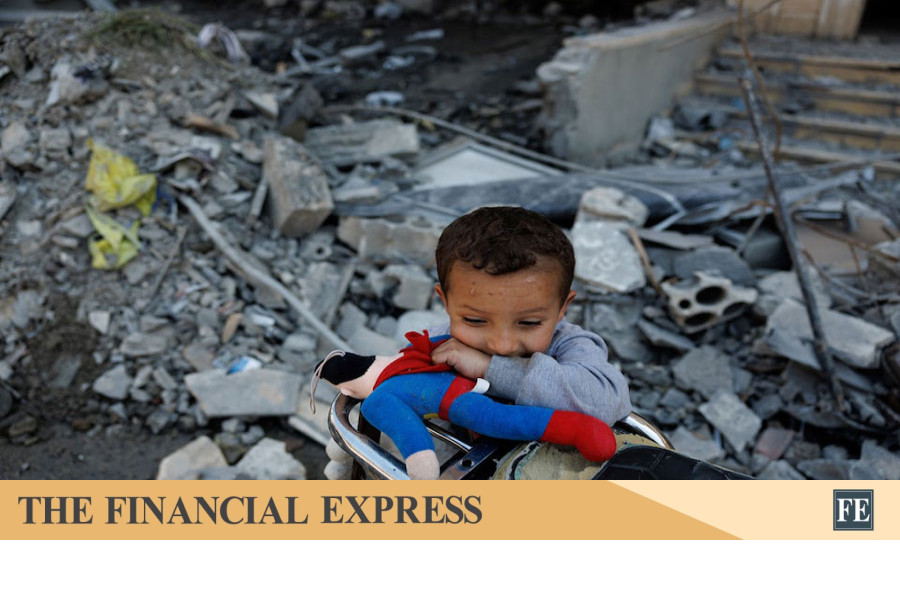
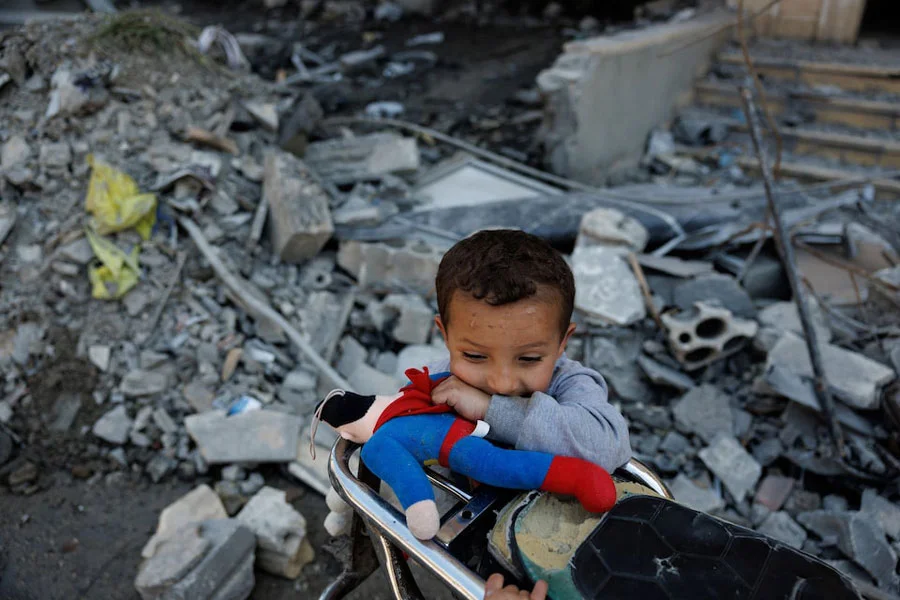
A child plays among the rubble of a building damaged by an Israeli strike, amid a temporary ceasefire between Lebanon and Israel, in Housh near Tyre, Lebanon, April 23, 2026. Photo : REUTERS/Zohra Bensemra

Peace talks between Iran and the United States could resume soon in Pakistan, where Iranian Foreign Minister Abbas Araqchi was expected to arrive on Friday night, three Pakistani sources said.

Two of the sources, from the Pakistani government, said a US logistics and security team was already in place for potential talks.

There was no immediate direct response from Washington or Tehran to the report, but US Defense Secretary Pete Hegseth, speaking around the same time, told a briefing that Iran had a chance to make a "good deal" with the United States.

The last round of peace talks ⁠had been expected on Tuesday but never took place, with Iran saying it was not yet ready to commit to attending and a US delegation led by Vice President JD Vance never leaving Washington.

President Donald Trump unilaterally extended a two-week ceasefire on Tuesday at the 11th hour to allow more time to reconvene the negotiators.

LEBANON CEASEFIRE EXTENDED

On Thursday, Israel and Lebanon extended a separate ceasefire for three weeks at a meeting at the White House brokered by Trump. Iran considers maintaining the ceasefire in Lebanon a precondition for talks with the United States on the wider war.

Trump said on Thursday he was in no rush to reach an ⁠agreement and wanted it to be "everlasting," while asserting that the US had an upper hand in a standoff in the Strait of Hormuz, the world's most important energy shipping route.

The United States has yet to find a way to open the strait, where Iran has blocked nearly all ships apart from its own since the start of the war ⁠eight weeks ago. Iran showed off its control this week by seizing two huge cargo vessels there.

Trump imposed a separate blockade of Iranian shipping last week, with US forces boarding several Iranian ships in international waters. Iran says it ⁠will not reopen the strait until Trump lifts his blockade.

Only five ships crossed the strait in the last 24 hours, shipping data showed on Friday, compared to around 130 a day before the war. Those included ⁠one Iranian oil products tanker, but none of the vast crude-carrying supertankers that normally feed global energy markets.

Container shipping company Hapag-Lloyd (HLAG.DE) also said one of its ships had crossed, without giving details.​
 

Iran's foreign minister heading to Islamabad for indirect talks with US

Reuters
Islamabad
Published: 24 Apr 2026, 22: 19

1777076904112.webp


Iran's Foreign Minister Abbas Araghchi AFP file photo

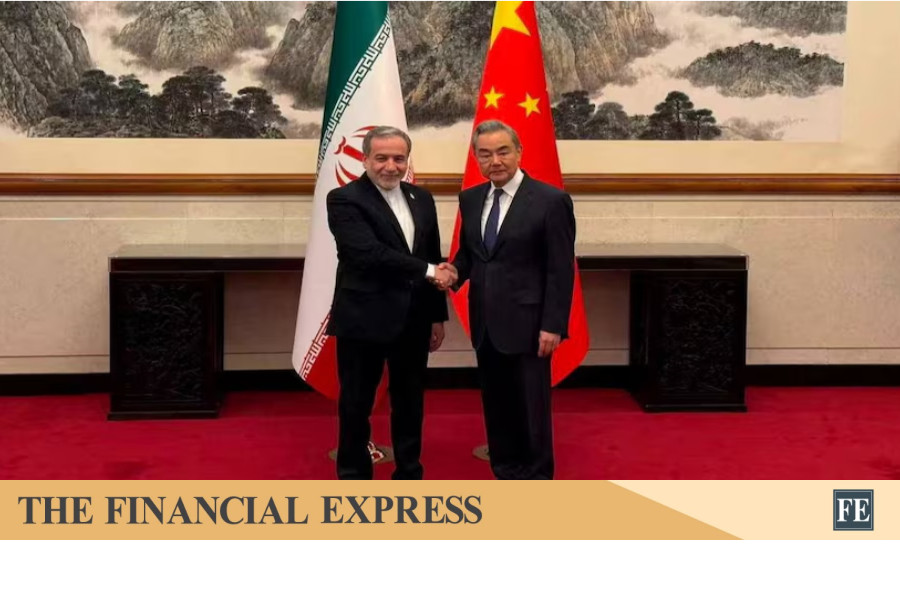
Iran's Foreign Minister Abbas Araqchi was expected in the Pakistani capital Islamabad on Friday to discuss proposals for restarting peace talks with the United States, but was not due to meet US negotiators.

Islamabad was the venue for talks between the U.S. and Iran on ending their war that collapsed earlier this week.

Araqchi said in a statement on X he was embarking on visits to Pakistan, Oman and Russia to coordinate with partners on bilateral matters and consult on regional developments, adding that Iran's neighbours remained Tehran's priority.

Two Pakistani government sources aware of the discussions said Araqchi's visit would be a brief one to discuss Iran's proposals for talks with the U.S., which mediator Pakistan would then convey to Washington.

There was no direct response from Washington to Araqchi's trip, but U.S. Defense Secretary Pete Hegseth, speaking around the same time the news emerged, told a briefing that Iran had a chance to make a "good deal" with the United States.

"Iran knows that they still have an open window to choose wisely ... at the negotiating table. ⁠All they have to do is abandon a nuclear weapon in meaningful and verifiable ways," he said.

Reports on Araqchi's trip in Iranian state media and the Pakistani sources made no mention of Mohammad Baqer Qalibaf, the speaker of Iran's parliament, who was the head of its delegation at the only talks held so far, earlier this month.

Pakistani sources had said earlier that a U.S. logistics and security team was already in place in Islamabad for potential talks.

The last round of peace talks had been expected on Tuesday but never took place, with Iran saying it was not yet ready to commit to attending and a U.S. delegation led by Vice President JD Vance never leaving Washington.

President Donald Trump unilaterally extended a two-week ceasefire on Tuesday at the 11th hour to allow more time to reconvene the negotiators.

Hezbollah dismisses Lebanon ceasefire extension

On Thursday, Israel and Lebanon extended a separate ceasefire for three weeks at a meeting at the White House brokered by Trump.

The war in Lebanon, which Israel invaded last month to root out Iran's Hezbollah allies after the militant group fired across the border, has run in parallel with the wider Iran war, and Tehran says a ceasefire there is a precondition for talks.

There was little sign of an end to the fighting in the south of the country, however, as ⁠Lebanese authorities reported two people killed by an Israeli strike and Hezbollah downed an Israeli drone.

While the ceasefire that came into force on April 16 has led to a significant reduction in hostilities, Israel and Hezbollah have continued to trade blows in southern Lebanon, where Israel has kept soldiers in a self-declared "buffer zone".

Responding to the extension, Hezbollah lawmaker Ali Fayyad said, "it is essential to point out that the ceasefire is meaningless in light of Israel's insistence on hostile acts, including assassinations, shelling, and gunfire" and its demolition of villages and towns in the south.

Strait of Hormuz blockade

Trump said on Thursday he was in no rush to reach an agreement with Iran and wanted it to be "everlasting," while ⁠asserting that the U.S. had an upper hand in a standoff in the Strait of Hormuz, the world's most important energy shipping route.

The United States has yet to find a way to open the strait, where Iran has blocked nearly all ships apart from its own since the start of the war eight weeks ago. Iran showed off its control this week by seizing two huge cargo vessels there.

Trump imposed a separate blockade of Iranian shipping last week, with U.S. forces ⁠boarding several Iranian ships in international waters. Iran says it will not reopen the strait until Trump lifts his blockade.

Only five ships crossed the strait in the last 24 hours, shipping data showed on Friday, compared to around 130 a day before the war. Those included one Iranian oil products tanker, but none of the vast crude-carrying supertankers that normally feed global energy markets.

Container shipping company Hapag-Lloyd said one of its ships had ⁠crossed, without giving details.
Though Trump has said that U.S. forces have destroyed Iran's naval threat, the use of a swarm of small, fast boats to seize the container ships on Thursday underscored Tehran's evolving tactics in the strait as it counters U.S. interception of Iran-linked oil tankers and other vessels.

Pressure for a way out of the war has mounted on Trump, meanwhile, as his fellow Republicans defend narrow majorities in Congress in the November midterm elections with U.S. gasoline prices high, inflation rising and his own approval ratings down.​
 

Trump says Iran can call if it wants to talk, as Iranian envoy returns to Pakistan

REUTERS

Published :
Apr 26, 2026 23:34
Updated :
Apr 27, 2026 00:14

1777246300078.webp


President Donald Trump said on Sunday that Iran could call if it wanted to negotiate an end to the war launched by the US and Israel, as Iran's foreign minister returned to Pakistan for talks despite the absence of US counterparts.

Hopes of reviving peace efforts had earlier receded after Trump scrapped a visit to Islamabad by his envoys Steve Witkoff and Jared Kushner, even as Iranian Foreign Minister Abbas Araghchi continued to shuttle between mediating countries.

"If they want to talk, they can come to us, or they can call us. You know, there is a telephone. We have nice, secure lines," Trump said in an interview on Fox News' "The Sunday Briefing."

"They know what has to be in the agreement. It's very simple: they cannot have a nuclear weapon, otherwise there's no reason to meet," Trump said.

Iran has long demanded Washington acknowledge its right to enrich uranium, which Tehran says it only seeks for peaceful purposes but which Western powers and Israel say is aimed at building nuclear weapons.

Although a ceasefire has paused full‑scale fighting in the conflict, which began with US-Israeli strikes on Iran on Feb 28, no agreement has been reached on terms to end a war that has killed thousands, driven up oil prices, fuelled inflation and darkened the outlook for global growth.

Tehran has largely closed the Strait of Hormuz, which normally carries a fifth of global oil shipments, while Washington has imposed a blockade of Iran's ports.

After holding talks in Pakistan, Araghchi flew to Oman - another mediator in the war - where he met the country's leader, Haitham bin Tariq al-Said, on Sunday.

They discussed security in the strait and Araghchi called for a regional security framework free of outside interference, according to Iran's foreign ministry.

Iranian Foreign Minister To Discuss Hormuz Strait

Araghchi later returned to Islamabad, Iranian state media reported. Pakistani government sources said he would hold talks with the country's leadership before heading to Moscow.

Iran's semi-official Tasnim news agency reported that Araghchi's talks with Pakistani officials would include "implementing a new legal regime over the Strait of Hormuz, receiving compensation, guaranteeing no renewed military aggression by warmongers, and lifting the naval blockade."

The talks would be unrelated to Iran's nuclear programme, the report said.

Speaking in Florida before being rushed out of the White House Correspondents' Association dinner in Washington when a man opened fire nearby, Trump said he cancelled his envoys' visit due to too much travel and expense for what he considered an inadequate Iranian offer.

Iran "offered a lot, but not enough," Trump said.

An earlier round of talks in Islamabad - in which Vice-President JD Vance led the US delegation opposite Iran's parliamentary speaker Mohammad Baqer Qalibaf - ended without agreement.

After the latest diplomatic trip was called off, two US Air Force C-17s carrying security staff, equipment and vehicles used to protect US officials flew out of Pakistan, two Pakistani government sources told Reuters on Sunday.

Trump Says Iran’s Leadership In Disarray

Iranian President Masoud Pezeshkian told Pakistani Prime Minister Shehbaz Sharif by phone that Tehran would not enter "imposed negotiations" under threats or blockade, according to a statement from the Iranian government.

He said the United States should first remove obstacles, including its maritime blockade, before negotiators could begin laying the groundwork for a settlement.

Writing on Truth Social before the shooting at the White House Correspondents' Dinner, Trump said there was "tremendous infighting and confusion" within Iran's leadership.

Pezeshkian said last week there were "no hardliners or moderates" in Tehran and that the country stood united behind its supreme leader.

The war has destabilised the Middle East - Iran has struck its Gulf neighbours and conflict between Israel and Iran-backed Hezbollah in Lebanon has been reignited.

Israel's military issued new evacuation orders for southern Lebanon on Sunday, ordering residents to leave seven towns beyond the "buffer zone" it occupied before a ceasefire that has failed to bring a full halt to hostilities.​
 

Pakistan still seeks to bridge US, Iran gaps despite failure of face-to-face talks

REUTERS

Published :
Apr 27, 2026 16:55
Updated :
Apr 27, 2026 16:55

1777334677114.webp

A motorcade believed to be carrying Iranian Foreign Minister Abbas Araghchi upon his departure, as Pakistan prepares to host the US and Iran for the second phase of peace talks in Islamabad, Pakistan, April 26, 2026. Photo : REUTERS/Akhtar Soomro

Work has not halted to bridge gaps between the United States and Iran, sources from mediator Pakistan said, despite the failure of face-to-face diplomacy after Donald Trump called off a trip by his envoys and told Iran to phone when it wants a deal.

Hopes of reviving peace efforts have receded since the US president scrapped a visit on Saturday by his envoys Steve Witkoff and Jared Kushner to Islamabad, the Pakistani capital, where Iranian Foreign Minister Abbas Araqchi shuttled in and out twice over the weekend.

Araqchi, who also visited Oman, arrived on Monday in Russia to meet President Vladimir Putin, a longstanding ally.

With the warring sides still seemingly far apart on issues including Iran's nuclear ambitions and access through the crucial Strait of Hormuz, oil prices resumed their upward march when trade reopened on Monday. Brent crude was up around 2.5% at around $108 a barrel.

"If they want to talk, they can come to us, or they can call us. You know, there is a telephone. We have nice, secure lines," Trump told "The Sunday Briefing" on Fox News.

ISLAMABAD REOPENS AFTER LOCKDOWN TO HOST TALKS

"They ⁠know what has to be in the agreement. It's very simple: They cannot have a nuclear weapon; otherwise, there's no reason to meet," Trump said.

In a sign that no face-to-face meetings are planned any time soon, streets reopened in Pakistan's capital Islamabad, which had been locked down for a week in anticipation of talks that never took place. The luxury hotel that had been cleared out to serve as a venue was again taking reservations from the public.

Pakistani officials said negotiations were still taking place remotely, but there were no plans to convene a meeting in person until the sides were close enough to sign a memorandum.

"The draft will be negotiated remotely till they reach some consensus," said a Pakistani source familiar with the negotiations.

Although a ceasefire has paused the US-Israeli strikes on Iran that began on February 28, no agreement has been reached on terms to end a war that has killed thousands, driven up oil prices, fuelled inflation and darkened the outlook for global growth.

Both sides could be settling in for a test of wills to see who can endure economic pain before making concessions.

Iran has largely blocked all shipping apart from its own from the Gulf through the Strait of Hormuz since the war began. This month, the United States began blockading ⁠Iranian ships, which Iran says must be halted as a condition for talks.

TRUMP FACES DOMESTIC PRESSURE TO END WAR

After Araqchi's first weekend visit to Islamabad, a Pakistani official said he had delivered a new Iranian proposal and criticism of the US proposal, without providing details.

News site Axios reported that the Iranian proposal would discuss ending the war and reopening the strait as first steps while leaving nuclear negotiations for a later stage.

With his approval ratings falling, Trump faces domestic pressure to end the unpopular war. Iran's leaders, though weakened militarily, have found leverage in negotiations with their ability to stop shipping in the strait, which normally carries a fifth of global oil shipments.

While Araqchi met Pakistani officials, Trump, ⁠speaking in Florida on Saturday, said he cancelled his envoys' visit due to too much travel and expense for what he considered an inadequate Iranian offer. Iran "offered a lot, but not enough," he said. Iranian officials had already played down any suggestion that Araqchi might meet Americans while in Islamabad.

FIGHTING INTENSIFIES IN LEBANON

Fighting has intensified in Lebanon, where Israeli strikes killed 14 people and wounded 37 in the south on Sunday, according to the health ministry, making it the deadliest ⁠day since a US-brokered ceasefire was agreed in mid-April.

Iran says it will not hold talks on the wider conflict unless a ceasefire also holds in Lebanon, which Israel invaded in March in pursuit of the Iran-backed group Hezbollah, which fired across the border in support of Tehran.

Israel and Hezbollah blame each other for violating the truce, which was agreed between Israel and the Lebanese government in Washington and extended last week.

Israeli ⁠forces have ordered hundreds of thousands of people out of their villages and have been bulldozing homes where they say Hezbollah fighters operated. The military warned residents on Sunday to leave seven more towns beyond the occupied buffer zone.

Reuters journalists on a vantage point across the border in northern Israel filmed columns of smoke rising into the sky above southern Lebanon and the constant sound of explosions.​
 

Latest Posts

Back