Home Watch Videos Wars Login

[🇧🇩] Political Activities of Jamaat-E-Islami

[🇧🇩] Political Activities of Jamaat-E-Islami
84
2K
More threads by Saif

G Bangladesh Defense

US seeks to be ‘friends’ with Bangladesh’s Jamaat-e-Islami : US media
New Age Desk 22 January, 2026, 22:34

1769133973029.webp

Bangladesh Jamaat-e-Isami amir Shafiqur Rahman leads a marathon organised by the youth wing of the party at Suhrawardy Udyan to mark Victory Day in December 2025. | New Age photo

With Bangladesh’s national election knocking at the door, Washington Post reported on Thursday that US diplomats are looking to step up their engagement with once-banned Jamaat-e-Islami citing audio recordings.

The Jamaat-e-Islami has been banned multiple times in the country’s history, including before the fall of deposed prime minister Sheikh Hasina on August 5, 2024.

The party has traditionally advocated for governing by sharia law and reducing work hours for women to help them ‘fulfill their duties toward their children,’ but it has recently sought to soften its public image and expand its support base — saying it is now mainly focused on rooting out corruption, reported Washington Post.

As the political landscape changes in Bangladesh, American diplomats there have signaled they are open to working with the resurgent Islamist movement. In a December 1 closed-door meeting with female Bangladeshi journalists, a U S diplomat based in Dhaka said the country has ‘shifted Islamic’ and predicted Jamaat-e-Islami would ‘do better than it’s ever done before’ in the Feb. 12 election, according to the audio recordings, read the report uploaded online on Thursday.

‘We want them to be our friends,’ the diplomat said, asking if the reporters in the room would be willing to bring members of the party’s influential student wing on their programs: ‘Can you talk to them?’ he asked. ‘Will they go on your show?’ added the report.

According to the report, in a statement to The Post, Monica Shie, the spokesperson for the U S Embassy in Dhaka, the Bangladeshi capital, said ‘the conversation that took place in December was a routine gathering, off-the-record discussion between US Embassy officials and local journalists.’ She added that ‘numerous political parties were discussed’ during the meeting and that ‘the United States does not favour one political party over another and plans to work with whichever government is elected by the Bangladeshi people.’

Mohammad Rahman, the US spokesperson for Jamaat-e-Islami, said in a statement that ‘we choose not to comment on the context of remarks reportedly made during a private diplomatic meeting.’

The uprising against Hasina paved the way for the formation of an interim government led by the Nobel Peace Prize-winning economist Muhammad Yunus and for the upcoming elections — meant to mark a decisive democratic turn for Bangladesh after decades of instability, the report said.

The American outreach to Jamaat-e-Islami could ‘potentially drive another wedge between the U S and India,’ said Michael Kugelman, a senior fellow for South Asia at the Atlantic Council. Relations between the countries are already at a low point, owing to disagreements over India’s recent conflict with Pakistan, its purchases of Russian oil, an unfinished trade deal and punishing U S tariffs on many Indian products, the report said.

Since Hasina’s ouster in 2024, Jamaat-e-Islami has held four meetings in Washington with U.S. officials and ‘several’ meetings in Dhaka, Mohammad Rahman said in his statement to The Post. The party leader also met virtually with US Trade Representative (USTR) Jamieson Greer on Friday, reported Washington Post.

The State Department declined to comment on the Washington meetings and described the meetings with Jamaat-e-Islami in Dhaka as part of ‘routine diplomatic work.’ The USTR did not respond to a request for comment, said the report.​
 
Analyze

Analyze Post

Add your ideas here:
Highlight Cite Respond

Jamaat chief Shafiqur sets three conditions for 'collaborative’ governance

bdnews24.com
Published :
Jan 23, 2026 18:37
Updated :
Jan 23, 2026 18:37

1769214096237.webp


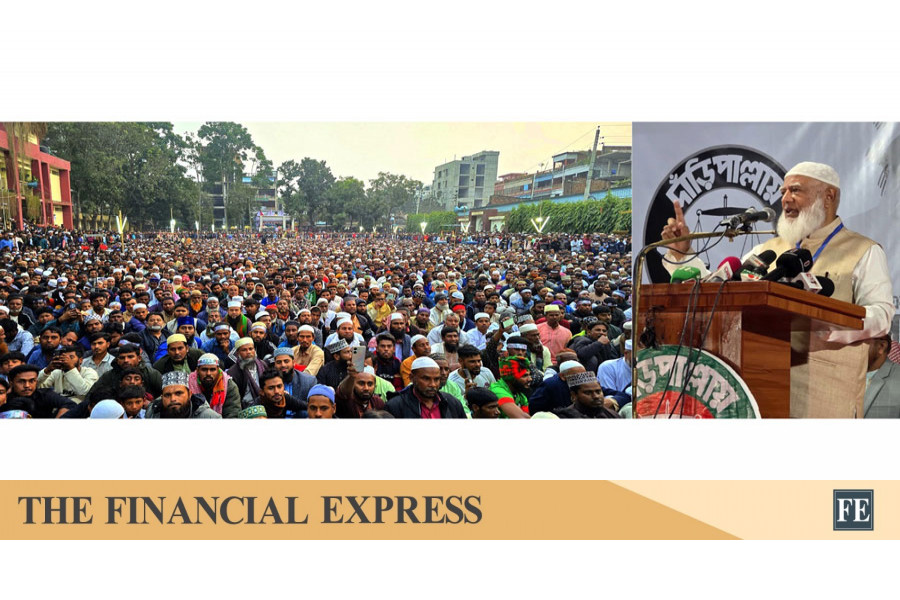
Jamaat-e-Islami chief Shafiqur Rahman has promised to build the nation inclusively if his party is given the chance to form the government, while laying out three conditions for governance.

He addressed a large election rally of the 10-party alliance at Thakurgaon Government Boys’ High School ground on Friday, saying he intends to include all groups in nation-building.

He emphasised that Bangladesh cannot be developed by a single party and must be built through national unity.

He reminded Thakurgaon residents of their repeated support for different leaders in past elections, urging them to vote for the coalition representing the country’s freedom-minded citizens.

The Jamaat chief outlined three conditions for collaboration.

Firstly, there must be no corruption, neither personally nor by sheltering corrupt individuals.

Secondly, justice must be guaranteed for all citizens regardless of wealth, gender, religion, or social background, with a fully independent judiciary free from political influence.

Thirdly, he pledged to eliminate systemic “inequality and abuses” that have affected the country over the last 52 years, targeting misgovernance, extortion, and regional disparities.

Shafiqur said reform proposals submitted to a national referendum will be implemented if endorsed by voters.

He added that Jamaat does not seek single-party rule but a people-led government including scholars, skilled citizens, and patriotic groups, rejecting dominance by any single faction.

He urged voters to elect leaders who uphold integrity, respect citizens, and prevent extortion.

Shafiqur promised that if elected, his government will transform northern Bangladesh into an agricultural hub.

Saiddpur Airport will be upgraded to international standards to support industrial growth and agro-based sectors, ensuring products reach national and global markets efficiently.

He pledged to reduce unemployment through advanced education and vocational training, aiming to transform households into small-scale industrial units, citing Japan, Vietnam, and China as examples of successful models.​
 
Analyze

Analyze Post

Add your ideas here:
Highlight Cite Respond

US seeks to be 'friends' with Jamaat-e-Islami: Washington Post

bdnews24.com
Published :
Jan 23, 2026 11:38
Updated :
Jan 23, 2026 11:38

1769214336816.webp


As the Jamaat-e-Islami readies for its strongest showing at the polls next month, US diplomats are quietly signalling a willingness to engage with the once-banned party, reports The Washington Post, citing audio recordings it says it obtained.

The party, historically outlawed under successive governments -- most recently by former prime minister Sheikh Hasina before her 2024 ouster, has long championed Shariah-based governance.

If elected to power, Jamaat has vowed reduced work hours for women, citing family duties, also seeking to recast itself as an anti-corruption force, softening its image to appeal to a broader electorate, the report added.

In a December 1 closed-door discussion with female Bangladeshi journalists, a US diplomat in Dhaka described the country as “shifted Islamic” and predicted that Jamaat would “do better than it’s ever done before” in the Feb 12 elections, The Washington Post said, citing the audio recording.

“We want them to be our friends,” the official added, asking whether journalists could bring members of the party’s “influential student wing” -- Islami Chhatra Shibir -- onto their programmes.

The diplomat, whom The Post said it is not naming for security reasons, downplayed worries that Jamaat-e-Islami would try to force its interpretation of Islamic law on Bangladesh, saying Washington had leverage it was prepared to use.

Meaning any concerning moves would prompt immediate economic consequences. “We would have 100 percent tariffs put on them the next day,” the diplomat said.

Monica Shie, spokesperson for the US Embassy in Dhaka, told The Post that the December gathering was “a routine, off-the-record discussion between US Embassy officials and local journalists,” adding that “numerous political parties were discussed” and that “the United States does not favour one political party over another and plans to work with whichever government is elected by the Bangladeshi people.”

Mohammad Rahman, Jamaat’s US spokesperson, said in a statement that “we choose not to comment on the context of remarks reportedly made during a private diplomatic meeting”, as quoted in The Post.

The comments provide insight into US diplomatic strategy in Bangladesh as the country undergoes a crucial political transition.

Hasina’s ouster led to an interim government headed by Nobel laureate economist Muhammad Yunus, paving the way for elections intended to mark a democratic turning point.

Analysts warn that US outreach to Jamaat could “potentially drive another wedge between the US and India”, said Michael Kugelman, senior fellow for South Asia at the Atlantic Council.

India has long viewed the party as a regional security threat due to its historic ties with Pakistan.

Bangladesh’s complex political history -- independence from Pakistan in 1971, decades of military coups, and alternating civilian governments -- shapes current dynamics.

Relations with India are already strained following Hasina’s exile in India and subsequent death sentence in absentia. Recent communal violence against Hindus has added to tensions, the report added.

The Jamaat-e-Islami, which once faced political bans, is now “mainstream”, according to Mubashar Hasan, a Bangladesh politics expert at Western Sydney University.

The party’s stated platform focuses on “anti-corruption, transparency, accountability, and good governance”, and proposals to reduce women’s work hours remain preliminary, with no plans to implement sharia law, Mohammad Rahman was quoted as saying.

The party’s main rival is the BNP, led by Tarique Rahman, who returned to Dhaka from self-imposed exile in London in late December.

Tarique has privately expressed confidence in Jamaat’s electoral performance but does not plan to integrate the party into a potential coalition government, the report added.

Jamaat chief Shafiqur Rahman has indicated openness to working with the BNP, recalling the party’s junior role in a BNP-led government between 2001 and 2006.

Since Hasina’s removal, Jamaat has met with US officials in both Washington and Dhaka, including a virtual meeting with US Trade Representative Jamieson Greer.

The State Department described these interactions as “routine diplomatic work”, declining further comment.

India, meanwhile, continues to view the party warily, having labelled its Kashmir chapter an “unlawful group” in 2019 and renewed the designation in 2024, The Post said.

The US diplomat emphasised that Washington would respond decisively to any policies undermining socially liberal norms, citing Bangladesh’s garment industry, which supplies 20 per cent of US imports.

“If Bangladesh tells women they can only work five hours… or imposes Shariah law, there will be no more orders. And if there are no more orders, there will be no Bangladeshi economy,” the official was quoted as saying.

Yet they remained confident that Jamaat-e-Islami’s pool of “educated leaders” would avoid such measures.

Jamaat’s publicity chief Ahsanul Mahboob Zubair on Thursday night dismissed the report as merely a journalist’s “observation”.

Speaking to bdnews24.com around 10:45 pm, he said: “These are just the observations of a newspaper and one of its reporters. The country’s situation cannot truly be captured in a single report.”

With a national election approaching, Zubair said: “Bangladesh had moved past ‘fascism’, reforms were under way and trials were ongoing, which was why many international and local outlets were publishing such reports.

“Al Jazeera has also done a report -- I have looked at it -- but in the end, it is the people’s position that matters,” he said.

Asked whether Jamaat would protest or condemn the report, Zubair said the party would first study it in full and then decide its next course of action.​
 
Analyze

Analyze Post

Add your ideas here:
Highlight Cite Respond

Laundering country’s wealth to stop forever if Jamaat comes to power: Shafiqur Rahman

UNB
Published :
Jan 26, 2026 22:57
Updated :
Jan 26, 2026 22:57

1769473288773.webp


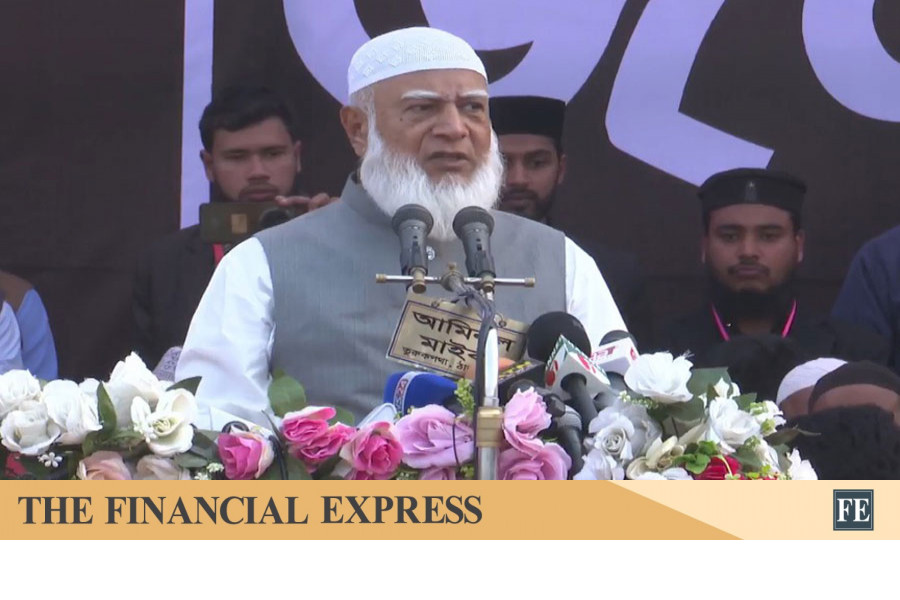
Bangladesh Jamaat-e-Islam Ameer Dr Shafiqur Rahman has vowed that stealing the country’s money will be permanently stopped if his party assumes power.

“Those who have stolen the country’s money will be held strictly accountable, and the money will be recovered from them,” he said at an election rally at Wazir Ali High School ground in Jhenaidah on Monday evening.

The programme was presided over by Ali Azam Mohammad Abu Bakar, Jamaat’s candidate for the Jhenaidah-2 constituency.

Dr. Shafiqur Rahman said the party seeks unity, not division, and called for a political revolution through the upcoming 26th general election, similar to the people’s uprising against fascism in 2024.

“If anyone interferes with people’s voting rights under political disguise, their fingers will be broken. Fascism will not be allowed to return to this country,” he warned.

The Jamaat Ameer also claimed that extortion has increased in Jhenaidah since August 5. “Those who extort should feel ashamed. People earn money through hard work, and you take a share of it. Extortion is haram, but begging is not,” he said.

He criticized syndicates that raised prices during the fascist government and said, “We have driven fascism away with the fresh blood of our hearts. If anyone tries to return, we will stop it, because so many families have already suffered losses.”

Dr. Shafiqur Rahman outlined Jamaat’s development plans, including providing skill-based training for educated youths, establishing a medical college in Jhenaidah, improving healthcare, and digging railways and rivers for better communication. “If Jamaat comes to power, development will be non-discriminatory, and justice will always side with the people,” he said.

Referring to Jhenaidah as a district of martyrs, he said, “Many young lives, like that of Sohan, were brutally taken by tyrants, with unimaginable cruelty. I stand with the families of the victims.”

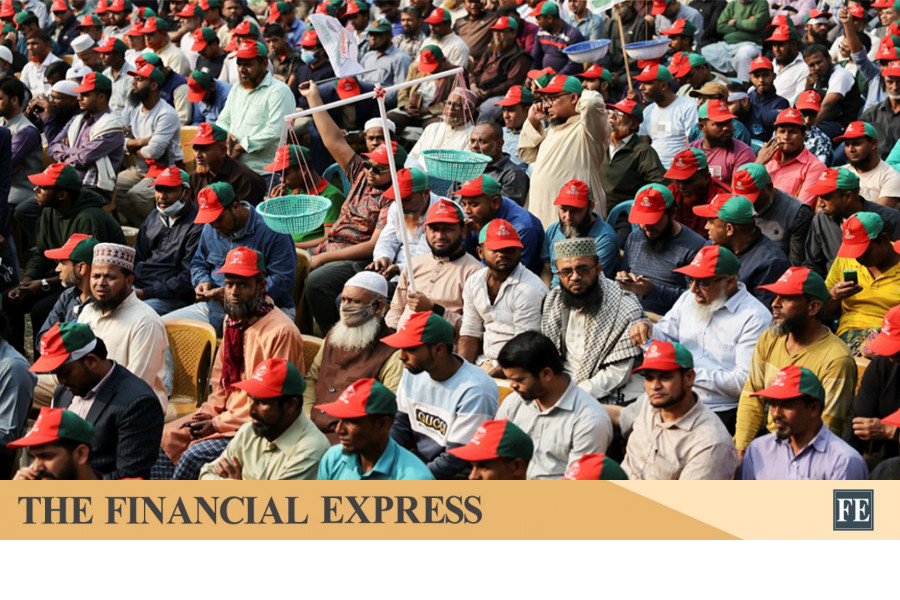
During the rally, district Jamaat leaders and constituency candidates – Ali Azam Mohammad Abu Bakar (Jhenaidah-2), Abu Saleh Md. Matiur Rahman (Jhenaidah-1), Matiar Rahman (Jhenaidah-3), and Abu Talib (Jhenaidah-4) – were presented with the party symbol, the scale, and urged voters to support them.​
 
Analyze

Analyze Post

Add your ideas here:
Highlight Cite Respond

Politics: Jamaat’s crisis over Shariah and Islam

Zahed Ur Rahman
Published: 27 Jan 2026, 08: 26

1769562936168.webp


The term “strategic ambiguity” is widely used in the field of international relations. When a state considers it to be in its interest not to clarify its position on a particular issue, it may choose either to remain silent or to issue differing statements at different levels.

The United States’ strategic ambiguity over whether it would militarily support Taiwan in the event of a Chinese attempt to seize the island by force is a well-known example. Since the fall of Sheikh Hasina, a similar discussion has been underway regarding Jamaat-e-Islami: if it comes to power, will it establish Islamic Shariah law or not?

As the election draws nearer, this question has grown more pressing. Recently, it has gained renewed attention following a report published by The Washington Post, which was based on an audio recording of conversations between a US embassy official in Bangladesh and journalists.

Some time earlier, the issue resurfaced after a delegation from the Christian community met with the Jamaat ameer. Upon leaving that meeting, one of the delegation members stated that the Jamaat ameer had assured them that Jamaat would not introduce Shariah law if it came to power. Citing this very stance, Islami Andolan later withdrew from its alliance with Jamaat, explaining that Jamaat’s reluctance to implement Shariah was the reason for its departure.

To date, we have not heard a clear, unequivocal statement from two or three of Jamaat’s top leaders as to whether the party would implement Shariah law if it assumed power. However, the party’s second-most senior leader was seen offering reassurances to India on this matter (despite Jamaat’s routine accusations that its rival, the BNP, engages in pro-India appeasement).

In a BBC Bangla report titled “How Delhi is currently thinking about Bangladesh’s upcoming election”, reference is made to a meeting with Jamaat-e-Islami’s nayeb-e-ameer, Syed Abdullah Mohammad Taher, during a recent visit to Dhaka. According to Dr Sreeradha Datta, she asked him, “Suppose you obtain enough seats to form a government—would you then seek to introduce Shariah law in the country?” He reportedly replied: “Where did you hear that? When and where have we ever said that, if we win, we will introduce Shariah law in Bangladesh?” (18 September 2025)

Anyone who reads Jamaat’s constitution will find such statements astonishing. It bears little resemblance to the constitution of a political party; rather, it reads like that of a purely religious organisation. A brief look at a few provisions makes this clear.

The first principle of Jamaat’s permanent policy states that, in making any decision or adopting any course of action, Jamaat shall give priority solely to the commands and injunctions of Allah Almighty and His Messenger (peace be upon him). The first condition for becoming a full member (rukn) is the observance of obligatory and essential religious duties in personal life and abstention from major sins.

The foremost duty of the Jamaat ameer is to prioritise obedience and allegiance to Allah Almighty and His Messenger (peace be upon him) above all else. The first clause of the oath taken by a rukn declares that the ultimate goal of the member’s life is to attain Allah’s pleasure and success in the hereafter by striving wholeheartedly to establish the religion, prescribed by Allah and demonstrated by His Messenger, for the sake of comprehensive peace in the world and the welfare of humanity—and that, with pure intent, the individual joins Bangladesh Jamaat-e-Islami to pursue this objective.

We are therefore speaking of a political party whose central membership requires one to be a practising Muslim. That means, a non-Muslim can never qualify. Jamaat attempts to create the impression of inclusivity by offering non-Muslims the status of “associate members”, but the constitution makes it clear that all substantive activities are conducted by rukns. Consequently, a non-Muslim can never become the ameer of the party.

While Jamaat seeks, when expedient, to convey the message in certain quarters that it will not implement Shariah if it comes to power, its leaders, including MP candidates, openly speak about establishing Shariah law on television talk shows. Not only this, at the grassroots level, mid- and lower-tier leaders and activists are presenting voting for the “daripalla” (balance scale) symbol as a religious obligation, while some even portray it as a “ticket to paradise”.

This raises an obvious question: if Jamaat is signalling that it will not implement Shariah, why is the Shariah narrative simultaneously being sustained on the ground?

Politically, Jamaat-e-Islami finds itself in a profound dilemma. Because the word “Islam” is embedded in its name, and because it has long campaigned under the slogan “We want Allah’s law”, a section of its core supporters votes for Jamaat precisely in the hope of establishing Islamic Shariah. At the same time, Jamaat appears to understand that pursuing state power makes the politics of Shariah implementation counterproductive to that objective.

This explains why, in student union elections, Islami Chhatra Shibir has removed the word “Islam” from its manifestos and replaced it with the language of “welfare”. Moreover, the potential international reaction to the introduction of Shariah after an electoral victory is made clear in the remarks of the US diplomat cited in The Washington Post report.

This is precisely the “strategic ambiguity” referred to at the beginning of this article, an approach Jamaat has adopted as the election approaches. Rather than offering clarity, it seeks to keep both narratives alive simultaneously. This, however, should not be acceptable.

Voting for Jamaat instead of the BNP (Bangladesh Nationalist Party) is not the same as voting for the BNP instead of the Awami League, or vice versa. There are fundamental ideological differences at stake. Jamaat’s ameer must publicly and unequivocally state whether Jamaat-e-Islami will implement Islamic Shariah if it comes to power. If so, he must also present a clear framework for what that Shariah would entail.

This is particularly important because many prominent Islamic scholars, including the current ameer of Hefazat-e-Islam, do not recognise Jamaat’s interpretation as authentic Islam. We will not enter into that theological debate here, but Jamaat must nevertheless clarify its position.

If Jamaat or any other “Islamic” party declares its intention to establish Shariah, the question inevitably arises as to whether it retains the right to engage in politics under Bangladesh’s existing constitution. Conversely, if Jamaat insists it will not implement Shariah, then another question follows: by using the word “Islam” in its name, is it misleading the public? Indeed, does its constitution itself remain compatible with political participation under the country’s constitutional framework?

With the election approaching, Jamaat must urgently clarify its stance on Shariah and enable voters to make an “informed decision” when exercising their franchise. Jamaat’s top leadership should recognise that its strategic ambiguity on this issue directly contradicts its much-publicised slogan, “We want the rule of honest people”, and amounts, quite plainly, to duplicity (munafiqi, in religious terms).

* Zahed Ur Rahman is a teacher and political analyst.​
 
Analyze

Analyze Post

Add your ideas here:
Highlight Cite Respond

Jamaat to establish dignity of women, claims Shafiq
Staff Correspondent 29 January, 2026, 01:19

1769648718090.webp

Shafiqur Rahman.

Bangladesh Jamaat-e-Islami amir Shafiqur Rahman on Wednesday said that his party wanted to establish dignity of women in the society if voted to power.Bangladesh travel guides

While speaking at a women’s rally at the Monipur Girls High School playground in the afternoon, Shafiqur Rahman, also a party-nominated candidate for Dhaka-15, said that they wanted to establish a dignified and humanitarian society by establishing rights and dignity of women and mothers in the society.

An advanced society cannot be formed without women’s participation, Shafiqur Rahman said.

He called on the women voters to cast their votes in favour of ‘Yes’ in the referendum on February 12 for establishing an anti-fascist country and also cast votes in favour of party symbol ‘balance’.

Referring to the harassment of Jamaat’s women activists during campaigns, Shafiqur Rahman called on the attackers to refrain from the attacks on women. ‘Otherwise we would resist the attackers in future,’ he warned.

Shafiqur Rahman said, ‘If our party is voted to power, we would establish daycare centres and breast feeding corners in the offices.’

Before the rally, while taking part in his election campaigns in Dhaka-15 constituency, Shafiqur told reporters that the party wanted to establish a forward looking Bangladesh with all.

‘We did not want to look backward and also want to avoid all sorts of confrontations which lead to divide the nation,’ Shafiqur Rahman said.

Shafiqur Rahman also took part in election campaigns in Mirpur -13 and Mirpur-10 areas.

Jamaat central executive council member Mobarak Hossain, Dhaka city north Nayeb-e-Amir, election coordinator Abdur Rahman Musa and former Chhatra Shibir president Zahidul Islam, among others, were present during the campaign.

Shafiqur Rahman will also hold daylong election campaigns today in favour of some other candidates of Jamaat led alliance in Dhaka city.​
 
Analyze

Analyze Post

Add your ideas here:
Highlight Cite Respond

Jamaat chief rules out women leading party as ‘cultural reality’ in Al Jazeera interview

bdnews24.com
Published :
Jan 29, 2026 23:07
Updated :
Jan 29, 2026 23:09

1769733589869.webp

Jamaat‑e‑Islami chief Shafiqur Rahman has said no woman can ever lead his party because, in his words, Allah did not create women “in that way” and it is “unchangeable”.

He claimed that no party has nominated a “substantial number” of female candidates in the parliamentary election, describing it as “a cultural reality of Bangladesh”, and argued that most countries do not consider women’s leadership “feasible”.

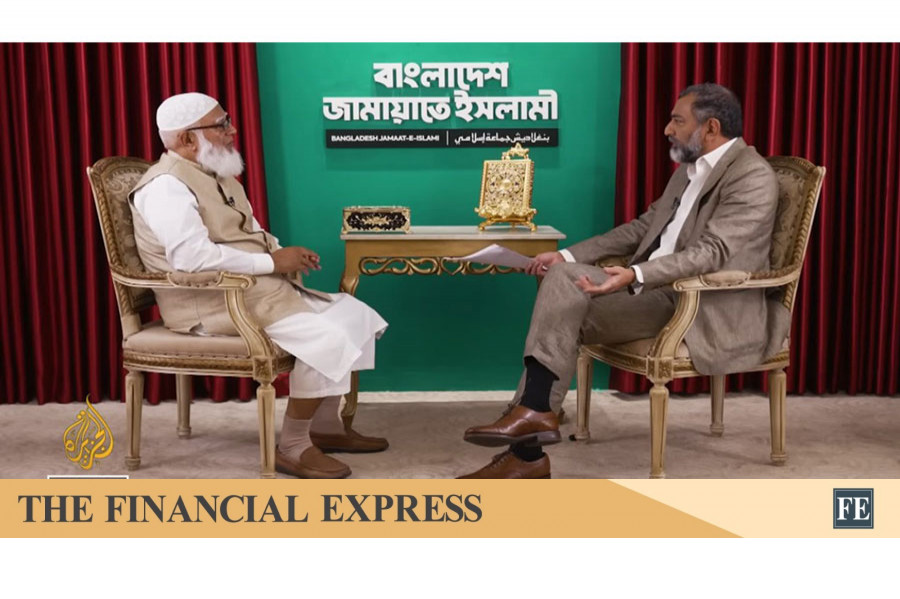
His remarks came in an interview with Qatar‑based broadcaster Al Jazeera, aired on Thursday.

Journalist Sreenivasan Jain conducted the half-an-hour interview at Shafiqur’s residence in Dhaka, pressing him on Jamaat’s policies towards women.

When asked about reports that Jamaat had proposed reducing working hours for women based on Quranic principles, Shafiqur denied making such a statement.

“Who said [so]? I never said this,” he was quoted as saying.

He explained instead that mothers should have the option of shorter hours during lactation, calling it a matter of “justice” and “respect”.

“A mother, at the same time she is caring for her baby, and at the same time she will perform the same duty, same hour with the gentleman, it’s not justice,” he told Al Jazeera.

He described shorter hours as an “optional offer” for mothers, not a mandatory restriction.

Shafiqur dismissed protests against the proposal, saying critics had “misunderstood”.

“No question of darkness. It is a matter of showing respect to them,” he said, adding that only a “negligible section” of society opposed the idea.

Pressed on representation, Shafiqur admitted Jamaat has fielded no female candidates in the parliamentary election.

“Not a single one. But we are preparing,” he said, noting that women had contested in local government polls.

On whether a woman could lead Jamaat in future, Shafiqur was categorical in the interview: “It’s not possible. Because Allah made everyone in its own entity. We will never be able to feed our breast to a child. This is God‑given. And there are some differences between men and women. What Allah made, we cannot change it.”

When reminded that Bangladesh has had female prime ministers for three decades, Shafiqur replied: “We did not protest them. Already I said we are not disrespectful. But if you look at the world, how many ladies came forward? Few countries.”

He acknowledged Jamaat’s past alliance with the BNP under Khaleda Zia, saying: “It’s not our decision. It’s their party decision. We should respect this party's opinion.”

The Jamaat chief rejected criticism that his party seeks to impose Islamic law, saying any decision would rest with parliament.

He also defended his party’s record on minorities and its controversial role in Bangladesh’s 1971 Liberation War during the interview.​
 
Analyze

Analyze Post

Add your ideas here:
Highlight Cite Respond

A wave in favour of justice sweeping across the country: Jamaat ameer
Shafiqur Rahman says only those who ensure safety before power can govern justly

By Star Online Report

1769821812109.webp

Photo: Screen grab

Jamaat-e-Islami Ameer Shafiqur Rahman today said that those who cannot ensure people’s safety before coming to power can never make the nation feel safe after attaining power.

He also said youths have decided who will carry forward the spirit of the July Uprising; mothers and sisters too have realised in whose hands their honour is safe.

The Jamaat chief made the remarks while addressing an election rally organised by the 11-party electoral alliance at the Noakhali Zilla School ground this afternoon.

“If the nation is entrusted to those who have proven their love for the country, it is possible to build a land of compassion. People have realised this, and a wave in favour of justice has begun to sweep across the country,” he said.

The Jamaat ameer further said, "We want a corruption-free Bangladesh, free from extortion and misrule. We do not want the misrule of the last 15 and a half years to return to the country."

Speaking as the chief guest, Shafiqur Rahman pledged to take effective measures towards upgrading Noakhali town to a city corporation and preventing river erosion in Hatiya, Companiganj and Subarnachar.

He also described Jamaat as the “most persecuted party”, adding, "We had promised that we would not take revenge. We would not engage in attacks or in the business of filing cases. We have kept our word. But some have failed to uphold that commitment."

The rally was presided over by Noakhali district Jamaat Ameer and the party’s candidate for the Noakhali-4 constituency (Subarnachar and part of Sadar), Ishaq Khandaker. Among others, district Jamaat Secretary Maulana Borhan Uddin and Abdul Hannan Masud, the 11-party alliance candidate for the Noakhali-6 constituency, also addressed the rally.

Earlier, around 12:15pm, the Jamaat ameer arrived in Noakhali by helicopter from Feni.

Our Noakhali correspondent contributed to this report​
 
Analyze

Analyze Post

Add your ideas here:
Highlight Cite Respond

Posts you haven't read yet..

Members Online

Latest Posts

Back
 
G
O
 
H
O
M
E