Bangladesh Defense
Saif
Senior Member
- Jan 24, 2024
- 21,561
- 9,760
- Nation

- Residence
- Axis Group


The Financial Express | First Financial Daily of Bangladesh
Get latest stock share market news, financial news, economy news, politics news, breaking news, Bangladesh economy news at The Financial Express.
Retreat from reform could be costly
Published :
May 11, 2026 01:11
Updated :
May 11, 2026 01:11
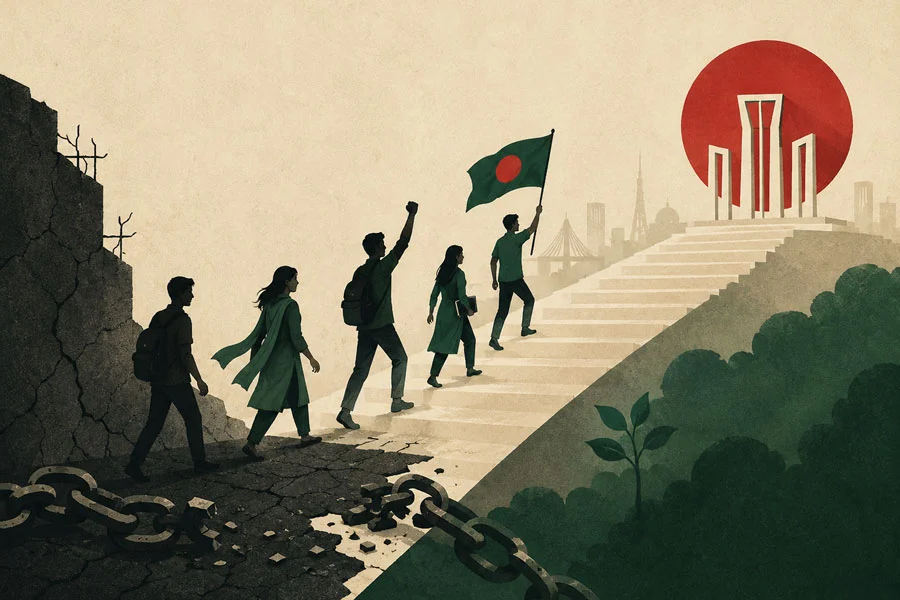
The incumbent BNP government's amendment to the Bank Resolution Act 2025, which created scope for former owners of five merged Islamic banks to regain control of these financial institutions, has drawn widespread criticism both at home and abroad. Many have described the move as an attempt to rehabilitate bank looters, an outright ill-advised decision that has already begun to exact a toll. Last month, the IMF withheld the release of $1.3 billion under a $5.5 billion loan agreement, citing, among other reasons, the controversial amendment to the Bank Resolution Act as well as delay in implementing the bifurcation of the National Board of Revenue (NBR). Adding to the pressure, the World Bank reportedly wants the government to repeal Section 18(A) of the Bank Resolution Act 2026 before extending a $500 million budget support credit. As things stand, it is becoming increasingly clear that any retreat from financial sector reforms could prove costly. It risks not only undermining efforts to rescue the crisis-hit banks and restore public confidence in the banking sector, but also eroding the trust and support of development partners at a time when the economy can ill afford such setbacks.
The merger of the five troubled Islamic banks was necessary, as years of systematic looting had bled them dry. The banks were carrying NPL ratios as high as 90 per cent, and many depositors were protesting on the street demanding their money back. Against this backdrop, the interim government formulated the Bank Resolution Ordinance 2025, which provided a necessary legal framework for the merger of such distressed banks. The banks were merged in November 2025 to form Sammilito Islami Bank, touted as the largest bank of its kind in the country. Tk 350 billion was injected into the bank as paid-up capital, of which Tk 200 billion came from the government exchequer, while the rest was mobilised from depositors' fund. The main objective of the merger was to save the banks, safeguard depositors' interests and ensure broader financial stability - all of which were quite reasonable. However, in a move that defies reason, the BNP government enacted the Bank Resolution Act 2026, amending the Bank Resolution Ordinance 2025. Section 18(A) of the Act allows former shareholders to regain control of the banks by initially paying only 7.5 per cent of the government-injected funds. The remaining 92.5 per cent of the fund is to be paid over the next two years, with a 10 per cent simple interest charge added.
Economists decried the move, saying that paving the way for the former owners to regain control of the banks on such easy terms is akin to rewarding them instead of holding them accountable for their misdeeds. Moreover, questions remain as to how those who had already driven the banks to the brink through large-scale loan scams can now be trusted with their stewardship at those institutions again. There is every possibility that the government-injected funds could also be misused if proper accountability and oversight are not ensured. More importantly, such a move could set a dangerous precedent, encouraging a culture of impunity in the banking sector.
It is worth recalling that many of the country's major economic reforms - from market-oriented liberalisation and the expansion of private sector-led growth to the introduction of VAT - were undertaken under BNP governments. The current hesitation to pursue necessary reforms appears both puzzling and counterproductive. Anyway, the IMF and the World Bank have pushed the ball to the government's court. It is now up to the government to take the right decision.
Published :
May 11, 2026 01:11
Updated :
May 11, 2026 01:11
The incumbent BNP government's amendment to the Bank Resolution Act 2025, which created scope for former owners of five merged Islamic banks to regain control of these financial institutions, has drawn widespread criticism both at home and abroad. Many have described the move as an attempt to rehabilitate bank looters, an outright ill-advised decision that has already begun to exact a toll. Last month, the IMF withheld the release of $1.3 billion under a $5.5 billion loan agreement, citing, among other reasons, the controversial amendment to the Bank Resolution Act as well as delay in implementing the bifurcation of the National Board of Revenue (NBR). Adding to the pressure, the World Bank reportedly wants the government to repeal Section 18(A) of the Bank Resolution Act 2026 before extending a $500 million budget support credit. As things stand, it is becoming increasingly clear that any retreat from financial sector reforms could prove costly. It risks not only undermining efforts to rescue the crisis-hit banks and restore public confidence in the banking sector, but also eroding the trust and support of development partners at a time when the economy can ill afford such setbacks.
The merger of the five troubled Islamic banks was necessary, as years of systematic looting had bled them dry. The banks were carrying NPL ratios as high as 90 per cent, and many depositors were protesting on the street demanding their money back. Against this backdrop, the interim government formulated the Bank Resolution Ordinance 2025, which provided a necessary legal framework for the merger of such distressed banks. The banks were merged in November 2025 to form Sammilito Islami Bank, touted as the largest bank of its kind in the country. Tk 350 billion was injected into the bank as paid-up capital, of which Tk 200 billion came from the government exchequer, while the rest was mobilised from depositors' fund. The main objective of the merger was to save the banks, safeguard depositors' interests and ensure broader financial stability - all of which were quite reasonable. However, in a move that defies reason, the BNP government enacted the Bank Resolution Act 2026, amending the Bank Resolution Ordinance 2025. Section 18(A) of the Act allows former shareholders to regain control of the banks by initially paying only 7.5 per cent of the government-injected funds. The remaining 92.5 per cent of the fund is to be paid over the next two years, with a 10 per cent simple interest charge added.
Economists decried the move, saying that paving the way for the former owners to regain control of the banks on such easy terms is akin to rewarding them instead of holding them accountable for their misdeeds. Moreover, questions remain as to how those who had already driven the banks to the brink through large-scale loan scams can now be trusted with their stewardship at those institutions again. There is every possibility that the government-injected funds could also be misused if proper accountability and oversight are not ensured. More importantly, such a move could set a dangerous precedent, encouraging a culture of impunity in the banking sector.
It is worth recalling that many of the country's major economic reforms - from market-oriented liberalisation and the expansion of private sector-led growth to the introduction of VAT - were undertaken under BNP governments. The current hesitation to pursue necessary reforms appears both puzzling and counterproductive. Anyway, the IMF and the World Bank have pushed the ball to the government's court. It is now up to the government to take the right decision.