[🇧🇩] India's Water Terrorism Against Bangladesh

Afghanistan Albania Algeria Andorra Angola Antigua Austria Azerbaijan Bahamas Bahrain Bangladesh Barbados Canada China Egypt Finland Germany India Iran Israel Japan Lebanon North Macedonia Pakistan Palestine Qatar Russia Syria Turkey Ukraine United Kingdom United States Yemen
[🇧🇩] India's Water Terrorism Against Bangladesh
297
13K
More threads by Saif

G Bangladesh Defense

We are here on Bangladesh's request regarding Teesta, nothing else: Yao Wen

Diplomatic Correspondent
Dhaka
Published: 02 Jul 2026, 19: 08

1783045880099.webp

At the Chinese Embassy in Baridhara, the Chinese Ambassador Yao Wen answered journalists' questions during a press briefing. Photo: Prothom Alo

The Chinese Ambassador to Dhaka, Yao Wen, stated that in response to Dhaka's request, China has come forward with the large-scale Teesta project, which is directly linked to the lives and livelihoods in the northern region. Beyond this, China has no other concerns.

This comment was made by Ambassador Yao Wen in response to journalists' questions during a briefing at the Chinese Embassy in Baridhara, the capital, on Thursday morning.

The Chinese Embassy organized this briefing regarding the recent visit of Bangladesh's Prime Minister, Tarique Rahman, to China.

Yao Wen began by speaking on Prime Minister Tarique Rahman's visit to China.

He then answered various questions from the journalists. Highlighting the Teesta project as one of the most important topics of Prime Minister Tarique Rahman's visit, the Chinese Ambassador stated that the livelihoods of people around the river are linked to the project. At Bangladesh's request, China will provide maximum assistance for this project.

When attention was drawn to the signing of a Memorandum of Understanding with a Chinese company regarding the Teesta project, the Chinese Ambassador Yao Wen said, "The previous Memorandum of Understanding was between a Chinese company and a Bangladeshi government entity. But we are talking about cooperation at a governmental level in this project. Chinese companies can conduct their surveys. We will conduct surveys with the best scientists. If the project is to move forward, surveys are necessary. The Chinese government will work with the Bangladesh government to advance these surveys. We are committed in this regard. "

A journalist asked, regarding the Teesta, experts say India has some concerns about this, and again some say there are concerns about whether it will be effective if India does not release water from upstream.

In response, the Ambassador said, "You are talking about other elements. This is not our concern. China has come forward according to Bangladesh's expectations. "

When asked about the tri-nation economic corridor involving Bangladesh and Myanmar, Yao Wen said, "This is not a new initiative. We proposed BCIM (Bangladesh-China-India-Myanmar) 15 years ago. Although there has been some progress, it has not moved forward as China wanted. Since Bangladesh wants regional connectivity, China also wants more regional connectivity. I believe Myanmar also wants such (connectivity) cooperation."

The Chinese Ambassador further stated, "We are open-minded about other countries. If they are ready, we are prepared to include them. It depends on their decision. But China is now determined to move forward with an economic corridor involving Bangladesh and Myanmar. "

When asked about the challenges of establishing a corridor by land due to Myanmar's instability, Yao Wen said, "Initially, we can consider connectivity through ports and sea routes. "​
 

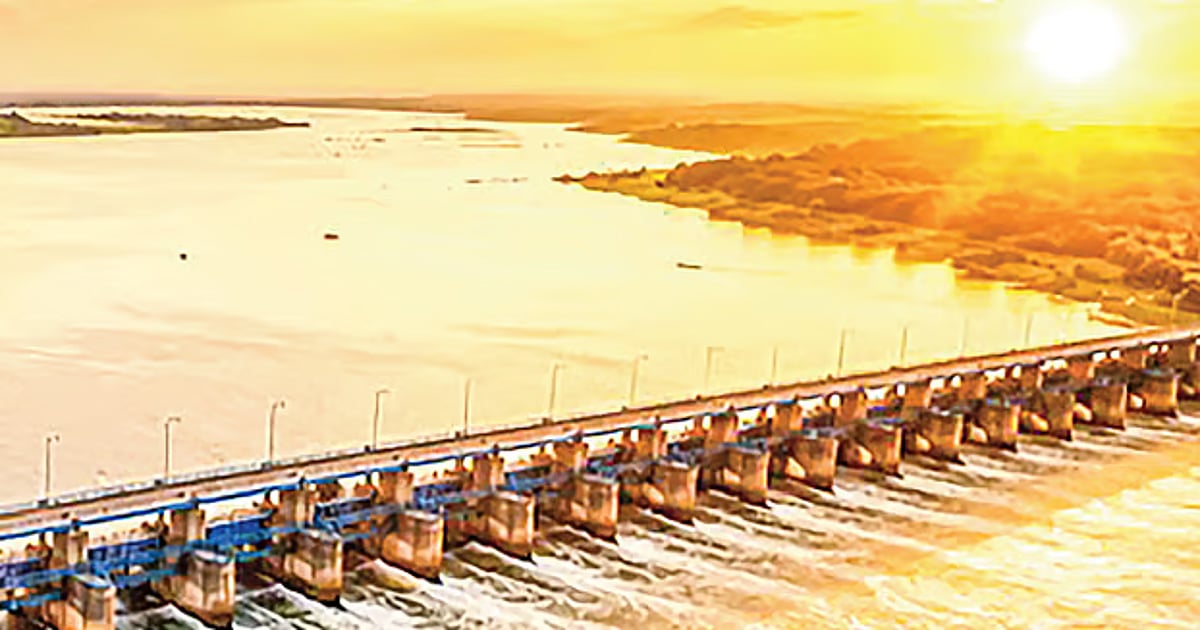
Padma (Ganges) barrage and 14 problems: Why a new study is necessary

Subail Bin Alam

1785108005747.webp

Representative image

In 2012, a comprehensive 563-page feasibility report was submitted, covering hydrology, morphology, environment, economy, social impact, and engineering design. However, the report was for the Padma of 2012, with the climate of 2012. Now, it's 2026, and the report is 14 years old. Over these 14 years, the river, climate, diplomacy, and technology have all changed. Yet, a project worth Tk 500 billion has been approved based on this outdated survey.

Problem 1: The fundamental water calculations are questionable
The report's dry season flow calculations rest on two assumptions: firstly, that the Ganges Treaty of 1996 will remain in effect, and secondly, that the flow patterns from 1997 to 2010 will continue in the future. Both assumptions have now fallen apart.

The Ganges Treaty's term will expire in December of 2026, with no indication of a new agreement. Before the Farakka Barrage, the average dry season flow at Pangsha was 2,031 cubic meters per second. Post-treaty, it dropped to 576 cubic meters, and in some years, even lower.

Without the treaty, it is likely to decrease further. Moreover, India's upstream water withdrawal is increasing every decade. The report contains no flow data from the 16 years post-2010.

Problem 2: No lessons learned from Farakka regarding silt
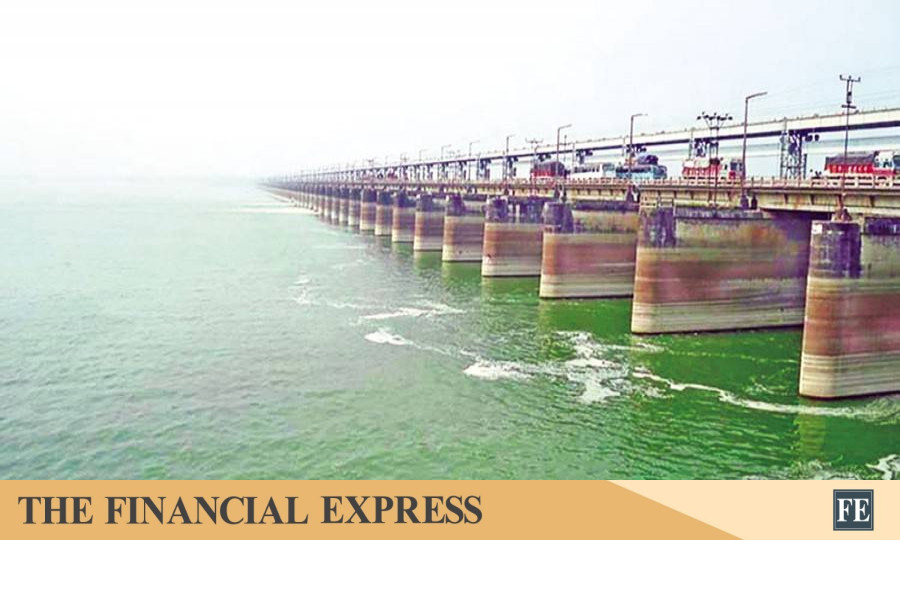
The report claims that if a barrage is constructed at Pangsha, the riverbed will rise only by 3.28 feet over 60 years. Farakka's real-life experience shows that the riverbed there rose by nearly 20 feet in just 52 years. Such a significant discrepancy in a similar river with similar structures implies a fundamental flaw in the modeling approach.

The Ganges carries approximately 450 million tonnes of silt annually at Pangsha. The report mentions 18 undersluices, but these sluices' total width is only one-eighth of the entire barrage length. These could quickly become blocked in a silt-rich river and, being submerged, would be difficult to clean. When to open the sluices, how much to open them, and what strategies to employ in different seasons are not covered in the report.

The silt-related mathematical modeling in the report was based on 2008 data. Significant changes in the Padma's channel, silt characteristics, and quantity have occurred between 2008 and 2026. Using an outdated model in this changed context ensures incorrect results.

Problem 3: The location issue has been closed
The Pangsha point was selected in 2012 based on the river morphology at the time. In 2017, the design was canceled due to design flaws and concerns about siltation, waterlogging, and bank erosion upstream. Nine years later, the same Pangsha point has been reapproved, but the technical solutions for the 2017 issues have not been made clear to the public.

The biggest issue is that Pangsha as the only option has never been validated through a multi-criteria analysis. Selecting any location without a comparative evaluation of multiple points based on hydraulic efficiency, silt load, land acquisition level, navigation, cost, and climate resilience is like betting billions of taka on assumptions. The Padma's course has changed significantly since 2012, with new shoals, eroded banks, and a shifted main channel. Without a new survey, it's uncertain if Pangsha is still the best point.

1785108081455.webp

Farakka barrage File photo

Problem 4: The concerns of downstream people are ignored

Downstream from Pangsha to Goalanda, there is another 20 to 23 kilometers of river. If water is held back at Pangsha, the flow in this section will decrease. With Farakka blocking upstream and Pangsha blocking downstream, the river in between is drying up. The report lacks any analysis of how this "double Farakka" situation will affect the Arial Khan, Kumar, and Gorai regions.

Since 1988, there have been practically no natural flow in the Gorai during the dry season. This has doubled salinity in the Khulna region and increased the peak salinity at Bardia Point eightfold. The project's objective is to reduce salinity, but without understanding the impact on downstream flow, it might have the opposite effect. This risk assessment is missing from the report.

Problem 5: No modern assessment of biodiversity
The report mentions two fish passes (passages for fish migration), but provides no further details. Farakka also had a fish pass, yet upstream hilsa production decreased by 92 per cent due to Farakka. Simply stating the number of fish passes does not fulfill responsibility. There is no analysis of the design type, effectiveness for different species, or how they will be managed and monitored.

Bangladesh's hilsa production has already decreased by over 71,000 tonnes in two years. The Ganges-Padma basin is a habitat for the endangered Gangetic dolphin. Gorai is the main freshwater source for the Sundarbans.

If the barrage obstructs the river's connection with floodplains during floods, it will destroy the habitat and breeding grounds of thousands of wetland-dependent species. Increased salinity in the Sundarbans will occur if downstream flow decreases during the dry season. There is no quantitative modeling of these environmental impacts in the 2012 report. Approving the project without such assessments according to 2026 international environmental standards is questionable.

1785108137299.webp

Riverbank erosion along the Padma River is swallowing up farmland in Daulatpur Upazila.Photo: Prothom Alo

Problem 6: Climate change impact is not accounted for

The report's entire hydrological analysis is based on historical data from 1965 to 2008. The rate of Himalayan glacier melt, monsoon patterns, and dry season flow characteristics were considerably different at that time.

The latest IPCC report indicates that by 2050, maximum monsoon flows in the Ganges-Brahmaputra basin will increase by 15-20 per cent.

The 100-year flood calculations in the report haven't been checked against this new reality to see if they are understated. Although there is a brief chapter on climate change, it is not reflected in the main design. Without projections of flow till 2050 and 2100, there's no way to determine how climate-resilient the barrage will be.

Problem 7: Structural safety requires reassessment

The report states that the barrage's foundation and structural design were based on a geological survey conducted in 2012. However, the riverbed of the Padma is highly dynamic, with its soil composition changing annually due to sediment deposition and erosion.

Without a new geological survey, the safety of the foundation cannot be assured. Moreover, the report does not reassess the probable maximum flood, seismic risk, or structural reliability in line with the latest standards of the International Commission on Large Dams (ICOLD). A failure of the barrage would put the lives of millions of people downstream at risk.

Problem 8: Future navigation left unexamined

The report mentions the construction of a navigation lock. However, it provides no detailed modelling of how the barrage would affect the depth of the navigation channel, water levels, or vessel movement upstream and downstream of Pangsha.

Inland waterborne trade in southwestern Bangladesh depends heavily on this river. Without assessing the barrage's impact on navigation, it is not possible to determine the appropriate size and design of the navigation lock.

Problem 9: No operational guidelines

Once constructed, a barrage will last 50 to 100 years. How it's operated will determine whether the project is beneficial or harmful. Modes for silt management at the start of the monsoon, storage post-monsoon, environmental flow in winter, emergency in extreme drought, and overflow during excess floods need to be defined. Who will make decisions, on what basis, and how the gates will function in these five different scenarios are not described in the report. Without operational guidelines, a barrage is like having a tool without the instructions for use.

Problem 10: Economic analysis only considers benefits, not risks

The report includes calculations of agricultural, irrigation, hydropower, and navigation benefits. However, there is no account of the long-term dredging costs upstream due to siltation, flood compensation, erosion damage, and environmental cost. Comprehensive investment evaluations include both benefits and risks. An evaluation showing only benefits is not an analysis but a promotion. The project's cost was originally estimated at Tk 314.14 billion in 2012. It has now exceeded Tk 500 billion. When basic costs increase by 60 per cent, benefits must be recalculated. This hasn't been done.

Problem 11: Resettlement plan is 13 years outdated

The report contains a land acquisition and resettlement plan. But the Padma's course and the habitation near its banks have significantly changed since 2012. Land that was submerged according to the old survey now has newly formed settlements, while some settlements have been lost to river erosion. Implementing a resettlement plan based on a 13-year-old survey will inevitably lead to land disputes and social conflict.

Problem 12: Funding source remains unclear

It’s still unclear if this Tk 500 billion project will be financed internally, through foreign loans, or via public-private partnerships. A memorandum of understanding was signed with China in 2013, but it hasn't been implemented. Without finalising the funding source, it's impossible to calculate loan terms, interest rates, and long-term financial burdens.

Approving construction with uncertain funding creates financial risk even before the project starts.

Problem 13: No analysis of diplomatic risks

This is the most significant omission in the 2012 report. The report assumes water will come and agreements will stand. However, constructing the Ganges Barrage could weaken or strengthen Bangladesh's position in negotiating a new Ganges treaty with India, but there's no analysis of this. There's also no mention that ratifying the 1997 UN Watercourses Convention is essential for any water-dispute-related negotiations.

Problem 14: This is a barrage project, not a basin plan

This is perhaps the most fundamental issue, talked about the least. The 2012 report is primarily an engineering feasibility study on how to build a structure. But the Padma's problems won't be solved by building a barrage alone. The water crisis, silt crisis, salinity crisis, biodiversity crisis are all interconnected and linked to the entire Ganges-Padma basin.

Unless the entire basin's water, silt, environment, navigation, and climate adaptation are inclusively planned around the barrage, the barrage may be constructed, but the underlying problems it aims to solve will persist.

Bangladesh's Delta Plan 2100 includes basin management, but there's no connection between that plan and this project. Approval was granted without assessing whether the construction of a standalone barrage would support or complicate the broader plan.

The 2012 report might have been adequate for its time, but in each of the fourteen fundamental problems, new information, realities, and questions have emerged by 2026. Technology has also changed significantly. Starting construction worth Tk 500 billion without addressing these fourteen questions or incorporating modern technology is a massive gamble on uncertainty.

70 million people in the southwest region are waiting for water. While their wait may be long, the project should genuinely benefit them. Bangladesh cannot afford another repeat of Farakka through rush construction based on old grounds.

#Subail Bin Alam is an engineer, founding member of the Centre for Science Tech and Policy Diplomacy, and Bangladesh Research Analysis and Information Network.​
 

Latest Posts

Back