Bangladesh Defense
Saif
Senior Member
- Messages
- 21,756
- Likes
- 9,802
- Nation

- Residence
- Axis Group

Pollution sources identified, Dhaka rivers still dirty
Sadiqur Rahman . Dhaka 27 September, 2026, 01:05
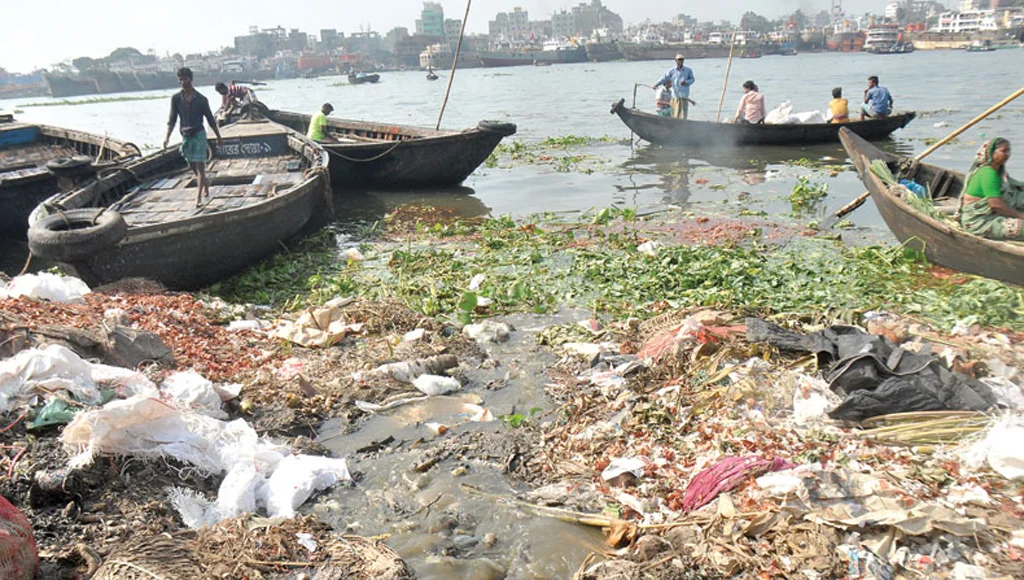
New Age file photo
Despite years of planning, projects and investment, the five major rivers around Dhaka remain heavily polluted, with government agencies repeatedly identifying the sources of pollution but failing to stop untreated waste from reaching the waterways.
The Buriganga, Shitalakhya, Dhaleshwari, Turag and Balu rivers continue to receive industrial effluents, untreated sewage and solid waste despite successive initiatives to restore them.
In the latest move, the government has identified 424 major sources of untreated wastewater and more than 550 discharge points that are continuously polluting the five rivers.
Water resources ministry, in a letter on August 4, identified 232 liquid-waste sources from 225 entities under industries ministry, 191 sources from 20 entities under local government division, 138 sources from 138 entities under textiles and jute ministry, four sources from four power plants under power division and two sources from one entity under defence ministry.
The ministry asked environment ministry to take action against 257 polluting entities and requested Bangladesh Inland Water Transport Authority to take preventive measures against waste dumping by passenger and cargo vessels.
In December 2021, the National River Conservation Commission identified 280 polluters and 693 pollution sources along the Buriganga, Turag, Balu and Tongi canal.
Environmentalists say repeated identification of pollution sources has not produced significant results because efforts by government agencies remain fragmented, while some agencies responsible for managing urban services are themselves contributing to river pollution.
‘Identifying the pollution sources is important. But integrated waste collection, segregation and reduction is very important. Otherwise, revitalisation of the river system of Dhaka cannot be achieved,’ said Malik Fida A Khan, former executive director of Center for Environmental and Geographic Information Services under water resources ministry.
Greater Dhaka, covering Dhaka city and parts of Gazipur and Narayanganj, produces around 4,000 million litres of wastewater every day, including about 2,400 million litres of industrial discharge and 1,500 million litres of residential sewage, much of which reaches rivers untreated, he said, citing several studies.
Sheikh Rokon, secretary general of Riverine People, said that pollution control efforts had repeatedly failed because government agencies themselves appeared to be major sources of pollution.
He alleged that Dhaka Water Supply and Sewerage Authority continued to discharge untreated sewage into rivers, while the Dhaka city corporations had failed to prevent wastewater from flowing through city canals into rivers.
The government has undertaken several projects over the years, spending crores of taka, much of it in the form of loans, to improve sanitation and restore the rivers.
The latest is the World Bank’s $370 million Metro Dhaka Water Security and Resilience Programme, approved in February. The project is being implemented by Dhaka North City Corporation, Dhaka South City Corporation, Narayanganj City Corporation and Dhaka WASA to address solid waste dumping, direct sewage discharge into drainage networks and industrial effluent discharge into rivers and canals.
In 2020, the government began implementing a Tk 3,855.60-crore project funded by the World Bank and the Asian Infrastructure Investment Bank to improve Dhaka’s sanitation network. Under the project, the Pagla Sewage Treatment Plant is being expanded to a capacity of 200 million litres a day.
The World Bank says only about 20 per cent of Greater Dhaka residents have piped sewer connections, while just 2 per cent use functional faecal sludge management systems.
The 500 million litres per day Dasherkandi Sewage Treatment Plant currently treats around 280MLD during the dry season. The existing 120MLD Pagla plant operates at only 30-40 per cent capacity because parts of its sewer collection and transmission network are damaged or clogged, according to studies.
In early September, the government also formed a 37-member central cell to prevent encroachment and pollution of rivers around the capital and maintain their navigability.
State minister for environment, forest and climate change Shaikh Faridul Islam, one of the cell’s advisers, said that river pollution continued despite rules and regulations as many polluters had failed to establish effluent treatment plants.
‘The environment ministry is committed to stopping river pollution and is strict against polluters who must be held responsible,’ he said.
His assurance comes as the world observes World Rivers Day on Sunday with Dhaka’s rivers still struggling under untreated sewage, industrial waste and solid waste.
Sadiqur Rahman . Dhaka 27 September, 2026, 01:05
New Age file photo
Despite years of planning, projects and investment, the five major rivers around Dhaka remain heavily polluted, with government agencies repeatedly identifying the sources of pollution but failing to stop untreated waste from reaching the waterways.
The Buriganga, Shitalakhya, Dhaleshwari, Turag and Balu rivers continue to receive industrial effluents, untreated sewage and solid waste despite successive initiatives to restore them.
In the latest move, the government has identified 424 major sources of untreated wastewater and more than 550 discharge points that are continuously polluting the five rivers.
Water resources ministry, in a letter on August 4, identified 232 liquid-waste sources from 225 entities under industries ministry, 191 sources from 20 entities under local government division, 138 sources from 138 entities under textiles and jute ministry, four sources from four power plants under power division and two sources from one entity under defence ministry.
The ministry asked environment ministry to take action against 257 polluting entities and requested Bangladesh Inland Water Transport Authority to take preventive measures against waste dumping by passenger and cargo vessels.
In December 2021, the National River Conservation Commission identified 280 polluters and 693 pollution sources along the Buriganga, Turag, Balu and Tongi canal.
Environmentalists say repeated identification of pollution sources has not produced significant results because efforts by government agencies remain fragmented, while some agencies responsible for managing urban services are themselves contributing to river pollution.
‘Identifying the pollution sources is important. But integrated waste collection, segregation and reduction is very important. Otherwise, revitalisation of the river system of Dhaka cannot be achieved,’ said Malik Fida A Khan, former executive director of Center for Environmental and Geographic Information Services under water resources ministry.
Greater Dhaka, covering Dhaka city and parts of Gazipur and Narayanganj, produces around 4,000 million litres of wastewater every day, including about 2,400 million litres of industrial discharge and 1,500 million litres of residential sewage, much of which reaches rivers untreated, he said, citing several studies.
Sheikh Rokon, secretary general of Riverine People, said that pollution control efforts had repeatedly failed because government agencies themselves appeared to be major sources of pollution.
He alleged that Dhaka Water Supply and Sewerage Authority continued to discharge untreated sewage into rivers, while the Dhaka city corporations had failed to prevent wastewater from flowing through city canals into rivers.
The government has undertaken several projects over the years, spending crores of taka, much of it in the form of loans, to improve sanitation and restore the rivers.
The latest is the World Bank’s $370 million Metro Dhaka Water Security and Resilience Programme, approved in February. The project is being implemented by Dhaka North City Corporation, Dhaka South City Corporation, Narayanganj City Corporation and Dhaka WASA to address solid waste dumping, direct sewage discharge into drainage networks and industrial effluent discharge into rivers and canals.
In 2020, the government began implementing a Tk 3,855.60-crore project funded by the World Bank and the Asian Infrastructure Investment Bank to improve Dhaka’s sanitation network. Under the project, the Pagla Sewage Treatment Plant is being expanded to a capacity of 200 million litres a day.
The World Bank says only about 20 per cent of Greater Dhaka residents have piped sewer connections, while just 2 per cent use functional faecal sludge management systems.
The 500 million litres per day Dasherkandi Sewage Treatment Plant currently treats around 280MLD during the dry season. The existing 120MLD Pagla plant operates at only 30-40 per cent capacity because parts of its sewer collection and transmission network are damaged or clogged, according to studies.
In early September, the government also formed a 37-member central cell to prevent encroachment and pollution of rivers around the capital and maintain their navigability.
State minister for environment, forest and climate change Shaikh Faridul Islam, one of the cell’s advisers, said that river pollution continued despite rules and regulations as many polluters had failed to establish effluent treatment plants.
‘The environment ministry is committed to stopping river pollution and is strict against polluters who must be held responsible,’ he said.
His assurance comes as the world observes World Rivers Day on Sunday with Dhaka’s rivers still struggling under untreated sewage, industrial waste and solid waste.